






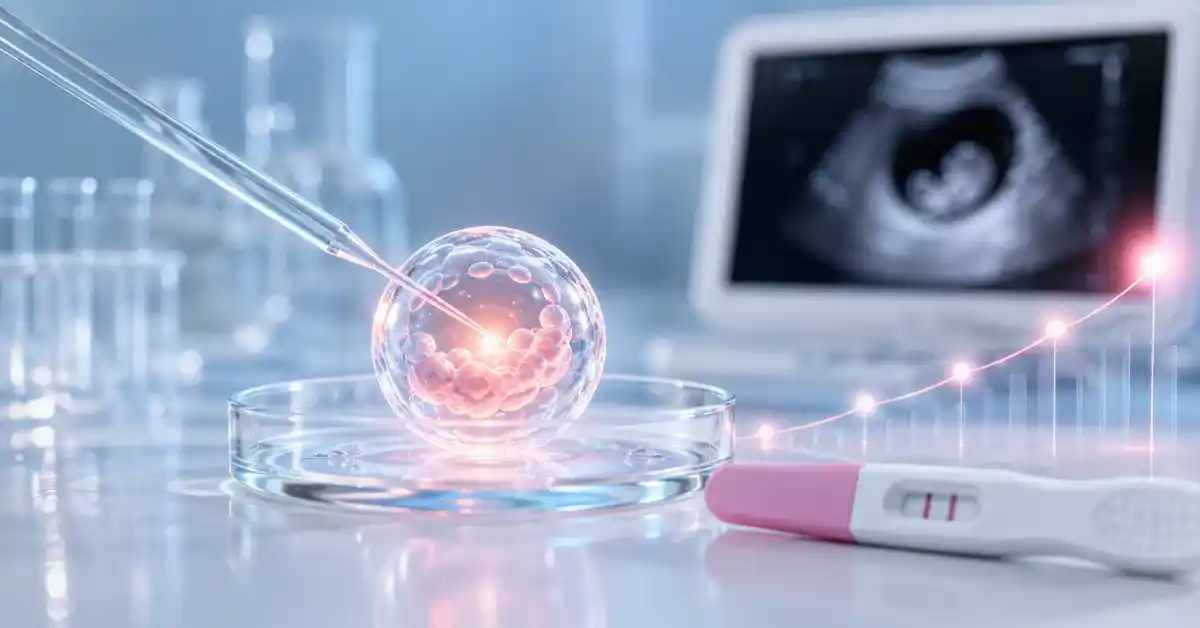
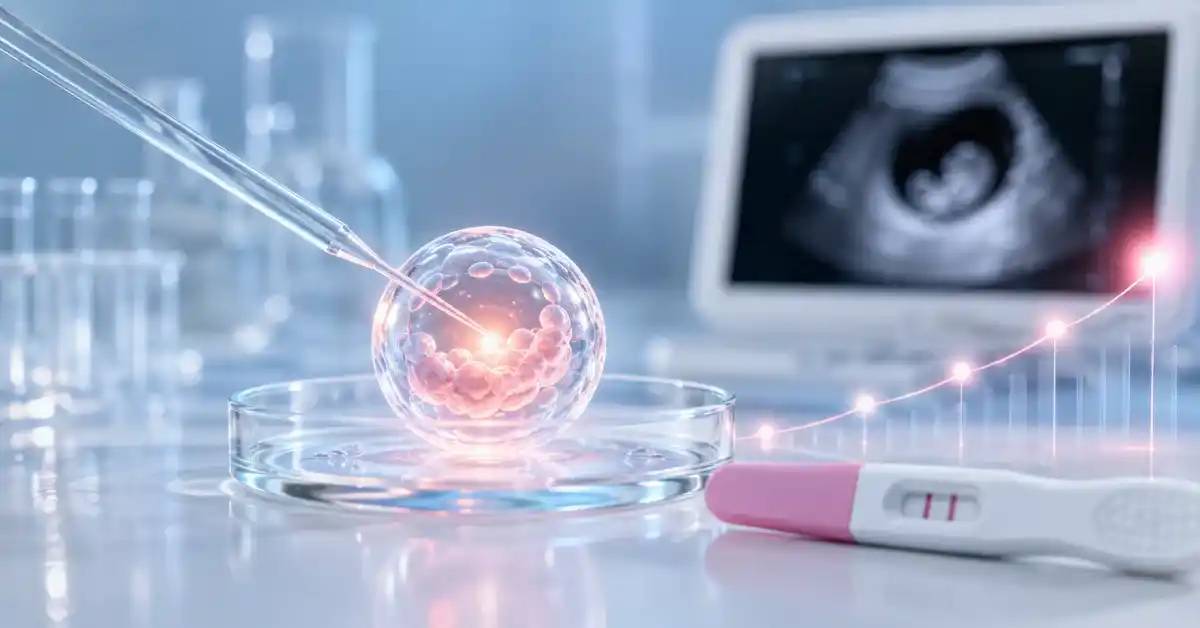
The waiting period after embryo transfer is one of the most emotionally sensitive stages of IVF. In the days after transfer, many patients start monitoring every body sensation: mild cramps, breast tenderness, tiredness, nausea, light spotting, or mood changes. The questions begin quickly: Are these pregnancy signs? Did the embryo implant? Does having no symptoms mean the cycle failed?
The truth is that early pregnancy symptoms after IVF can be very similar to the side effects of hormonal support, especially progesterone. For this reason, symptoms alone cannot confirm whether embryo transfer was successful. Some patients have strong symptoms and a negative test, while others have almost no symptoms and a positive pregnancy result. This is why the blood Beta-hCG test remains the most reliable way to confirm pregnancy after embryo transfer.
Understanding early symptoms helps reduce anxiety and prevents overinterpreting every sign. The goal is not to search for one definite sign of success, but to know what may be normal after transfer, what may be medication-related, and when medical advice is needed.
What Happens After Embryo Transfer?
After the embryo is placed inside the uterus, the patient enters the waiting period often called the “two-week wait.” During this time, the embryo may attach to the uterine lining if conditions are suitable. If implantation occurs, pregnancy cells begin producing hCG, the hormone detected by pregnancy tests.
However, this process cannot be accurately felt through symptoms. Mild uterine or body changes may occur, but the hormone medications used after transfer can create symptoms that feel almost identical to early pregnancy. This is why calm waiting and testing at the correct time are important.
Implantation After Embryo Transfer
Implantation means that the embryo attaches to the uterine lining and begins communication with the uterus. The timing depends on embryo stage, whether it is a day-3 embryo or a day-5 blastocyst, as well as endometrial receptivity and embryo quality.
Implantation may sometimes be associated with mild symptoms such as:
- Mild cramps.
- Gentle pulling in the lower abdomen.
- Light pink or brown spotting.
- Pelvic heaviness.
- Mild discharge changes.
- Fatigue.
However, having no symptoms does not mean implantation failed. Many successful IVF pregnancies have no clear signs in the first days.
Why Symptoms Do Not Appear Immediately
True pregnancy symptoms usually require hCG to rise enough to affect the body. In the first days after embryo transfer, the hormone level may still be very low, even if implantation has started. Therefore, the patient may not feel anything specific.
Also, the body may still be affected by ovarian stimulation, egg retrieval, or hormonal preparation. This makes it difficult to separate pregnancy symptoms from treatment effects.
Reasons for no early symptoms include:
- hCG is still low.
- Implantation may have just started.
- Each body responds differently.
- Medications can hide or mimic symptoms.
- Embryo stage and transfer timing vary.
- Sensitivity to hormones differs.
No symptoms should not be considered a sign of failure.
Read about: Differences Between IVF and ICSI Fertilization Techniques
First Symptoms After IVF
Some symptoms may appear after embryo transfer, but they do not confirm pregnancy. They may be related to implantation, progesterone, stress, or the IVF process itself. Therefore, symptoms should be seen as possible signs, not final results.
It is important to observe severity and progression rather than simply whether a symptom exists. Mild symptoms are often normal, while severe pain, heavy bleeding, or fainting require medical advice.
Mild Cramps and Lower Abdominal Pain
Mild cramps after embryo transfer are common and do not necessarily mean the cycle has failed. They may be related to mild uterine activity, progesterone, stress, constipation, or the effects of stimulation and egg retrieval in fresh cycles.
Cramps may be normal if they are:
- Mild.
- Intermittent.
- Not worsening.
- Not associated with heavy bleeding.
- Not accompanied by fever or severe pain.
- Improved with rest.
Patients should contact the clinic if pain is severe, persistent, one-sided, or associated with dizziness or clear bleeding. In rare cases, doctors may need to rule out ectopic pregnancy or ovarian hyperstimulation.
Breast Tenderness and Fatigue
Breast tenderness, swelling, or sensitivity is often linked with pregnancy, but after IVF it is commonly caused by progesterone and other hormonal support. Therefore, breast symptoms alone cannot confirm success.
Fatigue may also be caused by:
- Progesterone.
- Emotional stress.
- Poor sleep.
- Hormonal changes.
- Recovery after egg retrieval.
- Early pregnancy in some cases.
Mild or moderate tiredness is usually not concerning. Severe fatigue with shortness of breath, chest pain, or faintness should be assessed medically.
Read about: Step-by-Step Guide to the In Vitro Fertilization (IVF) Process
Spotting or Bleeding After Embryo Transfer
Seeing light blood after embryo transfer can be frightening, but it does not always mean failure. Light spotting may occur from cervical irritation after transfer, vaginal progesterone use, or sometimes around implantation. Some patients may also have light bleeding in early pregnancy.
It is important to distinguish light spotting from heavy bleeding. Spotting is usually a few pink or brown drops, while heavy bleeding resembles or exceeds a menstrual period and needs medical advice.
Is Implantation Bleeding a Sign of Success?
Light spotting around implantation may be a possible sign, but it is not a definite sign. Many patients become pregnant without any bleeding, and spotting can occur for reasons unrelated to pregnancy.
Spotting may be caused by:
- Cervical irritation after transfer.
- Vaginal progesterone.
- Hormonal changes.
- Implantation in some cases.
- Period-like bleeding if the cycle fails.
- Other causes that need assessment if symptoms increase.
Patients should not stop medications because of light spotting unless instructed by their doctor.
When Is Bleeding Concerning?
Bleeding is more concerning when it is heavy, persistent, associated with severe pain, or accompanied by dizziness or fainting. Large clots or one-sided abdominal pain should also be reported.
Contact the doctor if there is:
- Heavy bleeding like or more than a period.
- Severe lower abdominal pain.
- One-sided pain.
- Dizziness or fainting.
- Fever or chills.
- Shoulder pain with dizziness.
- Severe abdominal swelling.
- Shortness of breath.
- Persistent vomiting.
- Severe leg swelling or pain.
These symptoms require medical attention, especially after ovarian stimulation.
Read about: IVF Procedure Explained: From Fertilization to Embryo Transfer
Early Signs of Successful Embryo Transfer
Early signs of success may include a missed period, light spotting, mild cramps, fatigue, breast tenderness, mild nausea, or frequent urination. However, all these symptoms can also occur because of medications. No single symptom proves that the embryo transfer worked.
The true sign of success is a rising blood Beta-hCG level, followed by an appropriate trend and later ultrasound confirmation of a pregnancy sac in the uterus. Symptom tracking should not become a daily source of fear.
Signs That May Be Encouraging
Some signs may feel encouraging but are not definitive. They should be interpreted with balance.
Possible signs include:
- Delayed period.
- Light pink or brown spotting.
- Mild intermittent cramps.
- Pelvic heaviness.
- Breast tenderness or swelling.
- Fatigue and sleepiness.
- Mild nausea.
- Sensitivity to smells.
- Frequent urination.
- Mood changes.
- Slight body temperature changes.
These signs may happen in pregnancy or from hormonal support, so testing is still necessary.
Does No Symptom Mean Failure?
No. Lack of symptoms does not mean failure. Many patients have a positive IVF pregnancy test without clear symptoms before the blood test. Others have strong symptoms from progesterone and still receive a negative result.
Reasons for no symptoms include:
- Pregnancy is still very early.
- hCG is low at first.
- The body may not show early signs.
- Hormonal support may be stable.
- Every patient’s sensitivity differs.
- Overfocusing can make symptoms feel inconsistent.
The most important advice is not to judge the result before Beta-hCG testing.
Read about: Reasons for IVF Failure and Proven Ways to Improve Success Rates
Role of Beta-hCG Testing After IVF
The blood Beta-hCG test is the most important test for confirming pregnancy after IVF. It measures the amount of pregnancy hormone in the blood and can detect early pregnancy more accurately than a home urine test.
The fertility clinic sets the test date based on embryo stage, transfer type, and protocol. It is often done around 10 to 14 days after embryo transfer, but timing may vary by clinic.
When Should the Pregnancy Test Be Done?
The pregnancy test should be done on the date recommended by the fertility clinic. Testing too early may give a false negative if hCG has not risen enough, or an unclear positive if an hCG trigger shot is still present in some cycles.
Important tips:
- Follow the clinic’s test date.
- Prefer blood Beta-hCG.
- Do not stop medications before the result.
- Do not rely only on early urine testing.
- Repeat testing if the doctor requests it.
- Follow the hormone trend, not only the first number.
- Wait for ultrasound to confirm clinical pregnancy.
The first result is important, but it is not the end of follow-up.
What Do Rising or Low Numbers Mean?
If Beta-hCG is positive, the doctor may request a repeat test after about 48 hours or according to the clinic protocol. A suitable rise is more reassuring, but later ultrasound confirms the pregnancy location and development.
Possibilities include:
- Ongoing pregnancy with a good rise.
- Biochemical pregnancy if the number is low and then falls.
- Weak early pregnancy needing follow-up.
- Possible ectopic pregnancy if the rise is abnormal.
- Need for repeat blood test.
- Need for ultrasound at the right time.
Patients should not interpret the number without their doctor, because timing, transfer type, and clinical context matter.

Progesterone and Medication Effects on Symptoms
After embryo transfer, many patients use progesterone as vaginal pessaries, gel, injections, or tablets. This hormone supports the uterine lining, but it can cause symptoms that feel like early pregnancy.
This is one of the main reasons symptoms after IVF are difficult to interpret. Fatigue, breast tenderness, bloating, constipation, and mood changes may come from medication rather than pregnancy.
Symptoms Caused by Progesterone
Progesterone may cause:
- Breast tenderness or swelling.
- Fatigue and sleepiness.
- Bloating.
- Constipation.
- Mild cramps.
- Mood changes.
- Increased vaginal discharge.
- Mild nausea.
- Light dizziness.
- Pelvic heaviness.
These symptoms are common and do not confirm success or failure.
Should Medications Be Stopped if Bleeding Occurs?
No medication should be stopped because of light spotting or bleeding unless the doctor gives that instruction. Some patients have light bleeding even with an ongoing pregnancy, and stopping hormonal support too early may affect the treatment plan.
Continue medications until:
- The pregnancy test date.
- The result is available.
- The doctor gives instructions after the result.
- The doctor explains how long to continue if positive.
- Treatment is stopped only by medical advice.
If bleeding is heavy or pain is severe, contact the clinic instead of stopping medication on your own.
Read about: IVF Procedure with Egg Freezing: Step-by-Step Explanation
Home Pregnancy Tests After Embryo Transfer
Many patients want to take a home pregnancy test before the official test date because waiting is emotionally difficult. However, home testing can create confusion when done too early. It may be negative before hCG rises enough or positive because of leftover hCG trigger medication in some cycles.
It is usually better to follow the clinic’s blood test schedule because it gives a measurable number that can be tracked.
Why Home Tests Can Be Misleading
Urine tests depend on hCG concentration in urine and may not be sensitive enough in the earliest days. Drinking a lot of water may also dilute the urine and affect the result.
Home testing can be misleading because of:
- Testing too early.
- Different test sensitivity.
- Diluted urine.
- hCG trigger medication.
- Early biochemical pregnancy.
- Misreading a faint line.
- Stress and repeated testing.
Patients should not stop medication or make final decisions based on an early home test.
When Is a Urine Test More Useful?
A urine test may be more useful when performed on or near the official test date, especially when a blood test is not available. However, in IVF, blood Beta-hCG is still more accurate.
For a better result:
- Wait until the recommended date.
- Use first morning urine.
- Follow the test instructions.
- Do not read the result after the allowed time.
- Do not stop medication based only on the urine test.
- Confirm with a blood test.
- Contact the clinic if unsure.
The goal is to reduce anxiety, not increase it.
Read about: Embryo Freezing in IVF: Key Benefits and Opportunities for Couples
What to Do During the Waiting Period
The waiting period after embryo transfer requires balance between rest and normal life. There is no strong reason for strict bed rest for all patients; many clinics recommend gentle daily activity while avoiding heavy exertion. The most important steps are taking medications correctly and following clinic instructions.
The body should be treated gently, without fear of every movement.
Daily Tips After Embryo Transfer
Helpful tips include:
- Take medications on time.
- Avoid heavy exertion.
- Walk gently if comfortable.
- Sleep well.
- Drink enough fluids.
- Eat balanced meals.
- Avoid smoking and alcohol.
- Do not take new medication without advice.
- Avoid hot baths and sauna.
- Reduce stress when possible.
- Avoid symptom-checking all day.
- Contact the clinic for unusual symptoms.
A calm and organized routine is better than anxious over-resting.
What Should Be Avoided?
Patients should avoid anything that causes intense physical strain, heat exposure, or unsafe medication use. They should also avoid constant symptom interpretation, which increases stress.
Avoid:
- Heavy lifting.
- Intense exercise.
- Smoking.
- Alcohol.
- Sauna and hot baths.
- Unprescribed medications.
- Stopping medications without permission.
- Repeated early pregnancy tests.
- Comparing symptoms with other patients.
- Panicking about no symptoms.
Every IVF journey is different. There is no single sign that applies to everyone.
Read about: IVF Cost in Turkey and the Gulf: Complete Guide for Couples
When to Contact the Doctor Immediately
Most mild symptoms after embryo transfer are normal, but some symptoms need quick evaluation. This is especially important after stimulation cycles because ovarian hyperstimulation, ectopic pregnancy, or bleeding complications may need medical care.
Early communication helps protect the patient.
Warning Symptoms
Contact the doctor immediately if there is:
- Severe or increasing pain.
- Heavy bleeding.
- Dizziness or fainting.
- One-sided abdominal pain.
- Severe abdominal swelling.
- Shortness of breath.
- Reduced urination.
- Persistent vomiting.
- Fever or chills.
- Chest pain.
- Severe leg swelling or pain.
- Shoulder pain with dizziness.
These symptoms do not always mean something serious, but they deserve medical evaluation.
After a Positive Pregnancy Test
If the pregnancy test is positive, follow-up does not stop there. The doctor may monitor Beta-hCG rise and schedule ultrasound to confirm the pregnancy sac inside the uterus and assess development.
After a positive result:
- Continue medications as instructed.
- Repeat Beta-hCG if requested.
- Do not stop hormonal support.
- Schedule the ultrasound.
- Report pain or bleeding.
- Avoid unprescribed medications.
- Continue fertility-clinic follow-up until transfer to pregnancy care.
Early IVF pregnancy needs careful monitoring.
Read about: Role of Nutrition in Enhancing IVF Success Rates
Conclusion
The first symptoms after IVF can be confusing because they resemble natural early pregnancy symptoms and also resemble progesterone side effects. Mild cramps, breast tenderness, fatigue, light spotting, nausea, or bloating may appear after embryo transfer, but they do not prove or disprove success.
The most important sign of success is the blood Beta-hCG test at the time recommended by the fertility clinic, followed by appropriate hormone follow-up and ultrasound. Patients should avoid judging the result by symptoms, avoid stopping medication before medical instruction, and avoid very early home testing that may increase anxiety.
Frequently Asked Questions: Pregnancy After IVF
What are the first signs of successful embryo transfer?
Possible signs include mild cramps, light spotting, fatigue, breast tenderness, or mild nausea, but they are not definite. Beta-hCG is the most important confirmation.
Does having no symptoms after embryo transfer mean failure?
No. Many successful IVF pregnancies have no clear symptoms before the pregnancy blood test.
When should I test for pregnancy after embryo transfer?
Follow your fertility clinic’s schedule. Blood Beta-hCG is often done around 10 to 14 days after transfer, depending on the protocol.
Is spotting after embryo transfer normal?
Light pink or brown spotting can be normal, but heavy bleeding or bleeding with severe pain should be reported to the doctor.
Is a home pregnancy test reliable after IVF?
It may be misleading if done too early. Blood Beta-hCG at the recommended time is more accurate.