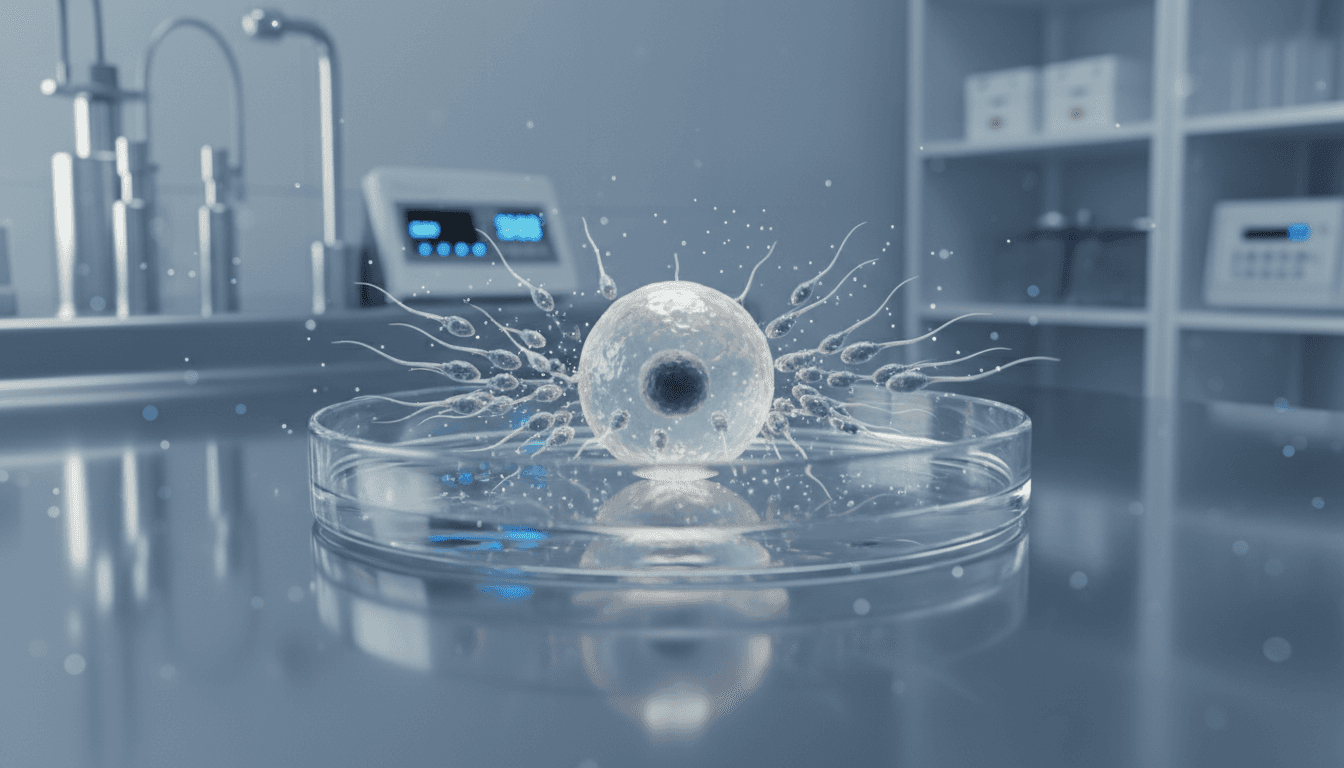






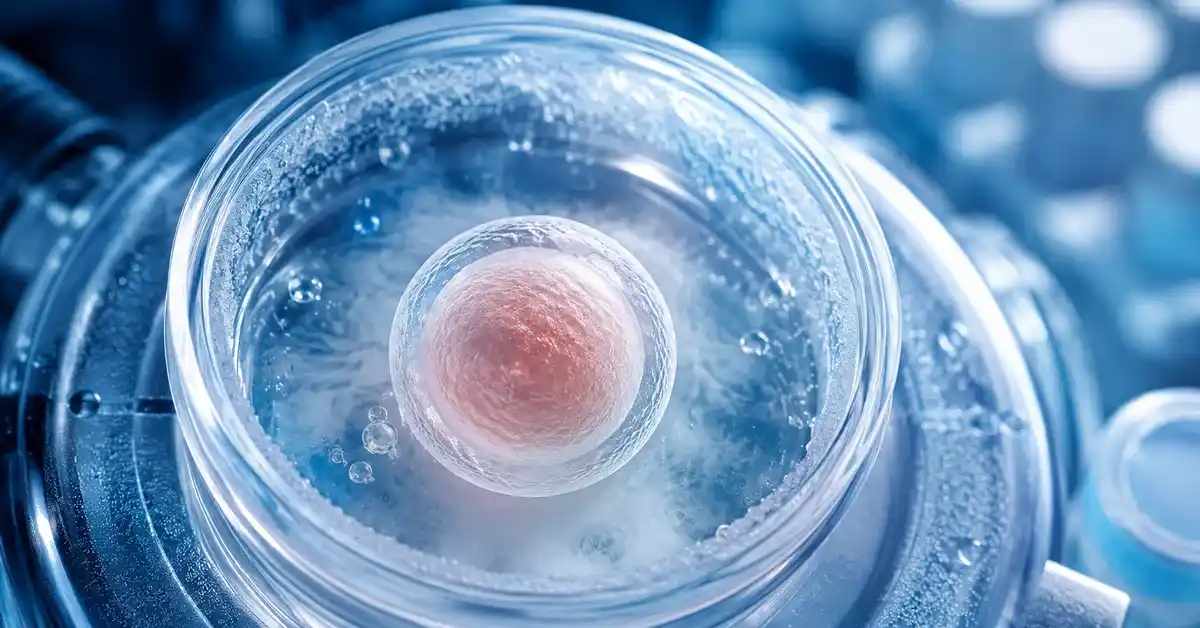
The IVF procedure with egg freezing is an important option for women who want to preserve fertility and use their eggs later in an in vitro fertilization cycle. Egg freezing, also called oocyte cryopreservation, allows mature eggs to be collected, frozen, and stored for future use. When the woman is ready to try for pregnancy, the frozen eggs can be thawed, fertilized in the laboratory, and the resulting embryo can be transferred into the uterus.
At Safemedigo, egg freezing is explained as a fertility preservation option with realistic expectations. It can be helpful for women who want to delay pregnancy, women focusing on career or personal planning, women over 35 who want to understand their options, and women who need fertility preservation for medical reasons. However, egg freezing does not guarantee a future pregnancy. Success depends on the woman’s age at freezing, number of mature eggs frozen, egg quality, laboratory experience, sperm quality at the time of use, embryo development, and uterine readiness.
This article explains the egg freezing process step by step, how to freeze eggs for IVF, ovarian stimulation for egg freezing, the egg retrieval process IVF patients may go through, egg freezing benefits IVF patients should know, egg freezing risks IVF patients should understand, egg freezing and IVF costs, and how to make an informed decision before starting.
Introduction to IVF with Egg Freezing
IVF with egg freezing means that eggs are collected and frozen before they are fertilized. Later, when the woman decides to use them, the eggs are thawed and fertilized in the laboratory as part of an IVF procedure. This is different from a standard IVF cycle where eggs are usually fertilized shortly after retrieval.
The main purpose of egg freezing is fertility preservation. It gives women the chance to store eggs at their current biological age and use them later. This can be especially relevant because egg quality declines with age, particularly after the mid-thirties. ASRM notes that planned oocyte cryopreservation is affected by factors such as age and ovarian reserve, and outcomes should be discussed with realistic counseling.
IVF with egg freezing is not one procedure only. It includes two separate phases: the egg freezing phase and the future IVF use phase. The first phase includes ovarian stimulation, trigger shot, egg retrieval, and freezing. The second phase includes thawing, fertilization, embryo development, and embryo transfer.
What is Egg Freezing?
Egg freezing is a medical process in which mature eggs are collected from the ovaries and frozen for possible future use. The eggs are stored unfertilized in a specialized laboratory at very low temperatures. When the woman wants to use them, the eggs are thawed and fertilized as part of an IVF cycle.
Egg freezing preserves the eggs at the age they were collected. This is important because a woman’s age at the time of egg freezing is one of the strongest factors affecting future success. HFEA has emphasized that the age at which eggs are frozen matters more than the age at which they are thawed, because egg quality is linked to age at freezing.
Egg freezing may be considered by women delaying pregnancy, women who are not ready for pregnancy now, women pursuing career or education goals, women with medical conditions, or women preparing for medical treatments that may affect ovarian function. It should always be presented as an option, not a guarantee.
Importance of Egg Freezing in IVF
The importance of egg freezing in IVF is that it allows eggs collected at one point in time to be used later for fertilization. This can help women avoid relying only on eggs collected at an older age, when egg quality may be lower. If eggs are frozen at a younger age, they may offer a better chance than eggs collected much later.
When frozen eggs are used, they are usually thawed and fertilized using ICSI, because the egg has already gone through freezing and thawing and may benefit from direct sperm injection. The resulting embryos are then monitored before transfer or freezing, depending on the treatment plan.
Egg freezing may support fertility planning, but the outcome depends on several stages:
- Number of mature eggs frozen.
- Survival after thawing.
- Fertilization rate.
- Embryo development.
- Uterine preparation.
- Age at the time of egg freezing.
- Sperm quality at the time of use.
- Laboratory experience.
For this reason, patients should understand that egg freezing is a chance-preserving tool, not a promise of future pregnancy.
Read about: Differences Between IVF and ICSI Fertilization Techniques
Step-by-Step IVF Procedure with Egg Freezing
The step-by-step IVF procedure with egg freezing includes a first phase where eggs are collected and frozen, and a later phase where the eggs are used for IVF. During the first phase, the ovaries are stimulated, eggs are retrieved, mature eggs are frozen, and the eggs remain stored. During the later IVF phase, the eggs are thawed, fertilized, embryos are developed, and an embryo may be transferred into the uterus.
The egg freezing timeline IVF patients follow can vary depending on menstrual cycle timing, ovarian response, medication dose, and whether more than one stimulation cycle is needed. Some women complete one egg freezing cycle, while others may require more than one cycle to freeze an appropriate number of mature eggs.
Understanding the process helps patients prepare emotionally and practically. It also helps them know that each stage has a different success point. Not every follicle contains an egg, not every egg is mature, not every frozen egg survives thawing, and not every fertilized egg becomes an embryo suitable for transfer.
Ovarian Stimulation
Ovarian stimulation for egg freezing is the first active medical step. Fertility medications are used to encourage the ovaries to develop multiple follicles instead of the single follicle that usually grows in a natural cycle. The goal is to collect several mature eggs that can be frozen.
The doctor chooses the medication dose based on age, AMH level, antral follicle count, body weight, previous response, and risk of ovarian hyperstimulation. During stimulation, ultrasound scans are used to monitor follicle growth. Blood tests may also be used in some cases to check hormone levels.
Ovarian stimulation usually includes:
- Starting injectable fertility medication.
- Ultrasound monitoring.
- Dose adjustment if needed.
- Medication to prevent premature ovulation.
- Planning the trigger shot.
- Scheduling egg retrieval.
The goal is a safe and effective response. Producing more eggs may be helpful, but safety is also important. Patients with high ovarian reserve or PCOS may need a careful protocol to reduce overstimulation risk.
Trigger Shot
The trigger shot is given when the follicles reach the right size and the eggs are expected to be close to maturity. This injection helps the eggs complete the final stage of maturation before retrieval. Timing is very important because egg retrieval is scheduled at a specific time after the trigger.
If the trigger is too early, some eggs may not be mature. If it is too late, ovulation may occur before retrieval. This is why patients must follow instructions carefully and take the trigger injection exactly when the medical team advises.
The trigger step usually involves:
- Final ultrasound review.
- Confirmation of follicle size.
- Choosing the trigger medication.
- Taking the injection at the exact time.
- Avoiding missed or delayed doses.
- Preparing for egg retrieval.
The trigger shot is a short step, but it has a major effect on the egg retrieval process IVF patients undergo. Correct timing helps improve the chance of collecting mature eggs suitable for freezing.
Egg Retrieval
The egg retrieval process IVF patients experience during egg freezing is usually performed under sedation or anesthesia. Using ultrasound guidance, the doctor passes a thin needle through the vaginal wall to collect fluid from the ovarian follicles. The embryology team then examines the fluid to identify eggs.
The procedure is usually short, but patients need recovery time afterward. Mild cramping, bloating, or tiredness may occur. Severe pain, heavy bleeding, fever, shortness of breath, or increasing abdominal swelling should be reported to the medical team.
After retrieval, the laboratory evaluates the eggs. Only mature eggs are usually frozen because they have the best chance of being used later. The patient should receive clear information about:
- Number of follicles seen.
- Number of eggs retrieved.
- Number of mature eggs.
- Number of eggs frozen.
- Whether another cycle may be useful.
- Expected storage details.
This stage is emotionally important because the final number of frozen eggs may be different from what the patient expected.
Egg Freezing
Egg freezing is performed after the laboratory identifies mature eggs. Most modern laboratories use vitrification, a rapid freezing method that reduces ice crystal formation inside the egg. This method has improved egg survival after thawing compared with older slow-freezing methods.
Eggs are stored in specialized tanks under strict laboratory controls. Accurate labeling, documentation, storage monitoring, and safety protocols are essential. The quality of the laboratory can influence the future usefulness of the frozen eggs.
It is important to understand that frozen eggs still need to pass several future steps:
- Thawing.
- Survival after thawing.
- Fertilization.
- Embryo development.
- Embryo transfer.
- Implantation.
- Pregnancy continuation.
Therefore, freezing eggs is not the same as freezing embryos or guaranteeing a child. It preserves a possibility for future IVF treatment.
Embryo Freezing
Embryo freezing is different from egg freezing. Egg freezing stores unfertilized eggs, while embryo freezing stores fertilized eggs that have developed into embryos. In the structure of IVF with egg freezing, embryo freezing may happen later, after frozen eggs are thawed, fertilized, and embryos develop.
Some patients ask about egg freezing vs embryo freezing because both are forms of cryopreservation. Egg freezing may be preferred when a woman wants to preserve fertility without fertilizing eggs immediately. Embryo freezing may be used later if embryos are created and not all are transferred at once.
Key differences include:
- Egg freezing preserves unfertilized eggs.
- Embryo freezing preserves fertilized embryos.
- Egg freezing allows future fertilization timing.
- Embryo freezing depends on fertilization first.
- Both require legal, ethical, and medical counseling.
- Both involve storage policies and future decisions.
The correct option depends on the patient’s situation, treatment goals, and local regulations.
Read about: Step-by-Step Guide to the In Vitro Fertilization (IVF) Process
Benefits of Egg Freezing Before IVF
The benefits of egg freezing before IVF are related to timing, fertility preservation, and future reproductive planning. Egg freezing allows women to store eggs at their current age for possible future use, which may be valuable if pregnancy is not planned immediately.
Egg freezing benefits IVF planning because it separates the egg collection phase from the future embryo transfer phase. A woman may freeze eggs now and decide later when to use them. This can be important for medical reasons, career planning, personal circumstances, or age-related fertility concerns.
However, benefits should be explained honestly. Egg freezing may improve future options, but it does not remove the need for IVF later. The frozen eggs must still be thawed, fertilized, and developed into embryos. The uterus must also be ready for embryo transfer when pregnancy is attempted.
Preserving Fertility for Future Use
Preserving fertility for future use is one of the main reasons women consider egg freezing. The process gives women the opportunity to store eggs before further age-related decline occurs. This can be especially important for women who are not currently ready for pregnancy but want to keep reproductive options open.
Egg freezing for single women, egg freezing for career women, and egg freezing for medical reasons are all examples of fertility preservation planning. In each case, the decision should be guided by medical evaluation, age, ovarian reserve, and future goals.
Before starting, women should discuss:
- Current age.
- AMH and ovarian reserve.
- Expected number of eggs.
- Possibility of needing more than one cycle.
- Storage duration.
- Future IVF process.
- Legal requirements for future use.
- Realistic chances of success.
The earlier the decision is discussed, the more options a woman may have. Consultation does not mean immediate treatment; it means gaining clear information.
Enhancing IVF Success Rates
Enhancing IVF success rates through egg freezing depends mainly on the age at which eggs are frozen and the number of mature eggs stored. If eggs are frozen at a younger age and used later, they may have better potential than eggs collected for the first time at an older age.
This benefit is not automatic. Egg freezing and IVF success rates depend on survival after thawing, fertilization, embryo development, sperm quality, uterine health, and medical planning. A 2023 review noted that planned oocyte cryopreservation outcomes are closely linked to age and the number of mature eggs cryopreserved, with higher numbers generally improving cumulative chances.
Egg freezing can enhance planning by:
- Preserving eggs at a younger biological age.
- Supporting future IVF use.
- Allowing time for personal or medical planning.
- Reducing pressure from immediate timing.
- Offering a fertility preservation strategy before medical treatment.
- Creating a future option when pregnancy is delayed.
Still, success should be discussed individually, not through general averages alone.

Costs Associated with Egg Freezing
Costs associated with egg freezing vary by country, clinic, medication dose, monitoring schedule, egg retrieval procedure, anesthesia, freezing method, storage duration, and future IVF use. Egg freezing and IVF costs should be discussed separately because freezing eggs now and using them later are two different phases.
Some cost plans include only the stimulation and retrieval stage. Others may include freezing and short-term storage. Medications, blood tests, annual storage, future thawing, fertilization, embryo culture, embryo transfer, and additional procedures may be separate.
Because cost of egg freezing IVF varies so widely, patients should ask for a clear written breakdown. General cost discussions are more useful than fixed numbers because pricing changes by case and location. A transparent plan helps avoid unexpected expenses later.
Breakdown of Expenses
A breakdown of expenses helps patients understand what they are paying for. Egg freezing is not one single cost item; it includes several medical, laboratory, and storage components. Future IVF use may create additional costs when the patient decides to use the frozen eggs.
Possible expense categories include:
- Initial consultation.
- Hormone tests and ultrasound.
- Ovarian stimulation medications.
- Monitoring visits.
- Trigger shot.
- Egg retrieval.
- Anesthesia or sedation.
- Laboratory egg assessment.
- Vitrification.
- Storage.
- Annual renewal if required.
- Future egg thawing.
- Future fertilization and embryo culture.
- Future embryo transfer.
Patients should also ask whether additional cycles may be needed. Some women may freeze a lower number of eggs in one cycle and decide to repeat stimulation to improve future chances.
Insurance Coverage and Financial Assistance
Insurance coverage and financial assistance for egg freezing vary significantly depending on country, insurance policy, medical indication, and local regulations. Some policies may cover fertility preservation for medical reasons, such as before treatments that may affect ovarian function. Elective or planned egg freezing may not always be covered.
Patients should ask:
- Is egg freezing covered for medical reasons?
- Is planned egg freezing covered?
- Are medications included?
- Is storage covered?
- Are future thawing and IVF included?
- Are there financing options?
- Are payment plans available?
- Are annual storage fees separate?
- Is documentation required for medical coverage?
- Are future embryo transfer costs included?
Financial planning is part of informed consent. Patients should not start treatment without understanding both current and future costs. Safemedigo can help patients organize questions and clarify what should be reviewed before starting.
Read about: IVF Procedure Explained: From Fertilization to Embryo Transfer
Success Rates of IVF with Egg Freezing
Success rates of IVF with egg freezing depend on several linked steps. The first is how many mature eggs are frozen. The second is how many survive thawing. The third is how many fertilize. The fourth is how many develop into embryos. The fifth is whether the embryo implants and pregnancy continues.
Egg freezing success rates are strongly affected by age at freezing. Eggs frozen at a younger age usually have better potential than eggs frozen later. HFEA reported that the average age of patients freezing eggs was 35 and the average age of thawing was 40 in 2023, highlighting the common pattern of freezing earlier and using later.
Success should not be judged only by the number of frozen eggs. A woman needs to understand the full chain from frozen egg to embryo transfer to pregnancy. The medical team should explain expectations based on age, ovarian reserve, and egg number.
Factors Influencing Success
Factors influencing success include patient age at egg freezing, ovarian reserve, number of mature eggs, freezing method, laboratory quality, thaw survival, fertilization method, sperm quality, embryo development, uterine lining, and overall health at the time of transfer.
Important success factors include:
- Age at egg freezing.
- AMH and antral follicle count.
- Number of mature eggs frozen.
- Vitrification quality.
- Laboratory experience.
- Thaw survival rate.
- ICSI fertilization after thawing.
- Embryo quality.
- Uterine preparation.
- General health at transfer.
- Pregnancy monitoring.
A woman freezing eggs over 35 may still benefit, but the expected number and quality of eggs may be lower than at younger ages. This is why early consultation matters when egg freezing is being considered.
Comparing Fresh vs. Frozen Eggs
Comparing fresh vs. frozen eggs depends on the age at retrieval and the reason for freezing. Fresh eggs are used soon after retrieval, while frozen eggs are stored and used later. If eggs were frozen at a younger age and thawed later, they may offer a better option than retrieving new eggs at an older age.
However, frozen eggs must survive thawing before fertilization. This extra step does not exist with fresh eggs. Modern vitrification has improved thaw survival, but it does not guarantee that every egg will survive or fertilize.
Comparison should consider:
- Age at egg retrieval.
- Number of eggs available.
- Freezing method.
- Laboratory experience.
- Thaw survival.
- Fertilization method.
- Embryo development.
- Uterine readiness.
- Medical reason for freezing.
- Future pregnancy timing.
Fresh and frozen eggs can both be useful, but the best option depends on personal circumstances and treatment goals.
Read about: Reasons for IVF Failure and Proven Ways to Improve Success Rates
Risks and Considerations in Egg Freezing
Risks and considerations in egg freezing should be explained clearly before treatment. Egg freezing is generally considered safe when performed by an experienced medical team, but it is still a medical procedure. It includes medications, monitoring, egg retrieval, anesthesia or sedation, and long-term storage decisions.
Egg freezing risks IVF patients should know include physical side effects, emotional pressure, cost uncertainty, and the possibility that frozen eggs may not lead to pregnancy. Some women feel empowered by the process, while others may feel disappointed if the number of eggs retrieved is lower than expected.
ESHRE’s fertility preservation guideline emphasizes the importance of information provision, support, pre-treatment assessment, and aftercare in fertility preservation. This is especially relevant because egg freezing involves not only a medical procedure but also future decisions.
Health Risks and Side Effects
Health risks and side effects of egg freezing are usually related to ovarian stimulation and egg retrieval. During stimulation, patients may feel bloating, mood changes, headaches, breast tenderness, or pelvic discomfort. After retrieval, mild cramping or fatigue can occur.
Possible risks include:
- Ovarian hyperstimulation syndrome.
- Abdominal bloating.
- Pelvic pain.
- Bleeding after retrieval.
- Infection, rarely.
- Anesthesia-related risks.
- No eggs or fewer eggs than expected.
- Some eggs not surviving future thawing.
Most side effects are temporary, but patients should know when to contact the medical team. Severe pain, increasing abdominal swelling, fever, heavy bleeding, or shortness of breath should be reported immediately.
Emotional and Psychological Impact
The emotional and psychological impact of egg freezing can be significant. Some women feel relief because they have taken an active step toward preserving fertility. Others may feel anxiety about age, egg number, future success, cost, storage duration, or whether they will need IVF later.
Common emotional experiences include:
- Relief after taking action.
- Anxiety about results.
- Pressure related to age.
- Fear of future failure.
- Stress about cost.
- Uncertainty about when to use eggs.
- Worry about whether enough eggs were frozen.
- Emotional comparison with others.
- Social or family pressure.
- Need for privacy and support.
Good counseling helps women make informed decisions without fear-based pressure. Egg freezing should be presented as an option for planning, not as a guarantee or obligation.
Read about: Embryo Freezing in IVF: Key Benefits and Opportunities for Couples
Tips for Women Considering Egg Freezing
Tips for women considering egg freezing should begin with early evaluation. A woman does not need to decide immediately, but she should understand her ovarian reserve, age-related fertility changes, and expected response before waiting too long.
Egg freezing for women over 35 may still be possible, but timing becomes more important. After 35, egg quantity and quality may decline more noticeably. Some women may need more than one cycle to freeze an appropriate number of mature eggs.
Women should also understand the difference between egg freezing and IVF. Egg freezing stores eggs for possible future use. IVF is still needed later to thaw, fertilize, create embryos, and transfer an embryo into the uterus.
When to Start the Process
When to start the process depends on age, personal plans, medical history, ovarian reserve, and whether there is a medical reason for fertility preservation. In general, earlier consultation provides better information and more options.
Egg freezing may be considered when:
- Pregnancy is being delayed.
- A woman is focused on career or education.
- A woman is single and wants to preserve options.
- There is a medical condition affecting fertility.
- Medical treatment may harm ovarian function.
- Family history suggests early menopause.
- AMH is low for age.
- A woman is approaching or over 35.
- Fertility planning feels time-sensitive.
- A woman wants clearer information before deciding.
Consultation does not force treatment. It provides facts. The best decision is one made before time pressure becomes severe.
Choosing the Right Fertility Clinic
Choosing the right fertility clinic for egg freezing and IVF should be based on medical quality, transparency, laboratory experience, and patient support. The clinic should explain the process, success expectations, risks, costs, storage policies, and future IVF use clearly.
Important selection criteria include:
- Experience with egg freezing.
- Strong embryology laboratory.
- Use of modern vitrification.
- Clear ovarian stimulation plan.
- Careful ultrasound monitoring.
- Honest discussion of expected egg number.
- Transparent cost and storage details.
- No exaggerated promises.
- Accurate documentation and sample tracking.
- Good communication and patient coordination.
Patients should also ask how frozen eggs are used later, whether ICSI is planned after thawing, and what legal or medical requirements apply before future embryo transfer.
Read about: IVF Cost in Turkey and the Gulf: Complete Guide for Couples
Real-Life Experiences with Egg Freezing and IVF
Real-life experiences with egg freezing and IVF vary widely. Some women freeze eggs and feel emotionally reassured. Others feel uncertain if fewer eggs are retrieved than expected or if they need another cycle. Later, when eggs are used for IVF, outcomes depend on thaw survival, fertilization, embryo development, and uterine readiness.
Success stories can provide encouragement, but they should not be treated as personal predictions. A woman’s age at freezing, number of mature eggs, ovarian reserve, laboratory quality, sperm quality, and uterine condition all affect results.
It is helpful to listen to experiences, but decisions should be based on medical evaluation. Each woman’s fertility journey is different, and egg freezing should be personalized.
Success Stories
Success stories with egg freezing and IVF can be inspiring, especially when women froze eggs at a suitable age and later used them successfully in IVF. These stories may show how fertility preservation can support future family planning.
However, success stories should be interpreted carefully. A successful case may involve details that are not visible to the reader, such as age at freezing, number of eggs frozen, number of cycles, thaw survival, sperm quality, embryo development, and uterine preparation.
When reading success stories, ask:
- How old was the woman when eggs were frozen?
- How many mature eggs were frozen?
- Was more than one cycle needed?
- How many eggs survived thawing?
- How many embryos developed?
- Was embryo transfer fresh or frozen?
- Were there uterine or medical issues?
- How many transfer attempts were needed?
Stories can support hope, but they should not replace personal counseling.
Challenges Faced
Challenges faced during egg freezing and IVF may be physical, emotional, financial, or social. The stimulation phase requires injections and monitoring. Some women experience bloating or discomfort. Others feel stressed waiting to hear how many mature eggs were frozen.
Common challenges include:
- Fear of injections.
- Anxiety about egg number.
- Need for more than one cycle.
- Cost and storage fees.
- Scheduling treatment around work.
- Emotional uncertainty about the future.
- No guarantee of pregnancy.
- Social pressure or privacy concerns.
- Confusion between egg freezing and embryo freezing.
- Worry about using eggs years later.
Clear medical explanations and supportive communication can make these challenges easier to manage. Knowing what to expect at each stage reduces fear and improves decision-making.
Read about: Role of Nutrition in Enhancing IVF Success Rates
Conclusion and Recommendations
Conclusion and recommendations for IVF with egg freezing should focus on informed planning. Egg freezing may be a valuable fertility preservation option for women who want to delay pregnancy, women over 35 seeking fertility planning, women with career or personal goals, single women, and women needing fertility preservation for medical reasons.
However, it is important to understand the limits. Egg freezing does not guarantee pregnancy. Future success depends on age at freezing, number of mature eggs, thaw survival, fertilization, embryo development, uterine health, sperm quality, and pregnancy safety. The process also involves cost, storage decisions, emotional considerations, and possible need for future IVF.
The best decision is made after medical evaluation and clear counseling. Women should understand their ovarian reserve, expected egg number, risks, costs, and future steps before starting.
Importance of Informed Decision-Making
The importance of informed decision-making cannot be overstated. Egg freezing is a personal and medical decision that should be based on facts, not fear or marketing pressure. Women should know what the process involves, what it may offer, and what it cannot guarantee.
Informed decision-making includes understanding:
- Age and egg quality.
- AMH and ovarian reserve.
- Expected response to stimulation.
- Number of eggs likely needed.
- Egg freezing timeline IVF patients may follow.
- Egg freezing risks IVF patients should know.
- Egg freezing and IVF costs.
- Storage rules and future use.
- Difference between egg freezing vs embryo freezing.
- Emotional and practical implications.
When women receive clear information, they can make decisions that match their values, timing, and medical situation.
Seeking Professional Guidance
Seeking professional guidance is essential before starting egg freezing. A fertility specialist can review ovarian reserve, medical history, reproductive goals, and possible future IVF use. The medical team can also explain whether egg freezing is suitable now, whether more than one cycle may be needed, and what expectations are realistic.
Professional guidance should include:
- Medical evaluation.
- Ovarian reserve testing.
- Ultrasound assessment.
- Explanation of the stimulation protocol.
- Discussion of risks.
- Cost and storage review.
- Future IVF planning.
- Emotional support.
- Legal and regulatory considerations.
- Follow-up after retrieval.
Read about: Proper Nutrition for Women After IVF
Conclusion
The IVF procedure with egg freezing includes ovarian stimulation, trigger shot, egg retrieval, egg freezing, and later use of the frozen eggs through thawing, fertilization, embryo development, and embryo transfer. This approach can help preserve fertility for future use, especially when pregnancy is delayed for personal, professional, or medical reasons.
Egg freezing benefits IVF planning by giving women an additional future option, but it does not guarantee pregnancy. Success depends on age at freezing, number of mature eggs, laboratory quality, thaw survival, fertilization, embryo development, sperm quality, and uterine readiness. Costs also vary depending on medications, monitoring, retrieval, freezing, storage, and future IVF use.
Frequently Asked Questions: IVF Procedure with Egg Freezing
What is the IVF procedure with egg freezing?
The IVF procedure with egg freezing involves stimulating the ovaries, retrieving mature eggs, freezing them, and using them later in IVF. When needed, the eggs are thawed, fertilized in the laboratory, monitored as embryos, and a suitable embryo may be transferred into the uterus.
How does the egg freezing process step by step work?
The egg freezing process step by step includes medical evaluation, ovarian stimulation, ultrasound monitoring, trigger shot, egg retrieval, laboratory assessment of egg maturity, vitrification, and storage. Future IVF use includes thawing, fertilization, embryo development, and embryo transfer.
Does egg freezing guarantee IVF success?
No, egg freezing does not guarantee IVF success. Egg freezing success rates depend on age at freezing, number of mature eggs frozen, thaw survival, fertilization, embryo quality, uterine health, and sperm quality at the time of use.
What is the difference between egg freezing and embryo freezing?
Egg freezing stores unfertilized eggs for future use, while embryo freezing stores fertilized embryos. Egg freezing may be preferred when a woman wants to preserve fertility without fertilizing eggs immediately. Embryo freezing occurs after fertilization and embryo development.
What are the risks of egg freezing?
Egg freezing risks may include bloating, discomfort, ovarian hyperstimulation, rare bleeding or infection after retrieval, anesthesia-related risks, emotional stress, cost concerns, and the possibility that frozen eggs may not lead to pregnancy later.