





Enlarged prostate, medically known as benign prostatic hyperplasia or BPH, is one of the most common urinary problems in aging men. It can cause weak urine flow, frequent urination, nighttime urination, urgency, difficulty starting urination, and the feeling that the bladder is not empty after urinating. For many men, the main concern is whether they can improve symptoms without traditional surgery.
The latest non-surgical treatments for enlarged prostate include minimally invasive enlarged prostate treatments such as Rezūm water vapor therapy, UroLift prostatic urethral lift, temporary implantable nitinol device BPH treatment, prostate artery embolization, and selected thermal or non-thermal approaches. Other options, such as laser vaporization, HoLEP, bipolar plasma vaporization, and Aquablation therapy for an enlarged prostate, are often described as less invasive than open surgery, but they remain procedural treatments that require specialist evaluation.
The best non-surgical enlarged prostate treatment depends on prostate size, prostate shape, presence of a median lobe, symptom severity, bladder condition, urinary retention, sexual function priorities, medications, bleeding risk, and patient expectations. A newer technology is not automatically the best option for every patient.
Latest Non-Surgical Treatments for Enlarged Prostate
Latest non-surgical treatments for enlarged prostate are designed to reduce urinary obstruction while limiting recovery time, bleeding risk, hospital stay, and sexual side effects where possible. Some work by shrinking prostate tissue with heat, some mechanically open the prostatic urethra, some reduce blood supply through interventional radiology, and some remove or ablate tissue with controlled energy.
These treatments are not interchangeable. Rezūm water vapor therapy enlarged prostate treatment may fit one patient, UroLift non-surgical enlarged prostate treatment may fit another, while a man with a very large gland may need HoLEP or Aquablation rather than a small-office procedure.
Latest non-surgical treatments for enlarged prostate
The term latest non-surgical treatments for enlarged prostate usually refers to modern, minimally invasive, or non-open techniques. Some are performed through the urethra, some through blood vessels, and some with temporary implants. The goal is to improve urination without a large incision or traditional open prostate surgery.
Modern options include:
- Rezūm water vapor therapy enlarged prostate treatment.
- Water vapor thermal therapy for BPH.
- UroLift non-surgical enlarged prostate treatment.
- Prostatic urethral lift enlarged prostate treatment.
- Temporary implantable nitinol device BPH treatment.
- iTind prostate treatment non-surgical approach.
- Prostate artery embolization.
- Aquablation therapy for an enlarged prostate.
- High-pressure water jet prostate treatment.
- Laser vaporization for enlarged prostate.
- HoLEP enlarged prostate treatment.
- Bipolar plasma vaporization.
- TUMT non-surgical prostate treatment.
- Transurethral microwave thermotherapy for BPH.
- TUNA benign prostatic hyperplasia non-surgical treatment.
- Non-thermal ablation prostate treatment in selected research or emerging contexts.
Not every option is equally available, equally proven, or equally suitable for every prostate size.
Importance of non-surgical enlarged prostate treatment
Non-surgical enlarged prostate treatment is important because many men want symptom relief without traditional surgery, long recovery, or major interruption of daily life. Some patients are older, have heart disease, take blood thinners, have diabetes, or want to preserve ejaculation if possible. For these men, minimally invasive enlarged prostate treatments can provide useful alternatives.
These options may help:
- Reduce urinary symptoms.
- Improve urine flow.
- Decrease nighttime urination.
- Reduce dependence on long-term medication.
- Avoid open surgery.
- Shorten recovery in selected patients.
- Reduce bleeding in some procedures.
- Preserve ejaculation in some techniques.
- Offer options for high-risk patients.
- Improve quality of life.
- Provide outpatient or short-stay treatment in some cases.
- Personalize treatment according to prostate anatomy.
However, non-surgical does not mean risk-free. Every procedure has limitations, side effects, and retreatment possibilities.
key benefits of minimally invasive enlarged prostate treatments
The key benefits of minimally invasive enlarged prostate treatments include faster recovery, lower invasiveness, and potential preservation of sexual function in selected cases. These benefits depend heavily on the treatment type and patient selection.
Potential benefits include:
- Smaller or no external incision.
- Shorter hospital stay.
- Less bleeding in some options.
- Less anesthesia requirement in some treatments.
- Faster return to daily activities.
- Lower risk of sexual side effects in selected techniques.
- Treatment options for patients with medical risks.
- Reduced need for long-term medication.
- Improved urinary comfort.
- Personalized choice based on prostate size.
- Possible outpatient treatment.
- Lower recovery burden for selected patients.
The patient should ask not only “What is the latest treatment?” but “Which treatment fits my prostate, symptoms, and priorities?”
Read about: Prostate Enlargement Treatments: Medication or Surgery
Rezum Water Vapor Therapy for Enlarged Prostate
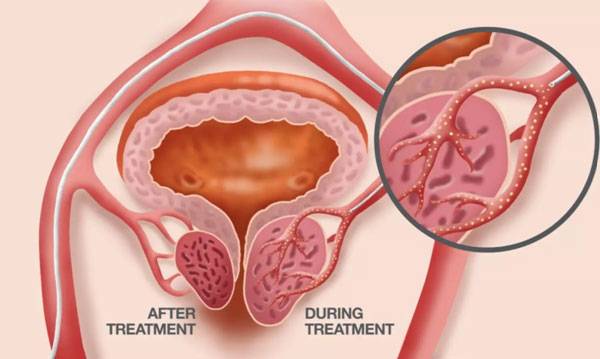
Rezum water vapor therapy enlarged prostate treatment is one of the best-known minimally invasive BPH options. It uses thermal energy stored in water vapor to treat excess prostate tissue. The vapor condenses inside the targeted tissue, releasing heat and causing controlled tissue destruction. Over time, the body absorbs the treated tissue, and the urinary channel becomes more open.
NICE describes Rezūm as water vapor steam therapy for lower urinary tract symptoms associated with BPH and notes that it uses water vapor to destroy excess prostate tissue with the aim of relieving symptoms.
Rezum water vapor therapy enlarged prostate
Rezum water vapor therapy enlarged prostate treatment is performed through the urethra using a special device. The doctor delivers small bursts of water vapor into targeted prostate tissue. The treatment is designed to shrink the obstructing tissue gradually rather than remove it immediately.
The process may include:
- Urology evaluation.
- Symptom scoring.
- Urine tests when needed.
- PSA evaluation when appropriate.
- Ultrasound or prostate measurement.
- Local, sedation, or other anesthesia plan.
- Device insertion through the urethra.
- Delivery of water vapor into prostate tissue.
- Temporary catheter if needed.
- Follow-up to monitor symptom improvement.
Rezūm does not usually provide instant improvement. Many patients improve gradually over weeks to months.
Recovery time after Rezum water vapor therapy
Recovery time after Rezum water vapor therapy varies. Some men experience temporary burning, urgency, urinary frequency, blood in urine, pelvic discomfort, or temporary difficulty urinating. A catheter may be needed for a period after treatment, depending on the patient and physician plan.
Recovery may include:
- Short-term catheter use.
- Burning with urination.
- Frequent urination.
- Urgency.
- Mild blood in urine.
- Pelvic discomfort.
- Temporary weak flow.
- Gradual symptom relief.
- Activity adjustment for a short period.
- Follow-up visits.
- Medication use if prescribed.
- Monitoring for fever or retention.
Patients should understand that symptoms may temporarily worsen before they improve.
Results of Rezum water vapor therapy for BPH
Results of Rezum water vapor therapy for BPH are best in properly selected patients, especially men with moderate symptoms and suitable prostate anatomy. NICE states that clinical evidence shows Rezūm relieves LUTS caused by BPH in men with moderate to severe symptoms who have a moderately enlarged prostate.
Expected results may include:
- Improved urine flow.
- Less nighttime urination.
- Reduced urgency.
- Less straining.
- Better bladder emptying sensation.
- Reduced medication dependence in some patients.
- Gradual quality-of-life improvement.
- Potential preservation of ejaculation in many men.
- Shorter recovery than some tissue-removing procedures.
- Useful option for selected moderate BPH cases.
Rezūm may not be the best choice for every patient, especially men with very large prostates, severe retention, advanced bladder dysfunction, or anatomy outside the treatment criteria.
Read about: Interventional Radiology for Enlarged Prostate Treatment
Prostate Artery Embolization (PAE)
Prostate artery embolization is a non-surgical enlarged prostate treatment performed by an interventional radiologist. Instead of entering through the urethra, the doctor guides a tiny catheter through an artery, usually from the wrist or groin, to the blood vessels feeding the prostate. Small particles are then injected to reduce blood flow to the prostate, causing it to shrink gradually.
PAE is not a urologic endoscopic procedure, and its results depend strongly on arterial anatomy and interventional radiology expertise.
Prostate artery embolization is a non-surgical
Prostate artery embolization is a non-surgical approach in the sense that it does not involve cutting or removing prostate tissue through the urethra. It is done through the blood vessels using imaging guidance. It may be attractive for patients who want to avoid urethral instrumentation or who have higher surgical risk.
The general steps include:
- Urology and interventional radiology assessment.
- Imaging to understand prostate and vessel anatomy.
- Local anesthesia in many cases.
- Catheter insertion through an artery.
- Navigation to prostate arteries.
- Injection of embolic particles.
- Reduction of prostate blood supply.
- Gradual prostate shrinkage.
- Follow-up for symptom improvement.
- Monitoring for complications.
The effect is gradual, not immediate, because the prostate shrinks over time.
Advantages of prostate artery embolization
Advantages of prostate artery embolization may include no urethral cutting, limited anesthesia, and potential preservation of sexual function in selected patients. It may be considered for men who are not ideal surgical candidates or who prefer an interventional radiology approach.
Potential advantages include:
- No open incision.
- No transurethral tissue removal.
- Local anesthesia in many cases.
- Lower bleeding risk in selected patients.
- Option for some high-risk patients.
- Gradual prostate shrinkage.
- Short hospital stay in many cases.
- Potential ejaculation preservation.
- May suit larger prostates in selected patients.
- Avoids some endoscopic surgical risks.
- Can be considered when surgery is less suitable.
- Offers a non-urologic procedural pathway.
However, PAE may not provide the same degree of symptom relief as some endoscopic surgeries in every patient, and retreatment may be needed.
Suitable cases for prostate artery embolization
Suitable cases for prostate artery embolization should be selected carefully. PAE may be considered in men with bothersome BPH symptoms who prefer a non-surgical enlarged prostate treatment or who have higher surgical risk, provided their vascular anatomy is suitable.
PAE may suit:
- Men seeking to avoid transurethral surgery.
- Patients with surgical or anesthesia risk.
- Selected men with larger prostates.
- Patients wanting lower bleeding risk.
- Men interested in preserving ejaculation.
- Patients who accept gradual improvement.
- Men with suitable arterial anatomy.
- Patients managed by experienced interventional radiologists.
- Men who understand possible retreatment.
- Cases reviewed by both urology and radiology teams.
It may not be ideal for severe bladder dysfunction, complex retention, unsuitable vascular anatomy, or cases needing immediate strong obstruction relief.
Read about: Benign Prostate Enlargement: Latest Non-Surgical Treatments
Water Vapor Thermal Therapy for BPH
Water vapor thermal therapy for BPH includes Rezūm-type treatment, where steam energy is delivered into prostate tissue to reduce obstruction. It is a minimally invasive enlarged prostate treatment and is often discussed as a non-surgical enlarged prostate treatment because it avoids open surgery and tissue cutting.
This therapy is most useful when prostate size and anatomy fit the treatment criteria and when the patient accepts gradual improvement.
Steps of water vapor thermal therapy for BPH
The steps of water vapor thermal therapy for BPH begin with proper evaluation. A doctor must confirm that the symptoms are likely due to BPH and that the anatomy is suitable for the technique.
Common steps include:
- Symptom assessment.
- Urine testing.
- PSA testing when appropriate.
- Ultrasound or prostate measurement.
- Post-void residual urine assessment.
- Discussion of sexual function goals.
- Anesthesia planning.
- Device insertion through the urethra.
- Water vapor delivery into target tissue.
- Observation after treatment.
- Catheter placement if needed.
- Follow-up plan.
The treatment itself may be relatively short, but recovery and improvement occur gradually.
Recovery period after water vapor thermal therapy
The recovery period after water vapor thermal therapy usually includes a temporary inflammatory phase. Patients may notice urgency, burning, frequency, blood in urine, or weaker urination for a short time before improvement begins.
Recovery considerations include:
- Temporary catheter in some patients.
- Mild blood in urine.
- Burning with urination.
- Urinary urgency.
- Frequent urination.
- Pelvic discomfort.
- Gradual return to activity.
- Avoiding sex for a period recommended by the doctor.
- Drinking fluids as advised.
- Monitoring for fever.
- Follow-up assessment.
- Patience for gradual improvement.
Patients should call their doctor if they cannot urinate, develop fever, or experience severe pain.
The success rate of water vapor thermal therapy for an enlarged prostate
The success rate of water vapor thermal therapy for an enlarged prostate depends on patient selection, prostate anatomy, symptom severity, bladder health, and physician experience. It may provide good symptom improvement in suitable men, but it is not the most powerful option for every prostate.
Factors affecting success include:
- Prostate size.
- Median lobe presence.
- Severity of obstruction.
- Bladder muscle function.
- Baseline post-void residual urine.
- Previous retention.
- Doctor experience.
- Proper delivery of treatment.
- Follow-up adherence.
- Patient expectations.
Some men may still need medication or another procedure later if symptoms do not improve enough.

Laser Vaporization for Enlarged Prostate
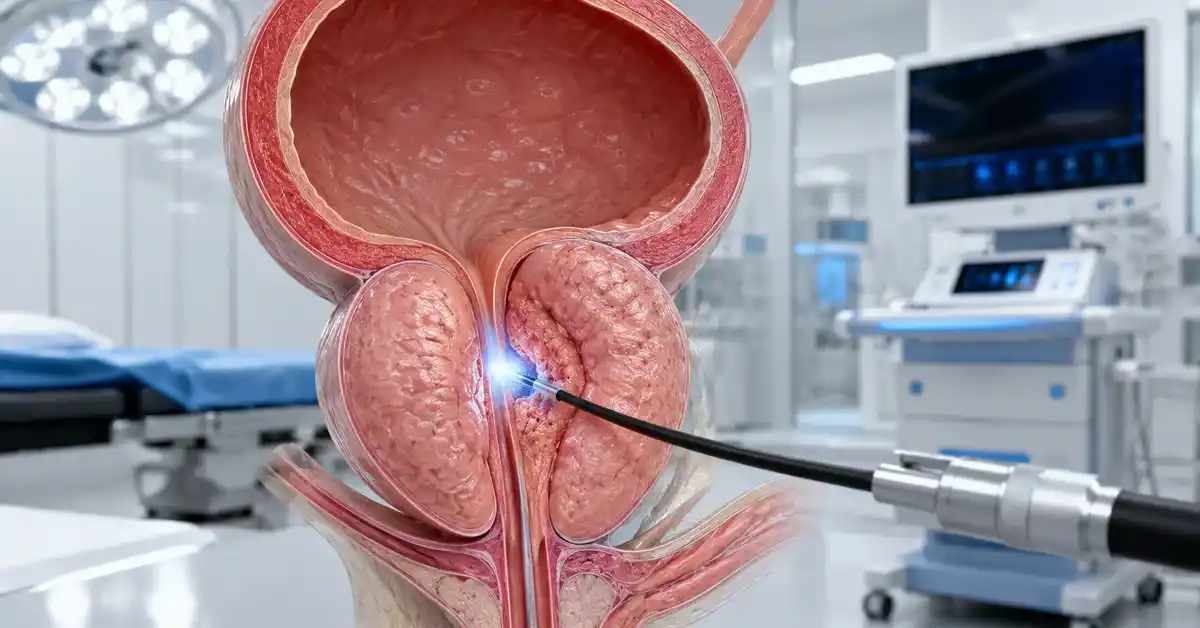
Laser vaporization for enlarged prostate uses laser energy to vaporize obstructing prostate tissue through an endoscopic approach. It is not open surgery, but it is still a procedural treatment performed by a urologist. Laser vaporization is one type of minimally invasive enlarged prostate treatment, especially when bleeding reduction is important.
Different laser systems may be used, and results depend on prostate size, technology, and surgeon experience.
Types of laser vaporization treatments
Types of laser vaporization treatments vary according to laser source and technique. Some vaporize tissue directly, while others remove or enucleate tissue. GreenLight laser vaporization and holmium laser procedures are commonly discussed categories, though HoLEP is more accurately an enucleation procedure rather than simple vaporization.
Laser approaches may include:
- GreenLight laser vaporization.
- Holmium laser treatment.
- HoLEP.
- Laser enucleation.
- Laser ablation.
- Laser tissue vaporization.
- Endoscopic prostate laser therapy.
- Laser treatment for moderate prostates.
- Laser treatment for selected larger prostates.
- Modern BPH laser procedures.
The best laser technique depends on prostate size, bleeding risk, anatomy, and surgeon skill.
Benefits of laser vaporization for BPH
Benefits of laser vaporization for BPH may include improved urinary flow, reduced bleeding in selected patients, shorter hospital stay, and faster recovery compared with some older procedures. It may be considered for men taking blood thinners after careful medical planning.
Potential benefits include:
- Improved urine flow.
- Reduced obstruction.
- Less bleeding in some settings.
- Endoscopic approach without external incision.
- Short hospital stay in many cases.
- Temporary catheter use.
- Faster recovery in selected patients.
- Good symptom relief.
- Option for patients with bleeding concerns.
- Effective tissue reduction.
- Possible lower transfusion risk.
- Availability in specialized centers.
Laser treatment may still affect ejaculation and may cause temporary burning, urgency, bleeding, or infection.
Recovery after laser vaporization enlarged prostate treatment
Recovery after laser vaporization enlarged prostate treatment depends on the technique used and the patient’s baseline condition. Some patients improve quickly, while others experience temporary irritative urinary symptoms.
Recovery may include:
- Temporary catheter.
- Mild blood in urine.
- Burning with urination.
- Frequent urination.
- Urgency.
- Gradual improvement in flow.
- Avoiding heavy lifting.
- Avoiding sex for a recommended period.
- Drinking fluids if advised.
- Taking medications as prescribed.
- Follow-up visits.
- Calling the doctor for fever or severe bleeding.
Laser vaporization can be effective, but the patient must follow recovery instructions carefully.
Read about: Benign Prostate Enlargement Laser Treatment: Safe Results
HoLEP (Holmium Laser Enucleation of the Prostate)
HoLEP, or holmium laser enucleation of the prostate, is a powerful endoscopic treatment for BPH. It is often used for larger prostates and significant obstruction. Although not open surgery, it is still an operative procedure performed through the urethra.
HoLEP removes the obstructing prostate tissue by separating it from the prostate capsule using holmium laser energy. The tissue is then moved into the bladder and removed with a morcellator.
Procedure steps of HoLEP enlarged prostate treatment
Procedure steps of HoLEP enlarged prostate treatment include endoscopic access, laser enucleation, tissue removal, and catheter placement. The exact technique depends on surgeon training and prostate anatomy.
General steps include:
- Preoperative evaluation.
- Anesthesia.
- Endoscope insertion through the urethra.
- Identification of obstructing tissue.
- Holmium laser enucleation.
- Separation of prostate adenoma.
- Movement of tissue into the bladder.
- Morcellation and tissue removal.
- Bleeding control.
- Catheter placement.
- Recovery monitoring.
- Follow-up assessment.
HoLEP requires significant surgical expertise and a learning curve.
Ideal candidates for HoLEP BPH treatment
Ideal candidates for HoLEP BPH treatment may include men with large prostates, severe symptoms, recurrent retention, or failure of medication. It may be a strong option when a more definitive tissue-removing procedure is needed without open surgery.
HoLEP may fit:
- Large prostate volume.
- Severe urinary symptoms.
- Failed medical therapy.
- Recurrent urinary retention.
- High post-void residual urine.
- Clear bladder outlet obstruction.
- Need for effective tissue removal.
- Some patients on blood thinners after evaluation.
- Patients wanting durable symptom relief.
- Men suitable for anesthesia.
- Centers with HoLEP expertise.
- Cases where open surgery is being avoided.
HoLEP may be more invasive than Rezūm, UroLift, or iTind and may carry a higher chance of ejaculatory changes.
Recovery period after HoLEP treatment
Recovery period after HoLEP treatment varies by prostate size, tissue removed, patient health, and surgeon protocol. Many patients need a temporary catheter and short observation.
Recovery may include:
- Temporary catheter.
- Mild blood in urine.
- Burning during urination.
- Urinary frequency.
- Urgency.
- Gradual improvement in flow.
- Avoiding heavy lifting.
- Avoiding sex temporarily.
- Drinking fluids if advised.
- Follow-up after catheter removal.
- Monitoring for infection.
- Reviewing pathology if tissue is examined.
HoLEP often provides strong symptom relief, but proper recovery and follow-up are essential.
Read about: Latest Prostate Cancer Treatment Using Interventional Radiology
Bipolar Plasma Vaporization for Enlarged Prostate
Bipolar plasma vaporization for enlarged prostate uses bipolar energy to vaporize obstructing prostate tissue through the urethra. It is an endoscopic procedure and may be considered a less invasive alternative to older monopolar techniques or traditional resection in selected patients.
It is not completely non-procedural, but it avoids open surgery and can directly treat obstruction.
How bipolar plasma vaporization works
Bipolar plasma vaporization works by inserting a scope through the urethra and using bipolar energy to vaporize excess prostate tissue. The aim is to open the prostatic channel and improve urine flow.
General mechanism includes:
- Endoscope insertion.
- Identification of obstruction.
- Bipolar energy application.
- Vaporization of obstructing tissue.
- Improved urethral channel.
- Bleeding control during the procedure.
- Temporary catheter placement.
- Post-procedure monitoring.
- Gradual symptom relief.
- Follow-up testing if needed.
It directly treats obstruction, so symptom relief may occur faster than in gradual tissue-shrinking treatments.
Benefits of bipolar plasma vaporization for BPH
Benefits of bipolar plasma vaporization for BPH include direct obstruction relief, endoscopic access without external incision, and effective symptom improvement in selected patients. It may also have lower fluid-related risks compared with older techniques.
Potential benefits include:
- Improved urine flow.
- Direct treatment of obstruction.
- No external incision.
- Endoscopic approach.
- Bleeding control.
- Suitable for selected prostate sizes.
- Short hospital stay in many cases.
- May be more available than some newer technologies.
- Cost may be lower than some laser systems.
- Faster improvement than gradual thermal treatments.
- Familiar technique in many urology centers.
- Effective symptom reduction.
Possible side effects include burning, bleeding, infection, retrograde ejaculation, temporary catheter use, and need for follow-up.
Long-term results of bipolar plasma vaporization treatment
Long-term results of bipolar plasma vaporization treatment depend on patient selection, prostate size, surgical skill, and bladder condition. In suitable patients, it can provide meaningful urinary improvement, but retreatment is possible in some cases.
Factors affecting long-term results include:
- Prostate volume.
- Baseline obstruction severity.
- Bladder function.
- Surgeon experience.
- Amount of tissue treated.
- Presence of median lobe.
- Chronic retention history.
- Diabetes or neurologic disease.
- Follow-up adherence.
- Postoperative healing.
As with all BPH procedures, the name of the technology matters less than proper patient selection.
Read about: Prostate Cancer Treatment with Interventional Radiology: Latest Results
Minimally Invasive Thermal and Non-Thermal BPH Treatments
Minimally invasive thermal and non-thermal BPH treatments include older and newer technologies. Some older procedures, such as TUMT and TUNA, are less commonly used today in many centers because newer options may offer better outcomes or patient experience. However, they remain important for understanding the evolution of non-surgical enlarged prostate treatment.
Other options, such as UroLift, iTind, and Aquablation, may also be discussed as modern alternatives, although they work through different mechanisms and are not all “thermal” treatments.
TUMT non-surgical prostate treatment
TUMT non-surgical prostate treatment stands for transurethral microwave thermotherapy for BPH. It uses microwave energy delivered through the urethra to heat prostate tissue and reduce obstruction. It was historically used as a less invasive option for BPH.
TUMT may involve:
- Urethral catheter-based device.
- Microwave energy delivery.
- Heating prostate tissue.
- Gradual tissue change.
- Symptom improvement over time.
- Temporary urinary irritation.
- Possible catheter use.
- Outpatient-style treatment in some settings.
- Less tissue removal than surgery.
- Variable durability.
TUMT is not as widely favored in many modern practices compared with newer minimally invasive or endoscopic options. Availability and recommendation depend on local expertise and guideline interpretation.
TUNA benign prostatic hyperplasia non-surgical
TUNA benign prostatic hyperplasia non-surgical treatment stands for transurethral needle ablation. It uses needles to deliver radiofrequency energy into prostate tissue, producing controlled thermal injury and later tissue reduction.
TUNA may include:
- Endoscopic placement.
- Needle delivery into prostate tissue.
- Radiofrequency energy application.
- Thermal ablation.
- Gradual symptom improvement.
- Temporary urinary discomfort.
- Possible catheter use.
- Lower invasiveness than traditional surgery.
- Variable retreatment rates.
- Decreased use in many centers.
Like TUMT, TUNA is considered older or less commonly used in some modern BPH pathways, especially where newer technologies are available.
Hormonal analogs for BPH treatment
Hormonal analogs for BPH treatment are not a standard first-line approach for typical benign prostate enlargement symptoms. Drugs that affect hormones can shrink prostate tissue in certain contexts, but routine BPH management more commonly uses alpha blockers and 5-alpha-reductase inhibitors rather than broader hormonal analogs.
Hormonal approaches require caution because they may affect:
- Sexual desire.
- Erectile function.
- Mood.
- Energy.
- Bone health.
- Metabolic profile.
- Breast tissue.
- Fertility considerations.
- PSA interpretation.
- Long-term safety.
Patients should not use hormonal treatments for BPH without specialist supervision. For most men, standard medication, minimally invasive treatments, or procedural options are more appropriate.
Read about: Prostate Treatment: Turkey vs USA
Comparison of Latest Non-Surgical Treatments for Enlarged Prostate
Comparison of latest non-surgical treatments for enlarged prostate should be based on procedure time, recovery, side effects, preservation of sexual function, durability, prostate size suitability, and retreatment risk. A treatment that is excellent for one man may be weak or inappropriate for another.
Some options provide gradual improvement, such as Rezūm, iTind, and PAE. Others, such as HoLEP, Aquablation, laser vaporization, and bipolar plasma vaporization, more directly open the urinary channel.
Comparison based on procedure time
Procedure time varies widely. Shorter procedure time does not always mean better treatment. PAE may take longer because of vascular mapping. HoLEP may take longer in large prostates. Rezūm and UroLift may be shorter in suitable anatomy.
General comparison:
- Rezūm is often relatively short.
- Water vapor thermal therapy is usually limited in duration.
- UroLift may be short in suitable cases.
- iTind placement may be relatively brief.
- Laser vaporization depends on prostate size.
- HoLEP may take longer for large glands.
- Bipolar plasma vaporization depends on tissue volume.
- PAE may take longer because of arterial navigation.
- Aquablation time depends on mapping and tissue removal.
- Recovery time does not always match procedure time.
The correct question is not “Which is fastest?” but “Which is effective and safe for my case?”
Comparison based on possible side effects
Possible side effects differ by technique. Gradual thermal treatments may cause burning, urgency, urinary frequency, and temporary retention. Tissue-removing treatments may have higher risks of bleeding, catheter use, and retrograde ejaculation. PAE may cause pelvic pain or post-embolization symptoms.
Possible side effects include:
- Burning with urination.
- Frequent urination.
- Urgency.
- Blood in urine.
- Temporary retention.
- Catheter need.
- Urinary infection.
- Pelvic discomfort.
- Bleeding.
- Retrograde ejaculation.
- Temporary leakage.
- Need for retreatment.
Patients should ask about both short-term symptoms and long-term retreatment likelihood.
Comparison based on recovery time
Recovery time depends on how much tissue is treated or removed, anesthesia, catheter duration, and patient health. Minimally invasive options may have shorter downtime, but symptom improvement may be gradual. More definitive procedures may involve more recovery but stronger urinary flow improvement.
Recovery comparison:
- Rezūm: short recovery, gradual improvement.
- UroLift: often quick recovery in selected patients.
- iTind: temporary device period and gradual improvement.
- PAE: usually short downtime, gradual shrinkage.
- Laser vaporization: moderate recovery, faster flow improvement.
- HoLEP: endoscopic recovery, strong symptom relief.
- Bipolar plasma vaporization: catheter and endoscopic recovery.
- Aquablation: procedural recovery with tissue removal.
- TUMT/TUNA: gradual improvement, less common today.
- Recovery depends on baseline retention and bladder health.
A man with severe retention may need a different approach from a man with mild symptoms and preserved bladder function.
Comparison based on preserving sexual function
Preserving sexual function, especially ejaculation, is a major reason men seek non-surgical enlarged prostate treatment. UroLift, iTind, Rezūm, and PAE may be more favorable for ejaculation preservation in selected men compared with some tissue-removing procedures. However, no treatment can guarantee preservation of ejaculation or sexual function.
Sexual function comparison:
- UroLift often aims to preserve ejaculation.
- iTind may preserve ejaculation in many selected patients.
- Rezūm may preserve ejaculation in many men.
- PAE may have lower ejaculatory impact in some studies.
- Laser vaporization may affect ejaculation.
- HoLEP commonly affects ejaculation.
- Bipolar vaporization can affect ejaculation.
- Aquablation may preserve ejaculation better than some traditional tissue-removing procedures, depending on technique and anatomy.
- Erectile function depends on baseline health.
- Fertility goals should be discussed before treatment.
Patients should clearly tell the doctor if ejaculation preservation is a priority.
Read about: Laser vs Interventional: Turkey vs Germany
Conclusion and Recommendations
Latest non-surgical treatments for enlarged prostate provide many options beyond long-term medication and traditional open surgery. Rezūm water vapor therapy, UroLift, iTind, prostate artery embolization, Aquablation, laser vaporization, HoLEP, bipolar plasma vaporization, TUMT, and TUNA all represent different approaches with different levels of invasiveness, recovery, durability, and sexual side-effect profiles.
The most important point is that the newest treatment is not always the best treatment. The right non-surgical enlarged prostate treatment depends on prostate size, prostate anatomy, median lobe, bladder function, symptom severity, urinary retention history, sexual priorities, medical risks, and physician expertise.
Key tips for BPH patients
Before choosing any treatment, patients should confirm that symptoms are truly due to enlarged prostate. Similar symptoms can come from bladder overactivity, diabetes, neurologic disease, urinary infection, medications, or prostate cancer concerns.
Key tips include:
- Do not choose treatment based only on advertising.
- Ask about prostate size and shape.
- Ask whether there is a median lobe.
- Measure post-void residual urine.
- Discuss ejaculation preservation.
- Mention blood thinner use.
- Treat urinary infection before procedures.
- Ask about catheter duration.
- Ask about expected recovery time.
- Discuss retreatment risk.
- Ask what happens if treatment fails.
- Compare all suitable options.
Clear questions lead to safer decisions.
How to choose the right non-surgical enlarged prostate treatment?
Choosing the right non-surgical enlarged prostate treatment requires matching the technology to the patient. A man with moderate symptoms who wants to preserve ejaculation may consider Rezūm, UroLift, iTind, or PAE if anatomy is suitable. A man with a very large prostate or severe obstruction may need HoLEP, Aquablation, laser vaporization, or another stronger procedural treatment.
Important selection factors include:
- Prostate size.
- Median lobe presence.
- Symptom severity.
- Urinary flow rate.
- Post-void residual urine.
- Bladder function.
- Retention history.
- Kidney function.
- Blood thinner use.
- Sexual function priorities.
- Age.
- Chronic diseases.
- Anesthesia risk.
- Doctor expertise.
The best option is the one that treats the cause of symptoms with the lowest reasonable risk.
Role of the doctor in treatment decision
The doctor’s role is essential. A urologist helps confirm the diagnosis, rule out serious conditions, measure obstruction, compare treatments, explain risks, and choose the safest option. In some cases, interventional radiology input is needed for PAE.
A doctor helps with:
- Confirming BPH as the symptom cause.
- Excluding urinary infection.
- Assessing PSA when appropriate.
- Measuring prostate size.
- Checking bladder emptying.
- Evaluating kidney impact.
- Comparing Rezūm, UroLift, PAE, HoLEP, Aquablation, and laser options.
- Explaining side effects.
- Estimating recovery time.
- Discussing sexual function.
- Planning follow-up.
- Managing complications early.
Frequently Asked Questions: Latest Non-Surgical Treatments for Enlarged Prostate
What are the latest non-surgical treatments for enlarged prostate?
They include Rezūm water vapor therapy, UroLift, iTind temporary nitinol device, prostate artery embolization, Aquablation, laser vaporization, HoLEP, bipolar plasma vaporization, TUMT, and TUNA in selected contexts.
Is Rezūm suitable for every enlarged prostate patient?
No. Rezūm is suitable for selected patients, especially men with appropriate prostate size and anatomy. Very large prostates, severe retention, or advanced bladder dysfunction may need other treatments.
Is prostate artery embolization truly non-surgical?
Prostate artery embolization is non-surgical in the sense that it uses interventional radiology through blood vessels and does not remove prostate tissue through the urethra. It is still a medical procedure with risks and limitations.
Which treatments best preserve ejaculation?
UroLift, iTind, Rezūm, and PAE may be more favorable for ejaculation preservation in selected patients, but no treatment guarantees preservation of ejaculation.
Is Aquablation a non-surgical enlarged prostate treatment?
Aquablation is not open surgery, but it is a procedural treatment using a high-pressure water jet under imaging guidance to remove prostate tissue. It is better described as minimally invasive or robotically guided rather than completely non-procedural.