





An enlarged prostate, medically known as benign prostatic hyperplasia, can gradually affect urination and quality of life. Common symptoms include a weak urinary stream, difficulty starting urination, frequent nighttime urination, urgency, and the sensation that the bladder has not emptied completely. When medication is ineffective, poorly tolerated, or no longer provides sufficient relief, patients may begin exploring advanced enlarged prostate treatment options.
Interventional radiology for an enlarged prostate offers a minimally invasive approach known as prostate artery embolization. Instead of surgically removing prostate tissue, the procedure reduces blood flow to selected areas of the gland, allowing the enlarged tissue to shrink gradually and relieve pressure on the urethra.
Safemedigo supports international patients by coordinating medical report reviews, specialist evaluations, hospital arrangements, and follow-up planning. This guide explains how the prostate embolization procedure works, its potential benefits and risks, general cost factors, recovery after prostate artery embolization, and how it compares with conventional surgery.
What is Interventional Radiology for Enlarged Prostate?
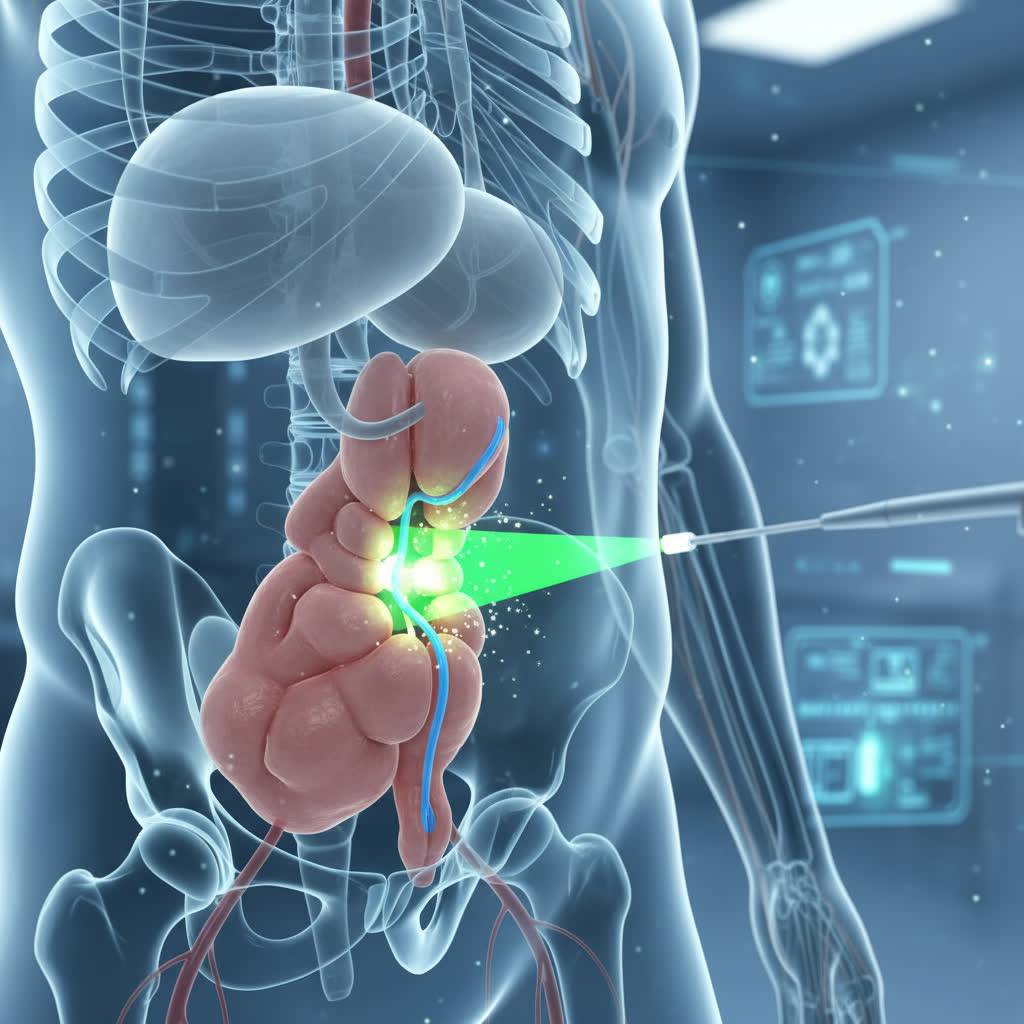
Interventional radiology for an enlarged prostate is an image-guided treatment used to relieve urinary symptoms caused by benign prostate enlargement. The procedure is generally performed through a very small arterial puncture in the wrist or groin, without making a traditional surgical incision or removing prostate tissue through the urinary tract.
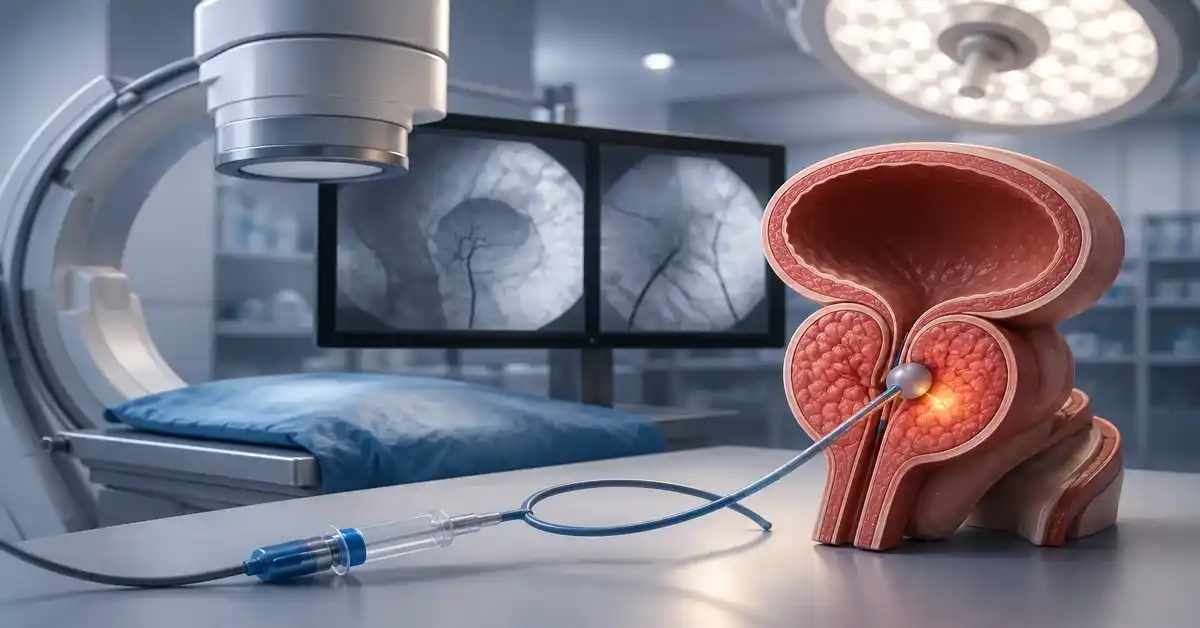
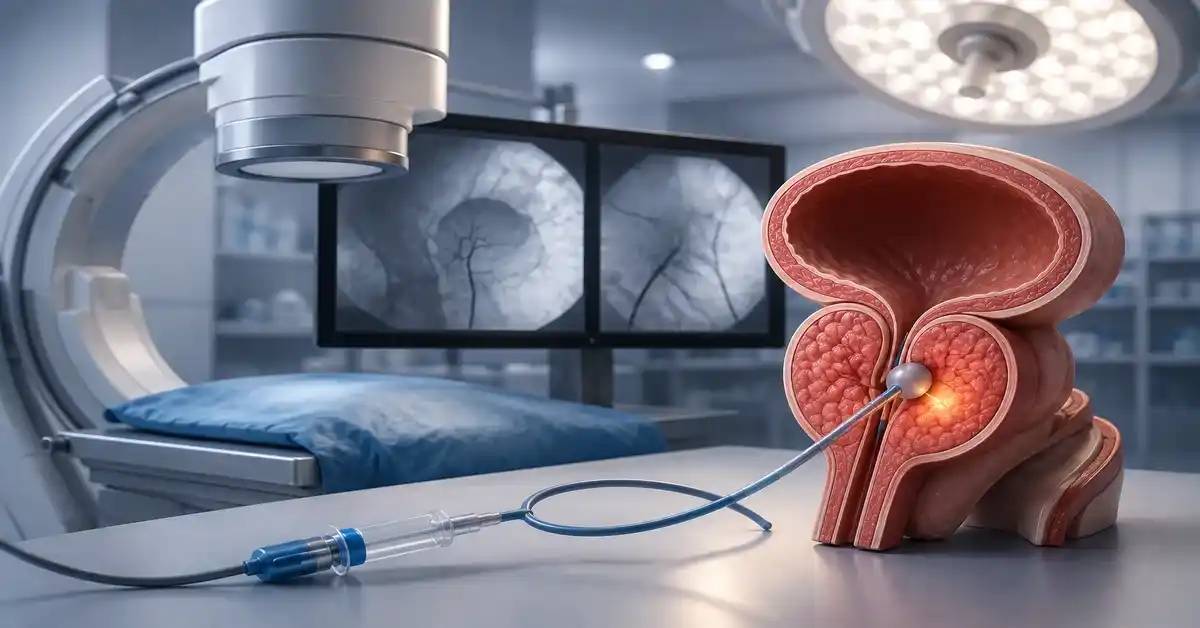
Using real-time X-ray imaging, an interventional radiologist advances a fine catheter through the pelvic arteries until it reaches the vessels supplying the prostate. Tiny medical particles are then delivered to reduce blood flow to the enlarged areas.
As the treated prostate tissue gradually shrinks, pressure around the urethra may decrease and urinary symptoms may improve. Prostate artery embolization is usually performed under local anesthesia and may be completed as a day-case procedure in appropriately selected patients.
Definition of Prostate Artery Embolization
Prostate artery embolization is a minimally invasive prostate treatment in which selected arteries supplying the enlarged gland are blocked using microscopic particles. The goal is not to remove the prostate but to reduce its blood supply so that the targeted tissue gradually becomes smaller.
During the prostate embolization procedure, the physician inserts a catheter into an artery and uses detailed imaging to navigate through the pelvic circulation. A smaller microcatheter is then positioned within the prostatic arteries before the particles are delivered.
This advanced prostate treatment requires careful assessment because urinary symptoms may also result from bladder dysfunction, urethral narrowing, infection, stones, neurological disorders, or prostate cancer. Appropriate testing must therefore confirm that benign prostate enlargement is the main cause of the patient’s symptoms.
Difference Between Prostate Embolization and Surgery
The main difference between prostate embolization and surgery is how each treatment reduces urinary obstruction. Surgical procedures usually remove, cut, vaporize, or enucleate obstructing prostate tissue. Prostate artery embolization leaves the gland in place and causes it to shrink by reducing its arterial blood supply.
Important differences may include:
- Embolization is generally performed under local anesthesia.
- No tissue is removed through the urethra.
- Blood loss and hospital stay may be lower.
- Recovery may be faster after embolization.
- Improvement usually develops gradually.
- Surgery may produce stronger improvements in urinary flow.
- Additional treatment may be more likely after embolization.
Prostate embolization vs surgery should therefore be discussed according to prostate size, symptom severity, bladder function, medical risks, sexual priorities, and the patient’s preference for recovery versus long-term durability.
How the Prostate Artery Embolization Procedure Works
The prostate artery embolization procedure begins with a detailed evaluation by urology and interventional radiology specialists. This assessment may include symptom scoring, urine and blood testing, prostate imaging, measurement of residual urine, evaluation of kidney function, and tests to exclude prostate cancer when clinically indicated.
Imaging may also be used to study the pelvic arteries before treatment. This is important because prostatic arteries are small and may arise from different vascular branches in different patients.
Once the patient is confirmed as a suitable candidate, the procedure is performed in an angiography suite. The physician uses X-ray guidance to reach the prostatic arteries and block the selected vessels. Cooperation between the urologist and interventional radiologist is important for diagnosis, selection, treatment planning, and follow-up.
Read about: Prostate Enlargement Treatments: Medication or Surgery
Steps of Minimally Invasive Prostate Treatment
The steps of minimally invasive prostate treatment may include:
- Reviewing urinary symptoms and medical history.
- Checking medications, especially blood thinners.
- Testing urine, blood, and kidney function.
- Evaluating prostate size and bladder emptying.
- Excluding infection or suspected malignancy.
- Mapping pelvic and prostatic arteries.
- Applying local anesthesia to the wrist or groin.
- Inserting and guiding a catheter under X-ray imaging.
- Positioning a microcatheter within the prostatic arteries.
- Delivering embolization particles to the targeted vessels.
- Removing the catheter and closing the access point.
- Monitoring the patient before discharge.
The procedure may take longer when the pelvic arteries are narrow, calcified, or anatomically complex. However, patients commonly experience a shorter hospital stay than with many surgical procedures.
Prostate Artery Embolization Success Rate
The prostate artery embolization success rate cannot be represented by one number that applies to every patient. Success may refer to completing the procedure technically, improving urinary symptoms, stopping long-term catheter dependence, reducing prostate volume, or avoiding further treatment.
Better results are generally associated with appropriate patient selection, confirmation that the symptoms are caused by prostate-related obstruction, and successful treatment of the relevant arterial supply.
Clinical evidence shows that many appropriately selected patients achieve meaningful and lasting symptom improvement. However, compared with transurethral prostate surgery, embolization may provide less improvement in maximum urinary flow and residual urine, and some patients may require another treatment later. The meaning of success should therefore be defined individually before treatment.
Benefits of Prostate Artery Embolization
The benefits of prostate artery embolization are mainly related to its minimally invasive nature. It does not require a large incision or direct surgical removal of prostate tissue, and it is usually performed under local anesthesia through an arterial access point.
Potential benefits include:
- Limited blood loss.
- Shorter hospitalization.
- Reduced need for general anesthesia.
- Faster return to light daily activities.
- A lower risk of some ejaculation-related complications.
- Suitability for selected patients with large prostates.
- A possible option for patients with significant medical conditions.
- Treatment through the wrist or groin.
These advantages can make PAE attractive to patients who prioritize a less invasive recovery. However, the benefits of prostate artery embolization must be balanced against gradual improvement and the possibility that another intervention may be needed in the future.
Read about: Latest Non-Surgical Treatments for Enlarged Prostate
Enlarged Prostate Treatment Without Surgery
Prostate artery embolization is commonly described as enlarged prostate treatment without surgery because it does not involve traditional surgical cutting or tissue removal through the urethra. It is more accurately classified as a minimally invasive, image-guided procedure.
The treatment still involves entering an artery, administering contrast material, using medical embolization particles, and exposing the patient to controlled X-ray imaging. It must therefore be performed in a specialized medical environment by an appropriately trained interventional radiologist.
Non-surgical treatment for an enlarged prostate may be particularly appealing to patients who wish to reduce hospitalization, bleeding, anesthesia exposure, or disruption to daily life. It is not suitable for every patient, especially when the symptoms arise from severe bladder weakness, urethral disease, stones, or another condition requiring direct treatment.
Latest Therapy for Enlarged Prostate
Prostate artery embolization is one of several modern enlarged prostate treatment options. Other advanced approaches may include water-vapor therapy, waterjet ablation, laser procedures, mechanical implants, and different forms of endoscopic prostate surgery.
Describing PAE as the latest treatment for an enlarged prostate does not mean it is automatically the best or newest option for every patient. The appropriate therapy depends on prostate size, anatomy, urinary obstruction, bladder function, general health, medication use, and the importance of preserving ejaculation.
In June 2026, the Society of Interventional Radiology published new practice guidance supporting standardized assessment, technique, and follow-up for PAE. Updated guidance also reflects stronger recognition of the treatment for selected patients, while preserving the need for individualized decision-making.
Risks of Prostate Artery Embolization
Although PAE is less invasive than many surgical procedures, the risks of prostate artery embolization should still be explained clearly. Most early symptoms are temporary and result from the inflammatory response produced when the prostate’s blood supply is reduced.
Possible risks include pelvic discomfort, urinary burning, frequent urination, fatigue, nausea, temporary urinary retention, and small amounts of blood in the urine or semen.
Less common complications may include urinary infection, arterial injury, contrast allergy, deterioration in kidney function, or unintended embolization of nearby tissues. The prostate shares vascular connections with areas such as the bladder, rectum, and penis, which makes accurate imaging and specialist experience essential for reducing complications.
Read about: Benign Prostate Enlargement Laser Treatment: Safe Results
Possible Prostate Artery Embolization Side Effects
Possible prostate artery embolization side effects may include:
- Pelvic pain or pressure.
- Burning during urination.
- More frequent or urgent urination.
- Temporary difficulty passing urine.
- Blood in the urine or semen.
- Mild fever, fatigue, or nausea.
- Bruising at the arterial access site.
- Temporary catheter use.
- Urinary tract infection.
- Lack of sufficient symptom improvement.
Patients should seek urgent medical advice if they develop high fever, inability to urinate, severe or worsening pain, persistent bleeding, unusual skin changes, or significant swelling at the access site.
Some discomfort may be expected during early recovery after prostate artery embolization, but symptoms should generally improve rather than become progressively worse.
How to Reduce Risks and Improve the Success Rate
Improving the prostate artery embolization success rate begins with confirming that the patient’s urinary symptoms are primarily caused by benign prostate enlargement. Infection, prostate cancer, urethral narrowing, bladder stones, and severe bladder muscle weakness should be considered before treatment.
Risk-reduction measures include:
- Joint assessment by urology and interventional radiology.
- Selecting an experienced PAE center.
- Detailed arterial imaging and planning.
- Treating urinary infection before embolization.
- Checking kidney function and contrast allergy.
- Reviewing blood-thinning medications.
- Managing diabetes and blood pressure.
- Following fasting and medication instructions.
- Taking prescribed medicines after treatment.
- Reporting fever or urinary retention promptly.
Modern imaging and careful catheter positioning can reduce the risk of non-target embolization, but technology must be combined with specialist training and experience.
Cost of Prostate Artery Embolization
The cost of prostate artery embolization varies between countries, hospitals, and individual treatment plans. A reliable estimate should only be prepared after reviewing the patient’s reports, required imaging, general health, and the complexity of the vascular anatomy.
The overall cost may include the specialist consultation, laboratory tests, prostate imaging, arterial mapping, angiography facilities, catheters, embolization particles, medication, monitoring, hospital services, and follow-up.
Cost should not be evaluated only according to the procedure day. Patients should also consider hospitalization, anesthesia, recovery time, travel arrangements, follow-up requirements, and the possibility of needing another intervention in the future.
For this reason, cost comparisons should focus on what is included in the complete medical pathway rather than on a single advertised amount.
Read about: Benign Prostate Enlargement: Latest Non-Surgical Treatments
Factors Affecting the Cost of Prostate Artery Embolization
Factors that may affect the cost of prostate artery embolization include:
- The country and city of treatment.
- Hospital and angiography-suite facilities.
- The interventional radiologist’s experience.
- The number and type of preoperative tests.
- CT, MRI, ultrasound, or arterial mapping requirements.
- The catheters and embolization materials used.
- The complexity of the pelvic arteries.
- Whether both sides can be treated successfully.
- The need for urinary catheterization.
- Length of observation or hospital stay.
- Additional medical conditions.
- Post-procedure medication and follow-up.
A complete quotation should clearly state whether consultation, testing, the prostate embolization procedure, medical materials, hospital care, and follow-up are included. This makes comparison between treatment centers more transparent.
Comparison of Embolization Cost vs Surgery
When comparing the cost of prostate artery embolization with surgery, embolization may involve fewer expenses related to general anesthesia, longer hospitalization, catheter duration, and time away from work. However, it requires advanced angiography equipment, microcatheters, specialist materials, and an experienced interventional team.
Surgical costs also differ according to the selected operation. Transurethral resection, laser treatment, waterjet procedures, and prostate enucleation have different equipment, anesthesia, and hospital requirements.
Prostate embolization vs surgery should therefore be compared after determining which treatment is medically appropriate. The lower-cost option is not necessarily the safest or most durable, while a higher initial cost does not guarantee a better result. Recovery, expected effectiveness, sexual function, and the risk of repeat treatment should all be considered.
Enlarged Prostate Treatment for Older Men
Enlarged prostate treatment for older men may require additional planning because patients can have heart disease, diabetes, hypertension, kidney problems, or medications that affect bleeding. Some may also have a higher risk from general anesthesia or prolonged hospitalization.
PAE may be considered for selected older patients because it is commonly performed under local anesthesia, involves limited blood loss, and may allow discharge after a relatively short observation period.
However, age alone should not determine treatment. An older man may remain an excellent surgical candidate, while a younger patient may be unsuitable for embolization because of bladder dysfunction or unfavorable arterial anatomy.
The decision should consider the patient’s symptoms, prostate size, bladder performance, frailty, medications, goals, and ability to participate in follow-up.

Why Is Non-Surgical Treatment for an Enlarged Prostate Safer?
Non-surgical treatment for an enlarged prostate may be safer for selected older or medically complex patients because it commonly avoids general anesthesia, major incisions, and direct resection of prostate tissue.
It may be considered for:
- Older men with multiple health conditions.
- Patients with an increased surgical risk.
- Selected men with very large prostates.
- Patients who may have difficulty stopping blood thinners.
- Men with prostate-related bleeding.
- Patients using long-term urinary catheters.
- Men concerned about sexual or ejaculation-related effects.
This does not mean PAE is risk-free or universally safer. Kidney function, vascular health, bladder performance, medication use, and the possibility of non-target embolization must still be assessed before recommending treatment.
Patient Experiences with Prostate Embolization
Patient experiences with prostate embolization vary because recovery and symptom improvement depend on prostate size, bladder health, symptom severity, arterial anatomy, and the duration of obstruction. Individual stories should not be used to predict another patient’s outcome.
In general, urinary improvement is usually gradual rather than immediate. Some patients may experience temporary burning, urgency, pelvic discomfort, or more frequent urination before symptoms begin to improve over the following weeks.
Older men who have used a urinary catheter for a long period or have significant bladder weakness may have a less predictable recovery. PAE can reduce prostate volume without necessarily restoring normal bladder contraction if long-standing obstruction has damaged bladder function.
Medical evaluation and follow-up are therefore more reliable than personal testimonials when estimating likely outcomes.
Prostate Embolization vs Surgery
Prostate embolization vs surgery involves balancing invasiveness, recovery, urinary improvement, sexual effects, and long-term durability. Surgery removes or destroys obstructing tissue directly, while embolization gradually shrinks the prostate by reducing its arterial blood supply.
PAE may offer less bleeding, shorter hospitalization, and a lower risk of certain ejaculation-related problems. Surgery may provide faster and more substantial improvements in urinary flow, especially in patients with severe obstruction.
Evidence reviewed by European guidelines indicates that PAE can improve symptoms in selected patients but may be less effective than transurethral resection in improving flow rate and other objective urinary measurements. Repeat treatment may also be more common after embolization.
Read about: Latest Prostate Cancer Treatment Using Interventional Radiology
Advantages of Minimally Invasive Prostate Treatment
Advantages of minimally invasive prostate treatment may include:
- Local rather than general anesthesia.
- A very small arterial access point.
- No direct tissue removal through the urethra.
- Limited blood loss.
- Shorter hospitalization.
- Reduced catheter duration in many patients.
- Faster return to light activity.
- Lower likelihood of some ejaculation-related effects.
- Potential suitability for selected large prostates.
These benefits may be valuable for patients who prioritize recovery, sexual function, or avoidance of conventional surgery.
However, minimally invasive prostate treatment may produce slower improvement, weaker objective urinary-flow results, or a greater probability of requiring additional treatment. The patient should accept these trade-offs before selecting PAE.
Limitations of Traditional Prostate Surgery
Traditional and endoscopic prostate surgery can involve anesthesia, bleeding, urinary catheterization, hospital observation, temporary urinary burning, and a longer interruption of normal activities. Some procedures may also cause retrograde ejaculation or other sexual changes.
These limitations do not mean surgery is an inferior option. Surgical and laser procedures may offer more direct removal of obstruction, faster urinary improvement, and greater durability in appropriately selected patients.
Surgery may be preferable when the patient has severe obstruction, large bladder stones, recurrent urinary complications, significant residual urine, or another condition requiring direct treatment.
A balanced comparison should therefore explain both the limitations and advantages of each option instead of presenting non-surgical treatment as universally better.
Choosing the Best Doctor for Prostate Artery Embolization
Choosing the best doctor for prostate artery embolization should be based on specialist training, procedural experience, case selection, imaging resources, and the quality of medical follow-up rather than promotional claims alone.
The interventional radiologist should work closely with a urologist because urinary symptoms require a complete assessment. The team must determine whether the prostate is truly causing the problem and whether embolization is more appropriate than medication, surgery, or another minimally invasive option.
The treatment center should also have a clear protocol for kidney-function assessment, contrast allergy, blood-thinning medication, infection prevention, urinary retention, pain management, and long-term follow-up.
A technically completed procedure is not the only measure of quality; symptom improvement, complication management, and honest counseling are equally important.
Read about: Prostate Cancer Treatment with Interventional Radiology: Latest Results
Criteria for Selecting the Right Specialist
Important criteria for selecting the best doctor for prostate artery embolization include:
- Accredited training in interventional radiology.
- Regular experience performing PAE.
- Familiarity with radial and femoral access.
- Experience managing complex pelvic arteries.
- Access to advanced angiography and imaging.
- Cooperation with an experienced urologist.
- Careful patient-selection protocols.
- Strategies to prevent non-target embolization.
- Clear explanation of alternatives and limitations.
- Structured follow-up after treatment.
- Honest discussion of repeat-treatment risk.
- Hospital support for managing complications.
Patients should also ask how the physician measures outcomes and what happens if only one prostatic artery can be treated or the symptoms do not improve sufficiently.
Importance of Medical Expertise for Successful Outcomes
Medical expertise strongly affects successful outcomes because prostatic arteries are small, variable, and sometimes difficult to identify. They may also communicate with arteries supplying the bladder, rectum, or penis.
The interventional radiologist must recognize these vascular connections, advance the microcatheter safely, select the correct vessels, and prevent embolization particles from reaching non-target tissues.
Experience can also help reduce unnecessary radiation exposure, contrast use, procedure time, and the likelihood of incomplete treatment.
Current professional guidance emphasizes standardized imaging, technique, and longitudinal follow-up. The prostate artery embolization success rate should therefore be considered in relation to physician experience, patient selection, and team quality—not merely the embolization materials or equipment used.
Future of Advanced Prostate Treatment
The future of advanced prostate treatment is moving toward personalized selection rather than one procedure being used for every patient. Treatment planning increasingly considers prostate shape, gland volume, arterial anatomy, bladder performance, symptom pattern, sexual priorities, and medical risk.
PAE is unlikely to replace all surgical enlarged prostate treatment options. Instead, it will remain one part of a broader treatment range that includes medication, water-vapor therapy, waterjet ablation, laser surgery, mechanical implants, and tissue-removing procedures.
Future improvements will depend on better patient-selection criteria, standardized embolization techniques, longer follow-up studies, and more accurate prediction of which patients are likely to need repeat treatment.
Collaboration between urology and interventional radiology will remain central to choosing the right advanced prostate treatment for each individual.
Read about: Prostate Treatment: Turkey vs USA
Innovations in Enlarged Prostate Treatment Options
Recent innovations in enlarged prostate treatment options include improved microcatheters, more detailed arterial mapping, refined embolization particles, radial-artery access, and better imaging inside the angiography suite.
Current areas of development include:
- More accurate pre-procedure arterial mapping.
- Improved recognition of non-target vascular connections.
- Standardization of embolization particle selection.
- Reduction of contrast and radiation exposure.
- More consistent technical protocols.
- Better assessment of bladder function.
- Longer monitoring of repeat-treatment rates.
- Improved coordination between medical specialties.
- More precise measurement of urinary and quality-of-life outcomes.
These advances may improve the consistency of the prostate embolization procedure, but they do not eliminate the importance of individual assessment and physician experience.
Role of Technology in Improving Prostate Embolization
Technology helps physicians identify prostatic arteries and distinguish them from nearby branches. Digital subtraction angiography and advanced three-dimensional imaging may improve navigation, catheter positioning, and recognition of vessels that should not receive embolization particles.
Technology may support:
- More accurate targeting of prostatic arteries.
- Reduced risk of non-target embolization.
- Better planning of imaging angles.
- Confirmation of catheter position.
- Assessment of blood-flow reduction.
- Documentation for follow-up.
- Comparison of prostate size before and after treatment.
- Reduced repetition of unnecessary imaging.
Despite these improvements, successful prostate embolization still depends on the physician’s ability to interpret complex anatomy and make safe decisions during the procedure. Advanced imaging is an important tool, but it cannot replace specialist training or experience.
Read about: Laser vs Interventional: Turkey vs Germany
Conclusion
Interventional radiology for an enlarged prostate provides a minimally invasive option for selected patients with moderate or severe urinary symptoms who wish to avoid conventional surgery or reduce recovery time. Prostate artery embolization works by blocking selected arteries so that enlarged prostate tissue gradually shrinks and places less pressure on the urethra.
Potential benefits include local anesthesia, limited bleeding, short hospitalization, faster recovery, and preservation of sexual function for many patients. However, improvement may be less pronounced than with surgery, and some patients may require another intervention later. A combined urology and interventional-radiology assessment is therefore essential before treatment.
Frequently Asked Questions About Prostate Artery Embolization
Is prostate artery embolization suitable for every enlarged prostate?
No. It is recommended for selected patients after evaluating prostate size, symptoms, bladder function, arterial anatomy, and other possible causes of urinary obstruction.
When does improvement begin after prostate artery embolization?
Improvement usually develops gradually over the following weeks and may continue for several months as the treated prostate tissue becomes smaller.
Does PAE affect sexual function?
PAE generally has a lower risk of ejaculation-related side effects than some surgeries, but individual results depend on age, health, and pre-treatment sexual function.
Is prostate embolization better than surgery?
PAE offers a less invasive recovery, while surgery may provide stronger and more durable urinary-flow improvement. The better option depends on the individual case.
Can enlarged prostate symptoms return after embolization?
Yes. Some patients may experience recurrent or insufficient improvement and may later need repeat embolization, surgery, or another enlarged prostate treatment.