





Prostate cancer represents a significant health challenge for men worldwide, and with continuous scientific advancement, treatment methods are evolving to become more precise and less invasive. At the forefront of this evolution, prostate cancer treatment with interventional radiology stands out as one of the most promising options that has changed the paradigm of managing this disease. Away from traditional surgery and its associated challenges, interventional radiology offers an innovative approach that targets tumors directly with minimal impact on surrounding healthy tissue, opening new horizons for patients towards recovery while preserving their quality of life.
In this article, we will highlight the latest medical technology in this field, exploring in detail how prostate cancer treatment without surgery is performed using advanced techniques such as catheterization and embolization. We will delve into the prostate cancer treatment results of these modern methods, discuss their advantages and costs, and provide a clear vision of what patients can expect. At Safemedigo, we are committed to providing the latest information on modern prostate cancer treatment, empowering you to understand the available options to make informed health decisions. Our goal is to be your partner in the journey to find a safe and effective treatment.
Prostate Cancer Treatment with Interventional Radiology
Interventional radiology prostate cancer
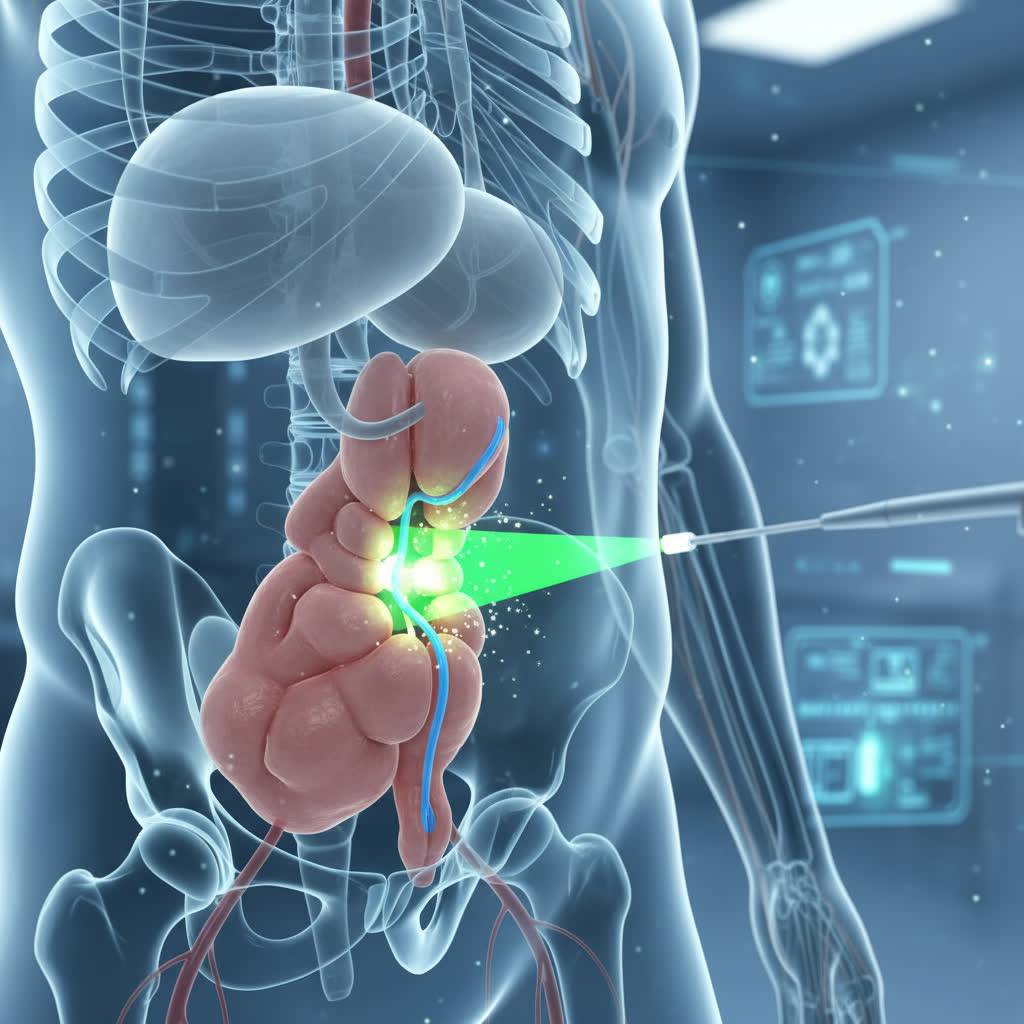
Interventional radiology for prostate cancer is a revolution in the treatment of prostate diseases, whether benign or malignant. This technique relies on using very precise instruments, such as catheters and needles, which are guided through blood vessels or directly through the skin to the prostate under the guidance of live imaging technologies (like X-rays or ultrasound). This targeted approach allows doctors to deliver treatment directly to the affected area, minimizing damage to adjacent organs like the bladder and rectum, and preserving vital functions.
catheter treatment for prostate cancer
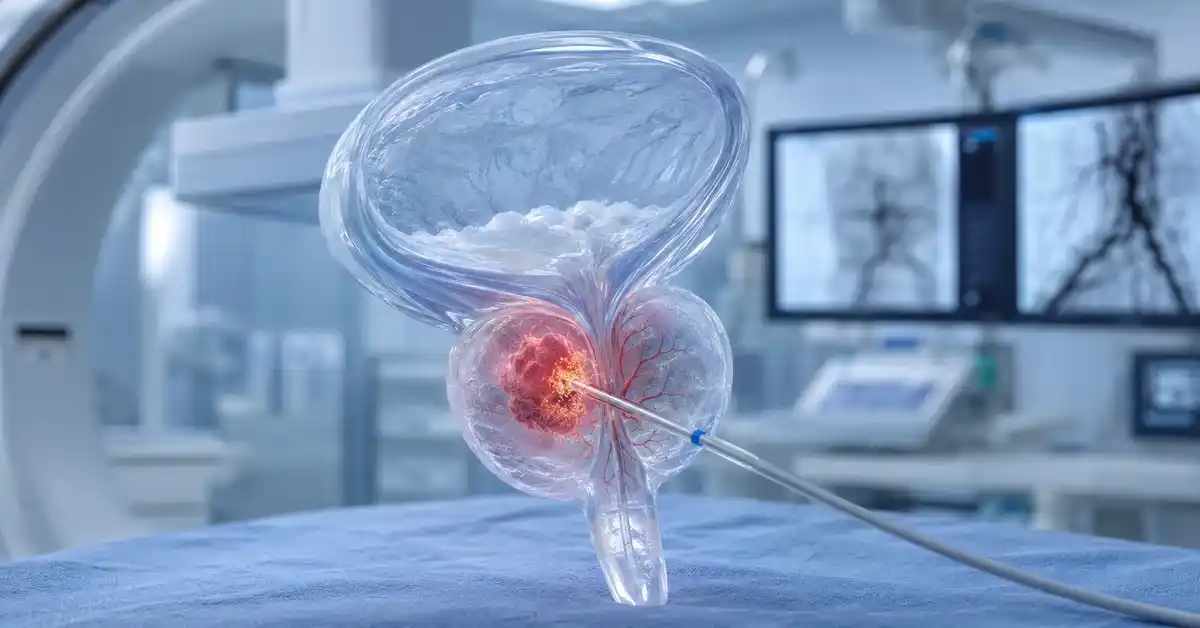
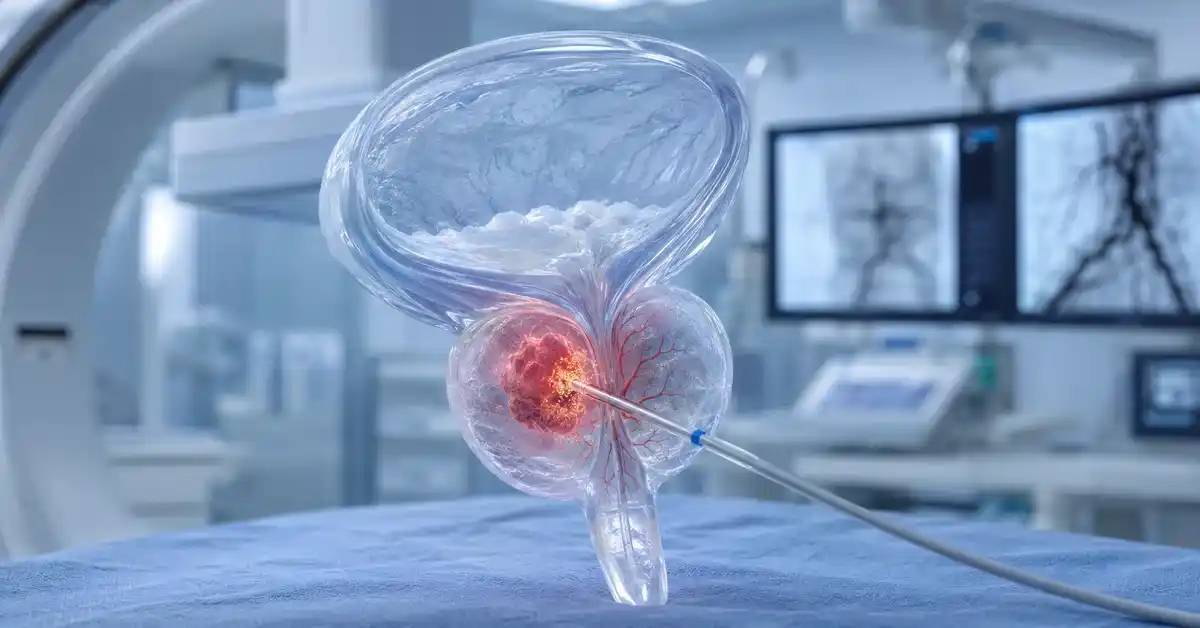
One of the main applications of interventional radiology is catheter treatment for prostate cancer. This procedure, known as Prostate Artery Embolization (PAE), is performed by inserting a microcatheter through an artery in the groin or wrist and guiding it to the small arteries that supply the prostate tumor. Once on target, microscopic particles are injected to cut off the blood supply to the tumor, causing it to shrink and gradually die. This procedure is particularly effective for treating advanced prostate cancer or as an option for patients unsuitable for surgery.
prostate cancer embolization
Prostate cancer embolization is a precise technique that selectively targets the blood vessels feeding the tumor. In addition to bland embolization, other techniques like Transarterial Chemoembolization (TACE) exist, where chemotherapy drugs are injected directly into the tumor along with the embolic agents. This ensures a high concentration of the drug at the tumor site while reducing systemic side effects. It represents a significant part of prostate cancer radiology treatment.
Latest Prostate Cancer Treatment
latest prostate cancer treatment
Treatment with interventional radiology represents the pinnacle of the latest prostate cancer treatment. These technologies are constantly evolving, with continuous improvements in embolization materials and imaging techniques to increase precision and effectiveness. The goal of this evolution is to provide personalized treatment tailored to the tumor's size, location, and the patient's overall health, ensuring the best possible outcomes.
modern prostate cancer treatment
As a key component of modern prostate cancer treatment, interventional radiology offers a sophisticated alternative to traditional methods. The integration of advanced imaging and minimally invasive techniques allows for a highly targeted attack on cancer cells. This approach is part of a broader shift in oncology towards personalized medicine, where treatments are customized to the individual patient for maximum efficacy and minimal side effects.
safe prostate cancer treatment
The search for a safe prostate cancer treatment is a top priority for patients and doctors alike. Interventional radiology provides a high level of safety as it spares the patient the risks of open surgery and general anesthesia. The recovery period is short, and most patients return home the same or next day. Furthermore, side effects related to sexual function and urinary incontinence are significantly lower compared to surgical resection.
Read about: Prostate Enlargement Treatments: Medication or Surgery
Prostate Cancer Treatment Without Surgery
prostate cancer treatment without surgery
The ability to offer prostate cancer treatment without surgery is the most prominent advantage of interventional radiology. Everything is done through a tiny skin puncture of just a few millimeters, which means no large scars and significantly less post-procedural pain. This option makes it accessible to patients who may not tolerate surgery due to advanced age or other chronic conditions.
Non-surgical prostate cancer therapy
Non-surgical prostate cancer therapy is a term that perfectly describes these techniques. By avoiding the scalpel, it preserves the patient's anatomy and reduces the physiological stress on the body. This approach aligns with the growing patient demand for less invasive but equally effective treatment options, improving the overall treatment experience and quality of life.
minimally invasive prostate cancer treatment
As a form of minimally invasive prostate cancer treatment, interventional radiology procedures are characterized by smaller incisions, less pain, lower risk of infection, and shorter hospital stays. Patients can resume their normal activities much faster than after conventional surgery. This efficiency is a crucial factor for both the patient's well-being and the healthcare system.

Prostate Cancer Treatment Results
prostate cancer treatment results
The prostate cancer treatment results using interventional radiology are highly promising. Recent studies indicate that these techniques can achieve effective tumor control, a significant decrease in Prostate-Specific Antigen (PSA) levels, and an improvement in urinary symptoms. The final results depend on the tumor stage at diagnosis and its extent. The prostate cancer embolization results, in particular, show a high rate of success in controlling localized disease.
prostate cancer embolization results
Specifically, prostate cancer embolization results demonstrate a significant reduction in tumor volume and blood supply. Clinical trials have shown that procedures like PAE can lead to long-term disease control in carefully selected patients. The follow-up imaging and PSA tests often confirm the treatment's success, providing patients with peace of mind and a positive outlook.
advanced prostate cancer treatment
Interventional radiology plays a vital role in advanced prostate cancer treatment. In cases where the cancer has spread to the bones or other organs (metastases), techniques such as radiofrequency or microwave ablation can be used to destroy these cancerous deposits and alleviate pain. These palliative treatments can significantly improve the patient's quality of life even in the advanced stages of the disease.
Read about: Latest Non-Surgical Treatments for Enlarged Prostate
Interventional Radiology for Prostate Tumors
Interventional radiology for tumors
The field of interventional radiology for tumors is broad and not limited to the prostate. The same principles and techniques are applied to treat tumors in the liver, kidneys, lungs, and bones. The expertise gained in treating various types of tumors positively reflects on the precision and effectiveness of procedures applied to prostate cancer, making it part of a comprehensive and integrated approach in interventional oncology.
prostate cancer radiology treatment
Prostate cancer radiology treatment encompasses a wide range of techniques. In addition to embolization, there are local ablation techniques that use energy (such as heat or extreme cold) to destroy tumor tissue directly. A special needle is inserted into the tumor under imaging guidance, and then energy is applied to destroy the cancer cells. These techniques are highly precise and are often used for small, localized tumors within the prostate.
prostate cancer interventional therapy
Prostate cancer interventional therapy is synonymous with personalized medicine. Each procedure is tailored to the patient's anatomy and tumor status. This customized approach, guided by advanced imaging, is the key to the success of these techniques and their ability to deliver superior results while preserving the patient's quality of life.
Prostate Cancer Embolization Techniques
prostate artery embolization cancer
The use of prostate artery embolization for cancer is a specific application of a procedure originally developed for benign prostatic hyperplasia (BPH). This technique has been adapted to target the blood supply of cancerous tumors within the prostate. By cutting off the nutrients and oxygen, the tumor is starved and cannot grow, often leading to its shrinkage and death. This is a prime example of a prostate cancer interventional therapy.
prostate cancer embolization
The general term prostate cancer embolization can refer to several methods. The most common is bland embolization, using only microscopic particles. Another is chemoembolization (TACE), which combines embolization with a targeted dose of chemotherapy. The choice of technique depends on the specific characteristics of the tumor and the patient's overall health profile.
catheter treatment for prostate cancer
As previously mentioned, catheter treatment for prostate cancer provides an effective alternative to surgery. It is a particularly attractive treatment option for patients who also suffer from BPH, as the procedure can address both conditions simultaneously by reducing the gland's size and improving urine flow, in addition to targeting the tumor. This dual approach is one of the key advantages of interventional radiology for the prostate.
Read about: Interventional Radiology for Enlarged Prostate Treatment
Prostate Cancer Treatment Cost
prostate cancer treatment cost
The prostate cancer treatment cost for interventional radiology is highly competitive when compared to robotic surgery or long-term traditional radiation therapy. The total cost depends on the type of procedure used, the materials required, and the length of the hospital stay (which is usually very short). Overall, this technology offers excellent value for money due to its effectiveness and rapid recovery period.
modern prostate cancer treatment
As part of modern prostate cancer treatment, the cost of interventional radiology is often more transparent. Hospitals can offer treatment packages that include all aspects of the procedure, from the initial consultation to post-treatment follow-up. This helps patients plan their finances better and avoid unexpected costs.
safe prostate cancer treatment
When evaluating the cost, one must consider the long-term value offered by a safe prostate cancer treatment. Avoiding the need for costly additional treatments or managing long-term side effects can save a lot of money and burden in the long run. Investing in a precise and effective treatment from the outset is a wise decision both medically and financially.
Read about: Benign Prostate Enlargement: Latest Non-Surgical Treatments
Conclusion
In conclusion, prostate cancer treatment with interventional radiology represents a paradigm shift in how this disease is confronted, offering new hope for patients to achieve recovery while maintaining their quality of life. Through techniques like embolization and local ablation, it is now possible to target tumors with pinpoint accuracy, avoiding the risks associated with traditional surgery. Understanding these modern options is your first step toward taking control of your health. At Safemedigo, we are dedicated to providing the latest and safest treatments. Are you ready to explore how interventional radiology can be the optimal solution for your condition? Contact the expert team at Safemedigo today via WhatsApp for a comprehensive consultation and to start your journey toward healing.
Frequently Asked Questions: Prostate Cancer Treatment with Interventional Radiology
Is prostate artery embolization painful?
The procedure is performed under local anesthesia and intravenous sedation, so the patient does not feel pain during the operation. They may feel slight pressure. After the procedure, there might be some pain that is easily controlled with prescribed medication.
How long does it take to recover from this procedure?
The recovery period is remarkably fast. Most patients can go home the same or the next day and resume light activities within a few days. It is advisable to avoid strenuous physical activity for a few weeks.
Does this treatment completely cure cancer?
The treatment aims to control or destroy the tumor. Its effectiveness depends on the cancer stage, size, and biological characteristics. In many cases, it can lead to long-term disease control and may require periodic follow-up or complementary treatments.
What is the success rate of prostate cancer treatment with interventional radiology?
Studies show high success rates in tumor control and reducing PSA levels. The rates vary depending on the technique used and the patient's condition, but the results are generally very promising and rival traditional treatments in many scenarios.
Am I a good candidate for this type of treatment?
This depends on a comprehensive evaluation by a multidisciplinary medical team. Generally, good candidates are those with a tumor confined to the prostate, or patients who are not suitable for surgery due to other health conditions. A thorough evaluation is key to determining the best treatment option.