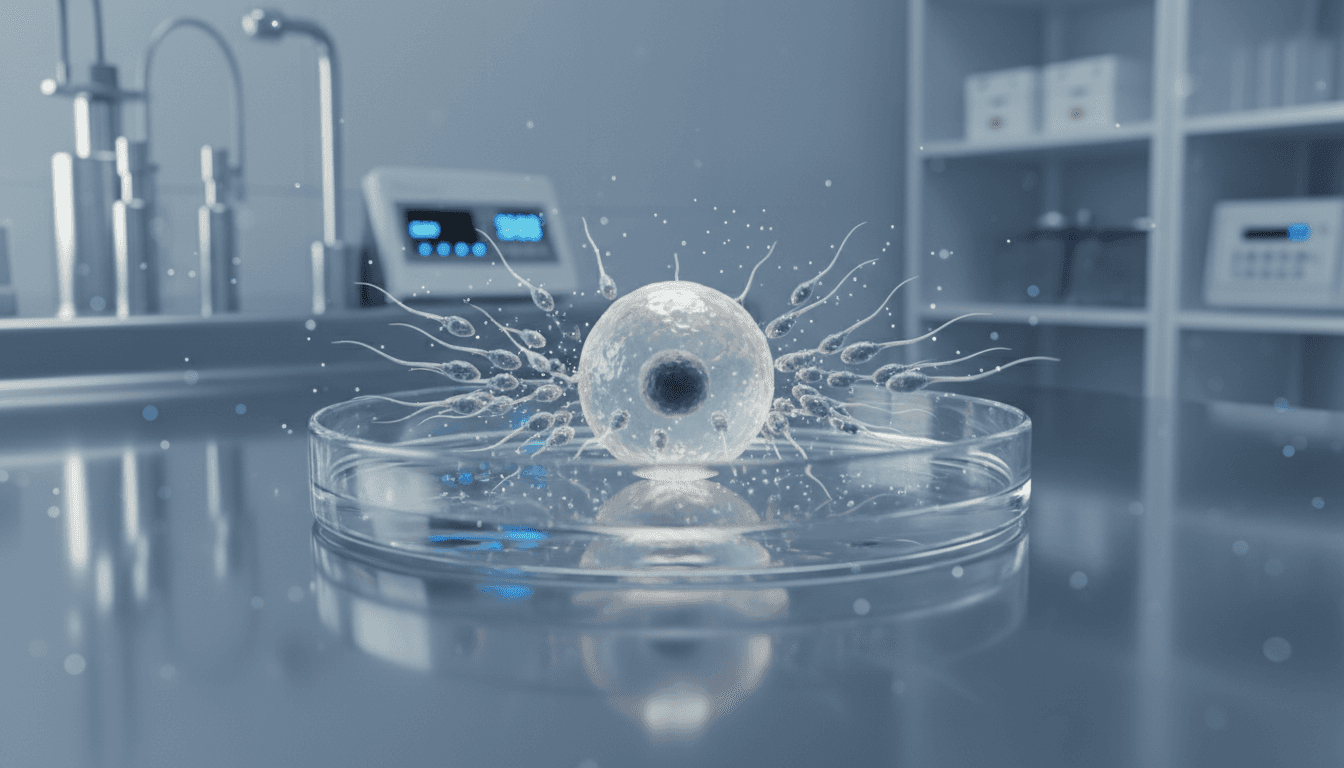






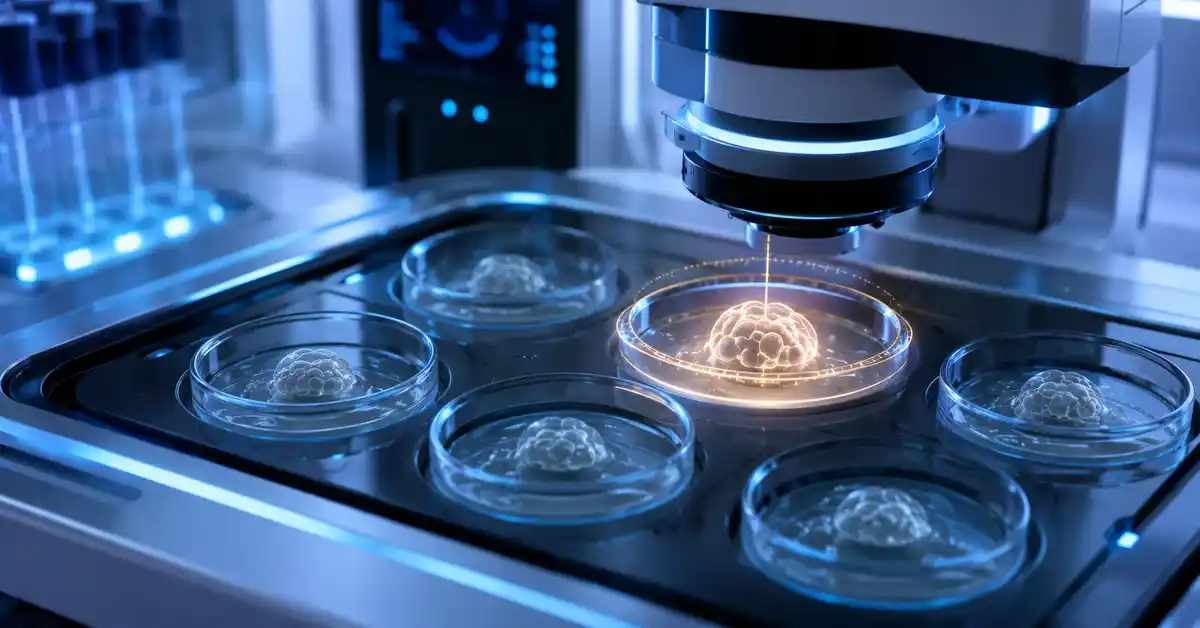
Embryo incubators are essential devices in IVF and ICSI laboratories. They provide the controlled environment required by fertilized eggs and developing embryos during the first days of development, including stable temperature, gas concentrations, culture-medium pH, and protection from external fluctuations.
Time-lapse embryo incubators, including systems commonly known as EmbryoScope, contain built-in cameras that capture repeated images while embryos remain inside the incubator. Embryologists can therefore review fertilization, cell divisions, compaction, and blastocyst formation without repeatedly removing embryos for observation.
Although time-lapse technology provides valuable developmental information, it cannot guarantee pregnancy or confirm that an embryo is chromosomally normal from images alone. Current evidence has not demonstrated an improvement in the chance of having a baby for most IVF patients compared with standard incubation and embryo assessment.
Safemedigo helps patients understand IVF laboratory technologies, compare their potential benefits and limitations, and choose a fertility center based on laboratory quality and embryology expertise rather than equipment names alone.
What Are Embryo Incubators?
An embryo incubator is a specialized laboratory device that maintains embryos in controlled conditions from fertilization until embryo transfer, freezing, or biopsy.
Embryos require regulated temperature, oxygen, carbon dioxide, nutrient balance, and culture-medium pH. These conditions must remain stable throughout the culture period.
Incubator quality also depends on recovery after opening, accurate monitoring, alarms, maintenance, calibration, and emergency procedures. Laboratory quality should therefore be evaluated as a complete system rather than according to one device.
Conventional Incubators vs Time-Lapse Incubators
In conventional embryo culture, an embryologist briefly removes the culture dish at scheduled times and examines the embryos under a microscope.
The assessment may include cell number, symmetry, fragmentation, and developmental stage.
A time-lapse embryo incubator has an internal camera that captures images of each embryo at regular intervals. These images create a continuous record of development rather than a series of observations separated by several hours.
Conventional incubation is not automatically inferior. Experienced laboratories can achieve strong outcomes using standard incubators when environmental control and embryo-handling procedures are carefully managed.
Creating the Right Environment for Embryo Development
Embryo incubators aim to minimize changes in temperature, gas balance, and culture-medium pH.
Some laboratories use small-chamber or individually compartmentalized incubators so that opening one section has less effect on embryos stored elsewhere.
Good laboratory practice also requires documented calibration, alarm monitoring, equipment maintenance, contingency plans, and reliable systems for confirming the identity of every sample.
How Do Time-Lapse Embryo Incubators Work?
Embryos are placed in specially designed culture dishes, with each embryo located in an individual microwell.
A built-in camera captures images at regular intervals over several days and combines them into a time-lapse developmental sequence.
The embryologist can review pronuclear formation, early cell divisions, compaction, and blastocyst development. Short or unusual developmental events that might be missed during occasional observations may also become visible.
Read about: Differences Between IVF and ICSI Fertilization Techniques
Continuous Imaging Without Removing Embryos
A major advantage of time-lapse incubation is the ability to observe embryos without repeatedly removing them from the controlled culture environment.
This may reduce exposure to changes in temperature, gas levels, and pH during assessment.
The system also produces a permanent visual record that can be reviewed by multiple embryologists for embryo assessment, team training, and laboratory-quality review.
Recording Morphokinetic Development
Morphokinetics combines embryo appearance with the timing of developmental events.
It may include the timing of pronuclear formation, division into two, four, and eight cells, compaction, and blastocyst expansion.
Current professional recommendations support structured morphological assessment of oocytes and embryos. Time-lapse data can add dynamic information, particularly when embryos have similar appearances in static images.
The Role of Embryo Incubators in Selecting the Best Embryo
No visual assessment can guarantee that a particular embryo will implant and result in a healthy birth.
Embryo selection is a probability-based process that considers morphology, developmental timing, maternal age, treatment history, embryo number, and genetic information when available.
Time-lapse incubators add detailed developmental information to conventional grading, but they do not remove uncertainty or replace embryologist judgment.
Read about: Step-by-Step Guide to the In Vitro Fertilization (IVF) Process
Evaluating Embryo Appearance and Cleavage Timing
Embryologists assess cell number, symmetry, fragmentation, pronuclear appearance, blastocyst expansion, inner cell mass, and trophectoderm quality.
Time-lapse technology adds the exact timing and sequence of cell divisions.
Two embryos that look similar in a single image may have followed different developmental patterns. This information may influence their relative ranking but cannot confirm implantation.
Embryologists, Algorithms, and Artificial Intelligence
The embryologist remains responsible for interpreting the images and combining them with laboratory and clinical information.
Some systems use algorithms to assign embryo scores based on morphology and developmental timing.
Artificial intelligence may help standardize assessment and reduce differences between observers. However, ASRM considers its implementation in IVF laboratories to be at an early stage and recommends caution, external validation, and appropriately designed clinical studies.
Benefits of Modern Embryo Incubators
The potential benefits of modern embryo incubators include environmental stability, reduced embryo handling, continuous documentation, and additional information for embryo ranking.
The value of the technology depends on how it is used. An advanced incubator cannot compensate for poor laboratory procedures, limited training, inadequate maintenance, or weak quality-control systems.
Maintaining Stable Culture Conditions
Small-chamber and time-lapse incubators may reduce fluctuations caused by frequently opening a large incubator or removing embryo dishes for examination.
This may be useful when embryos are cultured until day five or six or when the laboratory needs to monitor blastocyst development before an embryo biopsy.
Read about: IVF Procedure Explained: From Fertilization to Embryo Transfer
Documenting the Development of Each Embryo
The system creates a visual record of fertilization, cleavage, unusual developmental events, and blastocyst formation.
This record may support peer review, staff training, quality control, and more consistent communication between embryologists.
The images should be used within a defined embryo-assessment protocol rather than solely as a promotional feature.
Do Embryo Incubators Improve Pregnancy and Live-Birth Rates?
Current evidence has not shown that time-lapse incubation improves the chance of having a baby for most IVF patients compared with conventional incubation and standard embryo assessment.
The UK Human Fertilisation and Embryology Authority currently reports no demonstrated improvement in the chance of having a baby for most patients using manual or automated time-lapse embryo assessment.
This does not mean that the technology has no laboratory value. Its main benefits may relate to monitoring, documentation, and environmental stability rather than a guaranteed increase in success rates.

What Current Evidence Shows
Time-lapse systems can provide effective incubation and detailed developmental information.
However, they cannot correct every factor affecting implantation, including chromosomal abnormalities, uterine conditions, hormonal factors, embryo-transfer technique, or other clinical issues.
The technology should therefore be presented as a supportive laboratory tool rather than a guaranteed method for increasing pregnancy or live-birth rates.
Why the Technology May Still Be Useful
Even without proven live-birth improvement for most patients, time-lapse systems may reduce embryo handling, support laboratory organization, document development, and help time certain procedures.
They may also provide additional information when several embryos receive similar conventional grades.
Time-Lapse Incubators vs PGT-A
Time-lapse systems assess embryo appearance and developmental timing through images.
Preimplantation genetic testing for aneuploidy involves removing cells from a blastocyst and analyzing chromosome number in a specialized genetics laboratory.
A time-lapse incubator cannot confirm chromosomal normality and should not be presented as a direct alternative to genetic testing.
Visual Assessment vs Chromosome Analysis
An embryo with excellent morphology may still have a chromosome abnormality, while an embryo with a lower morphological grade may have the expected chromosome number.
AI models that attempt to predict chromosome status from images remain predictive rather than diagnostic. They require further validation before they can be considered a substitute for genetic analysis.
Read about: Reasons for IVF Failure and Proven Ways to Improve Success Rates
Can Both Technologies Be Used Together?
Time-lapse incubation may be used during a PGT-A cycle to monitor blastocyst development and help determine biopsy timing.
After genetic results are available, morphology and developmental timing may help rank the embryos considered suitable for transfer.
Each technology provides a different type of information.
Who May Benefit From Time-Lapse Incubation?
Time-lapse systems can be used in many IVF cycles, but their additional value differs among patients.
Detailed developmental information may be useful when several embryos are available for ranking or when continuous documentation supports the laboratory plan.
When Several Embryos Are Available
When multiple embryos have similar static grades, time-lapse data may provide additional information about cleavage timing, sequence, and developmental regularity.
This ranking is relative to the embryos available in the same cycle. A higher ranking does not guarantee implantation or birth.
Does Every Patient Need It?
Not every patient needs to pay an additional fee for time-lapse incubation, especially when a laboratory achieves strong results using conventional culture.
Patients should ask whether the service is included in routine laboratory care, how its findings will change the treatment decision, and whether an additional fee applies.
Cost of Embryo Incubators and Time-Lapse Monitoring
The cost of time-lapse incubation varies according to the country, fertility center, system, and laboratory-pricing policy.
The service may be included in an IVF package or offered as an optional add-on. A higher cost should not be interpreted as a guarantee of obtaining a better embryo or achieving pregnancy.
Read about: IVF Procedure with Egg Freezing: Step-by-Step Explanation
Factors Affecting the Cost
Cost may depend on:
- The incubator and imaging system.
- Length of embryo culture.
- Number of embryos and culture wells.
- Manual or algorithm-assisted assessment.
- Artificial intelligence software.
- Laboratory infrastructure.
- Embryologist experience.
- Whether the service is included in the package.
- Embryo biopsy or genetic testing.
- Documentation and monitoring policies.
The quotation should clearly distinguish time-lapse monitoring from ICSI, embryo culture, biopsy, freezing, and storage services.
Is Time-Lapse Technology Worth the Cost?
It may be valuable when it provides meaningful developmental documentation, supports the ranking of several embryos, or is already integrated into standard laboratory care.
It should not be promoted as a guaranteed method for improving live-birth rates. Regulators advise patients to ask clinics for clear information about the evidence, expected benefit, and cost of fertility add-ons.
Choosing the Right IVF Laboratory
An advanced embryo incubator alone does not establish laboratory quality.
Outcomes also depend on air quality, equipment calibration, temperature and gas control, embryologist expertise, witnessing systems, maintenance, and emergency procedures.
Patients should also consider the center’s culture protocols, freezing program, quality-control system, and clinical experience.
Laboratory Quality Matters More Than the Device Name
A well-organized laboratory using conventional incubators may outperform a center with newer equipment but weaker training, maintenance, or quality systems.
The incubator should operate within written procedures, alarm monitoring, calibration schedules, contingency plans, and robust sample-identification protocols.
Questions to Ask the Fertility Center
Patients may ask:
- Which embryo incubator is used?
- How often are embryos removed for assessment?
- How are embryos graded and ranked?
- Does an algorithm influence the decision?
- Are all images reviewed by an embryologist?
- Is there an additional fee?
- What benefit is expected in this case?
- How is embryo identity protected?
- What happens if the incubator fails?
- Is time-lapse presented as an alternative to PGT-A?
Clear answers help distinguish evidence-based laboratory practice from exaggerated marketing.
The Future of Embryo Incubators and Embryo Selection
The future of embryo incubation is moving toward combining continuous imaging with artificial intelligence and clinical data.
Algorithms may help standardize assessment and analyze large image datasets, but they need validation in different laboratories and patient populations before broad clinical adoption.
Artificial Intelligence in Embryo Assessment
AI can analyze embryo-development images and compare patterns with previous outcomes.
Some models have shown promise in blastocyst ranking, but questions remain about transparency, bias, data ownership, regulation, and whether a model developed in one laboratory will perform equally well elsewhere.
Toward More Personalized Embryo Ranking
Future systems may combine maternal age, egg quality, time-lapse images, laboratory conditions, treatment history, and genetic results when available.
Embryo selection will nevertheless remain probability-based. Images and algorithms cannot guarantee implantation or live birth.
Read about: Embryo Freezing in IVF: Key Benefits and Opportunities for Couples
Conclusion
Time-lapse embryo incubators represent an important advance in continuous embryo observation. They can document fertilization and cleavage without repeatedly removing embryos from the controlled culture environment and may provide additional information for embryo ranking and laboratory-quality review.
However, these systems cannot confirm chromosomal normality or guarantee that the selected embryo will implant and lead to birth. Current evidence has not demonstrated improved live-birth chances for most IVF patients compared with conventional incubation and grading. They should therefore be viewed as supportive laboratory tools rather than replacements for embryology expertise, genetic testing, or individualized medical planning.
Frequently Asked Questions About Embryo Incubators
Does a time-lapse incubator automatically select the best embryo?
No. It provides images and developmental data, while final embryo ranking and transfer decisions remain with the embryology and medical teams.
Do modern embryo incubators increase IVF success?
Current evidence has not shown improved live-birth chances for most patients, although the systems support continuous monitoring and documentation.
Can an embryo incubator confirm normal chromosomes?
No. Time-lapse images cannot confirm chromosome status and do not replace PGT-A when genetic testing is medically indicated.
What is the difference between EmbryoScope and a conventional incubator?
EmbryoScope continuously photographs embryos inside the incubator, while conventional systems assess embryos at planned intervals under a microscope.
Is time-lapse incubation worth an additional fee?
It depends on the treatment plan, embryo number, and how the information will be used. It is not a guarantee of IVF success.