







Coronary artery disease and artery narrowing remain among the leading causes of death and disability worldwide. When fatty deposits accumulate on the inner walls of the arteries, blood flow to the heart muscle becomes restricted — a condition that can lead to chest pain, heart attacks, and life-threatening cardiac events. Fortunately, coronary angioplasty has transformed the management of blocked artery treatment, offering a minimally invasive heart surgery alternative that restores blood flow with remarkable precision and speed.
This comprehensive guide covers everything patients need to know about angioplasty for artery narrowing: from the step-by-step procedure and stent placement to recovery timelines, success rates, costs, and how angioplasty compares with other treatment options. Whether you are facing a scheduled procedure or seeking information after a diagnosis, understanding your options is the first step toward a healthier heart — supported by the expert cardiac team at Safemedigo.
Angioplasty for Artery Narrowing Overview
Angioplasty for artery narrowing represents one of the most significant advances in modern cardiology, enabling physicians to treat coronary artery disease without the need for open-heart surgery. Its combination of diagnostic precision and immediate therapeutic effect makes it the cornerstone of interventional cardiology today.
What is coronary angioplasty
Coronary angioplasty — also known as percutaneous coronary intervention (PCI) or balloon angioplasty treatment — is a minimally invasive cardiac catheterization procedure performed by an interventional cardiologist. A thin, flexible tube called a catheter is inserted through a blood vessel, typically in the wrist (radial artery) or groin (femoral artery), and guided to the narrowed or blocked coronary artery. Once positioned at the site of the blockage, the physician uses a small balloon to widen the artery and, in most cases, places a coronary stent to keep the vessel open. Cardiac catheterization angioplasty is one of the most commonly performed cardiac procedures globally, with millions of patients benefiting from it each year. Its minimally invasive nature, short recovery time, and high success rate make it the preferred treatment for many forms of coronary artery disease.
Read about: Genetic Heart Diseases: Can Early Intervention Prevent
How angioplasty opens blocked arteries
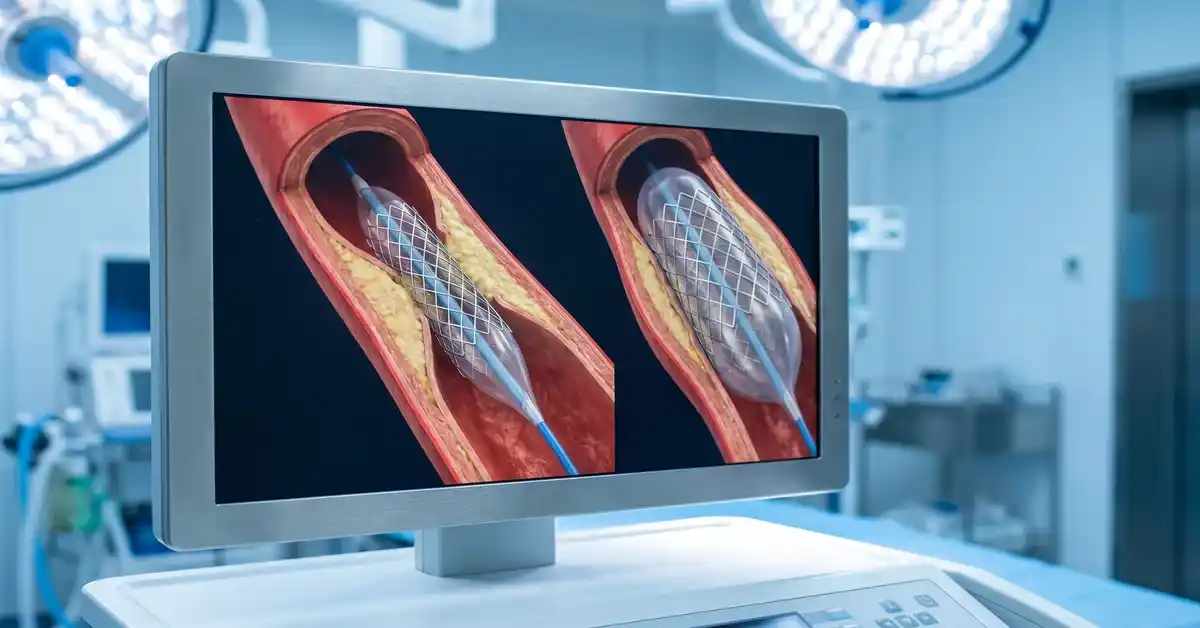
The mechanism of balloon angioplasty treatment is both elegant and highly effective. When the balloon catheter is positioned at the site of artery narrowing, it is inflated under controlled pressure, compressing the fatty plaque against the arterial wall and widening the vessel's inner diameter. This immediately improves blood flow to the heart muscle. In the vast majority of cases, a heart stent procedure follows the balloon inflation — a metallic mesh tube is deployed at the treated site to act as a permanent scaffold, preventing the artery from collapsing and reducing the risk of re-narrowing. The entire process is guided by real-time X-ray imaging (fluoroscopy), allowing the physician to visualize the coronary arteries in detail and confirm the success of the blocked artery treatment before concluding the procedure.
When angioplasty is recommended
Angioplasty for artery narrowing is recommended in a carefully selected range of clinical situations:
- Significant narrowing of one or more coronary arteries (typically greater than 70% of the vessel diameter).
- Stable angina (chest pain) that does not respond adequately to medical therapy.
- Acute myocardial infarction (heart attack), where rapid restoration of blood flow is critical to preserving heart muscle.
- Unstable angina or acute coronary syndrome requiring urgent intervention.
- Newly diagnosed coronary artery disease confirmed by diagnostic cardiac catheterization.
- Re-narrowing of a previously treated artery (restenosis).
- Patients who are not suitable candidates for bypass surgery due to their overall health status.
The decision to proceed with angioplasty is always made following a thorough clinical evaluation, review of imaging results, and a detailed discussion of the risks and benefits with the patient.
Read about: Symptoms of Coronary Artery Blockage and Treatment Options
Angioplasty Procedure Steps
Understanding the angioplasty procedure steps helps patients prepare effectively and set realistic expectations about what to expect before, during, and after the intervention.
Cardiac catheterization process
The cardiac catheterization angioplasty process begins with careful preparation. The access site — typically the wrist or groin — is shaved, cleaned, and numbed with a local anesthetic. A small introducer sheath is then inserted into the artery, providing a stable entry point for the catheter. The catheter is gently advanced through the blood vessels toward the coronary arteries under continuous X-ray guidance. Once positioned, a contrast dye is injected through the catheter, making the coronary arteries visible on the fluoroscopy screen. This step — known as coronary angiography — precisely identifies the location and severity of the artery narrowing. The entire cardiac catheterization process is performed with the patient awake but sedated, ensuring comfort throughout the procedure.
Balloon angioplasty technique
Following the diagnostic phase, the balloon angioplasty treatment begins. A thin guidewire is advanced through the catheter and carefully navigated across the narrowed segment of the coronary artery. A balloon catheter — with a small, deflated balloon at its tip — is then threaded over the guidewire and positioned precisely at the blockage site. The balloon is inflated for 30 to 60 seconds at a carefully controlled pressure, compressing the plaque and widening the artery. This process may be repeated several times to achieve optimal vessel opening. The physician monitors the result in real time using fluoroscopy, confirming that blood flow has been adequately restored before proceeding to stent placement.
Read about: Non-Surgical Artery Blockage Treatments: Latest Advances
Stent placement procedure
In the majority of angioplasty cases, the heart stent procedure follows balloon dilation. The stent — a small, expandable metallic mesh tube — is mounted on a balloon catheter and delivered to the treated site. When the balloon is inflated, the stent expands and locks into place against the arterial wall, acting as a permanent internal scaffold that keeps the vessel open. Two main types of stents are used in modern practice:
- Bare-metal stents (BMS): Made of stainless steel or cobalt-chromium alloy. Less expensive but carry a higher risk of restenosis compared to drug-eluting stents.
- Drug-eluting stents (DES): Coated with medications that are gradually released to prevent tissue growth inside the stent. Significantly reduce the risk of re-narrowing and are the preferred choice in most contemporary cases.
After stent placement in the heart, the balloon is deflated and removed, leaving the stent permanently in position. Final angiographic images confirm the success of the stent placement procedure before the catheter is withdrawn.

Angioplasty Cost and Factors
The cost of angioplasty varies considerably depending on several clinical and logistical factors. Understanding these variables helps patients plan their treatment realistically and make informed decisions about where and how to receive care.
Average angioplasty cost
The total angioplasty cost encompasses multiple components: the procedure itself, the stents used, physician and anesthesia fees, hospital stay, preparatory tests, and post-procedure follow-up. The type and number of stents placed significantly influence the overall cost, as drug-eluting stents are considerably more expensive than bare-metal alternatives. The complexity of the case — single-vessel versus multi-vessel disease — also plays a major role in determining the final cost. Patients considering treatment abroad should factor in travel, accommodation, and any required follow-up consultations when calculating the total investment.
Read about: Preventing Genetic Heart Diseases: Key Steps for Patients
Cost differences by country
Angioplasty cost varies dramatically between countries, making medical tourism an increasingly popular option for patients seeking high-quality cardiac care at more accessible prices. Countries such as Turkey, India, and Thailand offer angioplasty procedures at a fraction of the cost charged in Western Europe or the United States, without compromising on the quality of care, technology, or physician expertise. Turkey in particular has emerged as a leading destination for cardiac catheterization angioplasty, with internationally accredited hospitals equipped with state-of-the-art catheterization laboratories and experienced interventional cardiologists. Safemedigo provides expert guidance to help patients identify the best hospital for angioplasty that matches their clinical needs and budget.
Insurance coverage options
Health insurance coverage for angioplasty varies significantly between providers and policy types. In most countries, angioplasty for acute conditions such as heart attacks is covered by standard health insurance. However, coverage for elective procedures may require pre-authorization and documentation of medical necessity. Patients planning to undergo angioplasty abroad should verify whether their insurance policy includes international coverage and what documentation is required for reimbursement. Some medical tourism facilitators, including Safemedigo, assist patients in navigating insurance requirements and obtaining the necessary approvals to minimize out-of-pocket expenses.
Read about: Cardiac Catheterization for Artery Blockage Treatment
Risks and Complications
While angioplasty is considered a safe and well-established procedure, patients should be aware of the potential risks and complications associated with it. Understanding these risks enables informed decision-making and appropriate post-procedure vigilance.
Angioplasty risks overview
The overall risk profile of coronary angioplasty is favorable, particularly when performed by experienced interventional cardiologists in well-equipped facilities. The most commonly reported angioplasty risks and complications include:
- Bleeding or bruising at the catheter insertion site.
- Allergic reaction to the contrast dye used during the procedure.
- Temporary kidney stress caused by the contrast agent, particularly in patients with pre-existing kidney disease.
- Irregular heart rhythm (arrhythmia) during the procedure.
- Restenosis: re-narrowing of the treated artery, more common with bare-metal stents.
- Stent thrombosis: formation of a blood clot inside the stent, a rare but serious complication.
- Stroke (very rare).
- Heart attack during the procedure (rare).
Possible post-procedure complications
Beyond the immediate procedural risks, certain complications may emerge in the days or weeks following angioplasty:
- Restenosis: The most common long-term concern, occurring when scar tissue forms inside the stent. Drug-eluting stents have significantly reduced this risk.
- Stent thrombosis: A potentially life-threatening complication that can occur if antiplatelet medications are discontinued prematurely. Strict adherence to prescribed medications is essential.
- Access site complications: Hematoma, pseudoaneurysm, or arteriovenous fistula at the catheter entry point.
- Contrast-induced nephropathy: Temporary deterioration of kidney function following exposure to contrast dye, typically resolving within a few days with adequate hydration.
Read about: Chronic Heart Diseases: Best Early Diagnosis Methods
How to reduce risks
Several evidence-based strategies effectively minimize angioplasty risks and complications:
- Choosing an experienced interventional cardiologist and an accredited cardiac center with a high procedural volume.
- Strict adherence to dual antiplatelet therapy (aspirin and clopidogrel or equivalent) as prescribed, without interruption.
- Adequate hydration before and after the procedure to protect kidney function.
- Informing the medical team of any known allergies, particularly to contrast agents or medications.
- Attending all scheduled follow-up appointments and reporting any new symptoms promptly.
- Adopting a heart-healthy lifestyle to reduce the risk of disease progression and restenosis.
Recovery After Angioplasty
One of the most significant advantages of angioplasty over open-heart surgery is its remarkably short recovery time. Most patients are able to return to their normal activities within days rather than weeks, making it a highly practical treatment option for coronary artery disease.
Angioplasty recovery time
The typical angioplasty recovery time follows a predictable and reassuring timeline:
- In hospital: Most patients are monitored for 6 to 24 hours following the procedure. Uncomplicated cases may be discharged on the same day or the following morning.
- First week: Rest is recommended, with light daily activities permitted. Driving should be avoided for 24 to 48 hours.
- Weeks 2 to 4: The majority of patients return to desk work and normal daily routines. Physical activity is gradually increased under medical guidance.
- After one month: Moderate exercise such as walking can typically be resumed, with more vigorous activity introduced progressively based on the cardiologist's assessment.
Patients who undergo radial access (wrist) angioplasty generally experience a faster and more comfortable recovery compared to those treated via femoral (groin) access, as the wrist site heals more quickly and allows earlier mobilization.
Read about: Treating Coronary Artery Blockage with Non-Surgical Techniques
Post-procedure care instructions
Optimal angioplasty post-procedure care is essential for a smooth recovery and long-term success:
- Take all prescribed medications exactly as directed, particularly dual antiplatelet therapy, without skipping doses or stopping early.
- Keep the access site clean and dry for several days; avoid submerging it in water.
- Avoid heavy lifting or strenuous physical activity for at least one week.
- Report immediately to the nearest emergency department if chest pain, shortness of breath, bleeding, or swelling at the access site occurs.
- Drink plenty of water in the 24 hours following the procedure to help flush the contrast dye from the kidneys.
- Attend all scheduled follow-up appointments without delay.
- Avoid non-steroidal anti-inflammatory drugs (NSAIDs) unless specifically approved by the treating cardiologist, as they may interfere with antiplatelet medications.
Lifestyle changes after treatment
Angioplasty treats the immediate blockage but does not cure the underlying coronary artery disease. Sustained lifestyle modifications are essential to protect the treated artery and prevent new blockages from forming:
- Complete cessation of smoking — the single most impactful modifiable risk factor for coronary artery disease.
- Adopting a heart-healthy diet low in saturated fats, trans fats, sodium, and refined sugars.
- Engaging in regular moderate physical activity, such as 30 minutes of brisk walking most days of the week.
- Maintaining a healthy body weight and managing abdominal obesity.
- Controlling blood pressure, cholesterol, and blood sugar levels through medication and dietary measures.
- Managing stress through relaxation techniques, adequate sleep, and social support.
- Attending regular cardiac follow-up appointments and undergoing recommended monitoring tests.
Success Rate and Outcomes
Angioplasty for artery narrowing consistently delivers impressive clinical outcomes, with high procedural success rates and meaningful improvements in patient quality of life and long-term survival.
Angioplasty success rate
The angioplasty success rate — defined as achieving adequate vessel opening with restoration of normal blood flow — ranges from 95% to 98% in experienced cardiac centers. This high success rate reflects both the technical refinement of the procedure and the advanced equipment used in modern catheterization laboratories. In the context of acute myocardial infarction, primary angioplasty (performed as an emergency to open the blocked artery) is associated with significantly better outcomes than thrombolytic (clot-dissolving) therapy, particularly when performed within 90 minutes of symptom onset. The coronary stent recovery process is generally smooth, with most patients experiencing immediate relief from chest pain symptoms following successful revascularization.
Long-term effectiveness
The long-term effectiveness of angioplasty depends on several factors, including the type of stent used, the patient's adherence to medications and lifestyle changes, and the extent of underlying coronary artery disease. Drug-eluting stents have dramatically reduced the rate of restenosis compared to bare-metal stents, with restenosis rates of 5% to 10% at one year versus 15% to 30% for bare-metal alternatives. Patients who commit to the prescribed medication regimen and adopt a heart-healthy lifestyle demonstrate the best long-term outcomes, with sustained improvement in symptoms and reduced risk of future cardiac events. Regular follow-up with a cardiologist is essential to monitor the treated artery and detect any early signs of re-narrowing.
Patient survival improvement
Multiple large-scale clinical studies have demonstrated that angioplasty significantly improves patient survival and quality of life in appropriate clinical settings. In patients with acute myocardial infarction, primary angioplasty reduces short-term mortality by approximately 25% to 30% compared to thrombolytic therapy. For patients with stable coronary artery disease and significant symptoms, angioplasty provides superior relief from chest pain and improved exercise tolerance compared to medical therapy alone. The minimally invasive heart surgery nature of angioplasty also means that patients avoid the risks and prolonged recovery associated with open-heart bypass surgery, making it a life-changing intervention for millions of patients worldwide.
Read about: Coronary Artery Replacement: Turkey vs Germany
Angioplasty vs Other Treatments
Understanding how angioplasty compares with other available treatments for coronary artery disease is essential for making the most informed decision about cardiac care.
Angioplasty vs bypass surgery
The comparison between angioplasty and coronary artery bypass grafting (CABG) is one of the most important clinical decisions in cardiology. Angioplasty offers the advantages of a minimally invasive approach, shorter hospital stay, faster recovery, and no need for general anesthesia or a surgical incision. Bypass surgery, on the other hand, is generally preferred for patients with multi-vessel disease, left main coronary artery disease, or diabetes with complex coronary anatomy, as it provides more comprehensive and durable revascularization in these scenarios. For single-vessel or two-vessel disease without complex anatomy, angioplasty typically delivers equivalent long-term outcomes with significantly less procedural burden. The choice between the two is made by a multidisciplinary heart team based on the individual patient's anatomy, clinical condition, and preferences.
Medication vs angioplasty
For patients with stable coronary artery disease and mild to moderate symptoms, optimal medical therapy — including statins, antiplatelet agents, beta-blockers, and nitrates — can effectively manage symptoms and reduce cardiovascular risk. However, for patients with significant artery narrowing causing limiting symptoms, or those at high risk of cardiac events, angioplasty provides superior symptom relief and improved quality of life compared to medication alone. The COURAGE and ISCHEMIA trials have provided important insights into the relative benefits of angioplasty versus medical therapy, confirming that while medication is an appropriate first-line approach in many stable patients, angioplasty remains the superior choice for symptomatic relief and in high-risk anatomical situations.
Choosing the right treatment option
Selecting the most appropriate treatment for coronary artery disease requires a comprehensive evaluation of multiple factors:
- The number and location of blocked arteries and the severity of narrowing.
- The presence of diabetes, kidney disease, or other comorbidities that influence treatment outcomes.
- The patient's overall cardiac function (ejection fraction).
- The patient's ability to tolerate and adhere to long-term antiplatelet therapy.
- The patient's preferences regarding invasiveness, recovery time, and risk tolerance.
- The availability of experienced interventional cardiologists and cardiac surgeons.
A shared decision-making approach — involving the patient, cardiologist, and cardiac surgeon — ensures that the chosen treatment aligns with both the clinical evidence and the patient's individual values and circumstances.
Read about: Open Heart Surgery Cost: Turkey vs USA
In conclusion, angioplasty for artery narrowing stands as one of the most transformative procedures in modern medicine, offering patients with coronary artery disease a safe, effective, and minimally invasive path to restored cardiac health. From the precision of balloon angioplasty treatment to the durability of drug-eluting stent placement, every aspect of this procedure has been refined over decades of clinical research and technological innovation.
For a personalized assessment of your coronary artery condition and expert guidance on whether angioplasty is the right treatment for you, reach out to the Safemedigo cardiac specialists and take the first step toward a healthier, stronger heart.
FAQ: Angioplasty for Artery Narrowing
Is angioplasty a painful procedure?
Angioplasty is not a painful procedure in the traditional sense. A local anesthetic is applied at the catheter insertion site before the procedure begins, eliminating pain at the access point. Patients receive a mild sedative to keep them relaxed and comfortable throughout the intervention while remaining conscious. During balloon inflation, some patients experience brief chest discomfort or pressure lasting only seconds — this is normal and expected. The contrast dye injection may cause a temporary warm sensation. The overall experience is well-tolerated by the vast majority of patients, and most describe the procedure as far less uncomfortable than they had anticipated.
How long does an angioplasty procedure take?
The duration of a coronary angioplasty procedure varies depending on the complexity of the case. A straightforward single-vessel angioplasty typically takes between 30 and 60 minutes. More complex cases involving multiple vessels or challenging anatomy may take up to two hours. Pre-procedure preparation adds approximately 30 to 60 minutes, and post-procedure monitoring in the recovery area typically lasts between two and six hours. In emergency situations such as acute heart attacks, the procedure is performed as rapidly as possible, with the goal of restoring blood flow within 90 minutes of the patient's arrival at the hospital.
Can angioplasty be repeated if the artery narrows again?
Yes, angioplasty can be repeated if restenosis occurs. With modern drug-eluting stents, the risk of restenosis is significantly lower than with older bare-metal stents — approximately 5% to 10% at one year. If re-narrowing does occur, the cardiologist will evaluate the situation and recommend the most appropriate intervention, which may include a repeat angioplasty, placement of a new stent, or referral for bypass surgery in cases of complex or diffuse disease. Strict adherence to antiplatelet medications and lifestyle modifications remains the most effective strategy for preventing restenosis after stent placement.
Do I need to take medications after angioplasty?
Yes, medication adherence after angioplasty is critically important. Patients are prescribed dual antiplatelet therapy — typically aspirin combined with clopidogrel, ticagrelor, or prasugrel — to prevent blood clot formation inside the stent. The duration of dual antiplatelet therapy depends on the type of stent placed and the patient's individual risk profile, typically ranging from one month to twelve months or longer. Stopping these medications prematurely significantly increases the risk of stent thrombosis, a potentially life-threatening complication. Additional medications such as statins, beta-blockers, and ACE inhibitors are also commonly prescribed to manage underlying coronary artery disease and reduce the risk of future cardiac events.
Is angioplasty suitable for all patients with coronary artery disease?
Angioplasty is not universally suitable for all patients with coronary artery disease. Its appropriateness depends on the number of affected vessels, the location and complexity of the blockages, the presence of diabetes, and the patient's overall cardiac function. Patients with single-vessel or two-vessel disease and favorable anatomy are typically excellent candidates for angioplasty. Those with three-vessel disease, left main coronary artery involvement, or complex anatomy — particularly diabetic patients — may achieve better long-term outcomes with bypass surgery. A multidisciplinary heart team evaluation is the gold standard for determining the most appropriate revascularization strategy for each individual patient.