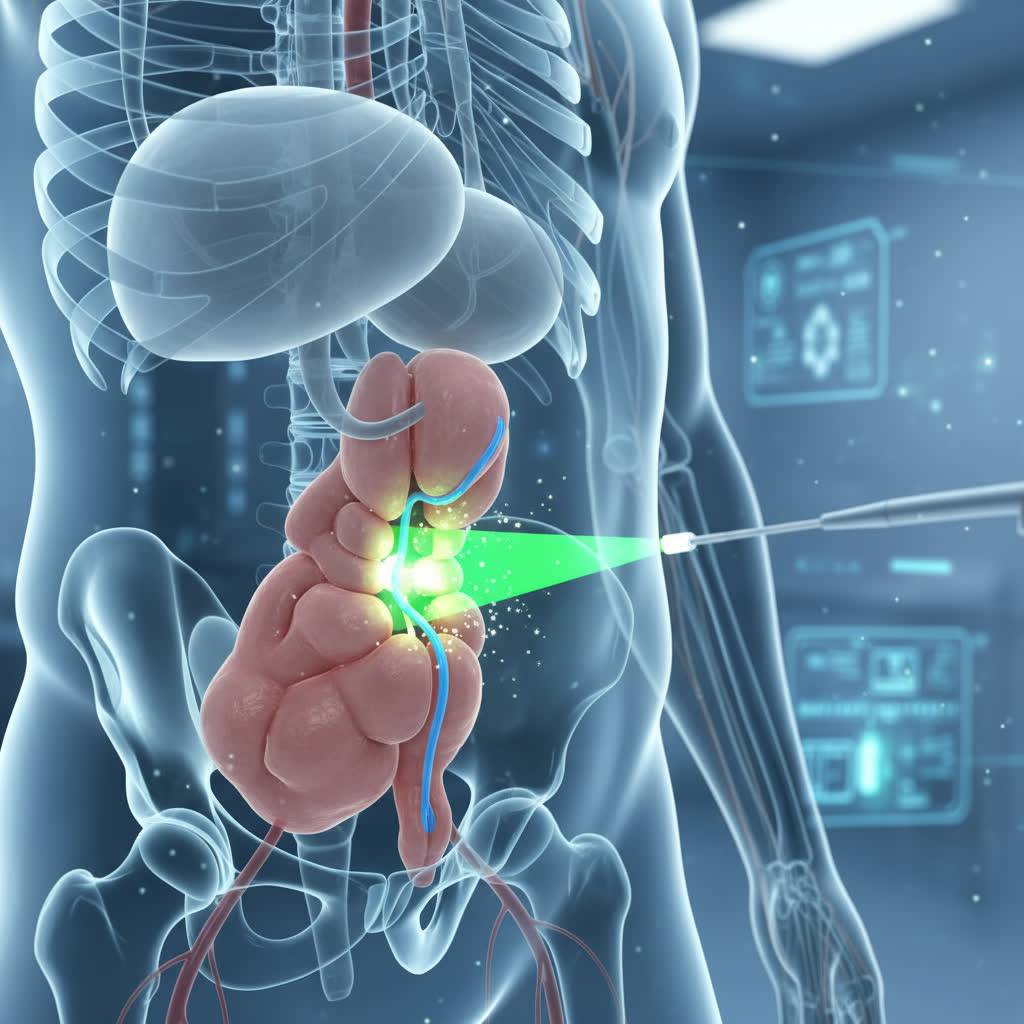






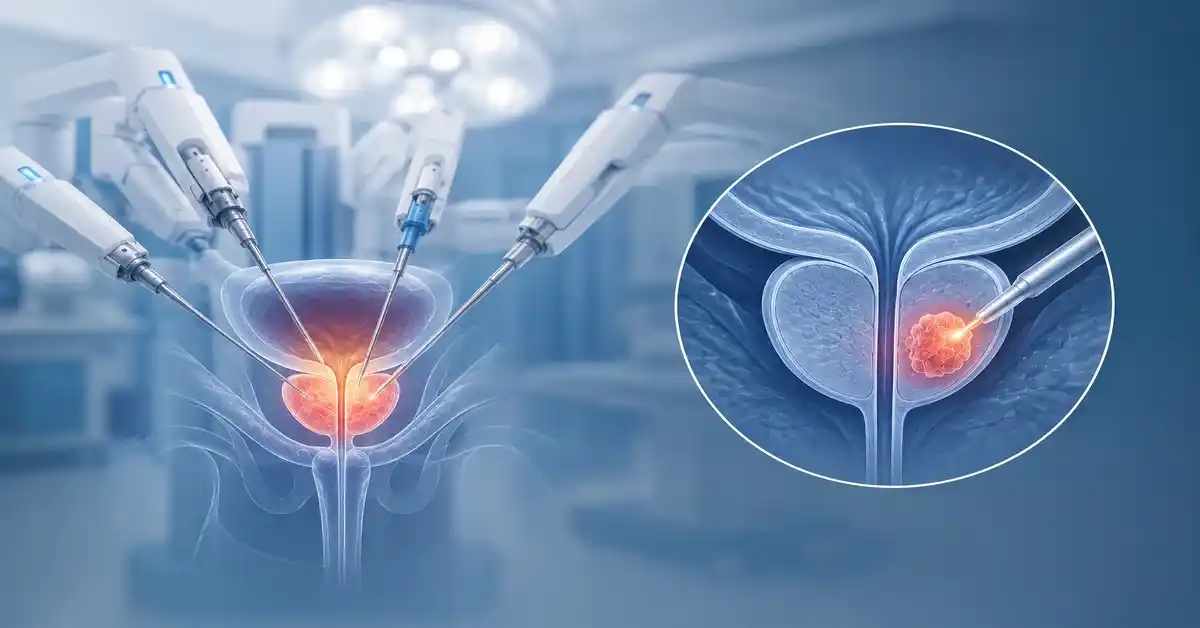
Robot-assisted radical prostatectomy is an advanced surgical option for selected patients with prostate cancer. The operation is performed through several small abdominal incisions while the surgeon uses magnified three-dimensional visualization and highly articulated instruments to work precisely within the narrow pelvic space.
Although the procedure is sometimes described as “robotic prostate tumor removal,” radical prostatectomy generally does not remove only the visible tumor. The entire prostate and seminal vesicles are usually removed, and pelvic lymph nodes may also be removed when the cancer risk makes nodal assessment appropriate. The bladder is then reconnected to the urethra.
The robotic system does not operate autonomously. The surgeon controls every instrument movement in real time. The quality of treatment therefore depends on cancer stage, surgical planning, patient anatomy, and the surgeon’s experience rather than on the robot alone.
What Is Robot-Assisted Radical Prostatectomy and How Is Cancer Removed?
The purpose of radical prostatectomy is to remove prostate cancer completely when surgery is an appropriate treatment while attempting to preserve urinary control and sexual function whenever this can be achieved without compromising cancer clearance.
The balance between these goals differs from one patient to another.
What Is Removed During Robotic Prostatectomy?
The operation generally removes:
- The entire prostate.
- Both seminal vesicles.
- Additional surrounding tissue when required for adequate margins.
- Pelvic lymph nodes in selected higher-risk patients.
After the prostate is removed, the bladder and urethra must be reconnected to recreate the urinary pathway.
How Does the Surgeon Control the Robot?
The surgeon sits at a dedicated console and controls instruments positioned inside the patient.
The system provides:
- Magnified three-dimensional vision.
- Fine movement within a confined anatomical space.
- Articulated instruments.
- Tremor filtration.
- Precise dissection and suturing.
- Detailed visualization around nerves and blood vessels.
The robotic system enhances surgical movement but does not replace the surgeon’s judgment.
Can Only the Tumor Be Removed?
Radical prostatectomy is generally not a tumor-only procedure.
Prostate cancer can be multifocal, and microscopic disease may exist outside the most obvious MRI lesion. Focal treatments are available for selected patients but represent a different treatment strategy and are not appropriate for every prostate cancer.
Read about: Prostate Enlargement Treatments: Medication or Surgery
Who Is a Candidate for Robotic Prostate Cancer Surgery?
Not every man diagnosed with prostate cancer needs surgery. Some low-risk cancers can be monitored safely, whereas radical treatment becomes more relevant for selected intermediate- and high-risk tumors.
Treatment decisions consider cancer biology and life expectancy rather than PSA or age alone.
Intermediate-Risk Prostate Cancer
Robot-assisted radical prostatectomy may be considered when the tumor remains surgically treatable and the patient is medically fit.
Assessment includes:
- PSA.
- Biopsy Grade Group.
- Amount of cancer in biopsy samples.
- MRI findings.
- Estimated extracapsular extension.
- Lymph-node risk.
- General health.
- Expected lifespan.
Radiotherapy may also provide a curative option, so both approaches should be compared before treatment.
Low-Risk Cancer May Not Need Surgery
Detecting cancer early does not automatically mean that the prostate should be removed.
Many men with low-risk disease can undergo active surveillance, which may include:
- PSA testing.
- Clinical follow-up.
- MRI.
- Repeat biopsy when indicated.
- Monitoring for changes in tumor characteristics.
The objective is to avoid unnecessary treatment while retaining the opportunity to treat the cancer if its risk increases.
High-Risk and Selected Locally Advanced Disease
Surgery can be part of treatment for selected high-risk patients, but the operation may not always be the final treatment.
Depending on postoperative pathology and PSA, additional management may involve:
- Close PSA surveillance.
- Salvage radiotherapy.
- Hormonal treatment in selected cases.
- Multimodal treatment for patients at substantial risk of recurrence.
Patients should understand this possibility before undergoing surgery.
Read about: Latest Non-Surgical Treatments for Enlarged Prostate
Preparation and Main Steps of Robotic Prostatectomy
The prostate lies between the bladder and rectum and is closely related to the urinary sphincter and neurovascular bundles involved in erectile function.
Accurate staging before surgery helps determine how extensively tissue needs to be removed and whether nerve preservation is oncologically safe.
Tests Before Robotic Surgery
Assessment may include:
- Complete prostate-biopsy pathology.
- Biopsy Grade Group.
- PSA and previous PSA results.
- Multiparametric prostate MRI.
- Additional staging imaging when indicated.
- Blood tests and kidney function.
- Anesthesia assessment.
- Medication and blood-thinner review.
- Baseline urinary-control assessment.
- Baseline erectile-function assessment.
Baseline function is especially useful for setting realistic expectations.
What Happens During the Operation?
After general anesthesia, several small ports are placed through the abdominal wall.
The surgeon generally:
- Accesses the prostate.
- Separates it from the bladder.
- Dissects the seminal vesicles.
- Separates the gland from the rectum and surrounding structures.
- Identifies the neurovascular bundles.
- Preserves nerves when oncologically appropriate.
- Divides the urethra.
- Removes the prostate and seminal vesicles.
- Removes pelvic lymph nodes when indicated.
- Reconnects the bladder to the urethra.
- Checks the reconstruction and bleeding control.
The removed tissues are then sent for complete pathological examination.
Why Is a Urinary Catheter Required?
A urinary catheter is placed during surgery to drain the bladder and protect the new bladder-to-urethra connection as it heals.
After catheter removal, temporary urinary leakage is common. Continence then usually improves progressively.

Advantages of Robotic Prostatectomy Compared With Open Surgery
Robotic surgery is minimally invasive, but this does not mean it automatically provides better cancer control than every other surgical approach.
Its most consistent advantages relate to the operation itself and early recovery.
Smaller Incisions, Blood Loss, and Recovery
Potential benefits include:
- Smaller abdominal incisions.
- Lower average blood loss.
- Reduced transfusion requirements.
- Less incision-related pain in some patients.
- Earlier mobilization.
- Shorter hospitalization.
- Faster early return to daily activities.
It remains major pelvic surgery despite the small external incisions.
Nerve-Sparing Robotic Prostatectomy
The nerves involved in erectile function run directly alongside the prostate.
When the cancer location allows it, the surgeon may preserve:
- Both neurovascular bundles.
- One bundle.
- Neither bundle when wider cancer clearance is necessary.
Cancer control remains the priority. If tumor is suspected immediately adjacent to or beyond the prostate capsule, preserving all nearby tissue may increase the risk of a positive surgical margin.
Is Robotic Surgery Better for Cancer Control?
Robotic and open prostatectomy can both achieve effective cancer control when performed correctly.
Long-term outcome depends heavily on:
- Cancer stage.
- Tumor grade.
- Surgical margins.
- Lymph-node involvement.
- Surgical quality.
- Postoperative PSA behavior.
The surgeon’s experience with radical prostatectomy is therefore more important than selecting a technique solely because it uses robotic technology.
Read about: Interventional Radiology for Enlarged Prostate Treatment
Urinary Continence and Sexual Function After Robotic Prostatectomy
Urinary control and erectile function are among the most important quality-of-life considerations after prostate removal.
Recovery varies substantially between patients, and fixed promises regarding timing are inappropriate.
Urinary Leakage After Prostate Removal
Leakage may occur after catheter removal, particularly during:
- Walking.
- Standing.
- Coughing.
- Sneezing.
- Lifting.
- Exercise.
Control generally improves over time.
Recovery can be influenced by:
- Age.
- Baseline continence.
- Sphincter function.
- Preserved urethral length.
- Prostate size.
- Body weight.
- Previous urinary procedures.
- Surgical technique.
Pelvic-floor rehabilitation may support recovery.
Erectile Dysfunction and Recovery
Even with nerve-sparing surgery, erectile function may temporarily decline because the nerves can become less active after surgical manipulation.
Recovery depends on:
- Erectile function before surgery.
- Age.
- Diabetes.
- Vascular health.
- Smoking.
- Whether one or both nerves are preserved.
- Tumor location.
- Time since surgery.
Sexual rehabilitation may include medication and other treatments when appropriate.
Ejaculation and Fertility After Radical Prostatectomy
Normal ejaculation permanently stops after radical prostatectomy because the prostate and seminal vesicles are removed.
Orgasm can still be possible, but it becomes a dry orgasm.
Natural fertility is also lost. Men who may want biological children in the future should discuss sperm preservation before treatment.
Read about: Benign Prostate Enlargement: Latest Non-Surgical Treatments
Surgical Risks and Final Pathology After Prostatectomy
Robotic prostatectomy remains a major operation and carries potential complications.
The final pathology specimen also provides important information that can change the patient’s risk classification after surgery.
Possible Surgical Complications
These may include:
- Bleeding.
- Infection.
- Deep vein thrombosis.
- Pulmonary embolism.
- Leakage from the bladder-urethra connection.
- Later narrowing of the reconstructed area.
- Lymphocele after lymph-node dissection.
- Rare injury to adjacent organs.
- Persistent urinary incontinence.
- Erectile dysfunction.
- Anesthesia complications.
- Rare need for further surgery.
Increasing pain, significant bleeding, fever, breathing difficulty, leg swelling, or catheter problems require medical assessment.
What Does the Final Pathology Report Show?
Examination of the entire removed prostate can determine:
- Final Grade Group.
- Tumor size and distribution.
- Extraprostatic extension.
- Seminal-vesicle invasion.
- Surgical-margin status.
- Lymph-node involvement when nodes are removed.
- Final pathological stage.
The result may differ from the original biopsy because the entire prostate is now available for examination.
What Is a Positive Surgical Margin?
A positive margin means cancer cells are present at the edge of the removed specimen.
It increases the risk of residual microscopic disease but does not mean that recurrence is inevitable or that every patient requires immediate additional treatment.
The finding should be interpreted together with PSA and the rest of the pathology report.
Read about: Benign Prostate Enlargement Laser Treatment: Safe Results
PSA Follow-Up and Prostate Cancer Recurrence After Surgery
PSA monitoring is one of the most important components of follow-up after radical prostatectomy.
Because almost all prostate tissue has been removed, PSA should become extremely low or undetectable.
What Should Happen to PSA After Prostatectomy?
PSA is checked after sufficient postoperative recovery and then periodically.
A persistently measurable PSA or a subsequent increase requires assessment. Management considers the pattern of PSA rather than automatically acting on one isolated result.
What If PSA Rises Again?
A rising PSA can be the earliest sign of recurrent prostate cancer, sometimes long before symptoms appear.
The next step depends on:
- PSA level.
- Rate of increase.
- Time since surgery.
- Pathological stage.
- Surgical margins.
- Lymph-node findings.
- Imaging when it will influence treatment.
Potential options include salvage radiotherapy, hormonal therapy in selected cases, or continued observation for carefully selected low-risk situations.
Robotic Surgery Versus Radiation Therapy
| Consideration | Robotic surgery | Radiation therapy |
|---|---|---|
| Prostate removed | Yes | No |
| Complete gland pathology | Available | Not available |
| Surgery and anesthesia | Required | No prostate-removal operation |
| Early urinary leakage | More characteristic | Usually less immediate |
| Erectile effects | May occur early or recover gradually | May develop gradually |
| Bladder or bowel irritation | Less radiation-related | Can occur |
| Additional treatment | Radiation may follow recurrent PSA | Salvage options differ after radiation |
Treatment selection should reflect cancer characteristics, patient health, urinary and sexual function, and personal priorities.
Read about: Latest Prostate Cancer Treatment Using Interventional Radiology
Conclusion
Robot-assisted radical prostatectomy enables prostate cancer surgery through small incisions using magnified three-dimensional visualization and highly precise instruments. It can reduce blood loss and improve early recovery while allowing nerve preservation in patients whose tumor location makes this oncologically safe.
However, the most important decision is not whether robotic technology is available. It is whether radical prostatectomy is actually the right treatment for the individual cancer. Some low-risk tumors are better monitored, while some high-risk cancers may require additional treatment even after complete prostate removal.
Frequently Asked Questions: Robotic Prostate Cancer Surgery
Does robotic surgery remove only the tumor?
No. Radical prostatectomy generally removes the entire prostate and seminal vesicles, with lymph-node removal when indicated.
Does the robot operate by itself?
No. The surgeon directly controls every movement of the robotic instruments.
Does urinary control return after surgery?
Most patients improve progressively, but recovery varies according to age, baseline function, anatomy, and surgical factors.
Can erections return after prostatectomy?
Yes, in selected patients, particularly when nerve sparing is possible and erectile function was good before surgery, although recovery may take many months.
Can prostate cancer return after prostatectomy?
Yes. Long-term PSA monitoring remains necessary to detect persistent or recurrent disease at an early stage.