





When back pain from a herniated disc becomes a barrier to your daily life, finding an effective and safe solution becomes a priority. Minimally invasive herniated disc treatment has revolutionized spine surgery, offering a less invasive alternative to traditional open surgery, with a faster recovery period and excellent results.
This guide aims to shed light on everything related to this advanced technique, from symptoms and benefits to results and recovery. At Safemedigo, we are committed to providing you with the latest information to help you make an informed decision about your health and return to an active, pain-free life.
Herniated Disc and When Treatment Is Needed
Herniated Disc Symptoms
The symptoms of a herniated disc vary depending on the location of the affected disc and the extent of pressure on the nerves. The most common symptoms include:
- Sharp Pain: Pain may radiate from the lower back down the leg (sciatica) in the case of a lumbar herniated disc, or from the neck to the arm for a cervical herniated disc.
- Numbness or Tingling: A sensation of numbness in the limbs supplied by the compressed nerve.
- Muscle Weakness: Severe pressure on the nerve can lead to weakness in the leg or arm muscles.
Causes of Herniated Disc
A herniated disc often results from the natural wear and tear of the spinal discs with age, a process called disc degeneration. However, other factors can increase the risk, such as lifting heavy objects incorrectly, a sudden back injury, being overweight, or leading a sedentary lifestyle.
Herniated Disc Complications
If left untreated, a herniated disc can lead to serious complications. Continuous pressure on the nerves can cause permanent damage, leading to chronic pain, persistent numbness, or severe muscle weakness. In rare cases, a severe lumbar herniated disc can cause cauda equina syndrome, a medical emergency requiring immediate surgical intervention.
Minimally Invasive Herniated Disc Treatment
Endoscopic Herniated Disc Surgery
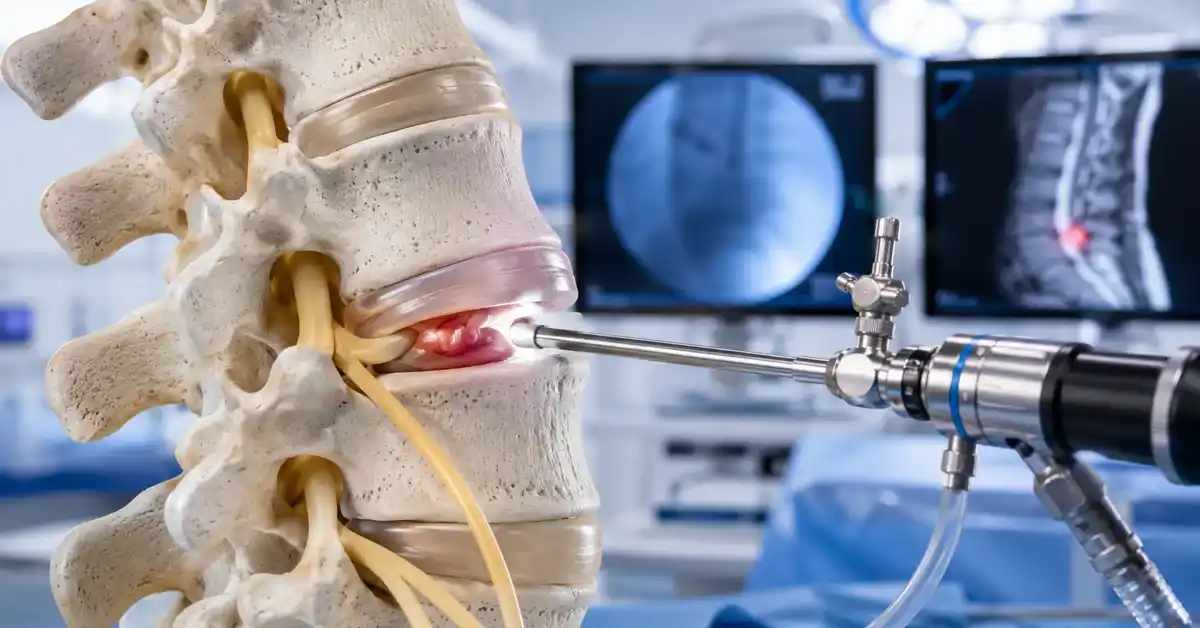
Endoscopic herniated disc surgery is a modern, minimally invasive surgical technique. It is performed through a very small incision (less than 1 cm), through which a thin tube containing a tiny camera (spinal endoscope) and precise surgical instruments are inserted. The camera allows the surgeon a magnified, clear view of the affected disc and compressed nerve, enabling the removal of the herniated portion of the disc with high precision without damaging surrounding tissues.
Non-Surgical Disc Treatment
This procedure represents an excellent alternative to traditional open surgery. Instead of making a large incision and cutting through muscles to access the spine, the affected area is reached through a small corridor between muscle fibers. This means that this form of non-surgical disc treatment significantly reduces tissue damage, leading to a faster recovery and less pain.
Spinal Endoscopy
The spinal endoscopy is the key tool in this surgery. It provides high-definition illumination and vision of the surgical site, enabling the surgeon to work with extreme precision. This technology contributes to increasing the safety of the operation and reducing the risks of injury to nerves or other important tissues surrounding the spine.
Read about: Herniated Disc Surgery: When Is It Necessary? Full Recovery Guide
Benefits of Minimally Invasive Disc Surgery
Benefits of Herniated Disc Surgery
This surgery offers numerous advantages over open surgery, making it the preferred choice for many patients and surgeons. These benefits include:
- Smaller Incision: A very small, cosmetic scar.
- Less Post-Surgery Pain: Due to reduced muscle and tissue damage.
- Faster Recovery: A quicker return to daily activities and work.
- Less Blood Loss: Reducing the need for blood transfusions.
- Lower Risk of Infection: Due to the small wound size.
Reduced Post-Surgery Pain
Since endoscopic surgery does not require cutting the large back muscles, patients experience significantly less post-operative pain. This means they need fewer pain medications and can start moving and undergoing physical therapy very early, which speeds up the healing process.
Short Hospital Stay
Thanks to its minimally invasive nature, endoscopic herniated disc surgery can often be performed as a day surgery. Most patients can return home the same day or the day after the surgery, compared to several days of hospitalization after open surgery.

Herniated Disc Surgery Results and Success Rate
Herniated Disc Surgery Results
The results of endoscopic herniated disc surgery show a significant and immediate improvement in symptoms for most patients. Leg pain (sciatica) or arm pain disappears almost completely right after the surgery. Numbness and weakness may take longer to improve as the nerve needs time to recover.
Herniated Disc Surgery Success Rate
The herniated disc surgery success rate for the endoscopic procedure is very high, exceeding 90% in relieving symptoms and improving patients' quality of life. Success depends on multiple factors, including the surgeon's experience, the patient's overall health, and adherence to post-operative instructions.
Back Pain Improvement
While the primary goal of the surgery is to relieve pressure on the nerve and thus treat leg or arm pain, many patients also report a significant improvement in chronic back pain. Maintaining spinal stability and minimizing tissue damage helps achieve this positive outcome.
Read about: Lumbar Disc Herniation: Best Treatment Options
Lumbar and Cervical Herniated Disc
Lumbar Herniated Disc
A lumbar herniated disc occurs in the lower back and is the most common type. It causes pressure on the nerve roots that lead to the legs, resulting in sciatica pain. This condition can be treated very effectively using spinal endoscopy, providing rapid relief for patients.
Cervical Herniated Disc
A cervical herniated disc occurs in the neck. It presses on the nerves that extend to the shoulders, arms, and hands, causing pain, numbness, and weakness in these areas. Endoscopic surgery can also be performed for a cervical herniated disc, either through an anterior or posterior approach, depending on the location of the herniation.
Differences Between Disc Types
The main difference lies in the location and symptoms. A lumbar herniation affects the lower extremities, while a cervical herniation affects the upper extremities. The endoscopic surgical technique differs slightly between the two types to adapt to the anatomy of the target area, but the basic principles and advantages remain the same.
Read about: Recovery Steps After Spinal Surgery to Avoid Complications
Recovery After Herniated Disc Surgery
Herniated Disc Surgery Recovery Time
The herniated disc surgery recovery time after endoscopic surgery is remarkably short. Patients can walk within a few hours after the surgery. It is advisable to avoid bending, twisting, and lifting heavy objects for the first few weeks. Most patients can return to office work within one to two weeks.
Movement After Disc Surgery
Early movement is encouraged. Walking is the best exercise initially. You will be provided with a gradual physical therapy program to strengthen your back and abdominal muscles and restore flexibility. Adhering to this program helps ensure the best results and prevent recurrence.
Faster Healing Tips
To speed up the healing process, follow these tips:
- Follow the instructions of your surgeon and physical therapist precisely.
- Avoid sitting for long periods.
- Maintain proper posture when sitting and standing.
- Refrain from smoking, as it slows down the healing process.
- Follow a healthy, balanced diet.
Herniated Disc Prevention and Back Pain Relief
Herniated Disc Prevention
Although a herniated disc cannot always be prevented, there are steps you can take to reduce the risk. This includes maintaining a healthy weight, exercising regularly, using proper lifting techniques, maintaining good posture, and avoiding prolonged sitting.
Strengthening Back Muscles
The core muscles (abdominal and back muscles) play a vital role in supporting the spine. Regular exercises that target these muscles, such as planks and bridges, help maintain spinal stability and reduce pressure on the discs.
Preventing Disc Recurrence
After surgery, it is important to adopt healthy habits to avoid the recurrence of a herniated disc at the same or other levels. This includes sticking to an exercise program, maintaining an ideal weight, and avoiding activities that put excessive stress on your back. Regular follow-up with your doctor is also important.
Read about: Herniated Disc Treatment: Turkey vs USA
Conclusion
In conclusion, minimally invasive herniated disc treatment represents a quantum leap in the field of spine surgery, offering patients a safe and effective solution with less pain and a faster recovery period. Understanding this technique and its advantages is the first step toward making an informed decision. Don't let pain control your life; explore modern treatment options with the experts at Safemedigo to regain your mobility and activity.
Frequently Asked Questions: Minimally Invasive Herniated Disc Treatment
Am I a good candidate for endoscopic herniated disc surgery?
Ideal candidates are patients with a clear herniated disc compressing a nerve, whose symptoms have not responded to conservative treatments (like physical therapy and medication) for at least 6 weeks. Your surgeon will accurately assess your condition to determine if this surgery is right for you.
How long does the procedure take?
Endoscopic herniated disc surgery typically takes about one hour. The time may vary slightly depending on the complexity of the case.
Will I need physical therapy after the surgery?
Yes, physical therapy is an important part of the recovery process. A physical therapist will help you safely regain strength, flexibility, and movement, and will teach you exercises to help prevent future problems.
What are the potential risks of endoscopic surgery?
Like any surgery, there are some risks, but they are much lower compared to open surgery. Rare risks include infection, bleeding, nerve injury, or incomplete symptom relief. Choosing an experienced surgeon significantly reduces these risks.
When can I return to sports?
You can usually return to low-impact activities like walking and swimming after a few weeks. High-impact sports and activities that involve twisting or heavy lifting should be avoided for at least 3 months, or until your surgeon allows it.