





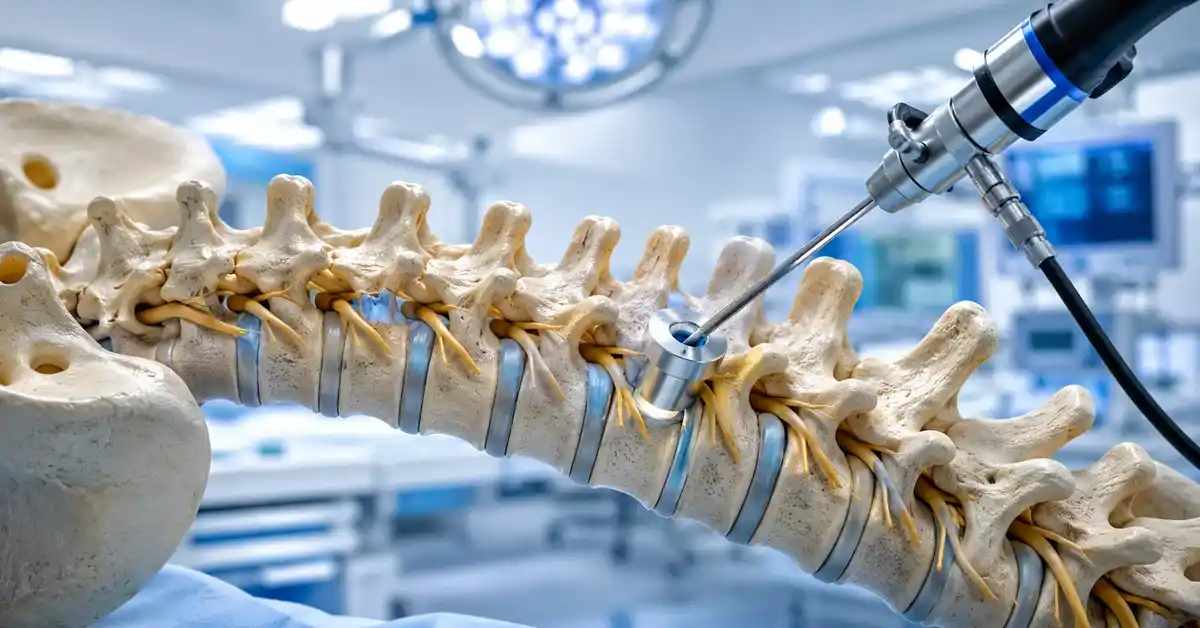
Endoscopic spine surgery is one of the most important developments in modern minimally invasive spine surgery. It allows surgeons to treat selected spinal problems through small incisions using an endoscope, a camera, and specialized instruments. The goal is to reach the source of nerve compression while reducing unnecessary muscle disruption and tissue trauma compared with many traditional open procedures.
This technique is commonly discussed for conditions such as lumbar disc herniation, selected cases of spinal stenosis, endoscopic discectomy surgery, and some cervical spine problems when anatomy and diagnosis are suitable. However, endoscopic spine surgery is not appropriate for every patient. It requires accurate diagnosis, advanced imaging, careful patient selection, and a surgeon experienced in endoscopic techniques.
Many patients search for the success rate of endoscopic spine surgery, endoscopic spine surgery risks, recovery after endoscopic spine surgery, and the cost of endoscopic spine surgery in Turkey or the USA. These are important questions, but the decision should begin with the medical problem itself: whether the symptoms match MRI findings, whether non-surgical treatment has failed, and whether the compressed nerve can be safely treated using an endoscopic approach.
Introduction to Endoscopic Spine Surgery
Endoscopic spine surgery is a minimally invasive technique used to treat certain spinal conditions through a small access route. Instead of making a large incision and widely separating muscles, the surgeon uses a narrow endoscope with a camera to view the surgical area and remove the structure causing nerve compression.
This method may be used in selected cases of lumbar disc herniation, cervical disc problems, foraminal stenosis, and spinal stenosis. The operation can be highly effective when the pain generator is clear and the patient’s symptoms match the imaging findings.
What Is Endoscopic Spine Surgery?
Endoscopic spine surgery uses a thin camera system and small instruments to access the spine through a limited incision. The endoscope provides magnified visualization, allowing the surgeon to remove herniated disc material, decompress a nerve root, or widen a narrowed nerve passage in selected cases.
In endoscopic discectomy surgery, the main goal is usually to remove the part of the disc pressing on a nerve. In spinal stenosis endoscopic surgery, the goal may be to remove small areas of thickened ligament, bone, or soft tissue that narrow the space around the nerves.
The technique is most useful when the problem is localized and accessible. It is not designed to treat every cause of back pain, and it is not always suitable for severe instability, major deformity, extensive multilevel compression, tumors, or complex revision cases.
Endoscopic Spine Surgery vs Open Surgery
Endoscopic spine surgery vs open surgery differs mainly in access, incision size, tissue disruption, and recovery pathway. Open surgery may require a larger incision and wider muscle separation to reach the spine. Endoscopic surgery uses a smaller corridor and specialized visualization.
General differences may include:
- Smaller incision in endoscopic surgery.
- Less muscle disruption in selected cases.
- Potentially less blood loss.
- Shorter hospital stay in many cases.
- Faster mobility after surgery.
- Smaller surgical scar.
- Higher technical demand.
- Limited suitability for complex conditions.
Open surgery remains necessary and safer in some patients, especially when there is spinal instability, severe deformity, extensive stenosis, tumors, infection, or the need for fusion or wide decompression.
Read about: Is Spine Surgery Safe? Recovery Stages and Post-Op Care
Endoscopic Spine Surgery Benefits
Endoscopic spine surgery benefits are mainly related to its minimally invasive nature. By reducing muscle disruption and using a targeted access route, the technique may support faster recovery, less post-operative pain, and earlier mobility in suitable patients.
However, the benefits depend strongly on correct patient selection. A modern technique does not automatically guarantee a better outcome if it is used for the wrong diagnosis. The best results are usually seen when symptoms, physical examination, and MRI findings all point to a specific treatable source of nerve compression.
Success Rate of Endoscopic Spine Surgery
The success rate of endoscopic spine surgery varies depending on the diagnosis, spinal level, surgeon experience, patient age, duration of symptoms, nerve condition, and whether the condition is simple or complex. In well-selected patients with disc herniation, endoscopic discectomy can provide meaningful relief of radiating leg or arm pain caused by nerve compression.
It is important to define success correctly. For many spine procedures, improvement in nerve pain that travels down the leg or arm is often more predictable than improvement in general back pain. Back pain can come from multiple sources, including joints, muscles, disc degeneration, posture, and chronic inflammation.
Factors that may affect success include:
- Clear MRI findings.
- Symptoms matching the compressed nerve.
- Shorter duration of severe nerve compression.
- Absence of major spinal instability.
- Single-level disease.
- Proper surgical technique.
- Patient adherence after surgery.
- Realistic expectations.
Success does not always mean complete disappearance of every symptom. It may mean reduced nerve pain, improved walking, better function, and less reliance on medication.
Why Choose Minimally Invasive Spine Surgery?
Minimally invasive spine surgery may be chosen when the condition can be treated through a smaller access route without compromising safety or effectiveness. For patients who are suitable candidates, this approach may reduce tissue trauma and support earlier recovery.
Reasons to consider minimally invasive spine surgery include:
- Localized disc herniation.
- Selected spinal stenosis.
- Nerve compression matching symptoms.
- Failure of conservative treatment.
- Desire to reduce tissue disruption.
- Need for shorter recovery in suitable cases.
- Lower wound burden compared with open surgery.
- Faster mobilization when medically appropriate.
Still, minimally invasive does not mean risk-free. The surgeon must choose the safest and most effective approach, whether endoscopic, microscopic, laparoscopic-style minimally invasive, or open surgery.
Read about: Endoscopic Spine Surgery: Turkey vs Germany
Endoscopic Spine Surgery Safety
Endoscopic spine surgery safety depends on the patient’s diagnosis, surgical planning, imaging quality, technology, anesthesia readiness, and surgeon experience. The spine contains delicate nerves, blood vessels, discs, joints, and in some regions the spinal cord, so precision is essential.
The safety of the procedure is not determined only by the size of the incision. A small incision can still involve a complex operation. Therefore, patients should understand the benefits, risks, alternatives, and realistic goals before choosing endoscopic treatment.
Endoscopic Spine Surgery Risks
Endoscopic spine surgery risks are generally related to operating near spinal nerves and delicate structures. While the technique may reduce some risks associated with large incisions, complications can still occur.
Potential risks include:
- Persistent pain.
- Incomplete decompression.
- Nerve irritation or injury.
- Dural tear.
- Spinal fluid leak.
- Bleeding.
- Infection.
- Recurrent disc herniation.
- Temporary numbness or weakness.
- Need for revision surgery.
- Failure to improve symptoms.
- Complications related to anesthesia.
Some risks are rare, but they should be discussed clearly. The patient should also understand that endoscopic surgery may need conversion or revision if the anatomy is more complex than expected.
When Endoscopic Surgery Is the Safest Option
Endoscopic surgery may be the safest option when the spinal problem is clear, localized, and accessible through an endoscopic route. It can be especially useful when the surgeon can decompress the nerve without needing wide muscle separation or spinal fusion.
It may be suitable when:
- Disc herniation is localized.
- Nerve compression matches symptoms.
- Conservative treatment has failed.
- There is no major spinal instability.
- There is no severe deformity.
- The patient has a single-level problem.
- The surgeon has appropriate endoscopic experience.
- The expected benefit is clear.
It may not be the safest choice when the patient has multilevel severe stenosis, unstable spondylolisthesis, spinal tumor, infection, major deformity, or a condition requiring extensive reconstruction.

Cost of Endoscopic Spine Surgery
The cost of endoscopic spine surgery varies widely depending on country, hospital, surgeon experience, spinal level, procedure type, anesthesia, imaging, hospital stay, technology used, and follow-up needs. A simple endoscopic discectomy surgery usually differs in cost from spinal stenosis endoscopic surgery or a complex revision case.
Patients should not compare cost without understanding what is included. A quoted price may or may not include MRI review, preoperative tests, hospital stay, anesthesia, medications, post-surgery follow-up, physical therapy, or management of complications.
Cost of Endoscopic Spine Surgery in the USA
The cost of endoscopic spine surgery in the USA can vary significantly because of differences in hospital systems, insurance coverage, surgeon fees, outpatient facility charges, anesthesia, imaging, and whether the procedure is performed in a hospital or ambulatory surgery center.
Factors affecting cost in the USA include:
- Insurance coverage.
- Deductible and co-pay.
- Hospital or outpatient center fees.
- Surgeon and anesthesia fees.
- State and city differences.
- Imaging and preoperative testing.
- Type of endoscopic procedure.
- Whether it is lumbar or cervical.
- Need for follow-up or physical therapy.
For insured patients, out-of-pocket cost may depend more on the insurance plan than on the procedure alone. For self-paying patients, package clarity is especially important.
Cost of Endoscopic Spine Surgery in Turkey
Endoscopic spine surgery in Turkey is often searched by international patients because Turkey has hospitals and specialists offering advanced spine procedures for medical travelers. However, the cost of endoscopic spine surgery in Turkey depends on the diagnosis and required procedure.
Cost factors in Turkey include:
- Lumbar or cervical spine surgery.
- Endoscopic discectomy or stenosis surgery.
- Number of spinal levels.
- Hospital category.
- Surgeon experience.
- Anesthesia and operating room fees.
- Length of stay.
- Preoperative tests.
- Need for physical therapy.
- Revision or first-time surgery.
- Medical travel support.
A proper medical plan should include review of MRI images, diagnosis confirmation, explanation of what is included, and a clear follow-up pathway after surgery.
Read about: Chronic Disc Herniation: When Is Surgical Intervention Needed?
When Do You Need Endoscopic Spine Surgery?
You may need endoscopic spine surgery when symptoms are caused by confirmed nerve compression and non-surgical treatment has not provided enough improvement. Many cases of back pain or disc herniation improve without surgery, so surgery should be considered only when there is a clear reason.
The decision should combine symptoms, physical examination, MRI findings, response to conservative treatment, and the presence or absence of neurological deficits.
Signs and Symptoms Requiring Surgery
Not every back or neck pain requires surgery. Surgery is usually considered when pain or nerve symptoms become severe, persistent, or progressive despite proper treatment.
Symptoms that may require surgery include:
- Severe leg pain from sciatica.
- Arm pain from cervical nerve compression.
- Numbness or tingling that worsens.
- Weakness in the leg, foot, arm, or hand.
- Difficulty walking due to nerve compression.
- Pain that prevents sleep or daily activity.
- Symptoms lasting despite conservative care.
- Spinal stenosis causing walking limitation.
- Progressive neurological deficit.
Urgent symptoms may include loss of bladder or bowel control, numbness in the saddle area, sudden severe weakness, or rapidly worsening neurological symptoms. These require immediate medical evaluation.
Alternatives Before Minimally Invasive Spine Surgery
Before minimally invasive spine surgery, many patients may try conservative treatment unless there are urgent neurological signs. Non-surgical treatment may help reduce inflammation, improve movement, and allow the body time to heal.
Alternatives may include:
- Anti-inflammatory medication when medically allowed.
- Pain management.
- Physical therapy.
- Core strengthening.
- Activity modification.
- Weight reduction when needed.
- Epidural steroid injection in selected cases.
- Posture correction.
- Avoiding heavy lifting.
- Gradual rehabilitation.
- Treatment of muscle spasm.
If these options fail and MRI confirms a treatable source of nerve compression, endoscopic surgery may be discussed.
Read about: Herniated Disc Surgery: When Is It Necessary? Full Recovery Guide
Latest Techniques in Endoscopic Spine Surgery
The latest techniques in endoscopic spine surgery include uniportal endoscopy, biportal endoscopy, transforaminal and interlaminar approaches, advanced radiofrequency tools, high-definition visualization, navigation-assisted techniques, and improved instruments for decompression.
However, the latest technique is not automatically the best technique. The correct method depends on the patient’s anatomy, diagnosis, spinal level, surgeon experience, and hospital equipment.
Endoscopic Discectomy Surgery
Endoscopic discectomy surgery is commonly used for selected disc herniations, especially in the lumbar spine. The surgeon removes the disc fragment pressing on the nerve through a small access route while trying to preserve surrounding tissues.
It may be suitable when:
- A disc herniation is clearly visible on MRI.
- Leg pain is stronger than back pain.
- Symptoms match the compressed nerve.
- Conservative treatment has failed.
- There is no major spinal instability.
- The disc fragment is accessible endoscopically.
Endoscopic discectomy surgery aims to relieve nerve compression. It does not treat every cause of back pain, especially pain caused by widespread degeneration or muscle weakness.
Spinal Stenosis Endoscopic Surgery
Spinal stenosis endoscopic surgery may be used in selected cases where narrowing of the spinal canal or nerve exit causes pain, numbness, or walking limitation. The surgeon may remove small portions of bone, thickened ligament, or soft tissue that compress the nerve.
This approach may help patients with:
- Localized lumbar stenosis.
- Foraminal stenosis.
- Nerve compression during walking.
- Symptoms relieved by bending forward.
- Single-level or limited disease.
- Suitable anatomy for endoscopic decompression.
It may not be appropriate for severe multilevel stenosis, unstable vertebrae, deformity, or cases requiring fusion. Careful imaging review is essential.
Read about: Lumbar Disc Herniation: Best Treatment Options
Preparation for Endoscopic Spine Surgery
Preparation for endoscopic spine surgery begins with confirming the diagnosis and making sure the symptoms truly match the imaging. Good preparation can reduce risk, improve recovery, and help the patient understand realistic goals.
The patient should know why surgery is recommended, what the surgeon plans to treat, what symptoms may improve, and what symptoms may remain. Clear expectations reduce anxiety and improve satisfaction.
Medical Tests Before Surgery
Medical tests before surgery depend on age, health condition, spinal level, and anesthesia type. The goal is to ensure the patient is medically ready and that the surgical target is well understood.
Tests may include:
- Updated MRI.
- X-rays when needed.
- Dynamic X-rays for instability.
- CT scan in selected cases.
- Nerve conduction studies when needed.
- Blood tests.
- Kidney and liver function tests.
- Coagulation profile.
- Diabetes assessment.
- Cardiac evaluation when necessary.
- Anesthesia assessment.
- Review of blood thinner medications.
MRI findings should always be interpreted with symptoms. Many people have disc changes on MRI without needing surgery.
Tips to Reduce Surgery Risks
Patients can help reduce surgery risks by preparing their health before the operation and following the surgeon’s instructions. This is especially important for patients with diabetes, smoking history, heart disease, or previous spine surgery.
Helpful tips include:
- Stop or reduce smoking.
- Control diabetes.
- Inform the doctor about all medications.
- Stop blood thinners only as instructed.
- Treat active infections before surgery.
- Maintain safe activity before surgery.
- Prepare the home for recovery.
- Arrange support for the first days.
- Follow fasting instructions.
- Understand movement restrictions.
These steps do not eliminate all risks, but they support safer surgery and smoother recovery.
Read about: Minimally Invasive Herniated Disc Treatment: Safe Results
Recovery After Endoscopic Spine Surgery
Recovery after endoscopic spine surgery varies depending on the procedure, spinal level, nerve condition, age, job type, and general health. Many patients walk early after surgery, and hospital stay may be short in selected cases.
Radiating nerve pain may improve quickly in some patients. Numbness or weakness may take longer, especially if the nerve was compressed for a long time before surgery. Recovery should be gradual and guided by medical instructions.
Recovery Time and Patient Mobility
Recovery time after endoscopic spine surgery is often shorter than open surgery in suitable cases, but every patient is different. Office work may resume earlier than heavy physical labor. Driving, lifting, bending, and exercise should follow the surgeon’s timeline.
Factors affecting recovery include:
- Type of procedure.
- Lumbar or cervical level.
- Severity of nerve compression.
- Duration of symptoms.
- Age.
- Diabetes or other chronic disease.
- Job requirements.
- Physical therapy needs.
- Patient adherence.
Early walking is often encouraged, but early walking does not mean unrestricted activity.
Post-Surgery Care for Better Outcomes
Post-surgery care is essential for better outcomes. The patient should protect the surgical area, avoid unnecessary strain, and follow a structured recovery plan.
General recommendations may include:
- Walk gradually as advised.
- Avoid heavy lifting.
- Avoid sudden bending or twisting.
- Keep the wound clean.
- Take medications as prescribed.
- Attend follow-up visits.
- Start physical therapy when allowed.
- Improve sitting posture.
- Strengthen core muscles gradually.
- Report fever, wound discharge, or worsening weakness.
- Avoid returning to sports too early.
Successful recovery depends on both surgery and rehabilitation. The operation removes compression, but long-term spine health requires movement, posture, strength, and weight management.
Read about: Recovery Steps After Spinal Surgery to Avoid Complications
Patient Reviews and Outcomes
Patient reviews of endoscopic spine surgery can be helpful, but they should not replace medical evaluation. Each patient’s outcome depends on diagnosis, nerve condition, surgical technique, health status, and expectations.
Some patients report fast improvement in leg pain after endoscopic discectomy, while others need weeks or months for symptoms to stabilize. Persistent back pain may remain if it comes from arthritis, muscle weakness, or disc degeneration rather than nerve compression alone.
Patient Reviews Endoscopic Spine Surgery
Patient reviews endoscopic spine surgery often focus on incision size, walking after surgery, pain relief, hospital stay, and return to daily life. Positive reviews are more likely when the patient had a clear disc herniation or localized nerve compression and realistic expectations.
Helpful review factors include:
- Was the diagnosis similar?
- Was the surgery at the same spinal level?
- Was it disc herniation or stenosis?
- Was it first surgery or revision?
- Was the patient older or younger?
- Were symptoms mainly nerve pain or back pain?
- Was follow-up included?
- Was physical therapy completed?
Reviews should be read carefully because a successful outcome for one patient does not guarantee the same result for another.
Long-Term Outcomes of Endoscopic Spine Surgery
Long-term outcomes of endoscopic spine surgery depend on the original condition, quality of decompression, recurrence risk, lifestyle, weight, posture, muscle strength, and age-related degeneration. The operation may relieve nerve compression, but it does not stop the spine from aging.
Good long-term outcomes are supported by:
- Correct procedure selection.
- Complete nerve decompression.
- Avoiding early overload.
- Physical therapy.
- Weight control.
- Core strengthening.
- Smoking cessation.
- Regular follow-up.
- Managing diabetes or inflammatory disease.
- Realistic activity return.
Patients should understand that surgery can treat a specific problem, but long-term spine health requires ongoing care.
Read about: Herniated Disc Treatment: Turkey vs USA
Conclusion
Endoscopic spine surgery is an advanced minimally invasive option for selected cases of disc herniation, lumbar spine surgery endoscopic procedures, cervical spine surgery endoscopic procedures, and spinal stenosis endoscopic surgery. Its key advantages may include smaller incisions, less tissue disruption, reduced pain, faster mobility, and shorter recovery in properly selected patients.
Its safety depends on accurate diagnosis, MRI findings, symptom correlation, surgeon experience, and choosing the right technique. It is not suitable for every spine condition, and it does not remove all risks. Patients should understand the benefits, risks, alternatives, cost, preparation, recovery, and long-term expectations before choosing surgery.
Frequently Asked Questions: Endoscopic Spine Surgery
What is endoscopic spine surgery?
Endoscopic spine surgery is a minimally invasive procedure using a small camera and instruments to treat selected disc herniations, stenosis, or nerve compression.
Is endoscopic spine surgery safe?
It can be safe in properly selected patients with experienced surgeons, but risks include nerve injury, infection, bleeding, spinal fluid leak, and persistent symptoms.
What is the success rate of endoscopic spine surgery?
Success varies by diagnosis, spinal level, nerve condition, and surgeon experience. Nerve pain relief is often more predictable than general back pain relief.
How long is recovery after endoscopic spine surgery?
Recovery varies, but many suitable patients walk early and return gradually to activities over days to weeks, depending on the procedure.
Is endoscopic spine surgery better than open surgery?
It may be better for selected localized problems, but open surgery may be safer for complex, unstable, or multilevel spinal conditions.