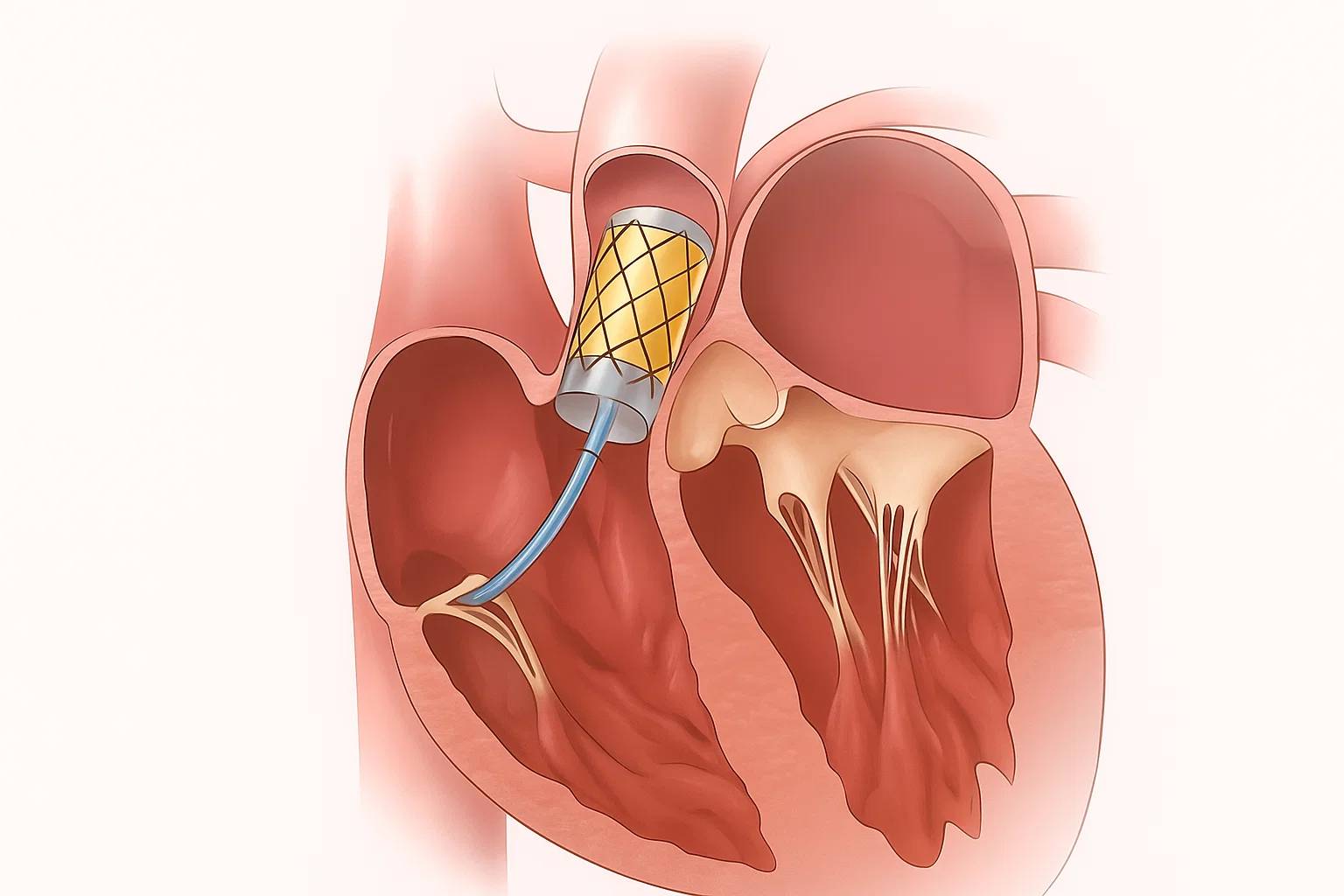






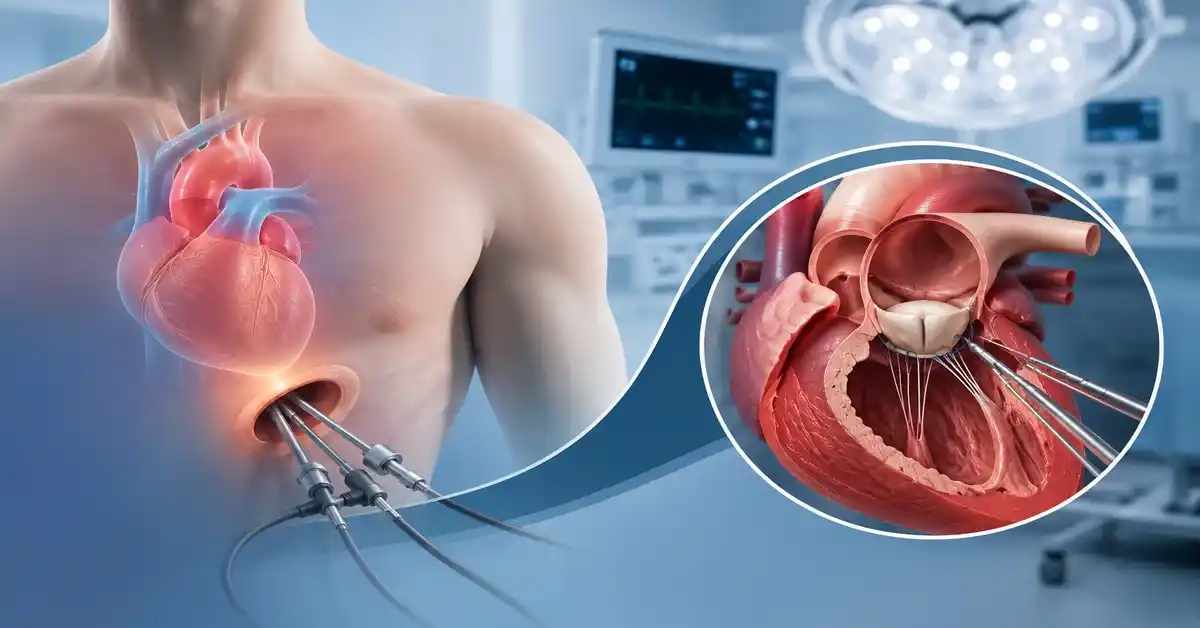
Minimally invasive heart valve surgery is an advanced surgical approach used to repair or replace selected diseased heart valves through smaller incisions compared with traditional open-heart surgery. Instead of opening the breastbone completely in some patients, the surgeon may reach the heart through small side-chest incisions between the ribs, sometimes using video-assisted or robotic techniques depending on the valve, patient anatomy, and surgical-team experience.
This approach may be used for selected mitral valve, aortic valve, and tricuspid valve conditions. However, it is not suitable for every patient. Some cases require traditional open surgery because of severe valve calcification, previous complex heart operations, associated coronary artery disease, aortic enlargement, multiple valve disease, infection, or anatomy that makes limited access unsafe or less effective.
The main advantage of minimally invasive valve surgery is not only the smaller incision. In suitable patients, it may also reduce pain, improve cosmetic results, support earlier mobility, and shorten recovery compared with full sternotomy surgery. Still, it remains major heart surgery and requires general anesthesia, specialized cardiac surgery expertise, and careful postoperative monitoring.
What Is Minimally Invasive Heart Valve Surgery?
Minimally invasive heart valve surgery is a procedure in which a diseased valve is repaired or replaced through smaller surgical openings. The surgeon uses specialized instruments, cameras, and sometimes robotic assistance to reach the valve and perform the operation with limited chest access.
The goal is the same as traditional surgery: to correct valve disease, improve blood flow through the heart, reduce symptoms, and prevent complications. The difference is mainly the access route, not the seriousness of the operation.
Difference Between Minimally Invasive and Traditional Surgery
In traditional open-heart valve surgery, the surgeon often opens the breastbone to reach the heart. In minimally invasive surgery, smaller incisions are made, often through the side of the chest or a limited chest opening. This may reduce trauma to the chest wall in selected patients.
Main differences include:
- Smaller skin incision.
- Less chest-wall trauma in some patients.
- Smaller scar.
- Less pain in selected cases.
- Earlier movement in some patients.
- Shorter hospital stay in some cases.
- Need for specialized surgical expertise.
- Not suitable for every valve condition.
- May take longer in complex cases.
- Requires careful preoperative imaging.
The best approach is not always the smallest incision. The safest option is the one that allows the surgeon to repair or replace the valve effectively.
Is It Still Open-Heart Surgery?
Many patients describe minimally invasive valve surgery as “not open-heart surgery,” but in many cases it is still real heart surgery. The heart may still need to be supported by a heart-lung machine, and the patient still requires general anesthesia and intensive monitoring.
Patients should understand that:
- It is still major surgery.
- General anesthesia is usually needed.
- A heart-lung machine may be used.
- Intensive care monitoring is often required.
- Recovery is faster for some patients, not instant.
- It carries risks like any heart operation.
- Patient selection is essential.
- Surgical-team experience matters.
The word “minimally invasive” refers to the access method, not to a simple or risk-free procedure.
Read about: Symptoms of Coronary Artery Blockage and Treatment Options
When Is Minimally Invasive Heart Valve Surgery Used?
Minimally invasive valve surgery may be used when a valve needs repair or replacement and the patient’s anatomy, valve disease, and overall health make limited-access surgery appropriate. It is commonly discussed for mitral valve repair or replacement and selected aortic or tricuspid valve procedures.
The decision depends on detailed evaluation, including echocardiography, transesophageal echocardiography, CT imaging in some patients, coronary artery assessment, heart function, lung function, and vascular access.
Valve Diseases That May Be Treated
Minimally invasive surgery can be used for selected valve diseases, especially when the problem is localized and there are no complex associated cardiac conditions.
It may be used for:
- Mitral valve regurgitation.
- Selected mitral valve stenosis.
- Mitral valve repair.
- Mitral valve replacement.
- Selected aortic valve replacement.
- Tricuspid valve repair.
- Selected combined valve procedures.
- Certain patients who may benefit from smaller incisions.
If the patient needs complex coronary bypass surgery, multiple valve surgery, or major aortic surgery at the same time, traditional open surgery may be safer and more complete.
Who Is a Suitable Patient?
A suitable patient is someone whose valve problem can be treated safely and effectively through limited access. The expected quality of repair or replacement should not be compromised just to avoid a larger incision.
Factors that may support suitability include:
- Valve disease suitable for minimally invasive access.
- No severe valve or aortic calcification blocking safe surgery.
- No need for complex coronary artery bypass in the same operation.
- Heart function that can tolerate surgery.
- Lung function suitable for anesthesia.
- Suitable femoral vessels if groin access is needed.
- No severe chest deformity.
- No major adhesions from previous surgery.
- Availability of an experienced surgical team.
The final decision should be made by a heart team after reviewing all imaging and test results.
Read about: Non-Surgical Artery Blockage Treatments: Latest Advances
Benefits of Minimally Invasive Heart Valve Surgery
The potential benefits come from reducing the size and impact of the surgical access. In suitable patients, smaller incisions may reduce pain, improve appearance, and allow earlier mobility compared with full sternotomy.
However, benefits vary between patients. Age, valve type, heart function, diabetes, lung disease, and postoperative complications can all affect recovery.
Smaller Incision and Less Pain
One of the main advantages is the smaller incision. Avoiding full breastbone opening in selected patients may reduce chest pain and make breathing, coughing, sitting, and walking easier after surgery.
Potential benefits include:
- Smaller wound.
- Less pain in selected cases.
- Less visible scar.
- Easier movement after surgery.
- Fewer breastbone restrictions when the sternum is not fully opened.
- Better cosmetic comfort.
- Earlier sitting and walking.
- Faster return to light activities.
Pain may still occur around the side incision, ribs, chest drains, or groin access area. Minimally invasive does not mean painless.
Faster Recovery and Earlier Activity
For suitable patients, minimally invasive surgery may support faster recovery compared with traditional open surgery. The patient may be able to walk earlier, regain independence sooner, and return to light daily activity more quickly.
Possible recovery advantages include:
- Shorter hospital stay in some patients.
- Earlier walking.
- Easier breathing due to less pain.
- Less dependence on assistance.
- Earlier return to desk work.
- Faster gradual improvement in fitness.
- Better emotional comfort for some patients.
Still, the heart itself needs time to recover. Heavy exercise, driving, lifting, or strenuous work should only resume after medical approval.
Read about: Cardiac Catheterization for Artery Blockage Treatment
Recovery Time After Minimally Invasive Valve Surgery
Recovery time varies from patient to patient. Some patients feel significantly better within weeks, while others need several months to regain full energy and fitness. Recovery depends on age, valve type, repair versus replacement, heart function before surgery, chronic diseases, and postoperative complications.
Although recovery may be faster than after traditional surgery, patients still need medication, breathing exercises, gradual walking, wound care, cardiac follow-up, and sometimes cardiac rehabilitation.
First Days in the Hospital
After surgery, the patient usually goes to the intensive care unit for close monitoring. The medical team checks blood pressure, heart rhythm, breathing, fluid balance, kidney function, bleeding, and valve function.
In the first days, care focuses on:
- Pain control.
- Heart rhythm monitoring.
- Removing the breathing tube when stable.
- Deep breathing exercises.
- Preventing lung fluid buildup.
- Monitoring bleeding.
- Starting early movement.
- Checking the wound.
- Adjusting heart medications.
- Starting blood thinners when needed.
Hospital stay may be shorter in stable minimally invasive cases, but the exact duration depends on the patient’s condition.
Recovery at Home During the First Weeks
After discharge, recovery continues at home. The patient may feel tired, weak, or have mild pain, appetite changes, or sleep disturbance. These symptoms should gradually improve.
Home recovery recommendations may include:
- Walking daily and increasing distance gradually.
- Taking medications exactly as prescribed.
- Monitoring the wound.
- Checking temperature if infection is suspected.
- Avoiding heavy lifting.
- Sleeping in a comfortable position.
- Continuing breathing exercises.
- Eating a heart-healthy diet.
- Attending follow-up appointments.
- Avoiding driving until approved.
- Monitoring pulse and blood pressure when advised.
- Never stopping anticoagulants without medical approval.
Patients with a mechanical valve may need long-term anticoagulation and regular INR monitoring.

Valve Repair Versus Valve Replacement
Heart valve surgery may involve repairing the patient’s own valve or replacing it with a mechanical or biological valve. Repair means preserving the natural valve as much as possible and improving its function. Replacement means removing the damaged valve and implanting a new one.
When a durable, high-quality repair is possible, it may be preferred in some cases, especially for mitral valve disease. However, severely calcified or damaged valves may require replacement.
Minimally Invasive Valve Repair
Minimally invasive valve repair aims to correct the valve while preserving the patient’s own tissue. It may involve suturing valve leaflets, placing a ring, repairing chordae, or reshaping the valve so it closes properly.
Potential advantages of repair in suitable cases include:
- Preserving the natural valve.
- Reduced need for lifelong anticoagulation in some cases.
- Excellent outcomes when repair is durable.
- Strong option for selected mitral regurgitation cases.
- Better preservation of heart function in some patients.
- Can be done minimally invasively in expert centers.
Repair is not always possible. If the valve is severely calcified or damaged, replacement may be more reliable.
Minimally Invasive Valve Replacement
Valve replacement involves placing a new valve. The new valve may be mechanical or biological. Mechanical valves often last longer but usually require lifelong blood-thinning medication. Biological valves may not always require lifelong anticoagulation, but they can wear out over time.
Factors that influence valve choice include:
- Patient age.
- Desire to avoid long-term anticoagulation.
- Ability to monitor INR.
- Pregnancy planning in women.
- Bleeding risk.
- Lifestyle.
- Other medical conditions.
- Expected valve durability.
- Surgeon and cardiologist recommendation.
The decision should be shared between the patient and the heart team after clear explanation of benefits and limitations.
Read about: Treating Coronary Artery Blockage with Non-Surgical Techniques
Is Every Patient Suitable for Minimally Invasive Valve Surgery?
No. Not every valve condition is suitable for minimally invasive surgery. Some patients need traditional open surgery because it provides wider access and better control in complex cases. Choosing open surgery does not mean choosing an outdated technique. In some patients, it is the safest and most effective option.
The priority is not the smallest scar. The priority is a safe operation and a durable valve result.
Cases Where Minimally Invasive Surgery May Not Be Suitable
Minimally invasive surgery may not be suitable when limited access is unsafe or when the patient needs additional complex procedures.
Open surgery may be preferred in cases of:
- Severe valve or aortic calcification.
- Need for complex coronary artery bypass.
- Multiple valve disease.
- Previous heart surgery with severe adhesions.
- Large aortic aneurysm.
- Severe chest deformity.
- Advanced lung disease.
- Unsuitable femoral vessels.
- Very poor heart function.
- Complex active valve infection.
- Need for multiple heart repairs.
In these situations, traditional open surgery may provide better safety and surgical control.
Importance of Surgical-Center Experience
Minimally invasive valve surgery requires an experienced team because access and visibility are more limited than in traditional surgery. Experience can affect operation time, repair quality, complication risk, and ability to manage unexpected findings.
Important center factors include:
- Experience in minimally invasive valve surgery.
- Intraoperative transesophageal echocardiography.
- Specialized cardiac anesthesia.
- Cardiac intensive care.
- Mitral valve repair expertise.
- Ability to convert to open surgery if needed.
- Infection-prevention protocols.
- Cardiac rehabilitation planning.
- Clear discussion of risks and options.
Minimally invasive surgery is not only a device or incision. It is a complete system of expertise, imaging, anesthesia, and postoperative care.
Read about: Coronary Artery Replacement: Turkey vs Germany
Possible Risks and Complications
Although minimally invasive valve surgery has advantages, it remains heart surgery and carries risks. Risk varies depending on the patient, valve disease, technique, and team experience.
Most suitable patients recover well, but understanding warning signs helps detect complications early.
General Surgical Risks
Possible risks include:
- Bleeding.
- Wound infection.
- Heart rhythm disturbance.
- Fluid around the heart or lungs.
- Blood clot.
- Stroke in rare cases.
- Temporary kidney function decline.
- Chest or incision pain.
- Need for blood transfusion.
- Conversion to open surgery.
- Failed repair or need for later intervention.
- Anesthesia-related complications.
These risks do not mean the surgery is unsafe, but they show why careful selection and follow-up are essential.
Warning Signs After Discharge
After leaving the hospital, the patient should monitor symptoms carefully. Some signs may indicate infection, rhythm disturbance, fluid buildup, medication problems, or complications.
Contact a doctor urgently if there is:
- Fever or chills.
- New or severe chest pain.
- Increasing shortness of breath.
- Persistent palpitations.
- Dizziness or fainting.
- Severe leg swelling.
- Redness or drainage from the wound.
- Ongoing bleeding.
- Rapid weight gain from fluid retention.
- Severe cough or bloody sputum.
- Sudden weakness or speech difficulty.
- Leg pain or swelling.
- Abnormal INR if taking warfarin.
Early communication with the medical team can prevent worsening complications.
Read about: The Best Tests Before Open Heart Surgery
Preparation Before Minimally Invasive Heart Valve Surgery
Good preparation helps reduce risk and support recovery. Preparation begins with heart imaging, anesthesia assessment, medication review, and management of blood thinners, diabetes, blood pressure, and infections.
The patient should clearly understand the plan: which valve is affected, whether repair or replacement is expected, what type of valve may be used, hospital stay, recovery time, and follow-up plan.
Tests Needed Before Surgery
Tests may include:
- Echocardiography.
- Transesophageal echocardiography.
- ECG.
- Coronary angiography or coronary CT when needed.
- CT scan of chest or vessels in selected patients.
- Complete blood tests.
- Kidney and liver function tests.
- Coagulation tests.
- Lung function assessment.
- Dental evaluation when infection risk is suspected.
- Anesthesia evaluation.
- Medication and anticoagulant review.
- General fitness assessment.
Some patients need special preparation if they take warfarin, have a previous valve, or have a history of blood clots.
Important Preoperative Instructions
Before surgery, patients must follow medical instructions carefully. Blood thinners and heart medications should not be stopped without guidance because this can cause serious complications.
General instructions include:
- Complete all requested tests.
- Inform the doctor about all medications.
- Do not stop anticoagulants without approval.
- Control diabetes and blood pressure.
- Stop smoking as much as possible.
- Treat infections before surgery.
- Follow fasting instructions.
- Arrange support after discharge.
- Understand the new valve plan if replacement is needed.
- Ask about cardiac rehabilitation.
Good preparation makes the postoperative period safer and more organized.
Read about: Open Heart Surgery Cost: Turkey vs USA
Cardiac Rehabilitation After Valve Surgery
Cardiac rehabilitation is an important part of recovery after heart valve surgery. Recovery is not only wound healing. It also includes regaining strength, breathing capacity, walking ability, medication stability, and confidence.
Rehabilitation may begin in the hospital and continue through an outpatient or home-based program depending on the patient’s condition and available services.
Walking and Breathing Exercises
In the first days and weeks, gradual walking and breathing exercises are central. They help prevent clots, improve lung function, reduce fatigue, and rebuild confidence.
General advice includes:
- Walk short distances frequently.
- Increase distance gradually.
- Avoid sudden overexertion.
- Use an incentive spirometer if advised.
- Cough safely when needed.
- Rest between activities.
- Monitor pulse and breathlessness.
- Avoid heavy lifting.
- Follow wound-care instructions.
- Report new chest pain or shortness of breath.
Regular walking is usually more important than intense exercise at the beginning.
Returning to Work and Daily Life
Return to work depends on the type of work, surgery, recovery speed, and whether complications occurred. Desk work may be possible earlier than physical labor, but timing should be medically approved.
Factors that influence return include:
- Type of surgery.
- Type of valve.
- Complications.
- Energy level.
- Job demands.
- Blood thinner use.
- Walking ability.
- Wound healing.
- Cardiologist and surgeon approval.
- Cardiac rehabilitation progress.
Even after minimally invasive surgery, return should be gradual rather than sudden.
Read about: Cost of Open Heart Surgery in Turkey 2026
Conclusion
Minimally invasive heart valve surgery is an advanced option for selected patients with valve disease. It may offer smaller incisions, less pain, smaller scars, earlier movement, and faster recovery compared with traditional open surgery in suitable cases. However, it is not appropriate for every patient and remains major heart surgery that requires careful evaluation and an experienced team.
Recovery time depends on the valve involved, repair versus replacement, heart function before surgery, patient age, and other medical conditions. Many suitable patients may recover faster than after full open surgery, but full return to normal activity can still take weeks to months, with medication, follow-up, and cardiac rehabilitation.
Frequently Asked Questions: Minimally Invasive Heart Valve Surgery
Is minimally invasive heart valve surgery safe?
It can be safe in suitable patients when performed by an experienced team, but it is still major heart surgery and requires careful evaluation.
Can all heart valves be treated minimally invasively?
No. Some mitral, aortic, or tricuspid valve cases may be suitable, while complex cases may need traditional open surgery.
How long is recovery after minimally invasive valve surgery?
Recovery varies, but many patients need several weeks for early recovery and several months for full return to activity.
Is valve repair better than replacement?
When a durable repair is possible, it may be preferred in selected cases, especially mitral valve disease. Severely damaged valves may need replacement.
Can minimally invasive surgery be converted to open surgery?
Yes. The surgeon may convert to open surgery if it becomes safer or necessary during the procedure.