





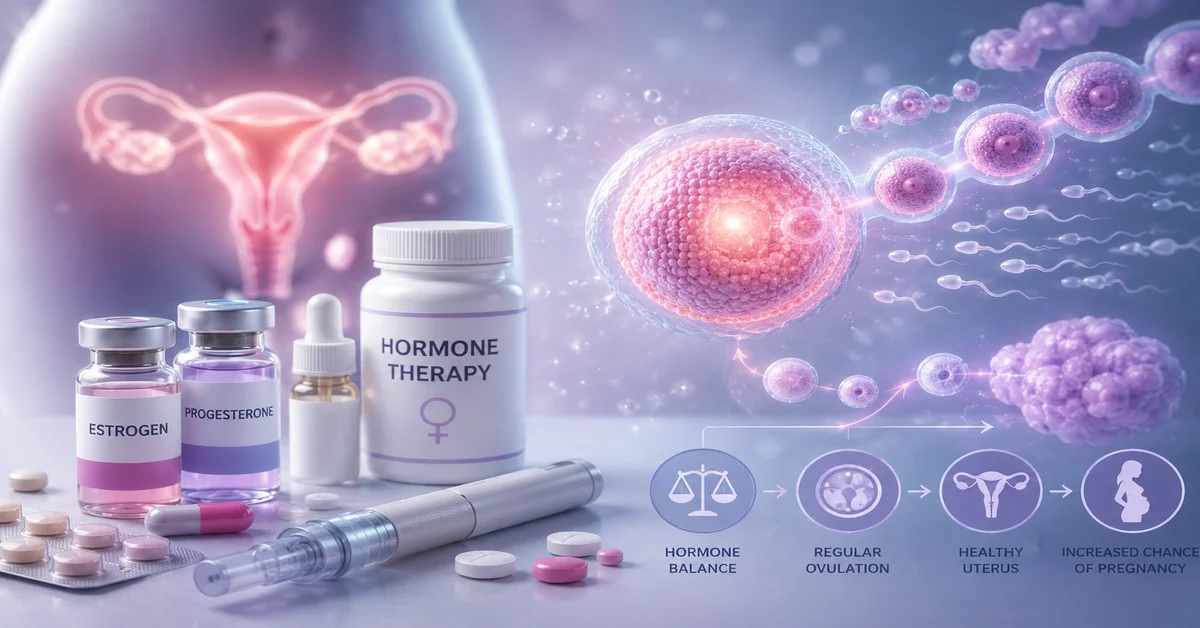
Hormonal therapies to boost pregnancy are among the most important treatment options for women who experience irregular ovulation, delayed pregnancy, PCOS, hormonal imbalance, low or irregular FSH and LH activity, or unexplained difficulty conceiving. Female fertility depends on a precise hormonal relationship between the brain, pituitary gland, ovaries, uterine lining, and reproductive timing. When this balance is disrupted, ovulation may become irregular and pregnancy chances may decrease.
Hormonal therapy for pregnancy does not mean that every woman needs the same medication or the same dose. Some women may need oral ovulation induction medications. Others may need hormone injections for pregnancy, IVF hormone treatment, or medications to correct thyroid, prolactin, insulin resistance, or PCOS-related hormone problems. The correct approach depends on the diagnosis.
Ovulation induction medications can help follicles grow and release an egg at the right time. This may improve pregnancy chances through timed intercourse, intrauterine insemination, or IVF. However, fertility drugs for women must be used carefully and with medical monitoring. Random or repeated use without ultrasound follow-up may increase the risk of ovarian over-response, multiple pregnancy, cyst formation, or poor treatment timing.
At Safemedigo, a fertility hormone therapy plan begins with a full assessment. This may include menstrual history, hormone tests, ultrasound, ovarian reserve evaluation, thyroid and prolactin testing, PCOS assessment, insulin resistance screening, and semen analysis for the partner when needed. The goal is to choose the most suitable hormonal therapy plan, not simply to prescribe stimulants for every case.
Hormonal Therapy For Pregnancy And Fertility Boost
Hormonal therapy for pregnancy aims to support ovulation, regulate reproductive hormones, improve follicle development, and increase the chances of fertilization. These therapies are commonly used for women with ovulation disorders, PCOS, irregular cycles, hormonal imbalance, or some unexplained infertility cases when part of a structured fertility plan.
Treatment may include oral medications, hormone injections, ovulation trigger injections, progesterone support, thyroid treatment, prolactin treatment, or insulin resistance management. In IVF hormone treatment, hormones are used in a more controlled way to stimulate multiple follicles, prevent early ovulation, mature eggs, and support the uterine lining after embryo transfer.
A fertility boost does not depend only on stimulating the ovaries. Tubal health, sperm quality, uterine lining, timing, age, ovarian reserve, and general health all influence pregnancy chances. This is why hormonal therapy should be part of a complete fertility evaluation.
Ovulation Induction Medications
Ovulation induction medications are used to help the ovary grow and release an egg. They are commonly prescribed when ovulation is irregular, absent, or difficult to predict. These medications may be used with timed intercourse, IUI, or as part of a broader fertility plan.
Ovulation induction may include:
- Oral medications such as letrozole or clomiphene.
- Insulin-sensitizing medication in selected cases.
- FSH injections to stimulate follicle growth.
- LH-containing injections in selected protocols.
- Trigger injections to time ovulation.
- Ultrasound monitoring.
- Hormone blood tests when needed.
- Progesterone testing after ovulation.
- Timed intercourse or IUI planning.
The goal is not always to produce many eggs. In natural-cycle fertility treatment, one good follicle may be enough when tubes and sperm are healthy.
Fertility Drugs For Women
Fertility drugs for women include several types of medications used for different fertility problems. The right medication depends on the cause of infertility, age, ovarian reserve, PCOS status, previous response, and treatment goal.
Common fertility drugs may include:
- Letrozole for selected ovulation disorders.
- Clomiphene citrate for ovulation induction in some cases.
- Gonadotropin injections containing FSH or LH activity.
- hCG or similar trigger injections.
- Metformin when insulin resistance is present or clinically indicated.
- Progesterone support in selected cases.
- Thyroid medication if thyroid imbalance affects fertility.
- Prolactin-lowering medication when prolactin is high.
- IVF stimulation medications.
- Medications to prevent premature ovulation in IVF.
Fertility drugs should not be chosen based on another patient’s experience. The same medication may work well for one woman and be unsuitable for another.
Hormone Injections For Pregnancy
Hormone injections for pregnancy are often used when oral medications are not enough, when stronger ovarian stimulation is needed, or during IVF. These injections may contain FSH, LH activity, hMG, hCG, or other hormones depending on the protocol.
Hormone injections can help follicles grow, mature eggs, and prepare treatment timing. However, they require careful monitoring because they may stimulate more than one follicle. This can increase pregnancy chances but may also increase the risk of twins or higher-order multiple pregnancy if not managed properly.
Monitoring usually includes ultrasound scans and sometimes blood tests such as estradiol, LH, or progesterone. Based on the response, the doctor may adjust the dose, schedule the trigger injection, continue treatment, or cancel a cycle if the response becomes unsafe.
Read about: Modern Fertility Treatments for Men and Women You Should Know
Best Ovulation Stimulants For Improving Fertility
The best ovulation stimulants for improving fertility depend on the diagnosis. There is no single medication that is best for all women. A woman with PCOS may need a different approach from a woman with low ovarian reserve, hypothalamic dysfunction, thyroid imbalance, or unexplained infertility.
Some patients respond well to oral medications. Others need hormone injections or IVF hormone treatment. If the fallopian tubes are blocked or sperm quality is severely reduced, ovulation stimulants alone may not be enough.
Success depends on diagnosis, timing, monitoring, and whether other fertility factors have been checked. Even the best ovulation stimulants may fail if intercourse is mistimed, ovulation is not confirmed, or another factor prevents pregnancy.
Ovulation Stimulation Drugs
Ovulation stimulation drugs help follicles grow inside the ovaries. They may be used in simple ovulation induction, IUI cycles, or IVF. The dose and medication type depend on the treatment plan and the patient’s ovarian response.
Ovulation stimulation drugs may include:
- Letrozole.
- Clomiphene citrate.
- FSH injections.
- FSH and LH combination injections.
- hMG injections.
- hCG trigger injection.
- GnRH antagonist medications in IVF.
- GnRH agonist medications in selected IVF protocols.
- Progesterone support after ovulation or embryo transfer.
- Adjunct medications based on diagnosis.
These drugs should be monitored carefully. Too little response may fail to induce ovulation, while too strong a response may increase safety concerns.
Causes Of Ovulation Disorders
Causes of ovulation disorders are varied. Identifying the cause is essential before starting hormone treatment for infertility. If the wrong cause is assumed, treatment may be delayed or ineffective.
Common causes include:
- PCOS.
- Thyroid dysfunction.
- High prolactin.
- Low or high body weight.
- Excessive exercise.
- Severe stress.
- Hypothalamic dysfunction.
- Pituitary hormone disorders.
- Low ovarian reserve.
- Premature ovarian insufficiency.
- Insulin resistance.
- Certain medications.
- Chronic medical conditions.
- Age-related changes.
Evaluation may include cycle history, hormone testing, ultrasound, ovarian reserve testing, insulin resistance screening, and partner semen analysis. Treatment should target the actual cause.
Boost Ovulation Naturally
Boost ovulation naturally means supporting the body’s reproductive environment through healthy habits. Natural methods may help, especially when ovulation problems are linked to insulin resistance, weight changes, stress, or lifestyle factors.
Helpful steps may include:
- Maintaining a healthy weight.
- Eating balanced meals.
- Reducing refined sugar.
- Increasing protein and fiber.
- Exercising regularly.
- Improving sleep.
- Managing stress.
- Avoiding smoking.
- Reducing alcohol.
- Treating vitamin deficiencies if confirmed.
- Tracking menstrual cycles.
- Timing intercourse around ovulation.
Natural support can improve the overall plan, but it should not replace medical care when ovulation is absent or pregnancy is delayed.
Read about: Do Natural Fertility Vitamins Really Help with Conception?
Role Of Hormones In Pregnancy Success
Hormones play a central role in pregnancy success from follicle growth to ovulation, fertilization, implantation, and early pregnancy support. FSH stimulates follicle development, LH helps trigger ovulation, estrogen supports the uterine lining, progesterone prepares the lining for implantation, and hCG supports early pregnancy.
When these hormones are not balanced, ovulation may not occur regularly or the uterine lining may not be optimally prepared. Thyroid dysfunction, high prolactin, insulin resistance, PCOS, and low ovarian reserve may also affect this balance.
Regulating hormones for pregnancy requires correct testing and timing. Hormone results must be interpreted according to the day of the menstrual cycle and the patient’s clinical situation.
FSH Hormone For Fertility
FSH hormone for fertility is essential because it stimulates ovarian follicles to grow. In fertility treatment, FSH injections may be used when the ovaries need additional stimulation, especially in IUI or IVF cycles.
FSH levels measured early in the cycle may help doctors understand ovarian response, especially when interpreted with AMH, antral follicle count, age, and ultrasound findings. A high baseline FSH may suggest reduced ovarian reserve or reduced ovarian response in some patients.
FSH should not be used randomly. The dose depends on age, ovarian reserve, weight, previous response, PCOS risk, and treatment type. Too much stimulation may increase risks, while too little may not produce an adequate response.
LH Hormone Ovulation
LH hormone ovulation is closely connected because the natural LH surge triggers egg release. In a normal cycle, LH rises sharply before ovulation. This is why home ovulation tests often detect LH surge.
In fertility treatment, LH activity may be useful in some protocols, especially when the patient has low LH activity, poor response, or specific IVF needs. In other cases, FSH alone may be enough. The need for LH depends on diagnosis and response.
Understanding LH helps the doctor time ovulation, trigger injection, IUI, egg retrieval, or timed intercourse. However, LH should not be interpreted alone; ultrasound and other hormones may also be needed.
Regulating Hormones For Pregnancy
Regulating hormones for pregnancy means correcting the hormonal factors that affect ovulation, uterine lining preparation, and early pregnancy support. This may include treating thyroid imbalance, high prolactin, PCOS-related hormone disruption, insulin resistance, or luteal phase problems.
Hormone regulation may involve:
- TSH testing for thyroid function.
- Prolactin testing.
- FSH and LH evaluation.
- Estradiol and progesterone testing.
- AMH and ovarian reserve assessment when needed.
- Insulin resistance evaluation.
- Cycle monitoring.
- Ovulation induction.
- Progesterone support in selected cases.
- Lifestyle and weight management.
- Follow-up blood tests.
- Ultrasound monitoring.
Regulation is not a one-time step. It is part of a fertility plan that may be adjusted according to response.
Read about: How Hormones Affect Fertility: Key Tests Couples Should Consider
Hormone Treatment For Infertility Solutions
Hormone treatment for infertility solutions is used when fertility problems are related to ovulation, hormone imbalance, luteal support, PCOS, thyroid dysfunction, prolactin elevation, or ovarian response. It can be highly effective when the cause is correctly identified.
However, hormone treatment is not suitable for every infertility case. If tubes are blocked, sperm quality is severely reduced, or uterine factors are present, hormonal treatment alone may not solve the problem. That is why fertility evaluation should include both partners.
A good hormone treatment plan answers three questions: What is the diagnosis? What is the goal of treatment? How will response be monitored? Without these answers, fertility medication may lead to repeated unsuccessful cycles.
Hormonal Imbalance And Pregnancy
Hormonal imbalance and pregnancy are closely linked. Ovulation may be delayed or absent if hormones are disrupted. The uterine lining may also be affected if estrogen and progesterone patterns are not appropriate.
Hormonal imbalances that may affect pregnancy include:
- PCOS-related androgen excess.
- Thyroid dysfunction.
- High prolactin.
- Low progesterone in selected cases.
- Irregular LH patterns.
- Low ovarian reserve.
- Hypothalamic dysfunction.
- Insulin resistance.
- Luteal phase concerns.
- Stress-related cycle disruption.
Treatment depends on the specific imbalance. Correcting one hormone may restore cycles in some women, while others need ovulation induction or IVF.
Female Infertility Treatment Options
Female infertility treatment options range from simple hormone correction to advanced assisted reproduction. The correct option depends on diagnosis, age, duration of infertility, ovarian reserve, tubal status, sperm quality, and previous treatments.
Options may include:
- Lifestyle and weight optimization.
- Thyroid or prolactin treatment.
- PCOS management.
- Oral ovulation induction.
- Injectable hormone stimulation.
- Timed intercourse.
- IUI.
- IVF.
- IVF with ICSI when indicated.
- Progesterone support.
- Treatment of uterine factors.
- Surgery for specific conditions when needed.
The best plan is the one that treats the cause while considering time, safety, and pregnancy chances.
Fertility Hormone Therapy Plan
A fertility hormone therapy plan should be individualized. It should include diagnosis, medication type, dose, monitoring schedule, ovulation timing, and when to change strategy if pregnancy does not occur.
A structured plan may include:
- Baseline ultrasound.
- Hormone blood tests.
- Medication selection.
- Dose schedule.
- Follicle monitoring.
- Endometrial lining assessment.
- Trigger timing.
- Timed intercourse or IUI plan.
- Progesterone check or support when needed.
- Pregnancy test timing.
- Review after each cycle.
- Clear limit before moving to another option.
This approach helps avoid random treatment and improves safety.

PCOS Fertility Treatment And Hormonal Support
PCOS fertility treatment and hormonal support are among the most common uses of ovulation induction. PCOS can cause irregular ovulation, long cycles, high androgen levels, insulin resistance, and delayed pregnancy. Hormonal treatment can help the ovary release an egg more predictably.
The plan may start with lifestyle changes, insulin resistance management, and oral ovulation medication. Some women may require hormone injections, but they must be used carefully because PCOS ovaries can sometimes respond strongly.
PCOS fertility treatment should also include partner evaluation and tubal assessment when needed. If pregnancy does not occur after appropriate cycles, IUI or IVF may be considered.
PCOS Fertility Treatment
PCOS fertility treatment aims to restore ovulation and increase pregnancy chances. The plan depends on age, weight, insulin resistance, cycle pattern, hormone levels, and how long the couple has been trying.
A PCOS fertility plan may include:
- PCOS diet and lifestyle changes.
- Weight management if needed.
- Insulin resistance treatment.
- Letrozole or other ovulation induction medication.
- Ultrasound monitoring.
- Trigger injection when needed.
- Timed intercourse.
- IUI in selected cases.
- IVF if simpler methods fail or other factors exist.
- Careful monitoring to reduce multiple pregnancy risk.
Many women with PCOS respond well to ovulation induction, but treatment should be medically supervised.
Improve Egg Quality Naturally
Improve egg quality naturally is a common goal, but it should be understood realistically. Egg quality is influenced strongly by age and genetics, but lifestyle, metabolic health, inflammation, sleep, and nutrition may support the environment in which eggs develop.
Supportive steps include:
- Avoiding smoking.
- Maintaining healthy weight.
- Managing insulin resistance.
- Eating nutrient-rich meals.
- Taking folic acid before pregnancy.
- Treating vitamin deficiencies if confirmed.
- Improving sleep.
- Reducing alcohol.
- Managing stress.
- Avoiding extreme diets.
- Controlling thyroid or metabolic issues.
- Following medical advice.
Natural methods cannot reverse age-related egg decline, but they may improve overall reproductive health and treatment readiness.
Read about: Best Foods to Naturally Boost Fertility in Men and Women
IVF Hormone Treatment Explained
IVF hormone treatment is a controlled process used to stimulate the ovaries to produce multiple follicles, prevent early ovulation, mature the eggs, and support implantation after embryo transfer. It is more intensive than simple ovulation induction because the goal is to collect multiple eggs for fertilization in the laboratory.
IVF hormone treatment may be recommended when simpler treatments fail or when there are factors such as blocked tubes, severe male factor infertility, endometriosis, advanced reproductive age, low ovarian reserve, or need for genetic testing.
The protocol is customized according to ovarian reserve, age, previous response, PCOS risk, and fertility diagnosis. Monitoring is essential throughout the cycle.
IVF Hormone Treatment
IVF hormone treatment may include several types of medications. These medications are used at specific stages of the IVF cycle and are adjusted based on ultrasound and blood test response.
IVF hormones may include:
- FSH injections.
- LH or hMG-containing injections.
- GnRH antagonist to prevent early ovulation.
- GnRH agonist in selected protocols.
- Trigger injection for final egg maturation.
- Progesterone support after egg retrieval.
- Estrogen support in selected embryo transfer cycles.
- Medications for frozen embryo transfer preparation.
- Dose adjustments based on response.
The goal is to obtain a safe number of mature eggs while reducing risks such as ovarian hyperstimulation.
Hormone Injections For Pregnancy
Hormone injections for pregnancy in IVF are used to stimulate follicle growth and prepare eggs for retrieval. They are also sometimes used in IUI or ovulation induction cycles. In IVF, they are part of a carefully timed protocol.
Patients using injections should receive clear instructions about:
- Injection timing.
- Dose.
- Storage.
- How to inject.
- What side effects to expect.
- When to attend ultrasound scans.
- When to report symptoms.
- Trigger injection timing.
- Activity restrictions if needed.
- Follow-up schedule.
Proper instruction improves safety and reduces stress during treatment.
Read about: Natural Fertility Treatments: Effective Ways to Boost Conception
Tips To Improve Pregnancy Chances With Hormones
Improving pregnancy chances with hormones requires more than taking medication. The treatment must be matched to the diagnosis, monitored correctly, and supported by healthy lifestyle choices. The couple should also be evaluated together.
Women should avoid comparing their treatment with others. A medication that works for one patient may not be suitable for another. The correct dose depends on age, ovarian reserve, weight, PCOS status, previous response, and treatment goal.
Medical attention is needed if there is severe bloating, strong abdominal pain, shortness of breath, rapid weight gain, heavy bleeding, or unusual symptoms during stimulation. These may suggest excessive ovarian response or another complication.
Boost Ovulation Naturally
Boost ovulation naturally can support hormonal therapy and may improve overall fertility health. Natural steps are especially useful when ovulation problems are linked to lifestyle, weight, insulin resistance, or stress.
Supportive tips include:
- Maintain a healthy weight.
- Eat balanced meals.
- Reduce refined carbohydrates.
- Exercise regularly.
- Sleep well.
- Manage stress.
- Take folic acid before pregnancy.
- Avoid smoking.
- Limit alcohol.
- Time intercourse around ovulation.
- Treat infections if present.
- Avoid unapproved hormonal herbs.
- Keep follow-up appointments.
These steps do not guarantee pregnancy, but they improve the quality of the treatment plan.
Regulating Hormones For Pregnancy
Regulating hormones for pregnancy takes time and follow-up. Some women need one or more cycles to find the correct medication dose. Others need thyroid, prolactin, insulin resistance, or PCOS treatment before ovulation induction begins.
To support hormone regulation:
- Do hormone tests at the correct cycle time.
- Start medication only after baseline evaluation.
- Monitor follicle growth.
- Check progesterone when needed.
- Treat thyroid imbalance.
- Treat high prolactin.
- Manage insulin resistance.
- Adjust medication based on response.
- Avoid repeating cycles without review.
- Reassess after failed cycles.
- Evaluate sperm and tubes if pregnancy does not occur.
- Move to advanced treatment when appropriate.
If pregnancy does not occur despite good ovulation, the next step is not always increasing medication dose. Other fertility factors should be reviewed.
Read about: How Hormones Affect Fertility: Essential Tests for Couples
Conclusion
Hormonal therapies to boost pregnancy can be very effective when infertility is related to ovulation disorders, hormonal imbalance, PCOS, or poor ovarian response. These treatments can support follicle growth, trigger ovulation, regulate hormones, and improve the timing of pregnancy attempts.
The best ovulation stimulants vary from one patient to another. Treatment may include oral medications, hormone injections, IVF hormone treatment, thyroid or prolactin treatment, insulin resistance management, or progesterone support. Because these therapies can carry risks, they should be used with medical supervision and proper monitoring.
Frequently Asked Questions: Hormonal Therapies To Boost Pregnancy
Can hormonal therapy help me get pregnant?
Yes, hormonal therapy may help when pregnancy is delayed due to ovulation problems or hormone imbalance. A correct diagnosis is needed before treatment.
What are the best ovulation stimulants?
There is no single best stimulant for everyone. The choice depends on the cause, age, ovarian reserve, PCOS status, and previous response.
Are hormone injections for pregnancy safe?
They can be safe when monitored by a fertility specialist, but they may increase risks such as multiple pregnancy or ovarian over-response if used incorrectly.
How does FSH hormone support fertility?
FSH helps ovarian follicles grow. In fertility treatment, FSH injections may be used to stimulate follicle development in selected cycles.
Can I boost ovulation naturally?
Healthy weight, balanced nutrition, exercise, sleep, stress control, and insulin resistance management may support ovulation, but medical care is needed when ovulation is absent or pregnancy is delayed.