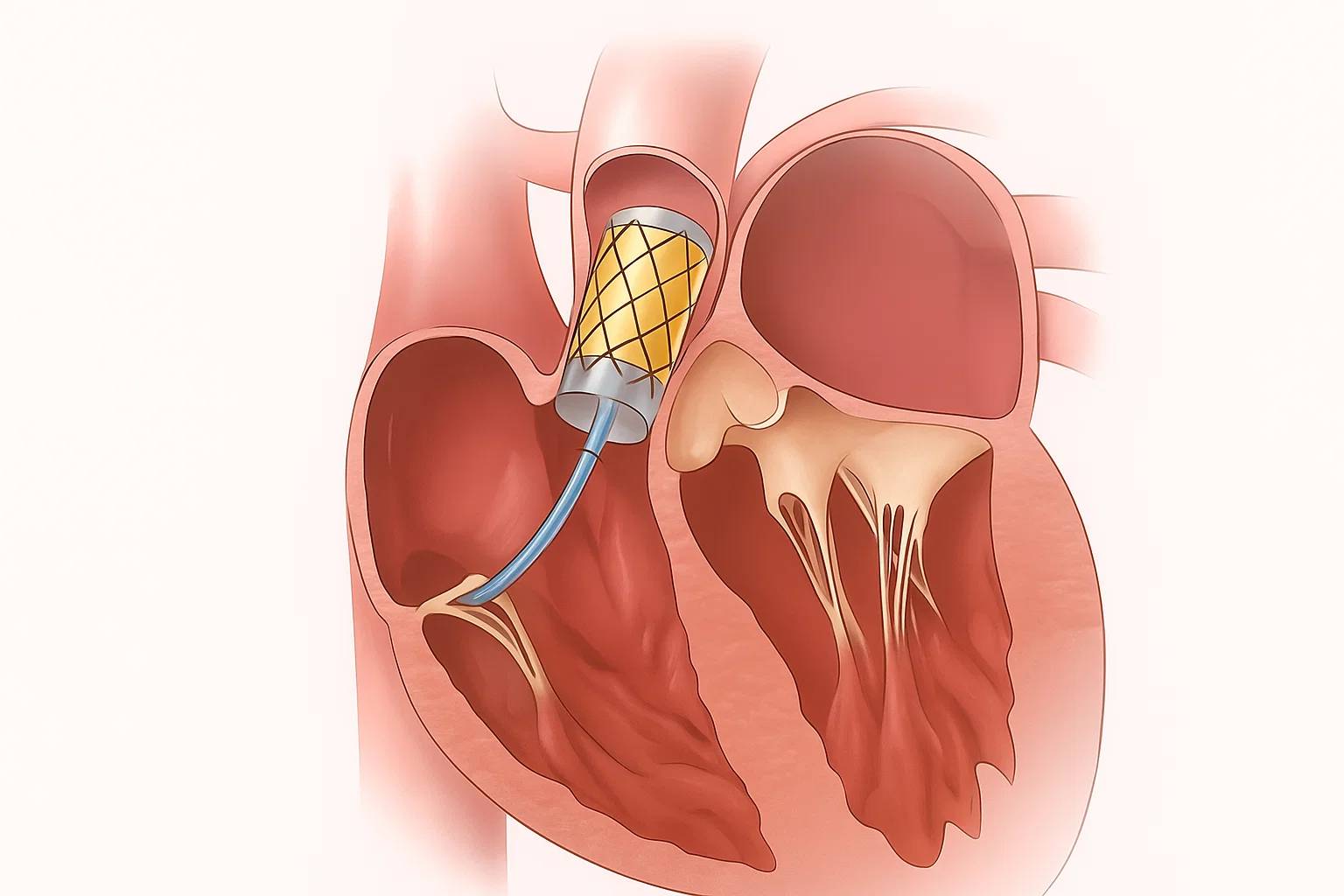






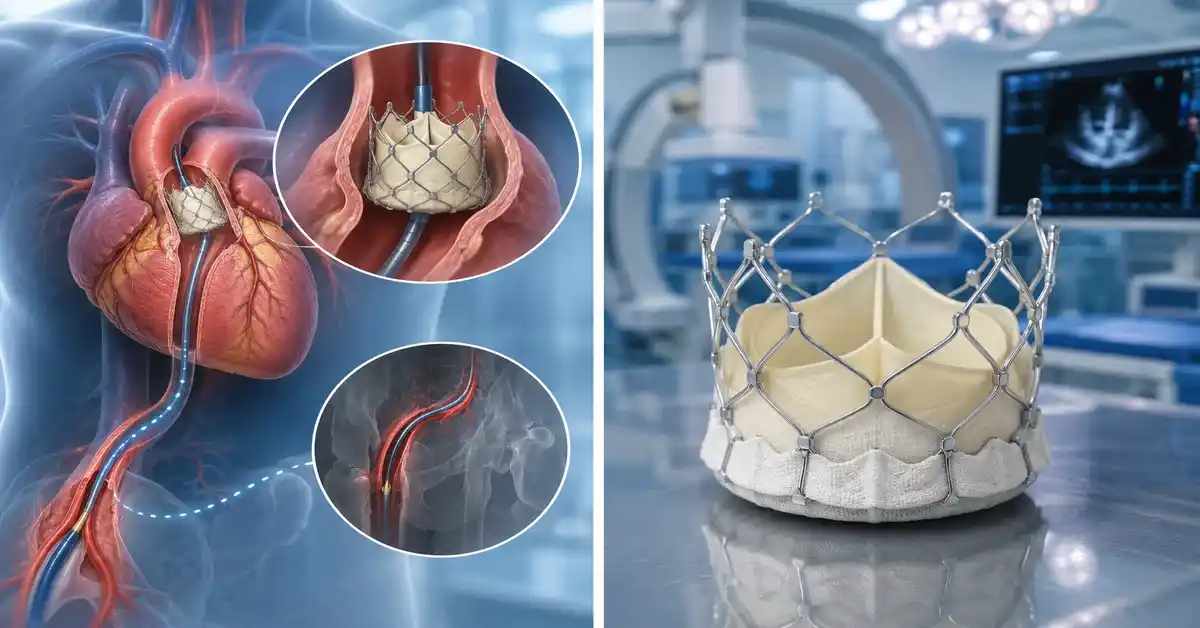
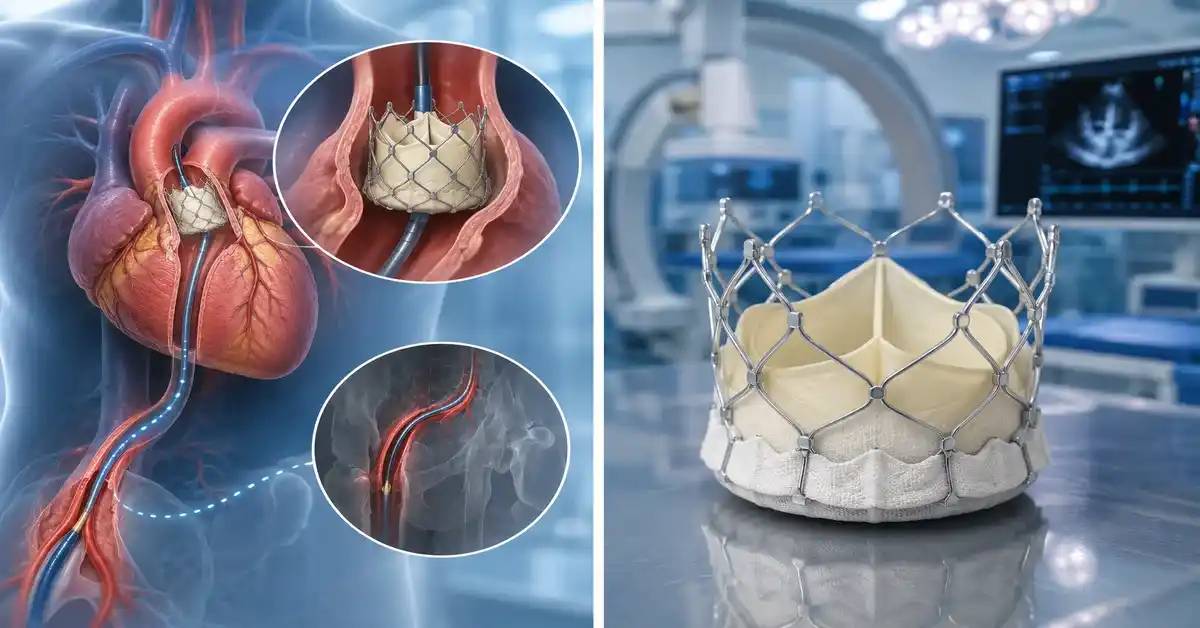
Transcatheter aortic valve replacement, known as TAVR or TAVI, has transformed the treatment of severe aortic stenosis. Instead of opening the chest and surgically removing the diseased valve, physicians can deliver a new biological valve through a catheter, most commonly through an artery in the groin.
For suitable patients, the approach avoids opening the breastbone, usually involves a shorter hospital stay, and allows faster early recovery than conventional surgical valve replacement.
However, describing TAVR as a safe alternative does not mean it is automatically safer or better for everyone. Age, life expectancy, valve anatomy, vascular access, other cardiac disease, and the possibility of future valve procedures all influence whether TAVR or surgical replacement is the better strategy.
What Is TAVR and How Does Transcatheter Aortic Valve Replacement Work?
The aortic valve controls blood flow from the left ventricle into the aorta. Severe narrowing forces the heart to work harder and may eventually produce breathlessness, chest discomfort, fatigue, dizziness, or fainting.
TAVR creates a functioning new valve within the diseased native valve without surgically excising it.
How Is the New Valve Delivered?
A compressed tissue valve is mounted on a catheter-delivery system and advanced through a blood vessel toward the heart.
The transfemoral route through the groin is commonly preferred when the arteries are suitable. Once correctly positioned, the replacement valve is expanded either by a balloon or by its own self-expanding frame. The old valve leaflets are displaced outward while the new valve begins controlling blood flow.
TAVI Versus TAVR
The two terms generally describe the same procedure:
- TAVI: Transcatheter Aortic Valve Implantation.
- TAVR: Transcatheter Aortic Valve Replacement.
Different regions and medical teams may favor one name, but both refer to transcatheter placement of an aortic prosthetic valve.
Is the Old Valve Removed?
Usually not. The transcatheter valve is positioned inside the existing diseased valve.
Selected patients with a failing previous tissue valve may also undergo placement of another transcatheter valve inside the old prosthesis, a strategy commonly described as valve-in-valve treatment.
Who Is a Suitable Candidate for TAVR?
TAVR is most commonly used for patients who require intervention for severe aortic stenosis. The decision is not based solely on the valve measurement, however.
The medical team first determines whether valve replacement is indicated and then compares transcatheter and surgical approaches according to the patient’s overall lifetime strategy.
Patients Who May Benefit From TAVR
Potential factors favoring a transcatheter approach include:
- Severe aortic stenosis.
- Breathlessness, chest pain, fainting, or reduced functional capacity.
- Older age.
- Increased risk from open-heart surgery.
- Significant lung, kidney, or other medical disease.
- Arteries suitable for catheter access.
- No major additional cardiac procedure requiring surgery.
- A deteriorating previous biological valve in selected cases.
Updated guidance recommends TAVI for anatomically suitable patients aged 70 years or older with tricuspid aortic stenosis, while surgery remains particularly important in younger low-risk patients. Other candidates require individualized assessment.
When Can Surgery Be the Better Option?
Surgical replacement may be favored when the patient is relatively young with long life expectancy or requires another cardiac operation simultaneously.
Examples include:
- Coronary bypass surgery is also needed.
- Important disease of the ascending aorta is present.
- Certain bicuspid aortic-valve anatomies.
- Vascular or valve anatomy unsuitable for TAVR.
- Multiple valves require treatment.
- A mechanical prosthetic valve is considered appropriate.
A minimally invasive option is therefore not automatically the best lifetime option.
Why Age Is Not the Only Factor
Two patients of the same age can have very different treatment needs.
The decision also considers life expectancy, frailty, kidney and lung function, vascular anatomy, future coronary access, expected valve durability, and whether another intervention may be required years later.
Read about: Symptoms of Coronary Artery Blockage and Treatment Options
Tests and Planning Before TAVR
Careful planning is a major part of successful transcatheter valve replacement. The valve must be accurately sized and there must be a safe route for delivering it to the heart.
Evaluation therefore combines cardiac imaging with assessment of the arteries and general medical condition.
Echocardiography
An echocardiogram evaluates:
- Severity of aortic stenosis.
- Blood-flow velocity and pressure gradient.
- Left ventricular function.
- Other heart valves.
- Chamber size.
- Associated valve leakage.
Severe stenosis is evaluated through an integrated assessment rather than one measurement alone.
CT Planning of the Valve and Blood Vessels
Specialized CT imaging measures the aortic annulus, assesses calcification, and examines the relationship between the valve and coronary arteries.
It also evaluates the access arteries for:
- Vessel diameter.
- Severe narrowing.
- Calcification.
- Tortuosity.
- Safe passage of the delivery system.
Unsuitable femoral access can change the access strategy or lead to reconsideration of surgery.
Additional Pre-TAVR Tests
Assessment may also include:
- Electrocardiography.
- Blood tests and kidney function.
- Coronary-artery assessment.
- Chest imaging where needed.
- Respiratory assessment in selected patients.
- Medication and anticoagulant review.
- Investigation of potential infection sources when relevant.
- Anesthesia and general-health assessment.

How TAVR Is Performed and What Recovery Is Like
The exact procedure depends on valve design and access route. Transfemoral treatment is commonly used when anatomy permits.
Many transfemoral procedures can be performed using local anesthesia and sedation, although general anesthesia remains appropriate in selected situations.
Main Steps of the Procedure
A typical procedure includes:
- Preparing and monitoring the patient.
- Local or general anesthesia.
- Accessing the selected artery.
- Advancing the catheter to the aortic valve.
- Positioning the replacement valve.
- Expanding the valve.
- Confirming valve function and blood flow.
- Checking for leakage around the new valve.
- Removing the delivery system.
- Closing the vascular access site.
Heart rhythm and valve performance are monitored afterward.
Hospital Stay After TAVR
Shorter early recovery is an important advantage. Many suitable patients can leave hospital within one or two days, although frailty, rhythm problems, vascular complications, or other medical issues can extend the stay.
Discharge does not mean recovery is complete. Fatigue may continue for several weeks, and activity should be increased gradually.
Recovery at Home
Post-discharge care commonly includes:
- Monitoring the groin access site.
- Gradual walking.
- Avoiding strenuous lifting initially.
- Following the new medication plan.
- Monitoring blood pressure or pulse when instructed.
- Attending follow-up appointments.
- Completing scheduled echocardiograms.
Antiplatelet or anticoagulant therapy must follow the individualized discharge prescription rather than another patient’s regimen.
Read about: Non-Surgical Artery Blockage Treatments: Latest Advances
TAVR Versus Surgical Aortic Valve Replacement
TAVR is no longer simply a treatment reserved for patients considered too ill for surgery. Evidence has expanded its use to broader groups when anatomy and long-term considerations are favorable.
Nevertheless, surgery and TAVR have different advantages, and treatment should be planned with the patient’s future cardiac needs in mind.
TAVR and Surgery Compared
| Feature | TAVR | Surgical replacement |
|---|---|---|
| Access | Usually through femoral artery | Chest surgery |
| Breastbone opening | Usually avoided | Commonly required |
| Anesthesia | Sedation or general anesthesia | General anesthesia |
| Early recovery | Usually faster | Usually longer |
| Hospital stay | Often shorter | Usually longer |
| Treating other heart disease simultaneously | Limited | Often possible |
| Mechanical valve option | No | Possible |
| Younger patients | Requires lifetime planning | Important option for many |
| Vascular-access injury | Specific catheter-related risk | Less related to femoral catheter access |
| Pacemaker requirement | Relevant with some TAVR systems | Also possible but profile differs |
| Future valve planning | Essential | Essential |
Are TAVR Results Comparable With Surgery?
Modern randomized trials have demonstrated strong outcomes for carefully selected patients across several surgical-risk groups.
A recent analysis of low-risk randomized trials with follow-up ranging from three to ten years found no significant difference in cardiovascular mortality or overall stroke between transcatheter and surgical replacement, although valve reintervention and durability remain important areas of long-term planning.
How Long Does a TAVR Valve Last?
TAVR uses a biological tissue valve, so permanent lifetime function cannot be guaranteed.
Longer follow-up data continue to accumulate. Patient age, life expectancy, future valve-in-valve feasibility, coronary access, and possible repeat intervention are particularly important in younger patients.
Modern treatment selection therefore increasingly considers lifetime valve management, not only the first procedure.
Read about: Cardiac Catheterization for Artery Blockage Treatment
TAVR Risks and Warning Signs After the Procedure
Less invasive does not mean risk-free. TAVR involves a major heart valve and large arteries, making careful patient selection and procedural expertise important.
Potential TAVR Complications
Risks can include:
- Bleeding.
- Vascular injury.
- Groin hematoma.
- Stroke.
- Heart-rhythm disturbances.
- Need for a permanent pacemaker.
- Leakage around the replacement valve.
- Kidney injury.
- Rare valve displacement.
- Coronary obstruction.
- Infection.
- Rare need for emergency intervention.
The risk profile varies according to anatomy, valve design, and the patient’s underlying health.
Why Can a Pacemaker Be Needed?
The heart’s electrical conduction system lies close to the aortic valve.
Pressure from the new prosthetic valve can interfere with electrical conduction. Some disturbances resolve, while others require a permanent pacemaker. Rhythm monitoring after the procedure helps identify patients who need further treatment.
Warning Symptoms After Discharge
Prompt medical assessment is important for:
- New or severe chest pain.
- Increasing breathlessness.
- Fainting.
- Severe palpitations with dizziness.
- Sudden weakness or speech difficulty.
- Persistent bleeding from the catheter site.
- Rapidly increasing groin swelling.
- Fever or infection signs.
- Rapid fluid retention with worsening breathing.
Long-term cardiology follow-up remains necessary to monitor the valve and heart.
Read about: Treating Coronary Artery Blockage with Non-Surgical Techniques
Conclusion
TAVR has become an effective, less invasive alternative to surgical aortic valve replacement for many patients with severe aortic stenosis. Avoiding breastbone opening in most transfemoral procedures can shorten hospital stay and accelerate early recovery.
Yet catheter treatment is not automatically the right choice for everyone. Younger patients, complex anatomy, other cardiac disease, or the need for additional surgery may favor conventional replacement. The correct decision comes from combining echocardiography, CT planning, vascular assessment, overall health, and long-term valve strategy.
Frequently Asked Questions: Transcatheter Aortic Valve Replacement: A Safe Alternative to Surgery
Is TAVR safer than open-heart surgery?
It is less invasive and often offers faster recovery, but the safest option depends on the patient and anatomy.
Is the chest opened during TAVR?
Most transfemoral TAVR procedures do not require opening the breastbone.
How long is hospitalization after TAVR?
Many suitable patients leave within a short period, sometimes one or two days, although recovery varies.
Can younger patients have TAVR?
It can be considered in selected cases, but durability and lifetime valve planning become especially important in younger patients.
Can a TAVR valve be replaced later?
Repeat transcatheter treatment may be possible in selected cases, depending on valve and coronary anatomy.