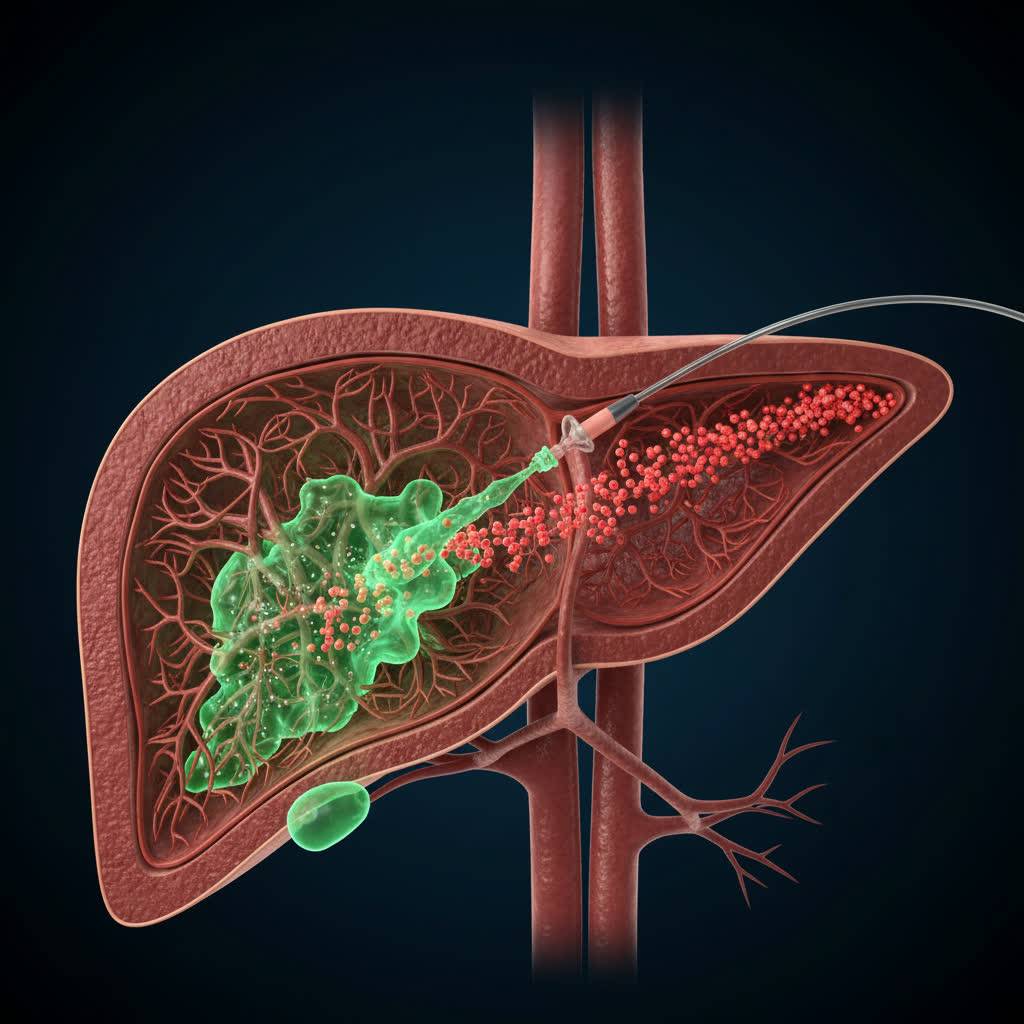






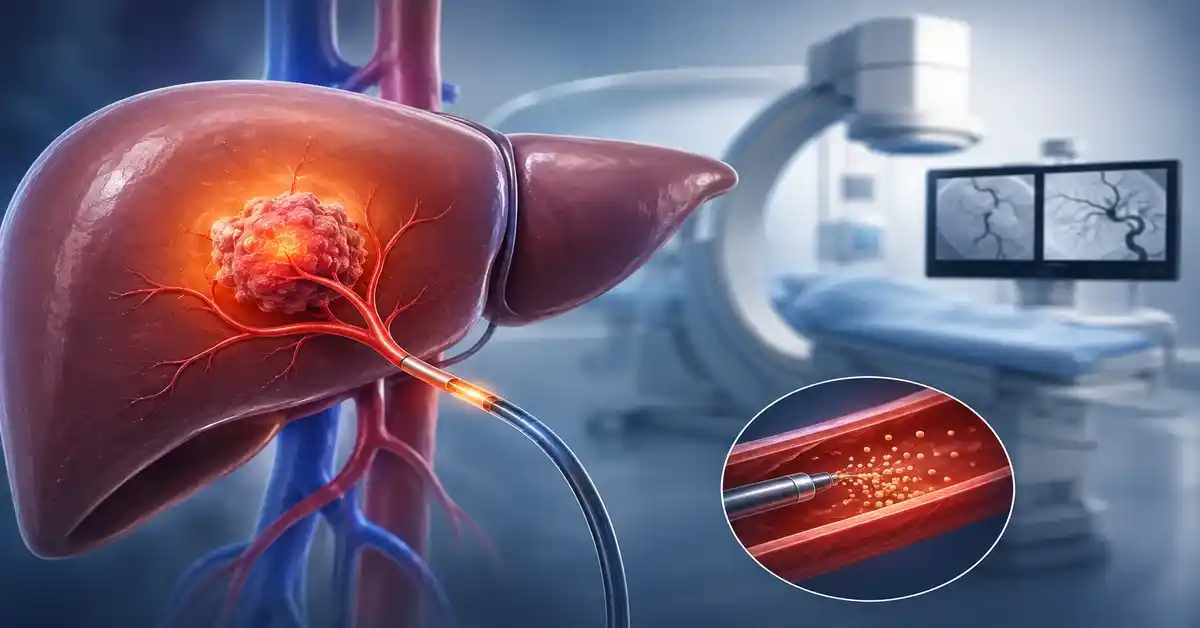
Transarterial chemoembolization, commonly known as TACE, is an important locoregional treatment for selected liver tumors. Rather than removing a tumor through abdominal surgery, an interventional procedure delivers treatment through the arteries supplying the tumor and then reduces blood flow through those vessels.
TACE is particularly established in the management of hepatocellular carcinoma (HCC) when curative options such as surgical resection, transplantation, or local ablation are not appropriate. It can also be used in selected settings for other primary or metastatic liver tumors, although its role is not identical across all tumor types.
The major concept is to concentrate therapy within the tumor while limiting its arterial blood supply. This can reduce systemic exposure compared with conventional intravenous chemotherapy, but TACE is still a significant medical procedure that can affect liver function and cause important complications.
How TACE Works in Liver Tumors
Many hepatocellular carcinomas obtain a substantial portion of their blood supply from the hepatic arterial circulation. TACE exploits this difference to target tumor-feeding vessels more selectively.
Treatment combines delivery of an anticancer agent with embolization of the arterial branches supplying the tumor.
Delivering Treatment Through the Tumor-Feeding Artery
The physician usually enters an artery through the groin or wrist and advances a thin catheter toward the hepatic circulation under imaging guidance.
Angiography identifies the branches feeding the tumor. A smaller microcatheter can then be advanced closer to these vessels so that therapy is delivered as selectively as anatomy allows.
Superselective treatment aims to maximize tumor exposure while preserving as much healthy liver tissue as possible.
Combining Chemotherapy With Embolization
Once the appropriate vessel has been reached, anticancer treatment and embolic material are delivered according to the selected TACE technique.
The intended effects are:
- High local drug exposure within the targeted region.
- Reduced arterial blood flow to the tumor.
- Longer contact between the therapeutic agent and tumor tissue.
- Ischemic stress within the treated lesion.
The extent of embolization is individualized according to tumor distribution and liver reserve.
TACE Versus Intravenous Chemotherapy
TACE is not simply intravenous chemotherapy delivered through a different tube.
Systemic therapy circulates throughout the body, whereas TACE is designed to concentrate treatment within selected hepatic arteries.
This difference can alter the adverse-effect profile, but local therapy can still produce inflammation, biochemical liver injury, pain, fever, and systemic symptoms.
Which Patients May Benefit From Liver TACE?
Appropriate patient selection is fundamental. The decision combines tumor stage with liver function, physical condition, vascular anatomy, and whether a potentially curative treatment remains feasible.
A less invasive procedure should not automatically replace surgery when complete surgical treatment remains safe and realistic.
Unresectable Hepatocellular Carcinoma
TACE is especially important for selected patients with unresectable HCC confined predominantly to the liver and adequate hepatic reserve.
Potential candidates may have multiple tumors or disease distribution that makes resection unsuitable while remaining amenable to selective arterial treatment.
Intermediate-stage HCC is highly heterogeneous, however. Contemporary treatment increasingly separates patients who are good TACE candidates from those who may achieve greater benefit from systemic or combined therapy.
Is TACE Truly an Alternative to Surgery?
It can be an important non-surgical alternative when surgery is not the best option, but it is not inherently superior to resection.
When a tumor can be removed safely with adequate remaining liver function, surgical resection may provide curative potential that should be considered before choosing palliative or disease-control treatment.
TACE becomes particularly relevant when surgery is technically unsuitable, carries excessive risk, or does not appropriately address the tumor distribution.
When TACE May Not Be Appropriate
Caution increases when liver reserve is poor or tumor burden is so extensive that embolization could damage too much functioning liver.
Factors that may change the plan include:
- Advanced liver decompensation.
- Poorly controlled ascites.
- Severe deterioration in general condition.
- Extensive extrahepatic disease.
- Certain forms of major vascular invasion.
- Very high intrahepatic tumor burden.
- Renal impairment or other conditions increasing procedural risk.
These are not simple universal exclusion rules; multidisciplinary assessment remains essential.
Read about: Diagnosing Fatty Liver Disease and Modern Treatment Options
TACE Procedure and Different Chemoembolization Techniques
Treatment planning typically includes multiphase CT or MRI to map the tumors and blood vessels. Blood count, coagulation, liver function, and kidney function are also reviewed.
TACE generally does not require an abdominal incision and is performed by an interventional team with local anesthesia and sedation in many patients.
What Happens During a TACE Session?
A typical procedure involves:
- Reviewing imaging and laboratory results.
- Sterilizing the arterial access site.
- Administering local anesthesia and sedation as appropriate.
- Introducing a catheter into the arterial system.
- Advancing to the hepatic arteries.
- Mapping tumor-feeding branches.
- Positioning a microcatheter selectively.
- Delivering treatment and embolic material.
- Repeating angiographic imaging.
- Removing the catheter and closing the access site.
Post-procedure observation ranges from several hours to an overnight or longer admission according to symptoms and medical condition.
Conventional TACE
Conventional TACE typically combines an anticancer drug with a carrier formulation followed by embolic material.
Drug choice, embolization technique, and degree of selectivity can vary between patients, so conventional TACE is not a single identical protocol.
Drug-Eluting Bead TACE
Drug-eluting bead TACE uses microspheres designed to carry and gradually release an anticancer drug while contributing to embolization.
Newer does not necessarily mean superior for every endpoint or every patient. Comparative studies continue to assess differences in local response, tolerability, and safety between embolization strategies.

TACE Results and Imaging Follow-Up
Success after TACE is not judged solely by whether the tumor becomes physically smaller.
A treated mass can remain similar in size while much of its enhancing, viable tumor tissue has been destroyed. Follow-up therefore emphasizes contrast enhancement and viable tumor rather than diameter alone.
How Treatment Response Is Evaluated
Follow-up CT or MRI may assess:
- Remaining contrast-enhancing tumor.
- Complete loss of enhancement within treated areas.
- New lesions.
- Tumor growth outside the treated field.
- Vascular involvement.
- Disease outside the liver.
- Liver function after therapy.
A second treatment may be recommended when viable tumor remains and liver reserve remains adequate.
Why TACE Should Not Be Repeated Indefinitely
Each embolization session affects both tumor and surrounding liver.
This is especially important in patients with cirrhosis, where hepatic functional reserve may already be limited. Repeated ineffective treatment can worsen liver function without providing sufficient tumor control.
The decision to repeat TACE should therefore be based on tumor response, liver function, overall condition, and whether another therapy has become more appropriate.
Can TACE Make Curative Treatment Possible Later?
Selected patients may experience sufficient tumor control or downstaging to allow reconsideration of surgery, transplantation, or another potentially curative strategy.
TACE may also be used within a broader conversion-treatment plan involving systemic therapy in selected cases.
Conversion to surgery is a possible objective rather than a guaranteed outcome.
Read about: Fatty Liver Diagnosis: Early Tests and Treatment Tips
TACE Risks and Recovery After Chemoembolization
Although TACE avoids major abdominal surgery, it frequently causes symptoms in the first days afterward.
A characteristic group of symptoms is known as post-embolization syndrome, which reflects tissue injury and inflammation following arterial embolization.
Post-Embolization Syndrome
Symptoms can include:
- Right upper abdominal pain.
- Fever without infection.
- Nausea.
- Vomiting.
- Fatigue.
- Reduced appetite.
- Temporary elevation of liver enzymes.
Post-embolization syndrome is one of the most common adverse effects of TACE.
Supportive treatment can include fluids, analgesia, anti-nausea medication, and careful clinical monitoring.
Less Common but More Serious Complications
Potential complications include:
- Significant deterioration in liver function.
- Bile-duct injury.
- Liver abscess.
- Gallbladder inflammation.
- Arterial injury.
- Bleeding at the catheter site.
- Embolization of unintended tissues.
- Contrast-related kidney injury.
- Rare serious vascular or gastrointestinal complications.
Nontarget embolization can cause injury outside the intended treatment area and is one reason highly selective catheter positioning matters.
Warning Signs After TACE
Prompt assessment is important for:
- Severe or increasing abdominal pain.
- Persistent high fever or chills.
- Vomiting that prevents adequate fluid intake.
- Increasing jaundice.
- Marked abdominal swelling.
- Confusion.
- Persistent bleeding from the access site.
- Fainting or significant dizziness.
- New shortness of breath.
These symptoms should not automatically be attributed to normal post-treatment recovery.
Read about: Liver Removal Laparoscopy: Turkey vs USA
TACE Versus Surgery and Other Liver Tumor Treatments
Treatment selection depends on the goal: cure, downstaging, prolonged local control, or broader disease control.
TACE therefore needs to be considered alongside surgery, transplantation, ablation, radioembolization, and systemic therapy rather than in isolation.
Comparing Major Liver Tumor Treatments
| Treatment | General role | Key consideration |
|---|---|---|
| Surgical resection | Resectable disease with adequate liver reserve | Potentially curative |
| Liver transplantation | Selected patients meeting appropriate criteria | Treats tumor and diseased liver |
| Thermal ablation | Selected small tumors | Direct local destruction |
| TACE | Selected unresectable liver-dominant disease | Arterially targeted therapy |
| Radioembolization | Alternative locoregional option | Delivers radiation through arteries |
| Systemic therapy | Selected stages and disease patterns | Treats disease throughout the body |
The least invasive treatment is not necessarily the treatment with the greatest long-term benefit.
TACE Versus Radioembolization
Both are transarterial treatments, but their mechanisms differ.
TACE uses chemotherapy and embolization, whereas radioembolization delivers radioactive microspheres through the hepatic arterial circulation.
Recent comparisons suggest potential differences in tumor-control duration and tolerability, but neither approach is universally superior for every patient.
When Combination Treatment May Be Considered
Modern HCC management increasingly uses combinations of locoregional and systemic therapy in selected patients.
Recent randomized evidence has shown improved disease-control outcomes with certain systemic treatments added to TACE in appropriate unresectable, non-metastatic HCC populations, although benefits and adverse effects depend on the exact regimen.
Combination therapy should therefore be selected according to individual tumor burden and liver function rather than routinely added to every TACE procedure.
Read about: Laparoscopic Gallbladder Removal: Procedure Recovery
Conclusion
TACE is an important locoregional treatment for liver tumors, particularly selected hepatocellular carcinomas that are not best treated by immediate surgical resection. It delivers therapy through the tumor-feeding arteries while simultaneously reducing their blood supply, avoiding major abdominal surgery.
However, TACE should not be described as a universally safer replacement for surgery. Resection, transplantation, or local ablation may provide greater curative potential in suitable patients, while TACE becomes more valuable in other disease stages.
Frequently Asked Questions: Transarterial Chemoembolization for Liver Tumors
Can TACE cure liver cancer?
It can produce strong local tumor responses in selected patients, but it is not a guaranteed curative treatment for every liver cancer.
How many TACE sessions are required?
There is no fixed number. Repeat treatment depends on response, liver function, and whether additional TACE remains beneficial.
Is TACE painful?
Post-embolization abdominal pain can occur and is usually managed with appropriate medication and supportive care.
Does TACE cause hair loss like systemic chemotherapy?
Systemic exposure differs from conventional intravenous chemotherapy, so side effects can differ considerably and depend on the drug and dose used.
When is surgery better than TACE?
When a tumor can be safely and completely resected with adequate remaining liver function, surgery may offer curative potential and deserves consideration.