





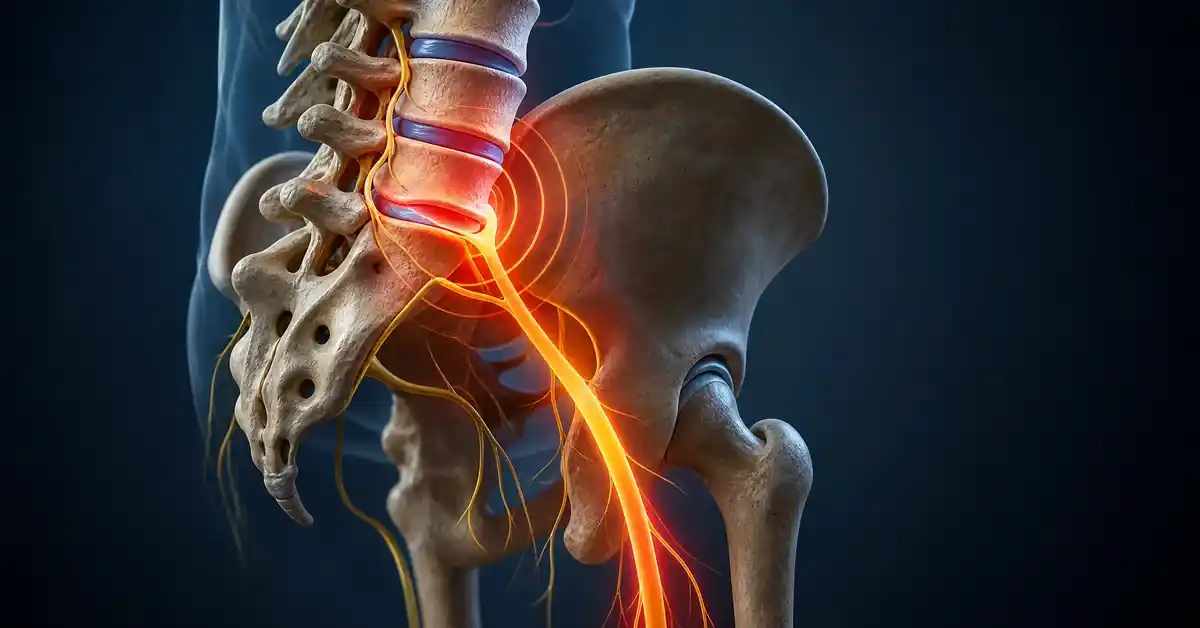
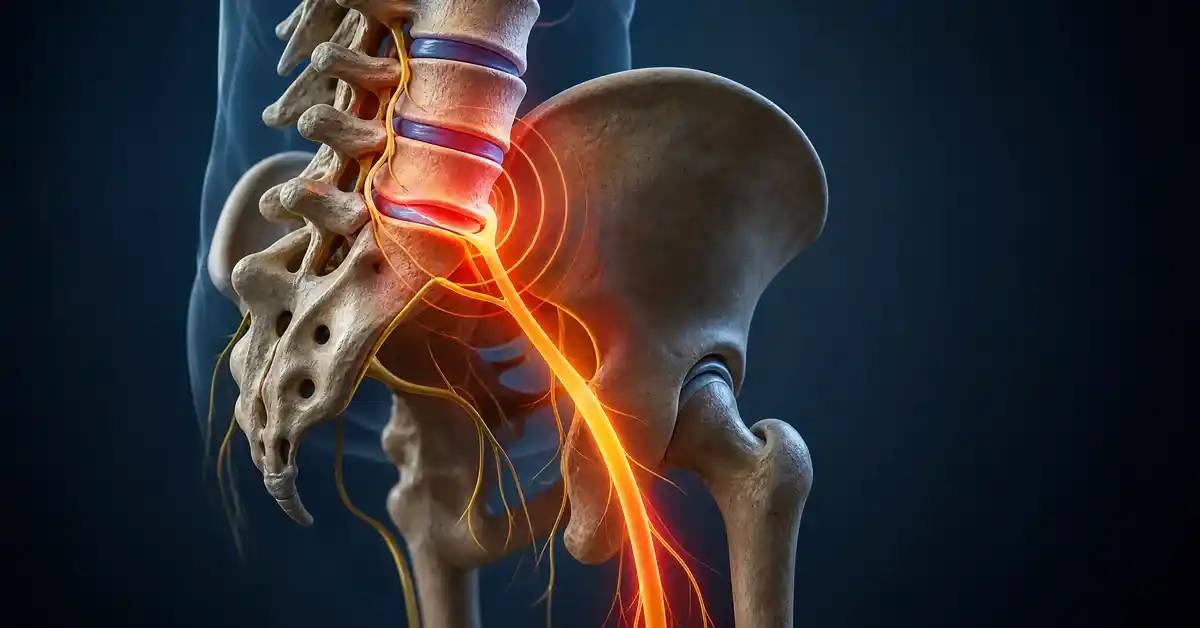
Sciatica caused by lumbar disc herniation develops when a herniated disc irritates or compresses a lumbar nerve root. Pain typically travels from the lower back or buttock into the thigh and leg and may be accompanied by tingling, numbness, or weakness. Even when the pain is intense, finding a herniated disc on MRI does not automatically mean that surgery is required.
At Safemedigo, assessment focuses on identifying the affected nerve, muscle strength, sensation, reflexes, symptom duration, and whether imaging findings actually correspond with the neurological pattern. Many patients can initially be treated with activity, structured rehabilitation, appropriate pain control, and selected interventional treatments. Modern evidence also confirms that spontaneous reduction in the size of lumbar disc herniations is common during conservative treatment, particularly with extruded and sequestered fragments.
Why Herniated-Disc Sciatica Is Often Treated Without Surgery First
Severe leg pain can be alarming, but pain intensity alone does not prove permanent nerve damage.
Spontaneous Improvement and Disc Resorption
The body can gradually remove portions of herniated disc material.
A recent meta-analysis involving more than 2,000 conservatively treated patients reported imaging evidence of disc resorption in approximately 70% overall, with substantially higher rates for sequestered and extruded herniations than for contained bulges. Much of the resorption occurred during the first several months.
Radiological resorption and symptom recovery are not identical, however. Nerve-root inflammation can improve before the MRI abnormality disappears.
When Conservative Sciatica Treatment Is Appropriate
Non-surgical management is generally reasonable when symptoms are compatible with radiculopathy and there is no rapidly progressive neurological deficit or emergency nerve compression.
Treatment duration should be individualized according to pain, weakness, function, symptom duration, neurological examination, and response to care rather than a rigid universal waiting period.
Why Prolonged Bed Rest Is Not Recommended for Sciatica
A short reduction in aggravating activity may be necessary during severe pain, but prolonged inactivity is usually not the goal.
Patients are generally encouraged to remain active within tolerable limits and gradually return to normal daily activity and work.
Physical Therapy and Exercise for Herniated-Disc Sciatica
Physical therapy should be adapted to the patient's neurological findings and functional limitations rather than based on one universal exercise routine.
Progressive Exercise for Sciatic Nerve Symptoms
Rehabilitation may include:
- Progressive walking.
- Appropriate lumbar mobility exercises.
- Trunk strengthening when tolerated.
- Hip and pelvic conditioning.
- Functional movement training.
- Gradual return to work and activity.
Exercises that consistently worsen radiating leg pain or produce new weakness should be reassessed.
Manual Therapy as Part of a Sciatica Rehabilitation Program
Selected mobilisation or manual techniques may be used, but they are best considered as part of a broader programme that includes exercise rather than as a stand-alone cure.
Routine traction, belts, corsets, and several electrotherapy modalities are not supported as core treatments for sciatica.
Exercise Does Not Mechanically Push a Herniated Disc Back Into Place
There is no single manoeuvre that physically forces a herniated disc back into the spine.
Rehabilitation aims to reduce symptoms, restore movement and strength, improve tolerance to activity, and support recovery while nerve inflammation and the disc herniation evolve naturally.
Read about: Is Spine Surgery Safe? Recovery Stages and Post-Op Care
Medication for Sciatica and Treatments That Should Not Be Used Routinely
Medication can make movement and rehabilitation easier, but it does not directly remove nerve compression.
Anti-Inflammatory Medication for Sciatic Pain
Non-steroidal anti-inflammatory medication may be considered for selected patients, but the benefit specifically for sciatica is limited and must be balanced against gastrointestinal, renal, cardiovascular, and other risks.
When medically appropriate, the lowest effective dose for the shortest necessary period is generally preferred.
Neuropathic Pain Medication Is Not Automatically Effective for Sciatica
Some medications historically prescribed for nerve pain have not demonstrated sufficient benefit for routine sciatica treatment.
Current evidence-based recommendations advise against routine gabapentinoids and other antiepileptic drugs, oral corticosteroids, and benzodiazepines for sciatica. Long-term opioid treatment is also discouraged for chronic sciatica.
Patients already taking dependence-forming medication should not stop it abruptly without medical guidance.
Pain Relief Should Not Hide Progressive Nerve Weakness
Pain improvement from medication does not replace neurological monitoring.
New difficulty lifting the foot, climbing stairs, standing on the heel or toes, or using part of the leg should prompt reassessment even if pain remains tolerable.
Read about: Chronic Disc Herniation: When Is Surgical Intervention Needed?
Epidural Steroid Injections for Sciatica Before Considering Surgery
For severe leg pain that limits activity despite initial treatment, an epidural steroid injection may be considered in an appropriately selected patient.
How Epidural Injections Reduce Sciatic Nerve Pain
The injection does not remove the disc herniation.
Anti-inflammatory medication is delivered near the affected nerve root to reduce inflammation and pain, potentially allowing better sleep, mobility, and participation in rehabilitation.
Short-Term Effectiveness of Epidural Steroid Injections
A 2025 evidence synthesis of 72 randomized trials involving 7,701 patients found epidural steroid injections useful for sciatica compared with several conservative approaches, although durable long-term benefit was not established.
Another meta-analysis found short- and medium-term pain improvement while functional improvement was less consistent and long-term pain benefit was limited.
Epidural injection should therefore be viewed primarily as a tool for symptom control rather than a permanent cure for disc herniation.
Who May Be Considered for an Epidural Injection?
An epidural local anaesthetic and steroid injection can be considered for selected patients with acute, severe sciatica.
Planning should account for the suspected nerve level, imaging when appropriate, anticoagulant medication, diabetes, infection risk, and realistic treatment goals.

MRI and Follow-Up During Non-Surgical Sciatica Treatment
MRI is valuable, but imaging every patient immediately can identify abnormalities that may not actually be responsible for the symptoms.
When MRI Is Useful for Herniated-Disc Sciatica
Routine imaging is generally not required early in uncomplicated sciatica when imaging would not change management.
MRI becomes more useful when symptoms remain significantly disabling, neurological deficits develop or progress, an injection or operation is being planned, or a more serious diagnosis is suspected.
Does MRI Need to Be Repeated to Prove the Disc Has Healed?
Not routinely.
If pain, strength, and function are clearly improving, repeat imaging may add little.
Disc material can regress substantially over time, particularly in extruded or sequestered herniations, but clinical recovery remains more important than obtaining a completely normal follow-up scan.
A Large Herniated Disc Does Not Automatically Require Immediate Surgery
Size alone is not sufficient.
A relatively large fragment can coexist with improving symptoms and preserved strength, while a smaller disc in a restricted location can cause clinically important nerve compression.
Treatment therefore integrates symptoms, neurological examination, imaging, and progression over time.
Read about: Herniated Disc Surgery: When Is It Necessary? Full Recovery Guide
When Surgery Becomes Necessary for Herniated-Disc Sciatica
The purpose of conservative treatment is not to postpone surgery regardless of the patient's condition. Some people benefit substantially from timely nerve decompression.
Persistent Sciatica Despite Appropriate Non-Surgical Treatment
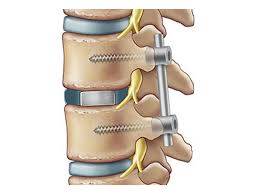
Spinal decompression can be considered when non-surgical treatment has failed to improve pain or function and the imaging findings correspond with the patient's sciatic symptoms.
Randomized-trial evidence indicates that surgery can provide more rapid relief for selected patients, although differences between surgical and conservative strategies may become smaller over longer follow-up in some populations.
Progressive Leg Weakness Changes the Treatment Decision
Significant or worsening motor weakness requires prompt specialist assessment.
Controlling pain while neurological function continues to deteriorate is not an adequate treatment strategy, because preservation of nerve function can become the priority.
Cauda Equina Warning Signs Require Emergency Assessment
Urgent assessment is required when back pain or sciatica is accompanied by new:
- Difficulty starting urination or urinary retention.
- Loss of bladder or bowel control.
- Numbness around the genitals, perineum, or saddle area.
- New sexual dysfunction with neurological symptoms.
- Severe or progressive leg weakness.
- Bilateral or rapidly worsening neurological symptoms.
These can indicate cauda equina syndrome, in which nerve compression may require urgent investigation and treatment rather than continued home exercises or injections.
Read about: Lumbar Disc Herniation: Best Treatment Options
Conclusion
Herniated-disc sciatica does not automatically require surgery. In the absence of progressive neurological deficits or emergency warning signs, structured activity, physical rehabilitation, and carefully selected pain treatments can be appropriate, and a substantial proportion of disc herniations can regress naturally over time.
Epidural steroid injection can provide additional short-term pain relief for selected patients, while surgery becomes more relevant when disabling symptoms persist despite appropriate conservative treatment or neurological function deteriorates.
Frequently Asked Questions: Herniated-Disc Sciatica and Non-Surgical Treatment
Can a herniated disc improve without surgery?
Yes. Imaging studies show spontaneous regression in many cases, particularly extruded and sequestered disc herniations.
Is walking good for sciatica?
Progressive movement and activity are suitable for many patients, while prolonged bed rest is generally discouraged.
Does an epidural steroid injection fix the herniated disc?
No. It aims to reduce nerve-root inflammation and can provide temporary pain relief while natural recovery continues.
Does everyone with sciatica need an MRI?
No. MRI is most useful when its result will alter management, symptoms persist, or important neurological or warning signs are present.
When is sciatica an emergency?
New bladder or bowel dysfunction, saddle numbness, or severe progressive neurological weakness requires urgent assessment.