





Embryo transfer is the final and most anticipated step in an IVF journey. After eggs are retrieved, fertilized, and monitored in the laboratory, an important question appears: Is it better to transfer the embryo in the same cycle as a fresh transfer, or freeze the embryos and transfer them later in a separate cycle? This question matters because it affects success rates, maternal safety, endometrial preparation, treatment timing, and cost.
There is no single answer for every patient. Fresh embryo transfer may be suitable when hormone levels are stable, the uterine lining is ready, and there is no increased risk of ovarian hyperstimulation syndrome. Frozen embryo transfer may be better when there is OHSS risk, elevated progesterone, need for genetic testing, or an endometrium that is not ideal for transfer.
The choice between fresh and frozen transfer should be individualized. It should not be based only on general advice or another patient’s experience, because the best option depends on the woman’s medical condition, embryo quality, and the clinic’s plan.
What Is Fresh Embryo Transfer?
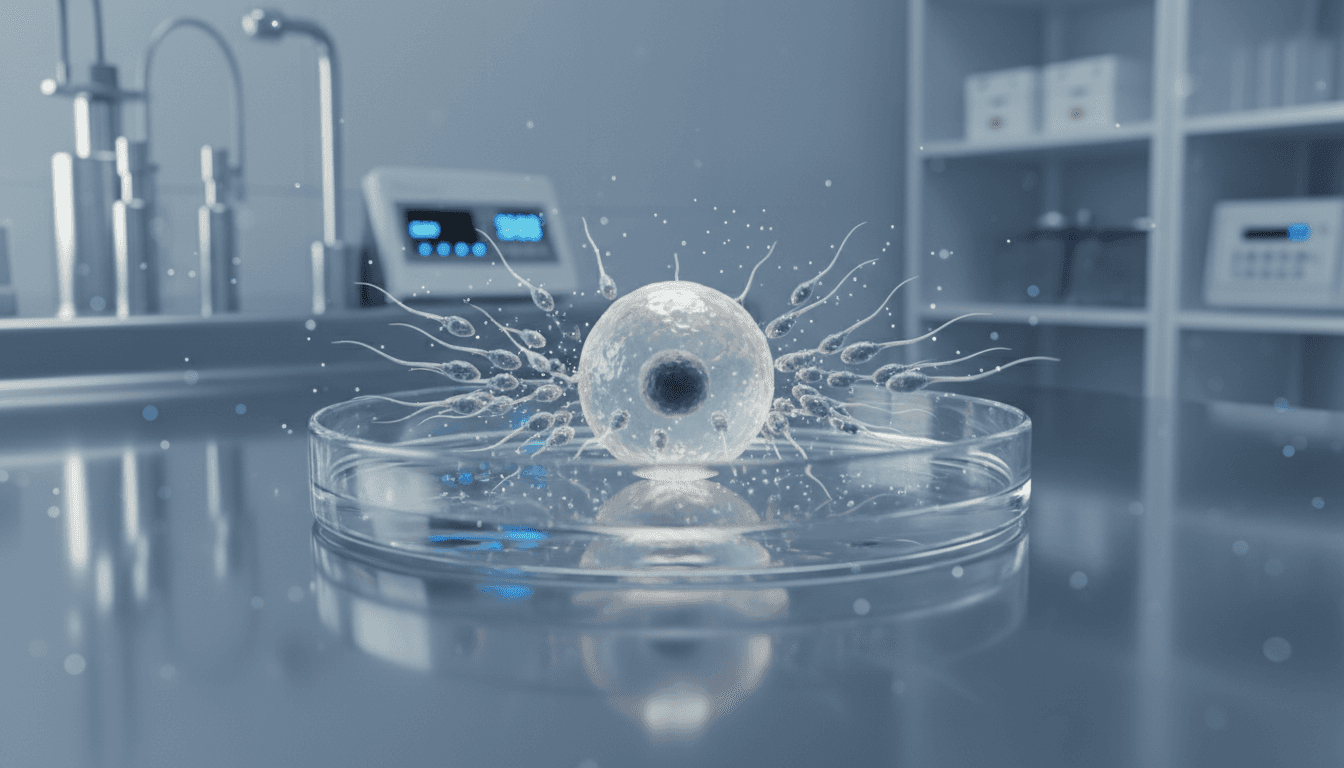
Fresh embryo transfer means placing the embryo into the uterus during the same cycle in which ovarian stimulation and egg retrieval were performed. After egg retrieval and fertilization, embryos are observed in the laboratory for several days, then one or more embryos may be transferred according to medical, legal, and patient-specific factors.
Fresh transfer is usually done on day 3 or day 5 after egg retrieval if the situation is appropriate. The decision depends on embryo quality, endometrial thickness, hormone levels, and ovarian response.
When Is Fresh Transfer Suitable?
Fresh transfer may be suitable when the stimulation cycle is stable and there are no signs that transfer in the same month would be less safe or less effective. In this situation, the couple can attempt pregnancy immediately without waiting for a later cycle.
Fresh transfer may be suitable when there is:
- A suitable number of embryos.
- Good endometrial thickness and appearance.
- No high risk of OHSS.
- Appropriate hormone levels.
- No need for embryo genetic testing.
- No bleeding or uterine problem.
- No medical reason to delay transfer.
- Medical confirmation that the uterus is ready.
- Couple preference for immediate transfer if safe.
- No clear indication for freeze-all.
In these cases, fresh transfer can be a logical and effective option.
Advantages of Fresh Embryo Transfer
The main advantage of fresh transfer is that it happens within the same IVF cycle. The patient does not need to wait for another cycle to prepare the uterus. It may also avoid embryo freezing and thawing in some cases, although modern freezing techniques are highly advanced.
Advantages of fresh transfer include:
- Immediate pregnancy attempt.
- Shorter waiting time.
- No separate transfer cycle needed.
- Suitable when the lining is good.
- Suitable when hormones are stable.
- May reduce initial storage-related costs.
- Gives a direct chance after egg retrieval.
- Emotionally easier for some couples.
- No later embryo thawing required.
- Effective in carefully selected patients.
However, these advantages do not mean fresh transfer is always better.
Read about: Modern Egg Freezing Techniques: A Smart Choice to Preserve Fertility
What Is Frozen Embryo Transfer?
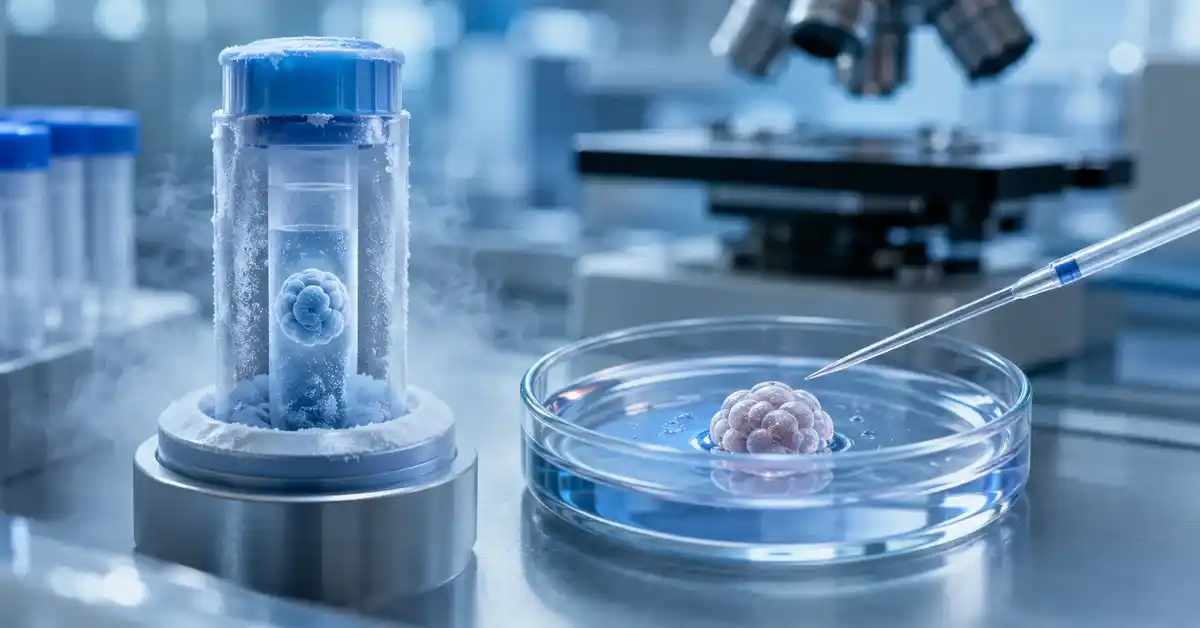
Frozen embryo transfer means embryos are frozen after development in the laboratory, then thawed and transferred to the uterus in a later cycle. This cycle may be natural or hormonally prepared depending on ovulation, uterine lining, and the doctor’s plan.
Frozen transfer has become more common because vitrification has improved embryo survival after thawing and allows doctors to choose a more suitable time for the uterus.
When Is Frozen Transfer Suitable?
Frozen transfer may be suitable when transferring in the same stimulation cycle is not ideal. In some cases, the body is strongly affected by stimulation hormones, the endometrium is not suitable, or pregnancy immediately after retrieval may increase medical risk.
Frozen transfer may be suitable when there is:
- Risk of ovarian hyperstimulation syndrome.
- Elevated progesterone before transfer.
- Unsuitable endometrium.
- Need for embryo genetic testing.
- Bleeding or uterine concern.
- Need for hysteroscopy or treatment before transfer.
- Desire for carefully planned single embryo transfer.
- Frozen embryos from a previous cycle.
- Medical or personal reason to delay pregnancy.
- Need for better endometrial preparation.
Freezing does not mean the embryos are weak or the cycle failed. It can be part of a safer and more strategic plan.
Advantages of Frozen Embryo Transfer
Frozen transfer allows the doctor to separate ovarian stimulation from the embryo-transfer cycle. This may be helpful when hormone levels in the stimulation cycle are not ideal or when the body needs time to recover after egg retrieval.
Advantages of frozen transfer include:
- Lower OHSS risk in selected patients.
- More controlled endometrial preparation.
- More precise transfer timing.
- Ability to perform embryo genetic testing.
- Delaying transfer for medical reasons.
- Using embryos for later attempts.
- Less physical stress after stimulation.
- Opportunity to improve uterine conditions.
- Useful in freeze-all plans.
- Greater scheduling flexibility.
However, frozen transfer may require an additional cycle, medications, and storage or preparation costs.
Read about: Egg Freezing for Single Women: Future Pregnancy Options
Which Option Has Better Success Rates?
The question of success cannot be answered with one universal number. In some studies and patient groups, frozen transfer may show better outcomes, especially in high responders or women with OHSS risk or unfavorable hormone levels. In other situations, fresh and frozen transfer may have similar success rates when the patient is suitable for fresh transfer.
Therefore, it is not correct to say that frozen is always better or fresh is always better. The better option is the timing that gives the embryo and endometrium the best match while keeping the patient safe.
Why Frozen Transfer May Work Better in Some Cases
Frozen transfer may work better in some cases because the uterus is no longer exposed to the high hormone levels of ovarian stimulation. In a separate cycle, the doctor can prepare the endometrium more calmly and improve synchronization between the embryo and uterine lining.
Frozen transfer may be better when there is:
- High ovarian response.
- Risk of OHSS.
- Elevated progesterone.
- Thin or unsuitable endometrium in stimulation cycle.
- Need for PGT.
- Good-quality blastocysts.
- Need for delayed transfer.
- Uterine issue requiring treatment.
- Body not ready for immediate pregnancy.
- Plan to reduce multiple pregnancy risk with single transfer.
In these situations, freezing protects the opportunity rather than simply delaying treatment.

Why Fresh Transfer May Be Suitable or Equal
Fresh transfer can be very suitable when stimulation is well controlled, the lining is ready, and hormones are appropriate. Some patients do not benefit from delaying transfer and may have good pregnancy chances in the same month.
Fresh transfer may be suitable when there is:
- No OHSS risk.
- Good endometrium.
- Suitable hormone levels.
- Good embryos.
- No need for genetic testing.
- Stable condition after retrieval.
- No medical reason to delay.
- Desire to reduce treatment time.
- Doctor confirmation that the uterus is ready.
- No expected benefit from freeze-all.
Fresh transfer is not outdated or inferior. It is the right option for selected patients.
Effect of the Endometrium on the Decision
The uterine lining is one of the most important factors in embryo transfer success. Even an excellent embryo needs a receptive endometrium to implant. For this reason, the doctor may delay transfer if the lining is thin, irregular, or not synchronized with embryo development.
In fresh transfer, the endometrium is affected by the stimulation cycle. In frozen transfer, it can be prepared separately in a natural or medicated cycle.
Endometrium in Fresh Transfer
In fresh transfer, the endometrium develops during the same cycle as ovarian stimulation. If its thickness and pattern are good and hormone levels are suitable, it can be a good environment for transfer.
However, the lining may not be ideal when there is:
- Early progesterone rise.
- Excessive ovarian response.
- Very high estrogen.
- Thin endometrium.
- Fluid or bleeding in the uterus.
- Timing mismatch.
- Severe discomfort after retrieval.
- OHSS risk.
- Uterine problem found during the cycle.
- Medical decision to delay pregnancy.
In these cases, freezing may be better than transferring an embryo into a less suitable environment.
Endometrium in Frozen Transfer
In frozen transfer, the doctor can prepare the uterus in a separate cycle. This may be done in a natural cycle if the patient ovulates regularly, or with estrogen and progesterone medications if cycles are irregular or according to clinic protocol.
Benefits of endometrial preparation in frozen transfer include:
- Calm monitoring of thickness.
- Medication adjustment when needed.
- Precise progesterone timing.
- Avoiding stimulation-cycle hormone effects.
- Treating uterine problems before transfer.
- Delaying transfer if lining is not suitable.
- Better scheduling control.
- Less pressure after egg retrieval.
- Planned single embryo transfer.
- Greater flexibility.
Frozen transfer can be especially helpful when endometrial timing is important.
Read about: Egg Freezing Before Chemotherapy: Safe Fertility Option
Safety and OHSS Risk Reduction
Ovarian hyperstimulation syndrome can occur after ovarian stimulation, especially in women with high ovarian reserve, PCOS, or a large number of retrieved eggs. If pregnancy happens immediately in the stimulation cycle, symptoms may worsen in some patients.
For this reason, the doctor may recommend freezing all embryos and delaying transfer until the body recovers. This strategy can be safer for selected patients.
When Is Freeze-All Safer?
Freeze-all means freezing all embryos and not performing a fresh transfer in the same cycle. It does not mean the IVF cycle failed. It means the doctor is choosing a safer transfer time.
Freeze-all may be suitable when there is:
- High OHSS risk.
- Large number of eggs.
- PCOS.
- Significant pain or bloating after retrieval.
- Very high hormone levels.
- Unsuitable endometrium.
- Need for PGT.
- Temporary medical condition.
- Uterus not ready.
- Desire to reduce risk.
This plan can protect the patient and allow embryo transfer under better conditions later.
Does Freezing Harm the Embryo?
With modern vitrification, embryo survival after thawing is high in good laboratories. However, success depends on embryo quality before freezing, laboratory experience, freezing method, and thawing technique.
Freezing does not mean the embryo is weak. In many cases, good-quality embryos are frozen to preserve them for later attempts. Still, no medical process is without limits, and not every embryo survives thawing, especially if its quality was lower from the beginning.
Read about: Egg Freezing: Steps and Top Tips for Women
Genetic Testing and Its Role in Choosing Transfer Type
If the couple needs embryo genetic testing such as PGT-A or PGT-M, transfer is usually frozen. This is because embryo biopsy and genetic analysis require time before selecting the embryo for transfer.
In these cases, embryos are created, suitable embryos are biopsied, then frozen. Transfer is planned later after the genetic result is available.
When Is PGT Needed?
Genetic testing is considered in selected cases, not for every patient. The decision depends on maternal age, miscarriage history, implantation failure, known genetic disease, or doctor recommendation.
PGT may be discussed when there is:
- Known genetic disease in the family.
- Need for PGT-M.
- Advanced maternal age in selected cases.
- Recurrent miscarriage.
- Repeated implantation failure.
- Multiple embryos requiring more precise selection.
- Chromosomal issue in one partner.
- Medical goal to reduce abnormal embryo transfer.
- Shared decision after counseling.
- Suitable embryos available for testing.
In these cases, frozen transfer is often a natural part of the plan.
Does PGT Always Increase Success?
PGT should not be presented as a guarantee of pregnancy. It may help select chromosomally normal embryos or embryos free of a specific genetic disease, but it does not guarantee implantation or birth. Its value depends on age, number of embryos, and medical history.
Patients should discuss:
- Does my case really need PGT?
- How many embryos are available?
- Are embryos suitable for biopsy?
- What is the purpose of testing?
- Will the result change the treatment plan?
- What is the cost?
- Is it possible to have no suitable embryo?
- What are the limits of testing?
- Is frozen transfer necessary?
- What is the plan after results?
Genetic testing is a precise medical decision, not a routine step for all patients.
Cost and Time Differences
Fresh and frozen transfers differ not only in success rates, but also in cost and timeline. Fresh transfer happens in the same IVF cycle, while frozen transfer requires freezing, storage, thawing, and a separate transfer-preparation cycle.
In some cases, delaying transfer is the wiser choice even if it adds time or cost, because transferring at the wrong time may reduce success or increase risk.
Cost of Fresh Transfer
Fresh transfer may be less costly at the beginning because it is performed within the same IVF cycle and usually does not require long storage or a separate preparation cycle. However, if conditions are not ideal, it may not be the best option even if it is faster.
Cost factors include:
- Main IVF cycle.
- Stimulation medications.
- Egg retrieval.
- Laboratory procedures.
- Embryo transfer.
- Blood tests.
- Follow-up.
- Possible freezing of extra embryos.
- Medications after transfer.
- Future attempts if unsuccessful.
Cost alone should not determine the choice.
Cost of Frozen Transfer
Frozen transfer may add costs such as embryo freezing, storage, thawing, endometrial preparation medications, and monitoring visits. In selected cases, these steps may improve safety and planning.
Cost factors include:
- Embryo freezing.
- Storage.
- Embryo thawing.
- Endometrial preparation medications.
- Hormone tests.
- Ultrasound monitoring.
- Embryo transfer.
- Pregnancy follow-up.
- Genetic testing if performed.
- Additional transfer cycles if needed.
Patients should ask the clinic for details so the full plan is clear from the beginning.
Read about: Egg Freezing Steps: Turkey vs Germany
Which Option Fits Your Case?
Choosing fresh or frozen transfer depends on many details. The question should not be “Which is better in general?” but “Which is better for my case?” The doctor reviews maternal age, ovarian reserve, number of eggs, embryo quality, endometrium, hormones, OHSS risk, genetic testing needs, and previous history.
A good decision balances pregnancy chance, patient safety, and treatment quality.
Cases That Favor Fresh Transfer
The doctor may favor fresh transfer when the conditions are suitable in the stimulation cycle and there is no reason to delay.
Fresh transfer may fit:
- Moderate ovarian response.
- Good endometrium.
- Stable hormones.
- No OHSS risk.
- Suitable embryos.
- No need for PGT.
- No uterine problem.
- No bleeding.
- Stable general condition.
- Desire to shorten treatment time.
In this situation, fresh transfer can be effective and direct.
Cases That Favor Frozen Transfer
The doctor may favor frozen transfer when the body or uterus needs better timing, or when medical reasons make delay safer.
Frozen transfer may fit:
- PCOS.
- High ovarian reserve.
- OHSS risk.
- Elevated progesterone.
- Unsuitable endometrium.
- Need for genetic testing.
- Previous failed transfers needing evaluation.
- Fluid or uterine problem.
- Need for hysteroscopy.
- Desire to control transfer timing.
Here, freezing is a strategic step, not an unnecessary delay.
Questions to Ask Your Fertility Doctor
Before choosing a transfer type, the couple should receive a clear explanation from the doctor. Some patients think freezing means a problem, while others think fresh transfer always gives a better chance. The truth depends on the case.
Good questions reduce anxiety and clarify the plan.
Questions About Success
Ask your doctor:
- Is my case suitable for fresh transfer?
- Is my uterine lining ready now?
- Are my hormones suitable for transfer?
- Is there any OHSS risk?
- Could freezing improve my chance?
- Do I need PGT?
- What is the embryo quality?
- Is day-3 or day-5 transfer better?
- Do you recommend single embryo transfer?
- What is the plan if transfer fails?
These questions make the decision more informed.
Questions About Safety and Cost
Patients should also ask about safety, cost, and timeline because these affect the full treatment experience.
Ask about:
- Why are we choosing this transfer type?
- Is there any health risk if we transfer now?
- How long will we wait if embryos are frozen?
- What is the cost of freezing and storage?
- What is the cost of frozen embryo transfer?
- What medications are needed?
- When does lining preparation start?
- Can transfer be canceled if the lining is not suitable?
- How many visits are needed?
- When is the pregnancy test?
A clear plan reduces stress during treatment.
Conclusion
Both fresh and frozen embryo transfer can achieve good IVF results, but the better option differs from one patient to another. Fresh transfer may be suitable when stimulation is stable, the uterine lining is ready, hormones are appropriate, and there is no high OHSS risk. Frozen transfer may be better when the body needs recovery, the endometrium needs more controlled preparation, OHSS risk is present, progesterone is elevated, or embryo genetic testing is needed.
Success does not depend only on whether the embryo is fresh or frozen. It depends on embryo quality, endometrial readiness, maternal age, laboratory experience, and the safety of the medical plan. The decision should be made with the fertility doctor based on individual details, not general rules.
Frequently Asked Questions: Frozen vs Fresh Embryo Transfer
Is frozen embryo transfer always better than fresh?
No. Frozen transfer may be better in cases such as OHSS risk or unsuitable lining, but fresh transfer can be excellent when the cycle is stable.
Does freezing reduce embryo quality?
With modern vitrification, most good-quality embryos survive thawing well, but results depend on embryo quality and laboratory experience.
When does the doctor choose freeze-all?
Freeze-all may be chosen for OHSS risk, elevated progesterone, unsuitable endometrium, need for genetic testing, or a medical reason to delay transfer.
Are pregnancy rates higher with frozen transfer?
They may be higher in some cases, especially when the stimulation cycle is not ideal. In other cases, fresh and frozen transfer may be similar.
Does frozen transfer require more medication?
Sometimes yes, especially in medicated cycles. Some patients may use a natural-cycle frozen transfer depending on ovulation and clinic protocol.