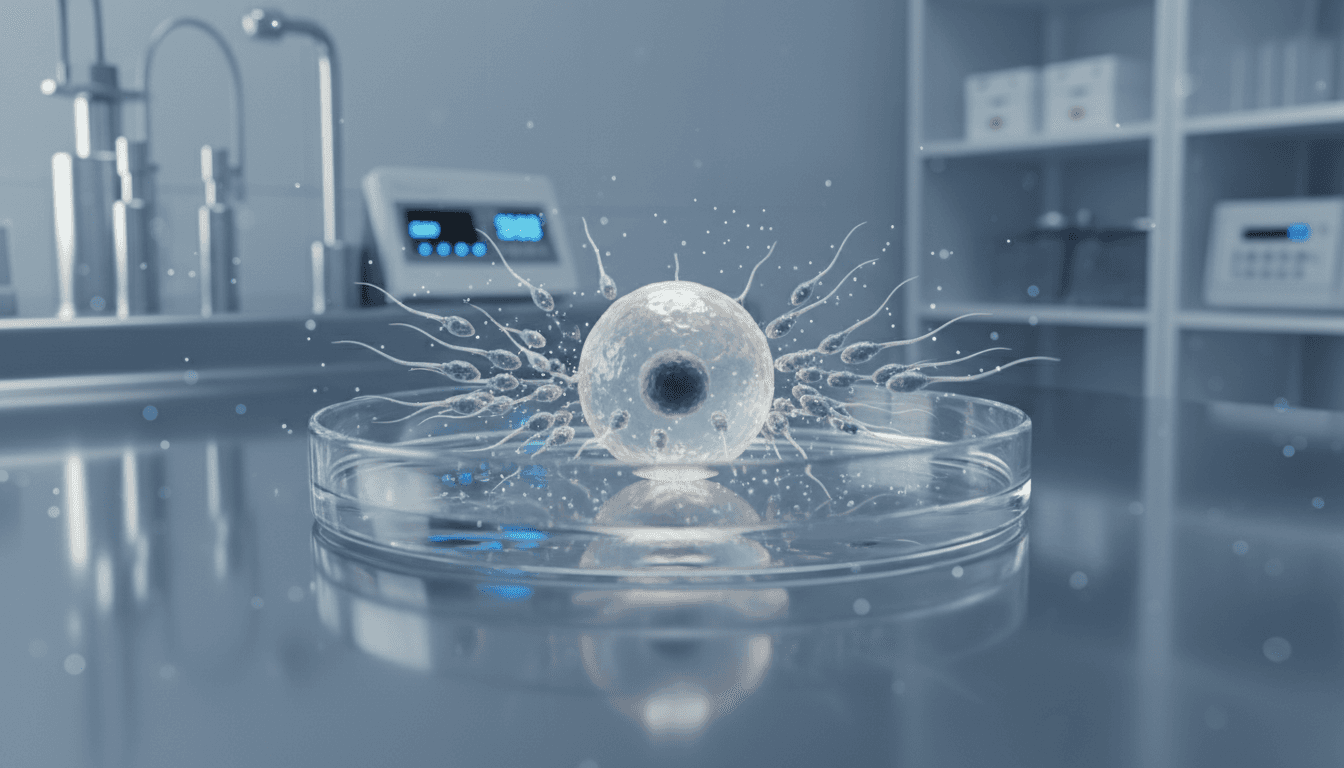








After egg retrieval and embryo development, one of the most important IVF decisions is:
Should an embryo be transferred in the stimulation cycle, or should all embryos be frozen for transfer later?
A transfer performed a few days after retrieval is called a fresh embryo transfer.
When no embryo is transferred and all suitable embryos are cryopreserved, this is commonly called a freeze-all strategy.
Neither approach is universally superior.
Fresh transfer can be entirely appropriate when ovarian response, hormone levels, endometrium and general health are favorable.
Freeze-all becomes particularly valuable when the stimulation cycle creates an unsafe or potentially suboptimal environment for immediate transfer.
The useful question is therefore not:
Is frozen transfer better than fresh transfer?
It is:
Is this patient's body and endometrium ready for transfer in this particular cycle?
What Is a Fresh Embryo Transfer?
Fresh transfer takes place during the same treatment cycle as egg retrieval.
Transfer may occur at:
Cleavage stage.
Or blastocyst stage, commonly day 5.
When a suitable blastocyst develops and the patient's clinical condition is appropriate, fresh day-5 transfer can be a reasonable strategy.
Read Safemedigo's guide to day-3 versus day-5 embryo transfer.
What Is Freeze-All?
Freeze-all means no embryo is transferred during the stimulation cycle.
Instead:
Embryos are cultured.
Suitable embryos are vitrified.
The ovaries recover.
The endometrium is prepared in a later cycle.
A selected embryo is then warmed and transferred during FET.
The objective should not simply be delay.
There should be a clinical, genetic or practical reason for postponing transfer.
When Is Fresh Transfer Reasonable?
It can be appropriate when:
Ovarian response is moderate.
OHSS risk is low.
Progesterone timing is acceptable.
The endometrium appears suitable.
No significant uterine problem needs treatment.
PGT is not planned.
There is no medical reason to postpone pregnancy.
Under these circumstances, freezing every embryo does not automatically improve the chance of live birth.
Is Fresh Transfer Less Successful?
Not necessarily.
Large randomized studies comparing routine freeze-all with fresh transfer have not shown a consistent cumulative live-birth advantage simply from freezing every embryo.
The major value of freeze-all appears when a patient has a clinical reason not to undergo fresh transfer.
When Does Freeze-All Become Particularly Important?
Important indications can include:
High OHSS risk.
Very high ovarian response.
A stimulation profile suggesting significant OHSS risk.
PGT requiring genetic results before transfer.
Premature progesterone elevation.
An unsuitable endometrium.
Persistent fluid in the uterine cavity.
A uterine or tubal problem requiring treatment.
A medical reason to delay pregnancy.
Freeze-All and OHSS
This is one of the strongest indications.
Ovarian hyperstimulation syndrome can follow an excessive ovarian response.
Symptoms can include:
Marked bloating.
Abdominal pain.
Ovarian enlargement.
Nausea.
Severe cases can involve:
Fluid accumulation.
Circulatory problems.
Breathing difficulty.
Hospital care.
Why Can Pregnancy Worsen OHSS?
Pregnancy produces hCG.
hCG can prolong or worsen ovarian hyperstimulation.
If fresh transfer results in pregnancy, late-onset OHSS can therefore become more severe or last longer.
Avoiding pregnancy during the stimulation cycle by freezing all embryos substantially reduces this component of risk.
Does Freeze-All Eliminate Every Form of OHSS?
It strongly reduces late OHSS related to pregnancy.
However, early OHSS can still occur because of the ovarian response itself or the trigger strategy.
Prevention may therefore also include:
An antagonist protocol.
Appropriate gonadotropin dosing.
GnRH agonist trigger when suitable.
Close monitoring.
What Makes a Patient High Risk?
There is no single number for everyone.
Clinicians consider:
Follicle number.
Expected egg yield.
Estradiol.
PCOS.
Previous response.
Age.
Trigger type.
Overall clinical picture.
The higher the response, the more important it becomes to reconsider fresh transfer.
Does High Estradiol Alone Mean Fresh Transfer Is Impossible?
No single estradiol threshold should be treated as an absolute rule for every patient.
Estradiol is interpreted together with:
Follicle number.
Symptoms.
OHSS risk.
Protocol.
Other clinical factors.

What About Progesterone Before Fresh Transfer?
In a natural cycle, progesterone rises after ovulation and transforms the endometrium for implantation.
During stimulated IVF, progesterone can sometimes rise earlier than desired.
The main concern is not necessarily embryo quality.
It is the possibility that the endometrium becomes developmentally advanced relative to the embryo.
Does Elevated Progesterone Damage the Embryo?
The concern relates more strongly to endometrial synchronization.
This helps explain why the same embryo may have a better opportunity when transferred later in an appropriately prepared FET cycle.
Is There One Progesterone Cutoff?
No.
Research has used thresholds such as:
1.0 ng/mL.
1.5 ng/mL.
And other values.
But the clinical effect varies according to:
Laboratory assay.
Ovarian response.
Egg number.
Treatment protocol.
Therefore, a single progesterone number should not automatically determine every decision.
Can Fresh Transfer Still Occur With Elevated Progesterone?
Sometimes.
It depends on:
Degree of elevation.
Timing of testing.
Clinic protocol.
Embryo number.
Patient characteristics.
When clinicians believe premature progesterone exposure has impaired synchronization, freeze-all may be more appropriate.
Read Safemedigo's guide to high progesterone before embryo transfer.
Does Endometrial Thickness Alone Decide?
No.
Thickness matters, but clinicians may also evaluate:
Endometrial appearance.
Fluid.
Polyps.
Fibroids affecting the cavity.
Adhesions.
Bleeding.
Other uterine findings.
What If the Endometrium Is Thin?
The cause should be considered rather than automatically proceeding with transfer.
Potential explanations include:
Hormonal response.
Intrauterine adhesions.
Previous uterine procedures.
Individual endometrial pattern.
Freeze-all may allow time to investigate and optimize the uterine environment.
Read Safemedigo's guide to thin endometrium before embryo transfer.
Is There a Magical Endometrial Thickness?
No.
Pregnancy rates tend to decline when the endometrium is very thin, but pregnancies still occur below commonly discussed thresholds.
A figure such as 7 mm should not be treated as an absolute biological border between possible and impossible.
What If Fluid Is Seen in the Uterus?
Persistent intrauterine fluid near transfer requires evaluation.
It may be related to:
Hydrosalpinx.
A uterine issue.
Temporary effects of stimulation.
Other causes.
When fluid persists, transfer may be postponed.
Why Does Hydrosalpinx Matter?
Hydrosalpinx is a damaged fallopian tube containing fluid.
Fluid can sometimes communicate with the uterine cavity.
Hydrosalpinx is associated with poorer IVF outcomes.
Treating the tube before embryo transfer may therefore be more appropriate than proceeding immediately.
Read Safemedigo's guide to hydrosalpinx before IVF.
What About Polyps or Fibroids?
Not every polyp or fibroid prevents embryo transfer.
However, if a lesion significantly distorts the cavity or is believed to interfere with implantation, embryos can be frozen while the uterine issue is treated.
Read Safemedigo's guides to endometrial polyps and uterine fibroids.
What About Intrauterine Adhesions?
Important adhesions may require hysteroscopic treatment before embryo transfer.
Using a good embryo before correcting a significant cavity problem may unnecessarily reduce its opportunity.
Read Safemedigo's guide to Asherman syndrome and intrauterine adhesions.
Why Does PGT Usually Require Freeze-All?
In modern PGT programmes, a biopsy is generally taken from a blastocyst.
The embryo is then vitrified while the genetic laboratory analyzes the sample.
Once results are available, the selected embryo can be transferred later.
Freeze-all in this context is mainly a technical consequence of waiting for genetic results.
Does PGT Mean Every IVF Patient Should Freeze Embryos?
If PGT has genuinely been chosen, frozen transfer usually becomes part of the pathway.
But the earlier question is:
Does this patient actually need PGT?
PGT-A should not be considered mandatory for every IVF patient.
If PGT Is Not Planned?
The fresh-versus-frozen decision should return to:
Safety.
Hormones.
Endometrial readiness.
Embryo development.
Medical factors.
There is no evidence-based reason to freeze every embryo merely because vitrification is available.
Does Freezing Harm Embryo Quality?
Modern vitrification has greatly improved embryo cryopreservation.
In experienced laboratories, most suitable blastocysts survive warming.
However, no laboratory technique has a 100% survival rate.
Some embryos may not survive.
It is therefore inaccurate to say freezing has absolutely no loss, but it is also inaccurate to describe modern vitrification as routinely damaging embryos.
Is a Frozen Embryo Weaker?
Not inherently.
A vitrified embryo can have an excellent pregnancy potential if:
It was suitable for freezing.
It survives warming.
The endometrium is appropriately prepared.
One benefit of FET is that embryo transfer is separated from the hormonal environment of ovarian stimulation.
Is FET Automatically Better After Age 40?
No.
Age itself does not make frozen transfer universally superior.
The major reproductive challenges after 40 more often involve:
Oocyte quality.
Aneuploidy.
Embryo availability.
Rather than whether transfer is fresh or frozen.
Without OHSS risk, PGT, poor endometrium or another indication, age alone does not mandate freeze-all.
What About Diminished Ovarian Reserve?
Patients with low ovarian reserve are generally less likely to have the very high ovarian response associated with OHSS.
They may therefore have fewer safety reasons to freeze all embryos.
However, freeze-all may still be indicated because of:
PGT.
Progesterone.
Endometrial issues.
Embryo accumulation plans.
Read Safemedigo's guide to diminished ovarian reserve and low AMH.
Does Embryo Accumulation Require Freezing?
Yes.
If several retrievals are planned before embryo transfer, embryos from earlier retrievals must be cryopreserved.
However, embryo accumulation should not automatically be offered to every patient with low reserve.
The strategy needs a clear objective.
What If There Is Only One Embryo?
One embryo does not automatically favor fresh or frozen transfer.
The same clinical questions still apply:
Is the endometrium suitable?
Is progesterone appropriate?
Is OHSS a concern?
Is PGT needed?
If the uterus is ready, fresh transfer may be reasonable.
If it is not, freezing one valuable embryo may be preferable to transferring it in a poor environment.
Can Transfer Be Delayed for Travel Reasons?
Yes.
International patients sometimes prefer:
Retrieval during the first trip.
Return home.
FET during a later visit.
This can shorten the first stay.
However, this is a logistical reason, not evidence that frozen transfer improves reproductive outcome.
Read Safemedigo's guide to IVF in Turkey in one or two visits.
Does Travel Make Freeze-All Medically Better?
No.
It may make treatment easier to organize.
Patients should distinguish between:
A medical indication.
A genetic indication.
A logistical preference.
How Soon Can FET Be Performed After Retrieval?
Several months are not required for every patient.
If:
The ovaries recover.
The next menstrual cycle begins.
The endometrium is suitable.
No additional treatment is required.
FET preparation can sometimes begin in the following cycle.
Timing depends on why freeze-all was chosen.
What If OHSS Occurred?
The patient should recover fully before transfer.
FET may be delayed if:
Ovaries remain enlarged.
Fluid remains.
Symptoms persist.
The patient's general condition has not normalized.
Safety should take priority over speed.
Natural or Programmed FET?
Frozen embryo transfer can be prepared using several approaches.
These include:
Natural cycle.
Modified natural cycle.
Hormone replacement or programmed cycle.
Stimulated FET in selected circumstances.
There is no single protocol that is superior for every patient.
When Is Natural FET Suitable?
It is often appropriate for women who:
Have regular cycles.
Reliably ovulate.
Can attend monitoring.
Follicle development and ovulation are followed, and embryo transfer is timed accordingly.
What Is Modified Natural FET?
The follicle grows naturally, but hCG or another trigger may be used to control the timing of ovulation.
Embryo transfer is then scheduled according to ovulation timing and embryo age.
What Is Programmed FET?
Estrogen is generally used to develop the endometrium.
Progesterone is then started at a carefully selected time before embryo transfer.
It can be useful when:
Cycles are irregular.
Ovulation is unreliable.
Scheduling flexibility is needed.
Or other clinical circumstances favor hormone replacement.
Is Programmed FET More Successful?
Not universally.
In women who ovulate regularly, there is no basis for saying that programmed FET is automatically superior.
Protocol choice should consider:
Cycle regularity.
Medical history.
Pregnancy-related risks.
Convenience.
Clinic experience.
Why Is Progesterone Timing So Important?
Embryo development and endometrial development need to be synchronized.
For a day-5 blastocyst, the duration of progesterone exposure before transfer is therefore carefully planned.
Starting progesterone is not an approximate scheduling decision.
Can Progesterone Timing Be Changed?
Patients should not independently change:
Start time.
Dose.
Route.
Or discontinuation.
Minor timing variations can sometimes be managed depending on the medication and protocol, but significant changes require the clinic's instruction.
What Happens If Progesterone Was Started at the Wrong Time?
If the error significantly changes embryo-endometrial synchronization, clinicians may:
Adjust transfer timing.
Cancel transfer.
Prepare again in another cycle.
The decision depends on the magnitude of the timing error and the protocol.
Is Progesterone in FET the Same Issue as Elevated Progesterone During Stimulation?
No.
They are different concepts.
During fresh IVF, premature progesterone elevation can advance the endometrium unexpectedly.
During programmed FET, progesterone is intentionally administered to create the implantation window.
The question becomes whether the timing and exposure are appropriate.
Can FET Be Cancelled at the Last Minute?
Yes.
Possible reasons include:
Unsuitable endometrium.
Unexpected bleeding.
Premature ovulation in a programmed cycle.
Persistent uterine fluid.
Medical illness.
Important medication-timing error.
Cancelling a transfer can protect a valuable embryo from being used under unfavorable conditions.
Read Safemedigo's guide to cancelled or delayed embryo transfer.
Fresh Transfer or FET: Which Costs More?
Fresh transfer can reduce the number of separate treatment stages because transfer occurs during the retrieval cycle.
Freeze-all adds:
Embryo cryopreservation.
Storage.
FET preparation.
A separate transfer.
It therefore commonly increases treatment cost.
But when it prevents OHSS or avoids transfer into an unsuitable endometrium, that additional cost may be clinically justified.
Current FET Cost
Under Safemedigo's current treatment structure:
FET after a freeze-all pathway is approximately US$1,700.
Some FET-only plans are approximately US$1,800.
Medication, freezing and storage can vary.
Current pricing should be confirmed before treatment.
Should Fresh Transfer Be Chosen Just to Save Money?
No.
If fresh transfer is medically unsuitable, avoiding FET cost should not override:
Patient safety.
Endometrial readiness.
Or an appropriate embryo-transfer strategy.
Should Freeze-All Be Chosen Because It Sounds More Advanced?
Also no.
Freeze-all is an excellent strategy when there is an indication.
Using it universally:
Adds cost.
Delays transfer.
Requires an additional treatment cycle.
And does not guarantee a higher cumulative live-birth rate for everyone.
Does Freeze-All Increase Cumulative Live Birth?
Evidence in general IVF populations does not show a consistent cumulative live-birth advantage simply from freezing every embryo.
Its safety value is particularly strong for patients at high risk of OHSS.
The principle should be:
Use freeze-all when it solves a real problem, not as an automatic policy.
What Do Modern Guidelines Say About OHSS?
Current ESHRE ovarian-stimulation guidance places OHSS prevention at the center of treatment individualization.
For high responders, avoiding fresh transfer and using a freeze-all strategy can be an important component of preventing pregnancy-related late OHSS.
Is a GnRH Agonist Trigger Enough Without Freeze-All?
A GnRH agonist trigger can substantially reduce OHSS risk in an antagonist cycle.
However, if fresh transfer leads to pregnancy, endogenous hCG can still contribute to late OHSS.
In appropriate high-risk patients, combining:
GnRH agonist trigger
with:
Freeze-all
provides a particularly strong prevention strategy.
What If Everything Looks Normal?
If:
OHSS risk is low.
Progesterone timing is appropriate.
The endometrium is suitable.
PGT is not planned.
No uterine or medical issue exists.
Fresh embryo transfer can be entirely appropriate.
There is no need to invent a reason to freeze the embryo.
When Is Freeze-All Relatively Clear?
The indication is stronger with:
High OHSS risk.
PGT requiring genetic results.
Unsuitable endometrium.
Hydrosalpinx needing treatment.
A uterine abnormality requiring treatment.
Clinically significant premature progesterone elevation.
A medical reason to postpone pregnancy.
When Is the Decision Less Clear?
Examples include:
A borderline endometrial measurement.
Mild progesterone elevation.
Moderately high ovarian response.
Only one embryo.
Travel preferences.
Clinic policy.
These situations require individualized decision-making.
Questions to Ask Before Agreeing to Freeze-All
Ask:
Why is fresh transfer not recommended?
Is the reason OHSS, progesterone or the endometrium?
Will freezing improve safety, success or both?
Is there a problem that must be treated before FET?
How many embryos are suitable for cryopreservation?
What is the laboratory's warming-survival experience?
When can FET begin?
Will it be natural or programmed?
What additional cost will be involved?
One Particularly Useful Question
If a clinic says:
“We freeze every embryo in every patient,”
ask:
Why?
Some centres have strong internal protocols, but universal freeze-all is not a global evidence-based requirement.
Likewise, if a clearly high-risk OHSS patient is encouraged to proceed with fresh transfer without a convincing explanation, the decision deserves careful review.
Conclusion
Fresh embryo transfer and freeze-all are not competing treatments where one must be universally better.
Both can be excellent when used for the right patient.
Fresh transfer may be suitable when:
Ovarian response is moderate.
OHSS risk is low.
Progesterone timing is appropriate.
The endometrium is ready.
No PGT or uterine treatment is required.
Freeze-all becomes particularly valuable when:
Ovarian response is excessive.
OHSS risk is high.
Progesterone rises prematurely and endometrial synchronization is a concern.
The endometrium or uterine cavity is unsuitable.
Hydrosalpinx or another condition requires treatment.
PGT is part of the pathway.
Evidence does not show that frozen transfer is superior for every woman.
However, there is strong evidence for freeze-all as an important OHSS-prevention strategy in high-risk patients.
Modern vitrification has also made frozen embryo transfer a highly effective part of IVF, but good timing and appropriate patient selection remain essential.
Do not ask only:
Fresh or frozen?
Ask:
Are the patient's hormones, uterus and overall health ready for this embryo now, or would a later transfer provide a safer and more appropriate environment?
If your fresh transfer has been cancelled or your clinic recommends freezing all embryos, you can book a consultation with Safemedigo on WhatsApp to review follicle response, estradiol, progesterone, endometrial findings, OHSS risk and the reason for freeze-all before planning the next step.
Frequently Asked Questions
Is frozen embryo transfer always more successful than fresh transfer?
No. Routine freeze-all has not been shown to improve cumulative live birth for every IVF patient when fresh transfer is otherwise appropriate.
When is freeze-all particularly important because of OHSS?
It is strongly considered in high responders at significant risk of OHSS because avoiding pregnancy during stimulation reduces pregnancy-related late OHSS.
Does elevated progesterone always mean fresh transfer must be cancelled?
No. There is no universal cutoff for all patients, but premature elevation can impair embryo-endometrial synchronization and may favor later FET.
Does embryo freezing reduce its chance of pregnancy?
Modern vitrification produces high survival in experienced laboratories, although survival is not 100%. A warmed embryo that survives can retain excellent implantation potential.
How soon after egg retrieval can FET be performed?
Sometimes in the following cycle if recovery is complete and the endometrium is suitable. Timing depends on OHSS, PGT, uterine issues and the original reason for freeze-all.