


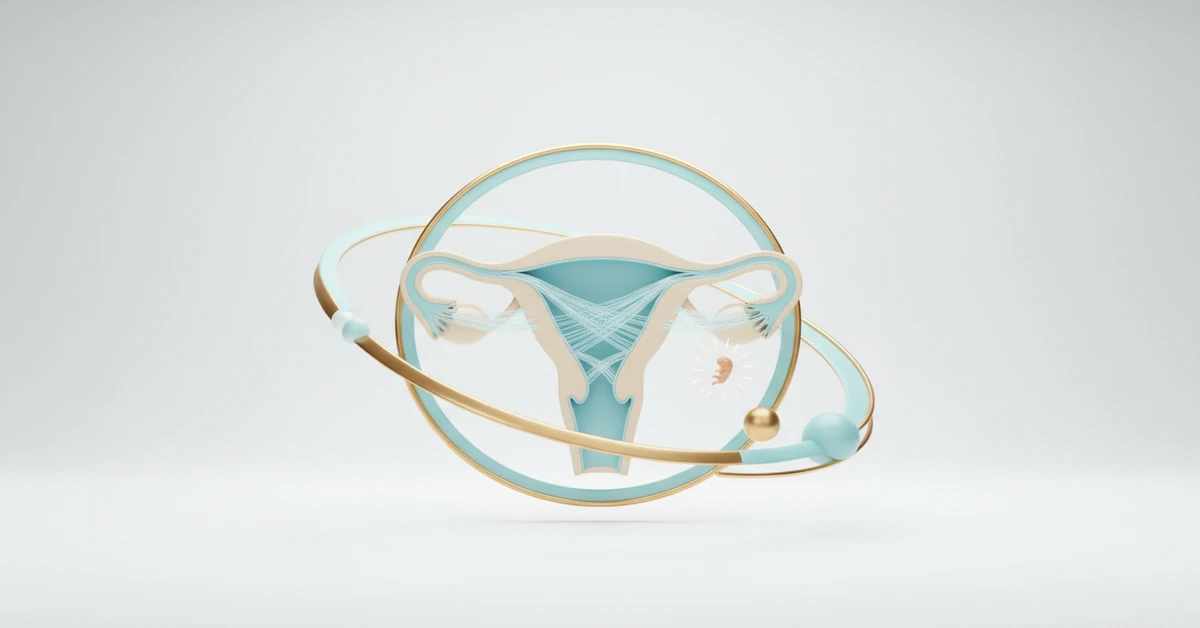
Intrauterine adhesions are bands of scar tissue that form inside the uterine cavity, causing areas of the opposing uterine walls to adhere to one another.
When these adhesions are associated with clinical problems such as markedly lighter periods, absent menstruation, cyclic pain, infertility or adverse reproductive outcomes, the term Asherman syndrome is commonly used.
The condition can range from a few thin adhesions to dense fibrosis involving much of the uterine cavity.
From a fertility perspective, intrauterine adhesions matter because they can affect both the shape of the uterine cavity and the function of the endometrium that must grow and support implantation.
Some patients first notice a major change in menstruation.
Others are investigated because the endometrium repeatedly remains thin during fertility treatment or because pregnancy does not occur.
However, a previous DC or a light period does not automatically diagnose Asherman syndrome. Proper evaluation of the uterine cavity is required.
What Are Intrauterine Adhesions?
The normal endometrium contains a basal layer that allows the lining to regenerate after menstruation.
If this basal layer is significantly injured, abnormal healing may result in fibrous scar tissue forming between opposing surfaces of the uterus.
Adhesions may be:
Thin and relatively filmy.
Dense and fibrotic.
Limited to one area.
Or extensive enough to narrow or almost obliterate the uterine cavity.
Severity matters.
Dense, extensive adhesions are generally more difficult to treat, more likely to recur and more likely to affect reproductive function than a few thin synechiae.
What Is the Difference Between Intrauterine Adhesions and Asherman Syndrome?
The terms are often used interchangeably.
A practical distinction is that intrauterine adhesions describe the anatomical finding, while Asherman syndrome usually refers to clinically significant adhesions associated with symptoms or reproductive problems.
These may include:
Hypomenorrhea.
Amenorrhea.
Cyclic pelvic pain.
Infertility.
Or pregnancy-related complications.
A woman may therefore have limited adhesions without developing the full clinical syndrome.
What Causes Asherman Syndrome?
The most important risk factor is injury to the endometrium, particularly following pregnancy-related uterine procedures.
Potential causes include:
Dilation and curettage after miscarriage.
Procedures for retained products of conception.
Postpartum uterine procedures.
Repeated curettage.
Some hysteroscopic fibroid procedures.
Other uterine surgery.
Certain uncommon infections.
Severe injury to the basal endometrial layer.
Current ASRM guidance recognizes uterine instrumentation, curettage, post-obstetric complications, infection and uterine surgery among circumstances associated with intrauterine adhesions.
This does not mean every woman who has undergone a DC will develop Asherman syndrome.
Does Repeated DC Increase the Risk?
It can.
Repeated uterine instrumentation may expose the basal endometrium to further injury, particularly after pregnancy loss.
A history of several curettage procedures together with a marked reduction in menstrual flow therefore raises more concern than a remote history of a single uncomplicated procedure.
Why Can Periods Become Very Light?
Menstrual bleeding depends on the growth and shedding of functional endometrium.
If part of the cavity becomes covered by scar tissue rather than normal endometrium, there may be less tissue available to shed.
Patients may notice:
Shorter periods.
Much less bleeding.
Only spotting.
Or complete amenorrhea.
If lower portions of the cavity are obstructed, menstrual blood can sometimes become partially trapped, causing cyclic pain despite minimal visible bleeding.
Can Asherman Syndrome Occur With Normal Periods?
Yes.
Relatively normal menstruation does not completely exclude adhesions.
Limited adhesions may involve only one area while enough functioning endometrium remains elsewhere to produce apparently normal bleeding.
Menstrual history is helpful but should not be used as the sole diagnostic test.
Can Intrauterine Adhesions Cause Infertility?
Yes.
They may interfere with fertility by:
Reducing the amount of healthy endometrium available for implantation.
Distorting the uterine cavity.
Preventing normal endometrial growth in scarred areas.
Interfering with sperm or embryo passage when adhesions involve the lower cavity or tubal openings.
More extensive disease is generally more concerning.
However, the presence of mild adhesions does not mean pregnancy is impossible.
Can They Cause Miscarriage?
They may contribute to adverse reproductive outcomes in some women, particularly when adhesions substantially affect the cavity or endometrium.
However, miscarriage has many potential causes.
A pregnancy loss should not automatically be attributed to Asherman syndrome simply because adhesions are present.
Modern guidance acknowledges that evidence demonstrating improved pregnancy outcomes after adhesiolysis specifically in recurrent pregnancy loss is still limited, although treatment of clinically important acquired uterine abnormalities can be considered.
How Are Adhesions Related to Thin Endometrium?
The relationship can be important.
When the basal endometrium has been damaged, affected areas may lose the ability to regenerate a normal lining.
Persistent thin endometrium despite adequate estrogen exposure can therefore be a reason to investigate for intrauterine adhesions.
However:
Thin endometrium does not automatically mean Asherman syndrome.
Other causes exist, and in some women no specific cause is identified.
When Should Asherman Syndrome Be Suspected?
Suspicion increases when a woman develops:
A major reduction in menstrual flow after DC.
Amenorrhea after an intrauterine procedure.
New cyclic pain with little bleeding.
Repeatedly thin endometrium.
Abnormal uterine-cavity imaging.
Infertility following uterine surgery or curettage.
Failed embryo transfers together with a relevant uterine history.
Symptoms alone are not enough to establish the diagnosis.
Can Standard Ultrasound Detect Adhesions?
Sometimes, but not reliably in every case.
Transvaginal ultrasound may show:
Irregular endometrial appearance.
Interrupted lining.
Fluid trapped within the cavity.
Or abnormal cavity shape.
Mild adhesions may be difficult to see.
More detailed cavity evaluation is appropriate when clinical suspicion remains high.
What Is the Role of Saline Infusion Sonography?
During saline infusion sonography, or sonohysterography, fluid is introduced into the uterine cavity during transvaginal ultrasound.
The fluid separates the uterine walls and improves visualization of intracavitary abnormalities such as:
Polyps.
Submucosal fibroids.
Synechiae.
ASRM considers sonohysterography highly useful for detecting intrauterine pathology, including synechiae.
It is less invasive than operative hysteroscopy and may be an appropriate diagnostic step.
Can HSG Detect Asherman Syndrome?
Hysterosalpingography may demonstrate filling defects or abnormal cavity contours.
It can be particularly useful when tubal patency also needs assessment.
However, HSG cannot directly visualize scar tissue or treat it.
For defining the location, density and extent of intrauterine adhesions, hysteroscopy is more informative.

Why Is Hysteroscopy Considered the Definitive Test?
Hysteroscopy allows direct visualization of the uterine cavity.
The clinician can assess:
Where adhesions are located.
How extensive they are.
Whether they are thin or dense.
How much normal endometrium remains.
Whether the tubal ostia can be identified.
Importantly, diagnosis and treatment can often be performed during the same procedure.
For this reason, hysteroscopy is generally considered the diagnostic reference standard for intrauterine adhesions.
Diagnostic vs Operative Hysteroscopy
Diagnostic hysteroscopy is performed primarily to inspect the uterine cavity.
Operative hysteroscopy allows instruments to be introduced to divide adhesions or treat another intracavitary lesion.
In Asherman syndrome, assessment and adhesiolysis may sometimes be performed during the same procedure.
Severe disease may require more complex planning or more than one surgical session.
How Are Intrauterine Adhesions Treated?
When treatment is clinically indicated, the main approach is hysteroscopic adhesiolysis.
The surgeon carefully divides scar tissue in an attempt to restore a normal cavity while preserving healthy endometrium.
Techniques may involve:
Fine hysteroscopic scissors.
Other mechanical instruments.
Selected energy devices.
Avoiding unnecessary injury to remaining normal endometrium is particularly important.
The objective is not simply to create an open space but to preserve the endometrial tissue needed for future pregnancy.
Are All Adhesions Removed in One Procedure?
Not necessarily.
Mild adhesions may be relatively straightforward.
In severe Asherman syndrome, normal anatomical landmarks can be difficult to identify and the risk of uterine perforation or additional endometrial injury is higher.
A staged approach can sometimes be safer.
Treatment complexity therefore varies dramatically between mild and severe disease.
Can Adhesions Return After Treatment?
Yes.
Recurrence is one of the major challenges in Asherman syndrome.
Risk is greater when the original adhesions are:
Dense.
Extensive.
Severe.
Associated with major basal-endometrial damage.
Successful adhesiolysis therefore does not necessarily end follow-up.
The uterine cavity may need reassessment after treatment.
How Is Recurrence Prevented?
Different postoperative strategies have been studied, including:
Mechanical intrauterine barriers.
Balloon catheters.
Barrier gels.
Estrogen treatment.
Second-look hysteroscopy.
Evidence supporting these interventions varies, and no strategy guarantees that adhesions will not reform.
Treatment is generally individualized according to disease severity and surgical findings.
Is a Balloon Used After Surgery?
Intrauterine balloon catheters can be used in selected cases to keep the opposing uterine surfaces separated during early healing.
The rationale is to reduce contact between injured surfaces while the endometrium regenerates.
Not every patient requires a balloon, and protocols vary regarding device type and duration of use.
Is an IUD Used After Adhesiolysis?
Historically, some intrauterine devices have been used as mechanical barriers.
However, not every IUD is appropriate for this purpose, and an ordinary contraceptive device should not automatically be inserted after surgery.
The decision depends on the surgeon's protocol, disease severity and available alternatives.
What Is the Role of Estrogen After Surgery?
Some clinicians prescribe estrogen after adhesiolysis to stimulate endometrial growth over the newly separated uterine surfaces.
Progesterone may later be added to create a withdrawal bleed.
This approach is commonly used in some protocols.
However, estrogen alone cannot guarantee normal endometrial recovery or prevent adhesion recurrence.
It should be viewed as one possible component of postoperative treatment.
Are Antibiotics Needed?
Antibiotic prophylaxis may be used with selected procedures or while certain intrauterine devices are present.
Routine prolonged antibiotic therapy without a clear indication is not automatically necessary after every adhesiolysis procedure.
What Is Second-look Hysteroscopy?
Second-look hysteroscopy is a repeat examination of the uterine cavity after treatment.
Its purpose may include:
Checking for recurrent adhesions.
Confirming that the cavity remains open.
Treating small recurrent adhesions before they become more extensive.
It can be particularly useful after moderate or severe disease, although timing and necessity vary between patients.
Does the Endometrium Return to Normal After Adhesiolysis?
Sometimes, but not always.
If adhesions are primarily mechanical and the basal endometrium remains functional, menstrual flow and endometrial thickness may improve substantially.
If the basal layer has suffered extensive irreversible damage, the cavity may be anatomically reopened while endometrial growth remains limited.
This distinction is crucial.
An anatomically successful operation does not always mean complete functional recovery.
What if the Endometrium Remains Thin?
The next step is to determine:
Whether the cavity remains open.
Whether adhesions have recurred.
Whether adequate hormonal preparation was used.
Whether some areas of the endometrium remain permanently damaged.
Whether the observed thickness represents the patient's best achievable response.
Only then should additional therapies be considered.
PRP, G-CSF and regenerative treatments have been investigated, but none can currently be considered a guaranteed standard treatment for restoring severely damaged endometrium.
Does PRP Treat Asherman Syndrome?
PRP should not replace hysteroscopic treatment of mechanical adhesions.
If the cavity is obstructed by scar tissue, the primary treatment is to restore the cavity when surgery is appropriate.
PRP has been studied as an adjunct intended to support endometrial regeneration, but evidence remains insufficient to promise improved live-birth outcomes.
What About Stem Cells?
Stem-cell and regenerative-medicine approaches are being studied for severe Asherman syndrome and refractory endometrial damage.
The field is scientifically interesting, but these treatments remain investigational.
Stronger evidence on both safety and live birth is needed before they can be considered routine therapy.
Can Natural Pregnancy Occur After Treatment?
Yes.
Natural conception can occur after successful treatment, particularly when:
The original disease was mild or moderate.
The cavity has been adequately restored.
Menstrual function improves.
The tubes are healthy.
No major additional infertility factor exists.
Prognosis is generally less favorable in severe disease where extensive basal endometrium has been destroyed.
Is IVF Necessary After Asherman Treatment?
Not automatically.
If the woman is younger, the tubes are open, semen findings are reassuring and the cavity has recovered, natural attempts or simpler fertility treatment may remain reasonable.
IVF may instead be required because of unrelated factors such as:
Advanced reproductive age.
Diminished ovarian reserve.
Male-factor infertility.
Tubal obstruction.
Long duration of infertility.
Or other independent indications.
Does IVF Bypass Asherman Syndrome?
No.
This is an important distinction.
IVF bypasses the need for natural fertilization and can bypass tubal disease, but it cannot bypass the need for a uterine cavity and endometrium capable of supporting implantation.
If adhesions distort the cavity or prevent adequate endometrial growth, transferring an embryo without addressing the problem may reduce the likelihood of success.
Should Adhesions Be Treated Before Embryo Transfer?
Clinically important adhesions that distort the cavity are generally addressed before embryo transfer.
After treatment, clinicians may reassess:
Uterine cavity shape.
Endometrial growth.
Whether recurrence has occurred.
In selected cases, second-look hysteroscopy may be considered before transferring a valuable frozen embryo.
The exact interval before transfer should be individualized.
Can Asherman Syndrome Cause Recurrent Implantation Failure?
It can be a relevant structural factor, but it does not explain every case of repeated transfer failure.
Cavity evaluation becomes particularly reasonable when there is:
Previous DC.
Newly reduced menstrual flow.
Persistent thin endometrium.
Abnormal imaging.
A history that raises suspicion for uterine pathology.
Routine hysteroscopy after one unsuccessful embryo transfer without another indication is not necessary.
For the broader evaluation, see Recurrent Implantation Failure After IVF: Causes, Tests and What Actually Helps.
Is Asherman Syndrome the Same as Adenomyosis?
No.
Asherman syndrome is a scar-related disorder within the uterine cavity.
Adenomyosis involves endometrial-like tissue within the uterine muscle, the myometrium.
Both may influence fertility, but their diagnosis, imaging and treatment are different.
Read more in Adenomyosis and Infertility: How Does It Affect Fertility and IVF Success?.
Pregnancy After Asherman Treatment
Women who previously had moderate or severe Asherman syndrome may benefit from closer obstetric follow-up after conception.
Significant endometrial injury and uterine scarring have been associated in observational studies with some placental and pregnancy complications.
The obstetric team should therefore know about the previous diagnosis and surgery even if the uterine cavity was successfully restored.
What Determines Prognosis?
Important factors include:
Original severity of adhesions.
Amount of healthy endometrium remaining.
Visibility and accessibility of tubal ostia.
Return of menstruation.
Endometrial growth after surgery.
Recurrence.
Maternal age.
Ovarian reserve.
Other causes of infertility.
A single pregnancy-success percentage cannot therefore be applied to all women with Asherman syndrome.
Common Mistakes in Asherman Syndrome
Common mistakes include:
Diagnosing Asherman syndrome solely because periods are light.
Excluding adhesions because menstruation still occurs.
Relying only on standard ultrasound despite strong clinical suspicion.
Treating HSG as a complete replacement for hysteroscopy.
Performing adhesiolysis without considering recurrence prevention and follow-up.
Assuming an anatomically open cavity means normal endometrium has completely recovered.
Starting PRP or stem-cell treatment before treating mechanical adhesions.
Assuming IVF bypasses uterine-cavity disease.
Repeating hysteroscopy without a clinical reason.
Conclusion
Intrauterine adhesions and Asherman syndrome can affect menstruation, fertility, endometrial growth and embryo implantation, particularly when scar tissue is extensive or dense.
A major risk factor is injury to the basal endometrium following intrauterine procedures, including some pregnancy-related curettage procedures and uterine surgery.
Ultrasound, sonohysterography and HSG can provide useful information, but hysteroscopy remains the most definitive method because it directly visualizes the adhesions and can allow treatment during the same procedure.
Hysteroscopic adhesiolysis is the main treatment when clinically significant adhesions are present.
Recurrence remains an important challenge, especially in severe disease. Balloon barriers, other mechanical barriers, estrogen and second-look hysteroscopy may be used in selected cases, but no strategy guarantees that adhesions will not return.
Importantly, restoring the shape of the uterine cavity does not always restore normal endometrial function if the basal layer has been severely damaged.
The treatment goal should therefore be not simply to “remove scar tissue,” but to restore the most functional uterine cavity and endometrium possible for future pregnancy.
If your periods became much lighter after a DC or uterine procedure, or your endometrium remains persistently thin during fertility treatment, you can contact Safemedigo on WhatsApp for a preliminary review of your history, ultrasound findings, previous procedures and whether uterine-cavity evaluation or hysteroscopy should be discussed.
Frequently Asked Questions
Does DC always cause Asherman syndrome?
No. Most women do not develop Asherman syndrome after a single procedure, but the risk is higher when the basal endometrium is injured and with some repeated pregnancy-related procedures.
Can I have intrauterine adhesions with normal periods?
Yes. Limited adhesions may coexist with relatively normal menstrual flow, so menstruation alone cannot exclude the condition.
What is the best test for Asherman syndrome?
Hysteroscopy is the most definitive test because it directly visualizes the adhesions, determines their extent and may allow treatment during the same procedure.
Can adhesions return after hysteroscopic treatment?
Yes, especially when the original adhesions are severe or extensive. Recurrence prevention and follow-up may therefore be part of treatment.
Can I become pregnant after Asherman syndrome treatment?
Yes. Pregnancy is possible, particularly after successful treatment of mild or moderate disease, but prognosis depends on adhesion severity, endometrial recovery, age and other fertility factors.