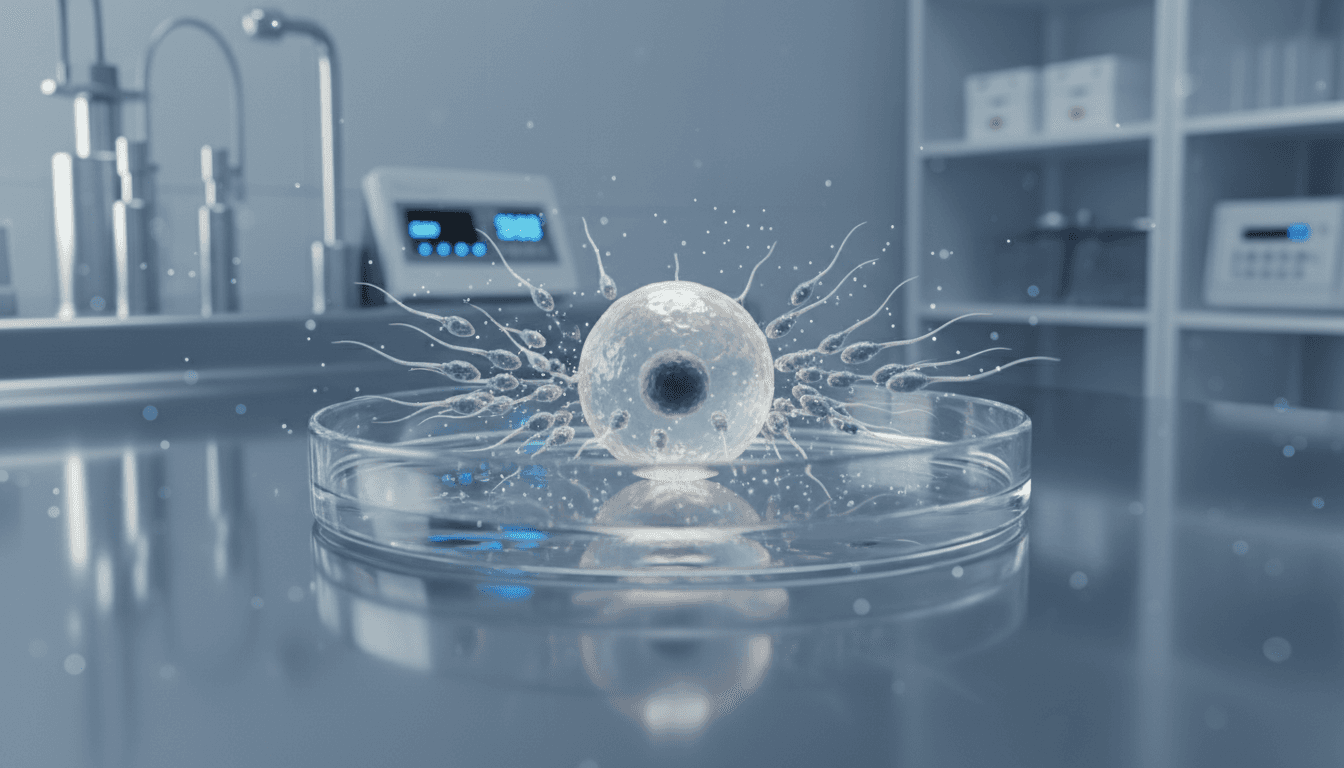



Finding an endometrial polyp during infertility evaluation often raises an immediate question: can this growth prevent pregnancy, and should it be removed before trying naturally or proceeding with IVF?
There is no single answer for every patient.
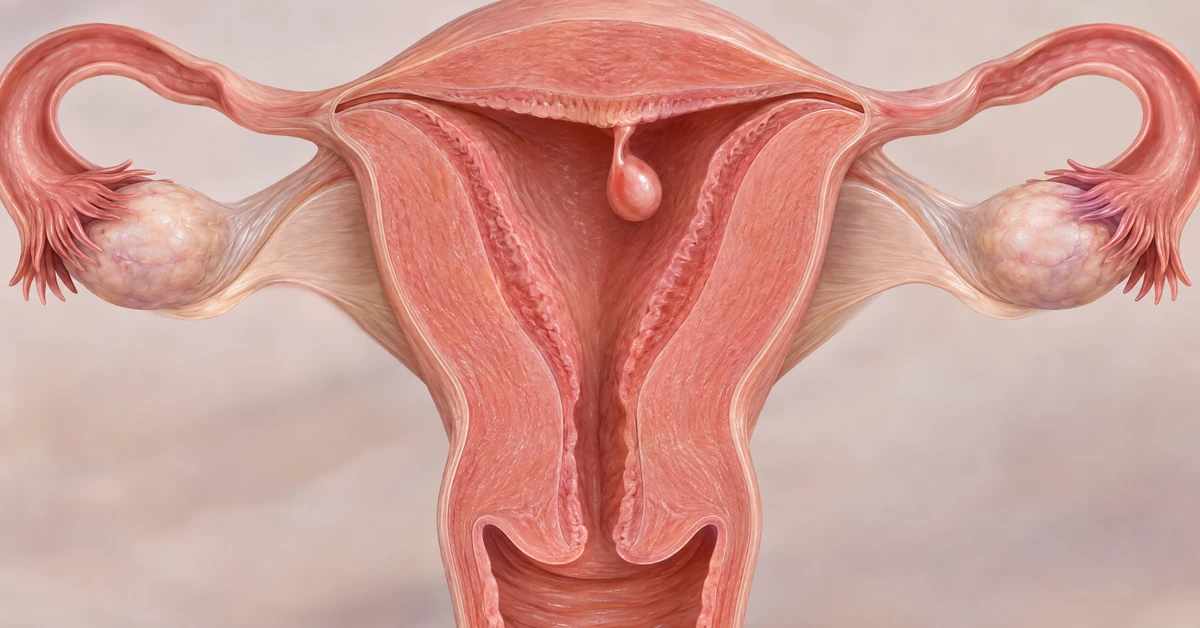
An endometrial polyp is a localized overgrowth of endometrial tissue projecting into the uterine cavity. It may be only a few millimeters in size and completely asymptomatic, or larger and associated with abnormal uterine bleeding.
Because polyps occupy the same cavity where an embryo must implant, they are potentially relevant to fertility. However, detecting a polyp does not automatically prove that it is causing infertility, nor does every polyp require immediate hysteroscopic removal.
Current evidence is more supportive of polypectomy before intrauterine insemination than of routine removal before every IVF cycle. Evidence regarding IVF implantation and live birth remains less definitive.
What Is an Endometrial Polyp?
An endometrial polyp is a localized growth of glands, stromal tissue and blood vessels arising from the endometrium.
Polyps may be:
Only a few millimeters.
Larger than one centimeter.
Single.
Multiple.
Pedunculated.
Or attached by a broad base.
Most polyps in reproductive-aged women are benign.
When removed, the tissue is generally submitted for histopathological examination.
What Symptoms Can Polyps Cause?
Many women have no symptoms.
Others may experience:
Bleeding between periods.
Irregular bleeding.
Heavier menstruation.
Spotting.
Occasionally bleeding after intercourse.
A polyp may also be discovered incidentally during an infertility ultrasound.
How Might Polyps Affect Fertility?
Several mechanisms have been proposed.
A polyp may mechanically interfere with the uterine cavity.
It may alter the local endometrial environment and inflammatory signaling.
Research also suggests changes in molecules and genes involved in endometrial receptivity and implantation.
However, these possible mechanisms do not mean every polyp prevents pregnancy.
Does Polyp Size Matter?
Yes, but size alone should not determine treatment.
Other considerations include:
Symptoms.
Number.
Location.
Patient age.
Duration of infertility.
Previous fertility treatment.
And the planned fertility procedure.
Small asymptomatic polyps may sometimes regress spontaneously.
Contemporary reviews therefore support individualized management rather than a universal rule for every small polyp.
How Are Endometrial Polyps Diagnosed?
Transvaginal ultrasound is usually the first step.
Detection may be influenced by:
Cycle timing.
Endometrial thickness.
Polyp size.
Imaging quality.
The uterine cavity is often easier to evaluate shortly after menstruation when the endometrium is relatively thin.
What Is Sonohysterography?
During saline infusion sonography, a small amount of fluid is introduced into the uterine cavity while ultrasound is performed.
This separates the cavity walls and makes abnormalities such as polyps, submucosal fibroids and adhesions easier to identify.
ASRM reports that SHG has greater than 90% positive and negative predictive values for intrauterine pathology.
Is HSG Enough?
Not usually.
HSG may demonstrate a filling defect but has limited sensitivity for endometrial polyps.
If a polyp is suspected, sonohysterography or hysteroscopy provides more accurate cavity assessment.
What Is the Role of Hysteroscopy?
Hysteroscopy allows direct visualization of the uterine cavity.
Its major advantage is that diagnosis and treatment can often occur during the same procedure.
A confirmed polyp can be removed under direct vision rather than by blind curettage.
Hysteroscopy remains the definitive method for diagnosing and treating intrauterine pathology.
Should Polyps Be Removed Before Natural Conception?
Not necessarily in every case.
Removal may be more reasonable when a polyp is:
Clearly documented.
Relatively large.
Symptomatic.
Multiple.
Or present in a woman with otherwise unexplained infertility.
Very small asymptomatic polyps may sometimes be monitored, depending on the complete fertility picture.
Does Polypectomy Improve Natural Pregnancy Rates?
Observational studies suggest that pregnancy may improve after hysteroscopic polypectomy in selected infertile women.
However, the evidence is heterogeneous.
It is therefore inappropriate to promise that removing a polyp will restore fertility or guarantee pregnancy.
What About IUI?
Evidence is stronger in this setting.
A randomized trial reported a significantly higher pregnancy rate after hysteroscopic polypectomy before IUI.
For this reason, removing a documented polyp before IUI has stronger evidence than routinely removing every small polyp before IVF.
Should Polyps Be Removed Before IVF?
This requires more nuance.
ASRM's 2026 committee opinion notes moderate evidence that polyps may adversely affect endometrial receptivity and implantation, but evidence that polypectomy before IVF improves implantation or live birth remains insufficient.
The decision should consider:
Polyp size.
Symptoms.
Number.
Previous IVF history.
Timing of embryo transfer.
Whether the diagnosis is definite.
And whether frozen embryos are already available.
What if the Polyp Is Very Small?
A small asymptomatic polyp, particularly one under approximately 10 mm, does not automatically require immediate removal.
Some may regress.
Management should therefore be individualized.
Removal may still be favored when there is:
Abnormal bleeding.
Previous implantation failure.
Repeated polyp formation.
Concern about the lesion.
Or an important embryo transfer planned.

What if a Polyp Is Found During Ovarian Stimulation?
The IVF cycle does not necessarily need to be cancelled.
Possible approaches include:
Continuing stimulation.
Retrieving the oocytes.
Creating embryos.
Freezing the embryos.
Then performing hysteroscopy before frozen embryo transfer.
In selected circumstances, the clinical team may still consider fresh transfer.
A recent retrospective cohort comparing fresh transfer with freeze-all followed by hysteroscopy found no significant difference in live birth after adjustment, but this observational study should not be interpreted as a universal rule.
Can Embryos Be Frozen Before Polypectomy?
Yes.
This strategy may be useful when reproductive time matters because of:
Advanced reproductive age.
Low AMH.
Limited ovarian reserve.
Or difficulty repeating stimulation.
The ovarian phase and uterine phase can therefore sometimes be separated.
Does Every IVF Patient Need Routine Hysteroscopy?
No.
The benefit of treating a documented intrauterine lesion should not be confused with a need for routine hysteroscopy in every IVF patient.
When ultrasound and cavity assessment are normal and there are no symptoms or relevant history, routine hysteroscopy is not automatically required.
What About Recurrent Implantation Failure?
The uterine cavity deserves renewed attention when repeated implantation failure occurs.
ASRM considers repeat endometrial and tubal assessment reasonable in women with RIF, using SHG, hysteroscopy, HSG or 3D ultrasound according to the clinical situation.
Read more in Recurrent Implantation Failure After IVF: Causes, Tests and What Actually Helps.
What Is the Difference Between a Polyp and a Submucosal Fibroid?
A polyp develops from the endometrial lining.
A submucosal fibroid arises from uterine muscle and protrudes toward or into the cavity.
Both can appear as intrauterine lesions but differ in structure, imaging findings and surgical management.
Read Uterine Fibroids and Infertility: When Do They Affect Fertility and Need Treatment Before IVF?.
Do Polyps Cause a Thin Endometrium?
Not typically.
A polyp represents localized tissue overgrowth, whereas thin endometrium refers to insufficient overall endometrial thickness.
The conditions may coexist but should be evaluated separately.
Read Thin Endometrium Before Embryo Transfer: What Thickness Is Adequate and Does It Affect IVF Success?.
Can Polyps Return?
Yes.
Recurrence is possible after hysteroscopic polypectomy.
Rates vary according to:
Follow-up duration.
Number of polyps.
Hormonal environment.
And associated endometrial conditions.
Recurrence does not mean hysteroscopy should be repeated routinely without clinical indication.
Can Polypectomy Cause Intrauterine Adhesions?
Simple hysteroscopic polypectomy is generally considered low risk.
However, every intrauterine procedure carries some potential for complications.
Risk may increase when treatment is extensive or multiple intrauterine procedures are performed.
Can an Endometrial Polyp Be Cancerous?
Most polyps in reproductive-aged women are benign.
A small minority may contain atypical or malignant changes.
Risk is higher in certain settings, particularly postmenopausal bleeding and other risk factors.
For this reason, removed tissue is usually sent for histopathology.
Are Antibiotics Needed After Polypectomy?
Not routinely simply because a polyp was removed.
Antibiotic use depends on the procedure, patient factors and clinical findings.
The presence of a polyp does not automatically mean chronic endometritis requiring antibiotic treatment.
How Soon Can Pregnancy Be Attempted After Polypectomy?
The recovery period after uncomplicated hysteroscopic polypectomy is generally much shorter than after surgery involving the uterine muscle.
Timing depends on:
Polyp size.
Number.
Extent of treatment.
Endometrial healing.
Bleeding.
And the planned fertility treatment.
The treating physician should determine when conception or embryo transfer can safely proceed.
Is a Second Hysteroscopy Always Needed?
No.
Second-look hysteroscopy may be considered when:
The procedure was extensive.
Symptoms recur.
Ultrasound again suggests a lesion.
Or there is another reason to reassess the cavity.
It is not automatically necessary after every uncomplicated polypectomy.
Common Mistakes
Common mistakes include:
Assuming every polyp causes infertility.
Removing every tiny asymptomatic polyp automatically.
Ignoring a documented lesion in a woman with abnormal bleeding or recurrent implantation failure.
Relying on HSG alone to diagnose a polyp.
Using blind curettage when hysteroscopic removal is available.
Automatically cancelling ovarian stimulation when a small suspected polyp is discovered.
Assuming polypectomy guarantees IVF success.
Performing routine hysteroscopy in every IVF patient without an indication.
And failing to send removed tissue for histopathological examination.
Conclusion
Endometrial polyps are usually benign localized growths within the uterine cavity and are commonly identified during infertility evaluation.
Because they occupy the implantation environment, they may affect fertility in selected women.
Evidence for hysteroscopic polypectomy is stronger before IUI than before IVF.
Current data do not justify a rule that every small endometrial polyp must be removed before assisted reproduction.
Larger, symptomatic or clearly documented polyps, and polyps identified in women with recurrent implantation failure, deserve more serious consideration for removal.
Very small asymptomatic lesions may be managed individually.
If a polyp is discovered during ovarian stimulation, the cycle does not automatically need to be cancelled. In selected cases, oocytes can be retrieved, embryos frozen and the uterine cavity treated before frozen embryo transfer.
If an endometrial polyp has been identified during infertility evaluation or before IVF, you can book a consultation with Safemedigo on WhatsApp to review the imaging and determine whether hysteroscopic removal should be considered before conception or embryo transfer.
Frequently Asked Questions
Does every endometrial polyp prevent pregnancy?
No. The impact depends on size, symptoms, reproductive context and other fertility factors.
Should every polyp be removed before IVF?
No. Larger, symptomatic or clinically significant lesions are more likely to justify treatment; small asymptomatic polyps require individualized assessment.
Is hysteroscopy the preferred way to remove a polyp?
Yes. Hysteroscopic polypectomy allows direct visualization and targeted removal.
What happens if a polyp is found during ovarian stimulation?
Treatment does not automatically need to stop. In selected cases, embryos can be frozen and the polyp removed before FET.
Can an endometrial polyp return after removal?
Yes. Recurrence can occur, but repeat hysteroscopy is not needed without a new clinical indication.