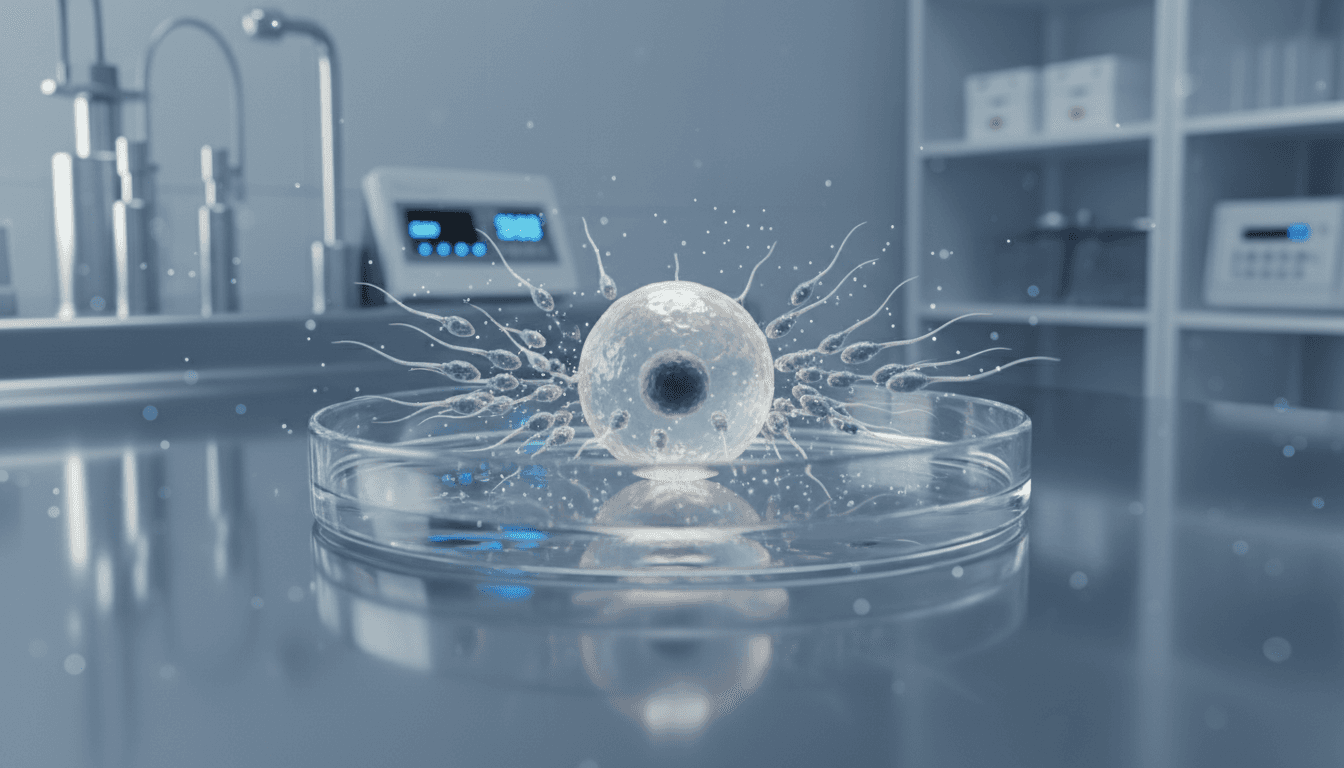



After egg retrieval and embryo development, many patients expect the next step to be a fresh embryo transfer within the same treatment cycle.
Sometimes, however, the fertility team recommends freezing all suitable embryos and delaying transfer.
This can be confusing when the embryos are developing well.
The obvious question is:
If we have a good embryo, why not transfer it now?
Because successful embryo transfer depends on more than embryo quality.
The patient's safety, hormonal environment, endometrial condition and uterine cavity also matter.
In some circumstances, delaying transfer is clearly beneficial.
However, a freeze-all strategy is not automatically better for every IVF patient.
What Is a Fresh Embryo Transfer?
A fresh transfer takes place during the same ovarian-stimulation cycle in which the eggs were retrieved.
An embryo is transferred several days after retrieval, depending on the laboratory plan and embryo stage.
If the patient has:
A suitable endometrium.
A low risk of ovarian hyperstimulation syndrome.
No significant uterine problem.
No relevant hormonal concern.
And a suitable embryo.
Fresh transfer can remain an excellent option.
What Does Freeze-All Mean?
Freeze-all means that all embryos suitable for preservation are cryopreserved and no embryo is transferred during the stimulation cycle.
Transfer is performed later during a frozen embryo transfer, or FET, cycle.
Reasons may include:
High OHSS risk.
Premature progesterone elevation.
Unsuitable endometrial conditions.
Persistent intrauterine fluid.
Hydrosalpinx.
A uterine lesion requiring treatment.
Preimplantation genetic testing.
Or another medical reason to avoid immediate pregnancy.
Is Freeze-All Better Than Fresh Transfer for Everyone?
No.
The idea that all patients benefit from separating ovarian stimulation from embryo transfer has become much less convincing as evidence has developed.
Freeze-all is extremely useful for selected clinical indications, especially OHSS prevention.
But current evidence does not show a universal improvement in live birth for the general IVF population.
A 2026 Canadian fertility guideline concluded that freeze-all is an important OHSS-prevention tool but should not be routinely used simply to improve live birth, reduce pregnancy loss or improve obstetric outcomes in all IVF patients.
Why Is OHSS One of the Strongest Reasons to Delay Transfer?
Ovarian hyperstimulation syndrome can occur after a strong response to fertility medication.
Patients at increased risk may have:
Many growing follicles.
A high ovarian response.
Polycystic ovarian morphology or related risk factors.
High hormonal exposure.
A large number of retrieved oocytes.
If a fresh embryo implants, the resulting pregnancy produces hCG, which can worsen or prolong OHSS.
For this reason, avoiding fresh transfer can substantially reduce the risk of late-onset OHSS.
ESHRE's updated ovarian-stimulation guideline recommends a GnRH agonist trigger combined with freeze-all in patients at significant OHSS risk.
Does Retrieving Many Eggs Automatically Require Freeze-All?
No.
Egg number is only one part of the risk assessment.
The clinician also considers:
Follicle number.
Estradiol.
Symptoms.
Trigger strategy.
PCOS-related factors.
Patient history.
And overall clinical risk.
Some high-yield retrievals remain clinically uncomplicated, while other patients require a more conservative approach.
Why Can Pregnancy Make OHSS Worse?
After implantation, endogenous pregnancy hCG continues stimulating the ovaries.
In susceptible patients this can maintain the vascular changes involved in OHSS.
A fresh transfer can therefore convert an early ovarian response into prolonged or late OHSS.
In such patients, cancelling fresh transfer is a safety strategy, not a judgment about embryo quality.
Why Can High Progesterone Delay Fresh Transfer?
During ovarian stimulation, progesterone can sometimes rise earlier than expected before retrieval.
This may advance endometrial maturation and create a timing mismatch between the embryo and the uterine lining during fresh transfer.
In selected patients, freezing the embryos and transferring them in a later cycle can avoid that stimulated endometrial environment.
However, there is no universal progesterone cutoff that should automatically cancel every fresh transfer.
Interpretation depends on the stimulation protocol, ovarian response, assay and the clinic's own validated experience.
Read Safemedigo's guide to high progesterone before embryo transfer.
Does a Mild Progesterone Rise Always Mean Freeze-All?
No.
Recent evidence shows that late-follicular progesterone is complex and should not be interpreted in isolation.
A single value should contribute to the decision rather than become the entire decision.
What if the Endometrium Is Thin?
Very thin endometrium can be another reason to consider delaying transfer.
However, there is no single thickness below which pregnancy is impossible.
A very large 2026 study specifically examined fresh-transfer cancellation in thin endometrium.
It found an apparent advantage to freeze-all when the lining was below 7 mm, while fresh transfer performed better when endometrial thickness was between 7 and 8 mm.
This argues against automatically cancelling every transfer simply because the lining is below 8 mm.
Read more in Safemedigo's thin endometrium and embryo transfer guide.
Is Endometrial Thickness the Only Uterine Factor?
No.
The team may also assess:
Endometrial pattern.
Fluid inside the uterine cavity.
Polyps.
Intrauterine adhesions.
Fibroids that distort the cavity.
Hydrosalpinx.
And other uterine findings that could affect implantation.
What if There Is Fluid Inside the Uterine Cavity?
Persistent endometrial cavity fluid can be concerning around embryo transfer.
The key questions are:
Why is the fluid present?
How much is present?
Does it disappear before transfer?
When was it detected?
A 2026 review found that fluid which resolved before transfer did not appear to carry the same prognosis as persistent fluid.
Persistent fluid at important treatment decision points was associated with lower live-birth rates in some large cohorts.
Therefore, persistent intrauterine fluid may justify postponing transfer while the underlying cause is investigated.
What Can Cause Intrauterine Fluid?
Possible causes include:
Hydrosalpinx.
Intrauterine adhesions.
Caesarean-scar niche.
Endometrial dysfunction.
Other structural conditions.
The goal should be to identify the cause rather than merely remove the visible fluid.

Why Does Hydrosalpinx Matter?
Hydrosalpinx is a damaged, fluid-filled fallopian tube.
Fluid can sometimes reflux toward the uterine cavity and negatively affect implantation.
When clinically significant hydrosalpinx is discovered, embryo transfer may be delayed while the tube is treated.
Read Safemedigo's guide to hydrosalpinx before IVF.
Does Every Hydrosalpinx Require Delay?
Management depends on the individual finding, but clinically significant hydrosalpinx is an important condition to address before embryo transfer.
Current fertility guidelines support treatment of significant hydrosalpinx before IVF transfer because untreated disease can reduce pregnancy outcomes.
What if an Endometrial Polyp Is Found During Stimulation?
Management depends on size, location and reproductive history.
A 2026 British Fertility Society guideline recommends considering freeze-all and polypectomy when a polyp larger than 20 mm is identified during ovarian stimulation.
For polyps smaller than 20 mm, fresh transfer may remain reasonable in selected patients without concerning risk factors.
Read Safemedigo's guide to endometrial polyps and infertility.
Can Fibroids Delay Transfer?
They can when they distort the uterine cavity or are otherwise considered clinically relevant.
Not every fibroid needs to be removed before IVF.
Important factors include:
Location.
Size.
Cavity distortion.
Symptoms.
Reproductive history.
See Safemedigo's guide to uterine fibroids before IVF.
What About Intrauterine Adhesions?
Significant adhesions can reduce the normal endometrial surface and interfere with implantation.
If clinically important adhesions are identified, hysteroscopic treatment may be recommended before embryo transfer.
Read more about Asherman syndrome and intrauterine adhesions.
Does a Good Embryo Mean It Should Be Transferred Immediately?
Not necessarily.
Embryo quality matters greatly, but implantation also requires an appropriately prepared uterus and a medically safe situation.
A good embryo may be better preserved for later transfer if the current cycle includes:
Significant OHSS risk.
A clearly unfavorable uterine environment.
A treatable uterine problem.
Or another temporary medical issue.
On the other hand, unnecessary delay should also be avoided.
Does Freezing Damage Embryos?
Modern vitrification produces high embryo-survival rates in experienced laboratories.
However, no cryopreservation process guarantees 100% survival.
A small proportion of embryos may not survive warming.
Cryopreservation should therefore not be described as biologically cost-free.
Are Frozen Embryos Better Than Fresh Embryos?
Freezing does not make an embryo biologically stronger.
The potential advantage of freeze-all is usually that transfer occurs later in a different uterine and hormonal environment, or that immediate pregnancy-related risk is avoided.
The benefit is therefore largely about timing and patient selection, not improving the embryo through freezing.
Does FET Always Produce Higher Pregnancy Rates?
No.
Recent evidence increasingly supports individualized transfer strategy.
A 2026 systematic review in low responders found that frozen transfer after freeze-all did not improve outcomes and, in the highest-certainty randomized evidence, was associated with lower live-birth and cumulative live-birth rates than fresh transfer.
Another 2026 study of low-prognosis women also found lower cumulative live birth with freeze-all compared with a fresh-transfer strategy.
These results argue strongly against routine freeze-all for everyone.
Why Might Fresh Transfer Be Better for Some Patients?
A patient with a low ovarian response may have only one or a few embryos.
If OHSS risk is negligible and the uterus is suitable, delaying transfer may provide no clear medical advantage.
Freeze-all adds:
Cryopreservation.
A warming procedure.
Another treatment cycle.
Additional time.
And additional cost.
A fresh transfer may therefore be entirely appropriate.
Does Low Egg Number Mean Fresh Transfer Is Always Better?
No.
It simply changes the balance.
If there is a clear medical reason for freezing, that reason may still outweigh embryo number.
But current evidence does not support freezing all embryos merely because freeze-all is viewed as inherently superior.
Does PGT Require Frozen Transfer?
In many modern preimplantation genetic testing programs, blastocysts are biopsied and vitrified while genetic results are awaited.
Transfer then occurs later.
This is a different reason for freezing than OHSS prevention or an unfavorable endometrium.
Can Illness or a Medical Complication Delay Transfer?
Yes.
Transfer may be delayed after:
An acute illness.
Important infection.
Significant post-retrieval complication.
Unexpected bleeding.
Or another medical condition that should stabilise before pregnancy.
The objective is not simply to achieve pregnancy quickly, but to begin pregnancy under appropriate medical conditions.
How Long After Retrieval Should FET Be Delayed?
There is no universal requirement to wait several months.
In some cases, transfer can be prepared in the following cycle once the ovaries and patient have recovered.
Longer delays may be needed when the reason for freeze-all was:
OHSS.
Tubal surgery.
Hydrosalpinx.
Hysteroscopic treatment.
Or another medical issue that first needs resolution.
Do the Ovaries Always Need Several Months to “Rest”?
No.
A fixed waiting period such as three months is not universally required after egg retrieval.
The correct timing depends on clinical recovery and the reason fresh transfer was avoided.
Does Frozen Embryo Transfer Always Require Hormonal Medication?
No.
FET can be prepared through:
A natural ovulatory cycle.
A modified natural cycle.
A hormonally programmed cycle.
The appropriate option depends on menstrual regularity, ovulation, medical history and clinic protocol.
Is Progesterone in FET the Same Issue as High Progesterone During Stimulation?
No.
Premature progesterone elevation late in ovarian stimulation can affect fresh-transfer timing.
During FET, however, adequate progesterone exposure and correct timing are necessary to synchronize the endometrium with embryo age.
These are different clinical questions.
Is Frozen Transfer Risk-Free?
No.
Every strategy has potential advantages and disadvantages.
Pregnancy and obstetric outcomes can differ according to transfer strategy and the way the frozen cycle is prepared.
FET should therefore not be presented as universally safer or universally superior.
Questions to Ask When Fresh Transfer Is Cancelled
Ask:
What is the exact reason for delaying transfer?
Is the concern patient safety or endometrial suitability?
How high is my OHSS risk?
Was progesterone elevated and how was it interpreted?
What is the endometrial thickness and appearance?
Is there intrauterine fluid?
Is hydrosalpinx or another uterine condition present?
Is freezing medically necessary or optional?
When can frozen embryo transfer be performed?
When Is Freeze-All Particularly Reasonable?
Strong indications can include:
High OHSS risk.
Early OHSS symptoms before transfer.
Clinically important hydrosalpinx requiring treatment.
Persistent intrauterine fluid.
A significant uterine lesion requiring treatment.
Clinically important premature progesterone elevation.
PGT.
Another medical reason to avoid immediate pregnancy.
When May Fresh Transfer Still Be Appropriate?
Fresh transfer can remain reasonable when:
The ovarian response is moderate.
OHSS risk is low.
The endometrium is suitable.
There is no major uterine pathology or cavity fluid.
Hormonal findings are acceptable.
A suitable embryo is available.
Common Misunderstandings
Common misconceptions include:
“Transfer was delayed because the embryos are weak.”
“Frozen embryos always work better.”
“Every thin endometrium requires cancellation.”
“Freeze-all should be used in every IVF cycle.”
“One progesterone number always determines the decision.”
“Pregnancy risk should be ignored if there is a good embryo.”
These oversimplify a highly individualized decision.
Conclusion
Delaying embryo transfer after egg retrieval does not mean the IVF cycle has failed.
In many cases, freeze-all protects the patient or allows transfer under more suitable uterine conditions.
One of the strongest indications is prevention of OHSS in high-risk patients, a strategy supported by updated ESHRE guidance.
Transfer may also reasonably be delayed for selected cases of progesterone elevation, very thin endometrium, persistent intrauterine fluid, hydrosalpinx or treatable uterine pathology.
However, current evidence does not support freeze-all for every IVF cycle.
Several 2026 studies and guidelines show that routine freeze-all does not consistently improve live birth and may be inferior to fresh transfer in some low-prognosis or low-response patients.
The correct question is therefore:
Why is delaying transfer better in this specific cycle?
rather than:
Is frozen transfer generally better than fresh transfer?
If your fresh transfer was cancelled after egg retrieval, you can book a consultation with Safemedigo on WhatsApp to review the reason for cancellation, progesterone level, endometrial findings, OHSS risk and frozen-transfer plan.
Frequently Asked Questions
Does delayed embryo transfer mean my IVF cycle failed?
No. Good embryos may still be available; transfer may simply be postponed for safety or to correct a temporary problem.
Is freeze-all always better than fresh embryo transfer?
No. It is highly useful for selected indications but does not routinely improve live birth for every IVF patient.
Why is fresh transfer avoided when OHSS risk is high?
Pregnancy hCG can worsen or prolong OHSS, so delaying transfer helps reduce late-onset OHSS risk.
Does a thin endometrium always require freezing all embryos?
No. The decision depends on the degree of thinning and the broader clinical context.
How soon can frozen embryo transfer be performed after retrieval?
Sometimes in the next cycle, but timing depends on recovery and the reason fresh transfer was postponed.