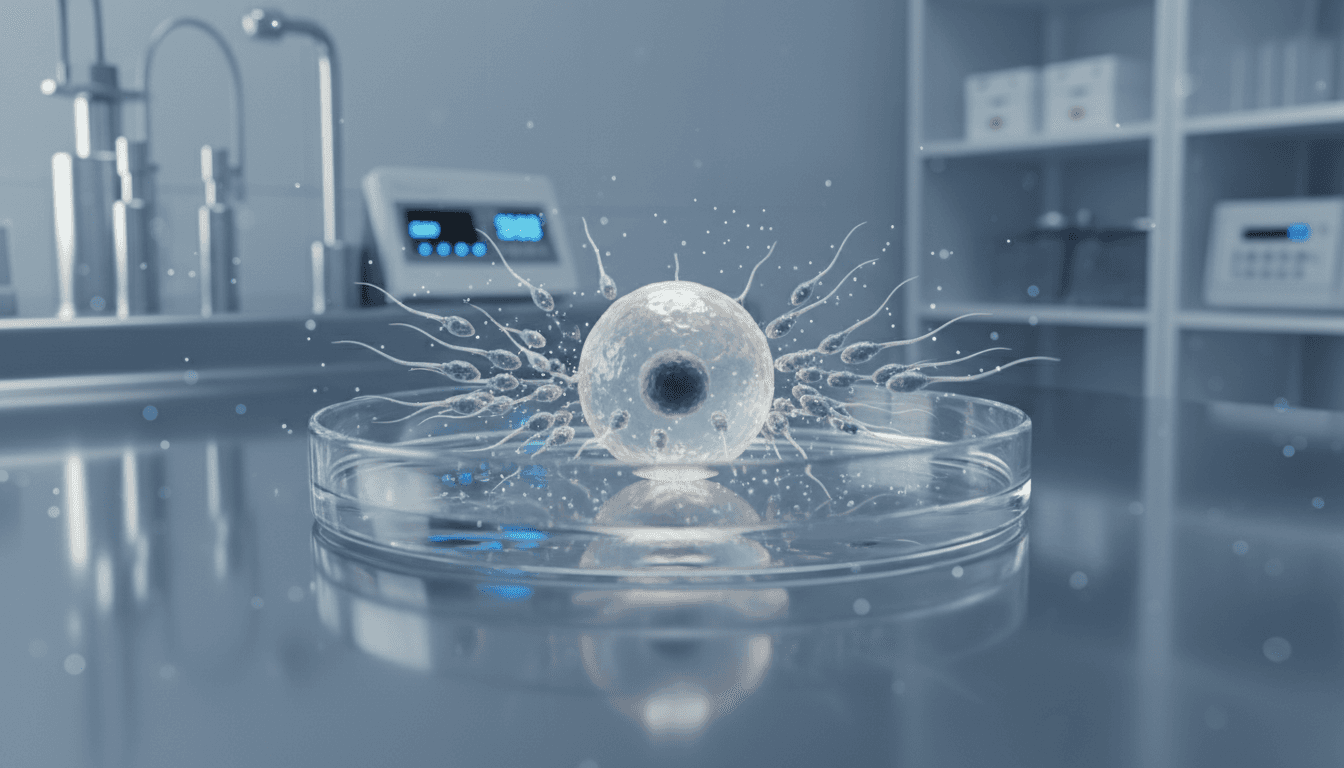





When a man reaches orgasm but produces little or no visible semen, couples may immediately assume that no sperm are being produced.
That is not always the case.
In some men, sperm production can be preserved and ejaculation occurs, but semen travels backward into the bladder instead of leaving through the urethra.
This is called:
Retrograde ejaculation.
It is very different from azoospermia because the primary problem may be the direction of ejaculation, rather than sperm production.
This distinction matters because sperm may sometimes be recovered from urine after ejaculation and used for IUI, IVF or ICSI depending on the number and quality recovered and the female partner's fertility status.
What is retrograde ejaculation?
During normal ejaculation, semen enters the urethra while the bladder neck closes.
This closure prevents semen from entering the bladder.
The semen is then expelled forward through the urethra.
In retrograde ejaculation, bladder-neck closure is impaired and some or most of the semen travels backward into the bladder.
A man may therefore experience:
A normal orgasm.
Normal ejaculatory sensations.
Very little visible semen.
Or no visible semen at all.
Does retrograde ejaculation mean sperm are absent?
No.
Spermatogenesis may be normal or near normal.
The sperm simply do not reach the collection container through the usual route.
After orgasm, sperm may instead be present in the urine within the bladder.
This is why post-ejaculatory urine testing can be so useful.
How is retrograde ejaculation different from azoospermia?
Azoospermia
Azoospermia means that sperm are not found in the ejaculate after appropriate laboratory assessment.
Its causes can include:
Obstruction.
Severe impairment of sperm production.
Hormonal disorders.
Genetic conditions.
Other causes.
Retrograde ejaculation
Sperm may be produced normally but semen travels into the bladder.
Therefore, absent or minimal ejaculate should not automatically be labelled azoospermia.
How is it different from anejaculation?
Both may produce a “dry orgasm,” but the mechanism differs.
Retrograde ejaculation
Emission and ejaculation occur, but semen is directed into the bladder.
Anejaculation or failure of emission
Seminal emission does not occur normally.
There may be no semen entering the urethra or bladder in the expected way.
Neurologic disease, surgery, medication and other factors can contribute.
Post-ejaculatory urine testing helps distinguish these conditions.
Is anejaculation the same as anorgasmia?
No.
Anorgasmia is inability to experience orgasm.
Anejaculation is inability to produce an ejaculate.
A man may occasionally experience orgasm without producing semen.
The conditions can coexist but should not be assumed to be identical.
What are the common signs?
Possible clues include:
Very low semen volume.
No visible ejaculate despite orgasm.
Cloudy urine after orgasm.
Infertility despite apparently normal sexual function.
Symptoms alone cannot confirm the diagnosis.
What else can cause low semen volume?
Low-volume semen may result from:
Incomplete sample collection.
Very short abstinence.
Ejaculatory duct obstruction.
Seminal-vesicle dysfunction.
Hormonal abnormalities.
Congenital absence of the vas deferens.
Retrograde ejaculation.
Failure of emission.
A low-volume result therefore requires clinical interpretation.
What causes retrograde ejaculation?
Several categories are important.
Medication
Certain medications can interfere with bladder-neck closure.
Alpha-blockers used for lower urinary-tract symptoms are an important example.
When medication is the cause, altering treatment under medical supervision may sometimes restore forward ejaculation.
Medication should never be stopped without the prescribing clinician.
Diabetes
Long-standing diabetes can damage autonomic nerves.
These nerves are involved in bladder-neck closure and ejaculation.
Affected men may experience:
Erectile dysfunction.
Delayed ejaculation.
Anejaculation.
Retrograde ejaculation.
Prostate or bladder-neck surgery
Operations involving the prostate, bladder neck or lower urinary tract may alter the mechanism responsible for antegrade ejaculation.
A previous surgical history is therefore important when a man presents with dry orgasm or markedly reduced semen volume.
Pelvic and retroperitoneal surgery
Operations deep in the pelvis or retroperitoneum can damage nerves involved in emission.
One important example is retroperitoneal lymph-node dissection.
Depending on the nerves affected, a man may develop retrograde ejaculation or failure of emission.
Neurologic conditions
Ejaculatory dysfunction can also occur with:
Spinal cord injury.
Multiple sclerosis.
Peripheral or autonomic neuropathy.
Other neurologic disorders.
Pelvic nerve injury.
The exact pattern varies according to the lesion.
How is retrograde ejaculation diagnosed?
One of the most useful tests is:
Post-ejaculatory urine analysis.
The man reaches orgasm and urine is collected shortly afterward.
The laboratory then examines the urine for sperm.
Finding significant numbers of sperm in post-orgasmic urine in a man with absent or very low antegrade ejaculate supports the diagnosis.
Does finding a few sperm in urine prove the diagnosis?
Not necessarily.
Small numbers of sperm may occasionally be found in post-ejaculatory urine even without clinically significant retrograde ejaculation.
The result therefore needs to be interpreted alongside:
Semen volume.
Symptoms.
Medical history.
Sperm concentration.
Motility.
The standard semen analysis.
How is a post-ejaculatory urine sample collected?
Laboratory protocols differ.
A typical approach may involve:
Preparing according to the fertility laboratory's instructions.
Managing bladder contents according to the protocol.
Reaching orgasm.
Collecting urine immediately afterward.
Processing the urine in the laboratory.
Recovering and assessing sperm.
When the goal is fertility treatment rather than diagnosis alone, preparation becomes particularly important.
Why is ordinary urine harmful to sperm?
Urine can have:
An acidic pH.
Unfavourable osmolality.
Other conditions that impair sperm motility and survival.
Therefore, sperm found in untreated urine are not automatically ideal for fertility treatment.
Specific preparation and laboratory processing may be needed.
What is urine alkalinisation?
Some sperm-recovery protocols attempt to make the urinary environment less acidic before ejaculation.
The objective is to protect sperm viability.
Different clinics may use:
Fluid instructions.
Medication-based protocols.
Bladder preparation with specific media.
These protocols should be performed under fertility-laboratory guidance rather than attempted independently.
Can sperm recovered from urine be used for pregnancy treatment?
Yes.
The laboratory can recover, wash and assess sperm and then decide which reproductive method is appropriate.
The choice between IUI and IVF/ICSI depends on:
Number of motile sperm recovered.
Sperm quality.
Reliability of recovery.
Female age.
Tubal status.
Ovarian reserve.
Other infertility factors.
When can IUI be considered?
IUI may be possible when enough motile sperm can be recovered and the female partner is otherwise a suitable candidate.
Important considerations include:
Open fallopian tubes.
Appropriate ovulation.
Female age.
Duration of infertility.
Ovarian reserve.
Other reproductive factors.
Good sperm recovery alone does not make IUI appropriate if there is a separate female indication for IVF.

When is IVF or ICSI more appropriate?
IVF or ICSI may be preferred when:
Very few sperm are recovered.
Motility is poor.
Sperm recovery is inconsistent.
Female-factor infertility is present.
Female age makes time important.
IUI has failed.
Sperm numbers are too limited to use efficiently with simpler treatment.
ICSI can use very small numbers of viable sperm compared with natural conception or IUI.
Should recovered sperm be frozen?
Sometimes.
Cryopreservation can be useful when:
Sperm recovery is difficult.
Results vary between attempts.
The male partner may not be available on egg-retrieval day.
A backup sample is desirable before IVF.
The decision depends on sperm number, quality and survival after freezing and thawing.
Can medication restore normal ejaculation?
Sometimes.
Selected medications attempt to improve bladder-neck closure.
Sympathomimetic medication and other agents have been used, but response varies.
Success depends strongly on the cause.
A medication-induced problem may be reversible, while permanent neurologic or surgical injury may respond less well.
Are pseudoephedrine or imipramine used?
They have been used medically in selected patients.
However, these are not self-treatment options.
They may affect:
Blood pressure.
Heart rate.
Urination.
The nervous system.
Other medications.
A reproductive urologist should determine whether such therapy is appropriate.
Does medical treatment always restore antegrade ejaculation?
No.
Some men respond, while others do not.
If reliable antegrade ejaculation is not restored, it may be more efficient to focus on recovering sperm for fertility treatment.
What if usable sperm cannot be recovered from urine?
Other options can include:
Penile vibratory stimulation.
Electroejaculation.
Surgical sperm retrieval.
The correct method depends on the underlying neurologic, surgical or functional problem.
What is penile vibratory stimulation?
Penile vibratory stimulation attempts to trigger the ejaculatory reflex mechanically.
It is particularly useful in selected men with neurologic disorders such as spinal cord injury.
If ejaculation occurs, the sperm can be processed for fertility treatment.
What is electroejaculation?
Electroejaculation uses controlled electrical stimulation to induce seminal emission or ejaculation.
It is a specialised medical procedure used particularly in selected men with neurologic ejaculatory dysfunction.
When is surgical sperm retrieval considered?
Surgical retrieval may be considered when:
Medication is ineffective.
Sperm recovery from urine is unsuccessful.
Induced ejaculation is unsuccessful or inappropriate.
ICSI is planned and a reliable sperm source is needed.
Depending on the condition, sperm may be obtained from the epididymis or testis.
Does retrograde ejaculation require micro-TESE?
Usually not simply because retrograde ejaculation exists.
Micro-TESE is primarily designed for men with non-obstructive azoospermia, where the laboratory and surgeon are searching for focal areas of sperm production inside the testis.
A man with otherwise preserved sperm production and an ejaculatory-routing problem may be able to use less invasive retrieval methods.
Can a man have both retrograde ejaculation and impaired sperm production?
Yes.
The two conditions can coexist.
If sperm are recovered from urine, their concentration and motility still need to be evaluated.
If no sperm are found, clinicians should not automatically assume retrograde ejaculation is the only issue.
Additional evaluation may include:
FSH.
LH.
Testosterone.
Testicular examination.
Genetic tests when indicated.
What is partial retrograde ejaculation?
Some semen may leave the urethra normally while another portion enters the bladder.
This is sometimes described as partial retrograde ejaculation.
The laboratory may assess both:
The antegrade ejaculate.
Post-ejaculatory urine.
and determine which provides the best usable sperm sample.
Does cloudy urine prove retrograde ejaculation?
No.
Cloudy urine after intercourse can be a clue, but it is not diagnostic.
Urine appearance can change for many reasons.
Laboratory confirmation is required.
Does retrograde ejaculation lower testosterone?
Not necessarily.
A man may have:
Normal testosterone.
Normal libido.
Normal erections.
Normal sperm production.
with an isolated problem of bladder-neck closure.
Hormonal deficiency should therefore not be assumed merely because ejaculation is abnormal.
Is retrograde ejaculation dangerous?
It is usually not physically dangerous by itself.
Semen entering the bladder is generally expelled with urine.
The condition becomes especially important when:
Fertility is desired.
It begins after surgery or neurologic disease.
Other symptoms suggest an underlying condition requiring treatment.
Does it cause permanent infertility?
Not necessarily.
If sperm production is preserved, the route of sperm delivery can often be bypassed through:
Restoring antegrade ejaculation when possible.
Recovering sperm from urine.
Induced ejaculation.
Surgical sperm retrieval.
Retrograde ejaculation is therefore often more accurately considered a sperm-delivery problem than a complete absence of sperm production.
Should the female partner also be evaluated?
Yes.
The decision between IUI and IVF/ICSI cannot be based solely on the male partner.
Evaluation should consider:
Female age.
Ovulation.
Tubal patency.
Ovarian reserve when appropriate.
Uterine factors.
Duration of infertility.
Previous treatment.
If IVF is already needed for a female factor, obtaining sperm reliably for ICSI may be more efficient than attempting several IUI cycles.
A practical treatment pathway
Medical treatment may be attempted when:
The cause is medication-related or potentially reversible.
There is no urgent IVF indication.
The female partner has sufficient reproductive time.
The clinician considers restoration of antegrade ejaculation realistic.
Urinary sperm recovery may be appropriate when:
Sperm can be recovered reliably.
Medication is ineffective or unsuitable.
Avoiding surgical retrieval is desirable.
IUI may be appropriate when:
An adequate motile sperm count is recovered.
Fallopian tubes are open.
There is no major female factor.
Female age and overall prognosis are favourable.
ICSI may be more appropriate when:
Few sperm are recovered.
Motility is limited.
Recovery is difficult or inconsistent.
Other infertility factors exist.
Maximum use needs to be made of a very small sperm number.
Surgical retrieval may be considered when:
No usable sperm are available from ejaculation or urine.
Induced ejaculation is unsuitable or unsuccessful.
ICSI is planned.
What tests may be needed?
Depending on the clinical situation:
Semen analysis.
Post-ejaculatory urine analysis.
Medication review.
Surgical history.
Diabetes and neurologic assessment.
FSH, LH and testosterone when indicated.
Male reproductive examination.
Parallel female-fertility evaluation.
Not every patient requires every test.
Conclusion
Retrograde ejaculation does not necessarily mean that the testes are unable to produce sperm.
Sperm production may be normal, but semen is redirected into the bladder rather than leaving through the urethra.
Post-ejaculatory urine analysis is therefore an important tool for distinguishing retrograde ejaculation from failure of emission and other causes of absent ejaculate.
When sperm are recovered, they can sometimes be processed and used for IUI or IVF/ICSI depending on sperm number, motility and the female partner's fertility status.
When urinary recovery is unsuccessful, induced ejaculation or surgical sperm retrieval may provide alternative routes to obtain sperm.
A man with a dry orgasm should therefore not automatically be labelled azoospermic before establishing whether sperm are truly absent or simply travelling in the wrong direction.
If you have very low or absent semen volume and are trying to conceive, Safemedigo can coordinate semen testing, post-ejaculatory urine assessment and reproductive-urology review to determine whether medication, urinary sperm recovery, IUI, ICSI or surgical retrieval is the most appropriate next step. Contact Safemedigo on WhatsApp.
Frequently Asked Questions
Does retrograde ejaculation mean that no sperm are being produced?
No. Sperm production may be normal, while semen travels into the bladder instead of leaving through the urethra.
How is sperm in the bladder detected?
A urine sample is collected after orgasm and examined for sperm, together with assessment of sperm quantity and motility.
Can sperm recovered from urine be used for ICSI?
Yes. When viable sperm are successfully recovered and processed, they may be used for IUI or IVF/ICSI depending on sperm quality and the couple's fertility plan.
Does retrograde ejaculation always require surgery?
No. Some causes are medication-related or medically treatable, and sperm may often be recovered from post-ejaculatory urine without surgery.
How is retrograde ejaculation different from azoospermia?
In retrograde ejaculation, sperm may be produced but redirected into the bladder. Azoospermia means sperm are absent from the ejaculate after appropriate laboratory assessment.