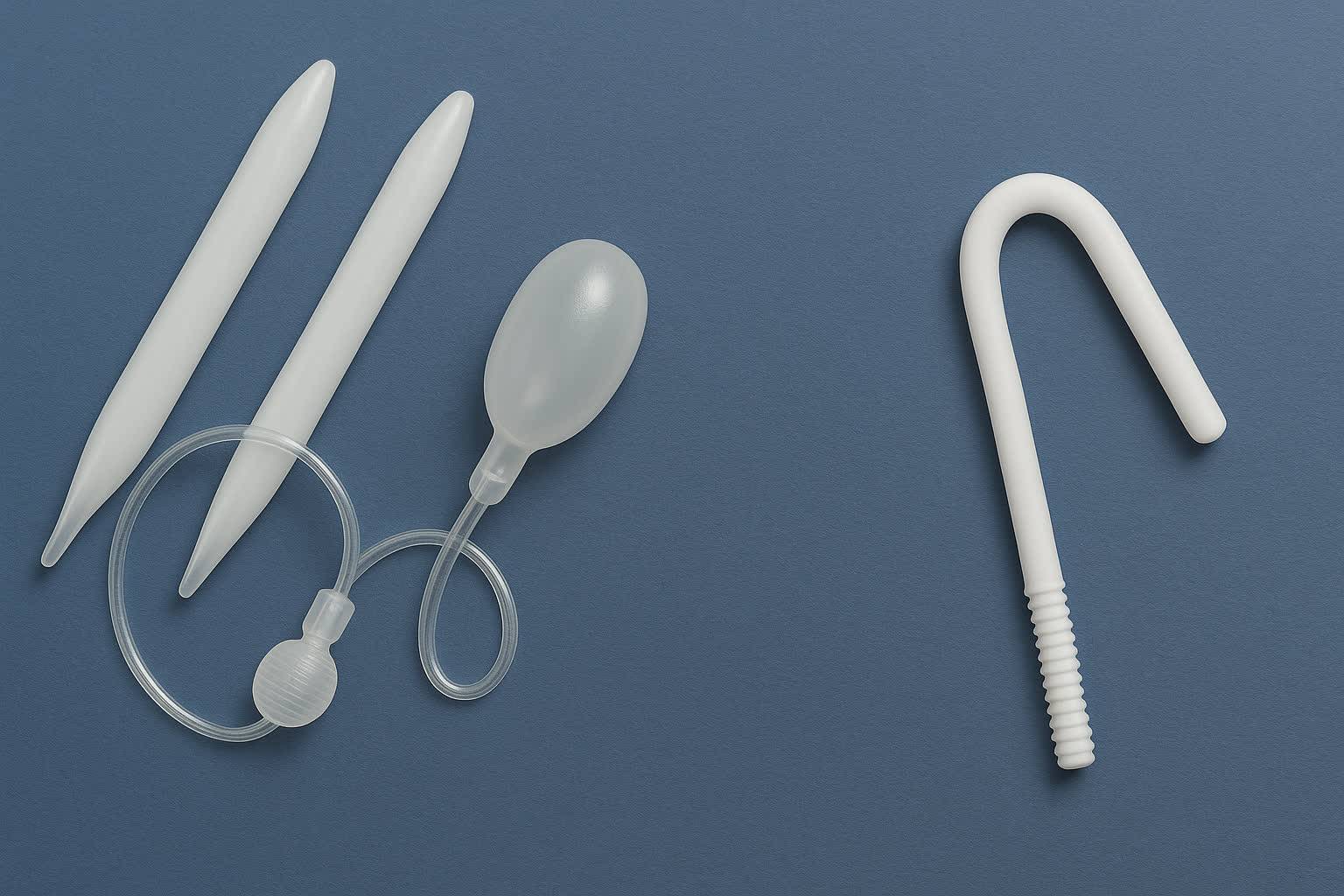






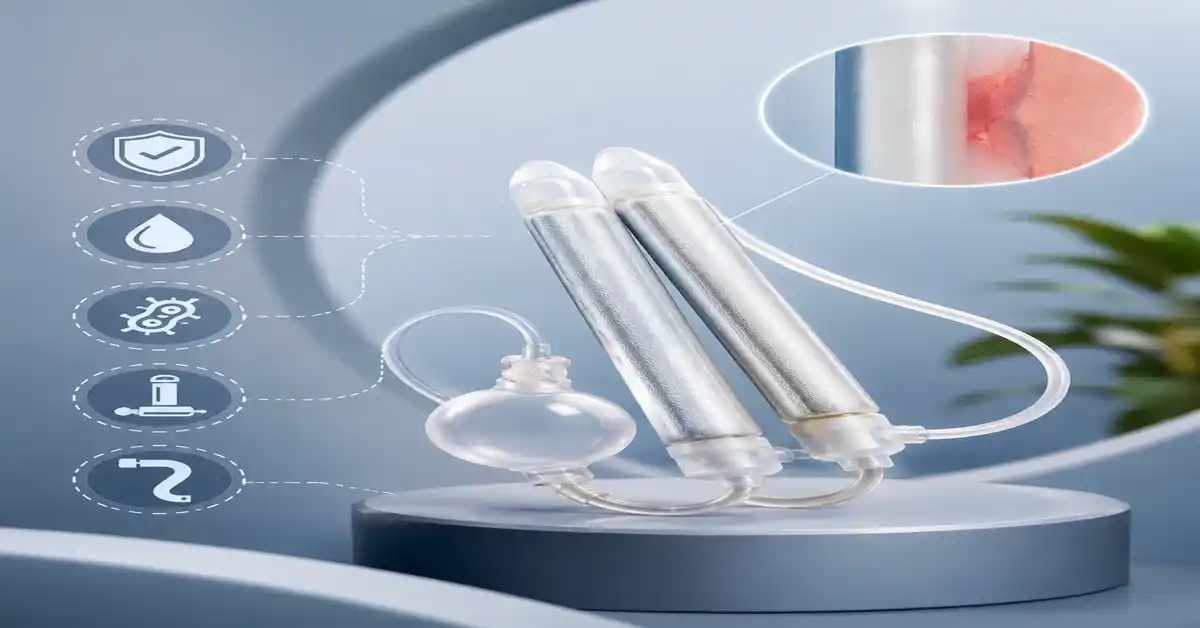
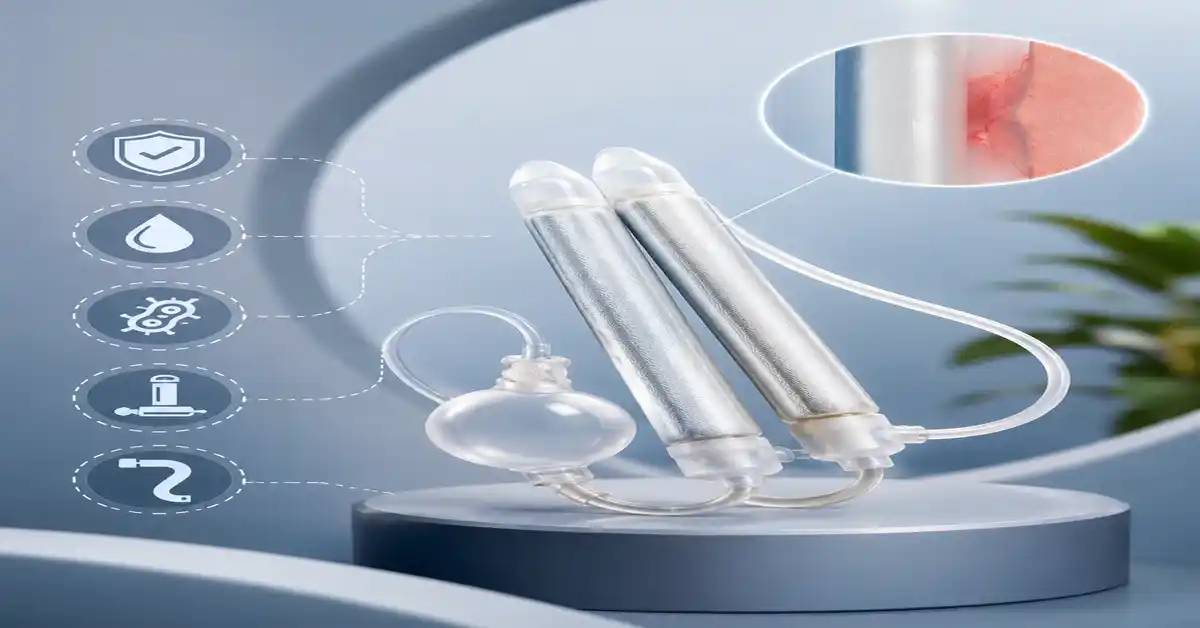
Penile implant surgery is an effective treatment for severe erectile dysfunction when medication, injections, or vacuum devices do not provide an acceptable result. Most patients recover without major difficulty and use the device normally after healing. However, a small number develop unusual complications requiring early assessment by a surgeon experienced in penile prosthetic surgery.
Rare does not mean unimportant. Some problems begin with subtle symptoms such as new pain, unusual difficulty operating the pump, skin discoloration, or reduced rigidity. Others appear suddenly as infection, device exposure, urinary difficulty, or severe abdominal pain.
Patients should not attempt to repair the implant at home or repeatedly force the pump. Appropriate management begins with recognizing warning signs, stopping device use when a significant problem is suspected, and obtaining specialist evaluation. Treatment may range from observation and imaging to revision, device removal, or replacement.
Safemedigo coordinates report review, specialist assessment, diagnostic imaging, revision surgery, hospital treatment, and follow-up for international patients experiencing penile implant complications.
Normal Recovery or a Warning Sign?
Pain, swelling, and bruising are expected during early recovery. These symptoms should gradually improve rather than intensify or return after a stable period.
Expected Postoperative Pain and Swelling
Patients may experience penile or scrotal pain, bruising, swelling, and temporary movement difficulty during the first days.
Mild sensitivity around the pump or incision may continue until healing is complete. The implant should not be activated before the surgeon gives permission, because premature cycling may increase pain or affect device position.
Symptoms That Require Medical Review
Contact the surgeon promptly for:
- Fever or chills.
- Increasing redness or swelling.
- Wound drainage.
- New pain after previous improvement.
- Visible implant material.
- Sudden urinary difficulty.
- Dark blue or black glans discoloration.
- Inability to deflate an inflated implant.
- New groin or lower-abdominal swelling.
- Sudden loss of rigidity or fluid transfer.
These symptoms may indicate infection, erosion, mechanical failure, reservoir displacement, or impaired blood flow.
When Is It an Emergency?
Emergency evaluation is appropriate for severe sudden pain, persistent bleeding, urinary retention, obvious device exposure, progressive glans discoloration, or significant abdominal pain with vomiting or distension.
An implant that remains painfully inflated and cannot be deflated also requires urgent assessment because prolonged tissue pressure may cause injury.
Delayed or Atypical Infection
Infection may appear shortly after implantation or months and years later. Some infections are obvious, while others remain low-grade because bacteria adhere to the implant surface.
Signs of Implant Infection
Possible findings include:
- Skin redness or warmth.
- Persistent swelling around the pump.
- Drainage or a nonhealing opening.
- Increasing or recurrent pain.
- Pump fixation to the scrotal skin.
- Fever or chills.
- Painful device operation.
- Skin erosion or component exposure.
Absence of fever does not exclude infection. Chronic infection may present mainly with pain or limited drainage.
Why Antibiotics Alone May Be Insufficient
Bacteria can form a protective biofilm on implanted material. Symptoms may temporarily improve with antibiotics and return when treatment stops.
Antibiotics remain part of management, but a truly infected prosthesis frequently requires removal or exchange. The decision depends on infection severity, tissue condition, systemic health, and organism type.
Removal or Immediate Salvage
One approach is complete removal followed by delayed reimplantation after infection clearance. The disadvantage is that corporal fibrosis may develop and make later implantation more difficult.
Selected patients may undergo immediate salvage, in which the infected implant is removed, the spaces are cleaned, and a new device is inserted during the same operation. This is a specialist procedure and is not appropriate in every infection.
Read about: Types of Penile Implants: Pros and Cons of Each Type
Implant Erosion and Extrusion
Erosion occurs when an implant component places persistent pressure on tissue and gradually moves into the urethra, glans, or skin.
Early Signs of Erosion
Possible signs include localized pain, thinning skin, a persistent red spot, new deformity, pump adherence, or visible material beneath the skin.
Patients with reduced sensation, neurological injury, or repeated catheter use may not recognize early pressure damage.
Cylinder Erosion Into the Urethra
Symptoms may include painful or difficult urination, blood in the urine, discharge, recurrent urinary infection, or visible implant material at the urethral opening.
Sexual activity and device cycling should stop immediately. Examination, imaging, or endoscopy may be required, and surgical removal or repair is commonly necessary.
Pump or Malleable Implant Exposure
The scrotal pump can press against or adhere to thin skin, particularly when infection is present. A malleable implant can also exert constant pressure on the distal tissues.
Visible hardware means that the skin barrier is no longer intact. The component should never be pushed back into the body or covered while waiting for improvement.
Read about: Types of Penile Implants and Benefits of Flexible Devices
Glans Ischemia and Tissue Necrosis
Reduced blood supply to the glans is extremely uncommon but can cause tissue loss if recognition is delayed.
Urgent Warning Signs
The glans may become dark, blue, cold, severely painful, numb, or blistered.
Progressive discoloration should not be dismissed as ordinary bruising, particularly when it is associated with coldness or pain out of proportion to expected recovery.
Risk Factors
Risk may be increased by:
- Advanced diabetes.
- Heavy smoking.
- Peripheral vascular disease.
- Multiple previous penile operations.
- Severe corporal fibrosis.
- Prolonged combined procedures.
- Excessive cylinder or dressing pressure.
These factors do not guarantee ischemia but justify careful planning and close postoperative monitoring.
How Is It Managed?
Management depends on severity and cause. It may involve pressure relief, dressing adjustment, device deflation, vascular assessment, or urgent implant removal.
Early intervention offers the best opportunity to prevent tissue necrosis.
Read about: Hydraulic Penile Implant vs Flexible: Which Offers Better Control
Unusual Mechanical Failures
Inflatable implants contain cylinders, a pump, reservoir, tubing, and valves. Any of these may eventually malfunction.
Loss of Rigidity or Fluid Leakage
The implant may fail to reach its previous firmness, lose rigidity quickly after inflation, or produce a pump sensation without cylinder filling.
The cause may be cylinder, tubing, connection, or reservoir leakage. Repeated forceful pumping does not correct the problem.
True mechanical failure usually requires revision surgery to replace the defective component or the full system.
Autoinflation and Deflation Failure
Autoinflation causes the cylinders to refill without intentional pump use. A valve, tubing, or reservoir problem may also prevent complete deflation.
Incorrect technique should first be excluded through supervised retraining. Persistent problems may require imaging, reservoir repositioning, or component replacement.
Pump Migration
The scrotal pump may move too high, rotate behind the testicle, or become fixed within scar tissue, making it difficult to operate.
Early postoperative instructions may help maintain pump position. Once healing is complete, forceful pulling should be avoided. Fixed migration may require surgical repositioning.
Read about: Latest Controllable Penile Implants: Features and Benefits
Cylinder Position and Penile Deformity
Correct sizing and symmetrical cylinder placement are essential for comfort, stability, and appearance.
Cylinder Crossover
A cylinder can enter the opposite corporal space, producing asymmetry, curvature, or abnormal inflation.
Examination and imaging may be required. Revision generally involves recreating the correct channel and repositioning or resizing the cylinders.
Cylinder Buckling or Excess Length
An excessively long or poorly positioned cylinder may buckle, causing pain, a palpable lump, or distal pressure.
A cylinder that is too short may provide inadequate glans support. Significant sizing problems usually require revision.
Floppy Glans and New Curvature
Insufficient distal support can allow the glans to move above the cylinder tips during erection. New curvature may also result from fibrosis, asymmetric placement, or healing.
Minor stable curvature may not require intervention. Painful deformity or difficulty with intercourse requires specialist assessment and may need device adjustment or corrective surgery.

Reservoir Complications
The reservoir of a three-piece implant is located in the pelvis or beneath the abdominal muscles. Complications are uncommon but can involve nearby organs.
Reservoir Herniation
The reservoir may move toward the inguinal canal or form a lower-abdominal bulge.
Symptoms may include discomfort, palpability, or impaired inflation. Treatment may require reservoir repositioning and fixation.
Migration Into the Bladder or Bowel
Very rarely, a reservoir can erode into the bladder or bowel, particularly after previous pelvic surgery, scarring, or retention of an old reservoir.
Possible symptoms include recurrent urinary infection, blood in the urine, pelvic or abdominal pain, bowel disturbance, vomiting, or obstruction. Imaging and endoscopy may be required, with surgical removal and organ repair when indicated.
Bladder or Vascular Injury
Reservoir insertion can rarely injure the bladder or a major blood vessel, especially after previous prostate, bladder, hernia, or pelvic surgery.
Bleeding, low blood pressure, hematuria, or severe pain may occur. Management can require immediate repair and involvement of additional surgical specialists.
Read about: Penile Implant Surgery Success Rates: What Patients Should Expect
Chronic Pain After Implantation
Pain should progressively decline after recovery. Pain lasting for months or appearing after normal device use requires structured evaluation.
Possible Causes
Chronic pain may result from low-grade infection, oversized components, cylinder buckling, pump position, early erosion, fibrosis, or nerve irritation.
Pain may also originate from pelvic-floor muscles, the spine, groin, or neuropathic conditions unrelated to the prosthesis.
Medical Evaluation
The surgeon determines pain location and its relationship to inflation, deflation, sitting, and intercourse.
Examination may be combined with urine testing, blood tests, ultrasound, or CT imaging to distinguish implant-related pain from other causes.
Does Implant Removal Always Cure Pain?
No. Neuropathic pain may continue after removal of a mechanically normal implant.
Revision should therefore follow identification of a likely cause rather than being performed for unexplained pain without complete evaluation.
Read about: Post-Surgery Penile Implant Rehab: Tips for Restoring Healthy Intimacy
Diagnosing Penile Implant Complications
No single test identifies every problem. Evaluation depends on the device, symptom timing, and surgical history.
Examination and Device Cycling
The surgeon examines the wound, skin, glans, cylinders, and pump. The device may be carefully inflated and deflated to assess function and symmetry.
A painful implant with suspected infection or erosion should not be forcefully cycled.
Laboratory Testing and Cultures
Blood tests, urine studies, and cultures may be obtained when infection is suspected.
Normal results do not always exclude localized chronic infection, so findings must be interpreted with examination and surgical observations.
Imaging and Endoscopy
Ultrasound may evaluate fluid collections and pump position. CT can show reservoir location and abdominal or pelvic complications.
Urethral or bladder endoscopy may be needed for hematuria, urinary symptoms, or suspected erosion.
Read about: Penile Implant Cost in Turkey and Financing Options
What Should You Do When a Sudden Problem Occurs?
The first step is to stop using the implant and assess whether emergency symptoms are present.
Immediate Actions
- Stop sexual activity.
- Do not force inflation or deflation.
- Do not push exposed hardware inward.
- Do not puncture swelling.
- Keep the wound clean.
- Record when symptoms started.
- Contact the implant surgeon.
- Seek emergency care for discoloration, fever, retention, or severe pain.
Actions to Avoid
Do not rely on leftover antibiotics or repeatedly test the device.
Avoid forceful pump massage or self-repositioning, which may worsen pressure, erosion, or tissue injury.
Information to Provide
The treating team will need:
- Implant type and date.
- Device identification card.
- Previous revision history.
- Symptom onset.
- Fever, drainage, or urinary symptoms.
- Ability to inflate and deflate.
- Medical conditions and medications.
- Anticoagulant use.
Revision and Replacement Surgery
Revision may involve repairing, repositioning, or replacing one or more components.
Partial Component Replacement
An isolated pump, reservoir, or cylinder may sometimes be replaced when no infection is present and the other components remain reliable.
For older systems, full replacement may be preferred because another aged component could fail shortly afterward.
Complete Device Replacement
Full replacement may be appropriate for multiple failures, extensive wear, incorrect sizing, tubing damage, or significant fibrosis.
Infection management may involve immediate salvage or removal with delayed reimplantation.
Recovery After Revision
Recovery may resemble the original surgery after a simple mechanical revision.
It can be longer after infection, erosion, urethral repair, vascular injury, or abdominal surgery. Revision should be performed by a surgeon experienced in complex prosthetic cases.
Read about: Penis Implants: Cost Types Turkey vs USA
Prevention and Long-Term Follow-Up
Not every complication can be prevented, but careful planning and correct use reduce risk.
Correct Device Selection and Sizing
Oversizing increases pressure, pain, and erosion risk. A penile implant is not an enlargement procedure.
Device type should reflect hand function, fibrosis, age, previous surgery, and the patient’s ability to operate the pump.
Medical Optimization
Diabetes control, treatment of urinary or skin infection, smoking cessation, anticoagulant planning, and good hygiene support safer surgery.
Previous pelvic and abdominal procedures must be disclosed because they affect reservoir placement.
Correct Use and Follow-Up
Patients should attend postoperative visits and begin cycling only when instructed.
Any persistent new change in rigidity, shape, pump position, skin condition, or urinary function should be reported.
Cost of Treating Penile Implant Complications
Cost varies from simple imaging and consultation to complete explantation, tissue repair, and new implantation.
Cost Factors
They include:
- Type of complication.
- Implant age and model.
- Imaging and endoscopy.
- Infection or erosion.
- Urethral, bladder, bowel, or vascular injury.
- Partial or complete replacement.
- Salvage or delayed reimplantation.
- Anesthesia and hospitalization.
- Cultures and antimicrobial treatment.
- Multidisciplinary surgery.
- Postoperative follow-up.
Why Revision Is More Complex
Revision may require removal of old components, dissection through fibrosis, repair of damaged tissue, and use of special implant sizes.
Complex reservoir or organ injury may require abdominal, vascular, or reconstructive support.
Requesting a Complete Quotation
The treatment plan should specify diagnostics, removal, washout, repair, replacement implant, hospitalization, medication, and follow-up rather than quoting the device alone.
Read about: Hydraulic Implants: Turkey vs Germany
Choosing the Right Specialist
Rare complications require a surgeon experienced not only in primary implantation but also in salvage, revision, and reconstructive work.
Relevant Surgical Experience
Ask about experience with:
- Implant infection.
- Immediate salvage.
- Urethral and cylinder erosion.
- Glans-support correction.
- Pump and reservoir revision.
- Migrated reservoir removal.
- Severe fibrosis.
- Multiple prior revisions.
Hospital Capabilities
The hospital should provide imaging, endoscopy, emergency surgery, microbiology support, and access to other surgical specialties when organ or vascular injury is possible.
Safemedigo Coordination
Safemedigo can organize review of the original operation report, implant card, imaging, cultures, and symptom history before travel.
The team coordinates consultation, diagnostic testing, revision surgery, hospitalization, and international follow-up.
Read about: Erectile Dysfunction Therapy: Turkey vs Germany
Conclusion
Rare penile implant complications do not always mean that treatment has failed permanently. Many problems can be corrected successfully when they are recognized early and managed by an experienced prosthetic surgeon.
Important warning signs include increasing pain, drainage, device exposure, glans discoloration, urinary difficulty, loss of rigidity, autoinflation, and abdominal or groin pain. Patients should not force the pump, continue intercourse, or depend on antibiotics without specialist examination.
Frequently Asked Questions
Does postoperative pain always indicate a complication?
No. Early pain is expected, but pain should gradually improve. Increasing or recurrent pain requires evaluation.
What should I do if the implant will not deflate?
Do not force the pump. Stop use and contact the surgeon, seeking urgent care if the implant is painful or placing pressure on the skin.
Can implant infection be treated only with antibiotics?
Antibiotics may suppress symptoms, but infection involving the device frequently requires surgical removal or exchange.
Can only the pump be replaced?
Sometimes, when failure is isolated and no infection exists. Device age and the condition of all components influence the decision.
Is glans discoloration after surgery dangerous?
Mild bruising can occur, but progressive dark discoloration, coldness, or severe pain requires urgent blood-flow assessment.