





Penile implants are surgical devices used to treat erectile dysfunction when medications, injections, vacuum devices, or other treatments do not provide enough benefit or are not suitable for the patient. Many men ask about the best types of penile implants, but the answer depends on the patient’s health, hand function, expectations, budget, anatomy, and lifestyle.
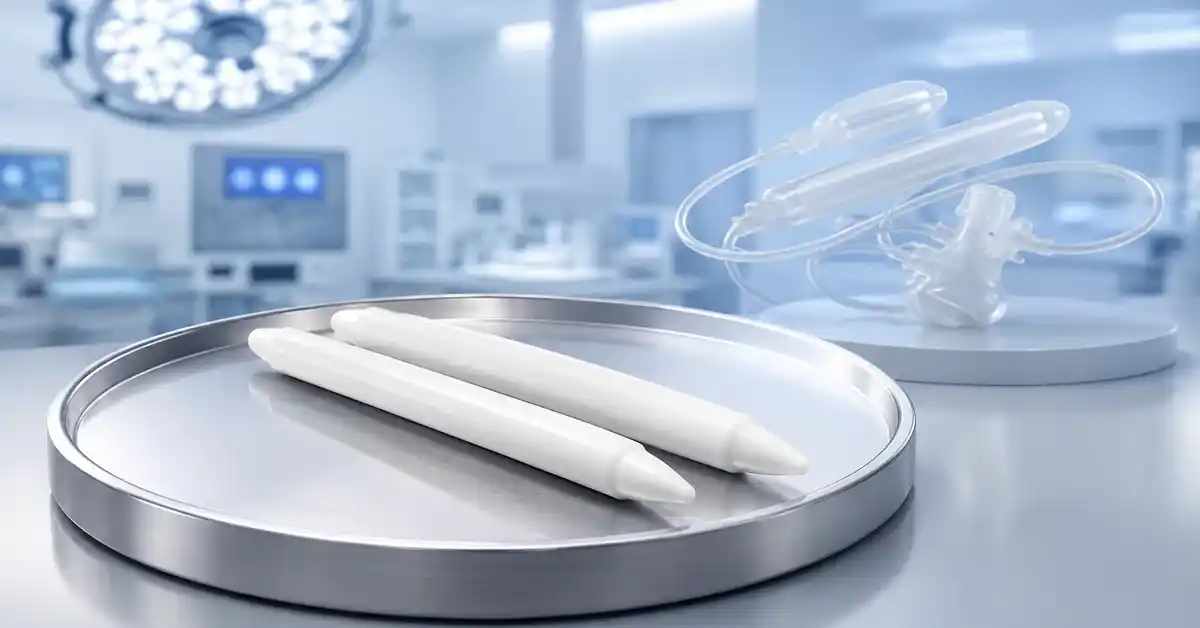
The main types of erectile implants include flexible penile implants, also called semi-rigid penile implants, and hydraulic penile implants, also called inflatable penile implants. Flexible devices are simpler, usually lower in cost, and do not require a penile implant pump. Hydraulic devices provide more control over erection and relaxation, but they are more complex and usually more expensive.
Choosing between flexible penile implants and hydraulic penile implants should happen after detailed counseling with an experienced urologist or andrology surgeon. The patient should understand the benefits of flexible penile implants, disadvantages of flexible penile implants, possible complications, recovery expectations, cost, and realistic sexual outcomes before surgery.
Types of Penile Implants
Types of penile implants differ in design, function, cost, concealment, ease of use, and risk of mechanical problems. Broadly, they are divided into flexible or semi-rigid penile implants and inflatable or hydraulic penile implants.
A penile implant does not increase sexual desire, does not treat ejaculation problems, and does not restore natural biological erection. It provides mechanical rigidity that allows intercourse. This is why expectations before surgery are very important.
Flexible penile implants
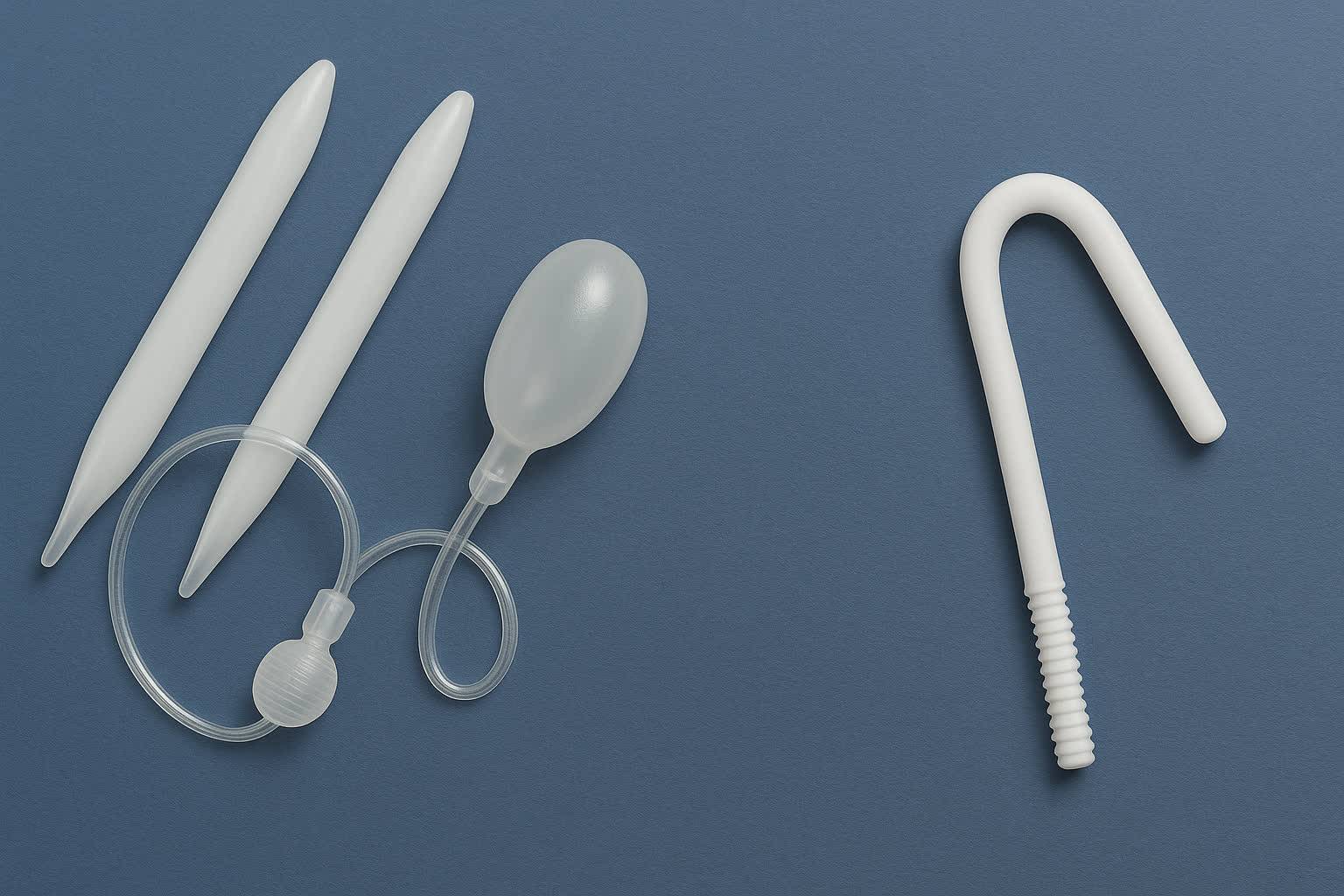
Flexible penile implants, also known as semi-rigid penile implants or malleable penile implants, are usually made of two bendable rods placed inside the erectile chambers of the penis. The penis remains firm enough for intercourse, and the patient manually positions it upward for sex or downward for daily concealment.
These are also called penile implants without a pump because they do not include a pump, reservoir, or fluid system. This makes them simple to use and easier for many patients to understand.
Flexible penile implants may offer:
- Simple daily use.
- No penile implant pump.
- No inflation or deflation steps.
- Lower cost in many cases.
- Less mechanical complexity.
- Fewer moving parts.
- Easier operation for older patients.
- Suitability for limited hand mobility.
- Faster learning after recovery.
- A practical solution for selected patients.
However, flexible implants do not fully relax like inflatable penile implants. This may affect comfort, concealment, and satisfaction in some men.
Hydraulic penile implants with a pump
Hydraulic penile implants with a pump are more complex devices designed to create an erection when the patient chooses. A three-piece hydraulic implant usually includes two cylinders inside the penis, a pump inside the scrotum, and a fluid reservoir placed inside the body. The patient squeezes the pump to move fluid into the cylinders and create rigidity. After intercourse, the fluid is released back to the reservoir, allowing the penis to become more relaxed.
This option may suit men who want a more natural appearance when not sexually active and better control over erection and relaxation.
Advantages may include:
- More natural flaccid appearance.
- Better concealment under clothing.
- Controlled erection when needed.
- Good rigidity during intercourse.
- Deflation after intercourse.
- High satisfaction in selected patients.
- Advanced device design.
- More natural daily comfort.
- Good option for men who can use the pump.
- Flexible function for sexual timing.
The main limitations are higher cost, more complex surgery, the need to use the pump, and a possible risk of mechanical failure over time.
Two-piece hydraulic penile implants
Two-piece hydraulic penile implants usually include cylinders and a scrotal pump, without a separate large fluid reservoir. They may be considered in selected patients when placing a separate reservoir is not ideal, such as men with certain pelvic surgery histories or anatomical considerations.
Two-piece devices provide more control than flexible penile implants, but they may not always provide the same rigidity or complete relaxation as three-piece inflatable penile implants, depending on the model and patient factors.
Two-piece hydraulic implants may be considered for:
- Selected men with prior pelvic surgery.
- Patients who want an inflatable option.
- Patients who may not be ideal for a separate reservoir.
- Men seeking more control than a flexible implant.
- Cases where the surgeon prefers a simpler hydraulic design.
- Patients with specific anatomical needs.
- Men who accept some functional trade-offs.
- Patients wanting a balance between simplicity and control.
- Carefully selected cases.
- Individualized surgical planning.
The choice between two-piece and three-piece hydraulic implants should be explained clearly before surgery.
Inflatable penile implants
Inflatable penile implants include two-piece and three-piece hydraulic devices. They are designed to allow the patient to inflate the device for sexual activity and deflate it afterward. This gives better control and a more natural appearance compared with semi-rigid penile implants.
Inflatable penile implants may be suitable for men who want:
- Control over when erection occurs.
- Better flaccidity outside intercourse.
- More natural appearance.
- Easier concealment.
- Good rigidity during sex.
- An advanced erectile implant option.
- A function closer to natural erection.
- Willingness to learn pump use.
- Acceptance of higher cost.
- Follow-up if device issues occur.
Inflatable implants are not ideal for every patient, especially men with severe hand limitations, difficulty using a scrotal pump, or preference for the simplest possible device.
Read about: Types of Penile Implants: Pros and Cons of Each Type
Benefits of Flexible Penile Implants
The benefits of flexible penile implants make them important options for many men with erectile dysfunction. They are simple, durable, and usually more affordable than hydraulic devices. Because they do not require inflation, deflation, a reservoir, or a pump, many patients find them practical.
Flexible implants are not inferior in every case. They are simply different. For the right patient, they can provide dependable rigidity with fewer mechanical concerns.
Lower cost of flexible penile implants
The cost of a flexible penile implant is usually lower than the cost of a hydraulic implant because the device is simpler and has fewer components. This can make flexible implants more accessible for patients who need a permanent solution but have budget limitations.
Cost factors may include:
- Device brand.
- Country of manufacture.
- Surgeon experience.
- Hospital level.
- Anesthesia type.
- Preoperative tests.
- Length of stay.
- Follow-up care.
- Medical risk factors.
- Warranty policy.
- Additional procedures if needed.
- Local market availability.
Lower cost should not be the only reason to choose a flexible implant. Surgeon experience, sterilization standards, proper sizing, postoperative follow-up, and realistic counseling are equally important.
Ease of flexible penile implant surgery
Flexible penile implant surgery is usually less mechanically complex than hydraulic implant surgery because the device has fewer parts. There is no separate reservoir, no pump, and no tubing system. In selected cases, this may mean a more straightforward procedure.
Ease of surgery may be helpful for:
- Older patients.
- Patients with chronic diseases.
- Men who may not tolerate longer procedures.
- Men with limited hand function.
- Patients wanting penile implants without a pump.
- Selected cases after previous surgery.
- Men seeking less mechanical complexity.
- Patients after failure of other treatments.
- Men who prefer simpler use.
- Cases where the surgeon recommends a practical option.
Even so, flexible penile implant surgery is still a specialized operation. Correct sizing and careful placement are essential to reduce pain, erosion, discomfort, and problems with flexible penile implants.
Durability and fewer mechanical failures
One of the strongest advantages of flexible penile implants is durability. Because they do not include a pump, reservoir, tubing, or fluid system, there are fewer mechanical parts that can fail. This may reduce the risk of device malfunction compared with more complex hydraulic systems.
Durability advantages include:
- Fewer moving components.
- No pump malfunction.
- No reservoir issues.
- No fluid leakage.
- No tubing-related failure.
- Easier daily use.
- Less need to learn complex operation.
- Reliable rigidity after healing.
- Practical long-term function.
- Lower mechanical anxiety for some patients.
However, fewer mechanical failures do not mean zero complications. Infection, pain, erosion, sizing problems, and dissatisfaction can still occur if patient selection or surgical technique is not appropriate.
Suitable for chronic cases and limited hand mobility
Flexible penile implants may be especially suitable for men with chronic diseases or limited hand mobility. Patients with advanced diabetes, nerve damage, arthritis, hand weakness, or reduced dexterity may find it difficult to operate a penile implant pump. A flexible implant avoids this problem.
Flexible penile implants may be suitable for:
- Limited hand mobility.
- Severe arthritis.
- Neurological weakness.
- Difficulty operating a pump.
- Desire for a direct-use device.
- Multiple chronic diseases.
- Preference for simplicity.
- Cost concerns.
- Inability to handle an inflatable device.
- Surgeon recommendation after evaluation.
This does not mean every patient with chronic disease needs a flexible implant. It means the device may be more practical in carefully selected cases.
Read about: Hydraulic Penile Implant vs Flexible: Which Offers Better Control
Disadvantages and Issues of Flexible Penile Implants
The disadvantages of flexible penile implants should be discussed clearly before surgery. Many dissatisfaction issues come from unrealistic expectations rather than device failure. A flexible implant provides reliable rigidity, but it does not offer complete natural flaccidity.
Problems with flexible penile implants are often related to concealment, daily comfort, and the feeling of constant firmness.
Inability to fully relax
The most important limitation of flexible penile implants is that the penis cannot fully relax in the same way it can with a deflated inflatable device. The implant remains semi-rigid all the time. The patient can position the penis downward, but it does not become completely soft.
This may cause:
- More difficulty concealing under tight clothing.
- A constant feeling of firmness.
- Discomfort while sitting in some men.
- Concern about daily appearance.
- Need for clothing adjustments.
- Difficulty with some sports.
- Psychological discomfort.
- Dissatisfaction if expectations were wrong.
- Preference for hydraulic implants in some patients.
- Need for careful counseling before surgery.
This limitation is central to the flexible penile implant vs hydraulic discussion.
Constant feeling of a rigid body
Because a flexible implant remains firm inside the penis, some patients feel a constant rigid body. Many men adapt over time, but some may find it uncomfortable, especially during the early recovery period or when wearing tight clothing.
The feeling may be more noticeable during:
- Long sitting.
- Tight clothing.
- Certain sleeping positions.
- Physical activity.
- Early healing.
- Incomplete tissue adaptation.
- Incorrect sizing.
- Persistent postoperative pain.
- Anxiety about the device.
- Poor preoperative counseling.
Correct sizing, experienced surgery, and proper follow-up help reduce these issues.
Effects on sexual sensation and intercourse
Flexible penile implants support mechanical rigidity, but they do not increase sexual sensation, desire, or orgasm. If a patient has reduced sensation due to diabetes, nerve damage, spinal injury, pelvic surgery, or other causes, the implant does not directly fix that sensory problem.
Patients should understand that:
- The implant provides firmness.
- It does not increase libido.
- It does not treat premature ejaculation.
- It does not restore damaged nerve sensation.
- It does not guarantee orgasm.
- Glans engorgement may remain different.
- Intercourse may require adaptation.
- Partner communication can help.
- Satisfaction depends on realistic expectations.
- Follow-up improves confidence and use.
This counseling is essential before flexible penile implant surgery.

Flexible vs Hydraulic Penile Implants: A Comprehensive Comparison
Flexible vs hydraulic penile implants should be compared based on cost, use, appearance, concealment, mechanical reliability, hand function, and patient priorities. Flexible implants are simple and durable. Hydraulic implants are more natural in appearance and offer more control.
No implant is best for every patient. The best types of penile implants are those that match the patient’s anatomy, expectations, health, manual ability, and lifestyle.
Cost comparison
Flexible penile implants usually cost less than hydraulic penile implants. Three-piece inflatable penile implants are often the most expensive because they include cylinders, a pump, a reservoir, and a more complex surgical setup. Two-piece hydraulic devices may fall between flexible and three-piece implants depending on brand and center.
Cost comparison depends on:
- Type of implant.
- Device brand.
- Country of manufacture.
- Flexible vs hydraulic design.
- Two-piece vs three-piece structure.
- Surgeon experience.
- Hospital level.
- Anesthesia.
- Preoperative testing.
- Hospital stay.
- Warranty terms.
- Follow-up services.
When comparing the cost of a flexible penile implant, patients should ask what is included: the device, surgery, anesthesia, hospital stay, medications, follow-up, and complication management.
Functionality and control differences
The main functional difference is that flexible implants are always semi-rigid and manually positioned, while inflatable penile implants are inflated when needed and deflated after intercourse. Hydraulic implants provide more control, but they require pump use.
Flexible penile implants:
- Remain semi-rigid.
- Do not require a pump.
- Are simple to use.
- Have fewer mechanical parts.
- Do not fully relax.
- May be harder to conceal.
- Suit patients who prefer simplicity.
- Have fewer mechanical failures.
- Usually cost less.
- Require minimal operation steps.
Hydraulic penile implants:
- Inflate for intercourse.
- Deflate afterward.
- Look more natural when relaxed.
- Require pump use.
- Usually cost more.
- Are mechanically more complex.
- Require hand dexterity.
- May have mechanical failure risk.
- Suit men who want more control.
- Are easier to conceal in daily life.
This comparison helps patients understand which option fits their priorities.
Reliability and ease of use
Flexible implants are usually easier to use because there is no pump, no reservoir, and no inflation or deflation. Hydraulic implants require the patient to learn how to use the scrotal pump. Many men learn this well, but some struggle, especially if hand movement is limited.
Reliability depends on more than the device. It includes surgical technique, infection prevention, correct sizing, wound healing, and patient follow-up.
Reliability factors include:
- Device quality.
- Surgeon experience.
- Correct sizing.
- Infection prevention.
- Wound healing.
- Patient education.
- Proper use.
- Chronic disease control.
- Follow-up care.
- Early management of symptoms.
Even the best types of penile implants can fail if implanted or managed poorly.
Suitability based on patient lifestyle
Patient lifestyle matters. A man who wants a low-maintenance device and lower cost may prefer a flexible implant. A man who wants better daily concealment and a more natural flaccid appearance may prefer a hydraulic implant. A man with limited hand function may not be comfortable with a penile implant pump.
Flexible implants may suit men who want:
- Simplicity.
- No pump.
- Lower cost.
- Fewer mechanical concerns.
- Easier use.
- Suitability despite hand limitations.
- A practical permanent solution.
- Less complex surgery.
- Acceptance of semi-rigid positioning.
- A device recommended by the surgeon.
Hydraulic implants may suit men who want:
- More natural appearance.
- Better relaxation.
- Greater control.
- Better concealment.
- Ability to use a pump.
- Willingness to pay more.
- Advanced device function.
- A more natural daily feel.
- Realistic expectations.
- Surgeon confirmation of suitability.
The decision should be shared between patient and surgeon.
Read about: Latest Controllable Penile Implants: Features and Benefits
Hydraulic Penile Implants: Advantages and Disadvantages
Hydraulic penile implants are advanced devices that provide better control over erection and relaxation. They are preferred by many patients because they can look and feel more natural outside intercourse, especially when deflated. However, they are more expensive, mechanically more complex, and require the patient to use a pump.
The advantages are important, but so are the limitations.
Natural appearance of an erection
One of the main advantages of hydraulic penile implants is a more natural appearance. When inflated, the penis becomes rigid for intercourse. When deflated, it becomes more relaxed and easier to conceal. This can improve confidence and comfort in daily life.
This may matter for patients who value:
- Daily appearance.
- Concealment under clothing.
- Relaxation after intercourse.
- Privacy.
- Natural-looking function.
- Psychological confidence.
- Control over timing.
- Less embarrassment.
- More natural sexual routine.
- Partner comfort.
However, the implant still creates a mechanical erection. It does not restore natural blood-flow erection or glans engorgement in every patient.
Full control of erection and relaxation
Hydraulic implants allow the patient to decide when to create an erection and when to deflate it. This is a major advantage for men who want better relaxation outside sexual activity.
Control benefits include:
- Inflation before intercourse.
- Deflation afterward.
- Better daily comfort.
- Easier concealment.
- More psychological control.
- Flexible sexual timing.
- Reduced constant rigidity.
- More natural flaccid state.
- Better clothing comfort.
- Improved confidence for some men.
This benefit depends on the patient’s ability to use the pump properly.
Potential mechanical failures
Because hydraulic penile implants contain cylinders, a pump, a reservoir, and tubing, mechanical failure can happen over time. Modern devices are reliable, but no implanted device is free from possible malfunction.
Potential issues include:
- Weak inflation.
- Fluid leakage.
- Pump malfunction.
- Difficulty deflating.
- Tubing problems.
- Loss of rigidity.
- Pain with operation.
- Need for revision.
- Device replacement.
- Corrective surgery in some cases.
These risks do not mean hydraulic implants should be avoided, but patients should understand them before surgery.
Higher cost and surgical complexity
Hydraulic penile implants usually cost more than flexible implants. Surgery is also more complex because the surgeon must place cylinders, a pump, and sometimes a reservoir. This requires specialized experience.
Higher cost may be related to:
- Multiple device components.
- Advanced technology.
- Longer surgery in some cases.
- Need for specialized expertise.
- Device brand.
- Hospital level.
- Anesthesia.
- Follow-up care.
- Warranty policy.
- Possible future revision.
- More complex operating setup.
- Center experience.
A higher price does not automatically mean it is the best option for every man. Suitability is more important than technology alone.
Read about: Penile Implant Surgery Success Rates: What Patients Should Expect
Indications for Choosing Flexible Penile Implants
Indications for flexible penile implants often include failure of other treatments, need for a simple permanent solution, limited hand mobility, cost concerns, or medical situations where a hydraulic device may be less practical. The decision should be medical and personal, not based on cost alone.
Flexible penile implants can be excellent when chosen for the right patient.
Failure of other treatments
A penile implant may be considered when oral medications, injections, vacuum devices, or other erectile dysfunction treatments fail or are not suitable. Some men do not respond well to medications, while others cannot use them because of heart medications or side effects.
Indications may include:
- Failure of oral ED medications.
- Contraindication to ED medications.
- Failure of injection therapy.
- Pain or refusal of injections.
- Poor response to vacuum devices.
- Severe erectile dysfunction.
- Penile fibrosis.
- Peyronie’s disease with ED.
- Desire for a permanent solution.
- Dissatisfaction with temporary treatments.
Flexible penile implants can provide a direct mechanical solution for rigidity.
Chronic diseases affecting erectile function
Chronic diseases can cause severe and persistent erectile dysfunction. Diabetes, vascular disease, nerve injury, pelvic surgery, spinal issues, and penile fibrosis may reduce response to medication. In such cases, an implant may be considered.
Flexible implants may suit patients with:
- Long-term diabetes.
- Nerve damage.
- Vascular disease.
- Arthritis or hand weakness.
- Prior pelvic surgery.
- Medication failure.
- Difficulty using a pump.
- Desire for simplicity.
- Multiple chronic diseases.
- Surgeon recommendation after assessment.
Chronic disease also requires careful preoperative preparation, especially infection prevention and diabetes control.
Need for a permanent, simple solution without mechanical complexity
Many men choose flexible penile implants because they want a permanent, simple solution without pump operation or complex mechanics. After healing, the implant is ready to use by manual positioning.
Flexible implants may suit men who prefer:
- Simplicity.
- Easy use.
- Fewer mechanical failures.
- Lower cost.
- No pump.
- No inflation steps.
- No deflation steps.
- Direct readiness after recovery.
- Practical function.
- Less concern about mechanical parts.
The patient must still accept the semi-rigid nature of the device as part of the choice.
Read about: Post-Surgery Penile Implant Rehab: Tips for Restoring Healthy Intimacy
Outcomes and Safety of Flexible Penile Implants
Outcomes of flexible penile implants depend on patient selection, device quality, surgeon experience, infection prevention, and postoperative care. In many men, flexible implants provide reliable rigidity and improve sexual confidence after other treatments fail.
Realistic counseling is essential. Penile implants do not increase penis length, do not restore natural erection biology, and do not treat sexual desire problems. They provide mechanical rigidity for intercourse.
High success rates in improving sexual function
Penile implants generally have high satisfaction when patients are carefully selected and counseled. The AUA notes that satisfaction is often higher with inflatable devices, but malleable implants may be more appropriate in some circumstances, including limited manual dexterity and cost concerns.
Improvement after implant surgery may include:
- Reliable rigidity for intercourse.
- Less anxiety about erection failure.
- No need for pills before sex.
- No need for injections.
- More predictable sexual function.
- Improved confidence.
- Long-term mechanical solution.
- Better intimacy in selected couples.
- Reduced dependence on temporary treatments.
- Satisfaction when expectations are realistic.
Results depend heavily on counseling, sizing, surgical technique, and follow-up.
Low infection rates with medical advances
Infection is one of the most serious penile implant complications, but modern prevention strategies have reduced risk in specialized centers. These strategies include careful patient selection, treating infections before surgery, appropriate antibiotics, sterile technique, coated devices in some settings, and postoperative wound care.
The AUA states that penile prosthesis surgery should not be performed when there is evidence of systemic infection, skin infection, or urinary tract infection.
Infection prevention depends on:
- Urine testing when needed.
- Treating urinary infections.
- Skin evaluation.
- Diabetes control.
- Antibiotic planning.
- Sterile operating room technique.
- Surgeon experience.
- Minimizing contamination.
- Proper wound care.
- Early reporting of warning signs.
Patients should contact the doctor quickly if they develop fever, increasing pain, severe redness, discharge, wound opening, or device exposure.
Short recovery time after implantation
Recovery time after flexible penile implant surgery varies depending on the patient, surgical technique, and surgeon instructions. Many patients need a period of rest, wound care, medication use, and avoidance of sexual activity until healing is confirmed.
Recovery may include:
- Rest during the first days.
- Pain medication as prescribed.
- Antibiotics if prescribed.
- Keeping the wound clean and dry.
- Avoiding sex until approved.
- Avoiding strenuous exercise.
- Wearing supportive underwear if advised.
- Attending follow-up visits.
- Monitoring swelling and pain.
- Reporting discharge or fever.
The patient should not resume intercourse until the surgeon confirms that healing is adequate.
Read about: Penile Implant Cost in Turkey and Financing Options
Cost and Availability in the Market
The cost and availability of penile implants vary by country, hospital, device brand, surgeon experience, and included services. Flexible penile implants are often more affordable than hydraulic devices, but price should not be the only deciding factor.
Because a penile implant is a surgical device placed inside the body, quality, safety, and follow-up are critical.
Prices of flexible vs hydraulic penile implants
Prices of flexible vs hydraulic penile implants differ because the devices are different. Flexible implants are simpler and usually less costly. Three-piece hydraulic implants are usually more expensive because they have multiple components and more advanced functionality.
A cost estimate should clarify:
- Implant type.
- Device brand.
- Flexible or hydraulic design.
- Whether the device is included.
- Surgery fee.
- Anesthesia fee.
- Hospital stay.
- Preoperative tests.
- Medications.
- Follow-up visits.
- Warranty details.
- Possible extra costs.
Patients should compare full treatment packages, not only device prices.
Leading companies and specialized centers
Leading companies and specialized centers matter because device quality and surgical experience both affect outcomes. The best types of penile implants are not chosen only by brand name. They should match the patient’s anatomy, expectations, and medical condition.
A specialized center should provide:
- Full preoperative evaluation.
- Clear explanation of implant types.
- Experienced penile implant surgeon.
- Safe surgical environment.
- Infection-prevention protocol.
- Flexible and hydraulic options.
- Transparent pricing.
- Written postoperative instructions.
- Follow-up after surgery.
- Emergency communication channel.
- Privacy and confidentiality.
- Realistic counseling.
A good center explains why a device is suitable, rather than pushing one option for every patient.
Warranty and after-sales services
Warranty and after-sales services are important when choosing a penile implant. Some manufacturers provide warranty coverage for specific device issues, but warranty may not cover all surgical, hospital, anesthesia, or travel costs if revision is needed.
Patients should ask:
- What is the warranty duration?
- What does the warranty cover?
- What is not covered?
- Does it include hospital fees?
- Does it include surgeon fees?
- What happens if the device fails?
- What happens if infection occurs?
- How is follow-up arranged?
- Is remote follow-up available?
- When can intercourse resume?
- What are emergency contact options?
- How are complications managed?
These details help prevent confusion after surgery.
Read about: Penis Implants: Cost Types Turkey vs USA
Precautions and Advice Before and After Implantation
Penile implant surgery requires careful preparation and follow-up. Success does not depend only on the device. It depends on surgeon experience, correct sizing, infection prevention, wound care, patient education, and early communication if symptoms appear.
Precautions before and after surgery reduce infection, pain, swelling, and device-related issues.
Choosing an experienced surgeon
Choosing an experienced surgeon is one of the most important factors in penile implant surgery. The surgeon should be able to explain types of penile implants, flexible penile implant vs hydraulic options, risks, benefits, and realistic outcomes.
Questions to ask include:
- How much experience do you have with penile implants?
- Which implant type suits my case and why?
- What are the benefits of flexible penile implants for me?
- What are the disadvantages of flexible penile implants?
- Am I at higher risk of infection?
- Is my diabetes controlled enough?
- What device brand will be used?
- What result should I realistically expect?
- Will sensation or desire change?
- When can I return to sex?
- What should I do if pain or discharge occurs?
- What is the total cost?
Clear answers show transparency and experience.
Pre-surgery instructions: tests, fasting, medications
Before surgery, the patient usually needs tests to confirm readiness for anesthesia and reduce infection risk. Active urinary or skin infection should be treated before surgery.
Pre-surgery preparation may include:
- Full medical evaluation.
- Blood tests.
- Urine test.
- Urine culture when needed.
- Diabetes and HbA1c assessment.
- Heart evaluation when needed.
- Medication review.
- Blood thinner management.
- Diabetes medication adjustment.
- Skin check.
- Fasting instructions.
- Hygiene instructions.
Patients should not stop blood thinners, diabetes medication, or heart medication without medical instructions.
Post-surgery care: hygiene, medications, exercises
Post-surgery care is essential for healing. The wound must be kept clean and dry according to the surgeon’s instructions. The patient should not use the implant or attempt intercourse before medical approval.
Post-surgery instructions may include:
- Taking medications as prescribed.
- Using pain medicine when needed.
- Keeping the wound clean and dry.
- Avoiding touching the wound with unclean hands.
- Avoiding sex until approved.
- Avoiding heavy exercise.
- Wearing supportive underwear if advised.
- Avoiding pressure on the surgical area.
- Attending follow-up visits.
- Learning implant handling.
- Following activation instructions.
- Avoiding random antibiotics.
For hydraulic implants, the patient may need training on pump use after healing. For flexible implants, the patient learns proper positioning.
Monitoring for any early complications
Monitoring after surgery helps detect problems early. Some pain, swelling, and bruising may be normal, but worsening symptoms should be reported.
Contact the doctor if there is:
- Severe or increasing pain.
- Marked redness.
- Swelling that worsens.
- Fever or chills.
- Discharge from the wound.
- Bad odor.
- Wound opening.
- Severe difficulty urinating.
- Device exposure.
- Persistent pain after recovery.
- Difficulty using the implant.
- Any symptom causing concern.
Early management can protect the surgical result and reduce the need for more complex treatment.
Read about: Hydraulic Implants: Turkey vs Germany
Conclusion
Types of penile implants include flexible penile implants, semi-rigid penile implants, hydraulic penile implants, and inflatable penile implants. Flexible penile implants are simple, usually lower in cost, easy to use, and mechanically durable because they do not require a pump, reservoir, or fluid system. Their main disadvantages are incomplete relaxation, a constant semi-rigid state, and possible concealment concerns.
Hydraulic penile implants provide more natural control over erection and relaxation, but they are more expensive, mechanically complex, and require manual pump operation. This is why penile implant comparison should be based on the patient’s health, hand function, lifestyle, budget, expectations, and surgeon recommendation.
Frequently Asked Questions: Types of Penile Implants and Flexible Devices
What are the main types of penile implants?
The main types are flexible or semi-rigid penile implants and inflatable or hydraulic penile implants. Hydraulic devices may be two-piece or three-piece systems.
What are the benefits of flexible penile implants?
Benefits include simpler use, no pump, lower cost in many cases, fewer mechanical parts, fewer mechanical failures, and suitability for some men with limited hand mobility.
What are the disadvantages of flexible penile implants?
Disadvantages include inability to fully relax, a constant semi-rigid feel, possible concealment difficulty, and the need for realistic expectations.
Are flexible penile implants better than hydraulic implants?
Not always. Flexible implants are simpler and more affordable, while hydraulic implants offer more natural relaxation and better control. The best choice depends on the patient.
Do flexible penile implants affect sexual sensation?
They provide mechanical rigidity but do not increase sexual desire or restore damaged nerve sensation. Sensation depends on the patient’s underlying nerve and tissue health.