





Spinal cord injury can affect erections, sensation, ejaculation, fertility, body image, and intimate relationships. The degree of change depends on the neurological level and completeness of the injury, as well as the function that remains below the injured area.
Some men retain reflex or psychogenic erections but cannot achieve sufficient rigidity or maintain it reliably. Treatment commonly begins with oral medication, intracavernosal injections, or vacuum devices. A penile implant may be considered when conservative treatments fail, are unsuitable, or the patient prefers a definitive surgical option after understanding its consequences. European neuro-urology guidance supports considering a penile prosthesis for neurogenic erectile dysfunction after conservative treatments have failed.
A penile implant does not repair the spinal cord or restore lost nerves. Its principal purpose is to create mechanical rigidity for penetrative sexual activity. Appropriate planning therefore requires assessment of hand dexterity, sensation, bladder management, catheter use, skin condition, infection risk, and autonomic dysreflexia.
Safemedigo coordinates medical-record review, specialist assessment, hospital planning, penile implant surgery, and postoperative rehabilitation for international patients with spinal cord injuries.
How Does Spinal Cord Injury Affect Sexual Function?
Erectile function after spinal cord injury varies according to the injury level and whether the lesion is complete or incomplete. Some men retain reflex erections triggered by physical stimulation, while psychogenic erections associated with thoughts or visual stimuli may be reduced. Others experience the opposite pattern.
Sexual health extends beyond erection. Sensation, orgasm, ejaculation, fertility, confidence, positioning, spasticity, bladder management, and communication with a partner may all be affected. Spinal cord medicine guidance recommends incorporating sexuality into comprehensive rehabilitation rather than treating it as a secondary issue.
Why Erectile Dysfunction Occurs After Spinal Cord Injury
Erectile dysfunction may result from disruption of neurological pathways between the brain, spinal cord, and peripheral nerves.
Pain, fatigue, spasticity, medication, depression, bowel or bladder problems, limited mobility, and difficulty finding a comfortable sexual position may also influence sexual performance.
The implant decision should therefore be based on the patient’s wider functional situation, not erectile rigidity alone.
What Can a Penile Implant Restore?
A penile implant creates controllable or positionable rigidity for sexual intercourse. In selected neurological patients, a prosthesis may also support condom-catheter use or aspects of bladder management, although this requires careful assessment because pressure and repeated catheterization can increase tissue risk.
The implant does not restore genital sensation, orgasm, ejaculation, or fertility when these functions have been lost because of the neurological injury.
When Is a Penile Implant Considered?
A penile implant is generally discussed when persistent neurogenic erectile dysfunction prevents satisfactory sexual activity and less invasive treatments have been unsuccessful, poorly tolerated, or impractical.
EAU guidance allows penile prosthesis implantation for neurogenic erectile dysfunction after conservative treatments fail. AUA guidance also emphasizes counseling about benefits, risks, postoperative expectations, and potential changes in penile appearance.
Treatments Usually Tried First
Options may include:
- PDE5 inhibitor medication when medically appropriate.
- Intracavernosal injections.
- Vacuum erection devices.
- Medication review.
- Sexual rehabilitation and positioning advice.
- Treatment of pain, spasticity, and bladder or bowel problems.
- Counseling for the patient and partner.
Systematic evidence in spinal cord injury identifies PDE5 inhibitors and intracavernosal injection therapy among the more established treatments, with selection based on residual erectile function, injury level, and comorbidities.
Read about: Types of Penile Implants: Pros and Cons of Each Type
Who May Be a Suitable Candidate?
A suitable candidate generally:
- Has persistent erectile dysfunction affecting sexual activity.
- Has not achieved an acceptable result with conservative therapy.
- Understands that implantation is a permanent surgical decision.
- Has no active skin, systemic, or urinary infection.
- Can operate the device or has agreed assistance.
- Has a clear bladder and catheter-management plan.
- Is medically suitable for anesthesia.
- Has realistic expectations about sensation, length, orgasm, and fertility.
AUA guidance advises against implantation when systemic, cutaneous, or urinary tract infection is present.
Types of Penile Implants for Spinal Cord Injury
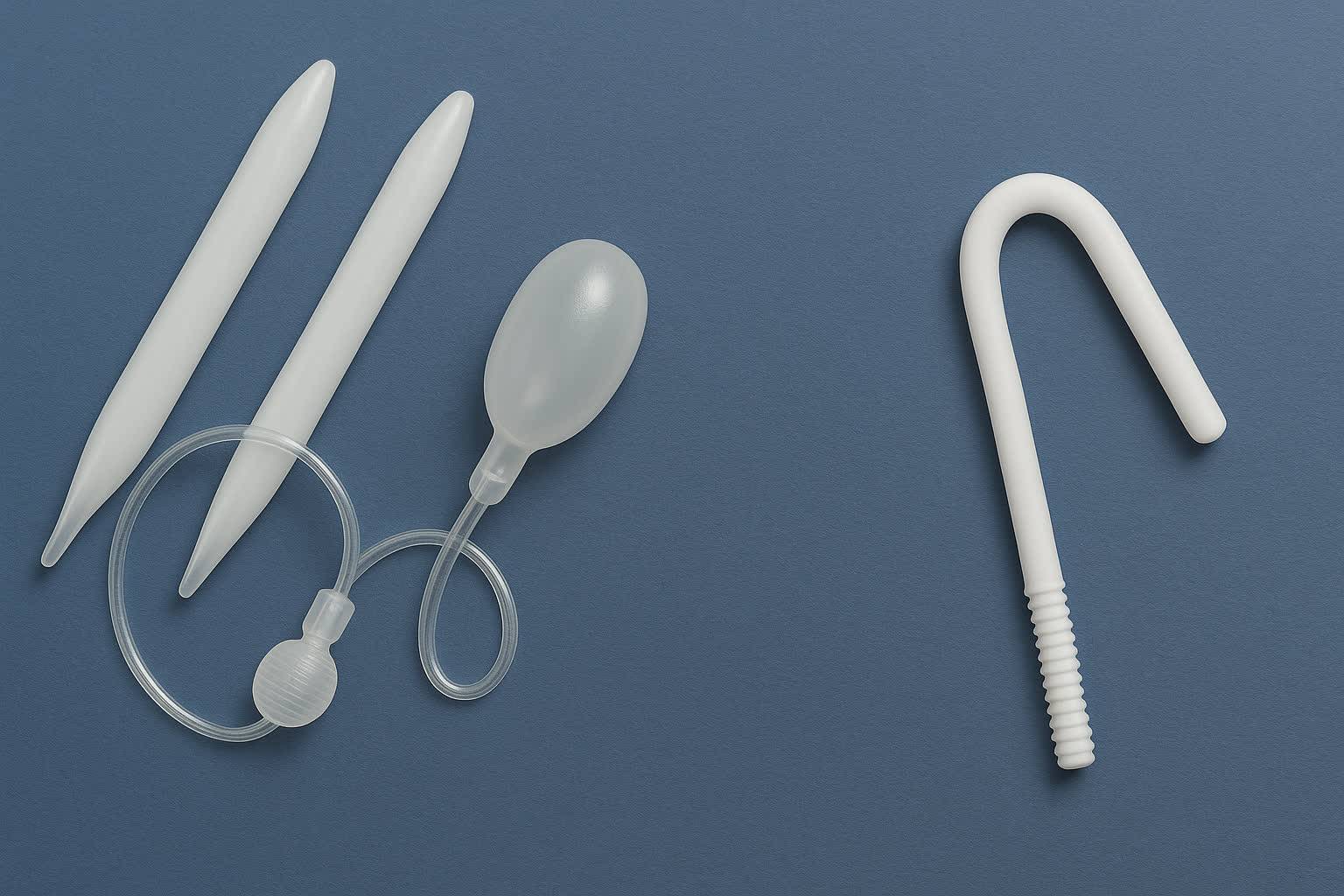
The two principal categories are malleable and inflatable penile implants.
The best option depends on hand function, genital sensation, catheterization, risk of pressure injury, access to caregiver support, and the patient’s preference for simplicity or a more natural flaccid appearance.
Malleable Penile Implant
A malleable implant contains two bendable rods placed inside the erectile bodies. The penis remains firm and is positioned upward for sexual activity and downward at other times.
Potential advantages include:
- Simple operation.
- No pump to manipulate.
- Fewer mechanical parts.
- Possible suitability for limited hand dexterity.
- Straightforward positioning.
However, continuous rigidity can increase pressure on tissues and make concealment more difficult. In patients with reduced sensation, pressure or early erosion may go unnoticed. Reviews emphasize that altered sensation and catheter use may increase erosion concerns in spinal cord injury.
Inflatable Penile Implant
An inflatable implant generally includes cylinders inside the penis and a pump within the scrotum. A three-piece device also includes a fluid reservoir.
The patient squeezes the pump to transfer fluid into the cylinders and later activates the release mechanism to return the penis to a softer state.
Potential benefits include:
- A more natural flaccid appearance.
- Better concealment.
- Controllable rigidity.
- Less constant pressure when fully deflated.
The patient must have adequate hand strength, finger coordination, and access to the scrotal pump. Mechanical parts may also fail over time and require revision surgery.
Read about: Types of Penile Implants and Benefits of Flexible Devices
Choosing the Right Device
The specialist should evaluate:
- Hand and finger strength.
- Ability to reach and compress the pump.
- Penile and genital sensation.
- Bladder-emptying method.
- Intermittent or indwelling catheter use.
- Previous urinary infections.
- Ability to inspect the skin.
- Availability of partner or caregiver assistance.
- Preference for simplicity or natural appearance.
- Likelihood of future revision.
A device should not be selected merely because it is newer or mechanically simpler. It must be usable and safe within the patient’s neurological and urinary situation.
Benefits of Penile Implants After Spinal Cord Injury
Penile implants provide rigidity without relying on intact nerve transmission. After recovery and training, the device can be used when desired without waiting for a drug response or applying an external device.
Reliable Rigidity for Intercourse
A successful implant can provide the mechanical firmness required for penetration and may reduce anxiety about losing an erection during sexual activity.
A systematic review of men with spinal cord injury reported broadly favorable satisfaction in many series, although results and complications varied considerably. Reported overall satisfaction ranged from approximately 79% to 93%, while satisfactory intercourse and revision rates differed substantially among studies. These figures should be interpreted cautiously because the evidence included different devices, eras, and patient populations.

Reduced Dependence on Medication and Injections
Once the device is healed and functioning, medication or an injection is generally not required each time to create mechanical rigidity.
This may be particularly valuable when medication is ineffective or when limited hand function makes injection therapy difficult.
Confidence and Intimacy
Greater predictability may improve confidence and allow couples to plan intimacy more comfortably.
The device does not address every aspect of sexuality, so communication, positioning, pain management, and sexual counseling may remain important.
Preparing for Penile Implant Surgery
Patients with spinal cord injury require a broader assessment than many other penile implant candidates.
Planning may involve a prosthetic urologist, neuro-urologist, rehabilitation physician, anesthesiologist, and nursing team familiar with spinal cord injury.
Read about: Hydraulic Penile Implant vs Flexible: Which Offers Better Control
Preoperative Assessment
Assessment may include:
- Neurological level and completeness of injury.
- Hand function and device-operating ability.
- Skin and genital examination.
- Urine testing and culture when indicated.
- Bladder-emptying and catheter routine.
- History of pressure injury and urinary infection.
- Spasticity and transfer needs.
- Medication and anticoagulant review.
- Diabetes and chronic disease control.
- History or risk of autonomic dysreflexia.
- Expectations regarding sensation, orgasm, ejaculation, and length.
Active infection or unhealed skin injury should be treated before implantation.
Bladder and Catheter Assessment
Intermittent catheterization, an indwelling catheter, or a condom catheter may influence implant selection and follow-up.
Repeated urethral instrumentation, urinary infection, and reduced sensation may increase tissue trauma or delay detection of device erosion.
Catheter use does not always prevent implantation, but it requires a clear risk-reduction plan.
Autonomic Dysreflexia
Autonomic dysreflexia can occur particularly in people with spinal cord injury at or above T6. Bladder distension, urological procedures, pain, and sexual activity can act as triggers in susceptible patients.
EAU guidance recommends counseling men with SCI at or above T6 about this potentially life-threatening condition, and spinal cord medicine resources emphasize prevention and rapid treatment planning.
How Is Penile Implant Surgery Performed?
The operation is carried out under anesthesia. The surgeon creates a small incision, prepares the erectile bodies, and places the prosthetic cylinders.
For an inflatable system, the pump is placed in the scrotum and a reservoir is added for a three-piece device.
Infection-prevention measures may include antibiotic prophylaxis, skin preparation, reduced device handling, and antimicrobial-coated prostheses where appropriate. Infection remains one of the most important complications because it may require device removal or replacement.
Read about: Latest Controllable Penile Implants: Features and Benefits
Hospital Stay and Monitoring
Length of stay varies according to the device, health condition, anesthesia, bladder plan, mobility, and need for neurological monitoring.
Some spinal cord injury patients require additional observation for blood-pressure changes, autonomic dysreflexia, catheter problems, skin pressure, transfers, or pain management.
Immediate Postoperative Care
The team monitors:
- Bleeding, swelling, and wound condition.
- Fever or signs of infection.
- Bladder drainage and catheter function.
- Blood pressure and autonomic symptoms.
- Penile and scrotal position.
- Pressure on skin and soft tissues.
- Ability to transfer safely.
Postoperative instructions may need to be adapted for wheelchair positioning and pressure relief.
Special Risks in Spinal Cord Injury
The basic risks are similar to those in other implant patients, but infection, erosion, delayed detection, urinary instrumentation, and device handling may create additional challenges.
EAU guidance notes a higher complication risk in spinal cord injury, with infection reported as high as 16% in some published series. These figures vary greatly and should not be treated as a fixed risk for every patient or center.
Infection
Possible signs include fever, redness, swelling, drainage, skin breakdown, or general deterioration.
Reduced sensation may prevent the patient from noticing pain, making visual examination and infection prevention particularly important. Device infection may require removal, washout, or specialist salvage surgery.
Erosion or Extrusion
Erosion occurs when an implant cylinder damages surrounding tissue and moves toward the urethra, glans, or skin.
The risk may be greater when sensation is reduced, catheterization is frequent, or constant pressure is present. Early assessment is essential because erosion generally requires surgical management.
Mechanical Failure and Revision
Inflatable devices contain pumps, tubing, cylinders, and sometimes reservoirs that can fail.
Penile implants are durable but not guaranteed to last for life. Younger patients should understand that revision or replacement may eventually be required.
Read about: Penile Implant Surgery Success Rates: What Patients Should Expect
Delayed Recognition of Complications
Patients with impaired sensation may not feel early pain or pressure.
Routine visual inspection, partner or caregiver assistance when appropriate, and regular surgical follow-up are therefore important.
Recovery and Sexual Rehabilitation
Recovery involves wound protection, pressure reduction, skin inspection, catheter care, and gradual training with the device.
Rehabilitation may need to account for wheelchair use, transfers, spasticity, upper-limb weakness, and assistance requirements.
Wound and Skin Care
The patient or caregiver should inspect for:
- Increasing redness or swelling.
- Drainage or unusual odor.
- Skin discoloration.
- Visible implant material.
- Pressure from clothing or sitting.
- Fever or systemic symptoms.
- New urinary changes.
Pain should not be the only warning sign when sensation is impaired.
Learning to Operate the Implant
After adequate healing, the surgeon teaches the patient how to position a malleable device or inflate and deflate an inflatable implant.
Actual operating ability should be tested. Partner participation may be useful with the patient’s consent, or a simpler implant may be considered when dexterity is limited.
Returning to Sexual Activity
Sexual activity should resume only after wound healing and surgical approval, commonly after several weeks depending on the individual operation.
Positions should minimize pressure, friction, spasticity, and risk during transfers. Patients vulnerable to autonomic dysreflexia need a prevention and response plan before resuming sexual activity.
Expected Sexual Results
The implant generally restores mechanical rigidity, but it does not reproduce every aspect of sexual function that existed before the neurological injury.
Read about: Post-Surgery Penile Implant Rehab: Tips for Restoring Healthy Intimacy
Erection, Sensation, and Orgasm
The device creates firmness. Sensation and orgasm depend on the remaining neurological pathways.
Some men retain orgasm with a different sensation, while others do not. Implantation itself does not restore lost sensation.
Ejaculation and Fertility
Spinal cord injury may affect ejaculation and semen quality.
A penile implant does not treat these fertility problems because its purpose is mechanical rigidity. Men wishing to have children require a separate fertility assessment and may need assisted ejaculation or sperm-retrieval options.
Penile Length Expectations
A penile implant is not an enlargement procedure.
Some patients perceive less length than expected, particularly after long-standing erectile dysfunction or tissue fibrosis. AUA guidance recommends discussing potential changes in penile appearance and perceived length before surgery.
Cost of Penile Implants for Spinal Cord Injury
Cost varies according to the device, surgeon, hospital, anesthesia, neurological condition, bladder management, and postoperative care.
A meaningful quotation requires review of the spinal injury, erectile dysfunction history, urinary management, skin condition, and previous infections.
Factors Affecting Cost
Factors may include:
- Malleable or inflatable implant.
- Manufacturer and device model.
- Prosthetic-urology experience.
- Neurological and neuro-urological assessment.
- Urine, blood, and anesthesia testing.
- Hospital stay and monitoring.
- Mobility and pressure-relief requirements.
- Catheter and bladder management.
- Surgical materials and medication.
- Implant-operation training.
- Management of complications.
- Future revision or replacement.
The quotation should explain which elements are included rather than presenting the implant price alone.
Choosing the Best Penile Implant Surgeon
The surgeon should have experience in penile prosthetics and neurological patients, not only routine erectile dysfunction surgery.
Surgeon and Hospital Criteria
Consider:
- Regular penile implant experience.
- Experience with spinal cord injury and neurogenic bladder.
- Ability to compare implant types objectively.
- Assessment of hand function and catheterization.
- A clear infection-prevention protocol.
- Experience managing erosion, infection, and revision.
- Collaboration with anesthesia, rehabilitation, and neuro-urology.
- Autonomic dysreflexia planning.
- Device-use training for the patient and partner.
- Long-distance follow-up for international patients.
Why a Multidisciplinary Team Matters
The treatment plan may need to combine prosthetic urology, bladder management, physical rehabilitation, skin care, sexual counseling, and partner education.
Selecting the device is only one part of restoring sexual function safely.
Read about: Penile Implant Cost in Turkey and Financing Options
Conclusion
A penile implant can provide reliable mechanical rigidity for men with spinal cord injury when medication, injections, and vacuum devices fail or are unsuitable. It may restore an important part of sexual independence, confidence, and intimacy, but it does not automatically restore sensation, ejaculation, orgasm, or fertility.
Good outcomes depend on matching the implant to hand function, sensation, bladder management, catheter use, and skin condition. Patients must also understand the potentially increased risks of infection, erosion, delayed complication recognition, and autonomic dysreflexia.
Frequently Asked Questions About Penile Implants and Spinal Cord Injury
Does a penile implant restore sensation after spinal cord injury?
No. It creates mechanical rigidity, while sensation and orgasm depend on the neurological pathways that remain after the injury.
Is an inflatable implant suitable with limited hand function?
Operating the pump may be difficult. Hand strength must be tested, and a malleable implant may be simpler for some patients.
Does catheter use increase implant complications?
Repeated catheterization, infection, and reduced sensation may increase erosion or infection risk, requiring careful planning and monitoring.
Does the implant treat ejaculation or infertility?
No. It treats rigidity only. Ejaculation and fertility problems require a separate reproductive assessment.
Can autonomic dysreflexia occur during sexual activity?
Yes, particularly with injuries at or above T6. Patients should know the symptoms and have a prevention and treatment plan.