





Erectile dysfunction is a common condition that can affect confidence, intimacy, and quality of life. The good news is that many cases can be treated successfully after proper evaluation. Among advanced treatment options, many men ask about the difference between a penile implant and erectile injections, and which option is better.
Erectile injections are a non-surgical treatment in which medication is injected directly into the erectile tissue of the penis before intercourse. The goal is to create a temporary erection by increasing blood flow. A penile implant, on the other hand, is a surgical solution in which a medical device is placed inside the penis to provide rigidity when needed, especially in men who do not respond to oral medication or injections.
There is no single best option for every man. Erectile injections may be suitable for patients who want an effective non-surgical treatment and are comfortable using injections before intercourse. A penile implant may be better for men with severe erectile dysfunction, failed medications or injections, or those who want a more reliable long-term solution.
Medical guidelines emphasize shared decision-making in erectile dysfunction care. The American Urological Association recommends informing men about FDA-approved oral medications, vacuum devices, intracavernosal injections, and penile prosthesis options. The European Association of Urology also describes intracavernosal injections and penile implants as established options, with treatment choice depending on patient condition, expectations, and preferences.
At Safemedigo, erectile dysfunction is evaluated carefully before treatment selection. The best choice depends not only on the treatment itself, but also on the cause of ED, severity, diabetes or heart disease, medication use, relationship expectations, and the patient’s comfort with injections or surgery.
What Is Erectile Dysfunction?
Erectile dysfunction is the repeated or persistent inability to achieve or maintain an erection firm enough for satisfactory sexual activity. It can be mild, moderate, or severe. It may develop gradually over years or appear suddenly due to stress, anxiety, surgery, injury, or a medical condition.
ED should not be treated as an isolated symptom only. It may be related to diabetes, high blood pressure, high cholesterol, cardiovascular disease, obesity, smoking, low testosterone, nerve damage, prostate surgery, pelvic injury, or medication side effects. For this reason, proper treatment begins with understanding the underlying cause.
Treatment options may include lifestyle changes, oral medications, vacuum erection devices, erectile injections, counseling when needed, and penile implants in selected cases. Each option has a role, and surgery should usually be considered after careful evaluation rather than as a first random step.
When Do We Need Advanced ED Treatment?
Advanced ED treatment may be needed when oral medications are not effective, not tolerated, or unsafe for the patient. Men with severe organic ED, diabetes-related vascular or nerve damage, post-prostate surgery ED, or pelvic trauma may require stronger treatment options such as injections or penile implants.
Advanced treatment may be discussed when there is:
- Failure of oral ED medications.
- Severe erectile dysfunction.
- Long-standing diabetes.
- ED after prostate surgery.
- Pelvic or spinal injury.
- Advanced vascular disease.
- Peyronie’s disease with ED.
- Side effects from oral medication.
- Contraindications to PDE5 inhibitors.
- Anxiety from repeated erection failure.
- Unsatisfactory response to temporary solutions.
- Desire for a more reliable treatment.
Advanced treatment does not always mean surgery. Erectile injections may be an appropriate intermediate step, while a penile implant may be the better option for severe or treatment-resistant cases.
Why No Single Treatment Fits Everyone
No single treatment fits everyone because erectile dysfunction has different causes, levels of severity, and personal effects. A younger man with anxiety-related ED is very different from an older man with long-standing diabetes and severe vascular disease. The right treatment must match both the medical condition and the patient’s expectations.
Factors that affect treatment choice include:
- Age.
- Severity of ED.
- Cause of ED.
- Diabetes or heart disease.
- Use of nitrates or blood thinners.
- Response to oral medications.
- Comfort with injections.
- Comfort with surgery.
- Frequency of intercourse.
- Peyronie’s disease or penile curvature.
- Relationship expectations.
- Desire for temporary or long-term treatment.
- Cost over time.
- Ability to follow instructions.
The best decision is made through discussion between the patient and the urologist, ideally with realistic expectations and clear understanding of benefits and risks.
Read about: Types of Penile Implants: Pros and Cons of Each Type
What Are Erectile Injections?
Erectile injections are a treatment in which medication is injected into the corpora cavernosa, the erectile chambers of the penis. The medicine relaxes smooth muscle and increases blood flow inside the penis, producing an erection suitable for intercourse. The injection is usually given shortly before sexual activity.
Erectile injections are commonly used in men who do not respond well to oral ED medications, cannot take them safely, or need a more direct treatment. The patient must be trained carefully on injection technique, dose, injection site, and maximum safe frequency.
Injections do not permanently cure the cause of erectile dysfunction. They create a temporary erection for a specific sexual encounter. This means the treatment must be used before each intercourse attempt.
How Erectile Injections Work
Erectile injections work by delivering vasodilating medication directly into the erectile tissue. This bypasses some of the pathways required for oral medications and can be effective even when pills are not enough.
Depending on the country and physician protocol, the injection may contain alprostadil or a combination of medications. The doctor chooses the medication and dose according to the patient’s condition and response. Patients should never use unknown products or unprescribed doses because this can lead to dangerous prolonged erection.
Usually, the physician starts with a low dose and adjusts it gradually. The goal is an erection firm enough for intercourse, lasting an appropriate time, without severe pain or excessive duration.
Advantages of Erectile Injections
Erectile injections have several advantages, especially for men who want to avoid surgery or try an effective non-surgical option before considering an implant. They may work even when oral medications have failed.
Advantages may include:
- No surgery required.
- Direct and relatively fast effect.
- Useful after failed oral medications.
- Used only when needed.
- No implanted device.
- Dose can be adjusted.
- Can be stopped if not suitable.
- May be used before deciding on an implant.
- Can help selected post-prostate surgery patients.
- Lower initial cost than penile implant surgery.
- Does not permanently change penile tissue in the same way as implant surgery.
- May provide good rigidity in properly selected patients.
However, injections require comfort with self-injection and preparation before intercourse, which some men find difficult.
Disadvantages and Risks of Erectile Injections
Erectile injections can be effective, but they also have disadvantages and risks. The most common practical issue is that the patient must inject before each sexual encounter. This may affect spontaneity or create anxiety for some men.
Possible disadvantages and risks include:
- Pain or burning at the injection site.
- Bruising.
- Mild bleeding.
- Fear of needles.
- Need to inject before each intercourse.
- Dose adjustment difficulty.
- Prolonged erection.
- Priapism if the erection lasts too long.
- Fibrosis or scar tissue with repeated use.
- Penile curvature in rare cases.
- Reduced spontaneity.
- Not ideal for some patients on blood thinners.
- Possible loss of effectiveness over time.
Patients must know when to seek urgent care, especially if an erection lasts too long or becomes painful.
Read about: Types of Penile Implants and Benefits of Flexible Devices
What Is a Penile Implant?
A penile implant is a medical device surgically placed inside the penis to help a man achieve an erection firm enough for intercourse. It is usually recommended for men with severe or persistent erectile dysfunction, especially when oral medications and injections fail, are not tolerated, or are not suitable.
A penile implant does not increase sexual desire, treat ejaculation problems, improve fertility, or increase sensation if sensation is already reduced due to nerve damage. Its main function is to provide mechanical rigidity for intercourse. Therefore, expectations must be discussed clearly before surgery.
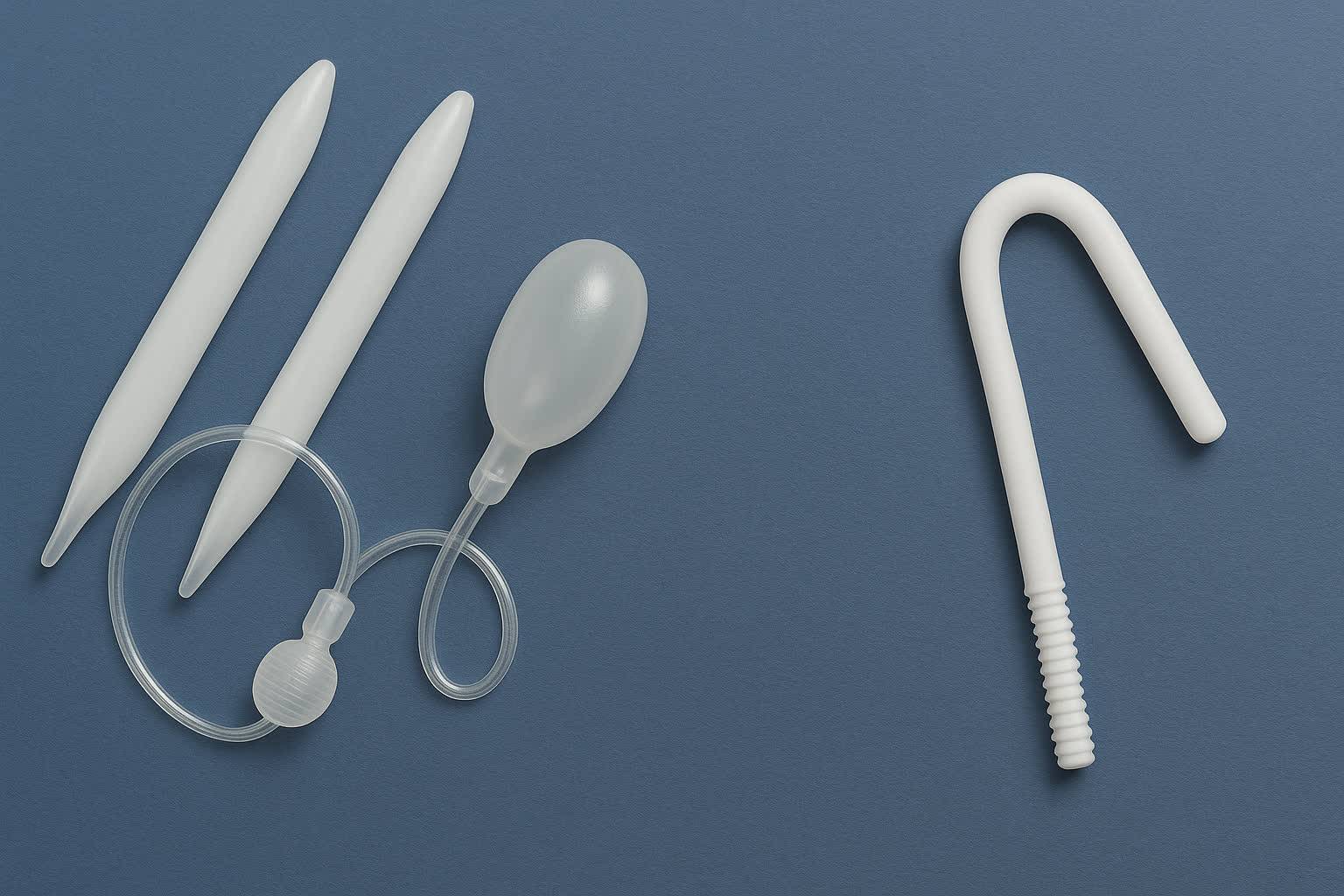
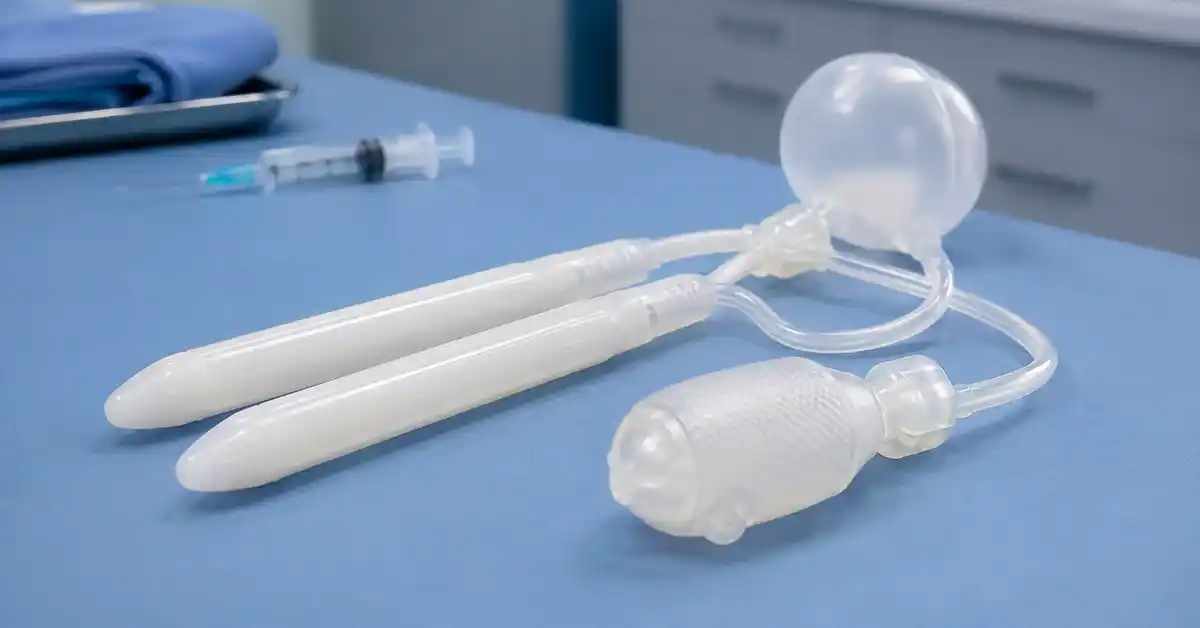
There are different types of penile implants, mainly malleable implants and inflatable implants. The choice depends on the patient’s health, hand function, budget, anatomy, surgeon recommendation, and personal preference.
Types of Penile Implants
The two most common types of penile implants are malleable and inflatable implants. Each has advantages and limitations, and neither is ideal for every patient.
Malleable penile implant:
- Uses bendable rods.
- The penis remains semi-rigid.
- It can be positioned upward for intercourse.
- It can be positioned downward when not in use.
- Simpler to use.
- Usually less expensive.
- No pump or reservoir.
- May suit patients who prefer simple handling.
- May be useful when hand dexterity is limited.
Inflatable penile implant:
- Usually includes cylinders, a pump, and a fluid reservoir.
- Creates erection when the pump is activated.
- Provides a more natural-looking flaccid and erect state.
- More mechanically complex.
- Usually more expensive.
- Requires manual ability to operate the pump.
- Often preferred by men who want better concealment and control.
The decision should be made after examination and detailed discussion with a urologist.
Advantages of Penile Implants
A penile implant is often a long-term and reliable solution for severe erectile dysfunction. One major advantage is that it does not require taking a pill or preparing an injection before each intercourse after recovery. The patient can use the device when needed.
Advantages may include:
- Long-term solution.
- Effective in severe ED.
- No repeated injections.
- No dependence on oral ED medication.
- Provides reliable rigidity.
- Useful after failed pills and injections.
- May reduce performance anxiety.
- Can be used when desired after healing.
- Usually does not affect urination.
- Usually does not affect sensation if nerves are intact.
- Usually does not prevent ejaculation if no other issue exists.
- High satisfaction in properly selected patients.
- Useful in some diabetic or post-prostate surgery cases.
Because it is a surgical treatment, success depends on surgeon experience, infection prevention, patient preparation, and post-operative care.
Disadvantages and Risks of Penile Implants
A penile implant has disadvantages and risks because it is a surgical procedure and a relatively permanent decision. After implant placement, the internal erectile tissue changes, and returning to simpler treatments may not be possible in the same way if the implant is removed later.
Possible disadvantages and risks include:
- Surgery and anesthesia required.
- Infection risk.
- Pain and swelling after surgery.
- Bleeding or bruising.
- Mechanical malfunction.
- Possible need for replacement in the future.
- Higher initial cost.
- Recovery period before sexual activity.
- Possible dissatisfaction with perceived length.
- Rare erosion or device exposure.
- Need for an experienced surgeon.
- Need to follow hygiene and post-op instructions.
- Possible revision surgery if complications occur.
Infection risk is especially important in patients with diabetes or immune problems. Blood sugar control and careful preparation are important before surgery.

Penile Implant vs Erectile Injections
The main difference between a penile implant and erectile injections is the nature of the treatment. Injections are temporary and non-surgical. They are used before each sexual encounter. A penile implant is a surgical long-term solution that provides rigidity when needed after recovery.
Basic comparison:
- Injections do not require surgery; implants do.
- Injections are used before each intercourse; implants are used after surgical healing.
- Injections create temporary erections; implants provide long-term mechanical support.
- Injections have lower initial cost; implants have higher upfront cost.
- Injections may cause needle anxiety; implants avoid repeated injections.
- Injections can cause prolonged erection; implants can cause infection or device malfunction.
- Injections can be stopped easily; implants are a relatively permanent surgical decision.
- Implants are often better for severe ED after failed treatments.
The decision should not be based on fear, advertising, or one person’s experience. It should be based on medical evaluation and realistic expectations.
Difference in Effectiveness
Both erectile injections and penile implants can be effective in the right patient. Injections may produce good erections if the patient responds to medication, uses the right dose, and is comfortable with the method. A penile implant provides more predictable mechanical rigidity after recovery.
Erectile injections may be effective when:
- The patient responds well to medication.
- The dose is properly adjusted.
- Injection technique is correct.
- There is no severe fibrosis.
- The patient accepts repeated use.
- Side effects are tolerable.
A penile implant may be more effective when:
- Oral medications failed.
- Injections failed or are not tolerated.
- ED is severe or permanent.
- There is advanced vascular or nerve damage.
- The patient wants a long-term solution.
- There is no major surgical contraindication.
- Expectations are realistic.
Injections may be a step before implant surgery, but implants may be the more stable final option in severe ED.
Difference in Safety and Complications
From a safety perspective, injections avoid surgery but have dose-related and injection-related risks. Penile implants avoid repeated injections but involve surgical risks.
Injection risks include:
- Local pain.
- Bruising.
- Mild bleeding.
- Prolonged erection.
- Priapism.
- Local fibrosis.
- Needle anxiety.
- Incorrect dosing.
Implant risks include:
- Infection.
- Postoperative pain.
- Bleeding.
- Swelling.
- Mechanical malfunction.
- Rare erosion.
- Possible replacement.
- Dissatisfaction if expectations are unrealistic.
Safety depends on instruction and follow-up. Injections require proper training, while implants require experienced surgery, infection prevention, and post-operative monitoring.
Difference in Comfort and Intimacy
Comfort and intimacy are major factors in choosing between injections and implants. Injections may be effective, but they require preparation before intercourse. This can reduce spontaneity for some couples. Some men adapt easily, while others feel anxious or embarrassed.
A penile implant may offer more spontaneity after recovery because there is no need for a pre-intercourse injection. However, the patient must first go through surgery and healing, and if the implant is inflatable, he must learn how to operate the pump.
Practical differences include:
- Injections require preparation before intercourse.
- Implants require surgery and recovery first.
- Injections may cause needle anxiety.
- Implants require adaptation to a device.
- Injections are temporary and stoppable.
- Implants are long-term and relatively permanent.
- Implants may suit men who want to avoid repeated planning.
- Injections may suit men who want to avoid surgery.
When appropriate, involving the partner in counseling can improve satisfaction and reduce misunderstanding.
Read about: Hydraulic Penile Implant vs Flexible: Which Offers Better Control
When Are Erectile Injections the Better Option?
Erectile injections may be the better option when the patient wants an effective non-surgical treatment, is not ready for surgery, or wants to try an intermediate option before considering a penile implant. They can also be appropriate when oral medications are ineffective or unsafe.
Injections may be suitable if the patient:
- Does not respond well to oral ED medication.
- Wants to avoid surgery for now.
- Needs an on-demand treatment.
- Accepts self-injection.
- Can follow instructions carefully.
- Has no severe penile fibrosis.
- Is not at high bleeding risk.
- Wants a treatment that can be stopped.
- Is comfortable with preparation before intercourse.
- Wants to test response before implant surgery.
However, injections should be used only under medical supervision because incorrect dosing can cause serious complications.
Suitable Candidates for Erectile Injections
Suitable candidates for erectile injections are often men who have not had enough benefit from oral medication but still want to avoid surgery. They may also be used in selected patients after prostate surgery or in some men with diabetes if response is adequate.
Injections may suit:
- Moderate to severe ED.
- Poor response to oral medications.
- Inability to use oral medications.
- Desire for non-surgical treatment.
- Selected post-prostate surgery cases.
- Some diabetic patients.
- Some vascular ED cases.
- Patients able to learn self-injection.
- Patients accepting treatment before intercourse.
- Men considering but not ready for implants.
The physician must explain dose, technique, maximum frequency, and emergency steps for prolonged erection.
When Injections May Not Be Suitable
Injections may not be suitable when the patient cannot use them safely, finds them too painful, does not respond well, or has increased risk of bleeding or fibrosis. They may also be unsuitable for men with strong needle fear or couples who dislike planned preparation before intercourse.
Injections may not be suitable in cases of:
- Severe needle fear.
- Inability to learn the technique.
- Poor vision or hand problems.
- High bleeding risk.
- History of priapism.
- Severe fibrosis or advanced Peyronie’s disease.
- Severe pain with injection.
- Failure despite dose adjustment.
- Repeated bruising or scarring.
- Poor partner acceptance.
- Desire for more spontaneity.
- Desire for a long-term solution.
In these cases, a penile implant may become more appropriate after medical evaluation.
Read about: Latest Controllable Penile Implants: Features and Benefits
When Is a Penile Implant the Better Option?
A penile implant is often the better option when erectile dysfunction is severe, persistent, and not responsive to oral medications or injections. It may also be suitable for men who want a long-term solution and do not want to rely on a treatment before each sexual encounter.
A penile implant may be better when there is:
- Failure of oral medication.
- Failure of erectile injections.
- Intolerable injection side effects.
- Severe diabetic ED.
- ED after prostate surgery.
- Peyronie’s disease with ED.
- Fibrosis of erectile tissue.
- Severe vascular ED.
- Desire for a long-term solution.
- Performance anxiety from repeated failure.
- Desire for more spontaneity.
- No major surgical contraindication.
The decision must be made carefully because implant surgery is not a temporary trial. The patient should understand implant types, healing time, infection risk, device function, and realistic outcomes.
Suitable Candidates for Penile Implants
Suitable candidates for penile implants are usually men who have not achieved satisfactory results with less invasive treatments. Many patients consider implants after years of using pills or injections without reliable satisfaction.
Penile implants may suit:
- Severe organic ED.
- Failed oral medications and injections.
- Diabetes-related nerve or vessel damage.
- ED after prostatectomy.
- Pelvic or nerve injury.
- Peyronie’s disease with ED.
- Penile fibrosis.
- Inability to use injections.
- Desire for a long-term treatment.
- Realistic expectations.
- Willingness to follow post-op instructions.
- Stable enough health for surgery.
Proper patient selection is one of the most important factors for satisfaction after implant surgery.
When a Penile Implant May Not Be Suitable
A penile implant may not be suitable if the patient is not medically ready for surgery, has an active infection, has poorly controlled diabetes, or has unrealistic expectations. Surgery may need to be delayed if there is urinary infection, skin infection, or any condition that increases infection risk.
A penile implant may be unsuitable or delayed in cases of:
- Active infection.
- Untreated urinary tract infection.
- Poorly controlled diabetes.
- Severe immune suppression.
- Inability to tolerate anesthesia.
- Expectation of penile length increase.
- Belief that the implant increases desire.
- Belief that it treats ejaculation or fertility.
- Inability to accept surgical risks.
- Inability to operate an inflatable pump.
- Refusal of follow-up care.
- Untreated psychological or relationship issues affecting satisfaction.
Preoperative education is essential to avoid disappointment and improve satisfaction.
Read about: Penile Implant Surgery Success Rates: What Patients Should Expect
Which Is Better: Penile Implant or Erectile Injections?
Which is better: penile implant or erectile injections? The answer depends on the patient’s condition. Injections are better for men who want a non-surgical, temporary, on-demand solution and respond well to medication. A penile implant is often better for men with severe ED, failed medications and injections, or a desire for a more reliable long-term solution.
A practical rule:
- If ED is moderate and injections work well, injections may be suitable.
- If injections are painful, ineffective, or inconvenient, an implant may be better.
- If the patient wants a temporary solution, injections are more suitable.
- If the patient wants a long-term solution, an implant may be more suitable.
- If surgery is unsafe, injections may be preferred.
- If severe ED with fibrosis or repeated treatment failure exists, an implant may be better.
The choice should be based on a urologic evaluation, not only patient fear or online advice.
Short Comparison Between Implant and Injections
Erectile injections:
- Non-surgical.
- Used before intercourse.
- Temporary effect.
- Lower initial cost.
- Requires injection training.
- Can be stopped.
- May cause pain or bruising.
- Risk of prolonged erection.
- May reduce spontaneity.
- Often used before surgery.
Penile implant:
- Requires surgery.
- Long-term solution.
- No pre-intercourse injection.
- Higher upfront cost.
- Requires recovery time.
- Provides reliable rigidity.
- Risk of infection or device malfunction.
- Does not increase desire or sensation.
- Often used after other treatments fail.
- Relatively permanent decision.
This comparison helps patients ask better questions, but it does not replace medical evaluation.
How Doctors Choose the Best Treatment
Doctors choose the best treatment after a full evaluation. This usually includes questions about ED duration, severity, morning erections, chronic diseases, medications, previous surgery, relationship factors, and expectations. Tests may be requested depending on the case.
Evaluation may include:
- Medical and sexual history.
- Physical examination.
- Diabetes, blood pressure, and cholesterol review.
- Testosterone test when needed.
- Medication review.
- Cardiac risk assessment when relevant.
- Penile examination for curvature or fibrosis.
- Penile Doppler in selected cases.
- Response to oral medication.
- Supervised injection trial.
- Discussion of implant surgery if other options fail.
- Review of benefits, risks, and expectations.
The best treatment balances effectiveness, safety, comfort, and patient satisfaction.
Read about: Post-Surgery Penile Implant Rehab: Tips for Restoring Healthy Intimacy
What Should You Know Before Deciding?
Before choosing between a penile implant and erectile injections, the patient should understand that both options treat erection firmness, but they do not necessarily treat libido, ejaculation, orgasm, fertility, or relationship problems. If the main issue is low desire, premature ejaculation, or relationship anxiety, additional evaluation may be needed.
Important questions to ask:
- What is the cause of my ED?
- Do I need hormone tests?
- Are oral medications safe for me?
- Are injections safe in my case?
- What should I do if an erection lasts too long?
- Am I a candidate for a penile implant?
- Which implant type fits my case?
- How long is recovery after implant surgery?
- When can I resume intercourse?
- What is my infection risk?
- Will the implant affect sensation?
- Will it change penile length?
- What is the total cost?
- What happens if the implant malfunctions?
Clear answers before treatment usually lead to better satisfaction afterward.
Importance of Patient and Partner Expectations
Patient and partner expectations play a major role in treatment satisfaction. Some men expect a penile implant to restore the penis exactly as it was in youth or increase length, which is not realistic. The implant provides rigidity for intercourse; it does not increase desire or treat ejaculation or fertility problems.
Similarly, some patients expect injections to work perfectly every time without inconvenience or side effects. In reality, injections require proper dosing and may cause pain or prolonged erection. Both treatments must be explained honestly.
It is useful to discuss:
- Desired spontaneity.
- Comfort with injections or surgery.
- Fear of pain.
- Expectations about length.
- Sensation and ejaculation.
- Frequency of intercourse.
- Cost.
- Recovery time.
- Partner support.
- Long-term satisfaction.
Clear communication reduces anxiety and improves treatment success.
Safemedigo’s Role in Organizing ED Treatment
Safemedigo helps patients organize erectile dysfunction evaluation and treatment in a clear, medical, and realistic way. The process begins with reviewing the patient’s health, chronic diseases, previous treatments, expectations, and then directing the case to a specialized urologist.
Safemedigo can help with:
- Reviewing the medical case.
- Organizing urology consultation.
- Explaining injections vs implants.
- Coordinating required tests.
- Assessing implant suitability.
- Explaining implant types.
- Organizing surgery if needed.
- Supporting post-op instructions.
- Helping with travel and coordination.
- Explaining the plan in clear language.
- Following the patient after treatment.
The goal is to choose a treatment that fits the patient medically, psychologically, and practically—not to push every patient toward one option.
Read about: Penile Implant Cost in Turkey and Financing Options
Conclusion
The difference between a penile implant and erectile injections lies in the treatment approach. Erectile injections are non-surgical, temporary, and used before intercourse. They may suit men who do not respond to pills but want to avoid surgery. A penile implant is a surgical long-term solution, usually suitable for severe ED, failed pills and injections, or patients who want more reliable rigidity.
The better option depends on the patient. If injections work well and are acceptable, they may be a good choice. If injections are ineffective, painful, inconvenient, or not suitable, a penile implant may offer a more stable long-term solution. The most important step is accurate diagnosis, realistic expectations, and clear discussion of risks and benefits.
Frequently Asked Questions: Penile Implant vs Erectile Injections
Are erectile injections better than a penile implant?
Not always. Injections may be better for men who want a non-surgical temporary option, while implants are often better for severe ED or failed medications and injections.
Does a penile implant affect sensation?
A penile implant usually does not affect sensation if the nerves are intact. It does not increase sexual desire or treat ejaculation or fertility problems.
Are erectile injections dangerous?
They can be safe when prescribed and taught by a doctor, but they may cause pain, bruising, fibrosis, or prolonged erection requiring urgent treatment.
When do I need a penile implant?
A penile implant may be needed when oral medications and injections fail, or when ED is severe, chronic, and the patient wants a long-term solution after medical evaluation.
Can injections be tried before an implant?
Yes, in many cases injections can be tried before implant surgery if medically appropriate. In severe cases, the doctor may discuss an implant directly.