





A penile implant is an advanced surgical solution for severe erectile dysfunction when medications, injections, or other less invasive treatments are no longer effective or suitable. One of the most common questions before surgery is: how long does a penile implant last? The answer is not the same for every patient because penile implant lifespan depends on the device type, device quality, surgeon experience, patient health, diabetes control, infection risk, and how the implant is used after recovery.
In many cases, modern penile implants can last for many years, and some patients may use them successfully for more than 10 years. However, like any medical device placed inside the body, a penile implant may eventually need replacement because of mechanical failure, infection, erosion, pain, difficulty using the device, or dissatisfaction that cannot be corrected without surgery.
Understanding implant lifespan does not mean waiting for failure. It means knowing what is normal, what requires medical review, and when replacement becomes necessary. A penile implant is designed as a long-term solution, but it should not be described as guaranteed for life in every patient.
What Does Penile Implant Lifespan Mean?
Penile implant lifespan refers to the period during which the device continues to function properly without mechanical failure or complications requiring revision surgery. The lifespan may differ between malleable penile implants and inflatable penile implants, and it also depends on surgical technique and patient-related risk factors.
A device may remain inside the body for many years, but the real question is whether it still provides reliable rigidity, comfort, and safe use. If the implant works well and there are no symptoms of infection, pain, or malfunction, replacement may not be needed even after a long time.
Does a Penile Implant Last a Lifetime?
A penile implant may last a very long time, but it is more accurate to describe it as a durable long-term device rather than a guaranteed lifetime device. Inflatable implants contain mechanical parts that can wear out over time, while malleable implants have fewer mechanical components but different comfort and appearance considerations.
Factors that affect lifespan include:
- Implant type.
- Device model and quality.
- Surgeon experience.
- Diabetes control.
- Smoking.
- Infection history.
- Previous penile surgery.
- Tissue fibrosis.
- Post-operative care.
- Correct device use.
Implants are not replaced automatically after a fixed number of years. Replacement is usually considered when there is a clear medical or functional reason.
Device Survival Versus Patient Satisfaction
A penile implant may remain mechanically functional, but the patient may still feel dissatisfied for reasons unrelated to device failure. These may include unrealistic expectations, persistent pain, difficulty using the pump, body image concerns, or misunderstanding what the implant can and cannot do.
Satisfaction depends on:
- Proper counseling before surgery.
- Understanding that the implant does not increase sexual desire.
- Understanding that it does not treat ejaculation or fertility.
- Correct device selection.
- Training on device use.
- Absence of chronic pain.
- Absence of infection.
- Relationship and psychological comfort.
Replacement is not always about the device “expiring.” Sometimes it is related to function, comfort, or complications.
Read about: Types of Penile Implants: Pros and Cons of Each Type
Types of Penile Implants and Their Effect on Lifespan
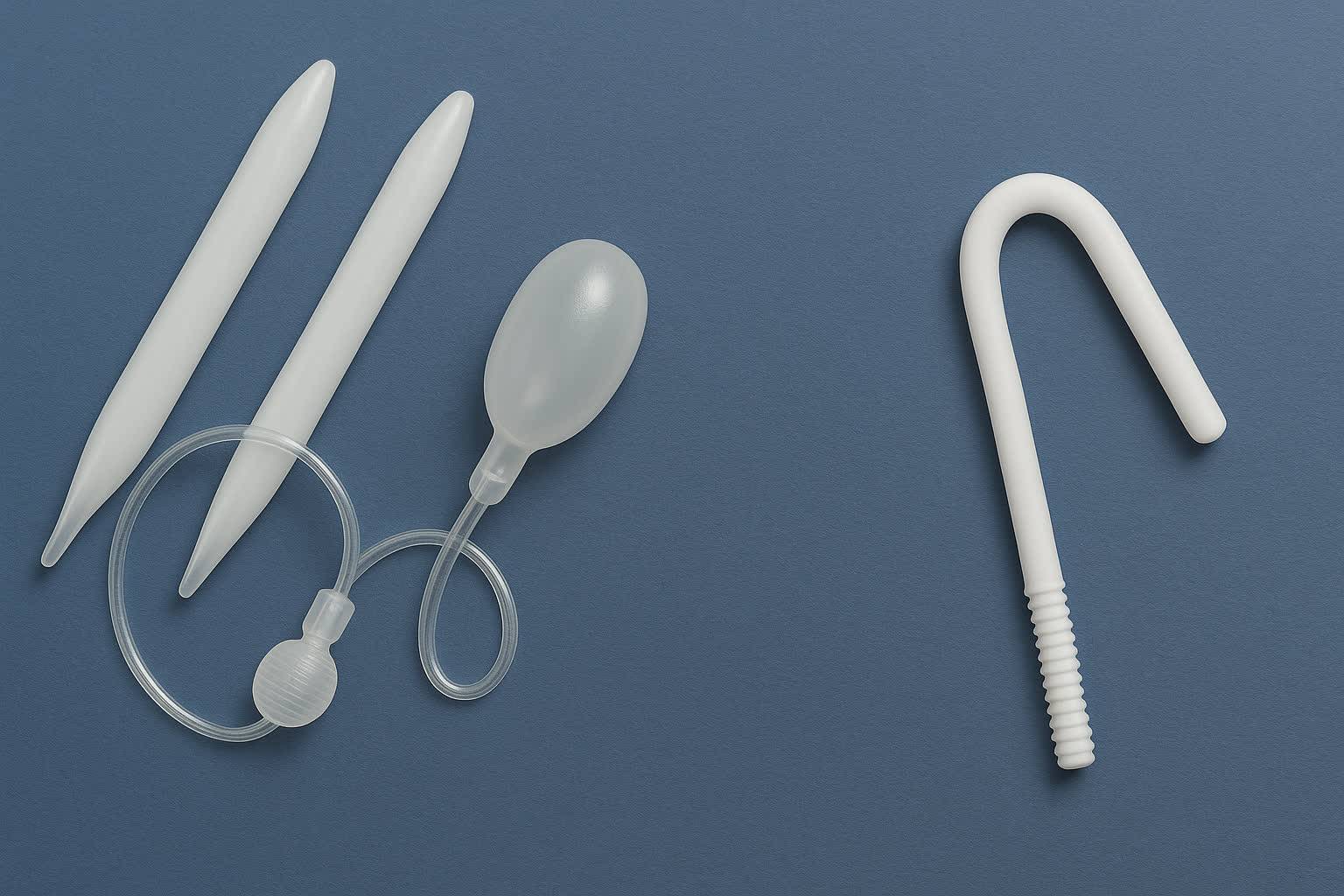
The type of implant strongly affects long-term performance. The two main categories are malleable, or semi-rigid, implants and inflatable implants. Inflatable implants may be two-piece or three-piece systems.
Malleable implants are mechanically simpler and therefore less likely to fail mechanically. Inflatable implants provide a more natural flaccid and erect state but include cylinders, a pump, tubing, and sometimes a reservoir, which means there are more components that may eventually malfunction.
Malleable or Semi-Rigid Penile Implant
A malleable penile implant usually consists of two bendable rods placed inside the erectile chambers. The patient positions the penis upward for intercourse and downward for concealment. There is no pump or fluid reservoir.
Potential advantages include:
- Simpler mechanical design.
- Lower mechanical failure risk.
- Easier use.
- Useful for some older patients.
- Helpful for patients with limited hand function.
- Lower cost in some settings.
- No pump operation required.
Potential disadvantages include a more constant semi-rigid state, less natural concealment, possible discomfort, and less natural appearance compared with inflatable implants. These factors can affect long-term satisfaction.
Inflatable Penile Implant
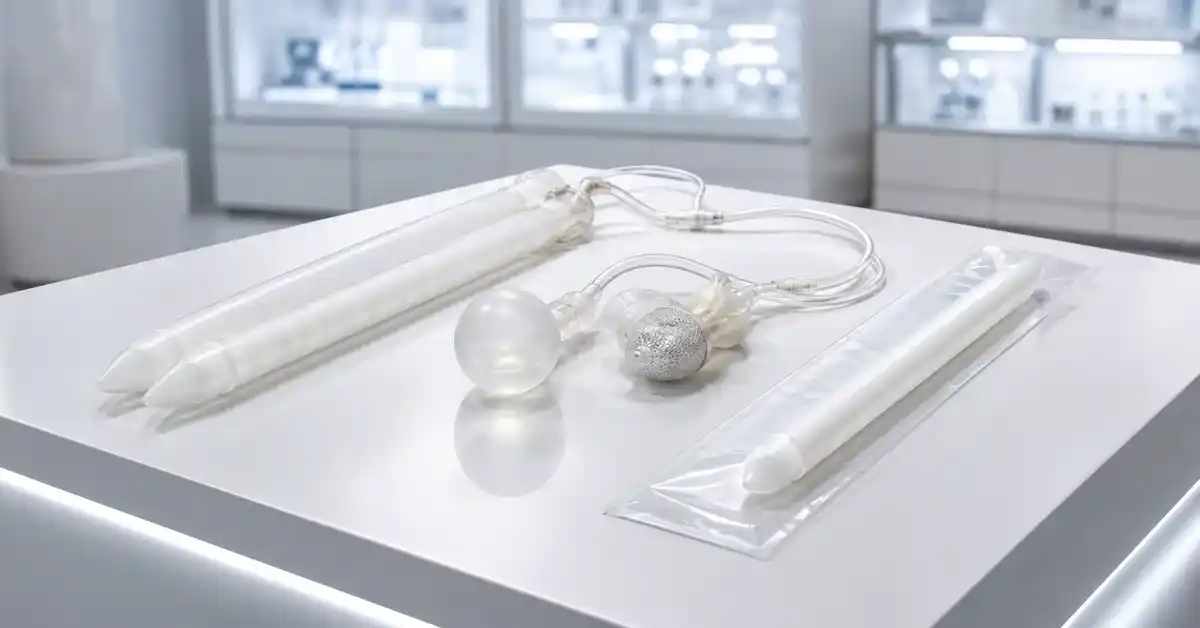
An inflatable penile implant allows the patient to create an erection when needed and deflate the device afterward. A three-piece implant usually includes cylinders inside the penis, a pump in the scrotum, and a fluid reservoir.
Potential advantages include:
- More natural flaccid appearance.
- Better control over erection timing.
- Good rigidity during use.
- High satisfaction in many patients.
- More natural function compared with malleable devices.
The main limitation is mechanical complexity. Over time, problems may occur in the pump, cylinders, tubing, or reservoir. When mechanical failure occurs, surgical replacement may be needed.
Read about: Types of Penile Implants and Benefits of Flexible Devices
How Many Years Does a Penile Implant Usually Last?
There is no single number that applies to every patient. Many modern penile implants can last 10 to 15 years or longer, especially if there is no infection or mechanical problem. Some patients may never need revision, while others may need earlier replacement because of complications.
The most important factor is not the number of years alone, but whether the implant still works safely and comfortably. If the device functions properly, replacement may not be necessary.
Expected Lifespan of Modern Implants
Modern penile implants are designed to be more durable than older models. Device materials, manufacturing quality, infection-reducing coatings, and surgical techniques have improved over time. Still, no implant is immune to mechanical wear.
Lifespan may be affected by:
- Device brand and model.
- Cylinder durability.
- Pump function.
- Reservoir integrity.
- Surgical placement.
- Scar tissue.
- Peyronie’s disease.
- Previous revision surgery.
- Diabetes and infection risk.
- Patient use and follow-up.
When discussing lifespan, patients should understand that statistics describe groups, not a guaranteed outcome for one individual.
Should the Implant Be Replaced After 10 or 15 Years?
No. A penile implant does not need to be replaced only because 10 or 15 years have passed. If the device works well and there is no pain, infection, erosion, or malfunction, observation may be all that is needed.
Replacement may be discussed when there is:
- Pump failure.
- Weak inflation.
- Fluid leakage.
- Loss of rigidity.
- Chronic pain.
- Infection.
- Erosion.
- Difficulty using the device.
- Device migration.
- Severe dissatisfaction that can be corrected surgically.
The decision should be based on examination, symptoms, and device function, not the calendar alone.
Read about: Hydraulic Penile Implant vs Flexible: Which Offers Better Control
When Does a Penile Implant Need Replacement?
A penile implant needs replacement when it no longer performs its function or when a complication cannot be managed safely without surgery. Sometimes replacement can be done in one operation. In other cases, especially with infection, the implant may need removal first and reimplantation later.
Not every pain or concern means the implant must be replaced. Early discomfort after surgery may be normal, while persistent or worsening pain after recovery should be evaluated. Difficulty using the pump may sometimes be a training issue rather than device failure.
Signs of Mechanical Failure
Mechanical failure is more common with inflatable penile implants than malleable implants because inflatable systems have several moving parts. The patient may notice that the implant no longer inflates properly, loses rigidity, or cannot be deflated normally.
Possible signs include:
- Inability to inflate the device.
- Weak rigidity after inflation.
- Loss of rigidity during use.
- Difficulty deflating the implant.
- Change in pump feel.
- New pain during operation.
- Uneven cylinder filling.
- Sudden change in erection shape.
- Unusual sensation or sound from the device.
The patient should not force the pump or try to repair the device. A specialist evaluation is needed.
Infection, Erosion, or Persistent Pain
Infection is one of the most important reasons for implant removal or replacement. It may occur early after surgery or later, especially in patients with diabetes, immune compromise, or previous surgery. Erosion means that the device is pressing into or through tissue and requires prompt evaluation.
Warning signs include:
- Severe redness.
- Increasing swelling.
- Pain that worsens instead of improving.
- Wound drainage.
- Fever or chills.
- Unusual odor.
- Device exposure.
- Persistent pain after recovery.
- Difficulty sitting or walking due to pain.
- Skin color change over the device.
These symptoms should not be ignored because delayed care may make revision surgery more difficult.

What Can Shorten Penile Implant Lifespan?
Several factors can shorten penile implant lifespan or increase the chance of revision surgery. Some are related to the device, while others are related to the patient, surgery, infection risk, or post-operative care.
Having risk factors does not mean failure will occur, but it does mean the surgeon and patient should plan more carefully before surgery and follow up more attentively afterward.
Diabetes, Smoking, and Immune Weakness
Uncontrolled diabetes can increase infection risk and delay wound healing. Smoking affects blood flow and tissue healing. Immune suppression may also increase the risk of infection or poor recovery.
Risk factors include:
- Poorly controlled diabetes.
- High HbA1c.
- Smoking.
- Obesity.
- Immune suppression.
- Recurrent urinary infections.
- Poor wound care.
- Not following antibiotics or instructions.
- Previous surgery in the same area.
- Severe penile fibrosis.
Improving these factors before surgery may reduce complications and support longer device survival.
Surgical Experience and Device Selection
Surgeon experience and device choice are important for long-term outcomes. Accurate sizing and placement can reduce the risk of pain, erosion, poor function, and revision surgery. The selected implant should match the patient’s anatomy, hand function, expectations, and medical condition.
Important technical factors include:
- Correct sizing.
- Management of fibrosis.
- Strict infection prevention.
- Appropriate pump placement.
- Proper cylinder positioning.
- Patient training.
- Post-operative wound follow-up.
- Device selection based on patient needs.
The most expensive device is not automatically the best, and the simplest device is not always the right choice. Selection should be individualized.
Read about: Latest Controllable Penile Implants: Features and Benefits
How to Make a Penile Implant Last Longer
Making a penile implant last longer begins with good preparation, proper surgery, careful healing, correct use, and timely medical review when symptoms change. Patients do not usually need frequent visits if everything is normal, but they should know when to seek help.
Correct use is especially important for inflatable implants. Forceful pumping, using the device before medical clearance, or ignoring pain can create problems.
Following Post-Surgery Instructions
After penile implant surgery, the doctor gives instructions about wound care, medications, device activation, physical activity, and when sexual activity can resume. These instructions protect the device and healing tissues.
General advice includes:
- Take medications as prescribed.
- Keep the wound clean.
- Attend follow-up visits.
- Do not activate the device too early.
- Avoid sexual activity until cleared.
- Avoid heavy lifting early.
- Watch for redness or drainage.
- Report fever or severe pain.
- Use supportive underwear if advised.
- Do not squeeze the pump aggressively.
The first weeks after surgery are important for reducing infection risk and supporting proper healing.
Correct Use and Follow-Up
Once the doctor allows activation, the patient needs to learn how to inflate and deflate the implant or position a malleable implant. Training reduces anxiety and prevents incorrect use.
Safe use includes:
- Learn operation from the medical team.
- Avoid excessive force.
- Do not try to repair the device.
- Monitor sudden changes.
- Report difficulty inflating or deflating.
- Avoid direct injury.
- Keep diabetes controlled.
- Treat urinary infections early.
- Do not delay evaluation for chronic pain.
Early evaluation may help manage problems before they become more complex.
Read about: Penile Implant Surgery Success Rates: What Patients Should Expect
Penile Implant Replacement Surgery
Penile implant replacement surgery means removing the old implant and placing a new device, or replacing a component in selected cases. Revision may be simpler when the cause is mechanical failure without infection, but it becomes more complex when infection, erosion, or scar tissue is present.
Replacement surgery requires experience because tissue may have changed after the first operation. Scar tissue, narrowing, or fibrosis may make sizing and placement more difficult.
How Replacement Surgery Is Performed
The method depends on the reason for replacement. If there is mechanical failure without infection, the old device may be removed and a new implant placed during the same operation. If infection is present, the surgeon may need to remove the device, clean the area, and decide whether immediate or delayed reimplantation is safest.
General steps may include:
- Physical examination.
- Identifying the old implant type.
- Checking for infection.
- Reviewing diabetes and medications.
- Surgical planning.
- Removing the damaged device.
- Cleaning the surgical area.
- Placing a new implant if safe.
- Delaying reimplantation if infection is severe.
- Close follow-up after surgery.
The plan must be individualized for each patient.
Is Replacement More Difficult Than the First Surgery?
Replacement can be more difficult than the first implant surgery, especially if there is scar tissue, previous infection, erosion, Peyronie’s disease, or multiple prior operations. However, successful outcomes are possible with careful planning and an experienced surgeon.
Factors that increase complexity include:
- Severe fibrosis.
- Old implant in place for many years.
- Previous infection.
- Previous implant removal.
- Peyronie’s disease.
- Poorly controlled diabetes.
- Multiple prior surgeries.
- Reduced tissue flexibility.
- Difficult sizing.
Patients should seek evaluation early if a problem appears, because delays can make revision more challenging.
Read about: Post-Surgery Penile Implant Rehab: Tips for Restoring Healthy Intimacy
Does Replacement Cost Differ From the First Implant?
Yes. Penile implant replacement may cost more than the first surgery because it can involve removing the old device, managing scar tissue, treating infection, using additional materials, or requiring longer hospital care. Cost also depends on the type of new implant.
The price is not determined only by the device. The patient’s condition, surgical complexity, hospital level, anesthesia, and follow-up needs also matter.
Factors Affecting Replacement Cost
Cost comparison should include the full medical plan, not only the implant price. A low quote may not include important items such as hospital stay, anesthesia, medications, or revision complexity.
Factors include:
- Type of new implant.
- Full or partial replacement.
- Mechanical failure versus infection.
- Removal of old device.
- Scar tissue.
- Surgeon experience.
- Hospital level.
- Anesthesia.
- Preoperative tests.
- Hospital stay.
- Antibiotics and medication.
- Follow-up care.
A proper quote should explain what is included and what may change depending on intraoperative findings.
Penile Implant Replacement Cost in Turkey
Penile implant cost in Turkey varies by device type, brand, hospital, surgeon experience, and whether the procedure is a first implant or replacement. Revision surgery requires more detailed evaluation, especially if the original implant was placed in another country.
Before travel, it is helpful to provide:
- Previous surgery report.
- Implant type if known.
- Implantation date.
- Current symptoms.
- Any medical images or reports.
- Diabetes and medication history.
- Fever or wound drainage history.
- Whether the problem is malfunction, pain, or infection.
This information allows a more realistic treatment plan and avoids inaccurate promises.
Read about: Penile Implant Cost in Turkey and Financing Options
When to See a Doctor After Penile Implant Surgery
Patients should attend scheduled follow-up visits after implant surgery and should also contact the doctor if new symptoms appear. Some patients assume that no follow-up is needed after recovery, but review is important when device function or comfort changes.
Early evaluation does not always mean a major problem. It can help distinguish normal learning issues from true malfunction.
Signs That Require Medical Review
A medical review should be arranged when the implant feels different, becomes difficult to use, or causes discomfort. Waiting until the device completely fails is not ideal.
Signs include:
- Difficulty inflating.
- Difficulty deflating.
- Weak artificial erection.
- New pain.
- Pain during intercourse.
- Pump position change.
- Unusual swelling.
- Change in penile shape.
- Concern about implant size.
- Feeling that the device works differently.
The doctor can evaluate whether the issue is technique-related, mechanical, or medical.
Urgent Signs That Should Not Be Delayed
Some signs require urgent evaluation because they may indicate infection, erosion, or tissue injury. Delaying care can increase the risk of implant removal or complicated revision.
Seek urgent care for:
- Fever.
- Chills.
- Severe redness.
- Wound drainage.
- Increasing severe pain.
- Rapid swelling.
- Device exposure.
- Skin color change.
- Unusual odor.
- Pain with urinary difficulty.
- Abnormal bleeding.
- Sudden loss of implant function.
These symptoms require medical evaluation, not home management alone.
Read about: Penis Implants: Cost Types Turkey vs USA
Conclusion
Penile implant lifespan varies from patient to patient. Modern implants can last many years and often more than 10 years, but replacement may be needed if there is mechanical failure, infection, erosion, persistent pain, device migration, or difficulty using the implant.
Malleable implants may have fewer mechanical failure risks because they are simpler, while inflatable implants often provide a more natural appearance and function but include mechanical parts that may eventually need replacement. Long-term success depends on proper patient selection, surgeon experience, infection prevention, diabetes control, correct use, and timely evaluation of symptoms.
Frequently Asked Questions: Penile Implant Lifespan
How long does a penile implant last?
Many modern penile implants last for years, often more than 10 years, but lifespan depends on implant type, health factors, and complications.
Does a penile implant need replacement after 10 years?
Not necessarily. If the implant works well and there are no complications, replacement may not be needed only because 10 years have passed.
What is the most common reason for replacement?
Common reasons include mechanical failure, infection, erosion, persistent pain, or inability to use the device normally.
Is replacement surgery harder than the first implant surgery?
It can be more complex because of scar tissue, previous surgery, infection history, or erosion, but good outcomes are possible with proper planning.
Can only part of the implant be replaced?
In selected cases, component replacement may be possible, but the decision depends on the device type, cause of failure, infection risk, and tissue condition.