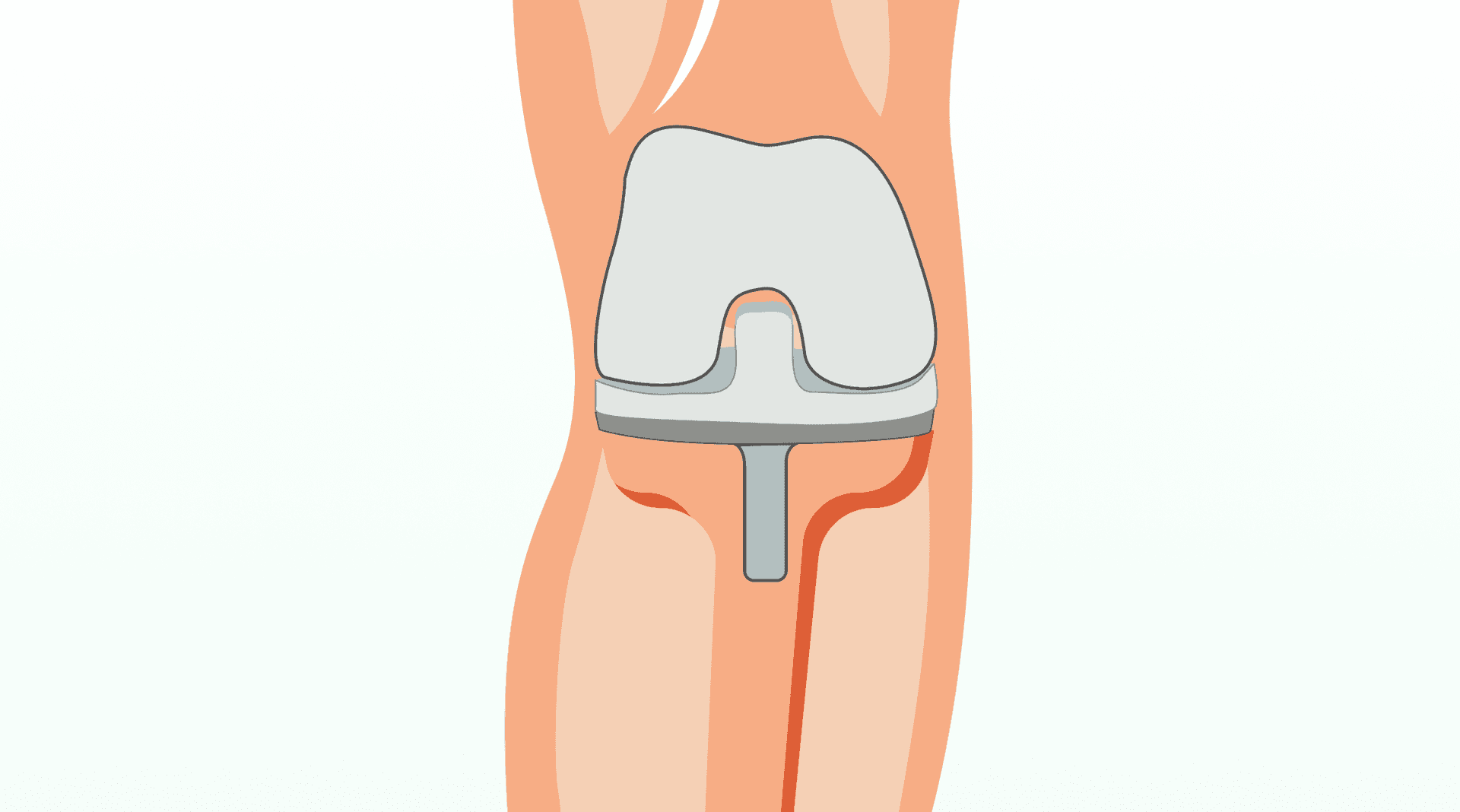








One of the most common questions after joint replacement is how long a knee or hip replacement lasts. Patients are often told that an artificial joint has a lifespan of 10, 15, or 20 years, but modern joint replacement does not work according to a fixed expiration date.
A well-functioning implant does not need to be replaced simply because a certain number of years has passed. Revision surgery becomes necessary when there is a specific problem such as loosening, infection, instability, recurrent dislocation, fracture, progressive wear, or significant bone loss.
Modern implant materials and fixation techniques have considerably improved longevity. Contemporary hip replacement data show approximately 93.6% implant survivorship at 20 years, with modeled estimates above 92% at 30 years. For total knee replacement, large registry analyses have reported approximately 90% survival without revision at 20 years, although results vary according to implant design, patient characteristics, and fixation.
At Safemedigo, knee and hip replacement lifespan is assessed together with symptoms, X-rays, implant stability, bone quality, and infection risk rather than using implant age alone to decide whether revision is required.
Knee and Hip Replacement Lifespan
Most modern knee and hip replacements are designed to provide long-term function, and many remain in place for two decades or longer.
How Long Does a Knee Replacement Last?
Long-term registry data have estimated total knee replacement survival at approximately 90.1% at 20 years and 82.3% at 25 years.
Results continue to improve with some contemporary designs. Recent large-registry data reported a 20-year revision rate of approximately 5.28% for the most commonly used cemented total knee configuration in that registry.
This means that many patients may never require another knee replacement, particularly when the first operation is performed later in life.
How Long Does a Hip Replacement Last?
Contemporary total hip replacements have shown particularly strong long-term durability.
A 2026 analysis involving almost 1.9 million modern hip replacements estimated survival without revision at 93.6% at 20 years. Model-based projections were approximately 92.8% at 25 years and 92.1% at 30 years.
The 25- and 30-year figures should be understood as projections for contemporary implants rather than direct 30-year observation of every modern device.
Knee vs Hip Replacement Revision
| Feature | Knee Replacement | Hip Replacement |
|---|---|---|
| Typical long-term durability | Often 20 years or longer | Often 20 years or longer, with modern implants potentially lasting several decades |
| Common revision reasons | Infection, loosening, instability, wear, stiffness, fracture | Loosening, infection, wear, dislocation, periprosthetic fracture |
| Typical warning symptoms | Pain, swelling, stiffness, giving-way sensation | Pain, limp, reduced function, instability or recurrent dislocation |
| Revision options | One component or the entire implant may be replaced | Cup, liner, head, stem, or the complete implant may be revised |
| Major challenge in revision | Bone loss and ligament instability | Bone loss and reconstruction of the socket or femur |
These averages are useful for counseling, but they cannot predict the exact lifespan of one individual's artificial joint.
Factors That Affect Joint Replacement Longevity
Implant longevity reflects the interaction between patient factors, implant design, surgical technique, fixation, bone quality, and activity.
Age and Activity Level
A younger patient has more years in which an implant can eventually wear, loosen, or require revision.
Younger and more active patients may therefore have a higher lifetime probability of revision even when their original surgery is technically successful.
This does not mean patients should avoid activity. Regular appropriate exercise is important after joint replacement, but repeated high-impact loading may not be suitable for every implant or patient.
Body Weight and Bone Health
Higher body weight can increase forces passing through a knee or hip replacement and may interact with other factors that influence mechanical failure or infection risk.
Bone quality also matters. Osteoporosis does not automatically cause a joint replacement to fail, but weak bone can increase concern about fractures around the prosthesis, particularly after a fall.
Implant Materials and Fixation
Joint replacements can be cemented or uncemented, and their bearing surfaces differ according to the joint and implant design.
Modern hip replacements increasingly use highly cross-linked polyethylene and advanced ceramic or metal heads, reducing wear compared with many older implant generations.
In knee replacement, component positioning, ligament balance, polyethylene quality, alignment, and fixation can all influence long-term performance.
Read about: Top Knee Replacement Technologies Available in Turkey
Signs of a Failing Knee or Hip Replacement
An old implant is not automatically a failing implant. However, new symptoms after years of good function deserve assessment.
New or Increasing Joint Pain
Increasing pain is one of the most important reasons to investigate a replaced joint.
Pain may be caused by implant loosening, infection, instability, fracture, or wear. However, not all pain around a replacement originates from the prosthesis itself. Spinal disease, tendon problems, muscles, nerves, and other joints can produce similar symptoms.
The cause should therefore be established before revision surgery is considered.
Swelling, Stiffness, and Instability
A failing knee replacement may produce recurrent swelling, progressive stiffness, reduced motion, or a sensation that the knee gives way.
Persistent instability is a recognized reason for knee revision when conservative treatment cannot restore adequate function.
For hip replacement, limping, reduced mobility, or repeated dislocation may indicate instability or a problem with component position or surrounding soft tissues.
Symptoms Requiring Prompt Assessment
Sudden severe pain after a fall, deformity, or inability to bear weight can indicate a periprosthetic fracture.
Persistent warmth, redness, drainage, fever, or unexplained increasing pain can raise concern for infection.
Joint replacement infection can occur soon after surgery or many years later.
Read about: Knee Joint Replacement: When to Opt for Surgery
Common Reasons for Revision Joint Replacement
Revision surgery is performed because the existing implant has a defined biological or mechanical problem, not simply because it is old.
Aseptic Loosening and Wear
For an artificial joint to function, its components must remain securely attached to bone.
Over time, an implant may loosen without infection. Microscopic wear particles can also trigger inflammation and bone loss around the implant, known as osteolysis.
A recent systematic review involving more than 1.3 million knee revision procedures found periprosthetic joint infection and aseptic loosening among the leading documented causes of revision. Infection predominated among early failures, whereas aseptic loosening was particularly important in later revision.
Joint Replacement Infection
Periprosthetic joint infection can be particularly difficult to treat because bacteria can attach to implant surfaces.
Selected acute infections may sometimes be treated with surgical cleaning while retaining stable components. Chronic infections can require removal and replacement of the prosthesis, either in a single-stage or staged revision depending on the organism, bone and soft tissues, and clinical circumstances.
Dislocation, Instability, and Fracture
Recurrent dislocation is an important reason for revision hip replacement.
Knee replacement can require revision because of ligament imbalance or instability.
A fracture around either a hip or knee prosthesis may require fixation, implant revision, or both depending on whether the existing components remain stable.

Diagnosing a Painful Joint Replacement
Revision should not be planned simply because a patient has pain. The underlying cause should be established whenever possible.
X-Rays and Implant Position
Standard X-rays can identify changes in implant position, radiolucent lines, bone loss, wear, fracture, or other signs of loosening.
Comparison with older X-rays can be especially valuable because it shows whether changes around the prosthesis are progressing over time.
CT imaging may be added when component position, bone loss, or fractures require more detailed assessment.
Blood Tests and Joint Aspiration
When infection is suspected, blood markers of inflammation may be checked.
Joint aspiration can then be used to obtain fluid from the replaced knee or hip for cell analysis and microbiological testing. Aspiration is an important part of the evaluation of a painful knee replacement when infection is a concern.
Pain Does Not Always Mean Revision
A stable implant without evidence of infection or mechanical failure may not benefit from revision.
This distinction is important because revision joint replacement is more complex than primary replacement and should ideally have a clearly defined target problem.
Read about: Hip Replacement Surgery: Pre- and Post-Operation Tips
Revision Knee or Hip Replacement Surgery
Revision joint replacement may involve changing a single component or rebuilding the entire artificial joint.
Partial and Complete Revision
If only one part of the prosthesis has failed and the remaining components are well fixed and correctly positioned, the surgeon may be able to retain part of the original implant.
In other cases, the entire replacement must be removed.
Substantial bone loss may require bone grafting, metal augments, longer stems, or specialized revision implants that transfer load deeper into stronger bone.
Why Revision Is More Complex
Removing an existing implant while preserving as much healthy bone as possible can be technically demanding.
Scar tissue, weakened bone, damaged ligaments or muscles, infection, and previous operations may all increase complexity. Revision surgery commonly takes longer than primary joint replacement and may require specialized implant systems.
Revision knee replacement also carries a higher complication risk than an uncomplicated primary replacement.
Protecting the Implant Long Term
Maintaining appropriate body weight, remaining active, preserving muscle strength, reducing fall risk, and seeking assessment when new symptoms appear can help protect a joint replacement.
Follow-up can also detect progressive wear or bone loss before symptoms become severe. In selected cases, earlier intervention may preserve more bone and simplify the eventual revision compared with waiting until extensive damage has occurred.
Read about: When Do You Need Hip Replacement Surgery? Essential Guidelines
Conclusion
Knee and hip replacement lifespan is no longer accurately described by a simple statement that every implant lasts only 10 or 15 years. Many modern joint replacements function for 20 years or longer, and contemporary hip implants in particular show excellent long-term survivorship.
Revision surgery is not determined by implant age alone. Loosening, infection, instability, recurrent hip dislocation, progressive wear, bone loss, and fractures around the prosthesis are among the major reasons for revision.
New pain or declining function in a previously successful joint replacement should therefore be investigated rather than assumed to be normal aging of the implant.
Frequently Asked Questions: Knee and Hip Replacement Lifespan
Does a knee replacement need changing after 20 years?
Not automatically. A stable, painless, well-functioning knee replacement can remain in place even after 20 years.
How long can a modern hip replacement last?
Many last more than 20 years, and modern implant data suggest excellent survivorship extending into the third decade after surgery.
What does a loose joint replacement feel like?
Symptoms can include increasing pain with weight bearing, reduced function, limping, swelling, or instability depending on the affected joint.
Is revision surgery harder than the first joint replacement?
Usually yes. Bone loss, scar tissue, old implants, and damaged soft tissues can make revision more technically complex.
Can only part of a joint replacement be revised?
Yes. When the other components are well fixed and functioning normally, selected patients may need only partial component revision.