






Are you considering hair transplant surgery but unsure which technique is right for you? The choice between FUE and DHI hair transplant methods is one of the most important decisions you'll make in your hair restoration journey. Both techniques have revolutionized the field of hair transplantation, offering minimally invasive solutions with impressive results. However, understanding the differences between FUE vs DHI hair transplant is crucial for making an informed decision that aligns with your specific needs, budget, and expectations.
This comprehensive guide will provide you with a detailed comparison between FUE and DHI hair transplant methods, covering everything from procedure steps and recovery time to cost considerations and long-term results. Whether you're just beginning your research or ready to schedule a consultation, this article will equip you with the knowledge needed to choose the best hair transplant method for your unique situation.
Difference Between FUE and DHI Hair Transplant
The difference between FUE and DHI hair transplant lies in several fundamental aspects of how each procedure is performed and how follicles are handled throughout the process. While both techniques represent significant advancements in hair restoration technology, they employ different methodologies that can impact your results, recovery experience, and overall satisfaction with the procedure.
FUE vs DHI Procedure Steps
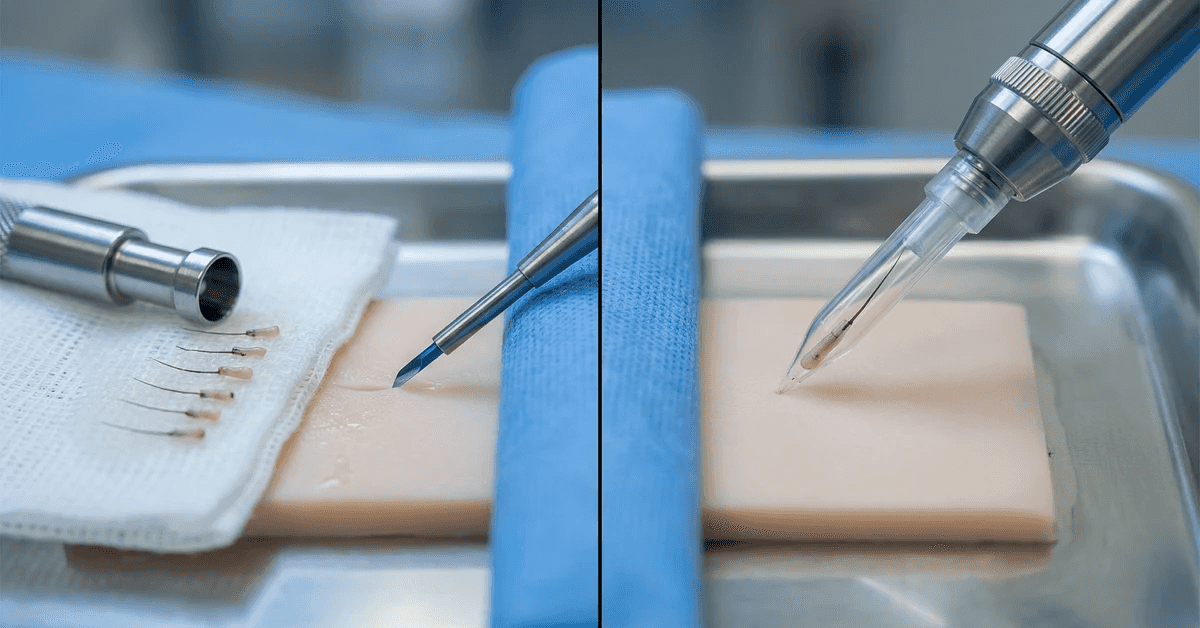
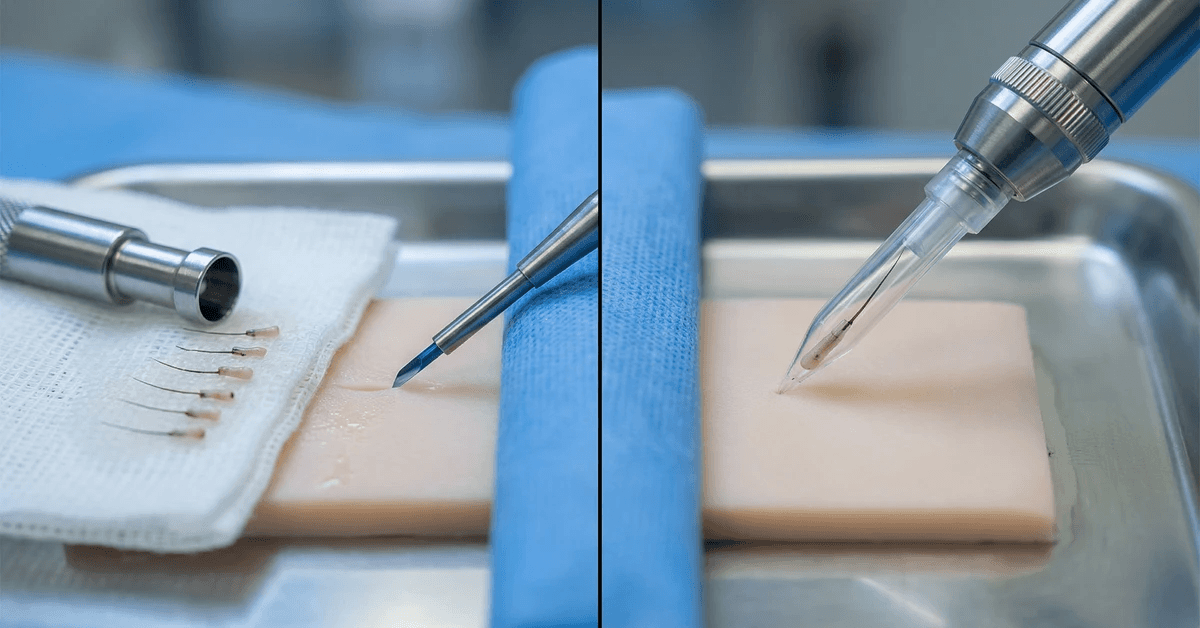
FUE vs DHI procedure steps differ significantly in their approach. In FUE hair transplant, individual follicles are extracted from the donor area using a specialized punch tool, then stored in a preservation solution before being implanted into the recipient area. This process involves a time gap between extraction and implantation, during which follicles remain outside the body. DHI hair transplant, conversely, uses the Choi Implanter Pen to extract and implant follicles simultaneously, minimizing the time follicles spend outside the body and potentially improving their viability.
The FUE vs DHI procedure steps also differ in how recipient sites are created. In FUE, the surgeon creates recipient sites before implanting the extracted follicles. In DHI, the implanter pen simultaneously creates the channel and places the follicle, offering greater precision in angle and depth control. This fundamental difference in procedure steps affects not only the technical execution but also the precision of results and the patient's overall experience.
How FUE vs DHI Graft Survival Compares
FUE vs DHI graft survival rates represent a critical consideration when comparing these two techniques. DHI hair transplant typically demonstrates higher graft survival rates, often exceeding 95%, because follicles are implanted immediately after extraction with minimal time outside the body. FUE hair transplant, while still offering excellent survival rates typically ranging from 85-90%, involves a longer storage period that can potentially affect follicle viability.
The difference in FUE vs DHI graft survival is particularly important because higher survival rates directly translate to better density and more impressive final results. Patients undergoing DHI often experience superior outcomes with fuller hair growth and more natural-looking restoration. However, the difference in graft survival between the two techniques has become increasingly minimal with modern preservation solutions and experienced surgical teams.
Read about: Latest Hair Transplant Techniques for Men and Women in Turkey
What Is a FUE Hair Transplant?
FUE, which stands for Follicular Unit Extraction, is a hair transplant technique that has become one of the most popular methods worldwide. This technique involves extracting individual hair follicles from the donor area, typically the back of the scalp where hair is genetically resistant to hair loss, and transplanting them to areas experiencing hair loss. FUE hair transplant is considered minimally invasive because it doesn't require a linear incision, resulting in no linear scarring.
FUE Hair Transplant Benefits
FUE hair transplant benefits are numerous and significant. First, the procedure leaves no linear scars, allowing patients to wear their hair short without visible evidence of the surgery. Second, FUE offers flexibility in the number of follicles that can be extracted, making it suitable for patients requiring large numbers of grafts. Third, recovery time is relatively quick, with most patients returning to normal activities within two weeks.
Additional FUE hair transplant benefits include the ability to extract follicles from various body areas if needed, making it versatile for different patient scenarios. The technique also provides natural-looking results when performed by experienced surgeons, and patients appreciate the minimal post-operative discomfort compared to older surgical methods. Furthermore, FUE allows for staged procedures if necessary, giving patients flexibility in their treatment planning.
FUE vs DHI Precision Aspects
When examining FUE vs DHI precision aspects, DHI generally offers superior precision in controlling the angle and depth of follicle placement. The Choi Implanter Pen used in DHI allows surgeons to place each follicle at the exact angle and depth needed for natural hair growth direction. FUE vs DHI precision comparison shows that while FUE can achieve excellent results in experienced hands, DHI provides more consistent precision across all implanted follicles.
This difference in FUE vs DHI precision is particularly noticeable in creating natural-looking hairlines, where angle and direction are critical. DHI's superior precision makes it an excellent choice for patients prioritizing aesthetic perfection, especially in visible areas like the frontal hairline. However, skilled FUE surgeons can achieve comparable precision through meticulous technique and careful planning.
Read about: Best Modern Treatments for Female Hair Loss
What Is DHI Hair Transplant?
DHI, which stands for Direct Hair Implantation, represents the latest advancement in hair transplant technology. This technique utilizes the Choi Implanter Pen, a specialized instrument that allows surgeons to extract individual hair follicles and implant them directly into the recipient area in one seamless motion. DHI hair transplant is considered the most advanced form of hair restoration, offering unprecedented precision and minimal invasiveness.
DHI Hair Transplant Benefits
DHI hair transplant benefits are extensive and compelling. First, the procedure offers exceptional precision in controlling the angle, depth, and direction of each implanted follicle, resulting in hair that grows in the most natural direction. Second, DHI requires minimal or no head shaving, allowing patients to maintain their existing hairstyle during recovery. Third, recovery time is significantly shorter than other techniques, with most patients returning to normal activities within one week.
Additional DHI hair transplant benefits include superior graft survival rates due to minimal time outside the body, reduced post-operative pain and discomfort, and less scalp trauma during the procedure. Patients also appreciate the ability to achieve higher hair density in the recipient area and the natural appearance of results. Furthermore, DHI eliminates the need for pre-made recipient sites, reducing overall procedure time and allowing for more efficient use of surgical resources.
Read about: Advantages and Expected Results of DHI Hair Transplant Technique
FUE vs DHI Natural Hairline
FUE vs DHI natural hairline comparison reveals that DHI typically produces superior results in creating natural-looking hairlines. The precision of the Choi Implanter Pen allows surgeons to place follicles at the exact angle that matches natural hair growth patterns, resulting in hairlines that appear completely authentic. FUE vs DHI natural hairline outcomes show that while FUE can produce excellent hairlines, DHI's superior control over implantation angles gives it an advantage in achieving the most natural appearance.
The importance of natural hairline creation cannot be overstated, as this is often the most visible area of hair restoration. Patients undergoing DHI frequently report exceptional satisfaction with their hairline results, noting that even close friends and family cannot detect that they've had a procedure. This natural appearance is one of the primary reasons many patients choose DHI for frontal hairline restoration.

FUE Cost vs DHI Cost Comparison
Cost is often a significant factor in the decision between FUE and DHI hair transplant methods. Understanding FUE cost vs DHI cost comparison helps patients make financially informed decisions while still prioritizing quality and results.
FUE Cost vs DHI Cost: Global Pricing
FUE cost vs DHI cost varies significantly depending on geographic location, surgeon experience, and clinic facilities. Generally, FUE cost vs DHI cost shows that DHI is slightly more expensive than FUE, though the difference may not be substantial. In many countries, FUE procedures range from moderate to high prices, while DHI procedures typically command a premium due to the advanced technology and precision required.
When comparing FUE cost vs DHI cost globally, it's important to consider that pricing reflects not only the technique but also the surgeon's expertise, clinic reputation, and local market conditions. Patients should obtain quotes from multiple clinics before making decisions based solely on FUE cost vs DHI cost comparisons. The most affordable option may not always provide the best value in terms of results and patient satisfaction.
Is DHI More Expensive Than FUE?
Yes, DHI is generally more expensive than FUE, but the cost difference is often justified by the superior results and shorter recovery time. Is DHI more expensive than FUE because the technology is more advanced, the procedure requires greater surgical precision, and graft survival rates are typically higher. However, when considering long-term value, DHI may prove more cost-effective because patients often achieve their desired results in a single procedure, eliminating the need for costly revision surgeries.
When evaluating whether DHI is more expensive than FUE, patients should consider the total cost of ownership, including potential revision procedures, time off work, and overall satisfaction with results. Many patients find that investing in DHI eliminates the need for additional procedures, ultimately resulting in lower total costs compared to choosing a less expensive technique that may require follow-up work.
Read about: Hair Transplant Cost in Turkey for 2026: What to Expect
FUE vs DHI Recovery Time and Downtime
Recovery time is an important consideration for patients balancing hair restoration with their professional and personal responsibilities. FUE vs DHI recovery time and downtime differ in ways that can significantly impact your ability to return to normal activities.
FUE vs DHI Downtime
FUE vs DHI downtime shows that DHI typically offers shorter downtime compared to FUE. With FUE, patients usually experience downtime of one to two weeks, during which they may experience mild pain, swelling, and redness. FUE vs DHI downtime comparison reveals that DHI patients often return to light activities within one week, experiencing minimal discomfort and faster resolution of post-operative symptoms.
The difference in FUE vs DHI downtime is particularly important for patients who cannot afford extended time away from work or social activities. DHI's shorter downtime means patients can resume their normal routines more quickly, with less visible evidence of the procedure. However, both techniques require avoiding strenuous exercise and direct sun exposure for approximately two weeks.
FUE vs DHI Recovery Time Differences
FUE vs DHI recovery time differences extend beyond the initial downtime period. While both techniques allow patients to return to normal activities within two weeks, the overall recovery experience differs. FUE vs DHI recovery time shows that DHI patients typically experience less post-operative pain, reduced swelling, and faster resolution of scalp tenderness. This difference in FUE vs DHI recovery time is attributed to the reduced scalp trauma associated with DHI's simultaneous extraction and implantation process.
Complete healing and final results for both techniques typically take 12-18 months, as transplanted follicles establish themselves and begin producing new hair. However, the FUE vs DHI recovery time difference during the initial post-operative period can significantly impact patient comfort and satisfaction during this critical healing phase.
Read about: When Do Hair Transplant Results Appear? Complete Timeline Explained
FUE vs DHI Density Results
Hair density in the transplanted area is a crucial measure of procedure success and patient satisfaction. FUE vs DHI density results represent one of the most important comparisons when evaluating these two techniques.
FUE vs DHI Density Results in Practice
FUE vs DHI density results in practice show that both techniques can achieve excellent density when performed by experienced surgeons. However, DHI typically produces slightly higher density in the recipient area because the technique allows for more precise placement of each follicle and potentially higher graft survival rates. FUE vs DHI density results comparison reveals that while FUE can achieve density ranging from good to excellent, DHI consistently produces superior density outcomes.
The difference in FUE vs DHI density results is particularly noticeable in the frontal area and hairline, where density is most visible. Patients undergoing DHI often report exceptional satisfaction with the fullness and thickness of their restored hair. However, the difference in density between the two techniques has become increasingly minimal with modern surgical techniques and experienced surgical teams.
Which Method Gives Better Density?
Which method gives better density is a question many patients ask when comparing FUE and DHI. Generally, DHI provides superior density due to higher graft survival rates and more precise follicle placement. Which method gives better density also depends on the surgeon's experience, the quality of extracted follicles, and the patient's individual hair characteristics. Experienced surgeons performing either technique can achieve excellent density, but DHI's technical advantages often result in superior outcomes.
When considering which method gives better density, patients should also factor in their specific goals and expectations. If maximum density is the primary objective, DHI may be the better choice. However, if other factors like cost or the ability to transplant a very large number of grafts are more important, FUE might be preferable.
Read about: Robotic Hair Transplant: How It Works and Is It Guaranteed?
Side Effects of FUE vs DHI
Understanding potential side effects is important for any surgical procedure. FUE vs DHI side effects comparison helps patients prepare for their procedure and manage expectations regarding post-operative experiences.
FUE vs DHI Side Effects Breakdown
FUE vs DHI side effects breakdown shows that both techniques carry similar potential side effects, though their severity and frequency may differ. Common side effects include temporary redness, swelling, itching, and mild pain in both the donor and recipient areas. FUE vs DHI side effects comparison reveals that DHI typically produces fewer side effects due to reduced scalp trauma, with patients experiencing less swelling and discomfort.
Additional FUE vs DHI side effects include temporary numbness in the donor area, which is more common with FUE due to the extraction process. Both techniques carry minimal risk of infection when proper post-operative care is followed. Serious complications are extremely rare with either technique when performed by qualified surgeons in accredited facilities.
Minimizing Side Effects in Both Techniques
Minimizing side effects in both techniques requires strict adherence to post-operative care instructions. Patients should avoid touching the transplant area, refrain from strenuous exercise, and protect their scalp from direct sun exposure during the initial healing period. Minimizing side effects also involves taking prescribed medications as directed, attending follow-up appointments, and reporting any unusual symptoms to their surgical team.
Proper pre-operative preparation also helps minimize side effects. Patients should avoid blood-thinning medications, alcohol, and smoking before surgery. Following these guidelines helps ensure optimal healing and reduces the likelihood of complications. Most side effects resolve naturally within a few weeks as the scalp heals.
FUE vs DHI Long-Term Results and Survival
Long-term results and graft survival are the ultimate measures of hair transplant success. FUE vs DHI long-term results comparison helps patients understand what to expect months and years after their procedure.
FUE vs DHI Long-Term Results
FUE vs DHI long-term results show that both techniques produce excellent outcomes when performed by experienced surgeons. Transplanted hair typically begins growing around three months post-procedure, with visible results becoming apparent by six months. FUE vs DHI long-term results comparison reveals that by 12-18 months, patients can see their final results, with fully established hair growth that appears completely natural.
The difference in FUE vs DHI long-term results is often minimal when both procedures are performed optimally. However, DHI's higher graft survival rates may result in slightly fuller hair growth and better density maintenance over time. Patients should understand that transplanted hair, like natural hair, will continue to age and may thin slightly over decades, though it will not fall out due to genetic hair loss.
FUE vs DHI Graft Survival Over Time
FUE vs DHI graft survival over time demonstrates that transplanted follicles remain viable and productive for a lifetime. FUE vs DHI graft survival rates show that DHI typically maintains slightly higher survival rates due to minimal time outside the body. However, both techniques produce permanent results because transplanted follicles are taken from areas genetically resistant to hair loss.
FUE vs DHI graft survival over time also depends on patient compliance with post-operative care and lifestyle factors. Patients who follow their surgeon's recommendations and maintain a healthy lifestyle typically experience optimal long-term graft survival and continued satisfaction with their results. Regular follow-up appointments help monitor graft survival and address any concerns that may arise.
Read about: Hair Care Tips After DHI Transplant to Ensure Best Results
How to Choose: Best Hair Transplant, FUE or DHI
Choosing the best hair transplant method between FUE and DHI requires careful consideration of multiple factors unique to your situation. This decision should be based on your specific needs, goals, budget, and expectations rather than on one factor alone.
Best Hair Transplant, FUE or DHI—Key Factors
Best hair transplant, FUE or DHI depends on several key factors. Consider your budget, as DHI typically costs more but may provide superior results. Evaluate your hair loss extent and the number of grafts needed, as FUE may be better for very large procedures. Assess your time availability, as DHI offers shorter recovery time. Consider your aesthetic goals, particularly regarding hairline precision, where DHI excels. Best hair transplant, FUE or DHI also depends on your hair type, scalp condition, and individual preferences regarding head shaving.
Consulting with a qualified hair transplant surgeon is essential in determining the best hair transplant method for your situation. The surgeon will evaluate your specific condition and recommend the technique most likely to achieve your desired results. Best hair transplant, FUE or DHI ultimately depends on matching the technique's strengths to your individual needs and priorities.
Matching Method to Hair Goals
Matching method to hair goals ensures you select the technique best suited to your specific objectives. If your primary goal is creating a natural-looking hairline with maximum precision, DHI is likely the better choice. If you need to transplant a very large number of grafts or have budget constraints, FUE may be more appropriate. Matching method to hair goals also considers your lifestyle and time availability—DHI's shorter recovery makes it ideal for busy professionals.
Matching method to hair goals requires honest self-assessment of your priorities and realistic expectations about what hair transplantation can achieve.
Read about: Hair Transplant Cost: Turkey vs USA and Germany
The detailed comparison between FUE and DHI hair transplant methods reveals that both techniques represent significant advancements in hair restoration technology. FUE vs DHI hair transplant comparison shows that while FUE offers flexibility and proven results, DHI provides superior precision, shorter recovery time, and typically higher graft survival rates. The best choice between FUE and DHI depends on your individual circumstances, including your budget, hair loss extent, aesthetic goals, and personal preferences.
Both techniques, when performed by experienced surgeons, can deliver natural-looking, permanent hair restoration that significantly improves appearance and confidence. The key to success with either method is selecting a qualified surgeon, following pre- and post-operative instructions carefully, and maintaining realistic expectations about the timeline for results. Whether you choose FUE or DHI, you're investing in a proven solution for hair loss that can transform your appearance and quality of life.
If you're ready to take the next step in your hair restoration journey, contact Safemedigo today to schedule a consultation with our expert hair transplant specialists. Our team will evaluate your specific situation, discuss your goals, and recommend the most appropriate technique for achieving your desired results. We're committed to providing you with exceptional care, advanced technology, and outstanding outcomes.
Frequently Asked Questions: Detailed Comparison Between FUE and DHI Hair Transplant Methods
What is the main difference between FUE vs DHI hair transplant procedures?
The main difference between FUE vs DHI hair transplant procedures lies in how follicles are handled. In FUE, follicles are extracted and stored in a preservation solution before implantation, creating a time gap between extraction and placement. In DHI, the Choi Implanter Pen extracts and implants follicles simultaneously, minimizing time outside the body. This fundamental difference affects graft survival rates, precision of placement, and recovery time. FUE vs DHI procedure differences also include how recipient sites are created—FUE requires pre-made sites, while DHI creates channels during implantation. Understanding these FUE vs DHI differences helps patients appreciate how each technique achieves its results.
Which technique offers better results: FUE or DHI?
Both FUE and DHI offer excellent results when performed by experienced surgeons, but they excel in different areas. DHI typically provides superior precision in hairline creation and higher graft survival rates, often exceeding 95% compared to FUE's 85-90%. DHI also offers shorter recovery time and less post-operative discomfort. However, FUE provides flexibility for transplanting very large numbers of grafts and may be more cost-effective. The best technique for you depends on your specific goals, budget, and preferences. Consulting with a qualified surgeon will help determine which method is most likely to achieve your desired results.
How much longer is the recovery period for FUE compared to DHI?
FUE typically requires a longer initial recovery period compared to DHI. FUE patients usually experience downtime of one to two weeks, while DHI patients often return to light activities within one week. However, complete healing for both techniques takes approximately 12-18 months as transplanted follicles establish themselves. The difference in initial recovery time is attributed to DHI's reduced scalp trauma and shorter procedure time. Both techniques require avoiding strenuous exercise and direct sun exposure for about two weeks. The shorter recovery period with DHI is one reason many patients prefer this technique, especially those with limited time for recovery.
Is DHI significantly more expensive than FUE?
Yes, DHI is generally more expensive than FUE, though the cost difference varies depending on location, surgeon experience, and clinic facilities. The higher cost of DHI reflects the advanced technology, greater surgical precision required, and typically higher graft survival rates. However, when considering total cost of ownership, DHI may prove more economical because its superior results often eliminate the need for revision procedures. Many patients find that investing in DHI achieves their desired results in a single procedure, ultimately resulting in lower total costs compared to choosing a less expensive technique that may require follow-up work. Cost should be balanced against your specific goals and expectations.
Can FUE achieve results comparable to DHI?
Yes, FUE can achieve results comparable to DHI when performed by highly experienced surgeons. Skilled FUE surgeons can create natural-looking hairlines and achieve excellent density through meticulous technique and careful planning. However, DHI's technical advantages—including superior precision in angle and depth control, higher graft survival rates, and reduced scalp trauma—often result in superior outcomes, particularly in visible areas like the frontal hairline. The difference between FUE and DHI results is often minimal when both procedures are performed optimally by experienced teams. Your choice should be based on your specific goals, budget, and the surgeon's recommendations for your particular situation.