









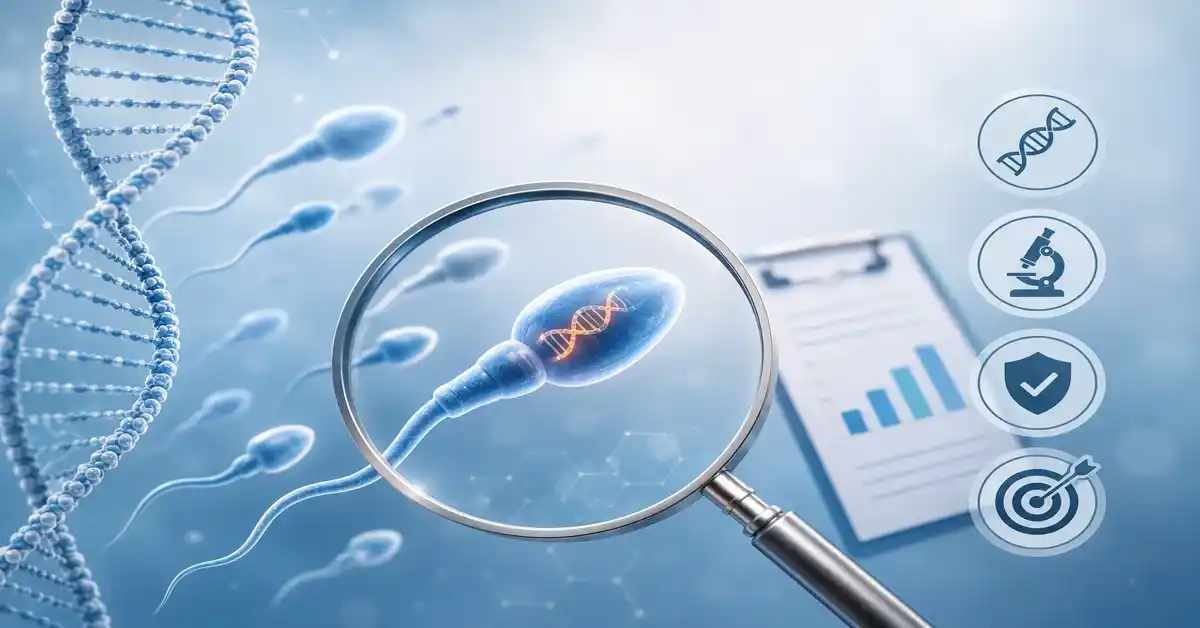
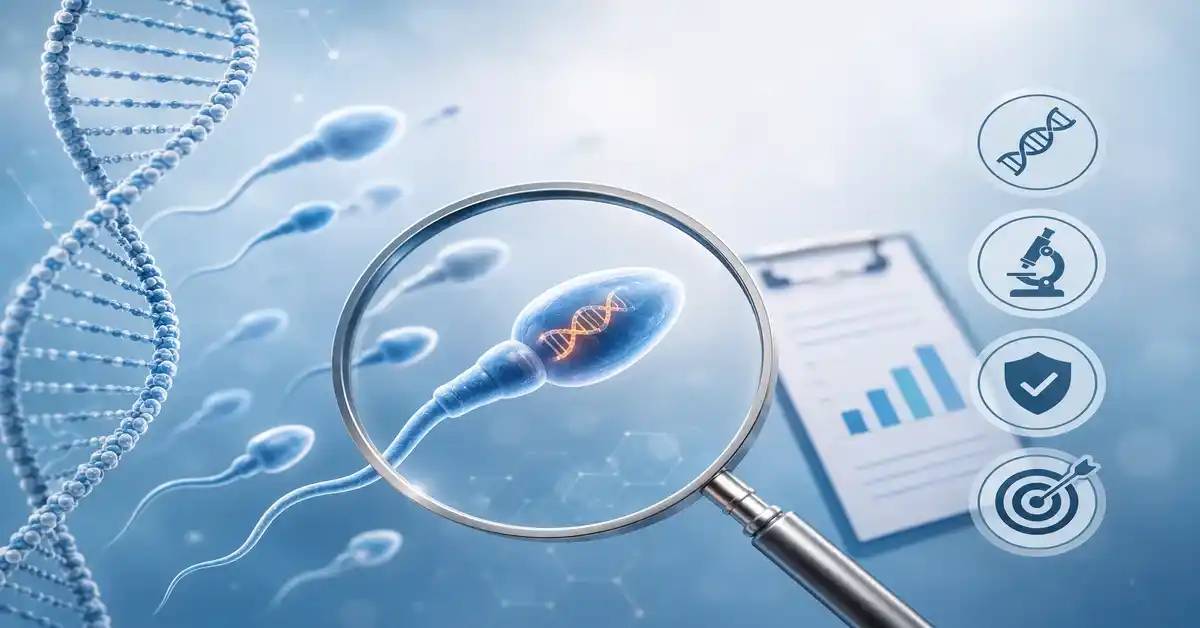
A sperm DNA fragmentation test evaluates the level of damage or breaks within the genetic material carried by sperm. Unlike a standard semen analysis, which measures sperm count, motility, volume, and morphology, this test focuses on the integrity of sperm DNA. This can be important in selected cases of male infertility, unexplained infertility, recurrent miscarriage, poor embryo development, failed IVF, or repeated ICSI failure.
A man may have a normal semen analysis but still have elevated sperm DNA fragmentation. This is why the test can provide additional information that is not visible in routine semen testing. However, it is not usually requested for every man at the beginning of fertility evaluation. It is most useful when there is a clinical reason to look deeper into sperm quality.
Understanding sperm DNA fragmentation does not mean making a final judgment about fertility. Instead, it helps the doctor identify possible contributing factors, such as smoking, varicocele, infection, heat exposure, oxidative stress, age, lifestyle, or previous treatment failure, and then build a more suitable fertility plan.
What Is a Sperm DNA Fragmentation Test?
A sperm DNA fragmentation test is a laboratory test that measures the percentage of sperm carrying damaged or fragmented DNA. Each sperm carries half of the genetic material needed to form an embryo. If the DNA is significantly damaged, fertilization, embryo development, implantation, or pregnancy continuation may be affected in some cases.
The presence of DNA fragmentation does not mean pregnancy is impossible. The egg may be able to repair some DNA damage, especially when egg quality is strong. However, when sperm DNA fragmentation is high, and especially when egg quality is reduced or there is a history of treatment failure, the impact may become more clinically relevant.
Meaning of DNA Fragmentation in Sperm
DNA fragmentation means that there are breaks or damage in the genetic material inside the sperm head. This genetic material should be tightly packed and protected so it can reach the egg in the best possible condition.
Possible causes include:
- Oxidative stress.
- Varicocele.
- Smoking.
- Genital tract infection.
- Heat exposure to the testicles.
- Obesity.
- Advanced paternal age.
- Environmental toxins.
- Some medications or treatments.
- Very long abstinence.
- Poor sperm production quality.
The higher the level of DNA damage, the more likely it may contribute to fertility problems in selected cases, especially when female factors or repeated treatment failure are also present.
Difference Between Semen Analysis and DNA Fragmentation Testing
A standard semen analysis evaluates visible and measurable semen parameters such as sperm count, motility, morphology, volume, and general sample quality. It remains the first and most essential test in male fertility assessment.
A sperm DNA fragmentation test evaluates a deeper layer: the genetic integrity of sperm. A semen analysis may look normal, while DNA fragmentation is elevated.
Key differences include:
- Semen analysis evaluates visible sperm parameters.
- DNA fragmentation testing evaluates genetic integrity.
- Semen analysis is the starting point.
- DNA testing is usually used in selected cases.
- High fragmentation may explain some unexplained failures.
- Results must be interpreted with female age, egg quality, and fertility history.
This test does not replace semen analysis. It complements it when needed.
Why Is Sperm DNA Fragmentation Important?
Sperm DNA fragmentation testing is important because it may reveal a hidden male factor that is not seen in standard semen analysis. Fertility depends not only on sperm reaching the egg, but also on the quality of the genetic message the sperm carries.
The test may help explain situations such as unexplained infertility, recurrent miscarriage, poor embryo development, repeated IVF failure, or implantation failure. Still, the result must be interpreted carefully because high fragmentation does not always mean pregnancy cannot occur, and low fragmentation does not guarantee pregnancy.
Impact on Fertilization and Embryos
High sperm DNA fragmentation may affect fertilization or the early stages of embryo development. In some cases, fertilization may occur naturally or through ICSI, but problems may appear later when embryos divide poorly, stop developing, or show reduced quality.
High fragmentation may be associated with:
- Lower natural pregnancy chances in some cases.
- Poorer outcomes in some IVF cycles.
- Weak embryo development.
- Embryo arrest.
- Increased miscarriage risk in selected cases.
- Need for deeper male-factor evaluation.
- Consideration of sperm selection or sample strategy changes.
The relationship is not always direct because egg quality and the egg’s DNA repair capacity also play a major role.
Connection With Recurrent Miscarriage and IVF Failure
Sperm DNA fragmentation is often discussed when couples experience recurrent miscarriage, repeated IVF failure, or repeated ICSI failure. In these cases, standard semen analysis may be acceptable, but sperm DNA damage may still be one of the hidden factors affecting embryo development or pregnancy continuation.
The test may be useful in cases of:
- Unexplained recurrent miscarriage.
- Repeated IVF failure.
- Poor embryo quality despite acceptable eggs.
- Repeated implantation failure.
- Unexplained infertility.
- Varicocele.
- Heavy smoking history.
- Advanced paternal age.
- Heat or toxin exposure.
The test does not provide the full answer alone, but it can add an important piece to the fertility evaluation.
Read about: Male Sperm Weakness: Main Causes and Modern Fertility Treatment Options
When Is DNA Fragmentation Testing Requested?
Sperm DNA fragmentation testing is not usually requested as a first-line test for every man. Standard semen analysis remains the first step. A doctor may request DNA fragmentation testing when the couple’s history suggests that deeper sperm quality assessment may be helpful.
The decision depends on fertility history, previous test results, female age, egg quality, IVF or ICSI history, miscarriage history, and male risk factors. The test should be part of a diagnostic plan, not an isolated number.
Unexplained Infertility Cases
The test may be requested in unexplained infertility when both partners’ basic evaluations appear acceptable, but pregnancy does not occur. In this setting, the doctor may look for hidden male factors such as sperm DNA integrity.
It may be useful when:
- Semen analysis is normal but pregnancy is delayed.
- No clear female factor is found.
- Natural attempts have continued for a long time.
- Female age allows planned treatment decisions.
- Lifestyle factors such as smoking or obesity are present.
- Oxidative stress is suspected.
- Varicocele may be contributing.
The result may help guide lifestyle treatment, male-factor evaluation, or assisted reproduction planning.
ICSI, IVF Failure, and Recurrent Miscarriage
During ICSI, one sperm is injected directly into the egg. However, selecting sperm visually does not guarantee that the DNA inside the sperm is normal. Therefore, DNA fragmentation testing may be considered after repeated failures or poor embryo development.
It may be requested in cases of:
- Repeated ICSI failure.
- Poor embryo development.
- Low number of good-quality embryos.
- Miscarriage after transfer of good-quality embryos.
- Repeated implantation failure.
- Unexpected poor outcomes despite good eggs.
- Varicocele, infection, or male risk factors.
- Before changing the treatment strategy.
The result may influence decisions such as lifestyle improvement, varicocele treatment, shorter abstinence, advanced sperm selection, or, in selected cases, the use of testicular sperm.

Causes of High Sperm DNA Fragmentation
High sperm DNA fragmentation may result from factors that damage sperm during production, storage, or ejaculation. Many of these factors are linked to oxidative stress, which can damage sperm membranes and genetic material.
The most useful approach is to search for the cause rather than focusing only on the percentage. If the cause is varicocele, infection, smoking, or heat exposure, improvement may be possible after treatment or lifestyle changes.
Oxidative Stress and Lifestyle
Oxidative stress is one of the main mechanisms associated with sperm DNA damage. It occurs when harmful reactive molecules exceed the body’s antioxidant defenses.
Lifestyle factors that may increase oxidative stress include:
- Smoking.
- Obesity.
- Poor sleep.
- Chronic stress.
- Poor diet.
- Low physical activity.
- Pollution exposure.
- Alcohol.
- Repeated heat exposure to the testicles.
- Frequent sauna use.
- Laptop heat on the thighs.
- Unsupervised supplements or medications.
Lifestyle improvement may take time to show results because sperm production takes several weeks. Reassessment is often considered after around 2 to 3 months, depending on the case.
Varicocele, Infection, and Heat
Varicocele may increase testicular temperature and oxidative stress, which can affect sperm count, motility, and DNA quality. Infections may also increase inflammatory cells and free radicals in semen.
Possible medical causes include:
- Varicocele.
- Prostatitis.
- Epididymitis.
- Genital tract infection.
- Testicular heat exposure.
- Recent fever.
- History of undescended testis.
- Chemotherapy or radiation exposure.
- Hormonal disorders.
- Chronic medical conditions.
Treatment may involve antibiotics when infection is present, varicocele treatment in selected cases, chronic disease control, or modification of fertility treatment plans.
How Is a Sperm DNA Fragmentation Test Done?
The test is usually performed on a semen sample collected after a specified abstinence period, according to laboratory and physician instructions. The sample is then analyzed using a laboratory method that estimates the percentage of sperm with DNA damage.
There are several techniques for sperm DNA fragmentation testing, and each has its own reference ranges and limitations. Results should be interpreted according to the method used.
Common Testing Methods
Several laboratory techniques are used to assess sperm DNA fragmentation. They do not always produce identical values because they measure damage differently.
Common methods include:
- TUNEL.
- SCSA.
- SCD or Halo test.
- Comet assay.
- Tests assessing DNA susceptibility to damage.
- Staining or flow cytometry-based methods.
No single method is perfect for every case. The laboratory should report the method used and its reference values. The result should be reviewed by a fertility specialist or andrologist in the context of the couple’s case.
How Should a Man Prepare for the Test?
Preparation helps improve the reliability of the result. The man should follow the laboratory’s instructions for abstinence and sample collection. Recent fever, infection, or heat exposure may temporarily affect the result.
General preparation tips include:
- Follow the required abstinence period.
- Avoid very long abstinence.
- Inform the doctor about recent fever.
- Report infections or medications.
- Avoid sauna or strong heat before testing.
- Reduce smoking as much as possible.
- Collect the sample correctly.
- Deliver the sample on time.
- Repeat the test if the result is unexpected.
A repeat test may be needed because semen quality and DNA integrity can change over time.
Read about: Male Infertility Causes: Tests and Modern Treatments
How Are DNA Fragmentation Results Interpreted?
Interpretation depends on the percentage, the testing method, the laboratory reference range, and the couple’s fertility history. Some tests report a DNA Fragmentation Index, or DFI, which represents the percentage of sperm showing DNA damage.
The number should not be interpreted alone. A high result may be less harmful when egg quality is strong, while a moderate result may be more important when there is recurrent miscarriage, older female age, or repeated IVF failure.
What Does High DFI Mean?
High DFI means that a larger percentage of sperm carries DNA damage. The higher the percentage, the more likely it may be contributing to infertility, especially when there is unexplained infertility, recurrent miscarriage, or ART failure.
High DFI may suggest:
- Oxidative stress.
- Varicocele.
- Infection.
- Lifestyle impact.
- Recent fever or heat exposure.
- Impaired sperm production.
- Need for andrology evaluation.
- Need to modify the fertility plan.
A high result does not mean pregnancy is impossible, and it does not automatically mean IVF is the only option. The full clinical picture matters.
Why the Result Alone Is Not Enough
Sperm DNA fragmentation is important, but fertility depends on many factors. Pregnancy also depends on female age, ovarian reserve, egg quality, uterus, fallopian tubes, laboratory quality, and embryo transfer conditions.
The result should be interpreted with:
- Standard semen analysis.
- Female age.
- AMH and ultrasound findings.
- Miscarriage history.
- Previous IVF or ICSI outcomes.
- Previous embryo quality.
- Varicocele status.
- Lifestyle factors.
- Chronic diseases.
- Duration of infertility.
The test helps guide decisions but does not replace a full couple evaluation.
Read about: Latest Male Infertility Treatments: From Medications to Innovative Techniques
How Can Sperm DNA Fragmentation Be Reduced?
Reducing sperm DNA fragmentation depends on the cause. If lifestyle or oxidative stress is involved, healthy changes and medically guided antioxidants may help. If varicocele or infection is present, targeted medical or surgical treatment may be needed.
Improvement takes time because sperm production is not immediate. Doctors often reassess after around 2 to 3 months.
Lifestyle Improvement and Antioxidants
Lifestyle improvement can be an important step, especially when smoking, obesity, poor sleep, heat exposure, or poor diet are present. Antioxidants may be recommended by a doctor, but high doses of supplements should not be used without supervision.
Helpful steps may include:
- Stop smoking.
- Lose weight if needed.
- Improve sleep.
- Exercise moderately.
- Reduce chronic stress.
- Eat more fruits and vegetables.
- Avoid heat exposure to the testicles.
- Avoid frequent sauna use.
- Reduce toxin exposure.
- Treat infections.
- Review medications with a doctor.
- Use supplements only when appropriate.
The goal is to reduce oxidative stress and improve the environment of sperm production.
Treating Varicocele or Infections When Needed
If a clinically relevant varicocele is present with high sperm DNA fragmentation or abnormal semen parameters, varicocele treatment may be discussed. The decision depends on examination, ultrasound, symptoms, and fertility history.
If infection is suspected, the doctor may request cultures or additional tests and prescribe appropriate treatment. Treating infection may reduce oxidative stress and improve semen quality in some cases.
Possible treatment steps include:
- Treating infections.
- Varicocele repair in selected cases.
- Controlling diabetes or chronic disease.
- Reducing abstinence duration before sample collection.
- Lifestyle improvement.
- Andrology follow-up.
- Repeating the test later.
- Adjusting IVF or ICSI strategy.
Treatment should target the cause, not only the number.
Read about: How Hormones Affect Fertility: Essential Tests for Couples
Role of DNA Fragmentation Testing in IVF and ICSI
In IVF and ICSI, sperm DNA fragmentation testing may help guide strategy when there has been previous failure, poor embryo development, or miscarriage. However, ICSI does not automatically solve DNA fragmentation because it injects sperm into the egg without repairing the sperm DNA.
If fragmentation is high, the fertility team may consider improving the semen sample, treating male factors, using sperm selection methods, or in selected cases, discussing testicular sperm.
Does ICSI Solve DNA Fragmentation?
ICSI helps when there are problems with sperm count, motility, or sperm-egg interaction because the sperm is injected directly into the egg. However, ICSI does not repair damaged DNA inside the sperm.
Possible outcomes include:
- Fertilization despite high fragmentation.
- Embryo arrest later.
- Lower embryo quality.
- Implantation failure.
- Miscarriage in some cases.
- Need for deeper male-factor evaluation.
High fragmentation does not mean ICSI will always fail. Egg quality, DNA repair capacity, embryo laboratory conditions, and other factors are important.
Can Testicular Sperm Be Used?
In very selected cases, doctors may discuss using testicular sperm instead of ejaculated sperm, especially when sperm DNA fragmentation is very high in semen and repeated ICSI failure has occurred. The idea is that some DNA damage may occur during sperm passage or storage, so testicular sperm may sometimes show lower fragmentation.
This is not a routine option for every man. It requires a surgical procedure and should be discussed with an andrologist and fertility team after full evaluation.
It may be considered when:
- DNA fragmentation is very high.
- Repeated ICSI failure has occurred.
- Embryos are poor despite good eggs.
- Recurrent miscarriage continues after other causes are excluded.
- Results do not improve after treating possible causes.
- The medical team has a clear reason.
The decision should be individualized.
Questions to Ask After the Test Result
After receiving the sperm DNA fragmentation result, the couple should not focus only on the percentage. They should understand what the result means for their specific fertility history and treatment plan.
The doctor needs to consider miscarriage history, previous IVF outcomes, female age, egg quality, varicocele, infection, and male lifestyle factors before recommending a plan.
Questions About the Cause
Useful questions include:
- Is the result high according to this test method?
- Should the test be repeated?
- Is there a varicocele?
- Are there signs of infection?
- Was the abstinence period appropriate?
- Could lifestyle be affecting the result?
- Was there recent fever or illness?
- Do I need hormone tests or ultrasound?
- Should I see an andrologist?
- When should we reassess?
These questions help identify treatable causes rather than focusing only on anxiety about the result.
Questions About Fertility Planning
Important planning questions include:
- Can the result improve within 3 months?
- Should we use antioxidants or specific treatment?
- Is varicocele treatment appropriate?
- Should we delay IVF or proceed?
- Do we need advanced sperm selection?
- Could this explain previous embryo quality?
- Is testicular sperm an option?
- How does this relate to female age?
- Are other recurrent miscarriage tests needed?
- What is the plan if fragmentation remains high?
The goal is to turn the test result into a practical, medically guided plan.
Read about: Natural Fertility Treatments: Effective Ways to Boost Conception
Conclusion
Sperm DNA fragmentation testing can be important in selected male infertility cases because it reveals information that routine semen analysis may miss. It may help explain unexplained infertility, recurrent miscarriage, repeated IVF or ICSI failure, poor embryo development, or implantation failure. However, it should not be used alone to judge fertility potential.
High sperm DNA fragmentation does not mean pregnancy is impossible. It means that an additional factor should be understood and investigated. Causes may include smoking, varicocele, infection, heat exposure, oxidative stress, paternal age, obesity, or lifestyle factors. In some cases, the result may improve with treatment or lifestyle changes.
Frequently Asked Questions: Sperm DNA Fragmentation Test
Is sperm DNA fragmentation testing necessary for every man?
No. It is not usually a first-line test for every man, but it may be useful in unexplained infertility, recurrent miscarriage, or repeated IVF failure.
Can semen analysis be normal while DNA fragmentation is high?
Yes. Semen analysis evaluates count, motility, and morphology, while DNA fragmentation testing evaluates genetic integrity inside sperm.
Does high sperm DNA fragmentation mean pregnancy is impossible?
No. Pregnancy can still happen, but high fragmentation may reduce success chances or be linked to embryo problems or miscarriage in some cases.
Can high DNA fragmentation be treated?
In some cases, it can improve by treating causes such as varicocele or infection, improving lifestyle, avoiding heat, and using antioxidants under medical guidance.
Does ICSI overcome sperm DNA fragmentation?
Not always. ICSI helps inject sperm into the egg, but it does not repair damaged sperm DNA.
.png&w=1920&q=70)