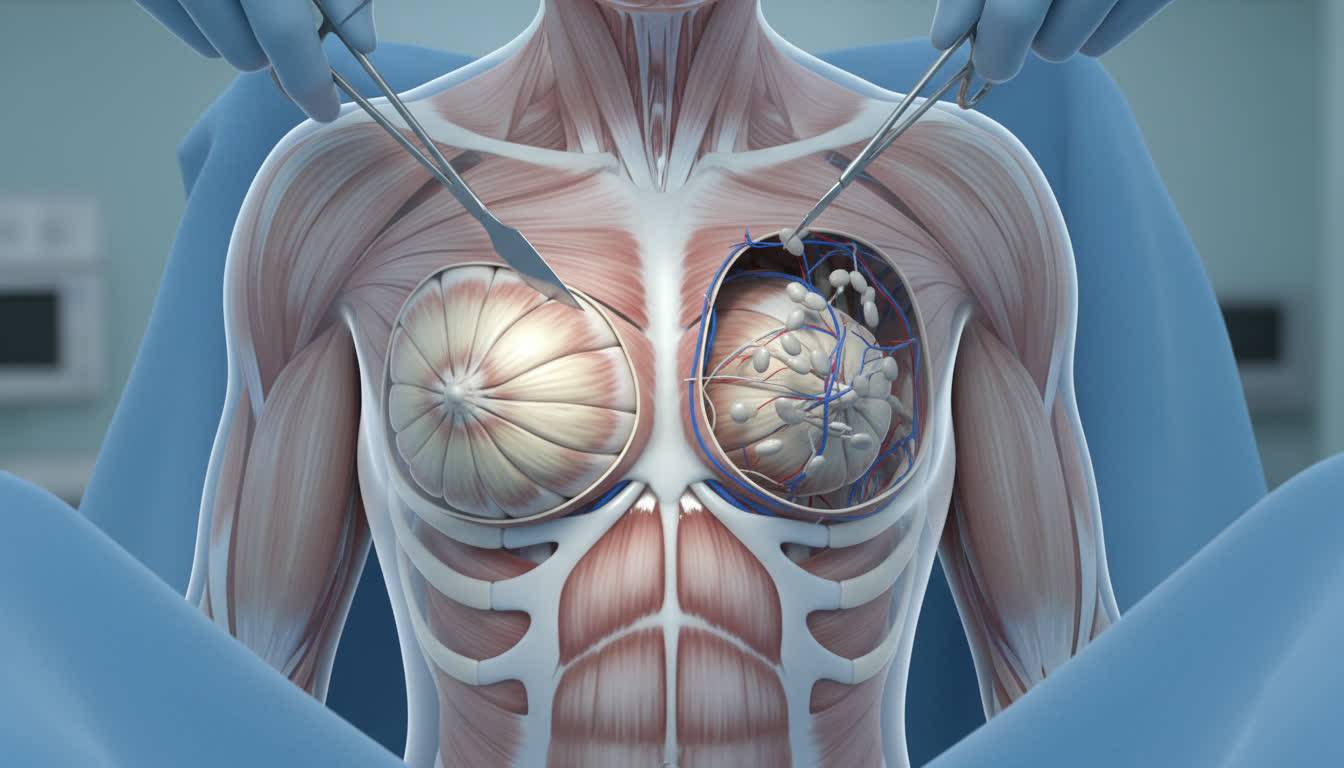






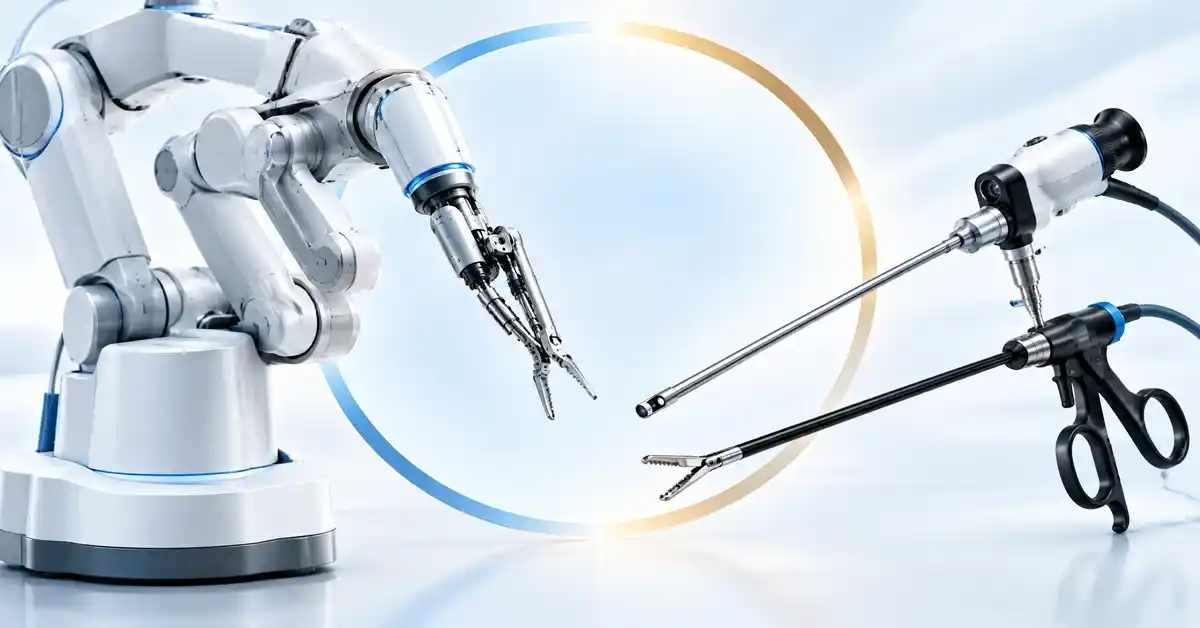

Robotic surgery and conventional laparoscopy are two major forms of minimally invasive surgery. Both techniques allow many operations to be performed through small incisions rather than the larger incision required for traditional open surgery.
The main difference between robotic surgery and laparoscopy lies in how the surgeon sees the operative field and controls the instruments. In conventional laparoscopy, the surgeon directly manipulates long instruments. In robotic surgery, the surgeon controls articulated instruments from a specialized console.
The robotic system does not perform surgery independently. Every movement and surgical decision remains under the surgeon's control.
At Safemedigo, the choice between robotic surgery and laparoscopy is based on the procedure, anatomy, disease complexity, surgeon experience and expected clinical benefit rather than simply choosing the newest technology.
Robotic Surgery vs Laparoscopy: How They Work
Both approaches use small surgical ports, but instrument movement and visualization differ considerably.
Conventional Laparoscopic Surgery
During laparoscopy, a camera and long instruments are inserted through small incisions.
The surgeon views the internal anatomy on a monitor and directly moves the instruments by hand.
Modern laparoscopy provides excellent imaging, although standard instruments generally have less articulation than robotic instruments.
Robot-Assisted Surgery
In robotic surgery, the surgeon controls the instruments from a surgical console.
The platform translates the surgeon's hand movements into precise movements inside the patient's body.
Robotic instruments can rotate and bend at multiple angles, while the system can also provide magnified three-dimensional visualization and reduce the effect of small hand tremors.
Robotic Surgery and Laparoscopy Comparison
| Feature | Robotic Surgery | Laparoscopy |
|---|---|---|
| Incisions | Small | Small |
| Instrument control | Surgical console | Direct hand control |
| Instrument movement | Wristed and multi-directional | More limited in many systems |
| Visualization | Usually magnified and three-dimensional | High definition, depending on system |
| Camera control | Often directly controlled by surgeon | Surgeon or assistant may control it |
| Tremor filtration | Available | Not available in the same way |
| Operating time | Can be longer | Can be shorter in some procedures |
| Cost | Usually higher | Usually lower |
| Recovery | Often rapid | Also generally rapid |
| Overall outcome | Depends on procedure and expertise | Also depends on procedure and expertise |
Read about: Robotic Tumor Surgery: Higher Precision, Fewer Complications
Precision and Visualization in Robotic Surgery
One of the major technical advantages of robotic systems is the combination of magnified visualization and highly articulated instruments.
Three-Dimensional Surgical Visualization
Modern robotic systems usually provide three-dimensional visualization, allowing the surgeon to appreciate depth more clearly.
This can be particularly useful when operating close to blood vessels, nerves or structures that need to be preserved.
Modern laparoscopic imaging has also improved substantially, so visualization alone does not determine surgical quality.
Wristed Robotic Instruments
Robotic instruments can bend and rotate inside the body in ways that resemble the movement of the human wrist.
This can make intracorporeal suturing, reconstruction and deep dissection easier in confined spaces.
The technical benefit may be particularly noticeable in prostate, kidney, rectal and selected gastric, pancreatic and gynecologic procedures.
Does Robotic Precision Always Mean Better Results?
No.
A robotic system can provide greater mechanical flexibility, but clinical outcomes remain strongly dependent on surgeon experience, patient selection, anatomy and disease complexity.
An experienced laparoscopic surgeon can achieve excellent outcomes in many operations where the additional capabilities of a robotic system do not provide a meaningful advantage.
Read about: Robotic Tumor Surgery: Higher Accuracy, Lower Risks
Recovery and Complications After Robotic Surgery and Laparoscopy
For patients, the most important question is whether the technology changes pain, blood loss, complications and recovery.
Pain and Incision Size
Both robotic and laparoscopic surgery usually use relatively small incisions.
This can reduce incision-related pain and scarring compared with open surgery and can support earlier mobilization.
However, robotic surgery does not automatically mean less pain than laparoscopy. The extent of the operation and the organ being treated often have a greater influence.
Blood Loss and Conversion to Open Surgery
Magnified visualization and precise instrument movement can assist vascular control during selected operations.
In some technically difficult procedures, robotic surgery can reduce the need to convert a minimally invasive operation to an open procedure.
This advantage is not universal, and robotic surgery does not eliminate the possibility of significant bleeding or conversion.
Hospital Stay and Return to Activity
Both approaches can allow earlier discharge and faster return to normal activity compared with many open operations.
Actual recovery depends on the procedure, patient age, general health, chronic diseases and whether complications occur.
For many procedures, recovery after robotic surgery and conventional laparoscopy can be very similar.

Robotic Surgery in Cancer Treatment
Robotic surgery may provide its greatest technical advantages when operations are performed in narrow anatomical spaces or close to important nerves and blood vessels.
Prostate and Kidney Surgery
Robot-assisted radical prostatectomy is one of the most widely recognized robotic procedures.
The prostate lies deep within the pelvis near the bladder, urethra and important nerves, making magnified visualization and articulated instruments useful during dissection and reconstruction.
Robotic surgery is also used in selected kidney tumors, particularly partial nephrectomy, where the tumor is removed while preserving as much healthy kidney tissue as possible.
Colorectal and Rectal Surgery
Rectal surgery can be technically difficult because of the narrow pelvis.
Robotic instruments can facilitate deep pelvic dissection and intracorporeal suturing.
Conventional laparoscopy remains a highly effective option for many colorectal operations when the patient is suitable and the surgical team has strong experience.
Gastric, Liver and Pancreatic Surgery
Robotic techniques are also increasingly used for selected stomach, liver and pancreatic procedures.
The best approach depends on tumor size, location, relation to major vessels and the amount of reconstruction required.
In cancer surgery, complete tumor removal, appropriate surgical margins and lymph-node management are more important than whether the operation is labeled robotic or laparoscopic.
For a broader overview of modern oncology care, read Latest Cancer Protocols: Turkey vs USA.
Robotic Surgery Cost and Operating Time
Robotic technology requires advanced equipment, specialized instruments and extensive team training.
Why Robotic Surgery Costs More
Robotic platforms have significant purchase and maintenance costs.
Specialized instruments, operating-room infrastructure and staff training further increase the cost of each procedure.
For this reason, robotic surgery is generally more expensive than conventional laparoscopy.
Why Robotic Procedures Can Take Longer
Robotic arms must be positioned and connected to the surgical ports before the main surgical phase begins.
This preparation adds time, particularly when a team is still developing experience.
Highly experienced teams can reduce setup time substantially, but some robotic procedures still remain longer than their laparoscopic equivalents.
Surgeon Experience Is More Important Than Technology Alone
A hospital owning a robotic platform does not mean that every robotic procedure is performed with the same level of expertise.
Patients should consider the surgeon's experience with the exact operation being proposed rather than the number of robotic procedures in general.
The same principle applies to conventional laparoscopy.
Choosing Between Robotic Surgery and Laparoscopy
No single technique is best for every patient or every operation.
When Robotic Surgery May Be More Useful
Robotics can be particularly useful when surgery is performed in a deep or narrow space or when extensive intracorporeal suturing is required.
It may also offer advantages when delicate dissection around nerves or vessels is essential.
These technical advantages do not mean that every suitable operation needs a robot.
When Laparoscopy Remains an Excellent Choice
Many operations can be performed safely and effectively with conventional laparoscopy.
If a procedure is well established laparoscopically and the surgeon has extensive experience, adding a robotic platform may not provide an important clinical benefit.
In these situations, laparoscopy can offer excellent results with lower costs and, in some procedures, shorter operating times.
Questions to Discuss Before Surgery
Patients should understand why a particular technique is being recommended for their case.
Expected blood loss, conversion risk, hospital stay, recovery, potential complications and total cost should all be discussed.
For cancer surgery, the complete oncological treatment plan should also be considered rather than focusing only on the surgical platform.
For an international comparison of robotic oncology services, read Robotic Tumor Surgery: Turkey vs Germany.
Conclusion
Robotic surgery and laparoscopy are both effective minimally invasive techniques. Robotic surgery offers magnified visualization, articulated instruments and precise control that can be valuable during complex procedures in confined anatomical spaces.
Conventional laparoscopy remains an advanced and highly effective technique that can provide excellent outcomes, often at a lower cost and sometimes with shorter operating times.
The best approach depends on the procedure, patient anatomy, disease complexity and the experience of the surgeon and surgical team.
Frequently Asked Questions: Robotic Surgery vs Laparoscopy: Differences, Benefits and Results
Is robotic surgery better than laparoscopy?
Not in every situation. Robotics can provide technical advantages in selected complex procedures, while laparoscopy can achieve comparable outcomes in many operations.
Does the robot perform surgery independently?
No. The surgeon controls the robotic instruments throughout the procedure and remains responsible for all surgical decisions.
Is robotic surgery less painful?
Both approaches use small incisions, so both can reduce incision-related pain compared with open surgery.
Is robotic surgery safer?
Both approaches can be safe when performed by experienced teams. Robotics may provide advantages in selected procedures but does not eliminate surgical risks.
Why is robotic surgery more expensive?
Specialized equipment, instruments, maintenance, staff training and operating-room infrastructure increase the overall cost.