





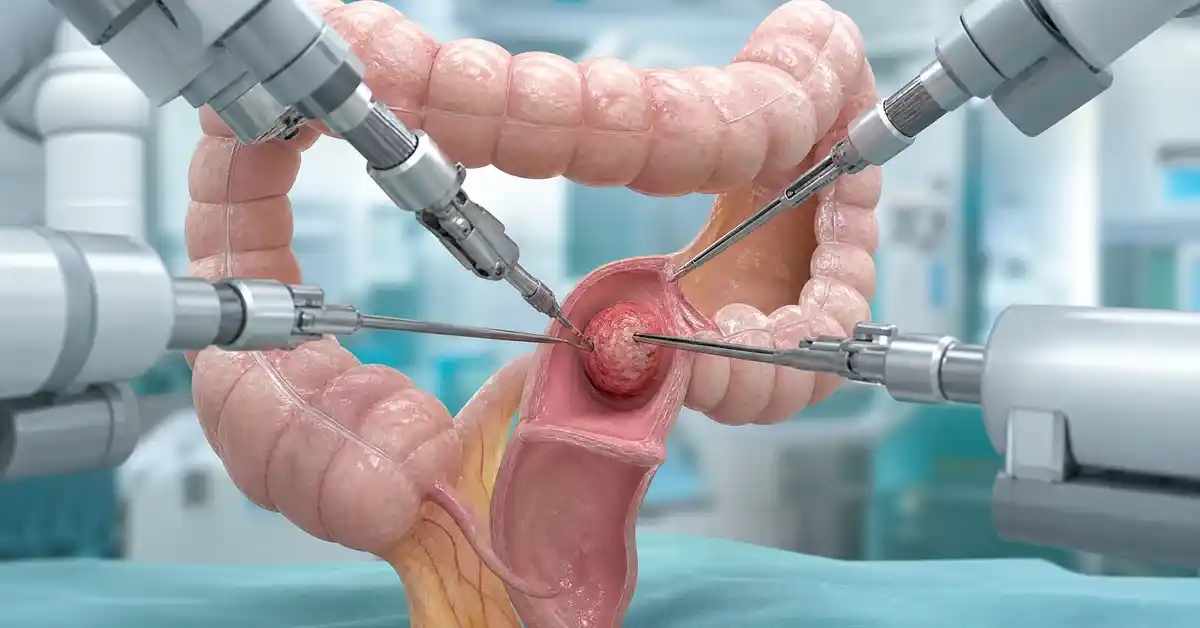
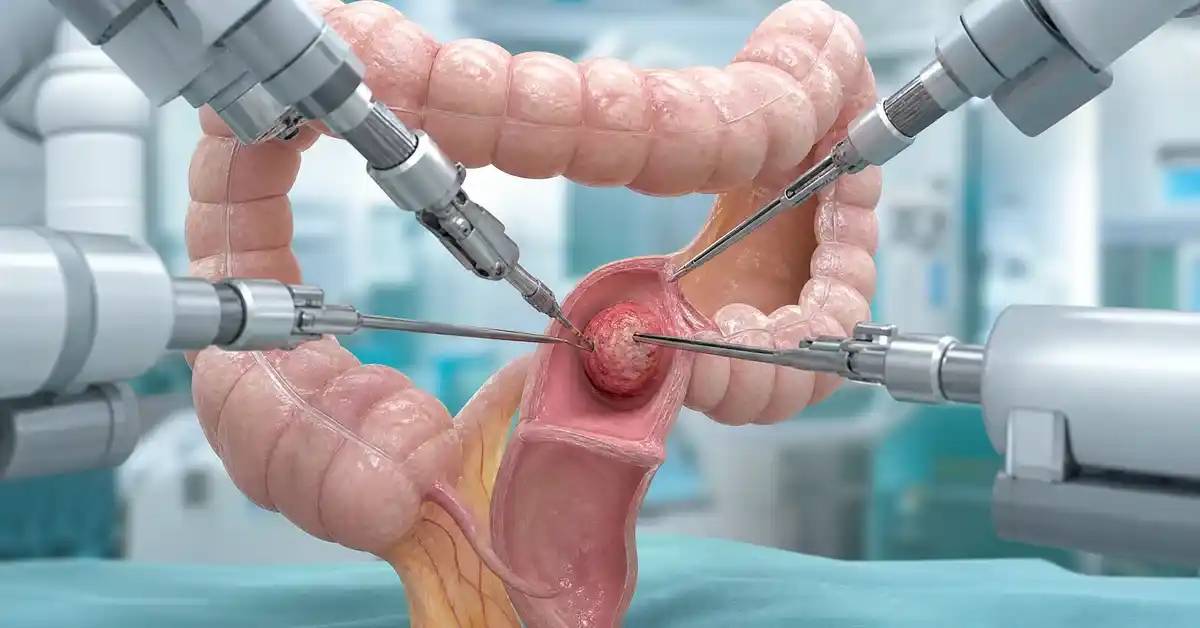
Robotic colorectal cancer surgery is an advanced minimally invasive approach that can be used for selected colon and rectal tumors. Its technical advantages are particularly relevant in rectal surgery, where the surgeon works deep within a confined pelvis close to important urinary, sexual, and pelvic nerves.
At Safemedigo, robotic surgery is not considered automatically superior simply because the technology is newer. Treatment selection begins with tumor location, stage, resectability, need for preoperative therapy, patient anatomy, and surgeon experience. Contemporary randomized evidence suggests robotic surgery can reduce conversion to open surgery compared with laparoscopy while producing broadly similar complication and cancer outcomes, although operations are generally longer.
How Robotic Surgery Is Used to Remove Colon and Rectal Cancer
Robotic colorectal surgery is performed through small abdominal incisions using a camera and articulated surgical instruments.
The Robot Does Not Operate Independently
Every surgical movement remains under the surgeon's control.
The operating surgeon determines where to dissect, divide vessels, remove bowel, protect surrounding organs, and create an intestinal connection.
The robotic platform primarily provides magnified three-dimensional visualization and highly mobile instruments.
Robotic Colectomy Removes the Tumor and Regional Lymphatic Tissue
Depending on tumor location, procedures can include:
- Right colectomy.
- Left colectomy.
- Sigmoid colectomy.
- Other segmental colorectal resections.
Cancer surgery removes not only the visible tumor but also an appropriate segment of bowel and its associated lymphatic drainage.
Robotic Rectal Surgery Takes Place in a Confined Pelvic Space
Rectal surgery is technically different from many colon operations.
The rectum lies deep within the pelvis beside the bladder, reproductive structures, pelvic nerves, and anal sphincter complex.
Improved instrument articulation can therefore be particularly useful during precise pelvic dissection.
When Robotic Surgery Is Considered for Colon and Rectal Tumors
The usefulness of robotic surgery varies according to tumor location and operative complexity.
Robotic Surgery for Colon Cancer
Robotic colectomy can be used for several colon cancer locations.
For right-sided cancer, robotic complete mesocolic excision can be performed, but recent comparative evidence shows broadly similar postoperative and oncologic outcomes to laparoscopic surgery, with a longer robotic operating time.
The advantage of robotics for routine colon cancer is therefore less clear than its technical role in difficult pelvic surgery.
Rectal Cancer Requires Detailed Staging Before Surgery
Planning can include assessment of:
- Tumor height.
- Depth of invasion.
- Regional lymph nodes.
- Relationship to surrounding structures.
- Circumferential resection margin.
- Distant metastases.
Selected patients require chemotherapy and/or radiotherapy before definitive rectal surgery.
Complex Pelvic Anatomy May Increase the Value of Robotics
Technical benefits may be more relevant in selected patients with:
- Mid or low rectal tumors.
- A narrow pelvis.
- Obesity.
- Deep male pelvic anatomy.
- Difficult nerve-preserving dissection.
- Technically demanding sphincter-preserving surgery.
These characteristics do not guarantee a better outcome with robotics, because surgeon expertise remains essential.
Read about: Robotic Tumor Surgery: Higher Precision, Fewer Complications
Robotic Total Mesorectal Excision for Rectal Cancer
For many rectal cancers, oncologically appropriate surgery requires total mesorectal excision (TME).
Why TME Quality Matters in Rectal Cancer
The mesorectum contains lymphatic tissue and structures around the rectum that must be removed in the correct anatomical plane.
High-quality surgery aims to achieve:
- Complete tumor removal.
- Clear circumferential margins.
- Adequate distal margins.
- Appropriate lymph-node evaluation.
Some contemporary studies suggest robotics may improve certain pathological quality indicators and reduce conversion, although superiority in TME completeness has not been consistent across all randomized analyses.
Protecting Pelvic Urinary and Sexual Nerves
Precise dissection around autonomic pelvic nerves is important for postoperative bladder and sexual function.
Comparative evidence has suggested better postoperative urinary and sexual-function scores in some robotic rectal surgery cohorts, but nerve preservation cannot be guaranteed and is also influenced by tumor location, previous treatment, patient factors, and the extent of resection required.
Sphincter Preservation Depends on Cancer Anatomy
Robotic surgery can facilitate technically difficult low rectal dissection, but it does not guarantee avoidance of a permanent colostomy.
Sphincter preservation depends on whether the cancer can be completely removed with safe margins while preserving functional sphincter tissue.
A temporary diverting ileostomy may also be recommended after a very low anastomosis and can potentially be reversed later.

Robotic Versus Laparoscopic and Open Colorectal Cancer Surgery
Modern evidence increasingly compares robotics with established laparoscopic surgery rather than only with open surgery.
Robotic Surgery Can Reduce Conversion to Open Surgery
Randomized evidence consistently suggests fewer conversions from minimally invasive surgery to an open operation with robotic assistance.
A recent randomized-trial meta-analysis found a substantially lower conversion rate with robotics while overall postoperative complication rates remained comparable.
This may be particularly useful during technically difficult operations.
Robotic Operations Generally Take Longer
Longer operative duration is one of the most consistent disadvantages.
Time is required for positioning, robotic setup, docking, and performing complex dissection.
Recent randomized evidence continues to show longer operating times compared with conventional laparoscopy.
Robotic Surgery Does Not Automatically Improve Cancer Survival
Several studies show comparable lymph-node retrieval, major complications, recurrence, and overall cancer outcomes.
Some pooled randomized analyses have found lower circumferential-margin positivity with robotics, but mature randomized long-term survival evidence remains limited.
Robotics should therefore be viewed as a method of performing oncologic surgery rather than a separate cancer treatment.
Read about: Robotic Tumor Surgery: Higher Accuracy, Lower Risks
Risks and Limitations of Robotic Colorectal Cancer Surgery
Small incisions do not make colorectal cancer resection a minor procedure.
Anastomotic Leakage After Colon and Rectal Resection
A leak can occur where the bowel has been reconnected, especially after low rectal anastomosis.
Intraoperative fluorescence imaging can be used to assess bowel perfusion before creating the final connection. Recent randomized evidence indicates that this adjunct can reduce leakage risk, particularly in left-sided colorectal and rectal resections, although it cannot eliminate the complication.
Other Complications of Robotic Colorectal Surgery
Possible complications include:
- Bleeding.
- Infection.
- Anastomotic leakage.
- Ileus.
- Blood clots.
- Injury to adjacent structures.
- Urinary problems.
- Sexual dysfunction after some rectal procedures.
- Stoma-related complications.
- Reoperation.
Conversion to open surgery may also be required when continuing robotically would not be safe.
Cost and Surgeon Experience Remain Important Limitations
Robotic systems require specialized equipment, instruments, and training and are generally more expensive than conventional laparoscopy.
The surgeon's colorectal oncology experience and ability to manage difficult anatomy and complications remain more important than simply having access to robotic technology.
Read about: Latest Cancer Protocols: Turkey vs USA
Recovery and Long-Term Results After Robotic Colorectal Cancer Surgery
The operation is only one stage of colorectal cancer treatment.
Recovery After Robotic Colon or Rectal Surgery
Postoperative care generally emphasizes:
- Early mobilization.
- Appropriate pain control.
- Progressive oral intake.
- Blood-clot prevention.
- Monitoring bowel function.
- Stoma education when required.
Some randomized analyses suggest slightly faster bowel recovery or a modest reduction in hospital stay with robotics, but differences are relatively small and recovery protocols strongly influence these outcomes.
Final Pathology Determines the Cancer Stage After Surgery
The pathology report evaluates:
- Tumor depth.
- Lymph-node involvement.
- Number of nodes examined.
- Surgical margins.
- Vascular or nerve invasion.
- Treatment response when preoperative therapy was given.
These findings help determine whether additional chemotherapy or other treatment is needed.
Cancer Surveillance Remains Necessary After Robotic Surgery
Follow-up can include:
- Clinical visits.
- Tumor-marker blood tests when appropriate.
- CT imaging according to cancer stage.
- Colonoscopy.
- Bowel-function assessment.
- Stoma management or reversal planning.
- Urinary and sexual-function assessment after rectal surgery.
Current evidence does not demonstrate that the robot itself produces superior long-term survival compared with high-quality laparoscopic cancer surgery.
Read about: Robotic Tumor Surgery: Turkey vs Germany
Conclusion
Robotic surgery provides an advanced minimally invasive option for colorectal cancer and offers its clearest technical advantages during complex pelvic rectal surgery. Contemporary evidence supports lower conversion-to-open rates and potentially improved precision in selected pathological outcomes, while major complications and overall oncologic results are generally similar to laparoscopy. Robotic procedures also usually take longer and involve greater resource use.
The correct approach should therefore be chosen according to tumor stage, location, required oncologic resection, patient anatomy, and surgical expertise—not simply according to which technology is newest.
Frequently Asked Questions: Robotic Colorectal Cancer Surgery
Does the robot perform colorectal surgery by itself?
No. The surgeon directly controls all instruments and decisions throughout the procedure.
Is robotic surgery better than laparoscopy for rectal cancer?
It may reduce conversion to open surgery and offer technical advantages in the pelvis, but overall complications and cancer outcomes are generally comparable.
Can robotic surgery prevent a permanent colostomy?
Not in every patient. Sphincter preservation depends primarily on tumor location, involvement of the sphincter, and the ability to obtain safe cancer margins.
Does robotic surgery prevent anastomotic leakage?
No. Fluorescence perfusion assessment can help reduce leakage risk in selected left-sided and rectal resections, but no technique eliminates it completely.
Does robotic colorectal surgery improve cancer survival?
There is currently no strong evidence that robotic technology alone improves long-term survival compared with high-quality laparoscopic surgery.