






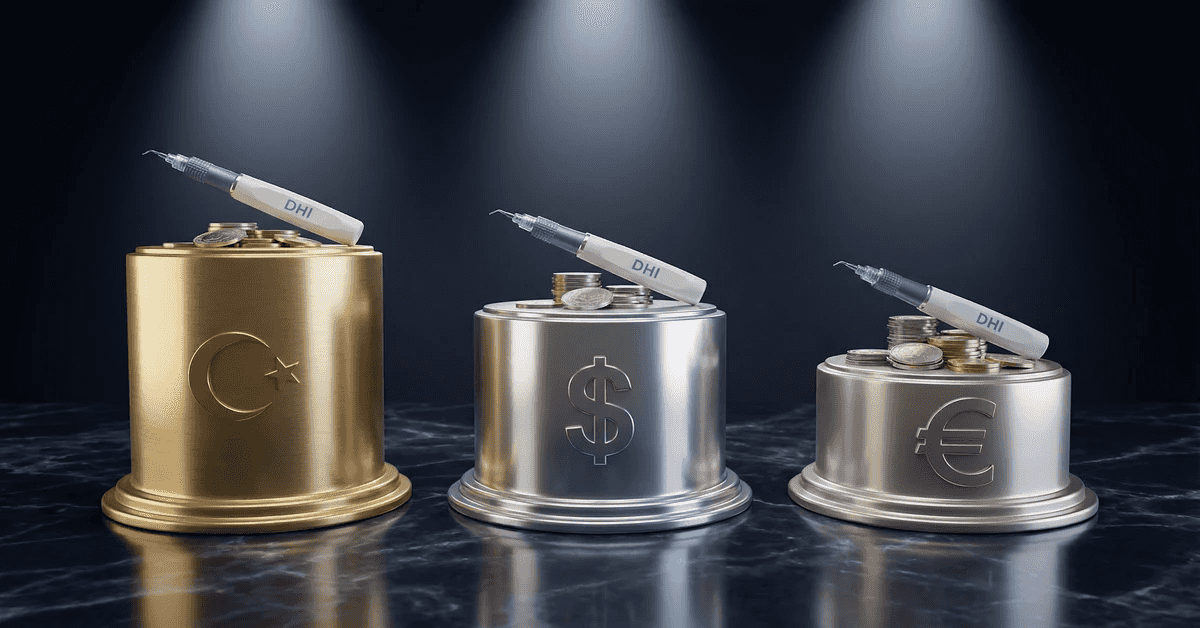
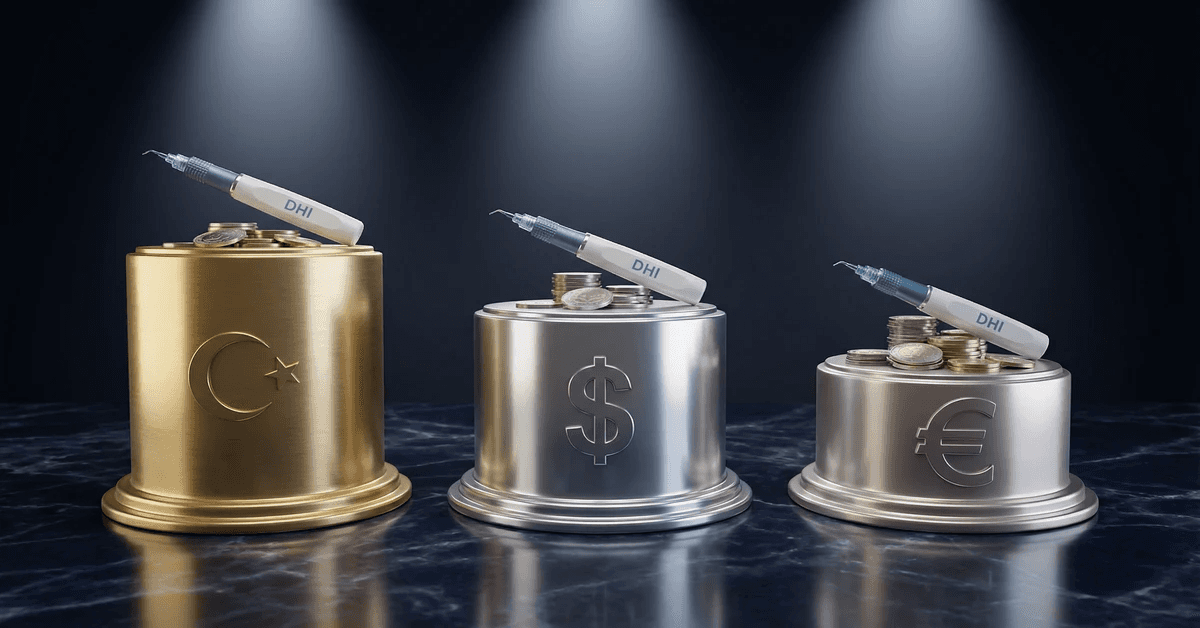
Hair-transplant prices can differ dramatically between Turkey, the United States and Germany.
An Istanbul package may include surgery, accommodation and transfers for less than the surgical fee alone in some American or German clinics.
That makes the comparison appear simple.
But the better question is not:
Which country is cheapest?
It is:
What is the total cost of receiving an appropriate treatment plan, who performs the surgery and what is actually included in the quotation?
A $2,000 package and a $10,000 procedure may not represent equivalent care.
This Safemedigo guide explains how to compare hair-transplant costs in Turkey, the USA and Germany using total treatment cost rather than headline price alone.
How much does a hair transplant cost in each country?
There is no national fixed price.
Cost depends on:
Graft requirements.
Hair-loss extent.
Surgeon.
City.
Facility.
Harvesting method.
Implantation approach.
Complexity.
Package structure.
Turkey
Current October 2026 market data lists many Turkish hair-transplant offers beginning around $1,500, with typical quoted ranges increasing according to technique, clinic and package content.
Bookimed currently describes a general Turkish range around $1,500–$2,200, while DHI and selected premium packages may start higher.
However, Turkey contains an extremely broad market.
There are low-cost packages, mid-range clinics and substantially more expensive physician-led practices.
There is no single “Turkey price.”
United States
The US market is usually considerably more expensive.
RealSelf reports an average of approximately $10,153 for hair-transplant surgery overall and around $11,229 for FUE, with some reported procedures exceeding $20,000.
Per-graft pricing is also common.
The final cost depends heavily on location, surgeon and required graft number.
Germany
German pricing often sits above Turkish package pricing but may remain below some high-end US practices.
Current 2026 Bookimed data lists general transplantation in Germany from around $4,500, with some procedures such as body-hair or no-shave transplantation starting higher.
These are market indicators rather than guaranteed quotations.
Why is Turkey usually less expensive?
A procedure's price reflects the economics of delivering care.
Factors include:
Labour costs.
Facility costs.
Currency.
Competition.
Patient volume.
International medical-tourism infrastructure.
Turkey has a large international hair-transplant market, which has encouraged fixed-package pricing.
Lower operating costs can produce lower prices without automatically proving lower quality.
However, low price also does not guarantee good value.
Does a higher US or German price guarantee better care?
No.
Higher pricing may reflect:
Surgeon fees.
Facility costs.
Staffing costs.
Insurance.
Local cost of living.
Longer physician involvement.
None of these automatically guarantee superior hairline design, donor management or graft growth.
Price and quality need to be evaluated separately.
Are you actually comparing the same procedure?
Consider two quotations.
Clinic A
$2,500 FUE package.
Clinic B
$10,000 FUE procedure.
At first glance Clinic A appears four times cheaper.
But you still do not know:
Graft count.
Doctor involvement.
Who harvests.
Who creates recipient sites.
Facility type.
Follow-up.
Additional fees.
Price comparisons are meaningless without treatment-plan comparisons.
How does graft count affect price?
In many markets, graft number is one of the biggest cost drivers.
United States
Per-graft pricing is common.
If a clinic charges $5 per graft and recommends 2,500 grafts, the theoretical graft-based price is:
$12,500
Some practices instead use tiered pricing or procedural fees.
Turkey
Fixed package pricing is much more common.
A clinic may charge one fee within a certain graft range.
This can simplify budgeting but makes cost-per-graft comparisons less useful.
Is flat package pricing better?
Not automatically.
It provides cost predictability, but the package should never encourage unnecessary harvesting.
Donor hair is finite.
Read our hair-transplant donor-area guide.
Is cost per graft a useful quality metric?
No.
It is a pricing metric.
A $2 graft is not necessarily better value than a $5 graft.
Outcome depends on:
Follicular-unit selection.
Extraction.
Transection.
Graft handling.
Storage.
Distribution.
Recipient-site direction.
Hairline planning.
Grafts and hairs are not the same
One follicular-unit graft can contain one, two, three or more hairs.
Therefore:
5,000 hairs
is not equivalent to:
5,000 grafts.
A quotation should clearly state what is being counted.

What should the surgical price include?
Ask for a written quotation.
Clarify whether it includes:
Medical assessment.
Surgery.
Local anaesthesia.
Surgical supplies.
Blood tests.
Medication.
First wash.
Postoperative kit.
Follow-up.
PRP if part of the plan.
What may cost extra?
Potential additional costs include:
Consultation.
Tests.
Prescription medication.
Additional treatments.
Hotel.
Airfare.
Transfers.
Extra nights.
Local follow-up after returning home.
“All-inclusive” has no universal definition.
What does an all-inclusive Turkish package mean?
It may include:
Procedure.
Hotel.
Airport transfers.
Clinic transportation.
Medication.
First wash.
But packages vary widely.
Ask exactly how many hotel nights are included and whether flights, companion costs or extra medication are excluded.
Does a free hotel automatically make the package better value?
No.
Accommodation is a travel benefit, not a measure of surgical quality.
Separate:
Medical value
from:
Travel convenience.
A luxury hotel cannot compensate for poor donor planning.
What is the real total cost of treatment in Turkey?
For an international patient, calculate:
Procedure.
Airfare.
Hotel if excluded.
Local transport.
Food.
Medication.
Additional nights.
Follow-up after returning home.
This gives you total trip cost, which is much more useful than package price.
A simple example
Suppose:
Turkish package: $2,500
Flights: $600
Additional expenses: $300
Total:
$3,400
If a comparable local US treatment is $8,000, Turkey may still represent a major saving.
But a second trip, revision or unexpected follow-up can change the long-term equation.
What about Germany?
For a patient living in Germany, local treatment may eliminate:
Flights.
Hotels.
International travel days.
Cross-border coordination.
So comparing $2,000 in Turkey with $5,000 in Germany without travel and follow-up costs is incomplete.
Time also has a cost
Treatment abroad may require:
Time away from work.
Travel days.
Companion travel.
Childcare.
Extended stay if needed.
These may not appear on a clinic invoice but still affect your total decision.
Is FUE more expensive than FUT?
It can be, particularly in markets using time-intensive per-graft pricing.
RealSelf notes that FUE may be priced higher than FUT by some American surgeons because individual extraction can require substantially more time.
However, modern Turkish transplantation is heavily FUE-based.
Is DHI more expensive?
Some clinics charge more for DHI.
DHI commonly refers to implantation using an implanter rather than a completely different harvesting technique.
Before paying a premium, ask what changes medically and why it is appropriate for your case.
Read our FUE vs DHI guide.
Should Sapphire FUE cost more?
Not necessarily.
Sapphire usually refers to the material used for recipient-site blades.
The blade name alone is not a quality measure.
Ask what meaningful difference justifies the additional price.
How does physician involvement affect cost?
This can be one of the largest differences between clinics.
Some treatment models involve the physician extensively in:
Planning.
Hairline design.
Harvesting.
Recipient-site creation.
Implantation.
Other models rely more heavily on large teams.
Greater physician involvement can increase cost.
The useful question is what level of medical involvement you are paying for.
Read our guide to choosing a hair-transplant doctor and clinic.
Does body-hair transplantation cost more?
Often.
Beard or body-hair extraction can require extra planning, time and technical work.
Current market data in Germany and Turkey commonly lists body-hair transplantation above basic scalp-transplant entry prices.
What about no-shave procedures?
No-shave transplantation may cost more because it can be more time-consuming and technically demanding.
Not every patient needs it.
Do not pay a premium solely to avoid shaving unless it genuinely matters to your treatment goals.
The hidden cost of a second procedure
This is often forgotten.
A transplant does not stop androgenetic alopecia.
If native hair continues thinning, another procedure may be needed years later.
Therefore, compare:
today's surgery price
and
your long-term hair-restoration plan.
Is a very low price a red flag?
Not by itself.
But unusually low pricing should trigger additional questions:
Who is the physician?
Who performs surgery?
How many patients are treated daily?
How was graft count determined?
What facility is used?
What follow-up is available?
The concern is not cheap treatment itself.
The concern is cost reduction at the expense of medical oversight or donor safety.
Does high price mean better quality?
No.
High price can reflect:
Location.
Branding.
Operating costs.
Demand.
You still need to verify the medical value.
How should Turkey, the USA and Germany be compared?
Use the same categories.
| Cost Item | Turkey | USA | Germany |
|---|---|---|---|
| Responsible physician | |||
| Graft number | |||
| Reason for graft count | |||
| Physician involvement | |||
| Facility | |||
| Medication | |||
| Testing | |||
| Follow-up | |||
| Hotel | |||
| Transfers | |||
| Flights | |||
| Total cost |
Only then is the comparison meaningful.
What should you obtain in writing?
Before paying, request:
Physician name.
Surgical facility.
Actual procedure.
Estimated graft number.
Team responsibilities.
Total price.
Included services.
Exclusions.
Cancellation/change terms.
Post-travel follow-up plan.
Why shouldn't you rely on “70% cheaper”?
Because one percentage cannot represent the entire market.
In one case Turkey may be more than 70% cheaper.
In another, the difference may be much smaller.
The result depends on surgeon, city, graft number, package and travel.
Ranges and like-for-like comparisons are more useful than marketing percentages.
Which country offers the best value?
There is no universal answer.
Value is roughly:
quality and suitability of the plan relative to total cost.
Turkey can offer excellent value in an appropriate clinic.
It can also offer very low-cost treatment that is unsuitable for a particular patient.
A more expensive local option in the US or Germany may be preferable for someone who prioritises direct physician access and local follow-up.
When can Turkey make financial sense?
Particularly when:
The price difference is substantial.
The physician and clinic are appropriate.
Package contents are clear.
Travel is manageable.
Follow-up is organised.
When may local treatment make more sense?
When:
The cost difference is limited.
Frequent follow-up is needed.
The case is complex.
Travel is difficult.
You already have a trusted local surgeon.
Don't choose a doctor based on the country alone
Do not start with:
Turkey is cheaper, so I will go there.
or:
America costs more, so it must be better.
Start with diagnosis, surgeon and treatment plan.
Compare countries and costs after that.
Conclusion
Hair transplantation in Turkey is generally less expensive than in the United States and Germany, partly because of operating-cost differences and the widespread use of packages for international patients.
Lower price does not automatically mean better value, just as a higher price does not guarantee higher quality.
A proper comparison should include graft number, donor assessment, physician involvement, facility, medication, follow-up, accommodation, travel and the possibility of future surgery.
The better goal is not to find the cheapest country, but to find the treatment plan that offers the right balance of medical safety, donor preservation, expected outcome and total cost.
If you are comparing a hair-transplant quotation in Turkey with one in the USA or Germany, Safemedigo can help review the treatment plan, graft estimate, package inclusions and total expected cost before you decide to book. Contact Safemedigo on WhatsApp.
Frequently Asked Questions
Is a hair transplant cheaper in Turkey than in the USA?
Usually, yes. However, airfare, additional expenses, physician involvement, graft number and package content should be included before calculating the true difference.
How much does a hair transplant cost in the United States?
Prices vary substantially. Current US market data shows averages around $10,000–$11,000, with both lower and considerably higher quotations available.
Is Germany more expensive than Turkey?
Usually, but a German resident may avoid flights and accommodation and benefit from easier local follow-up.
Are all-inclusive Turkish packages actually cheaper?
They can be, particularly when accommodation and transfers would otherwise be additional expenses, but “all-inclusive” does not have one standard definition.
Should I choose the lowest cost per graft?
No. Cost per graft is a pricing measure, not a quality score. Safe donor management, planning and appropriate medical involvement are more important.