




Platelet-rich plasma, commonly called PRP, has become a popular non-surgical treatment for hair loss. It is sometimes marketed as a way to regrow hair or as an alternative to medication or hair transplantation.
The evidence requires a more balanced interpretation.
Research suggests that PRP can improve hair density in some patients, particularly those with androgenetic alopecia, but results vary and there is no universally standardised PRP preparation or treatment schedule.
A 2024 systematic review found potential improvements in hair density while highlighting high heterogeneity, publication bias and low-quality evidence. A larger 2025 review incorporating 43 randomised trials and 1,877 participants also reported supportive evidence for selected PRP protocols.
PRP is therefore better understood as a potentially useful adjunct for appropriately selected patients—not a guaranteed solution for every form of hair loss.
What is PRP?
PRP stands for Platelet-Rich Plasma.
It is prepared from the patient's own blood.
How is it prepared?
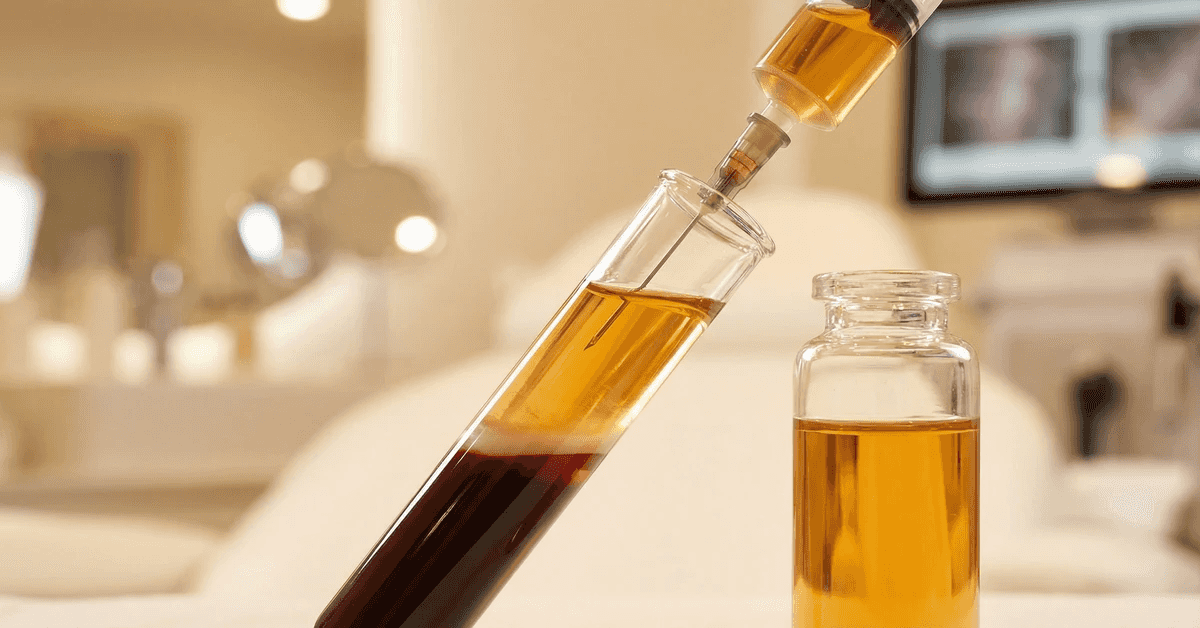
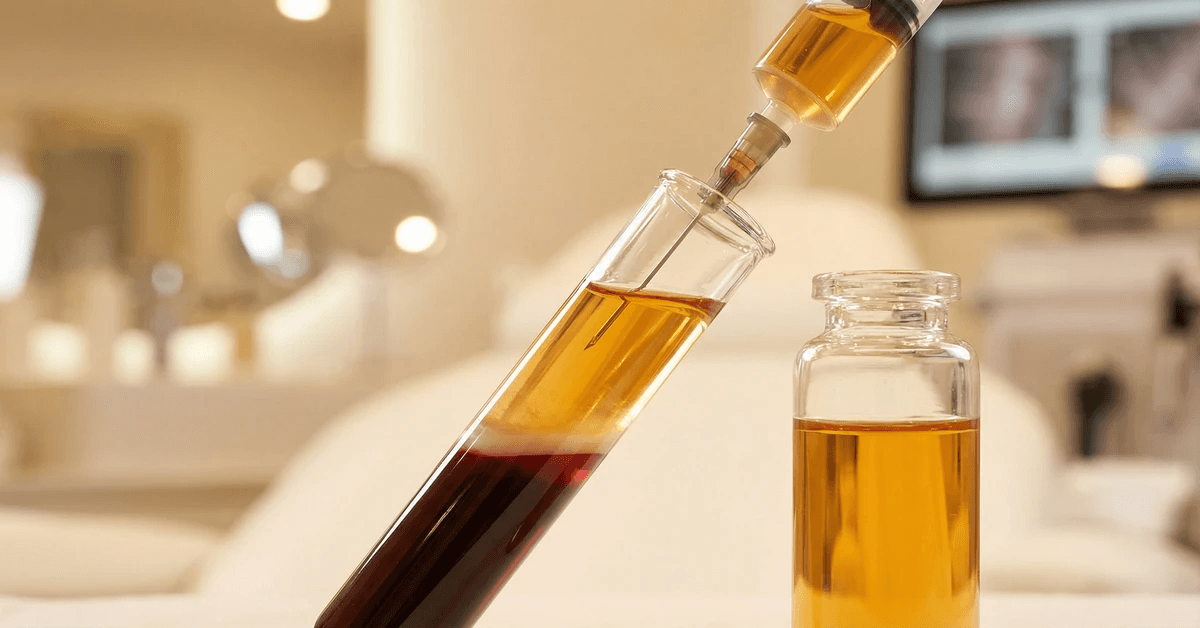
The general process involves:
Drawing blood.
Processing it in a centrifuge.
Separating blood components.
Collecting plasma with an increased platelet concentration.
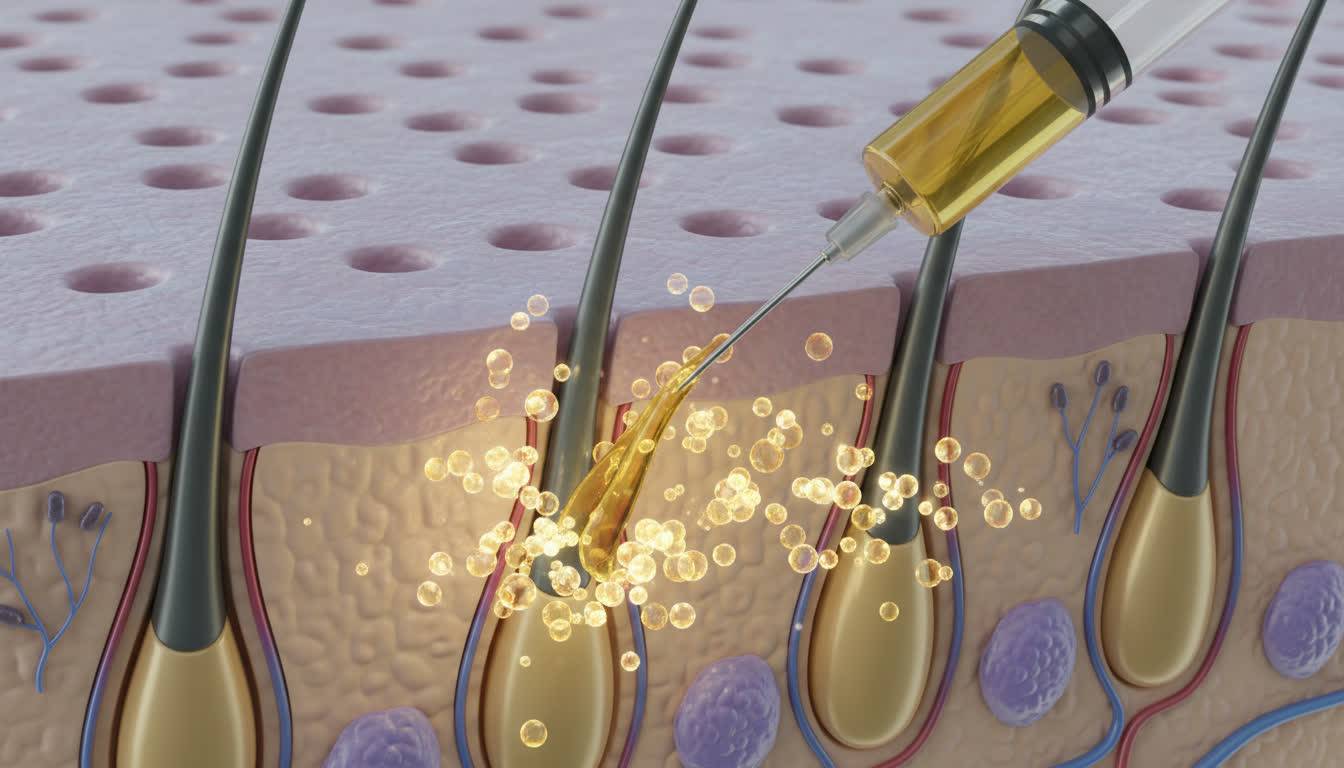
Injecting it into selected scalp areas.
Different PRP systems can produce substantially different final preparations.
Why are platelets used?
Platelets contain growth factors and signalling molecules involved in tissue repair and cellular activity.
PRP treatment aims to expose existing follicles and surrounding tissues to a concentrated preparation of these biological signals.
This does not mean that new follicles are created.
Can PRP regrow hair?
It depends on what "regrow" means.
When follicles remain but are miniaturised
PRP may help improve:
Hair density.
Hair shaft calibre.
Visible coverage.
Follicular activity.
When follicles have been lost
PRP cannot create a new follicular population in a long-standing bald area.
Hair transplantation may be more relevant when the goal is to replace established loss.
Which type of hair loss has the strongest evidence?
PRP has been studied most extensively for androgenetic alopecia, including male and female pattern hair loss.
Several systematic reviews and randomised trials report improvements in hair density in some patients, while also demonstrating considerable variation between protocols and study quality.
Can men with male pattern baldness benefit?
Selected men may benefit, particularly when miniaturised follicles are still present.
The objective may be to improve existing density rather than reconstruct completely bald regions.
PRP does not directly replace treatments that address androgen-related progression.
Read our male pattern baldness guide.
Can women benefit from PRP?
Selected women with female pattern hair loss may be considered for PRP.
However, female hair loss has many possible causes.
Before treatment, the clinician may need to consider:
Iron deficiency.
Thyroid disease.
Telogen effluvium.
PCOS.
Postpartum shedding.
Alopecia areata.
Scarring alopecia.
PRP should not replace diagnosis.
Read our female hair loss guide.
Does PRP treat telogen effluvium?
PRP should not automatically be considered the primary treatment for telogen effluvium.
The priority is to identify and address the trigger.
Potential triggers include illness, childbirth, surgery, rapid weight loss, nutritional problems and medication changes.
Can PRP treat iron deficiency hair loss?
No.
If iron deficiency is contributing to shedding, the deficiency itself should be investigated and treated.
The same principle applies to thyroid or nutritional disorders.
What about alopecia areata?
PRP has also been investigated in other alopecias, but evidence and established treatment pathways vary.
Alopecia areata is an autoimmune disorder and requires condition-specific assessment.
PRP should not automatically replace established management.
What about scarring alopecia?
Active scarring alopecia requires control of the inflammatory disease.
Once follicles have been permanently destroyed and replaced by scar tissue, PRP cannot recreate them.
This is why diagnosis comes before regenerative or cosmetic treatment.
How might PRP affect follicles?
Potential mechanisms include effects on:
Follicular cells.
Local vascular signalling.
Hair-cycle activity.
The surrounding tissue environment.
Mechanistic plausibility, however, is not the same as guaranteed clinical effectiveness.

Why are PRP study results so variable?
Because PRP is not one standardised product.
Protocols can differ in:
Blood volume.
Centrifugation method.
Number of spins.
Platelet concentration.
Leukocyte content.
Activation method.
Injection volume.
Modern reviews identify this lack of standardisation as one of the major limitations in interpreting and comparing PRP studies.
How many PRP sessions are needed?
There is no universally established schedule.
Different clinical studies have used different induction and maintenance protocols.
For that reason, a statement such as "three sessions followed by treatment every six months" should not be presented as a universal medical rule.
The schedule should depend on diagnosis, protocol and response.
When can results be seen?
Hair growth takes months.
Response should therefore be evaluated over an appropriate period rather than days after injection.
Monitoring may include:
Standardised photographs.
Hair density.
Hair calibre.
Trichoscopy.
Does PRP increase follicles or make hair thicker?
PRP does not normally create new follicular units.
Its potential benefit is more relevant to follicles that remain biologically active.
Improvement may therefore appear as greater density or thicker existing hairs.
Is PRP better than minoxidil?
Current evidence does not support a simple universal conclusion that PRP is always superior.
Recent systematic comparisons suggest that both PRP and topical minoxidil can improve measures of androgenetic alopecia, but studies remain heterogeneous.
For some patients, the options may be combined rather than treated as competitors.
Is PRP an alternative to finasteride?
They act through different mechanisms.
Finasteride targets DHT-related androgenetic progression in suitable men, while PRP is a local autologous biological treatment.
One should not automatically be substituted for the other.
Can PRP be combined with medical therapy?
Yes, selected patients may receive PRP alongside treatments such as minoxidil or other medically appropriate therapies.
However, every component should have a clear purpose.
More treatments do not automatically mean better results.
Is PRP an alternative to hair transplantation?
No.
PRP and transplantation address different problems.
PRP
Attempts to improve existing follicles.
Hair transplantation
Moves donor follicles into areas where coverage has been lost.
PRP cannot substitute for transplantation when there is insufficient follicular coverage to stimulate.
Is PRP necessary with a hair transplant?
No.
Some clinics use PRP around hair transplantation, but it is not a requirement for a successful transplant.
Core transplant outcomes depend on factors such as:
Candidate selection.
Donor management.
Graft harvesting.
Graft handling.
Hairline design.
Implantation.
Healing.
Does PRP guarantee better survival of transplanted grafts?
No fixed improvement can be guaranteed.
Research has explored PRP as an adjunct to transplantation, but evidence does not justify promising a specific survival percentage.
Can PRP repair a failed hair transplant?
It cannot correct structural surgical problems such as:
An unnatural hairline.
Incorrect angulation.
Donor overharvesting.
Scarring.
Poor graft distribution.
Selected native hairs may potentially benefit, but PRP is not revision surgery.
Read our failed hair transplant and revision guide.
What happens during a PRP session?
The usual process involves:
Blood collection.
Centrifugation.
PRP preparation.
Scalp cleaning.
Multiple small injections.
Anaesthesia and injection patterns vary between clinics.
Is PRP painful?
Scalp injections can cause discomfort.
Pain varies with individual sensitivity, injection number and anaesthesia technique.
PRP should not be described as completely painless for everyone.
What are common side effects?
Temporary effects can include:
Injection-site pain.
Tenderness.
Redness.
Mild swelling.
Bruising.
Temporary headache.
Published trials generally describe PRP as well tolerated, although no invasive treatment is risk-free.
When should a doctor be contacted?
Seek medical review for symptoms such as:
Severe or increasing pain.
Spreading redness.
Pus or drainage.
Significant swelling.
Fever.
Abnormal skin changes.
These should not simply be considered expected PRP reactions.
Who may be a good candidate?
PRP may be reasonable to discuss when a patient has:
Confirmed androgenetic alopecia.
Existing but weakened follicles.
Realistic expectations.
A clear diagnosis.
Interest in an adjunctive non-surgical treatment.
Who needs additional assessment first?
Particular care is needed with:
Unexplained sudden hair loss.
Active scalp disease.
Blood or platelet disorders.
Medications affecting bleeding or platelets.
Significant medical conditions.
Pregnancy or other circumstances requiring individual medical review.
Does the patient's blood affect the PRP product?
Yes.
Blood composition and the resulting platelet preparation can vary between individuals.
This is another reason why one PRP treatment is not necessarily identical to another.
Does a higher platelet concentration mean better results?
Not automatically.
Biological response is not necessarily a simple "more is better" relationship.
Treatment should not be chosen solely because a clinic advertises the highest platelet concentration.
What is the difference between PRP and PRF?
PRF stands for platelet-rich fibrin and uses a different preparation approach.
It is increasingly marketed for hair treatment, but newer terminology does not automatically establish superior clinical efficacy.
Protocol-specific evidence is more useful than marketing labels.
What about PRP plus microneedling?
Combination treatment is used in some settings.
However, when several interventions are performed together, it becomes more difficult to determine how much benefit comes from each component.
Both purpose and safety should be assessed individually.
Does PRP prevent future baldness?
It should not be described as a guarantee against future hair loss.
Androgenetic alopecia is chronic and may continue over time.
Long-term management may require ongoing treatment or transplantation in selected patients.
What is a realistic expectation?
For the right patient, realistic goals may include:
Reduced shedding.
Improved visible density.
Increased calibre of some existing hairs.
It is not realistic to promise:
Creation of new follicles.
Restoration of youthful density.
Cure of every alopecia.
A fixed success percentage.
How should results be assessed?
Use standardised before-and-after evaluation.
Photographs should ideally use similar:
Lighting.
Angles.
Hair length.
Hair parting.
Trichoscopy or objective density measurements can also help in some clinics.
How should you choose a PRP clinic?
Ask:
What is my diagnosis?
Why is PRP appropriate for me?
Which preparation system is used?
What is the treatment schedule and why?
How will response be measured?
Do I need treatment for the underlying cause?
A clinic that recommends PRP to every person with hair loss without first establishing a diagnosis is not following the most useful decision pathway.
Is PRP worth trying?
For selected patients, it can be a reasonable adjunct to discuss.
It is most rational when follicles remain, the diagnosis is appropriate and expectations are realistic.
It is much less useful when the underlying cause has not been addressed, follicles are permanently absent or an active destructive scalp disease is present.
Conclusion
PRP is an autologous, minimally invasive treatment studied most extensively for androgenetic alopecia. Current evidence suggests that it can improve hair density in selected patients, but wide variation in preparation methods and treatment protocols prevents a single guaranteed success rate or universal session schedule.
PRP does not create new follicles and should not replace diagnosis, treatment of an underlying medical cause or hair transplantation when established baldness requires redistribution of donor follicles.
Safemedigo can help review your hair-loss pattern, available reports and photographs and coordinate an assessment to determine whether PRP or another treatment is more appropriate. Contact Safemedigo on WhatsApp.
Frequently Asked Questions About PRP for Hair Loss
Can PRP grow hair in a completely bald area?
It may improve existing weakened follicles but cannot normally create new follicles in an area where they have been permanently lost.
How many PRP sessions are required?
There is no universal schedule. Session number and intervals depend on diagnosis, preparation protocol and individual response.
Is PRP better than minoxidil?
Not universally. Both may benefit selected androgenetic alopecia patients, and they may sometimes be used together.
Is PRP necessary after hair transplantation?
No. It may be used as an adjunct in some protocols but is not essential for a successful transplant.
How long does PRP take to show results?
Hair response should be assessed over several months rather than after one session or within a few weeks.