





Female hair loss is a deeply personal issue that extends far beyond aesthetics, often impacting self-esteem and emotional well-being. The journey to find the best treatment for female hair loss can be complex, as the causes range from hormonal fluctuations and nutritional deficiencies to genetics and stress. Fortunately, medical science has made significant strides, introducing modern treatments for female hair loss that offer real hope and effective solutions.
At Safemedigo, we understand the sensitive nature of this condition and are committed to providing the most advanced female hair loss treatment available. Our team of experts in Turkey, a leading destination for medical tourism, leverages cutting-edge technology and a compassionate approach to address female hair loss causes and treatments. We are here to guide you through every step, helping you understand your unique situation and choose the optimal therapeutic path to restore your hair’s vitality and your confidence.
Female Hair Loss Treatment: Why It Happens
Understanding the root cause of hair loss is the foundational step toward effective treatment. A proper diagnosis distinguishes between normal daily shedding and a medical condition requiring intervention. Identifying the specific triggers allows for a targeted female hair loss therapy that addresses the problem at its source, rather than just managing the symptoms.
Common reasons behind female hair loss treatment, such as hormonal imbalance and nutrition
Female hair loss causes and treatments are intricately linked. Hormonal female hair loss treatment is frequently required due to conditions like Polycystic Ovary Syndrome (PCOS), thyroid disorders, or changes during menopause and pregnancy. Nutritional deficiencies are another major culprit; inadequate intake of iron, zinc, and essential vitamins can disrupt the hair growth cycle. Other common factors include genetic predisposition, known as female pattern hair loss, severe stress, autoimmune diseases, and certain medications. Each of these factors requires a unique approach to create an effective female hair loss treatment plan.
Read about: Latest Hair Transplant Techniques for Men and Women in Turkey
When hair loss in women signals the need for treatment
While losing 50-100 hairs per day is normal, certain signs indicate that it’s time to seek professional help. You should consider seeking hair loss treatment for women if you notice:
• A significant increase in the amount of hair you shed daily.
• Visible thinning, especially at the crown of the head or a widening part.
• A receding hairline or bald patches.
• Your ponytail feeling noticeably thinner.
• Hair loss accompanied by scalp itching, redness, or pain.
Early intervention is key to preventing further loss and achieving the best results from any female hair loss treatment.
Read about: Advantages and Expected Results of DHI Hair Transplant Technique
Best Treatment for Female Hair Loss: An Overview
Navigating the world of female hair loss solutions can be overwhelming. The best treatment for female hair loss is not a one-size-fits-all solution but rather a personalized strategy based on a thorough diagnosis. The options range from clinically proven medications to the latest technological advancements in regenerative medicine.
Medical treatments, including medications and clinical therapies
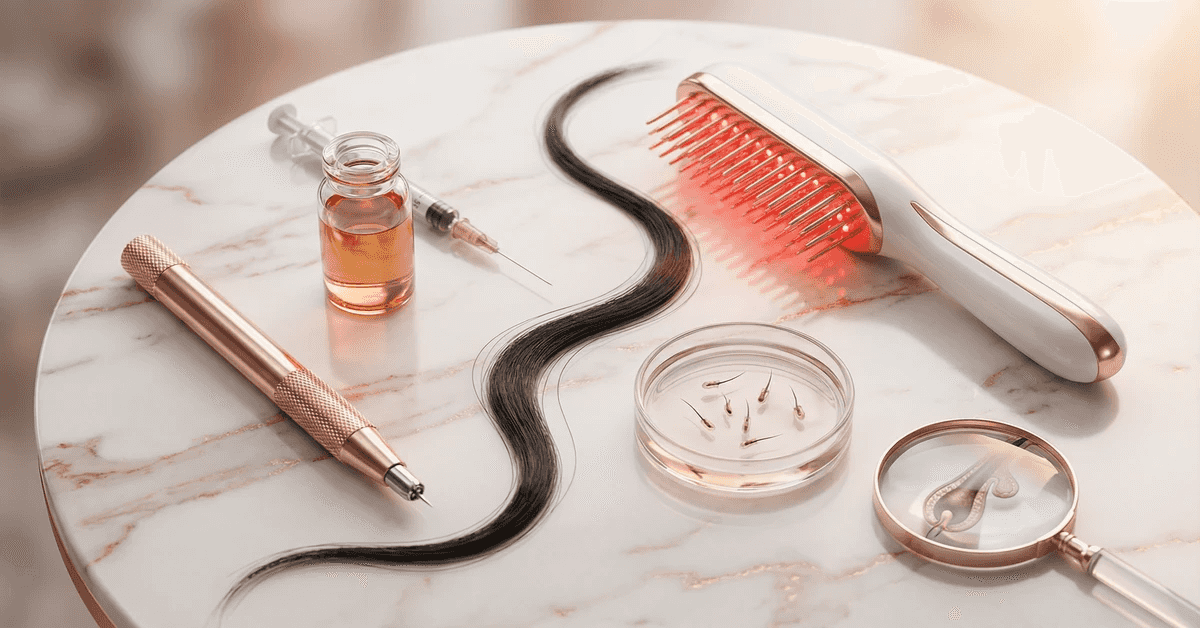
For many women, the first line of defense includes medical treatments. Minoxidil (Rogaine) is the only FDA-approved topical medication for female pattern hair loss treatment. It works by prolonging the growth phase of hair follicles. Oral medications like Spironolactone may be prescribed for hormonal female hair loss treatment by blocking the effects of androgens. Clinical therapies, such as Platelet-Rich Plasma (PRP), have also become a cornerstone of advanced hair loss treatment for women, using the body's own growth factors to stimulate follicles.
Read about: Hair PRP Injections: Is It Worth Trying
When to adopt modern treatments for female hair loss
It is time to consider modern treatments for female hair loss when traditional methods are not yielding desired results, or when you are looking for a more proactive and regenerative approach. These advanced therapies are ideal for women experiencing significant thinning or for those who want to enhance the results of conventional treatments. Cutting-edge female hair loss treatment options like low-level laser therapy and regenerative medicine offer innovative ways to stimulate hair growth with minimal downtime, making them a popular choice for a comprehensive female hair loss therapy plan.
Modern Treatments for Female Hair Loss: Latest Techniques
The field of dermatology is constantly evolving, bringing forth innovative and modern treatments for female hair loss that promise better outcomes with less invasive methods. These techniques focus on stimulating the scalp's natural regenerative capabilities to foster a healthy environment for hair growth.
Platelet-rich plasma therapy and scalp injections
Platelet-Rich Plasma (PRP) therapy is a leading female hair loss regenerative treatment. The procedure involves drawing a small sample of the patient's blood, processing it to concentrate the platelets, and then injecting this platelet-rich plasma into the scalp. These platelets release powerful growth factors that stimulate dormant hair follicles, increase blood supply, and promote new hair growth. It is a safe and effective non-surgical hair loss treatment for women experiencing thinning and pattern hair loss.
Non-surgical approaches, such as low-level laser therapy, for female hair loss
Low-Level Laser Therapy (LLLT) is another powerful tool in the arsenal of non-surgical hair loss treatment for women. This therapy uses medical-grade lasers to deliver low-level light energy directly to the scalp. The light is absorbed by the cells in the hair follicles, stimulating cellular activity and promoting blood flow. This process, known as photobiomodulation, helps to extend the growth phase of the hair cycle and can lead to thicker, healthier hair over time. It is a painless, convenient option that can be performed in a clinic or with at-home devices.
If you are looking for an accurate assessment or a safe treatment supervised by top doctors, contact Safemedigo now via WhatsApp, and our team will assist you directly.

Hormonal Female Hair Loss Treatment: How to Address It
Hormonal female hair loss treatment requires a targeted approach because it stems from internal imbalances. Successfully managing this type of hair loss involves identifying and addressing the specific hormonal issue, often combining medical intervention with supportive lifestyle changes.
Diagnosing hormonal causes like PCOS or thyroid in women
The diagnostic process is critical. A healthcare provider will typically order a series of blood tests to create a comprehensive fertility hormone panel and check for hormonal irregularities. This includes testing thyroid hormones (TSH, T3, T4) to rule out hypothyroidism or hyperthyroidism, and measuring androgen levels (like testosterone) to detect conditions such as Polycystic Ovary Syndrome (PCOS). A thorough medical history and physical examination help complete the picture, ensuring the hormonal female hair loss treatment plan is based on a precise diagnosis.
Read about: Detailed Comparison Between FUE and DHI Hair Transplant Methods
Lifestyle and medical interventions for hormonal female hair loss treatment
Once a hormonal imbalance is confirmed, treatment can begin. Lifestyle modifications, including a balanced diet, regular exercise, and stress management techniques, can help regulate hormones naturally. Medical interventions are often necessary and may include thyroid medication to correct a thyroid imbalance or oral contraceptives to regulate hormones in women with PCOS. Medications like Spironolactone, an anti-androgen, are also commonly prescribed to counteract the effects of excess androgens on the hair follicles, forming a key part of the hair loss treatment for women.
Female Hair Thinning Treatment: Natural and Supportive Methods
While medical interventions are crucial, a holistic approach that includes natural and supportive methods can significantly enhance the effectiveness of any female hair thinning treatment. These daily habits and routines help create the optimal foundation for healthy hair growth.
Nutritional and topical routines to support female hair thinning treatment
Nutrition plays a vital role. A diet rich in protein, iron, zinc, and vitamins is essential for building strong hair. Foods like lean meats, fish, leafy greens, nuts, and seeds should be staples. Topically, using gentle, sulfate-free shampoos and conditioners can prevent scalp irritation. Incorporating natural oils like rosemary, peppermint, or lavender oil through scalp massages can stimulate circulation and provide essential nutrients directly to the follicles. These practices are a simple yet effective part of any female hair loss solutions.
Daily habits and maintenance for female hair thinning treatment
Consistent, gentle care is key. Avoid harsh chemical treatments and tight hairstyles that pull on the hair follicles (traction alopecia). Be gentle when brushing and detangling, especially when your hair is wet and at its most fragile. Managing stress through practices like yoga, meditation, or regular exercise can also have a profound impact, as high stress levels can trigger hair shedding. These daily maintenance habits are a crucial component of a long-term female hair thinning treatment strategy.
Read about: When Do Hair Transplant Results Appear? Complete Timeline Explained
Postpartum Female Hair Loss Treatment: What Every New Mother Should Know
Postpartum female hair loss treatment is a common concern for new mothers. While the experience can be alarming, it is typically a temporary and normal physiological process. Understanding why it happens and how to manage it can alleviate much of the associated stress.
Why does postpartum hair loss happen, and when does it become persistent
During pregnancy, elevated estrogen levels prolong the hair's growth phase, leading to thicker, fuller hair. After childbirth, estrogen levels drop sharply, causing a large number of hairs to enter the resting (telogen) phase simultaneously. This results in excessive shedding, known as telogen effluvium, usually starting around three to four months postpartum. This condition is temporary and should resolve on its own within 6 to 12 months. However, if the hair loss is severe or persists beyond a year, it is important to consult a doctor to rule out other underlying female hair loss causes and treatments like anemia or thyroid issues.
Strategy for postpartum female hair loss treatment, including nutrition, rest, and professional support
While postpartum hair loss usually resolves on its own, a supportive strategy can help manage the condition. Focus on a nutrient-dense diet rich in iron, protein, and vitamins to support hair regrowth, especially if breastfeeding. Prioritize rest and manage stress as much as possible. Be gentle with your hair—avoid harsh treatments and tight styles. Using volumizing shampoos and conditioners can help improve the appearance of your hair during this phase. If you are concerned, seeking professional support can provide reassurance and ensure there are no other contributing factors.
Read about: Hair Transplant Cost in Turkey for 2026: What to Expect
Female Hair Loss Treatment Options: How to Choose the Right Path
Choosing the right path from the many available female hair loss treatment options depends on a careful evaluation of your specific condition, goals, and lifestyle. A consultation with a specialist is the best way to create a personalized and effective plan.
Comparing surgical versus non-surgical female hair loss treatment options
Non-surgical hair loss treatment for women includes options like topical Minoxidil, oral medications, PRP therapy, and LLLT. These are often the first line of treatment and are effective for slowing hair loss and stimulating regrowth in cases of thinning. Surgical options, primarily hair transplantation, are considered when hair loss is advanced or has created areas of baldness. A hair transplant involves moving healthy, growing follicles from a donor area to the thinning or bald area, providing a permanent solution. The choice between them depends on the extent of hair loss and patient preference.
Read about: Robotic Hair Transplant: How It Works and Is It Guaranteed?
Cost, time frame, and expected outcomes of female hair loss treatment options
The cost and time frame for results vary widely among female hair loss treatment options. Topical and oral medications are ongoing commitments and may take 4-6 months to show results. PRP and LLLT involve a series of sessions, with improvements often visible after 3 months. A hair transplant is a one-time procedure with a higher upfront cost, but the results are permanent, with new growth appearing in 3-4 months and final results visible after a year. Discussing these factors with a specialist will help you set realistic expectations.
Are you worried about your hair loss and want to know the real cause? Do not hesitate to contact the expert team at Safemedigo for a free initial consultation via WhatsApp.
Female Hair Loss Therapies Research: Emerging Trends
The future of hair loss treatment is exciting, with ongoing female hair loss therapies research focusing on regenerative medicine and more targeted biological approaches. These emerging trends promise even more effective and personalized solutions.
Regenerative treatments and stem cell-based female hair loss therapies research
Female hair loss regenerative treatment is at the forefront of innovation. Stem cell therapy is a particularly promising area of female hair loss therapies research. This involves harvesting stem cells from the patient's own fat tissue, activating them, and injecting them into the scalp. These stem cells have the potential to differentiate into new follicular cells and release growth factors that can rejuvenate dormant follicles and regenerate hair. While still largely in the research phase, early results are very encouraging.
Clinical studies and suggestions for future female hair loss therapies research
Clinical studies are continuously exploring new female hair loss medications modern and therapies. Future research is likely to focus on developing more targeted treatments that address specific molecular pathways involved in hair loss. This could include gene therapy for hereditary hair loss or new drugs that can more effectively block the hormonal triggers of female pattern hair loss. As our understanding of hair biology deepens, the treatments will become increasingly sophisticated and successful.
Read about: Hair Care Tips After DHI Transplant to Ensure Best Results
Non-Surgical Hair Loss Treatment for Women: When to Consider
Non-surgical hair loss treatment for women offers a wide range of effective options that can significantly improve hair density and health without the need for an invasive procedure. It is the preferred starting point for most women experiencing hair thinning.
Signs you may need non-surgical hair loss treatment for women rather than surgery
You should consider non-surgical options if your hair loss is diffuse (spread out over the scalp) rather than concentrated in bald patches, which is common in female pattern hair loss. It is also the ideal choice if your hair loss is in its early to moderate stages, as these treatments are most effective at slowing progression and stimulating regrowth. If you have an underlying medical condition causing the hair loss, such as a thyroid disorder, treating that condition is a non-surgical approach that must be prioritized.
Best practices and aftercare for non-surgical hair loss treatment for women
Consistency is the most critical factor for success with any non-surgical hair loss treatment for women. Whether it is applying a topical solution daily or attending regular PRP or LLLT sessions, sticking to the prescribed regimen is essential. Aftercare involves maintaining a healthy lifestyle, being gentle with your hair, and following up with your specialist to monitor progress and make any necessary adjustments to your advanced hair loss treatment for women. Combining therapies can often yield the best results.
Read about: Hair Transplant Cost: Turkey vs USA and Germany
Conclusion
In conclusion, the landscape of female hair loss treatment has been transformed by medical innovation, offering a diverse array of effective solutions. From proven medications and supportive natural care to modern treatments for female hair loss like PRP and LLLT, women now have more power than ever to combat hair thinning. The key to success lies in a timely, accurate diagnosis and a personalized treatment plan crafted by experts.
At Safemedigo, we are dedicated to providing exceptional medical care that combines the latest cutting-edge female hair loss treatment with the deep expertise of our specialists in Turkey. Our mission is to help you restore not just your hair, but also your confidence and sense of self.
If you are ready to take the first step toward healthier, fuller hair, our team is here for you. Contact Safemedigo today via WhatsApp for a confidential, personal consultation.
Frequently Asked Questions: Best Modern Methods to Treat Hair Loss in Women
What is the best treatment for hair loss in women?
The best treatment for hair loss in women depends on the underlying cause. For hormonal hair loss, minoxidil and anti-androgen medications may be effective. For thinning cases, platelet-rich plasma (PRP) injections are an excellent option. In cases of advanced baldness, hair transplantation is often the most durable solution.
Can hereditary hair loss in women be treated permanently?
Hereditary hair loss in women cannot be "cured" permanently because it is a genetic condition, but it can be controlled very effectively. Treatments such as minoxidil and PRP injections can slow hair loss and stimulate new growth. Hair transplantation provides a permanent solution for areas that have significantly lost hair by transferring hair loss-resistant follicles to them.
How long does it take to see results from hair loss treatment?
The time varies depending on the treatment. Using minoxidil for women's hair loss may take 4 to 6 months to notice significant improvement. PRP injections usually show their initial results after 3 months of starting sessions. As for hair transplantation, new hair begins to grow after 3-4 months, and final results appear after about 12 months.
Are natural remedies enough to treat hair loss?
Natural remedies for hair loss in women, such as using oils and proper nutrition, are excellent supportive methods that contribute to strengthening hair follicles in women and improving scalp health. However, in cases of moderate to severe hair loss or medical conditions such as hormonal hair loss in women, they are not sufficient on their own and require intervention through medical treatment for hair loss in women.
When should I worry about hair loss after childbirth?
Hair loss after childbirth in women is a natural and temporary condition in most cases, peaking about 4 months after delivery. It should only be a concern if heavy hair loss continues for more than a year after delivery, or if it is accompanied by other symptoms. In this case, it is recommended to visit a doctor to rule out other causes such as hair loss in women and iron deficiency or thyroid problems.