









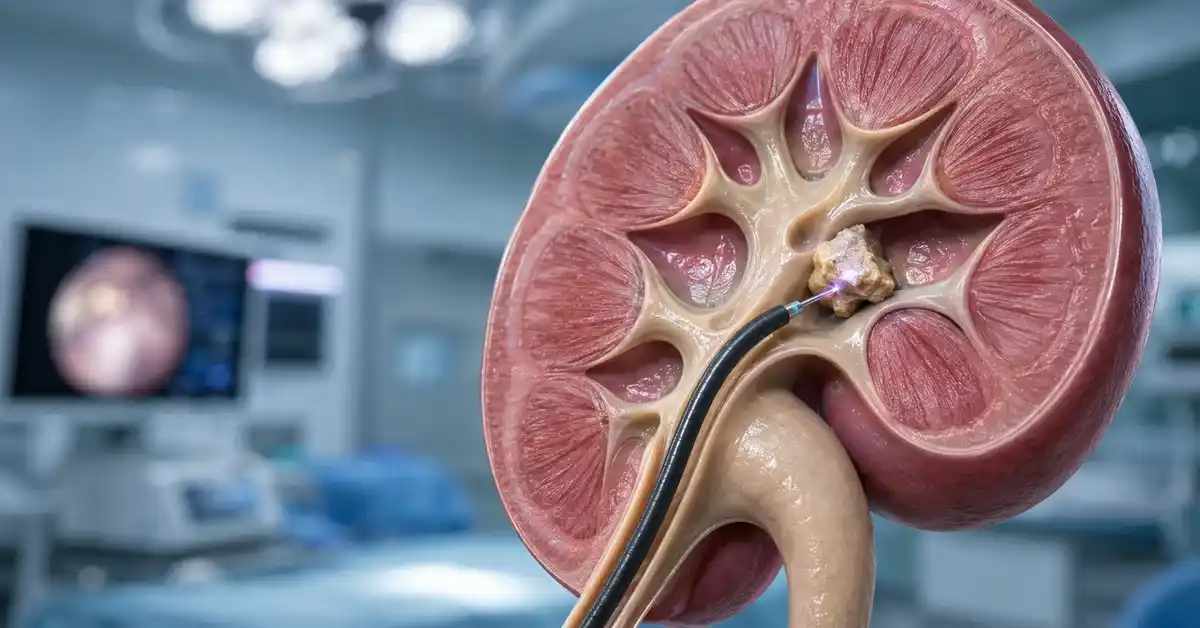
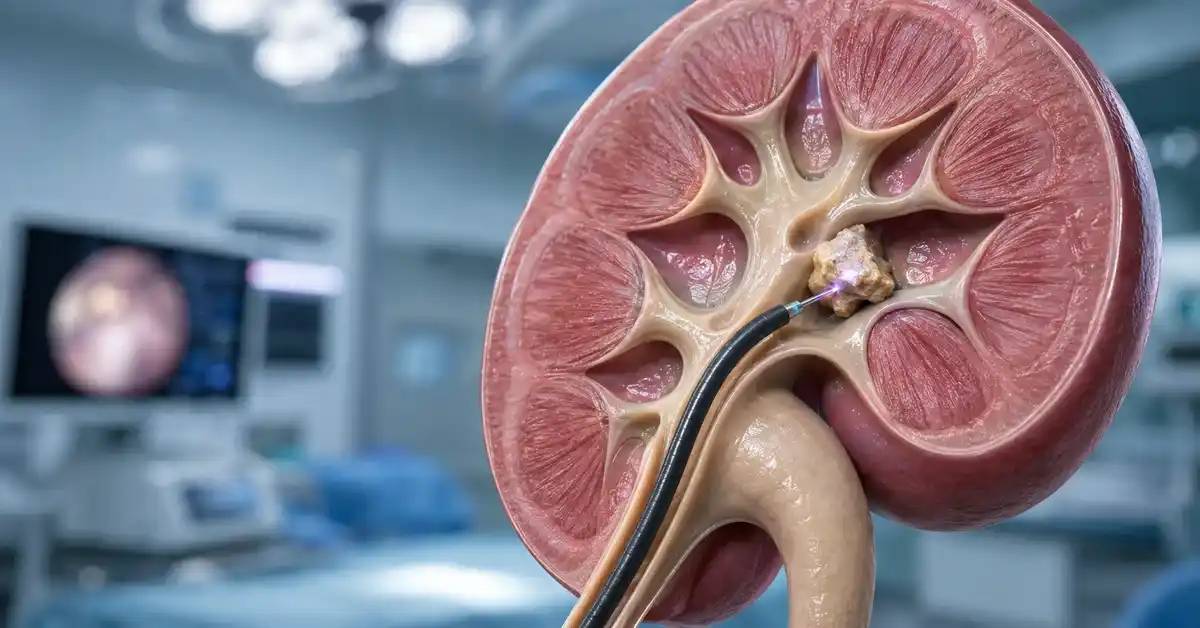
Flexible ureteroscopy for kidney stones is a modern, minimally invasive treatment that allows the urologist to reach stones inside the kidney or upper ureter through the natural urinary tract, usually without an external incision. The procedure is also known as flexible ureterorenoscopy or retrograde intrarenal surgery, and it is commonly combined with laser lithotripsy to break stones into tiny fragments that can be removed or passed naturally through urine.
Kidney stones may cause severe flank pain, blood in the urine, burning during urination, frequent urination, nausea, vomiting, or urinary blockage. Some stones may also be silent and discovered during imaging. Not every stone requires a procedure. Small stones may pass with fluids, pain control, medications, and follow-up, while larger, stuck, painful, obstructing, or infected stones may need active treatment.
Flexible ureteroscopy offers a high level of precision because the scope can bend and reach areas inside the kidney that a rigid instrument may not access easily. With ureteroscopy laser treatment, stones can be fragmented while surrounding tissues are protected as much as possible. However, the best treatment depends on stone size, location, hardness, number of stones, infection status, anatomy, kidney function, and previous stone history.
At Safemedigo, kidney stone treatment planning is based on symptoms, blood and urine tests, imaging results, stone size and location, kidney function, and patient health. The goal is to choose the best treatment for kidney stones, whether that means observation, medication, shockwave lithotripsy, flexible ureteroscopy, rigid ureteroscopy, percutaneous treatment, or another advanced kidney stone treatment.
Flexible Ureteroscopy For Kidney Stones
Flexible ureteroscopy for kidney stones is a precise procedure that reaches stones in the kidney or upper ureter through the urethra, bladder, and ureter. The doctor uses a thin flexible scope with a camera and light to visualize the urinary tract and locate the stone. Once the stone is seen, laser lithotripsy may be used to break it into small pieces.
This treatment is commonly used for small to medium kidney stones, selected upper ureter stones, and stones located in areas of the kidney that are difficult to treat with other methods. It may also be considered when shockwave lithotripsy is unlikely to work well or when a stone has not passed naturally.
Flexible ureteroscopy is not always the best option for every stone. Very large stones, complex stones, infection with obstruction, or staghorn stones may require a different approach, such as percutaneous nephrolithotomy or staged treatment. This is why imaging and specialist evaluation are essential before choosing the procedure.
What Is Flexible Ureteroscopy
Flexible ureteroscopy is a technique that uses a thin, bendable scope to examine and treat stones in the urinary system. The scope is inserted through the natural urinary opening, then passed through the urethra into the bladder and up the ureter. In many cases, it can reach the collecting system inside the kidney.
The flexible design allows the urologist to navigate the kidney’s internal spaces and reach stones that may be difficult to access with a rigid ureteroscope. A rigid scope is often more useful for stones in the lower or middle ureter, while a flexible scope can be better for stones in the upper ureter or kidney.
Although there is usually no external cut, flexible ureteroscopy is still a medical procedure that needs anesthesia, preparation, sterile equipment, and skilled technique. In some patients, a temporary ureteral stent may be placed after the procedure to support drainage and reduce swelling-related blockage.
How Laser Lithotripsy Works
Laser lithotripsy ureteroscopy works by passing a fine laser fiber through the flexible scope until it reaches the stone. The laser energy breaks the stone into smaller fragments. Depending on the stone and the urologist’s strategy, the stone may be dusted into very fine particles or fragmented into pieces that can be removed with a small basket.
The choice between dusting and basket extraction depends on stone size, location, hardness, and anatomy. Some fragments are left small enough to pass in the urine, while larger pieces may be removed during the same procedure to reduce residual stone burden.
A ureteral stent may be placed after laser lithotripsy if there is swelling, ureteral irritation, difficult access, infection risk, or a need to support urine flow. Stents are temporary and may cause urinary frequency, bladder pressure, flank discomfort, or mild blood in the urine until removed.
Benefits Of Minimally Invasive Treatment
Minimally invasive kidney stone removal with flexible ureteroscopy offers several benefits for suitable patients. Because the doctor enters through the natural urinary tract, there is usually no external incision, and recovery may be faster than with larger surgical procedures.
Potential benefits include:
- No external incision in most cases.
- Direct visualization of the stone.
- Precise laser fragmentation.
- Access to stones inside the kidney.
- Useful for stones in difficult locations.
- Short hospital stay in many cases.
- Faster return to daily activities.
- Option to remove fragments with a basket.
- Suitable when shockwave lithotripsy is less effective.
- Lower need for open surgery.
However, minimally invasive does not mean risk-free. The right procedure depends on stone size, location, infection status, and patient-specific factors.
Ureteroscopy Procedure For Kidney Stones
The ureteroscopy procedure for kidney stones is usually performed by a urologist under anesthesia. Before the procedure, the patient undergoes evaluation that may include urine analysis, urine culture, kidney function tests, CT scan or other imaging, and assessment for infection or obstruction.
If there is an active urinary infection, fever, or infected obstruction, the doctor may treat the infection first or place a temporary stent or drainage tube before stone fragmentation. Patient safety is the priority because treating stones in the presence of uncontrolled infection can increase the risk of serious complications.
The details of the procedure vary according to stone location and size. Some cases are straightforward, while larger, multiple, or very hard stones may require longer operative time or more than one session.
Steps Of The Procedure
The steps of flexible ureteroscopy usually begin with anesthesia and positioning in the operating room. The urologist then inserts the scope through the urethra, passes into the bladder, identifies the ureteral opening, and advances toward the stone.
Common steps may include:
- Reviewing imaging before treatment.
- Giving anesthesia.
- Inserting the scope through the urethra.
- Entering the bladder.
- Accessing the ureter.
- Using a guidewire when needed.
- Advancing the flexible scope to the stone.
- Visualizing the stone directly.
- Passing a laser fiber through the scope.
- Fragmenting the stone.
- Removing fragments when needed.
- Checking the treated area.
- Placing a ureteral stent if necessary.
- Monitoring the patient after the procedure.
The exact sequence may differ depending on anatomy, stone size, ureteral narrowing, and whether a stent or second session is required.
Preparation Before Ureteroscopy
Ureteroscopy preparation helps reduce risks and improve the chance of success. The patient should tell the doctor about chronic diseases, blood thinners, allergies, previous urinary procedures, previous stents, current medications, fever, burning urination, or severe pain.
Preparation may include:
- Urine test and urine culture when needed.
- Kidney function tests.
- CT scan or imaging to locate the stone.
- Measuring stone size and number.
- Temporarily stopping certain blood thinners if advised.
- Treating urinary infection before the procedure.
- Fasting instructions before anesthesia.
- Medication review.
- Anesthesia assessment.
- Discussion of possible stent placement.
- Planning transportation after outpatient surgery.
- Fluid instructions before and after the procedure.
If infection is present, stone fragmentation may be delayed until the infection is controlled. This step is important for safety.
Anesthesia And Duration
Anesthesia and duration depend on stone size, stone location, number of stones, stone hardness, ureter and kidney anatomy, and the patient’s health. Some procedures are relatively short, while larger or multiple stones may require a longer procedure or staged sessions.
Flexible ureteroscopy is commonly done under general anesthesia or another suitable anesthesia plan chosen by the urologist and anesthesiologist. Anesthesia keeps the patient comfortable and allows the urologist to work precisely without movement or pain.
Some patients may go home the same day, while others may stay for monitoring, pain control, antibiotics, or observation if the case is more complex or if a stent is placed.
Flexible Ureteroscopy Cost
Flexible ureteroscopy cost varies between countries, hospitals, and medical centers. The price depends on doctor experience, hospital level, anesthesia, use of laser equipment, disposable instruments, stone size, stone number, stent placement, and whether the patient needs a hospital stay.
The total cost should not be judged only by the procedure fee. Some quotes may not include imaging, laboratory tests, anesthesia, laser use, stent placement, medications, follow-up visits, or stent removal. Patients should ask what is included and what may be billed separately.
For international patients, the cost may also include translation, medical coordination, hotel stay, transport, and review of imaging before arrival. A clear treatment plan helps prevent unexpected expenses.
Average Cost Worldwide
Average cost worldwide for flexible ureteroscopy differs widely because hospital systems, device costs, surgeon fees, and anesthesia charges vary. In some countries, the cost may be higher due to advanced equipment and private hospital pricing. In others, it may be lower, but quality and experience should still be carefully evaluated.
The cost may also change depending on whether the stone is in the ureter or kidney, whether laser lithotripsy is required, whether a stent is placed, and whether the procedure is outpatient or requires admission. Large or multiple stones may increase cost because the procedure may take longer or need a second session.
Patients should compare medical quality and experience, not only price. A cheaper procedure may become more expensive if stone fragments remain, complications occur, or another treatment is required.
Factors Affecting Cost
Factors affecting flexible ureteroscopy cost include medical, technical, and administrative details. A precise estimate requires review of the patient’s imaging and medical condition.
Important cost factors include:
- Stone size.
- Stone location.
- Number of stones.
- Stone hardness.
- Laser lithotripsy use.
- Basket extraction.
- Ureteral stent placement.
- Type of anesthesia.
- Procedure duration.
- Urologist experience.
- Hospital level.
- Preoperative tests and imaging.
- Same-day discharge or hospital stay.
- Medications and antibiotics.
- Follow-up and stent removal.
- Country and city.
A detailed quote should clarify these items so the patient understands the expected total cost.
Cost Vs Other Treatments
Cost vs other treatments depends on the stone and the goal of therapy. Shockwave lithotripsy may be less invasive and sometimes less costly, but it may be less effective for certain stones, hard stones, larger stones, lower pole stones, or stones that need more direct treatment.
Flexible ureteroscopy may cost more than medication or simple observation, but it offers direct access to the stone and laser fragmentation. Compared with larger procedures such as percutaneous nephrolithotomy, it may involve shorter recovery in suitable stones, but it may not be ideal for very large stone burdens.
The best comparison should include effectiveness, chance of becoming stone-free, recovery time, complications, need for repeat procedures, and overall safety—not only the initial price.
Ureteroscopy Success Rate
Ureteroscopy success rate depends on stone size, location, number, surgeon experience, laser technology, kidney anatomy, infection status, and whether the ureter allows safe access. In suitable cases, flexible ureteroscopy can achieve excellent results, especially for small to medium kidney stones and upper ureter stones.
Success does not always mean every microscopic fragment is removed in one session. Some patients may have tiny residual fragments that pass later. Others may need a second session if the stone is large, hard, multiple, or difficult to reach.
Success is usually measured by symptom improvement, stone clearance, relief of obstruction, improved urine flow, and postoperative imaging. Long-term success also includes preventing recurrence through stone analysis, hydration guidance, and metabolic evaluation when needed.
Global Success Statistics
Global success statistics for flexible ureteroscopy are generally strong in properly selected patients, especially when stone size and location are suitable. As flexible scopes and laser technology have advanced, stones that once required larger procedures can now often be treated less invasively.
Success varies according to:
- Stone size.
- Stone location inside the kidney.
- Single vs multiple stones.
- Stone density and hardness.
- Surgeon experience.
- Laser type and settings.
- Imaging quality.
- Ureteral narrowing or difficult access.
- Postoperative follow-up.
- Need for staged treatment.
Smaller stones often have a higher chance of being treated in one session. Larger or multiple stones may require staged treatment to achieve the best result safely.
Factors Influencing Success
Factors influencing success begin with accurate diagnosis and planning. CT imaging helps the doctor understand stone size, density, location, and number. This helps determine whether flexible ureteroscopy is the right choice or whether another treatment may be better.
Important success factors include:
- Proper patient selection.
- No untreated active infection.
- Clear knowledge of stone size and location.
- Appropriate laser technology.
- Surgeon experience with flexible ureteroscopy.
- Safe access through the ureter.
- Stent placement when needed.
- Removal of significant fragments.
- Medication adherence after treatment.
- Hydration as advised.
- Follow-up for stent removal.
- Postoperative imaging when requested.
Good planning can reduce the need for additional procedures and lower complication risk.
Patient Outcomes
Patient outcomes after flexible ureteroscopy vary depending on stone size, stone location, and whether a stent is placed. Many patients experience clear improvement in pain after obstruction is relieved or the stone is fragmented.
If a ureteral stent is placed, the patient may temporarily experience urinary frequency, bladder pressure, mild flank pain during urination, or blood in the urine. These symptoms usually improve after the stent is removed, but they can be uncomfortable while the stent is in place.
Outcomes are better when patients understand what to expect after the procedure, when improvement is likely, and which warning signs require medical attention. Preoperative education is an important part of patient satisfaction.

Ureteroscopy Recovery Time
Ureteroscopy recovery time is often relatively short compared with larger stone surgeries, but temporary symptoms may occur. These can include burning during urination, frequent urination, mild blood in the urine, mild flank discomfort, or stent-related symptoms if a stent is placed.
Recovery depends on stone size, procedure duration, stent placement, previous infection, patient age, and overall health. Some patients return to light activities within a few days, while others need longer if the procedure was complex or stones were large.
The patient should follow post-procedure instructions carefully, including medication use, fluid intake guidance, warning signs, and follow-up appointments. If a stent is placed, attending the stent removal appointment is very important.
Recovery Timeline
The recovery timeline after flexible ureteroscopy may range from a few days to longer depending on the case. In simple procedures, discomfort may be mild and controlled with medication. If a ureteral stent is placed, some symptoms may continue until it is removed.
Common recovery symptoms may include:
- Burning during urination.
- Frequent urination.
- Mild blood in the urine.
- Mild flank pain.
- Bladder pressure.
- Discomfort with movement.
- Stent-related symptoms.
- Passing tiny stone fragments.
- Mild fatigue after anesthesia.
These symptoms often improve gradually. Severe pain, fever, inability to urinate, or worsening symptoms need urgent medical attention.
Post Procedure Care
Post ureteroscopy care helps recovery and reduces complications. Instructions vary depending on whether a stent was placed, stone size, infection risk, and the patient’s medical condition.
General advice may include:
- Drink fluids as directed.
- Take prescribed pain medication.
- Use antibiotics if prescribed.
- Avoid strenuous activity temporarily.
- Do not drive immediately after anesthesia.
- Monitor urine color.
- Expect mild blood in urine for a short time.
- Call the doctor if fever occurs.
- Do not miss the stent removal appointment.
- Avoid constipation.
- Resume eating gradually after anesthesia.
- Complete follow-up imaging if requested.
- Save stone fragments if instructed.
After recovery, prevention planning is important to reduce the risk of future stones.
When To Resume Activities
When to resume activities after ureteroscopy depends on the type of work and the patient’s condition. Desk work or light activity may be possible within a few days in simple cases. Heavy work, lifting, intense exercise, or travel may require a longer pause.
If the patient has a ureteral stent, urinary frequency or discomfort with movement may affect comfort during work or daily activities. Some patients may need to modify activity until the stent is removed.
Patients should resume activities after pain is controlled and there is no fever, heavy bleeding, dizziness from anesthesia, or urinary difficulty. The doctor should guide the timing based on the procedure details.
Read about: Kidney Stones Treatment with Shockwave Therapy Explained
Ureteroscopy Complications
Ureteroscopy complications are relatively uncommon when the procedure is done by an experienced team and the case is suitable, but they can occur. Understanding expected side effects and warning signs helps patients respond early.
Mild effects may include burning urination, blood in urine, frequent urination, temporary pain, or stent discomfort. Less common complications may include infection, fever, significant bleeding, ureteral injury, later ureteral stricture, or the need for an additional procedure if the stone is not fully cleared.
Risk reduction begins before treatment by identifying infection, reviewing imaging, choosing the right method, and informing the doctor about medications, allergies, and chronic conditions.
Possible Side Effects
Possible side effects after flexible ureteroscopy are often temporary. They may occur from passage of the scope, laser fragmentation, stone debris, or ureteral stent placement.
Possible side effects include:
- Burning during urination.
- Frequent urination.
- Mild blood in urine.
- Flank pain.
- Pain while urinating.
- Bladder pressure.
- Stent symptoms.
- Mild nausea after anesthesia.
- Passing stone fragments.
- Urinary tract infection.
- Fever if infection develops.
- Severe pain if fragments obstruct urine flow.
Most mild symptoms improve, but fever, severe pain, or inability to urinate should not be ignored.
Risk Prevention
Risk prevention for ureteroscopy depends on proper preparation and follow-up. One of the most important steps is making sure there is no active untreated urinary infection before stone fragmentation.
Ways to reduce risk include:
- Urine culture if infection is suspected.
- Antibiotics as prescribed.
- Informing the doctor about blood thinners.
- Stopping certain medications only when advised.
- Choosing an experienced center.
- Following anesthesia and fasting instructions.
- Drinking fluids as directed after treatment.
- Reporting fever quickly.
- Removing the stent on schedule.
- Completing follow-up imaging.
- Analyzing the stone if possible.
- Following a prevention plan.
Complication prevention depends on diagnosis, preparation, procedure quality, and aftercare together.
When To Contact A Doctor
Patients should contact a doctor after ureteroscopy if symptoms are severe, unusual, or worsening. Mild burning or light blood in the urine can be expected, but some warning signs require urgent attention.
Contact a doctor if there is:
- Fever or chills.
- Severe pain that does not improve.
- Heavy bleeding or clots.
- Inability to urinate.
- Persistent vomiting.
- Severe dizziness.
- Pain that worsens over time.
- Bad-smelling urine.
- Severe weakness.
- Stent displacement.
- Blood in urine lasting longer than expected.
- Strong urinary infection symptoms.
Early medical contact helps manage complications before they become serious.
Read about: Kidney Stone Laser Treatment: Procedure and Quick Recovery
Best Treatment For Kidney Stones
The best treatment for kidney stones depends on stone size, location, type, symptoms, and patient condition. Not every stone needs ureteroscopy, and not every stone is suitable for shockwave lithotripsy. Some small stones may pass naturally, while others need laser treatment, ureteroscopy, percutaneous surgery, or another approach.
The doctor chooses treatment based on imaging, pain level, obstruction, infection, kidney function, and overall health. The goal is not only to break the stone but also to relieve obstruction, reduce pain, prevent infection, and lower recurrence risk.
Advanced kidney stone treatment includes flexible ureteroscopy with laser lithotripsy, shockwave lithotripsy, percutaneous nephrolithotomy, mini-PCNL, and other endoscopic options. The newest option is not always the best for every stone.
Ureteroscopy Vs Shockwave Lithotripsy
Ureteroscopy vs shockwave lithotripsy is a common comparison. Shockwave lithotripsy treats stones from outside the body using sound waves to break them. Ureteroscopy enters the urinary tract directly, sees the stone, and often uses laser lithotripsy to fragment it.
Shockwave lithotripsy may be suitable for selected stones, especially when they are smaller, visible on imaging, and in favorable locations. However, it may be less effective for harder stones, larger stones, some lower pole kidney stones, or stones that need direct removal.
Flexible ureteroscopy may offer more direct treatment and higher control over fragmentation and removal, but it is more invasive than shockwave therapy and often requires anesthesia. The choice depends on stone characteristics and patient factors.
Surgical vs. Non-Surgical Options
Surgical vs. non-surgical options for kidney stones depend on size, location, symptoms, and complications. Small stones may pass with fluids, pain control, and medications that help relax the ureter in selected cases. Larger, stuck, infected, or obstructing stones may require intervention.
Non-surgical or conservative care may include:
- Pain relief.
- Medications to help stone passage in selected cases.
- Antibiotics if infection is present.
- Medical dissolution for certain uric acid stones.
- Fluid guidance.
- Follow-up imaging.
- Stone or urine analysis for prevention.
Interventional options may include shockwave lithotripsy, rigid ureteroscopy, flexible ureteroscopy with laser, percutaneous nephrolithotomy, or rarely other surgery. The right option should be chosen by diagnosis, not preference alone.
Choosing The Right Treatment
Choosing the right treatment for kidney stones begins with understanding stone size, location, density, symptoms, and kidney effect. CT imaging often provides important details, including stone number, density, position, and obstruction.
The doctor may consider:
- Stone size.
- Stone location in the kidney or ureter.
- Pain severity.
- Obstruction.
- Infection or fever.
- Kidney function.
- Number of stones.
- Previous stone history.
- Stone type if known.
- Patient health status.
- Availability of ureteroscopy and laser.
- Chance of natural stone passage.
- Patient preference after discussing options.
- Cost and recovery time.
If you have kidney stone symptoms or are considering flexible ureteroscopy for kidney stones, you can contact the Safemedigo team to review your imaging and tests, understand your treatment options, and choose the safest approach for your condition.
Read about: Kidney Stone Laser Treatment: Turkey vs USA
Conclusion
Flexible ureteroscopy for kidney stones is a modern and precise treatment that can reach stones inside the kidney or upper ureter without an external incision in many cases. With laser lithotripsy, stones can be broken into fine dust or small fragments, helping relieve obstruction and reduce pain.
However, success depends on choosing the right case. Stone size, location, hardness, number, infection status, ureter anatomy, and kidney function all influence whether flexible ureteroscopy is the best choice or whether shockwave lithotripsy, percutaneous treatment, or another method would be more suitable.
Frequently Asked Questions: Flexible Ureteroscopy For Kidney Stones
What is flexible ureteroscopy for kidney stones?
It is a minimally invasive procedure using a thin flexible scope inserted through the urinary tract to reach and treat kidney or upper ureter stones.
Is ureteroscopy painful?
The procedure is usually performed under anesthesia, so patients should not feel pain during treatment. Mild burning or discomfort may occur afterward.
How long is ureteroscopy recovery time?
Recovery varies, but many patients return to light activities within a few days, especially when there are no complications and instructions are followed.
What is laser lithotripsy ureteroscopy?
It is a technique where a laser fiber is passed through the ureteroscope to break the kidney stone into small fragments or fine dust.
What are ureteroscopy complications?
Possible complications include infection, bleeding, stent discomfort, ureteral injury, residual fragments, fever, or the need for another procedure.
.png&w=1920&q=70)