









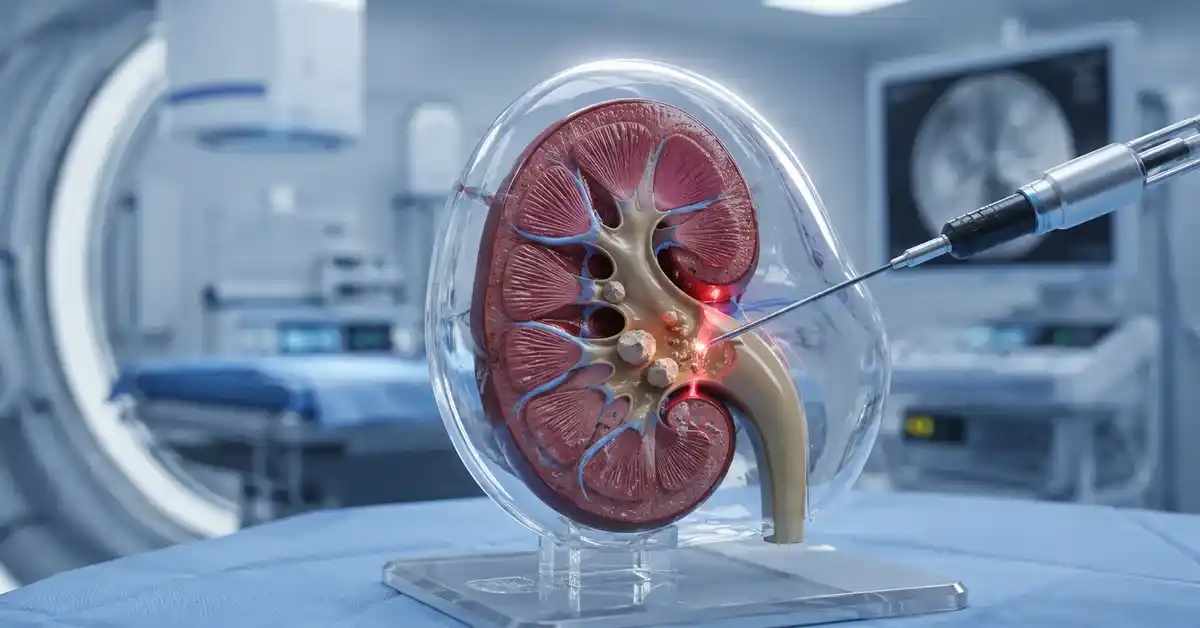
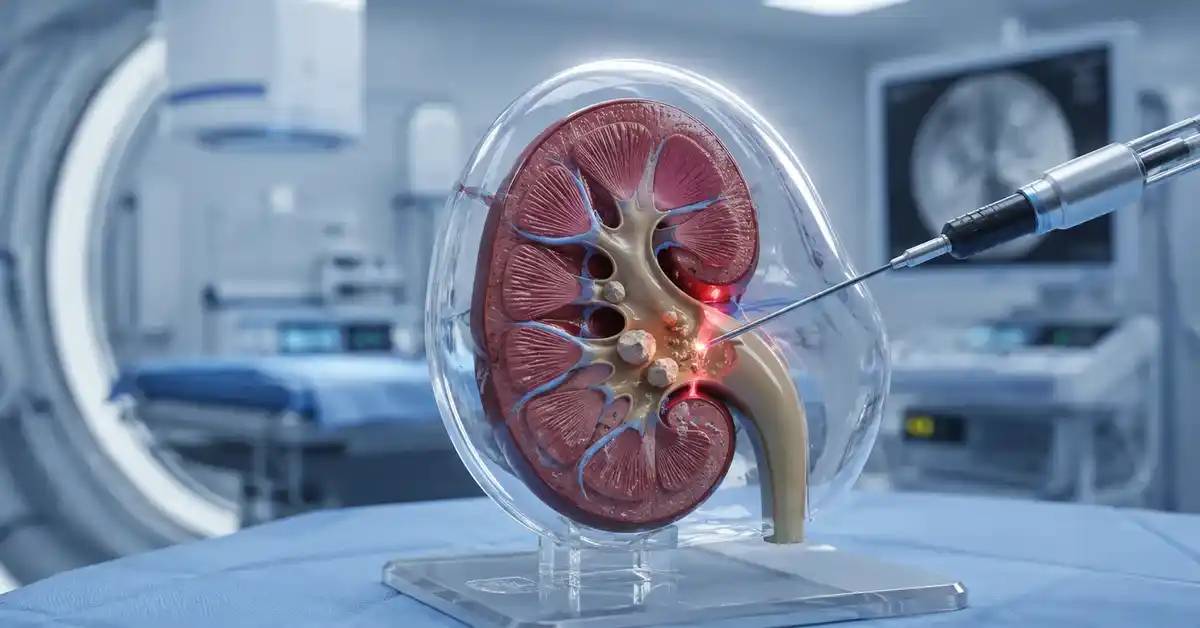
Kidney stones are one of the most painful and common health problems, affecting millions worldwide and causing severe pain that can disrupt a patient's daily life. In the past, treating large stones required complex open surgery, but with the tremendous technological advancements in medicine, modern techniques have emerged that have changed the game. At the forefront of these techniques is kidney stone laser treatment, a minimally invasive procedure that has proven incredibly effective in breaking up stones with precision and safety, reducing pain and speeding up recovery.
In this comprehensive article, we will delve into the world of laser kidney stone removal, exploring everything related to this advanced technology. We will learn what kidney stones are and the causes of kidney stones, review the symptoms that require medical intervention, and explain in detail the steps of the laser procedure and its advantages compared to traditional methods. We will also highlight the speed of recovery after laser kidney stone treatment and provide important tips for preventing their recurrence. At Safemedigo, we are committed to providing you with the latest reliable medical information to help you make informed decisions about your health.
What Are Kidney Stones
Kidney stones overview
Kidney stones, or nephrolithiasis, are hard masses formed from small crystals that precipitate from urine and collect inside the kidneys. These crystals form when urine becomes too concentrated, allowing minerals and salts to crystallize and stick together. Kidney stones can vary in size from a small grain of sand to the size of a golf ball and may remain in the kidney or travel through the urinary tract.
Causes of kidney stones
The causes of kidney stones are varied and often interconnected. The main cause is not drinking enough fluids, which leads to concentrated urine. Other factors include a diet high in protein, sodium, or sugar, obesity, certain medical conditions such as recurrent urinary tract infections and inflammatory bowel disease, as well as a family history of stones.
Types of kidney stones
There are several main types of kidney stones, and identifying the type of stone helps determine the cause and prevention plan:
- Calcium stones: The most common type, often composed of calcium oxalate.
- Uric acid stones: Form in people who don't drink enough fluids or who have a high-protein diet.
- Struvite stones: Form in response to a urinary tract infection.
- Cystine stones: Form in people with a hereditary disorder called cystinuria.
Kidney Stone Symptoms
Kidney stone pain
The kidney stone pain, known as renal colic, is one of the most severe types of pain a person can experience. The pain usually begins when the stone moves from the kidney into the ureter (the narrow tube connecting the kidney to the bladder). The pain is sharp and intermittent in the side and back, just below the ribs, and may radiate to the lower abdomen and groin area.
Common kidney stone symptoms
Besides severe pain, other common kidney stone symptoms include: pain or a burning sensation during urination, pink, red, or brown urine (hematuria), cloudy or foul-smelling urine, a persistent and urgent need to urinate, nausea and vomiting, and fever and chills if an infection is present.
When symptoms become severe
Symptoms become severe and require immediate medical attention if the pain is unbearable, accompanied by persistent nausea and vomiting, fever and chills, or difficulty passing urine. These signs may indicate a complete blockage of the urinary tract or a serious infection, which are kidney stone complications that require prompt intervention.
Read about: Kidney Stones Treatment with Shockwave Therapy Explained
When Laser Treatment Is Needed
When kidney stones need surgery
Not all stones require intervention. Small stones often pass on their own with increased fluid intake and pain relievers. However, there are specific situations when kidney stones need surgery or an effective therapeutic intervention, such as laser, especially when the stone is too large to pass, causes unbearable pain, blocks urine flow, or causes a persistent infection.
Failed medical treatment
In some cases, a doctor may prescribe medications (such as alpha-blockers) to help relax the muscles of the ureter and facilitate the passage of the stone. If these medications fail to expel the stone within a reasonable time and symptoms persist, a surgical or minimally invasive intervention, such as laser, becomes the next and best option.
Stone size and location
The size and location of the stone play a crucial role in determining the need for laser treatment. Stones larger than 5-6 mm in diameter often have difficulty passing through the ureter. Also, stones stuck in narrow parts of the ureter or within the kidney itself may require fragmentation for their removal. Laser is particularly effective for stones located anywhere in the urinary tract.

Kidney Stone Laser Treatment Procedure
Laser lithotripsy explained
The kidney stone removal procedure using a laser is medically known as "ureteroscopy with laser lithotripsy". This procedure is performed under general or spinal anesthesia. The procedure does not involve any surgical incisions in the skin, making it an attractive option for patients seeking a non-surgical kidney stone treatment.
Ureteroscopy laser treatment
The surgeon inserts a ureteroscope, a very thin, lighted tube with a camera, through the urethra and bladder up to the ureter where the stone is located. This ureteroscopy laser treatment allows the surgeon to see the stone directly on a high-definition video screen, ensuring precise targeting.
Laser kidney stone removal
Once the stone is visualized, a fine laser fiber is passed through the ureteroscope. The laser emits high-energy pulses that break the stone into very small, dust-like fragments. After that, the laser kidney stone removal is completed either by retrieving the larger fragments with a small basket or by leaving the fine fragments to pass naturally with urine in the following days.
Benefits of Laser Kidney Stone Treatment
Minimally invasive kidney stone treatment
The most prominent advantage is that it is a minimally invasive kidney stone treatment without open surgery. The entire procedure is performed through the natural urinary tract, which means no scars, significantly less pain, and a reduced risk of infection associated with surgical wounds. This makes it an ideal option for patients who want to avoid traditional kidney stone surgery.
Precision laser technology
The laser offers exceptional precision in targeting the stone without damaging the surrounding tissues in the ureter or kidney. The surgeon can precisely control the laser energy to break up all types of stones, including hard stones that may not respond to other forms of treatment such as shock wave lithotripsy (ESWL).
Lower risk of complications
Compared to open surgery, kidney stone laser treatment has a much lower rate of complications. Since there is no incision, the risk of severe bleeding, infection, and damage to adjacent organs is minimal. Patients can go home the same day or the day after the procedure.
Recovery After Laser Kidney Stone Treatment
Recovery after laser kidney stone
The speed of recovery after laser kidney stone treatment is one of its biggest advantages. Most patients feel a significant improvement within a day or two. Some may experience mild discomfort or blood in the urine for a few days, which is normal. The surgeon may place a temporary ureteral stent for a few days to facilitate urine drainage and prevent swelling.
Returning to normal activities
Most patients can return to their normal daily activities and work within two to three days after the procedure. It is advisable to avoid strenuous physical activities for a week or two, or as directed by the doctor, to allow the body to heal completely.
Post-procedure care
Important post-procedure instructions include drinking plenty of water to help flush out any remaining stone fragments. The doctor may prescribe pain relievers and antibiotics to prevent infection. It is essential to adhere to the follow-up visit with the doctor to ensure that all stones have been removed and that the kidneys are functioning properly.
Kidney Stone Prevention Tips
Kidney stone prevention
After a successful kidney stones treatment, kidney stone prevention becomes the priority. The most important step is to increase fluid intake, especially water, to keep the urine diluted. The goal is to drink enough to produce about 2 liters of urine per day.
Diet and hydration
The doctor may recommend dietary changes based on the type of stone that was treated. For example, for calcium oxalate stones, it may be advisable to reduce the intake of oxalate-rich foods (such as spinach and nuts) and sodium. For uric acid stones, it may be necessary to reduce the intake of red meat.
Reducing recurrence risk
In addition to diet and fluids, the doctor may prescribe certain medications to help reduce the risk of stone recurrence. These medications can help control the amount of minerals and salts in the urine that cause stone formation. Adhering to the prevention plan is key to avoiding painful episodes in the future.
Read about: Kidney Stone Laser Treatment: Turkey vs USA
Conclusion
In conclusion, kidney stone laser treatment has revolutionized how doctors handle this painful condition, offering an effective and safe solution characterized by high precision and quick recovery. Patients no longer have to endure pain for long periods or undergo major surgeries. If you are suffering from kidney stone symptoms, the first step is to get an accurate diagnosis and consult a specialist to determine the best treatment option for your condition. At Safemedigo, we are here to provide you with the support and information you need. Are you ready to take the next step towards getting rid of stone pain? Contact the expert team at Safemedigo today via WhatsApp to explore your treatment options and start your journey to recovery.
Frequently Asked Questions: Kidney Stone Laser Treatment
Is the laser lithotripsy procedure painful?
The procedure is performed under anesthesia, so you will not feel any pain during it. After the procedure, there may be some mild discomfort or pain that can be easily managed with pain relievers prescribed by your doctor.
How long does the laser procedure take?
The duration of the procedure depends on the size, location, and number of stones. In general, the procedure takes between 30 minutes to 90 minutes.
Will I need a ureteral stent?
In many cases, the surgeon places a temporary ureteral stent after the procedure. This stent is a thin plastic tube that helps keep the ureter open, reduces swelling, and facilitates the passage of any remaining stone fragments. The stent is usually removed after a few days to a week in the doctor's office.
What is the success rate of kidney stone laser treatment?
The success rate of this procedure is very high, often exceeding 95% in completely clearing the stones, especially with experienced surgeons and modern equipment.
Can kidney stones come back after laser treatment?
Yes, laser treatment removes existing stones but does not prevent the formation of new ones in the future. That is why prevention through lifestyle and dietary changes is crucial to reduce the risk of recurrence.
.png&w=1920&q=70)