





Total hip replacement is one of the most effective operations for relieving pain and restoring mobility in patients with advanced hip arthritis or severe joint damage. However, patients frequently encounter another decision before surgery: should the hip be replaced through an anterior or posterior approach?
The difference concerns how the surgeon reaches the joint rather than the fundamental purpose of the replacement. The direct anterior approach accesses the hip from the front through an interval between muscle groups. The posterior approach reaches the joint from behind and requires controlled opening and later repair of posterior soft tissues.
The anterior approach may provide somewhat faster early recovery in selected patients, whereas the posterior approach provides broad surgical exposure and considerable flexibility in complex cases. Long-term success depends heavily on implant positioning, patient selection, rehabilitation, implant design, and surgeon experience.
How the Anterior and Posterior Hip Approaches Differ
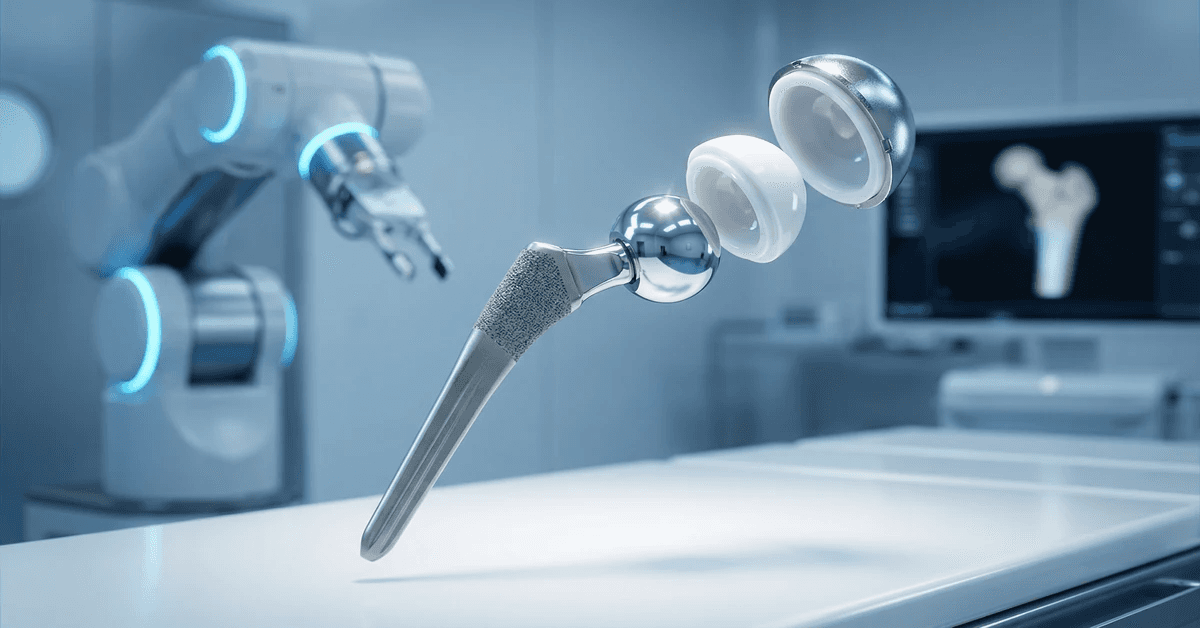
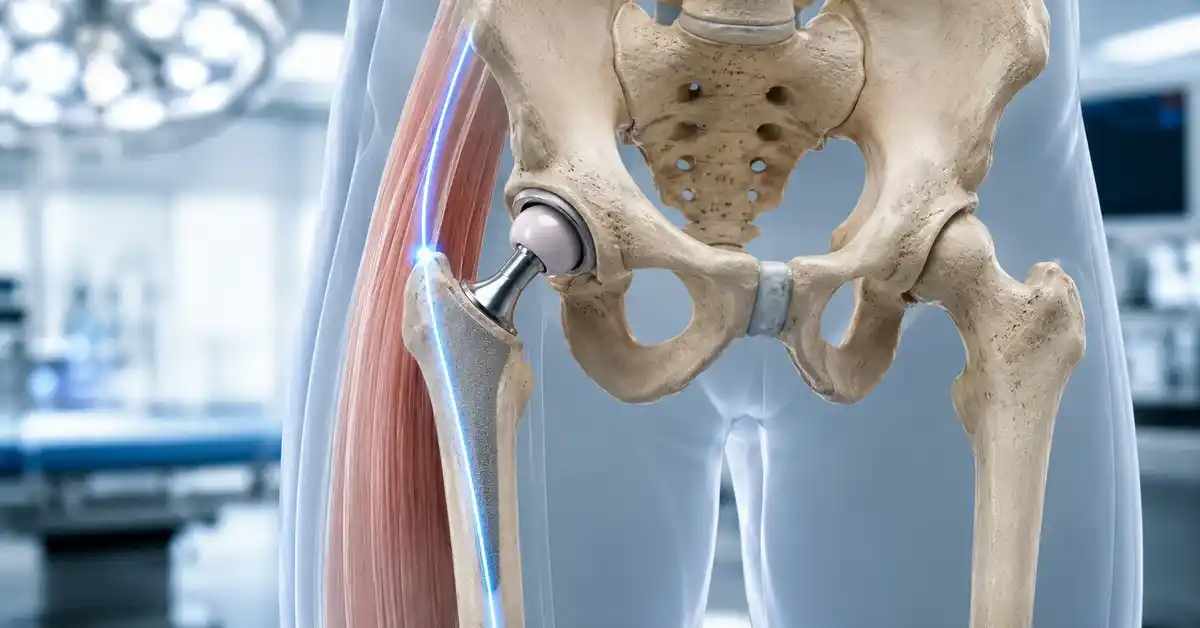
Both approaches remove the damaged femoral head, prepare the acetabulum, and implant prosthetic components designed to create a stable and functional artificial joint.
The surgical path to the hip, however, determines which muscles, tendons, and nerves are encountered.
How Direct Anterior Hip Replacement Is Performed
The incision is placed on the front or anterolateral portion of the upper thigh.
The surgeon usually reaches the hip through an anatomical interval between muscles rather than cutting through a major muscle belly. The patient is frequently positioned on the back, which may facilitate intraoperative imaging and comparison between the legs.
Femoral preparation can nevertheless be technically demanding through this approach, particularly in certain body types or complex femoral anatomy.
How Posterior Hip Replacement Is Performed
The posterior incision is made behind and to the side of the hip.
The surgeon works through the fibers of the gluteus maximus and manages the short external rotator tendons and posterior capsule to reach the joint. These structures can then be repaired after implant placement.
This approach provides broad access to both the femur and acetabulum and remains widely used for straightforward primary replacements as well as complex and revision procedures.
Direct Comparison
| Feature | Anterior approach | Posterior approach |
|---|---|---|
| Incision | Front of hip | Back and side of hip |
| Muscle handling | Often works between muscle groups | Posterior tissues are opened and repaired |
| Early recovery | May be faster in selected patients | Excellent but may be slightly slower initially |
| Femoral exposure | Technically more demanding | Broad and direct |
| Intraoperative imaging | Frequently used | Optional |
| Dislocation | Generally low | Historically somewhat higher but reduced with modern repair |
| Lateral thigh numbness | More characteristic | Less common |
| Complex revision surgery | Not always ideal | Highly versatile |
Advantages of the Direct Anterior Approach
Most of the potential benefits of anterior replacement relate to the first several weeks after surgery rather than a major difference in final long-term function.
Muscle-Sparing Access and Early Recovery
Using an anatomical interval between muscles can reduce direct muscle disruption.
Potential early advantages include:
- Less early postoperative discomfort in some patients.
- Faster initial walking.
- Earlier functional milestones.
- Shorter hospitalization in some programs.
- Faster return to selected daily activities.
As recovery progresses, however, differences between the approaches generally become much smaller.
Supine Positioning and Component Assessment
Anterior replacement is commonly performed with the patient lying on the back.
This can make it easier to compare both legs and use fluoroscopic imaging to assess:
- Cup orientation.
- Implant position.
- Leg length.
- Femoral offset.
- Overall component relationship.
Imaging remains an aid rather than a guarantee of perfect positioning.
Why “Minimally Invasive” Can Be Misleading
A smaller or muscle-sparing incision does not make total hip replacement a minor procedure.
The femoral head is still removed, bone is prepared, and prosthetic components are implanted. Infection, thrombosis, fracture, bleeding, leg-length differences, and implant-related problems therefore remain possible regardless of incision length.
Read about: When Do You Need Hip Replacement Surgery? Essential Guidelines
Risks and Limitations of the Anterior Hip Approach
The popularity of anterior surgery can sometimes cause patients to underestimate its approach-specific risks. Technical experience and appropriate patient selection are particularly important.
Lateral Thigh Numbness and Nerve Irritation
The lateral femoral cutaneous nerve travels near the operative area.
Irritation can produce:
- Numbness over the outer thigh.
- Tingling.
- Burning sensations.
- Altered skin sensitivity.
The nerve controls sensation rather than muscle strength. Symptoms improve in many patients, although a sensory change can sometimes persist.
Femoral Exposure and Intraoperative Fracture
Preparing the femur through an anterior incision can require greater manipulation.
In selected cases this may increase the likelihood of:
- Proximal femoral fracture.
- Difficulty inserting the femoral stem.
- Suboptimal femoral component positioning.
- Need to extend or modify the surgical exposure.
These risks are influenced by anatomy, bone quality, and the surgeon’s experience with the technique.
Wound Considerations
The anterior incision may lie close to a skin fold in some patients with obesity.
Moisture and friction in this region can make wound care more difficult in selected cases. Anterior surgery is therefore not automatically the preferred approach simply because it is described as muscle-sparing.

Benefits and Risks of the Posterior Approach
The posterior approach remains one of the most established methods for total hip arthroplasty. Its continuing use reflects its excellent exposure and adaptability rather than an absence of newer alternatives.
Broad Exposure and Surgical Flexibility
Posterior access provides direct visualization of the femur and acetabulum and can be particularly useful when there is:
- Complex femoral deformity.
- Previous hip surgery.
- Need for unusual implant components.
- Bone loss.
- Revision arthroplasty.
- A requirement for wider surgical exposure.
For these patients, surgical access can be more important than a small difference in early recovery.
Posterior Dislocation Risk
Posterior replacement has historically been associated with a greater tendency toward posterior dislocation because posterior capsular structures are opened during surgery.
Modern techniques can reduce this risk through:
- Careful posterior capsule repair.
- Repair of short external rotators.
- Accurate component orientation.
- Appropriate femoral-head size.
- More stable implant designs in high-risk patients.
The posterior approach should therefore not automatically be considered an unstable technique.
Early Muscle Discomfort
Some patients may experience greater early discomfort in the posterior soft tissues.
However, with rehabilitation, differences in walking, strength, pain, and daily function tend to become progressively smaller.
Read about: Hip Replacement Surgery: Pre- and Post-Operation Tips
Which Approach Allows Faster Recovery?
The anterior approach may offer a modest advantage during the early postoperative period, but surgical approach is only one of many factors influencing recovery.
Preoperative fitness, muscle strength, age, weight, pain control, medical conditions, implant fixation, and rehabilitation can be equally or more important.
Walking After Hip Replacement
Many patients begin standing and walking on the day of surgery or the following day when medically stable.
Progress depends on:
- Preoperative strength.
- Balance.
- Pain control.
- Bone quality.
- Neurological function.
- General health.
- Type of implant fixation.
Walking aids are reduced according to function rather than a fixed calendar.
Movement Precautions After Surgery
Posterior hip replacement was traditionally associated with stricter restrictions on deep flexion, internal rotation, and certain leg positions.
Some modern programs use fewer precautions when soft-tissue repair and implant stability are satisfactory.
Anterior replacement can also have movement precautions, so patients should follow their own surgeon’s instructions rather than assuming one approach has no restrictions.
Returning to Driving, Work, and Exercise
Recovery should not be based on incision location alone.
Before driving, patients should be able to enter and exit a vehicle safely, control the operated leg rapidly, walk reliably, and avoid medications that impair alertness.
Desk work may resume within weeks in some cases, whereas heavy physical occupations usually require more time. Sports are reintroduced gradually, with lower-impact activities commonly preferred.
Read about: Rehabilitation Exercises After Hip Replacement Surgery
How Surgeons Choose the Best Approach for Each Patient
The surgical route should not be selected because a friend recovered quickly with one approach or because one technique is advertised as newer.
The priority is to allow safe and accurate implant placement with the lowest reasonable risk.
When the Anterior Approach May Be Attractive
It may be considered particularly when:
- Anatomy provides appropriate anterior access.
- The replacement is a straightforward primary procedure.
- Early mobility is a significant priority.
- The surgical team has substantial experience with the technique.
- Major femoral deformity is absent.
These are considerations rather than absolute rules.
When the Posterior Approach May Be Preferred
Posterior surgery can be particularly useful for:
- Complex deformity.
- Previous implants or operations.
- Revision hip replacement.
- Significant bone loss.
- Cases requiring wider exposure.
- Surgeons whose strongest and most reproducible results are achieved through the posterior approach.
A surgeon’s experience with a technique is often more important than selecting a less familiar approach solely because it is marketed as newer.
Questions to Ask Before Hip Replacement
Patients should understand:
- Why this approach is recommended for their anatomy.
- The surgeon’s experience with it.
- Which implant will be used.
- Whether there are specific fracture or dislocation risks.
- Whether leg-length differences are anticipated.
- When full weight bearing can begin.
- How rehabilitation will progress.
- Which movement precautions will apply.
- What alternative plan exists if surgical exposure is difficult.
Long-Term Results and Hip Replacement Complications
Years after surgery, the incision used to reach the joint becomes less important than component position, fixation, bone quality, patient weight, activity level, implant material, and freedom from infection.
Does the Anterior Advantage Continue Long Term?
Most evidence suggests that the clearest anterior advantage is during early recovery.
After several months, pain relief, mobility, and overall functional outcomes are generally similar between well-performed anterior and posterior replacements.
This is why a small short-term recovery advantage should not override surgical safety.
Complications Shared by Both Approaches
Potential complications include:
- Infection.
- Deep vein thrombosis and pulmonary embolism.
- Bleeding.
- Periprosthetic fracture.
- Leg-length discrepancy.
- Dislocation.
- Nerve or vascular injury.
- Implant loosening.
- Component wear.
- Need for future revision surgery.
Patient health and surgical execution have a substantial influence on these risks.
Warning Signs After Hip Replacement
Prompt medical assessment is important for increasing pain, fever, wound drainage, spreading redness, sudden leg swelling, chest pain, breathlessness, or a sudden change in the position or length of the operated leg.
Severe sudden hip pain with inability to move after a fall or twisting event also requires urgent evaluation for dislocation or fracture.
Read about: Hip Replacement Surgery: Turkey vs USA
Conclusion
There is no universal winner between anterior and posterior total hip replacement. The anterior approach may provide somewhat faster early recovery and reduce direct disruption of certain muscles, but it has approach-specific risks such as lateral thigh sensory changes and technical difficulty during femoral preparation.
The posterior approach offers broad visualization and excellent flexibility, particularly for complex surgery, while requiring careful posterior soft-tissue repair and implant positioning to optimize stability.
Frequently Asked Questions: Anterior vs Posterior Hip Replacement
Is the anterior approach always better?
No. It may offer faster early recovery, but the best approach depends on anatomy, procedure complexity, and surgeon experience.
Which approach has a lower dislocation risk?
Anterior surgery may have an advantage in some patients, although modern posterior repair and implant techniques have substantially improved stability.
Can patients walk sooner after anterior hip replacement?
Some achieve early functional milestones sooner, but differences tend to diminish as rehabilitation progresses.
Can the anterior approach cause thigh numbness?
Yes. Irritation of a nearby sensory nerve can cause outer-thigh numbness or tingling.
Which hip replacement lasts longer?
Longevity depends more on implant design, positioning, bone quality, activity, and body weight than on incision direction.