






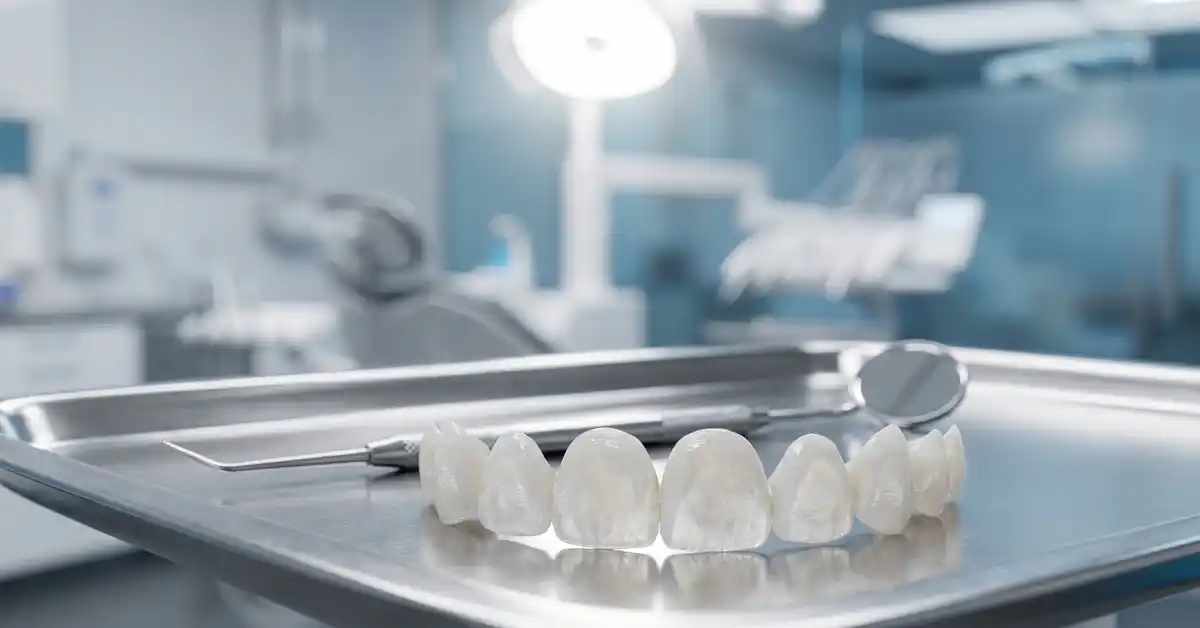
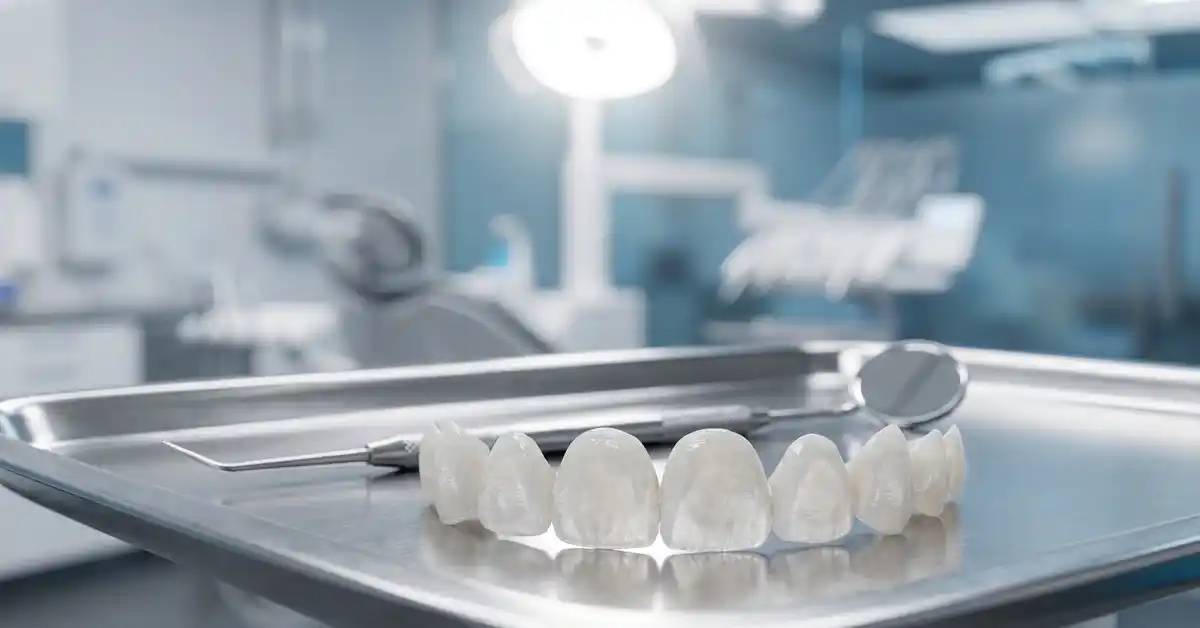
A broken or chipped front tooth is one of the most noticeable dental concerns a person can experience. Whether caused by an accident, a sports injury, or years of grinding, damage to the front teeth directly affects confidence, appearance, and even speech. Fortunately, veneers for broken front teeth have emerged as one of the most effective and aesthetically superior solutions in modern cosmetic dentistry — offering a natural-looking, long-lasting restoration that transforms smiles with minimal tooth preparation.
This comprehensive guide covers everything you need to know about front teeth veneers: from the different types available and the step-by-step procedure, to cost considerations, longevity, and how veneers compare with other restorative options. Whether you are dealing with a minor chip or a more significant fracture, understanding your options is the first step toward reclaiming a confident, radiant smile with the expert support of the Safemedigo dental team.
Veneers for Broken Front Teeth: The Best Cosmetic Solution
Among the many cosmetic dental treatments available today, veneers for broken front teeth stand out for their ability to deliver natural-looking, durable results while preserving the maximum amount of natural tooth structure. They offer a versatile solution that addresses a wide spectrum of front tooth damage.
What Are Veneers for Broken Front Teeth
Veneers for broken front teeth are ultra-thin shells — typically made from porcelain, composite resin, or ceramic — that are custom-crafted and bonded to the front surface of a damaged tooth. With a thickness ranging from just 0.3 to 0.7 mm, they are among the least invasive cosmetic dental restorations available. Front teeth veneers are designed to replicate the natural translucency, color, and texture of healthy tooth enamel, making them virtually indistinguishable from natural teeth. They are used to treat partial fractures, chips, cracks, worn edges, and irregularly shaped front teeth — all while maintaining the integrity of the original tooth structure as much as possible.
Are Veneers Good for Broken Teeth
Yes, veneers are good for broken teeth in many clinical scenarios, though their suitability depends on the extent and location of the fracture. Veneers are an excellent choice in the following situations:
- Partial fractures that do not extend into the tooth pulp or root.
- Surface chips and minor cracks limited to the enamel layer.
- Worn or eroded front teeth edges caused by grinding or acid erosion.
- Irregularly shaped or slightly misaligned front teeth.
- Discolored or stained front teeth that do not respond to whitening treatments.
Conversely, veneers may not be the most appropriate option for complete fractures extending to the root, extensive decay requiring significant tooth removal, or cases where the underlying tooth structure is severely compromised. In such situations, a dental crown may be recommended instead of veneers for broken teeth.
Fix Broken Front Teeth With Veneers
The process to fix broken front teeth with veneers is both precise and highly effective. The dentist begins with a thorough assessment of the fracture, followed by digital smile design to preview the final result before any preparation begins. The veneer is then custom-fabricated in a specialized dental laboratory to match the exact color, shape, and size of the adjacent teeth. Once bonded, the veneer completely conceals the fracture while providing a protective layer that prevents further wear and damage. The result is a tooth that looks and functions exactly like a natural, healthy front tooth — making veneers one of the most sought-after solutions in cosmetic dentistry for broken and chipped teeth.
Read about: Veneers vs Lumineers: Comprehensive Comparison and Differences
Types of Dental Veneers for Front Teeth and Choose the Best
Understanding the different types of dental veneers for front teeth is essential for making an informed decision. Each type has distinct properties, advantages, and ideal use cases that make it more suitable for specific clinical situations.
Types of Dental Veneers for Front Teeth
The main types of dental veneers for front teeth include:
- Porcelain veneers: The gold standard in cosmetic dentistry, known for their exceptional translucency, natural appearance, and superior stain resistance. Porcelain veneers for broken teeth are the most popular choice due to their longevity of 10–20 years and their ability to closely mimic the light-reflecting properties of natural enamel.
- Composite resin veneers: A more affordable and faster option that can often be completed in a single visit. While less durable than porcelain, composite veneers are a practical solution for minor chips and cracks in front teeth.
- Ceramic veneers: Offer a balance between the aesthetics of porcelain and the cost-effectiveness of composite, making them a versatile mid-range option.
- Zirconia veneers: The strongest and most durable option, ideal for cases involving significant fractures or patients with heavy bite forces.
- Thin veneers for front teeth (Lumineers): Ultra-thin veneers requiring minimal or no tooth preparation, suitable for less severe cases.
Best Veneers for Front Teeth
Porcelain veneers are widely considered the best veneers for front teeth in most clinical cases, owing to their unmatched ability to replicate the natural appearance of tooth enamel. Their high translucency allows light to pass through and reflect naturally, creating a result that is virtually indistinguishable from healthy natural teeth. Porcelain veneers for broken teeth also offer superior stain resistance and a lifespan of up to 20 years with proper care. For patients seeking a faster, more budget-friendly solution, composite resin veneers represent the best veneers for front teeth from a practical standpoint. The final recommendation always depends on the dentist's assessment of the fracture severity, tooth structure, and the patient's aesthetic goals.
Lumineers vs Veneers Front Teeth
The comparison of Lumineers vs veneers for front teeth reveals several key differences that influence which option is most appropriate:
- Thickness: Lumineers are significantly thinner (approximately 0.2 mm) compared to traditional veneers (0.5–0.7 mm), making them the thinnest veneers for front teeth available.
- Tooth preparation: Lumineers typically require no enamel removal, while traditional veneers require a thin layer of enamel to be removed for proper fit and adhesion.
- Reversibility: Because no enamel is removed, Lumineers are theoretically reversible, whereas traditional veneers are a permanent commitment.
- Translucency: Lumineers may appear slightly more translucent in some cases, which can allow the underlying tooth color to show through.
- Suitability for broken teeth: Traditional veneers are generally preferred for broken or significantly damaged front teeth, as they provide better coverage and concealment of the damage. Lumineers are better suited for minor cosmetic enhancements.
Read about: Lumineers vs Veneers: Which One Suits You Best
Details of the Veneers Procedure for Front Teeth
The veneers procedure for front teeth is a multi-step process that requires precision, expertise, and careful planning to achieve optimal, long-lasting results. Understanding each stage helps patients prepare effectively and set realistic expectations.
Veneers Procedure for Front Teeth
The veneers procedure for front teeth typically follows these carefully structured steps:
- Initial consultation and assessment: The dentist evaluates the extent of the fracture, the condition of the surrounding teeth and gums, and discusses the patient's aesthetic goals.
- Digital smile design: Advanced imaging software is used to simulate the final veneer result and present it to the patient for approval before any preparation begins.
- Tooth preparation: A thin layer of enamel (0.3–0.7 mm) is removed from the front surface of the tooth to create space for the veneer and ensure a flush, natural-looking fit.
- Impression taking: A precise digital or physical impression of the prepared teeth is sent to a specialized dental laboratory for custom veneer fabrication.
- Temporary veneers: Temporary veneers are placed to protect the prepared teeth and allow the patient to preview the approximate final result while the permanent veneers are being crafted.
- Final bonding: The custom-fabricated permanent veneers are bonded to the teeth using a specialized dental adhesive, then adjusted, polished, and refined to achieve a perfect fit and natural appearance.
No Prep Veneers for Front Teeth
No prep veneers for front teeth — most commonly Lumineers or ultra-thin porcelain veneers — offer an appealing option for patients who wish to enhance their smile without any enamel removal. This approach is ideal for cases where the front teeth are relatively intact and require only minor cosmetic improvement in shape, color, or alignment. However, no prep veneers for front teeth may not be the optimal choice for significantly broken or chipped teeth, as the absence of tooth preparation can sometimes result in a slightly bulkier appearance or reduced adhesion strength. A thorough clinical assessment is essential to determine whether no prep veneers are appropriate for each individual case.
Dental Veneers for Cracked Teeth
Dental veneers for cracked teeth are particularly effective for surface cracks and hairline fractures that affect the appearance of the front teeth without compromising the structural integrity of the tooth. The veneer acts as a protective shell that not only conceals the crack but also reinforces the tooth surface, reducing the risk of the crack propagating further. For deeper cracks that extend toward the pulp or root, additional dental treatment such as root canal therapy may be required before veneers can be applied. In all cases, early intervention is strongly recommended to prevent a minor crack from developing into a more serious fracture that may require more extensive treatment.

Cost of Veneers for Front Teeth and Influencing Factors
The cost of veneers for front teeth varies considerably depending on several clinical and logistical factors. Understanding these variables helps patients plan their treatment realistically and make informed decisions about their investment in their smile.
Cost of Veneers For Front Teeth
The primary factors that influence the cost of veneers for front teeth include:
- Material type: Porcelain veneers are more expensive than composite resin, while zirconia veneers represent the highest cost option due to their superior durability.
- Number of teeth treated: The total cost increases proportionally with the number of veneers placed.
- Dentist's expertise and location: Highly experienced cosmetic dentists and clinics in major cities typically charge more, reflecting the quality and precision of their work.
- Laboratory quality: Premium dental laboratories using advanced CAD/CAM technology produce higher-quality veneers at a higher cost.
- Preparatory treatments: Any required pre-treatment such as gum therapy, tooth whitening, or orthodontic alignment will add to the overall cost.
- Geographic location: Treatment costs vary significantly between countries, which is why many patients consider dental tourism as a cost-effective alternative without compromising quality.
A comprehensive clinical evaluation is always recommended before discussing cost, as the individual case determines the type of veneer required and therefore the actual investment involved.
Veneers Before And After Front Teeth
The transformation visible in veneers before and after front teeth cases is consistently remarkable. Before treatment, broken, chipped, or discolored front teeth create an uneven, unattractive smile that can significantly impact self-confidence and social interactions. After veneer placement, the front teeth appear perfectly shaped, uniformly colored, and naturally proportioned — creating a smile that looks both healthy and genuinely beautiful. Reviewing before and after cases is one of the most effective ways for patients to understand the realistic outcomes of the procedure and align their expectations with what is clinically achievable.
How Long Do Veneers Last on Front Teeth
A common question among patients is how long do veneers last on front teeth. The answer depends primarily on the material chosen and the quality of daily care:
- Porcelain veneers: Typically last between 10 and 20 years with proper maintenance.
- Composite resin veneers: Generally last 5 to 7 years before requiring replacement or repair.
- Zirconia veneers: The most durable option, with a lifespan that can exceed 20 years.
Key habits that extend veneer longevity include brushing twice daily with a soft-bristled toothbrush and non-abrasive toothpaste, flossing daily, avoiding biting hard objects such as ice or fingernails, wearing a night guard if teeth grinding is present, and attending regular dental check-ups every six months.
Read about: Veneers Quality Comparison: Turkey vs Germany
Pros and Cons of Veneers for Broken Teeth
Like any dental procedure, cosmetic veneers for chipped and broken teeth come with both advantages and limitations that should be carefully considered before proceeding with treatment.
Cosmetic Veneers for Chipped Teeth
The advantages of cosmetic veneers for chipped teeth are numerous and well-documented:
- Highly natural appearance that is virtually indistinguishable from healthy natural teeth.
- Superior stain resistance compared to natural tooth enamel, particularly with porcelain veneers.
- Minimally invasive procedure that preserves the majority of the natural tooth structure.
- Immediate, dramatic improvement in smile aesthetics and overall appearance.
- Protective function that shields the damaged tooth from further wear and fracture.
- Significant boost in self-confidence and quality of life.
- Long lifespan with proper care, making them a sound long-term investment.
Veneers vs Crowns for Broken Teeth
The decision between veneers vs crowns for broken teeth is one of the most important clinical choices in restorative dentistry. Veneers cover only the front surface of the tooth, requiring minimal enamel removal and preserving more of the natural tooth structure. Crowns, on the other hand, encapsulate the entire tooth from all sides, providing more comprehensive protection for severely damaged teeth. Veneers are preferred for partial fractures and cosmetic enhancements, while crowns are recommended for large fractures that significantly weaken the tooth, extensive decay, or teeth that have undergone root canal treatment. Both options deliver excellent aesthetic results, but the choice must be guided by the clinical condition of the tooth rather than cosmetic preference alone.
Are Veneers Good for Broken Teeth
To revisit the question — are veneers good for broken teeth — the answer is a qualified yes, provided the fracture is partial and does not compromise the structural integrity of the tooth. Veneers excel at concealing chips, cracks, and partial fractures in front teeth while delivering a natural, long-lasting aesthetic result. They are particularly effective when the damage is limited to the enamel or the outer dentin layer. For more extensive fractures involving the pulp or root, alternative treatments such as root canal therapy followed by a crown may be more appropriate. A thorough examination by an experienced cosmetic dentist is the only reliable way to determine whether veneers are the right solution for a specific case of broken front teeth.
Read about: Natural Ways to Strengthen Teeth Before Veneers or Lumineers
Comparing Veneers With Other Treatments
To make the most informed decision about treating broken front teeth, it is important to understand how veneers compare with the other restorative options available in modern dentistry.
Veneers vs Crowns for Broken Teeth
In the comparison of veneers vs crowns for broken teeth, veneers offer the significant advantage of minimal tooth preparation — preserving far more of the natural tooth structure than crowns require. Crowns necessitate the removal of a substantial amount of tooth material from all sides to accommodate the restoration. However, crowns provide superior structural protection for severely damaged teeth, making them the preferred option when the fracture is extensive or the tooth has been significantly weakened. From an aesthetic standpoint, both high-quality porcelain veneers and all-ceramic crowns deliver excellent natural-looking results for front teeth.
Porcelain Veneers for Broken Teeth
Porcelain veneers for broken teeth represent the pinnacle of cosmetic dental restoration. Their unique combination of exceptional aesthetics, durability, and biocompatibility makes them the preferred choice for patients seeking a permanent, natural-looking solution for front tooth damage. Compared to composite bonding — another common treatment for chipped and broken front teeth — porcelain veneers offer superior stain resistance, a longer lifespan, and a more refined, polished appearance. While composite bonding may be appropriate for minor chips and as a temporary solution, porcelain veneers deliver a more definitive and aesthetically superior long-term result for broken front teeth.
Fix Broken Front Teeth With Veneers
When comparing all available options to fix broken front teeth with veneers, the combination of minimal invasiveness, exceptional aesthetics, and long-term durability makes veneers the most well-rounded solution for most cases of front tooth damage. Unlike composite bonding, which may discolor and require frequent replacement, veneers maintain their appearance for many years. Unlike crowns, which require significant tooth reduction, veneers preserve the natural tooth structure. And unlike orthodontic treatment, which addresses alignment but not damage, veneers provide an immediate cosmetic and protective solution for broken and chipped front teeth.
Read about: Is No-Prep Hollywood Smile Effective? Pros and Cons Explained
Veneers Results Before and After
The results achieved with front teeth veneers are consistently among the most dramatic and satisfying in all of cosmetic dentistry, transforming not just the appearance of the teeth but the overall confidence and wellbeing of the patient.
Veneers Before and After Front Teeth
Reviewing veneers before and after front teeth cases reveals the true transformative power of this procedure. Before treatment, patients present with broken, chipped, discolored, or irregularly shaped front teeth that detract from their smile and self-image. After veneer placement, the front teeth appear perfectly shaped, uniformly white, and naturally proportioned — creating a smile that radiates health and confidence. The consistency of these results across different patients and different types of front tooth damage is a testament to the reliability and effectiveness of veneers as a cosmetic dental solution. Most patients report a profound improvement in their self-confidence and social interactions following veneer treatment.
Thin Veneers for Front Teeth
Thin veneers for front teeth — including ultra-thin porcelain veneers and Lumineers — represent an exciting advancement in minimally invasive cosmetic dentistry. With a thickness of just 0.2–0.3 mm, these veneers require little to no enamel removal, making them a particularly appealing option for patients who are concerned about preserving their natural tooth structure. Thin veneers for front teeth deliver excellent aesthetic results for cases involving mild discoloration, minor chips, and slight irregularities in tooth shape or size. Their ultra-thin profile also means they add minimal bulk to the tooth, resulting in a more natural feel in the mouth. However, for more significant fractures or structural damage, traditional veneers or crowns may be more appropriate.
How Long Do Veneers Last on Front Teeth
Returning to the question of how long do veneers last on front teeth, it is worth emphasizing that the longevity of veneers is directly proportional to the quality of care provided. Patients who commit to a consistent oral hygiene routine, attend regular dental check-ups, and avoid habits that place excessive stress on their veneers — such as biting nails, chewing ice, or opening packaging with their teeth — can expect their veneers to last at the upper end of the estimated lifespan. Porcelain veneers placed by an experienced cosmetic dentist using high-quality materials in a reputable laboratory can realistically last 15 to 20 years, making them one of the most durable and cost-effective investments in cosmetic dentistry.
In conclusion, veneers for broken front teeth offer a uniquely powerful combination of aesthetic excellence, functional protection, and long-term durability that few other dental treatments can match. Whether the damage is a minor chip or a more significant fracture, the right type of veneer — selected and placed by an experienced cosmetic dentist — can restore the front teeth to a state that looks and feels completely natural.
For a personalized assessment of your specific case and expert guidance on the most suitable veneer option for your broken front teeth, reach out to the Safemedigo dental specialists and take the first step toward your perfect smile.
FAQ: Veneers For Broken Front Teeth
Can veneers fix a completely broken front tooth?
Veneers are best suited for partial fractures, chips, and surface cracks in front teeth. For a completely broken tooth — particularly one where the fracture extends to the pulp or root — additional treatment such as root canal therapy is typically required first. Following this, a dental crown is usually recommended rather than a veneer, as it provides more comprehensive structural protection for a severely damaged tooth. A thorough clinical examination is essential to determine the most appropriate treatment for each specific case.
How many appointments are needed to get veneers?
The veneers procedure for front teeth typically requires two to three appointments over a period of approximately two weeks. The first appointment involves the initial assessment, tooth preparation, impression taking, and placement of temporary veneers. The second appointment is for the final bonding of the permanent veneers, followed by adjustments and polishing to achieve the perfect fit. In the case of composite resin veneers, the entire procedure can sometimes be completed in a single visit.
Do veneers for broken teeth look natural?
Yes, high-quality porcelain veneers for broken teeth are virtually indistinguishable from natural teeth. The translucency of dental-grade porcelain closely mimics the light-reflecting properties of natural tooth enamel, creating a result that looks genuinely natural even under close inspection. The key to achieving the most natural-looking result lies in the skill of the cosmetic dentist and the quality of the dental laboratory used to fabricate the veneers. Reviewing veneers before and after front teeth cases from a specific dentist is an excellent way to assess the quality of their work.
Are veneers permanent?
Traditional veneers are considered a permanent dental procedure because they require the removal of a thin layer of enamel from the tooth surface during preparation. Since enamel does not regenerate, the tooth will always require a veneer or similar restoration once the procedure has been performed. No prep veneers for front teeth, such as Lumineers, are technically reversible since no enamel is removed. However, all types of veneers will eventually need to be replaced after their expected lifespan, typically 10–20 years for porcelain veneers.
What is the difference between veneers and dental bonding for broken front teeth?
Both veneers and dental bonding can be used to fix broken front teeth with veneers or composite resin. Dental bonding involves applying composite resin directly to the tooth surface and shaping it by hand, making it a faster and less expensive option. However, bonding is less durable, more prone to staining, and typically needs to be replaced every 3–7 years. Veneers, particularly porcelain veneers for broken teeth, offer superior aesthetics, better stain resistance, and a significantly longer lifespan of 10–20 years, making them the preferred long-term solution for most patients.