









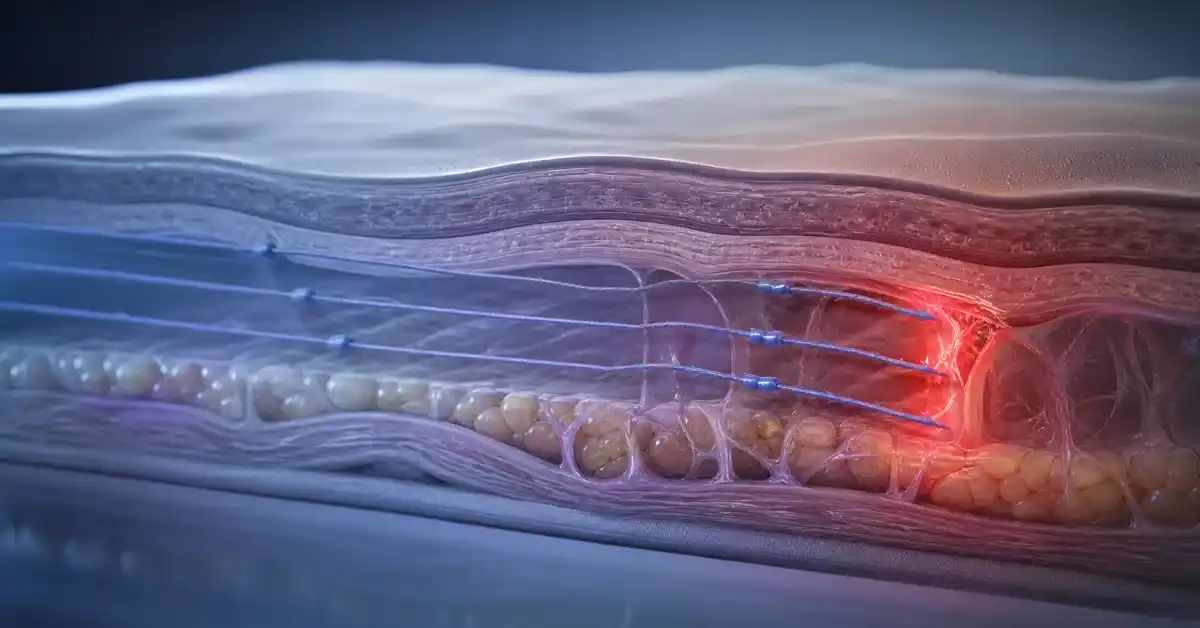
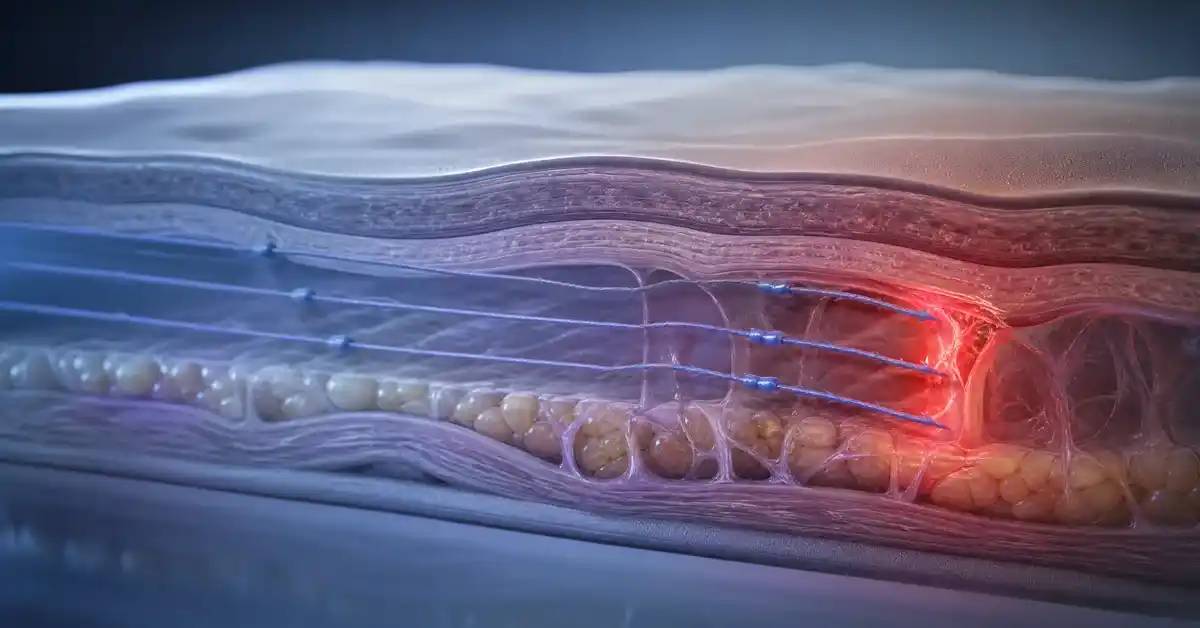
A facial thread lift is a minimally invasive aesthetic procedure designed to reposition mildly or moderately sagging facial tissues without a conventional surgical facelift. Threads are placed beneath the skin to provide mechanical suspension, and absorbable materials such as PDO, PLLA, or PCL may be used depending on the technique. Although less invasive than surgery, thread lifting is not risk-free, and its lifting effect is generally more limited and less durable than surgical facial rejuvenation.
At Safemedigo, reducing thread-lift complications begins with appropriate patient selection, detailed knowledge of facial anatomy, and accurate placement within the intended tissue plane. Modern reviews indicate that swelling, bruising, tenderness, and dimpling are among the more frequent events, while infection, granuloma, migration, nerve injury, and glandular or vascular damage are substantially less common but potentially more significant.
Expected Thread Lift Side Effects Versus True Complications
Some temporary changes are part of early recovery, while worsening or persistent abnormalities can indicate a genuine complication.
Swelling, Bruising, and Tenderness After Thread Lifting
Mild swelling, bruising, tenderness, and a pulling sensation are commonly reported early after treatment.
A recent meta-analysis involving more than 2,800 patients found swelling and bruising among the most frequently recorded events, although rates varied considerably between studies because thread materials, techniques, treatment areas, and reporting methods were not uniform.
Improvement over time is generally more reassuring than symptoms that progressively worsen.
Temporary Tightness and Facial Asymmetry
The face can initially appear uneven because swelling does not always occur symmetrically.
Persistent asymmetry after early swelling resolves may instead reflect unequal tension, thread position, tissue distribution, or an unsuitable lifting vector.
Why a Minimally Invasive Thread Lift Still Has Anatomical Risks
Threads travel through tissue containing vessels, nerves, glands, fat compartments, and facial retaining ligaments.
Safety therefore depends on correct depth and anatomical planning rather than simply on the small size of the entry point. Contemporary anatomical reviews emphasize precise knowledge of facial neurovascular pathways to reduce deeper complications.
Dimpling, Asymmetry, and Visible Threads After a Thread Lift
Contour problems are among the most noticeable aesthetic complications.
Skin Dimpling and Puckering After Thread Placement
Dimpling occurs when the skin or superficial tissue is caught or pulled unevenly by the thread.
Potential causes include excessively superficial placement, inappropriate tissue capture, excessive tension, or a lifting direction that does not match natural tissue movement.
Recent reviews identify dimpling as a recognized complication and emphasize accurate placement within the intended anatomical layer as a key preventive measure.
Visible or Palpable Facial Threads
A thread positioned too close to the skin surface can become visible or palpable, particularly in thin tissues.
A 2026 pooled analysis identified visible or palpable threads as an important later complication, distinguishing them from temporary early swelling or discomfort.
Thread Migration and Extrusion Through the Skin
Threads can occasionally shift or protrude through an entry or exit point.
An exposed thread should not be pulled, cut, or pushed back under the skin without clinical assessment. Infection, abnormal positioning, or local inflammation may require partial or complete thread removal.
Earlier pooled evidence also suggested lower rates of certain complications, including extrusion and altered sensation, with absorbable compared with nonabsorbable threads, although technique remains an important determinant of safety.
Read about: Thread Face Lift: Non-Surgical Technique with Quick Results
Infection, Granulomas, and Rare Nerve or Vascular Injuries
Deep complications occur less frequently but require greater clinical attention.
Infection After Facial Thread Lifting
Bacteria can enter through the insertion site or track along the implanted thread.
Increasing redness, warmth, worsening pain, drainage, pus, progressive swelling, or fever can indicate infection.
In some cases, antimicrobial treatment alone may not be sufficient if the thread acts as a persistent foreign-body focus. Reviews describe infection, granulomas, and excessive inflammatory reactions among complications that can occasionally require thread removal.
Granulomas, Nodules, and Excessive Fibrosis
A local inflammatory response can produce palpable nodules or persistent thickening.
Treatment depends on whether the lesion represents sterile inflammation, infection, abnormal thread placement, or excessive fibrosis.
Limited retrospective evidence also suggests that repeated previous thread procedures can create fibrosis and tissue distortion that may make a later surgical facelift more difficult. This evidence comes from a small case series and should not be generalized to every patient.
Rare Facial Nerve, Gland, and Blood Vessel Injury
Deep or incorrectly directed threads can approach important vessels, facial nerve branches, or glandular structures.
Nerve injury can cause sensory change or weakness, while vascular injury may cause bleeding or hematoma. Such complications are uncommon but reinforce the importance of detailed anatomical knowledge and appropriate thread depth.

Who Has a Higher Risk of Poor Thread Lift Results?
The best candidate is determined by tissue quality and anatomy rather than age or the desire to avoid surgery alone.
Severe Facial Laxity Is Less Suitable for Thread Lifting
Thread lifts generally perform best when laxity is mild to moderate.
Marked excess skin or substantial jowling and neck laxity cannot reliably be corrected to the same degree as a surgical facelift. Attempting to compensate by using excessive tension or too many threads can increase contour irregularity without producing a true surgical result.
Recent evidence on absorbable facial threads supports early aesthetic improvement in appropriately selected patients but continues to highlight limited high-quality information about long-term durability.
Thin Skin Can Increase Thread Visibility
Thin tissues require particularly careful depth selection.
Superficial placement can make a thread visible or palpable, while placement too deep in the wrong anatomical region can increase the risk of structural injury.
Medical History and Previous Facial Procedures Matter
Patients should disclose anticoagulants and antiplatelet medication, bleeding problems, healing disorders, previous fillers, energy-based treatments, surgery, or prior threads.
Prescription medication should not be stopped independently. Any changes should be decided by the treating medical team after balancing bleeding risk against the reason the medication is required.
Active infection or significant inflammation in the treatment area should also be assessed before elective thread placement.
Read about: Latest Thread Face Lift Methods for Quick Visible Results
How to Reduce Thread Lift Risks Before and During Treatment
Complications cannot be completely eliminated, but careful planning can substantially reduce preventable problems.
Choose a Clinician With Detailed Facial Anatomy Knowledge
Safe thread lifting requires an understanding of tissue depth, vascular pathways, facial nerve anatomy, fat compartments, retaining ligaments, and glandular structures.
The clinician should also be able to recognize and manage complications rather than only place the threads. Modern complication reviews repeatedly emphasize anatomical planning and correct placement as major factors in prevention.
Match Thread Design and Placement to the Facial Area
Barbed, coned, floating, and fixed threads have different mechanical characteristics.
A systematic review of absorbable materials found that complication patterns varied by thread design, fixation method, and treated region, supporting an individualized approach rather than selecting threads solely by material or marketing name.
Set Realistic Expectations About Thread Lift Results
A thread lift should not be presented as a miniature surgical facelift.
It can provide modest tissue elevation in suitable patients, but the visible effect generally declines with time, and robust long-term efficacy data remain limited.
Realistic expectations reduce the temptation to over-tension tissues in an attempt to create a surgical degree of lift.
Safe Management of Thread Lift Complications
Management depends on the timing, cause, and severity of the problem.
When Temporary Symptoms Can Be Observed
Mild bruising, swelling, tenderness, and a temporary pulling sensation often improve during recovery.
Patients should follow their clinician's instructions regarding cleaning, physical activity, facial manipulation, and skin care rather than aggressively massaging or attempting to reposition the tissues independently.
When Persistent Dimpling or a Visible Thread Needs Treatment
Minor early puckering can sometimes settle as swelling decreases and tissues adapt.
Persistent dimpling, migration, or a visible thread requires assessment to determine whether observation, limited release, adjustment, or thread removal is appropriate.
Warning Signs That Require Prompt Medical Assessment
Increasing pain, spreading redness, pus, fever, rapidly enlarging swelling, facial weakness, or thread extrusion should be assessed promptly.
Early treatment can prevent a localized problem from progressing to more extensive infection, fibrosis, or contour deformity.
Read about: Thread Face Lift: Turkey vs Germany
Conclusion
Thread lifting can provide useful improvement for appropriately selected patients with mild or moderate facial laxity, but it should not be regarded as a complication-free cosmetic procedure. Swelling, bruising, tenderness, dimpling, and contour irregularity are among the most commonly reported events, while infection, thread migration, granuloma, and structural injuries occur less frequently.
Safety depends heavily on patient selection, anatomical expertise, appropriate thread depth and direction, and avoiding excessive tension. Patients should also understand that thread lifting provides a more limited and typically temporary result compared with surgical facial rejuvenation, with long-term efficacy data still relatively limited.
Frequently Asked Questions: Thread Lift Risks and Safety
Is a facial thread lift safe?
It is generally considered relatively safe in appropriately selected patients when performed correctly, but swelling, bruising, dimpling, asymmetry, and other complications can still occur.
Is skin dimpling normal after a thread lift?
Minor early puckering can be temporary, but deep or persistent dimpling should be evaluated to check thread depth and tension.
Can a facial thread migrate or come through the skin?
Yes, although this is less common. An exposed thread should not be pulled or cut at home because infection or abnormal positioning may be present.
Are absorbable threads free from complications?
No. They can still cause bruising, swelling, dimpling, infection, and other problems, although some pooled data suggest lower rates of certain complications than with nonabsorbable threads.
Can thread lifting replace a surgical facelift?
Usually not when laxity is substantial. Thread lifting provides a smaller, temporary lifting effect, whereas surgery can address more extensive skin and deeper tissue laxity.