






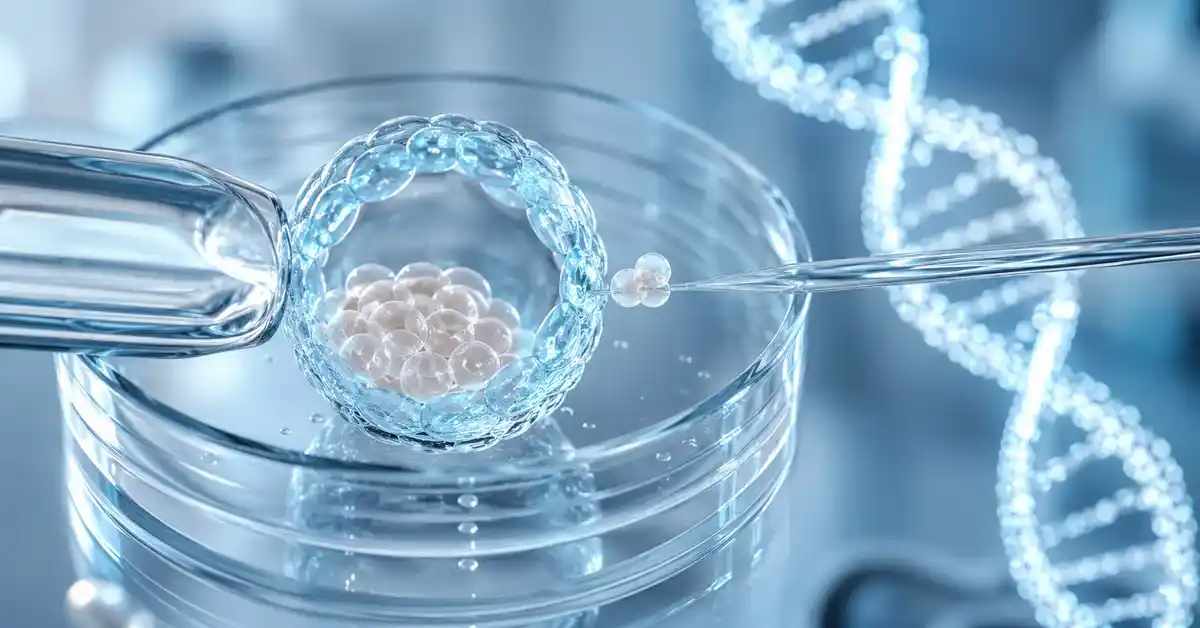
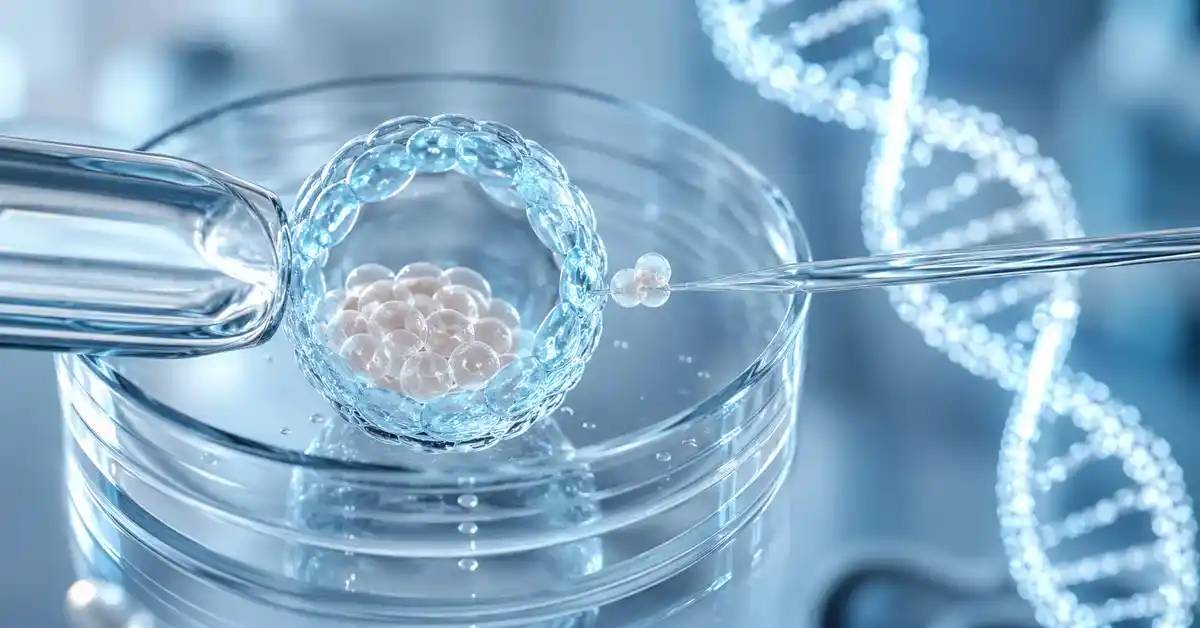
PGT embryo testing is one of the advanced technologies used during IVF to assess embryos before they are transferred to the uterus. It can help select embryos with a lower risk of specific genetic or chromosomal problems, especially when one or both partners carry a known genetic mutation or when there is a family history of inherited disease.
Many couples ask whether PGT guarantees a healthy pregnancy free from disease. The accurate medical answer is that PGT can significantly reduce certain risks in the right cases, but it cannot guarantee a healthy baby or pregnancy with 100% certainty. The test focuses on specific genetic or chromosomal targets, and it cannot detect every possible disease or every factor that may affect pregnancy.
There are different types of preimplantation genetic testing, including PGT-A for chromosomal aneuploidy, PGT-M for monogenic diseases, and PGT-SR for structural chromosomal rearrangements. The correct test depends on the couple’s genetic history, previous pregnancy losses, IVF history, maternal age, karyotype results, and specific medical goals.
At Safemedigo, PGT is approached as part of a carefully planned fertility journey. The process may include medical review, genetic counseling, choosing the correct PGT type, IVF or ICSI, embryo biopsy, genetic laboratory testing, embryo freezing, and selection of the most suitable embryo for transfer according to the medical and genetic results.
What Is PGT Embryo Testing?
PGT embryo testing, or preimplantation genetic testing, is a test performed on embryos created through IVF before embryo transfer. A small sample of cells is taken from the embryo at a suitable developmental stage, usually the blastocyst stage, and analyzed in a specialized genetic laboratory.
PGT cannot be performed in a natural pregnancy before conception because it requires embryos to be created and developed in the IVF laboratory. Couples who need PGT usually go through ovarian stimulation, egg retrieval, fertilization, embryo culture, biopsy, freezing, and later embryo transfer.
The goal of PGT is not to “improve” an embryo. It is to help identify embryos that do not carry the targeted genetic condition or that appear chromosomally suitable depending on the type of testing. Understanding what PGT can and cannot do is essential before starting treatment.
Definition of PGT
PGT stands for Preimplantation Genetic Testing. It is genetic testing performed before implantation, meaning before an embryo is transferred into the uterus. It is used to reduce the risk of transferring embryos affected by specific genetic diseases or chromosomal abnormalities.
PGT may be considered when there is a known inherited disease in the family, when both partners carry a genetic mutation, when there is a previous affected child, recurrent pregnancy loss, repeated IVF failure, advanced maternal age, or a chromosomal rearrangement in one partner.
Not every couple needs PGT. The decision should be made after medical and genetic evaluation, because the value of testing depends on the reason for using it, the number of embryos available, and the couple’s reproductive history.
Difference between PGT-A, PGT-M, and PGT-SR
The difference between PGT-A, PGT-M, and PGT-SR is essential because each test has a different purpose. Choosing the wrong test may not answer the couple’s actual medical question.
PGT-A checks embryos for an abnormal number of chromosomes. It may identify embryos that are euploid, aneuploid, or sometimes mosaic. It is often discussed in cases of advanced maternal age, repeated miscarriage, or implantation failure, but it does not test for every genetic disease.
PGT-M is used when a specific monogenic disease is known in the family. Examples may include conditions such as thalassemia, cystic fibrosis, spinal muscular atrophy, Huntington disease, and other single-gene disorders when the exact mutation is identified.
PGT-SR is used when one partner carries a structural chromosomal rearrangement, such as a translocation or inversion, which may increase the risk of embryos with unbalanced chromosomes. This test helps identify embryos more suitable for transfer in that specific context.
When is PGT recommended?
PGT may be recommended when there is a clear medical or genetic reason. It should not be used randomly without understanding the benefits and limitations.
PGT may be considered in cases such as:
- Known inherited disease in the family.
- Both partners carrying the same recessive condition.
- Previous child affected by a genetic disease.
- Recurrent miscarriage.
- Repeated IVF failure.
- Advanced maternal age.
- Abnormal karyotype in one partner.
- Balanced translocation.
- Strong family history of severe genetic disease.
- Consanguinity with identified genetic risk.
- Need for PGT-M before embryo transfer.
- Desire to reduce the risk of a specific inherited condition.
Before deciding, couples should receive clear counseling about success rates, possible outcomes, limitations, and the chance that no suitable embryo may be available after testing.
Read about: Differences Between IVF and ICSI Fertilization Techniques
How Are Embryos Tested Before Transfer?
Embryos are tested before transfer as part of an IVF cycle. The ovaries are stimulated to produce multiple eggs, the eggs are retrieved and fertilized, and the embryos are cultured in the laboratory until they reach a suitable stage for biopsy.
In most modern PGT cycles, embryo biopsy is performed at the blastocyst stage. A few cells are taken from the trophectoderm, the outer layer that later contributes to the placenta. This approach is designed to obtain genetic information while minimizing disturbance to the embryo.
After biopsy, embryos are usually frozen while the genetic laboratory completes the analysis. Once the results are available, the doctor and couple review which embryos are suitable for transfer based on the genetic report, embryo quality, and uterine preparation.
Steps of PGT testing
The steps of PGT testing begin before the IVF cycle starts. For some couples, especially those needing PGT-M, genetic preparation may take time because the laboratory must identify and design testing for the family’s mutation.
Typical steps include:
- Fertility consultation.
- Review of family history.
- Genetic testing of the couple when needed.
- Genetic counseling.
- Selection of PGT-A, PGT-M, or PGT-SR.
- Test preparation for PGT-M when needed.
- Ovarian stimulation.
- Egg retrieval.
- Fertilization by IVF or ICSI.
- Embryo culture to blastocyst stage.
- Embryo biopsy.
- Embryo freezing.
- Genetic laboratory analysis.
- Review of results.
- Selection of embryo for transfer.
- Frozen embryo transfer preparation.
Coordination between the fertility doctor, embryology laboratory, genetic laboratory, and patient is essential.
Embryo biopsy
Embryo biopsy is the process of removing a small number of cells from the embryo for genetic testing. It is performed by trained embryologists using specialized equipment in the IVF laboratory.
Most commonly, cells are taken from the trophectoderm at the blastocyst stage. The trophectoderm is the outer cell layer that later contributes to the placenta. The inner cell mass, which forms the fetus, is usually not sampled.
Although the technique is advanced, embryo biopsy requires high expertise. Results must also be interpreted carefully, especially when mosaicism is reported. Mosaicism means that not all sampled cells may have the same chromosomal pattern.
Interpreting results and choosing an embryo
Interpreting results and choosing an embryo depends on the type of PGT performed. In PGT-A, embryos may be reported as euploid, aneuploid, or mosaic. In PGT-M, the report may indicate whether an embryo is unaffected, affected, or a carrier depending on the inheritance pattern.
Embryo selection depends on several factors:
- Genetic test result.
- Embryo quality.
- Day of embryo development.
- Maternal age.
- Previous IVF history.
- Uterine readiness.
- Number of embryos available.
- Whether mosaic embryos are present.
- Doctor recommendation.
- Couple’s decision after counseling.
If there are no suitable embryos, the couple may need another IVF cycle or a revised plan. This possibility should be discussed before treatment begins.
Read about: Step-by-Step Guide to the In Vitro Fertilization (IVF) Process
Role of PGT in Preventing Genetic Diseases
The role of PGT in preventing genetic diseases is most clearly seen with PGT-M, when a specific disease-causing mutation is known in the family. In such cases, embryos can be tested before transfer, and embryos not affected by the targeted disease can be selected.
This is especially important for couples who already have an affected child, a strong family history, or genetic tests showing that both partners carry a condition that may be passed to their child. For some inherited diseases, the risk of having an affected child can be high without embryo testing.
However, PGT-M does not test for every disease. It tests for the specific condition it was designed to detect. Accurate genetic diagnosis before IVF is therefore essential.
Genetic diseases that can be tested
Genetic diseases that can be tested with PGT-M are usually conditions where the disease-causing mutation is known. A general family history is not enough; the responsible gene and variant should be identified.
Examples may include:
- Thalassemia.
- Sickle cell disease.
- Cystic fibrosis.
- Spinal muscular atrophy.
- Certain muscular dystrophies.
- Huntington disease.
- Some inherited metabolic disorders.
- Certain inherited blood disorders.
- X-linked genetic diseases.
- Some inherited cancer predisposition syndromes.
- Rare genetic conditions with an identified mutation.
- Recurrent family conditions with confirmed cause.
A genetic specialist should review whether the condition is suitable for PGT.
PGT for monogenic diseases
PGT for monogenic diseases is called PGT-M. It is used when a disease is caused by a change in a specific gene. This type of testing requires preparation before IVF because the laboratory must know the exact mutation and design a method to detect it in embryos.
The couple may need:
- Genetic report of the affected family member.
- Mutation testing for both partners.
- Testing of relatives in some cases.
- Genetic counseling.
- Time for test development.
- Explanation of embryo outcome probabilities.
- Understanding of affected, carrier, and unaffected results.
- Consent for embryo testing.
PGT-M can greatly reduce the risk of having a child affected by the targeted condition, but it does not remove all pregnancy risks or all diseases not included in the test.
Reducing recurrence risk in the family
Reducing recurrence risk in the family is one of the main reasons couples choose PGT. When a couple has had a previous child affected by a genetic disease, the fear of recurrence can be emotionally and medically significant.
Instead of conceiving naturally and discovering the condition during pregnancy, embryos can be tested before transfer. This allows the couple to choose an embryo not affected by the targeted disease, reducing the chance of recurrence.
Still, expectations must be realistic. Not every IVF cycle produces enough embryos, and not every embryo will be genetically suitable or suitable for transfer. The likelihood depends on maternal age, egg number, embryo development, and the inheritance pattern of the disease.

PGT and Healthy Pregnancy: Is There a Guarantee?
PGT and healthy pregnancy should be discussed carefully. PGT helps select embryos with a lower risk of specific genetic or chromosomal problems, but it does not guarantee pregnancy, live birth, or a baby free from all diseases.
A healthy pregnancy depends on many factors, including embryo quality, uterine health, placenta development, hormones, immune factors, maternal age, chronic disease, and pregnancy monitoring. Some conditions are not genetic, and some are not included in the PGT test.
Therefore, PGT should be described as a risk-reduction tool, not a guarantee. Accurate counseling protects couples from unrealistic expectations and helps them make informed decisions.
What PGT can and cannot guarantee
PGT can provide important information about the cells tested and the condition targeted, but it cannot guarantee everything about the embryo or pregnancy.
PGT may help:
- Avoid transfer of embryos affected by a specific inherited disease.
- Select chromosomally euploid embryos in PGT-A.
- Reduce some miscarriage risk related to chromosomal abnormalities.
- Reduce recurrence risk of a known genetic condition.
- Improve embryo selection decisions.
- Reduce random embryo transfer.
- Support families with genetic risk.
PGT cannot guarantee:
- Pregnancy.
- Embryo implantation.
- Live birth.
- A child free from all diseases.
- Absence of all birth defects.
- Normal placental development.
- No premature birth.
- Detection of all mutations.
- Perfect accuracy in every case.
- IVF success from the first attempt.
This distinction is essential for ethical and accurate patient communication.
Limitations of embryo genetic testing
Limitations of embryo genetic testing include several important points. First, the test is performed on a small sample of cells, not every cell of the embryo. Second, mosaicism can make interpretation more complex. Third, each test has a defined scope.
PGT-M tests for the specific disease or mutation the test was designed for. PGT-A mainly evaluates chromosome number and does not detect all single-gene disorders. PGT-SR focuses on structural chromosome rearrangements related to the known parental rearrangement.
Other limitations include the possibility of no suitable embryos, inconclusive results, mosaic embryos, or the need for another IVF cycle. Pregnancy follow-up and, in some cases, prenatal testing may still be recommended.
Importance of pregnancy follow-up
Pregnancy follow-up remains important even after PGT. Preimplantation testing does not replace prenatal care. The pregnancy still needs monitoring for fetal growth, heartbeat, placenta, maternal health, and pregnancy complications.
Follow-up may include:
- Pregnancy hormone monitoring.
- Early ultrasound.
- Fetal heartbeat assessment.
- First-trimester screening.
- Blood tests according to risk.
- Detailed anatomy scan.
- Blood pressure monitoring.
- Diabetes screening.
- Cervical assessment when needed.
- Fetal growth monitoring.
- Prenatal genetic testing when advised.
- High-risk pregnancy care when needed.
PGT is a step before pregnancy. Prenatal care is what monitors the pregnancy after it begins.
Read about: IVF Procedure Explained: From Fertilization to Embryo Transfer
Who Benefits Most from PGT?
The couples who benefit most from PGT are those with a clear risk that the test can reduce. It should not be presented as a universal requirement for every IVF patient. Some couples benefit greatly, while others may not need it.
The benefit depends on the type of PGT. PGT-M is highly relevant for known monogenic diseases. PGT-SR is important for chromosomal rearrangements. PGT-A may be discussed in selected cases, such as advanced maternal age or recurrent miscarriage, but its limitations should be explained.
Proper evaluation before PGT ensures that the test matches the medical reason and that couples understand possible outcomes.
Couples carrying inherited diseases
Couples carrying inherited diseases are among the most important candidates for PGT-M. When both partners carry the same recessive condition, there may be a risk of having an affected child. When one parent carries a dominant condition, the risk may also be significant depending on the disease.
PGT-M helps test embryos before transfer and select embryos not affected by the targeted condition. This can be especially valuable for severe diseases that affect life expectancy or quality of life.
Before starting, the mutation must be confirmed through reliable genetic testing. Couples should also understand that some embryos may be affected, some may be carriers, and some may be unaffected.
Recurrent miscarriage and implantation failure
Recurrent miscarriage and implantation failure are situations where PGT may be discussed, especially when chromosomal abnormalities, advanced maternal age, or abnormal embryos are suspected. However, other causes must also be evaluated.
PGT-A may help avoid transferring embryos with abnormal chromosome numbers. This may reduce transfer of embryos unlikely to develop normally. However, recurrent miscarriage can also result from uterine, hormonal, thyroid, immune, blood-clotting, or sperm-related factors.
In repeated implantation failure, doctors should also assess embryo quality, uterine cavity, endometrium, timing of transfer, inflammation, hydrosalpinx, and treatment protocol. PGT may be part of the plan, not the entire plan.
Advanced maternal age
Advanced maternal age is associated with a higher chance of chromosomal abnormalities in embryos. As age increases, egg quality and the proportion of chromosomally abnormal embryos may be affected. PGT-A may be considered in selected cases to help choose embryos with normal chromosome numbers.
However, PGT-A does not increase the number of eggs or improve egg biology. If very few embryos are available, the benefit of testing may be limited and should be discussed carefully. A euploid embryo also does not guarantee implantation or live birth.
For women over 35 or 40, the plan should include ovarian reserve assessment, expected embryo number, chance of obtaining a euploid embryo, and suitable treatment options.
Read about: Reasons for IVF Failure and Proven Ways to Improve Success Rates
IVF Treatment Steps with PGT
IVF treatment steps with PGT are similar to standard IVF at the beginning but include embryo biopsy, genetic testing, and often embryo freezing before transfer. These additional steps require coordination between the embryology lab, genetic lab, and fertility doctor.
The plan may take longer than a standard IVF cycle, especially with PGT-M because test preparation may be required before the IVF cycle begins. This is important for international patients who need travel planning.
The goal is to obtain an embryo suitable for transfer while reducing the targeted genetic or chromosomal risk.
Ovarian stimulation and egg retrieval
Ovarian stimulation and egg retrieval are the first clinical steps in IVF with PGT. Medications are used to stimulate the ovaries to produce multiple eggs. The doctor monitors follicle growth by ultrasound and hormone tests.
When the follicles are ready, a trigger injection is given, and egg retrieval is performed under sedation or light anesthesia according to the clinic protocol. The eggs are then transferred to the embryology laboratory for assessment and fertilization.
A higher number of mature eggs may increase the chance of having embryos available for testing, but egg quality, sperm quality, and maternal age are also crucial.
Fertilization and embryo culture
Fertilization and embryo culture take place in the IVF laboratory. In many PGT cycles, ICSI is used because it can reduce contamination risk and improve control during embryo creation, especially when genetic testing is planned.
After fertilization, embryos are monitored day by day until they reach the blastocyst stage, usually around day 5 or 6. Not all eggs fertilize, and not all embryos reach a stage suitable for biopsy.
Embryologists assess embryo development and quality. Suitable embryos are biopsied, and the samples are sent to the genetic laboratory.
Embryo freezing and healthy embryo transfer
Embryo freezing and healthy embryo transfer are common in PGT cycles. Embryos are usually frozen after biopsy because genetic results take time. Once results are ready, the doctor chooses the best embryo for transfer.
Embryo transfer is usually performed in a later cycle after preparing the uterine lining. The timing depends on the woman’s cycle, hormone levels, endometrial thickness, and medical plan. Single embryo transfer may be recommended in many cases to reduce the risks of multiple pregnancy.
A “healthy” embryo in a PGT report means suitable according to the specific test performed. It does not mean the embryo is guaranteed to implant or free from every possible condition.
Read about: IVF Procedure with Egg Freezing: Step-by-Step Explanation
PGT Cost and Factors Affecting It
PGT cost varies depending on the type of test, number of embryos, genetic laboratory, country, clinic policy, and whether special genetic preparation is required. The cost cannot be accurately estimated without knowing whether the couple needs PGT-A, PGT-M, or PGT-SR.
PGT is usually an additional cost on top of IVF. The full plan may include ovarian stimulation, egg retrieval, ICSI, embryo culture, embryo biopsy, embryo freezing, genetic testing, storage, and later frozen embryo transfer.
Couples should receive a clear explanation of the costs before starting treatment to avoid unexpected expenses, especially if more than one IVF cycle may be needed.
What is included in PGT cost?
What is included in PGT cost depends on the clinic and genetic laboratory. Couples should ask what is included and what is billed separately.
Costs may include:
- Genetic counseling.
- Genetic testing of partners.
- PGT-M test preparation when needed.
- IVF cycle.
- ICSI.
- Embryo culture.
- Embryo biopsy.
- Sample transfer to genetic lab.
- Testing per embryo.
- Embryo freezing.
- Embryo storage for a defined period.
- Frozen embryo transfer later.
- Uterine preparation medications.
- Additional tests before transfer.
Some clinics charge per embryo, some per cycle, and some offer packages covering a set number of embryos.
Number of embryos and test type
Number of embryos and test type are major cost factors. If many embryos are tested, the cost may increase because each embryo sample is analyzed. If there are few embryos, cost may be lower, but the chance of having a suitable embryo may also be lower.
The type of test matters. PGT-A often differs in cost from PGT-M because PGT-M may require family-specific test design before the cycle. PGT-SR may require analysis related to the specific chromosomal rearrangement.
Couples should ask: Which PGT type is needed? How many embryos are included? Is genetic test preparation included? Is frozen embryo transfer included?
Is PGT worth the cost?
Is PGT worth the cost? The answer depends on the reason for using it. For a known serious inherited disease, PGT-M may be highly valuable because it can reduce the risk of having an affected child. For chromosomal rearrangements, PGT-SR may help identify embryos more suitable for transfer.
For PGT-A, the decision should be individualized. It may be useful for some patients, but it is not necessary or equally beneficial for everyone. Age, embryo number, miscarriage history, and IVF history all matter.
The best decision comes after clear medical and genetic counseling that discusses benefits, limitations, cost, expected embryo number, and the possibility of no suitable embryos after testing.
Read about: Embryo Freezing in IVF: Key Benefits and Opportunities for Couples
Genetic Counseling Before PGT
Genetic counseling before PGT is essential, especially for monogenic diseases and chromosomal rearrangements. It helps couples understand inheritance patterns, recurrence risk, test type, possible embryo results, and limitations.
Genetic counseling also allows couples to discuss alternatives, such as natural conception with prenatal testing, IVF with PGT, transfer of unaffected embryos, or other options depending on medical, ethical, legal, and personal factors.
The decision should be made before the IVF cycle begins whenever possible, because interpreting results after embryo testing can be emotionally difficult without preparation.
Why genetic counseling is needed
Genetic counseling is needed because inherited diseases can be complex. Some are recessive, some are dominant, some are X-linked, and some require testing of relatives to define the risk accurately.
Counseling helps:
- Explain the inherited disease.
- Identify the responsible mutation.
- Estimate recurrence risk.
- Choose the correct PGT type.
- Explain possible embryo outcomes.
- Clarify carrier, affected, and unaffected status.
- Explain test limitations.
- Decide whether family member testing is needed.
- Discuss pregnancy testing after PGT.
- Reduce random or incorrect decisions.
Without genetic counseling, couples may request the wrong test or misunderstand the results.
Reading genetic reports
Reading genetic reports requires experience because reports may include terms such as pathogenic variant, carrier, mosaic, aneuploid, balanced, unbalanced, or variant of uncertain significance. Couples should not make major decisions based on superficial reading of the report.
In PGT-M, the report may indicate whether an embryo is affected, carrier, or unaffected. In some recessive diseases, a carrier embryo is not affected, but decisions about transfer should be discussed with the medical team. In PGT-A, euploid, aneuploid, and mosaic results require careful interpretation.
The report should be reviewed with the doctor or genetic counselor so the couple understands what it means for embryo transfer, pregnancy follow-up, and future planning.
Making the right decision as a couple
Making the right decision as a couple after PGT depends on medical facts and personal values. A couple may have several suitable embryos, one suitable embryo, only mosaic embryos, or no suitable embryos. Each situation requires careful discussion.
The decision may include:
- Selecting the best embryo for transfer.
- Freezing suitable embryos.
- Not using affected embryos.
- Discussing carrier embryos in some conditions.
- Considering mosaic embryo transfer.
- Repeating IVF.
- Performing additional testing.
- Delaying transfer for uterine preparation.
- Planning prenatal follow-up.
- Receiving emotional support.
The goal is informed decision-making, not decisions based on unrealistic promises.
Read about: IVF Cost in Turkey and the Gulf: Complete Guide for Couples
Conclusion
PGT embryo testing is a valuable technology that can help couples reduce the risk of transmitting certain inherited diseases and improve embryo selection before transfer in IVF. Its role is especially important in known genetic diseases, chromosomal rearrangements, recurrent miscarriage, and selected advanced maternal age cases.
However, PGT does not guarantee a healthy pregnancy or detect every possible disease. It tests a defined target or chromosomal category depending on the type of PGT. It should be part of a complete plan that includes genetic counseling, fertility evaluation, embryology expertise, uterine preparation, and pregnancy follow-up.
Frequently Asked Questions: PGT Embryo Testing
Does PGT guarantee a baby free from disease?
No. PGT reduces the risk of specific genetic or chromosomal problems depending on the test type, but it cannot guarantee a baby free from all diseases.
What is the difference between PGT-A and PGT-M?
PGT-A checks chromosome number, while PGT-M tests for a specific monogenic disease when the family mutation is known.
Can PGT be done without IVF?
No. PGT requires embryos created in the laboratory through IVF or ICSI, followed by embryo biopsy before transfer.
Who benefits most from PGT?
Couples carrying inherited diseases, families with a previous affected child, recurrent miscarriage cases, chromosomal rearrangements, and selected advanced maternal age cases may benefit.
Does embryo biopsy harm the embryo?
Embryo biopsy is performed by trained embryologists, usually at the blastocyst stage from outer cells. It requires expertise, and risks should be discussed before treatment.