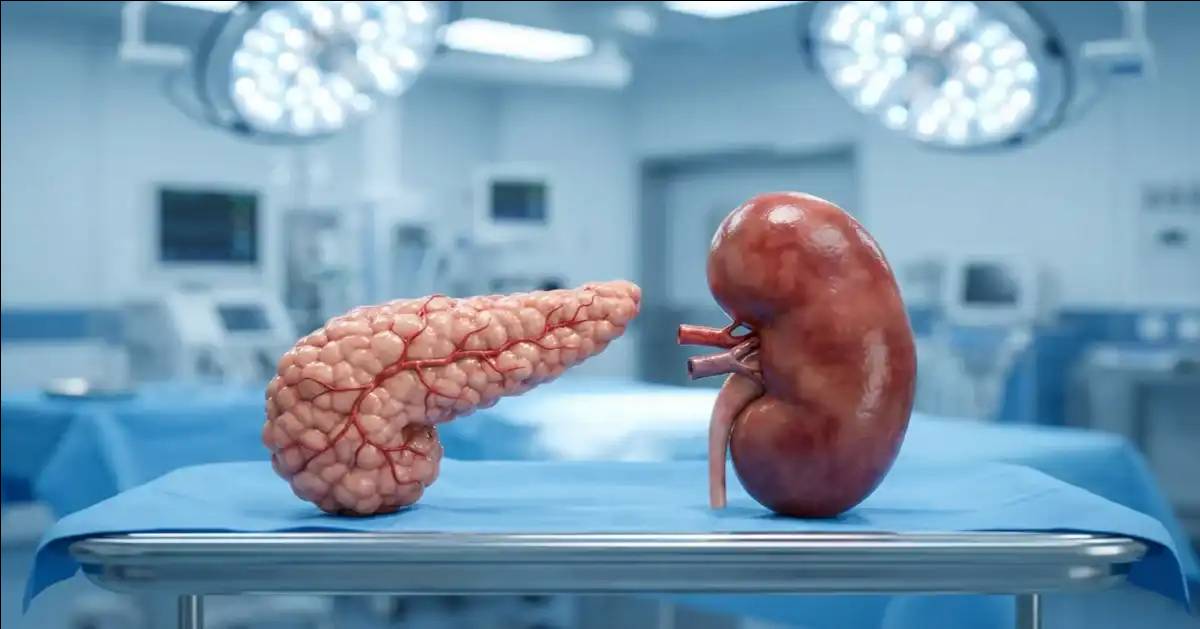






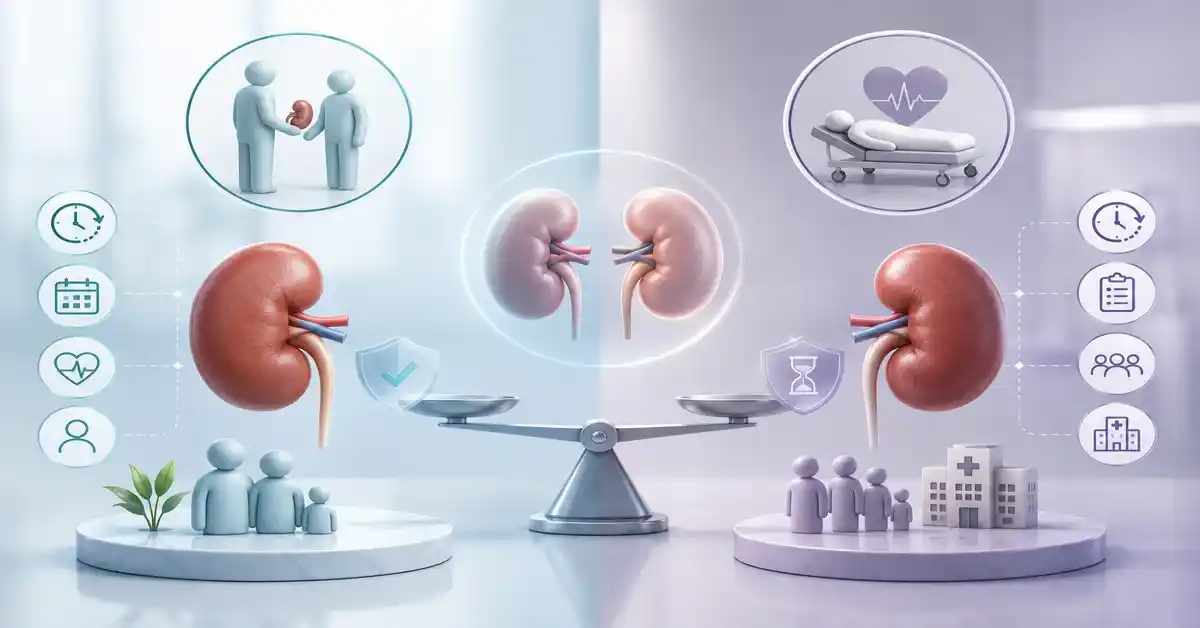
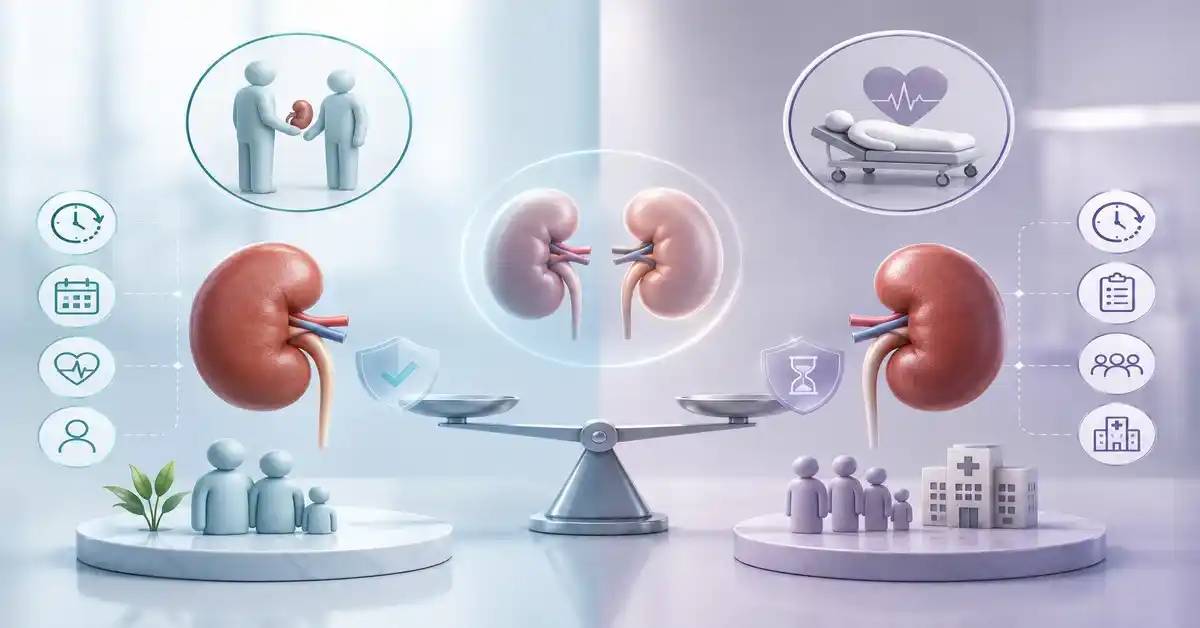
Kidney transplantation is an important treatment option for people with advanced kidney failure who are medically suitable for surgery and long-term immunosuppressive treatment. The transplanted kidney may come from a healthy living donor or from a deceased donor whose organs have been accepted for donation.
Both procedures aim to restore kidney function, regulate fluid and electrolyte balance, and reduce or eliminate dependence on dialysis. However, they differ in timing, donor evaluation, organ allocation, preservation time, likelihood of immediate kidney function, waiting period, and the presence or absence of surgical risk to a living donor.
Living donor transplantation can usually be planned in advance and involves a shorter period between kidney removal and implantation. In selected patients, it may allow transplantation before dialysis begins. Deceased donor transplantation provides access to treatment when no suitable living donor is available, but it normally involves an unpredictable waiting period. On average, living donor kidneys are associated with faster initial function and longer graft survival, although individual kidney quality, recipient health, compatibility, and postoperative care remain decisive.
Kidney Transplantation and the Main Types of Kidney Donor
The patient’s transplant pathway changes according to the source of the kidney. Living donation begins with the voluntary evaluation of a healthy donor candidate. Deceased donation depends on the availability and allocation of a medically suitable organ to a patient on the waiting pathway.
What Is a Living Donor Kidney Transplant?
A healthy person donates one kidney, which is removed surgically and implanted into the recipient. The donor may be a relative, spouse, partner, friend, or another person whose donation is accepted under the applicable medical and legal process.
Carefully selected people can generally live with one kidney, but donation is still major surgery performed on a healthy individual. Donor evaluation must therefore assess kidney function, blood pressure, metabolic and cardiovascular health, family history, psychological readiness, and the person’s understanding of immediate and long-term uncertainty.
What Is a Deceased Donor Kidney Transplant?
The kidney is recovered from a deceased person after the required medical, ethical, and consent procedures have been completed. Donation may occur after the irreversible loss of brain function or after circulatory death under controlled protocols.
The kidney is assessed for function, donor medical history, infection risk, and other factors before being allocated. Because it may need to be transported, it is preserved at a low temperature between retrieval and implantation. Kidneys donated after circulatory death may have a higher likelihood of delayed initial function, but carefully selected organs can achieve good long-term outcomes.
Why Does the Recipient Need a Full Transplant Evaluation?
Advanced kidney disease alone does not automatically make transplantation safe. The team must determine whether the patient can tolerate surgery and immunosuppressive therapy and whether untreated medical problems would create an unacceptable risk.
Evaluation may include:
- The cause of kidney failure and risk of recurrence.
- Heart, lung, and vascular assessment.
- Screening for active infection.
- Review of previous cancer and current health risks.
- Blood group, tissue typing, and antibody testing.
- Weight, diabetes, and blood-pressure management.
- Psychological and medication-adherence assessment.
- Review of living and deceased donor pathways.
Living Donor Kidney Transplant Benefits and Donor Requirements
Living donation allows the transplant to be organized after both people have completed assessment. This can reduce uncertainty and preservation time, but the plan is acceptable only when the donor’s safety and independent decision-making have been protected.
Benefits of Living Donor Transplantation for the Recipient
Potential advantages include:
- A planned operation: The date can be selected after the evaluations are complete.
- A shorter wait: The recipient does not depend entirely on deceased donor availability.
- Possibility of preemptive transplantation: Surgery may occur before long-term dialysis is required.
- Short preservation time: The kidney is usually implanted soon after removal.
- Earlier initial function: Living donor kidneys frequently begin functioning promptly.
- Favorable long-term graft outcomes: Living donation is associated on average with a lower risk of graft failure over subsequent years.
These advantages do not eliminate rejection risk. Every recipient still requires immunosuppressive medication and regular monitoring.
Medical and Ethical Evaluation of the Living Donor
A compatible blood group is not enough to approve donation. The donor’s decision must be voluntary, informed, and free from financial, emotional, or social coercion. A separate donor team should focus on the donor’s interests.
Donation may be unsuitable or require additional evaluation when there is:
- Reduced or uncertain kidney function.
- Unexplained protein or blood in the urine.
- Uncontrolled hypertension.
- Diabetes or substantial metabolic risk.
- Serious obesity or cardiovascular disease.
- Recurrent kidney stones.
- Active infection or malignancy.
- Possible inherited kidney disease.
- Psychological pressure or inability to provide informed consent.
Long-term follow-up should include blood pressure, kidney function, urine testing, and management of future health risks.
Living Kidney Donation Risks and Recovery
Donor nephrectomy is frequently performed with minimally invasive techniques, but potential complications include bleeding, infection, blood clots, injury to nearby structures, and anesthesia-related events. Operative death is extremely rare, but it remains a real risk that must be disclosed.
The remaining kidney increases its function after donation, although total filtration generally does not return completely to the pre-donation level. Long-term risk remains low for appropriately selected donors, but it is not zero and varies according to age, blood pressure, weight, family history, and other individual factors.
Deceased Donor Kidney Transplantation and the Waiting Process
Deceased donation is essential for patients without a suitable living donor. Because the number of available kidneys is lower than the number of patients who need transplantation, an allocation process is required to identify the most appropriate recipient for each organ.
How Is a Deceased Donor Kidney Allocated?
Once the recipient is accepted, the patient enters the relevant waiting pathway. When a kidney becomes available, its characteristics are compared with those of potential recipients.
Allocation factors may include:
- Blood group.
- Tissue characteristics.
- Antibody and crossmatch results.
- Time spent waiting.
- Recipient and donor age factors.
- Body size.
- Medical priority in applicable circumstances.
- Distance and transport time.
- Local allocation policies.
The waiting system is not a simple first-come, first-served queue. A kidney suitable for one patient may carry an unacceptable immune or medical risk for another.
Preparing for a Deceased Donor Kidney Offer
The operation cannot usually be scheduled until a suitable organ is identified. The patient must remain contactable and ready to attend the transplant center quickly.
The process commonly involves:
- Receiving the transplant call.
- Reporting any recent infection or hospitalization.
- Traveling to the center.
- Repeating blood and medical tests.
- Completing the final crossmatch.
- Reviewing the kidney’s condition.
- Proceeding only if the final assessment is satisfactory.
A patient may be called to the hospital and later informed that the transplant cannot proceed because the kidney or final test results are unsuitable. This protects the patient from accepting an avoidable risk.
Delayed Graft Function After Deceased Donation
Some deceased donor kidneys produce urine and function immediately, while others require time to recover. Temporary dialysis may be needed during this period.
Factors that may affect early function include:
- Cold preservation duration.
- Donor age and medical condition.
- Donation after circulatory or neurological death.
- Periods of reduced organ blood flow.
- Preservation and transport quality.
- Recipient stability during surgery.
Longer cold ischemia is associated with a higher probability of delayed function, but baseline kidney quality may have an even greater effect on long-term performance. Delayed function does not automatically mean permanent graft failure.
Living and Deceased Donor Kidney Transplant Comparison
A comparison describes general tendencies rather than predicting an individual result. A high-quality deceased donor kidney may function for many years, while a living donor transplant can still experience rejection, thrombosis, infection, or recurrent kidney disease.
Living Versus Deceased Donor Comparison Table
| Comparison | Living donor kidney | Deceased donor kidney |
|---|---|---|
| Surgical timing | Usually planned | Occurs when a kidney becomes available |
| Waiting period | Often shorter after evaluation | May be prolonged and unpredictable |
| Donor source | Carefully assessed healthy person | Medically assessed deceased donor |
| Preservation time | Usually short | May be longer because of transport |
| Initial kidney function | More often immediate | Delayed function is more common |
| Temporary dialysis | Less common on average | May be needed during recovery |
| Long-term graft outcome | Better on average | Good outcomes remain achievable |
| Compatibility testing | Completed and reviewed in advance | Final assessment follows the offer |
| Donor surgical risk | A healthy donor undergoes surgery | No living person undergoes donor surgery |
| Preemptive transplant | Easier to organize | Possible but less predictable |
| Incompatible options | Paired exchange may be possible | Another suitable offer is awaited |
| Cancellation | Can be postponed if either person changes | Offer may be declined after admission |
Is a Living Donor Kidney Always Better?
On average, a living donor kidney begins functioning faster and has longer graft survival. Careful donor selection, shorter preservation, and planned surgery contribute to this difference.
However, a living donor should not be accepted when donation creates an excessive personal risk. A donor may have an inherited condition, unsuitable anatomy, significant health risk, or complex incompatibility. Protecting the donor is more important than accelerating the transplant.
Is a Deceased Donor Kidney a Poorer Treatment?
No. Deceased donor transplantation provides effective long-term kidney replacement for many patients. Modern organ selection and preservation can produce stable outcomes, including with kidneys that initially require time to recover.
A kidney offer may contain some known uncertainty. The recipient should understand why it is being offered, the donor information that can be shared, the expected benefits and risks, and how declining the kidney may affect future waiting.
Compatibility and Choosing the Most Appropriate Kidney Source
Family relationship does not guarantee compatibility, and an unrelated donor may be medically and immunologically suitable. Both donor and recipient should be assessed independently, with the donor’s safety protected throughout the process.
Blood Group, Tissue Type, and Crossmatch Testing
The immune assessment commonly includes:
- Blood-group compatibility: Reduces the risk of severe early immune injury, although selected incompatible procedures may be possible.
- Tissue typing: Greater similarity can be helpful, but perfect matching is not required in every transplant.
- Antibody testing: Identifies immune sensitization from previous transfusions, pregnancy, or transplantation.
- Crossmatch: Determines whether the recipient’s blood reacts against cells from the intended donor.
Even with strong compatibility, immunosuppressive medication is required because the transplanted kidney remains genetically different from the recipient.

What If the Living Donor Is Incompatible?
Some incompatible donor-recipient pairs may participate in paired kidney exchange. The original donor gives a kidney to a compatible recipient, while the intended recipient receives a suitable kidney from another donor.
Selected patients may also be considered for specialized treatment across blood-group or antibody incompatibility. This approach may involve additional medication and increased immune risk and should be compared with paired exchange or deceased donor waiting.
How Should the Patient Choose?
The choice should consider:
- Living donor safety.
- Immunological compatibility.
- Rate of kidney-function decline.
- Current dialysis requirement.
- Expected waiting period.
- Recipient age and medical conditions.
- Quality of a deceased donor kidney offer.
- Availability of paired exchange.
- Ability to follow medication and monitoring.
- The informed preferences of the patient and donor.
A patient may pursue living donor evaluation while remaining eligible for an appropriate deceased donor pathway, depending on the applicable program.
Kidney Transplant Surgery, Recovery, and Long-Term Risks
The basic recipient operation is similar for both donor sources. The new kidney is usually placed in the lower abdomen, its blood vessels are connected to the recipient’s vessels, and its ureter is joined to the bladder. The original kidneys commonly remain in place unless they cause a specific problem.
Recovery After Living or Deceased Donor Transplantation
The team monitors urine production, kidney function, electrolytes, blood pressure, wound healing, and immunosuppressive drug levels. Hospital recovery may be shorter when a living donor kidney functions promptly. A deceased donor recipient may need longer monitoring or temporary dialysis if function is delayed.
Recovery includes:
- Early mobilization.
- Fluid and electrolyte management.
- Wound and urinary-catheter care.
- Immunosuppressive medication education.
- Frequent kidney-function blood tests.
- Blood-pressure and glucose control.
- Temporary lifting restrictions.
- Planned outpatient follow-up.
Risks Shared by Both Types of Kidney Transplant
Potential complications include:
- Bleeding or blood clots.
- Urine leakage or ureteric obstruction.
- Surgical and urinary infections.
- Acute or chronic rejection.
- Delayed graft function.
- Medication-related diabetes or hypertension.
- Increased susceptibility to infection.
- Increased risk of selected malignancies.
- Recurrence of the original kidney disease.
- Graft failure and return to dialysis.
The donor source changes some probabilities but does not remove the need for close monitoring.
Protecting the Kidney Over the Long Term
Long-term graft function depends heavily on taking medication at the correct time, monitoring drug levels, controlling blood pressure and diabetes, avoiding kidney-toxic medication, and treating infection promptly.
The patient should contact the clinical team for:
- Fever or chills.
- Markedly reduced urine output.
- Sudden swelling or rapid weight gain.
- Pain or redness near the graft.
- Vomiting that prevents medication use.
- Severe blood-pressure elevation.
- Shortness of breath.
- Missed immunosuppressive doses.
Conclusion
The principal differences between living and deceased donor kidney transplantation involve planning, waiting time, preservation time, early graft function, and donor risk. Living donation can provide a planned and often earlier operation, with faster average initial function and longer average graft survival. However, it requires a healthy person to accept surgical and long-term health risks, making donor protection the highest priority.
Deceased donor transplantation is an effective and essential option for patients without a suitable living donor. Waiting and delayed initial function may be more common, but a carefully selected deceased donor kidney can provide stable function for many years.
Frequently Asked Questions: Living Versus Deceased Donor Kidney Transplantation
Does a living donor kidney last longer?
On average, it is associated with longer graft survival, but actual duration depends on kidney quality, compatibility, rejection, recipient health, and medication adherence.
Can transplantation happen before dialysis?
Yes. Preemptive transplantation may be possible, and it is often easier to organize when a living donor evaluation is completed early.
Must a living kidney donor be related?
Not necessarily. A donor may be a relative, spouse, friend, or another approved person, depending on medical, ethical, and legal requirements.
What happens when the living donor is incompatible?
Paired kidney exchange, selected incompatibility treatments, or continued waiting for a deceased donor kidney may be considered.
Is dialysis sometimes required after deceased donor transplantation?
Yes. Temporary dialysis may be needed if the transplanted kidney takes time to begin functioning, but this does not necessarily mean permanent failure.