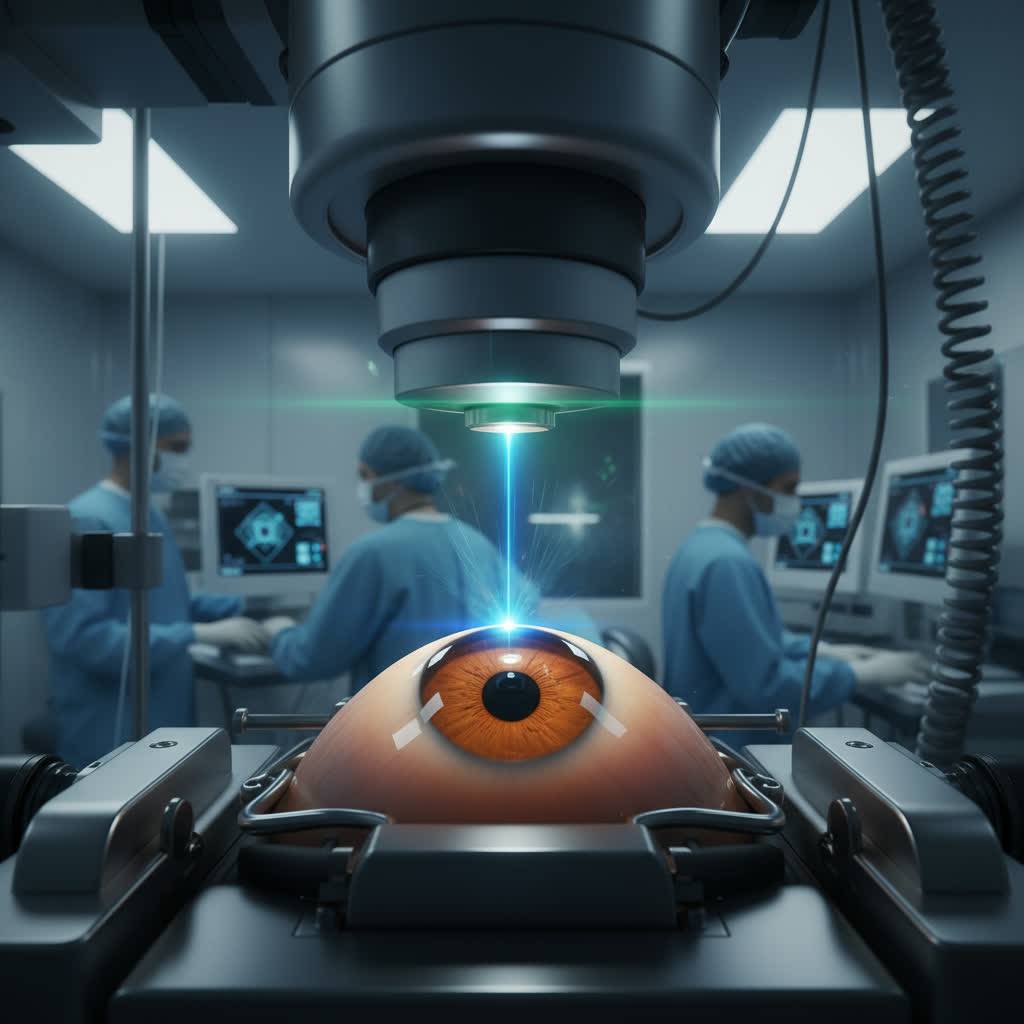








LASIK is one of the best-known laser vision correction procedures, but its popularity has also created conflicting claims. Some people believe it permanently eliminates glasses for everyone, while others fear that blindness, severe pain, or permanent dry eye are common consequences. Neither extreme reflects current evidence. LASIK can provide excellent results for appropriately selected patients, but it remains surgery with limitations, possible side effects, and uncommon serious complications. A 2025 review of 95 studies reported high patient satisfaction and very low rates of sight-threatening complications.
At Safemedigo, LASIK assessment begins with refractive stability, corneal thickness and shape, ocular-surface health, tear-film function, age, and the patient's visual requirements. The central question is therefore not simply whether LASIK is available, but whether LASIK is the most appropriate refractive procedure for that particular eye.
How LASIK Vision Correction Really Works and What It Can Achieve
LASIK reshapes corneal tissue to change how light is focused inside the eye. It can reduce myopia, hyperopia, and astigmatism within appropriate treatment ranges.
LASIK Reshapes the Cornea Rather Than Replacing the Eye Lens
A thin corneal flap is created, underlying tissue is reshaped with a laser, and the flap is repositioned.
Because corneal tissue is being altered, preoperative measurements are essential to determine whether sufficient structurally stable cornea will remain afterward.
LASIK Does Not Guarantee 20/20 Vision for Every Patient
Many patients achieve excellent unaided vision, but results vary according to the original refractive error, corneal characteristics, and treatment type.
A 2025 review found that approximately 88% of myopic LASIK eyes achieved uncorrected 20/20 distance vision, with different outcomes for hyperopic treatment. Patient satisfaction remained high overall.
The most realistic goal is therefore substantial reduction in dependence on glasses or contact lenses rather than an unconditional guarantee of perfect vision.
LASIK Surgery Is Usually Not Painful During Treatment
Topical anesthetic drops are used before the procedure.
Patients may feel pressure during certain steps, followed by burning, watering, light sensitivity, or a gritty sensation during early recovery. Significant or worsening pain should be evaluated rather than assumed to be normal.
Can LASIK Cause Blindness or Serious Vision Loss?
The statement that LASIK commonly causes blindness is incorrect, but claiming that serious complications are impossible is also inaccurate.
Sight-Threatening LASIK Complications Are Very Rare
In the recent review of 95 studies, sight-threatening complications occurred in approximately 0.07% of treated eyes, while overall satisfaction exceeded 90%.
Rare infection, inflammation, corneal instability, or other complications can affect vision, which is why informed consent should include both the high probability of a good outcome and the small possibility of serious harm.
Corneal Mapping Before LASIK Helps Identify High-Risk Eyes
Modern corneal topography and tomography can reveal subtle irregularity, abnormal thickness patterns, and early features of corneal ectasia.
Recent developments in three-dimensional imaging, epithelial mapping, biomechanics, and data-assisted analysis have improved screening for eyes that should not undergo corneal laser surgery.
Advanced Laser Technology Cannot Compensate for Poor Candidate Selection
A sophisticated laser cannot make LASIK safe for every cornea.
If significant thinning, irregularity, or suspected keratoconus is found, a different refractive procedure—or no surgery at all—may be safer.
Read about: LASIK vs Femto LASIK: How to Choose the Best Vision Correction
Dry Eye After LASIK: Temporary Symptom or Permanent Problem?
Dry eye is one of the most frequently discussed LASIK side effects, but it should not be described as either harmless in every patient or permanently inevitable.
LASIK Can Temporarily Affect Tear-Film Function
Corneal nerves play a role in sensation, blinking, and tear regulation. LASIK temporarily disrupts some of these nerves.
Modern reviews confirm that dry-eye symptoms and ocular-surface instability can develop or worsen after corneal refractive surgery.
Dry Eye Should Be Identified Before LASIK Surgery
A 2024 study found substantial ocular-surface abnormalities among people presenting as LASIK candidates, demonstrating why preoperative tear-film testing matters.
Assessment can include tear stability, eyelid oil glands, corneal staining, contact-lens history, and symptoms such as burning or intermittent blurry vision.
Post-LASIK Dry Eye Is Not Always Permanent
Many patients improve as corneal sensation and tear-film function recover.
However, persistent or severe symptoms can occur, particularly in patients with underlying ocular-surface disease. Treating dry eye before surgery and selecting an alternative procedure when necessary can be more important than simply managing symptoms afterward.
Read about: Latest Femtolasik Techniques for Sensitive Eyes in Turkey
Age, Reading Glasses, and Vision Regression After LASIK
LASIK corrects the refractive error present at the time of surgery. It does not stop the eye from aging or undergoing future biological changes.
Being Over 18 Does Not Automatically Make Someone a LASIK Candidate
Adults may be eligible for LASIK, but refractive stability is essential.
A changing glasses prescription, pregnancy, breastfeeding, certain medications, and some medical conditions can cause unstable vision and may justify postponing surgery.
LASIK Does Not Prevent Presbyopia and Reading Glasses
Presbyopia is the age-related loss of near focusing ability caused primarily by changes within the natural lens.
LASIK does not stop this process. Someone who had excellent distance vision after LASIK at age 30 may still require reading glasses later in life.
Monovision can be considered for selected patients but involves compromises in binocular vision and depth perception.
Vision Can Change Years After LASIK
Some patients experience residual refractive error, regression, or later age-related changes.
Additional laser treatment may sometimes be possible, but enhancement is not automatically necessary or safe in every eye.

Night Vision, Halos, and Recovery After LASIK Surgery
Rapid functional recovery is one of LASIK's advantages, but seeing well the next morning does not mean that every aspect of healing is complete.
Halos and Glare Can Occur After LASIK
Some patients notice:
- Halos around lights.
- Glare.
- Starbursts.
- Reduced contrast in dim conditions.
- Difficulty with night driving.
These symptoms often improve, although they can persist in a minority of patients. Modern outcome studies generally show high postoperative quality of vision but confirm that individual visual symptoms remain possible.
Fast Visual Recovery Is Different From Complete Healing
Distance vision may improve dramatically within a day or several days.
The ocular surface, tear film, and corneal nerves can take considerably longer to stabilize, so follow-up remains necessary even when visual acuity is already excellent.
Eye Rubbing and Contact Sports Matter After LASIK
Patients receive specific instructions about rubbing the eyes, swimming, exercise, eye makeup, and contact sports during recovery.
People who regularly participate in activities involving direct blows to the face should discuss this before choosing a flap-based procedure.
Read about: Femtosecond LASIK: Turkey vs Germany
Who Should Avoid LASIK and What Vision-Correction Alternatives Exist?
Not everyone who wears glasses should undergo LASIK. Identifying patients who should not receive the procedure is one of the most important parts of safe refractive surgery.
Keratoconus and Abnormal Corneal Shape Can Make LASIK Unsafe
Preoperative assessment evaluates:
- Corneal thickness.
- Anterior and posterior shape.
- Thickness distribution.
- Early ectatic changes.
- The amount of tissue expected to remain after treatment.
Modern multimodal corneal imaging has improved detection of subtle abnormalities before refractive surgery.
Pregnancy, Unstable Refraction, and Ocular Disease May Require Postponement
Pregnancy and breastfeeding can be associated with refractive instability.
Significant untreated dry eye and certain ocular or systemic conditions can also change the risk-benefit balance, making postponement or an alternative treatment preferable.
PRK, SMILE, and Implantable Lenses Are Alternatives to LASIK
Alternatives may include:
- PRK and other surface-ablation procedures.
- SMILE and related lenticule-extraction procedures.
- Implantable phakic lenses for selected patients.
- Continued glasses or contact lenses.
Comparative research shows that several refractive techniques can produce excellent visual results when matched to the correct patient.
Read about: LASIK Eye Surgery: Turkey vs USA
Conclusion
LASIK is neither a risk-free guarantee of perfect eyesight nor the dangerous procedure portrayed by some myths. In appropriately selected patients, modern LASIK generally provides high satisfaction and strong visual outcomes, while serious complications are uncommon. Dry eye, halos, residual prescription, and future need for reading glasses remain realistic possibilities that should be discussed beforehand.
Frequently Asked Questions: LASIK Misconceptions and Vision Correction Facts
Can LASIK cause blindness?
Severe sight-threatening complications are very rare but not impossible. Proper screening and postoperative care are essential.
Does LASIK mean I will never need glasses again?
No. Residual or future refractive changes can occur, and age-related reading glasses may still become necessary.
Is dry eye after LASIK permanent?
It frequently improves over time, although persistent dry eye can occur in some patients, especially when ocular-surface problems existed beforehand.
Is everyone over 18 suitable for LASIK?
No. Prescription stability, corneal health, tear-film status, and other medical factors must also be assessed.
Are halos after LASIK permanent?
They often improve during recovery, but some patients can continue to experience night-vision symptoms.