





The world of dentistry has witnessed a tremendous revolution with the introduction of laser technology, which has radically changed the way many surgical and cosmetic treatments are performed. Gone are the days when oral surgery was exclusively associated with the unsettling sound of a drill or a surgical scalpel. Today, focused and precise beams of light have replaced traditional tools, ushering in a new era of precision and comfort in dentistry.
This advanced technique relies on using intense light energy to modify or remove tissues in the mouth with utmost precision, which reduces pain and bleeding and accelerates the healing process. This shift has not only made procedures more effective but has also helped reduce the fear and anxiety many patients feel about visiting the dentist, making the treatment experience more positive and comfortable.
In this comprehensive guide, we will explore the world of laser dental surgery, highlighting the latest techniques, expected results, costs, and how to choose the right center. At Safemedigo, we believe in the importance of keeping up with medical advancements and aim to provide you with clear information to help you understand how these advanced technologies can offer you the best possible results for the health and beauty of your smile.
Laser Dental Surgery: An Overview
To understand the true value of this technology, we must first know what laser dental surgery is, how it works, and why it has become an integral part of modern dentistry.
What is laser dental surgery
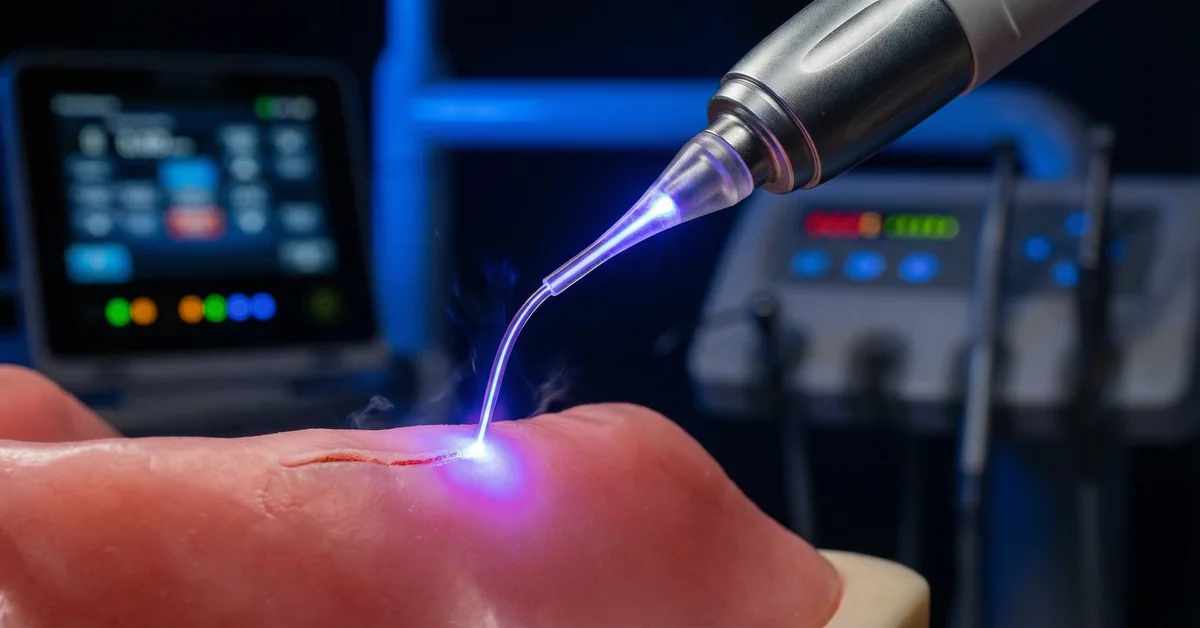
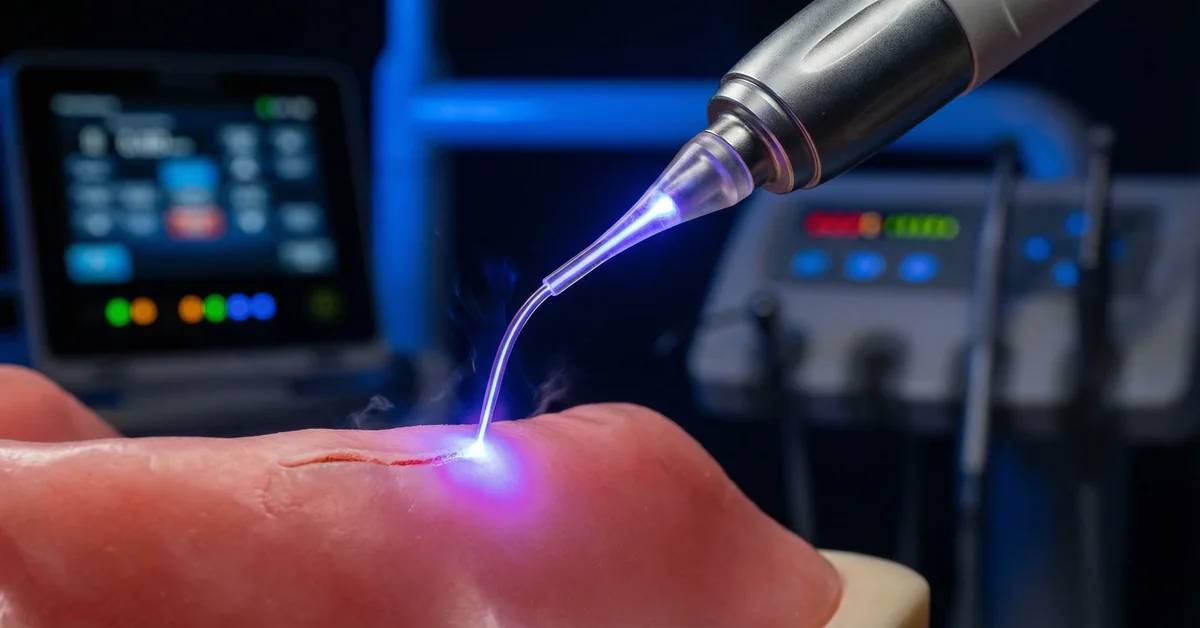
Laser dental surgery is the use of focused, high-energy light beams (lasers) to make adjustments or remove tissue in the mouth. Lasers can be used on soft tissues like gums and on hard tissues like tooth enamel and bone. The laser energy vaporizes or cuts tissue with extreme precision without the need for traditional surgical tools.
Why is laser dental surgery an advanced technique
This technique is considered advanced because it provides a level of precision and control that cannot be achieved with traditional instruments. The dentist can target very small areas without affecting the surrounding tissue. Additionally, the laser energy cauterizes blood vessels immediately during cutting, which significantly reduces bleeding and creates a clean, sterile surgical environment.
Benefits of laser dental surgery
The benefits for the patient are numerous, most notably:
- Less Pain: In many cases, the procedure requires no anesthesia, or a much smaller amount.
- Less Bleeding: The laser reduces bleeding during and after surgery.
- Faster Healing: The recovery time after laser dental surgery is much shorter.
- Reduced Risk of Infection: The laser sterilizes the area as it works.
- Greater Precision: It preserves as much healthy tissue as possible.
Read about: Same-Day Dental Implants: Is It Possible?
Advanced Laser Dental Surgery Techniques
Advanced laser dental surgery techniques are categorized based on the type of tissue they target, as each type requires a different laser wavelength.
Laser dental surgery of hard tissue applications
This technique targets teeth and bones. It is used for precise cavity removal, preparing teeth for fillings, and treating tooth sensitivity. Erbium lasers are the most common type in laser dental surgery of hard tissue, as they can effectively cut through tooth enamel and bone with minimal heat.
Laser dental surgery for soft tissue applications
This technique is used on the gums, lips, and tongue. Applications include gum reshaping, removing benign tumors, and treating gum disease. Diode lasers and CO2 lasers are the most commonly used in laser dental surgery for soft tissue due to their ability to cut and vaporize while simultaneously cauterizing blood.
Read about: Non-Surgical Dental Implant Techniques Available in Turkey
Devices used in laser-assisted dental surgery
Dental laser devices vary, and each has a specific wavelength suitable for certain applications. The dentist chooses the appropriate device based on the required procedure and the type of tissue being targeted. These devices require specialized training to ensure they are used safely and effectively, making the dentist's expertise a crucial factor in the success of the treatment.

Effective Laser Dental Surgery Results: What to Expect
Advanced laser dentistry procedures offer impressive results, but it is important for the patient to have realistic expectations about the healing period and final outcomes.
Recovery time after laser dental surgery
The recovery time after laser dental surgery is one of its biggest advantages. Since the procedure is less invasive and reduces swelling and bleeding, most patients return to their normal routine the same day or the next. Full tissue healing is much faster compared to traditional surgery.
Read about: Front Teeth Dental Implants: Procedure and Recovery Time
Suture-free laser dental surgery: myth or reality?
This is a reality in most soft tissue procedures. When the laser cuts the gum, it seals the blood vessels at the same time, eliminating the need for surgical sutures. This not only makes the procedure more comfortable but also reduces the risk of scarring and speeds up healing.
Comparing laser dental surgery vs conventional dental surgery
Compared to conventional surgery, effective laser dental surgery results show clear superiority in several aspects: higher precision, less pain, almost no bleeding, faster healing, and a reduced risk of infection. While the cost may be higher, these benefits make it a preferred choice for many patients and doctors.
Read about: How to Choose the Best Dental Implant Center in Turkey
Laser Gum Surgery and Tissue Shaping
Laser gum surgery is one of the most prominent applications of lasers in cosmetic and therapeutic dentistry, providing precise and effective solutions for gum problems.
Laser gum surgery for a smile makeover
A gummy smile, where a large part of the gum is visible when smiling, can be effectively treated with laser gum reshaping. The dentist uses the laser to remove excess tissue with extreme precision, creating a new, symmetrical gum line. A laser dental surgery smile makeover is quick, the results are immediate, and healing takes only a few days.
Laser dental surgery for soft tissue in periodontal treatment
In cases of periodontitis, the laser is used to remove inflamed tissue from the periodontal pockets and sterilize the area to kill the disease-causing bacteria. This process stimulates healing and helps the gum reattach to the tooth, all with minimal discomfort for the patient.
Laser tissue shaping for aesthetic dentistry
Besides gum treatment, other applications of laser oral surgery dentistry include frenectomies (removing the frenulum of the tongue or lip) that may cause speech problems or gaps between teeth, taking biopsies from suspicious tissues, and treating mouth ulcers to speed up their healing and relieve pain.
Read about: Immediate Laser Dental Implants: Fast and Advanced
Laser Root Surgery and Implant Procedures
The role of lasers is not limited to soft tissues; it has extended to complex procedures like root canals and dental implants, adding a new level of precision and success.
Laser root surgery dental: when and why
In root canal therapy, laser root surgery dental can be used to disinfect the canals more effectively than traditional methods. The laser light reaches minute areas within the canal that disinfectant solutions may not, ensuring complete removal of bacteria and increasing the long-term success rate of the treatment.
Laser dental implant surgery: steps and outcomes
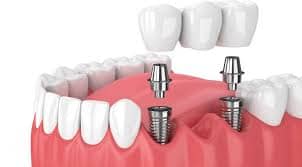
The laser can be used in several stages of laser dental implant surgery. It is used to make a precise incision in the gum to expose the bone with minimal bleeding, and it can also be used to sterilize the implant site before placement. After placing the implant, the laser helps stimulate healing and reduce inflammation around it, supporting the process of osseointegration.
Laser dental surgery hard tissue: innovations and challenges
Despite its advancements, laser dental surgery of hard tissue still faces some challenges, such as the inability to remove old metal fillings. However, research and development continue to improve laser capabilities and make them more comprehensive in the future.
Read about: Dental Implant Prices: Turkey vs USA
Benefits and Risks of Laser Dental Surgery
Like any medical procedure, it is important to weigh the significant benefits against the potential risks before making a decision.
Benefits of laser dental surgery for patients
The benefits are clear: a more comfortable treatment experience, less pain and bleeding, faster healing, precise results, and a reduced need for anesthesia and sutures. These advantages make lasers an ideal choice for patients who suffer from dental anxiety or fear. For a consultation about these benefits for your case, you can contact the Safemedigo team via WhatsApp.
Risks of laser dental surgery and what to watch for
The risks of laser dental surgery are very low when performed by a trained and qualified dentist. Potential risks include damage to surrounding tissues if incorrect laser settings are used. It is essential to ensure that the dentist and clinic use special protective eyewear to protect the eyes from the laser beam.
Cost of laser dental surgery versus value
The cost of laser dental surgery may be higher than traditional procedures, but the value it provides in terms of comfort, speed of healing, and reduced complications makes it a good investment in your health. Patients often find that the benefits outweigh the additional cost.
Read about: Dental Implants for Teenagers: What Is the Right Age
Cost of Laser Dental Surgery and Influencing Factors
The cost varies based on several factors, and it is important to understand them when planning for treatment.
Cost of laser dental surgery in specialized clinics
In general, the cost of laser procedures is 10-30% higher than traditional procedures. This is due to the high cost of laser devices and the specialized training that doctors require to use them.
Factors influencing the cost of laser dental surgery
The main factors affecting the cost include: the type and complexity of the procedure, the type of laser used, the dentist's experience, and the geographic location of the clinic. A simple procedure like removing a small lesion will be less expensive than a full periodontal treatment with a laser.
Read about: Fixed Dental Bridges: Benefits and Costs in Turkey
Is laser dental surgery worth the investment?
For many patients, the answer is yes. The added comfort, reduced pain and anxiety, and faster healing are important factors that make the treatment experience much better. The decision ultimately depends on the patient's priorities and budget. To discuss the options that are right for you, contact the experts at Safemedigo today.
How to Choose Your Laser Dental Surgery Provider
Choosing the right provider is the most important factor in ensuring the success and safety of the treatment.
What to look for in a laser-assisted dental surgery centre
Look for a reputable center with doctors who have certifications and specialized training in the use of lasers. The clinic should be equipped with the latest laser devices and follow strict safety protocols, including providing eye protection.
Questions to ask before undergoing laser dental surgery
Before agreeing to the treatment, ask your dentist: What is your experience with using lasers for this specific procedure? What type of laser will you use and why? What are the expected results and recovery period? Are there other alternatives for my case?
Laser dental surgery: pre- and post-operative experience
A good dentist will explain all the steps of the procedure to you, and what to expect during and after the surgery. They will provide you with clear post-operative care instructions to ensure the best possible healing. Transparency and good communication are key to a positive experience.
Read about: Dental Implants for Children: Safe and Modern Techniques
The Future of Laser Dental Surgery: Trends Expectations
Laser technology continues to evolve, and its future in dentistry looks very promising.
Advanced laser dentistry procedures coming in the next years
It is expected that we will see advanced laser dentistry procedures become more common and precise. Research is underway to develop lasers that can autonomously distinguish between healthy and diseased tissue, increasing treatment accuracy and preserving healthy tissue.
Innovations in laser-assisted dental surgery techniques
Future innovations include the development of smaller and less expensive laser devices, the integration of artificial intelligence to guide the laser beam with greater precision, and expanding the range of procedures that can be performed with lasers to include more complex treatments.
How effective laser dental surgery results will shape patient care
The patient of the future will benefit from faster, more comfortable, and less painful procedures. A visit to the dentist will become a less stressful experience, and the aesthetic and functional results will be better than ever, contributing to an improved quality of life and overall oral health.
Read about: Fast Recovery Steps After Laser Dental Implants in Turkey
Conclusion
In conclusion, laser dental surgery represents a paradigm shift in the field of dentistry, offering advanced solutions that combine precision, efficiency, and comfort. By reducing pain and bleeding and accelerating healing, this technology has radically transformed the patient experience, making treatments that were once complex and painful much simpler and easier.
Whether you are considering a cosmetic procedure like a laser dental surgery smile makeover or need a functional treatment like laser root surgery, understanding the available options is the first step toward making an informed decision. The success of the treatment largely depends on choosing a qualified doctor and a well-equipped center.
If you are ready to explore how advanced laser techniques can improve the health and beauty of your smile, the next step is to consult an expert. Contact the Safemedigo team today via WhatsApp for a personal consultation and to discuss the best treatment options available to you. Let us help you achieve a healthy, radiant smile with the latest technology.
Frequently Asked Questions: Laser Dental Surgery: Advanced Techniques with Effective Results
Is laser dental surgery safe?
Yes, it is considered very safe when performed by a trained and qualified dentist. Strict safety protocols are followed, including the use of special protective eyewear for the patient and medical staff to protect the eyes from the laser beam.
Can lasers be used in all dental procedures?
No, lasers cannot replace all traditional tools. For example, they cannot be used to remove old metal fillings or to shape crowns in some cases. The dentist determines whether the laser is the most appropriate option for your case.
What is the difference between a soft tissue laser and a hard tissue laser?
The main difference is the wavelength of the laser. A soft tissue laser (such as a diode) is well absorbed by water and hemoglobin, making it ideal for gum procedures. A hard tissue laser (such as an erbium) is absorbed by hydroxyapatite (the mineral component of teeth and bones), allowing it to cut these tissues effectively.
Will I feel any pain during laser dental surgery?
Most patients feel much less pain compared to traditional surgery. In many soft tissue procedures, you may not need anesthesia at all. In hard tissue procedures, a small amount of anesthesia may be used to ensure your complete comfort.