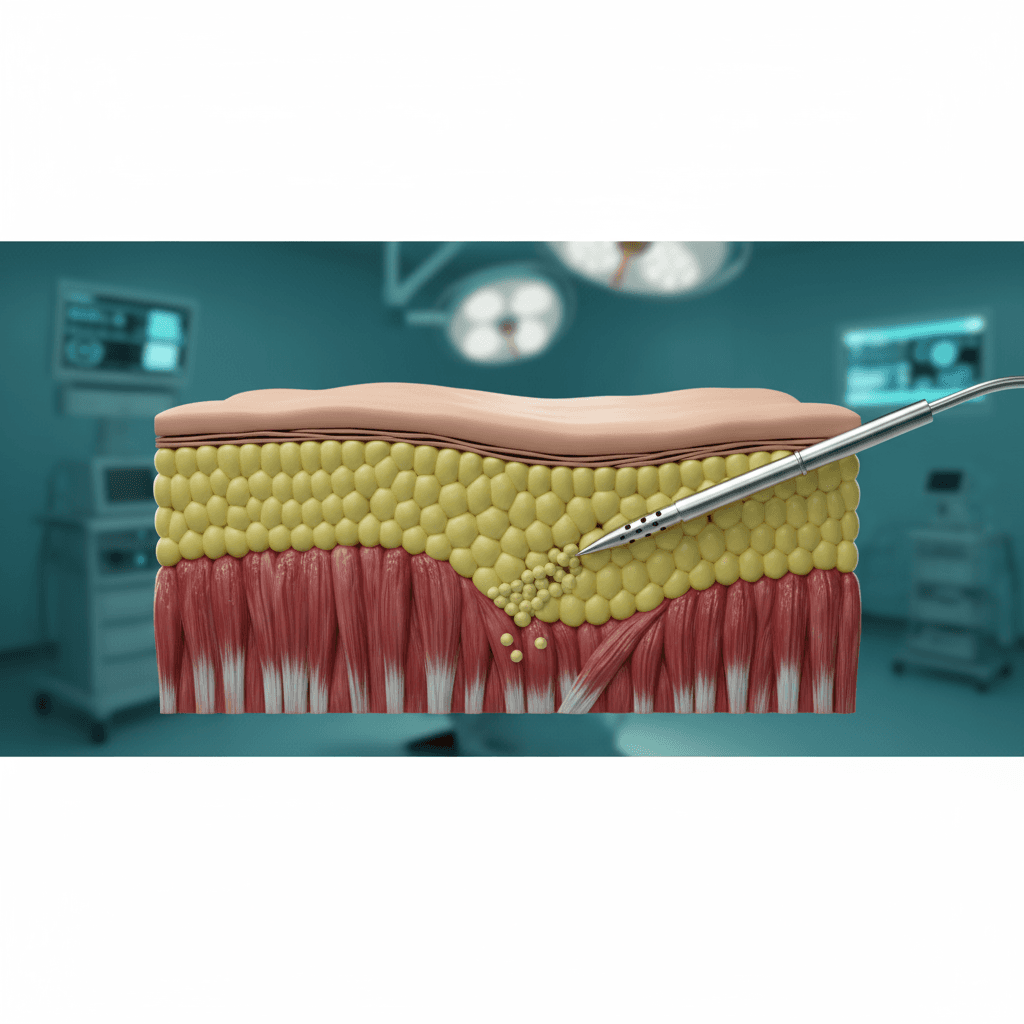






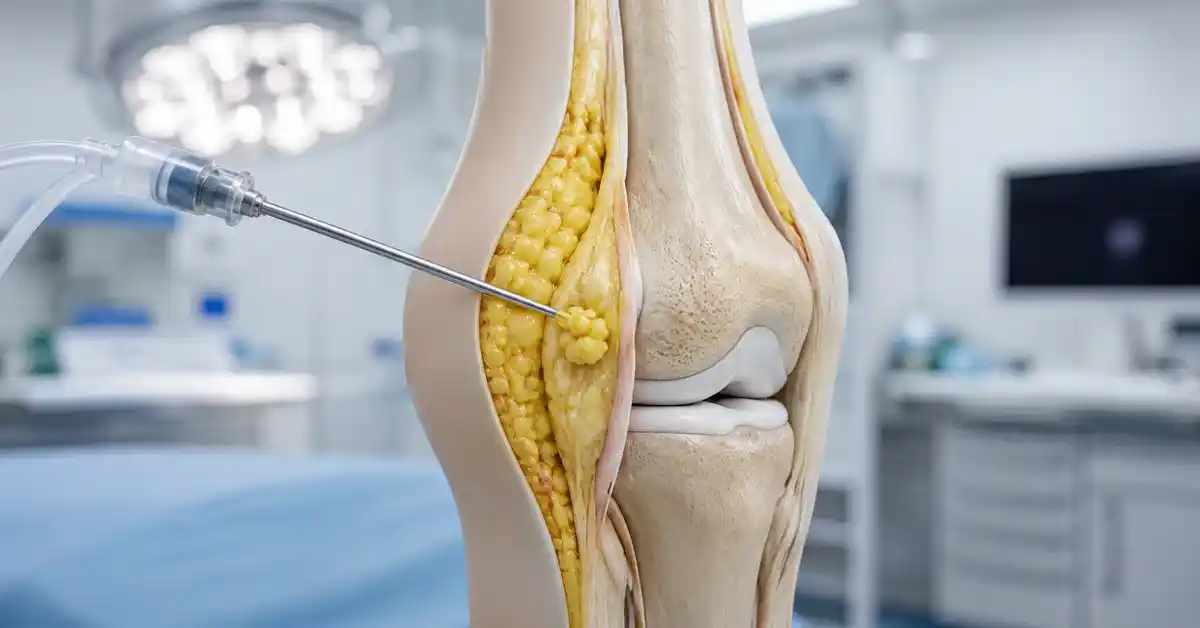
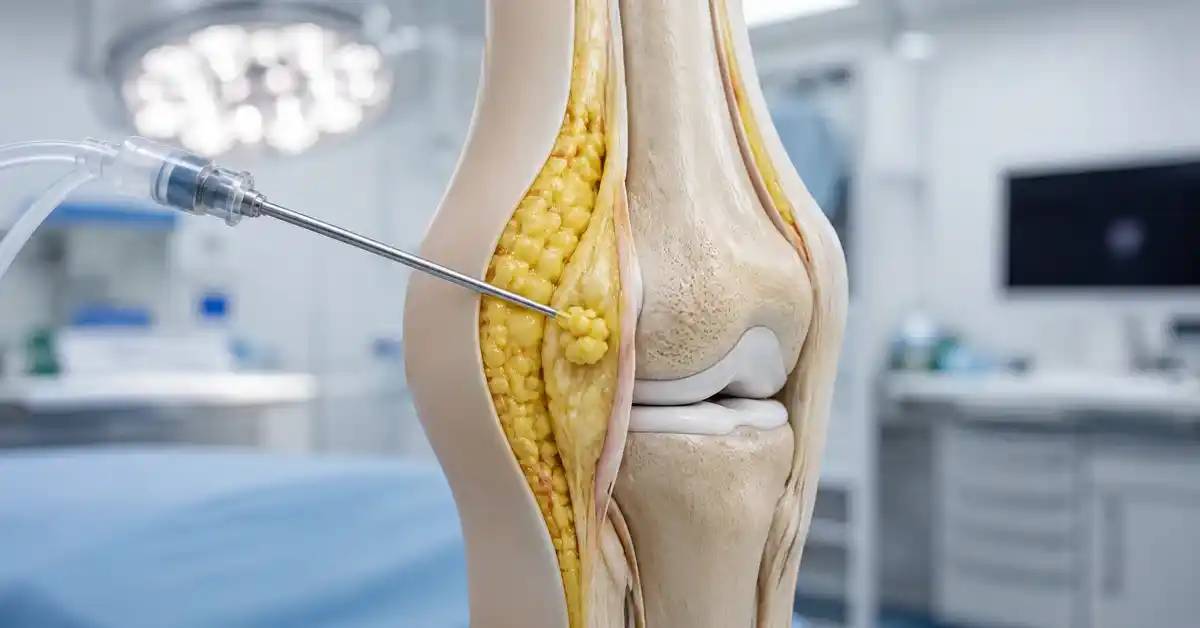
Knee liposuction is a delicate body-contouring procedure designed to remove localized fat around the knees and improve the overall shape of the legs. Although the knee area may seem small compared with the abdomen, thighs, or hips, stubborn fat around the knees can affect the full appearance of the lower body, especially when wearing fitted clothing, skirts, shorts, or swimwear.
Many people struggle with knee fat that does not respond well to diet or exercise, even when their weight is stable and their body is generally balanced. In these cases, knee fat liposuction may help refine the inner knee, upper knee, outer knee, or the area around the knees. The goal is not weight loss, but smoother proportions and a more elegant transition between the thighs, knees, and lower legs.
Knee liposuction requires precision because the skin around the knee is relatively thin, the treated area is small, and the joint moves constantly during daily activity. Removing too much fat may create irregularities, hollowness, or an unnatural appearance. Therefore, liposuction for knees should be performed conservatively and with careful planning.
At Safemedigo, knee contouring is evaluated as part of the full leg shape. The doctor considers the thighs, knees, calves, skin elasticity, fat distribution, and overall body proportions. The aim is not to remove the maximum amount of fat, but to create a natural, balanced result with safe planning, realistic expectations, and proper recovery support.
What Is Knee Liposuction?
Knee liposuction is a cosmetic procedure that removes localized fat deposits from the knee area using small cannulas. These thin tubes are inserted through tiny incisions, allowing the surgeon to gently suction fat and contour the area. Because the knee is a small and visible region, the procedure must be done with careful control.
The treatment may focus on inner knee liposuction, upper knee liposuction, outer knee liposuction, or liposuction around the knees depending on the patient’s anatomy. In some cases, knee liposuction is combined with leg contouring liposuction or inner thigh liposuction to create a more harmonious result.
Knee liposuction is not suitable for every case. If the main concern is loose skin rather than fat, liposuction alone may not provide the desired improvement. Patients with significant skin laxity may need skin-tightening treatments or surgical lifting options depending on the severity.
inner knee liposuction
Inner knee liposuction is one of the most common types of knee fat removal. Fat often accumulates on the inner side of the knees, creating a fuller appearance that may make the legs look less defined. This area can be resistant to exercise because it is often influenced by genetics and natural fat distribution.
The goal of inner knee liposuction is to reduce the bulge and create a smoother line between the inner thigh, knee, and lower leg. The surgeon must avoid over-removal because excessive fat reduction in this area may cause a hollow or uneven look.
A conservative approach is usually preferred. Small cannulas and fine movements help preserve surface smoothness. The best result is subtle, balanced, and natural, not overly sculpted or visibly operated.
knee fat removal
Knee fat removal is different from liposuction in larger areas such as the abdomen or back. The amount of fat removed is usually smaller, but the aesthetic impact can be significant because the knees are highly visible in the leg silhouette.
The procedure may be performed under local anesthesia or general anesthesia depending on the number of treated areas, patient preference, surgeon recommendation, and whether knee liposuction is combined with other areas. Small incisions are placed carefully to minimize visible marks.
Patients should understand that knee fat removal results appear gradually. Swelling and bruising may temporarily hide the improvement in the first weeks. As swelling decreases and the skin adapts, the new contour becomes more visible.
liposuction for knees
Liposuction for knees focuses on shaping, not weight reduction. It is suitable when fat is localized and persistent despite a healthy lifestyle. The surgeon evaluates the knee from the front, side, and standing position because fat distribution changes with posture and movement.
Liposuction for knees may treat:
- Inner knee fullness.
- Fat above the knee.
- Fat around the knee.
- Mild outer knee fullness.
- Lower thigh transition into the knee.
- Asymmetry between knees.
- Localized fat that affects leg contour.
The best outcome is a smoother transition between the thigh, knee, and calf. The knee should look slimmer and more defined while still appearing natural.
Read about: Vaser vs Laser Liposuction: Which Technique Is Better?
Who Is a Good Candidate for Knee Liposuction?
A good candidate for knee liposuction is someone with localized fat around the knees, stable weight, good general health, and realistic expectations. The patient should understand that liposuction is a contouring procedure, not a solution for obesity or overall weight loss.
Skin elasticity is very important. If the skin can contract after fat removal, the result is usually smoother. If the skin is loose or thin, liposuction alone may not create the desired shape and may even make laxity more noticeable. In such cases, skin tightening or lifting may be discussed.
The ideal candidate is also willing to follow recovery instructions, wear compression garments as advised, avoid intense activity during early healing, and maintain a stable weight after the procedure. Long-term results depend on both surgical technique and lifestyle.
stubborn knee fat removal
Stubborn knee fat removal may be suitable for patients who have tried exercise and weight control but still notice fullness around the knees. This fat may be genetically influenced and may remain even when the rest of the body looks slim.
Before treatment, the surgeon evaluates whether the problem is truly fat. Sometimes the knee may look swollen due to fluid retention, joint issues, inflammation, or skin laxity. These conditions require different management and should not be treated as cosmetic fat alone.
The evaluation may include:
- Fat location.
- Fat volume.
- Skin elasticity.
- Knee symmetry.
- Leg proportions.
- Weight stability.
- Medical history.
- Previous surgeries.
- Swelling or circulation concerns.
- Patient goals.
Correct diagnosis is essential for safe and satisfying results.
knee contouring
Knee contouring is more than simply removing fat. It involves improving the shape of the knee so it blends naturally with the thigh and calf. A small change in the inner knee or upper knee can significantly improve leg proportions.
Knee contouring may include inner knee liposuction, upper knee liposuction, outer knee liposuction, or liposuction around the knees. The surgeon must decide which areas need reduction and which areas should be preserved to avoid an overdone look.
Good knee contouring creates a natural result. The knee should appear lighter, smoother, and more refined without looking hollow, uneven, or surgically altered.
knee shaping surgery
Knee shaping surgery may refer to liposuction, skin tightening, or a combination of procedures depending on the patient’s concern. If the issue is localized fat, liposuction may be enough. If the issue is loose skin, fat removal alone may not solve the problem.
Knee shaping surgery may be considered for patients with:
- Inner knee fat.
- Upper knee fullness.
- Mild outer knee fat.
- Poor transition between thigh and knee.
- Localized fat resistant to exercise.
- Stable weight.
- Good skin quality.
- Desire for subtle leg refinement.
The best surgical plan should be individualized. A skilled surgeon avoids aggressive fat removal and focuses on smooth proportions.
Read about: Essential Pre and Post-Care Tips for Liposuction in Turkey
Knee Liposuction Techniques
Knee liposuction techniques vary depending on the patient’s anatomy, skin quality, fat distribution, and the surgeon’s preference. Options may include traditional tumescent liposuction, power-assisted liposuction, ultrasound-assisted liposuction, or other energy-assisted methods. The name of the technique matters less than careful planning and controlled execution.
Because the knee is a small area, fine cannulas are commonly used. The surgeon works gently to avoid contour irregularities. Overly aggressive suction can create unevenness or visible depressions, especially if the skin is thin.
Some patients may benefit from technologies that support skin contraction, but skin tightening depends heavily on natural skin quality. If skin laxity is significant, liposuction alone may not be enough.
knee fat liposuction
Knee fat liposuction removes excess fat through small incisions using a thin cannula. The surgeon usually injects a special fluid to reduce bleeding, make fat removal easier, and improve comfort. The fat is then removed gradually and symmetrically.
The procedure may include:
- Marking the knees while standing.
- Identifying fat pockets.
- Choosing anesthesia type.
- Preparing and sterilizing the area.
- Making tiny incisions.
- Injecting tumescent solution.
- Removing fat with small cannulas.
- Comparing both knees.
- Applying dressings.
- Using compression garments.
- Giving recovery instructions.
Precision is essential. Since the knee has natural curves and thin skin, small irregularities may be more visible than in larger areas.
upper knee liposuction
Upper knee liposuction treats fullness above the knee joint, often where the lower thigh meets the knee. This area may make the knee appear less defined and the lower thigh look heavier.
The surgeon must be conservative in this area. Removing too much fat above the knee can create unevenness or loose-looking skin, especially if the patient has reduced skin elasticity. The goal is to soften fullness, not flatten the area unnaturally.
Upper knee liposuction may sometimes be combined with thigh liposuction for a smoother result. Treating only one small area without considering the surrounding contour may create imbalance.
outer knee liposuction
Outer knee liposuction may be performed when mild fat fullness appears on the outer side of the knee or where the knee transitions into the lower thigh. This area is less commonly treated than the inner knee but may be important for full leg contouring in selected patients.
Outer knee liposuction requires a careful approach because the outer knee has natural bony and ligament structures. Overcorrection can make the area look uneven or too sharp. The surgeon must preserve natural softness while reducing unwanted fullness.
When performed properly, outer knee liposuction can help balance the leg contour and improve symmetry, especially when combined with inner knee or thigh contouring if needed.
Read about: Laser vs Vaser Liposuction: Which Is Safer
Information About the Knee Liposuction Before and After
Knee liposuction before and after results help patients understand possible improvements, but they should be interpreted carefully. Results vary based on fat volume, skin elasticity, age, anatomy, swelling, and whether other areas such as the thighs or calves were treated.
Before and after photos can show how inner knee fullness is reduced, how the knee becomes more defined, and how the leg line becomes smoother. However, photos should be viewed with attention to lighting, posture, timing after surgery, and similarity to the patient’s own body type.
The most natural results are usually subtle. Knee liposuction should not make the legs look dramatically different in an artificial way. Instead, it should refine proportions and improve confidence in clothing and movement.
knee liposuction before and after
Knee liposuction before and after images may show changes in the inner knee, upper knee, or overall knee contour. They can help patients visualize realistic outcomes, but they cannot guarantee an identical result.
When reviewing before and after photos, consider:
- Whether the patient has a similar body type.
- Whether the issue was fat or loose skin.
- Whether the knees alone or thighs were also treated.
- Whether photos were taken at the same angle.
- Whether swelling had fully resolved.
- Whether the result looks smooth and natural.
- Whether both sides appear balanced.
- How long after surgery the “after” image was taken.
A consultation is still necessary because the surgeon must assess the patient’s own fat distribution and skin quality.
knee contouring
Knee contouring results should improve the overall leg silhouette. Even a small reduction in inner knee fat can create a more elegant look, especially when the rest of the leg is already slim.
Successful knee contouring usually provides:
- Less inner knee fullness.
- Smoother thigh-to-knee transition.
- More defined knee shape.
- Better leg symmetry.
- Improved fit in clothing.
- Natural-looking proportions.
- No obvious hollowing.
- Minimal visible scarring.
The goal is refinement, not dramatic transformation. Overly aggressive contouring may look unnatural and should be avoided.
leg contouring liposuction
Leg contouring liposuction may include the knees, thighs, calves, or selected areas depending on the patient’s shape. Treating the knees alone may be enough for some patients, while others need a broader plan for balanced results.
Leg contouring liposuction may help when fat is distributed across:
- Inner thighs.
- Lower thighs.
- Inner knees.
- Upper knees.
- Outer knees.
- Calves in selected cases.
- Ankles in selected cases.
A full-leg approach can create smoother proportions, but it also increases treatment area, cost, and recovery needs. The plan should be tailored to the patient’s anatomy.

Learn About the Knee Liposuction Recovery
Knee liposuction recovery depends on the amount of fat removed, the technique used, whether other areas were treated, and the patient’s general health. Because the knee is a moving joint, patients may feel tightness, swelling, or discomfort when walking or bending the knee during the early recovery period.
Bruising, swelling, tenderness, mild numbness, and temporary firmness are common. These symptoms usually improve gradually. Compression garments may help reduce swelling and support the tissues as they heal.
Patients are usually encouraged to walk lightly according to the doctor’s instructions, but intense exercise, heavy activity, and excessive pressure on the knees should be avoided early. Recovery is usually easier than larger-area liposuction, but patience is still important.
knee liposuction recovery
Knee liposuction recovery often begins with a few days of swelling and bruising. Some patients return to light work relatively quickly, while others need more time depending on job demands and treatment extent.
During recovery, patients may notice:
- Swelling around the knees.
- Bruising.
- Mild to moderate soreness.
- Tightness with movement.
- Temporary numbness.
- Tenderness to touch.
- Mild difficulty bending the knee.
- Gradual contour improvement.
- Changes in skin sensation.
- Need for compression garments.
The final result does not appear immediately. Deep swelling may take weeks or months to fully resolve.
inner knee fat removal
Inner knee fat removal may require special attention during recovery because the inner knees can rub during walking. Swelling in this area may also be more noticeable early after surgery.
Patients should wear compression as directed and avoid pressure that causes discomfort. Mild walking is often encouraged, but long standing or intense lower-body workouts should wait until approved by the surgeon.
Warning signs such as severe pain, increasing redness, unusual heat, discharge, or significant swelling in one leg should be reported promptly. These symptoms may need medical evaluation.
knee fat reduction
Knee fat reduction results improve gradually as swelling decreases. The treated area may feel firm or uneven temporarily during healing. This does not always mean the final result will be irregular, as tissues need time to settle.
Helpful recovery habits include:
- Wearing compression as instructed.
- Walking lightly.
- Staying hydrated.
- Avoiding smoking.
- Following medication instructions.
- Avoiding intense exercise early.
- Keeping follow-up appointments.
- Maintaining stable weight.
- Reporting unusual symptoms.
- Being patient with swelling.
Good aftercare supports smoother healing and better long-term results.
Read about: Top Modern Non-Surgical Liposuction Techniques
Details About the Knee Lipo Cost and Planning
Knee lipo cost depends on the country, city, surgeon experience, clinic level, anesthesia type, technique used, and whether the knees are treated alone or with other areas. Since the knee is a small but delicate area, the cost reflects not only time but also surgical precision.
Knee lipo cost may be lower than large-area liposuction, but it should not be judged only by size. A small area can still require high expertise to avoid irregularities. Sometimes combining knee liposuction with thigh or leg contouring provides a better result, but it changes the total cost.
Patients should ask for a clear quote that includes consultation, procedure fees, anesthesia, compression garments, medications, follow-up visits, and any additional skin-tightening plan if needed.
knee lipo cost
Knee lipo cost may be affected by:
- Amount of fat.
- One knee or both knees.
- Inner, upper, or outer knee treatment.
- Whether other areas are included.
- Type of anesthesia.
- Liposuction technique.
- Surgeon experience.
- Clinic or hospital level.
- Operating room time.
- Compression garments.
- Medications.
- Follow-up visits.
- Country and city.
- Need for skin tightening.
The lowest price is not always the best choice. In a precise area like the knee, natural contour and safety should come before cost alone.
best knee liposuction surgeon
The best knee liposuction surgeon is a doctor experienced in small-area body contouring, leg aesthetics, and conservative fat removal. The surgeon should understand knee anatomy and know when liposuction is appropriate and when skin tightening or another treatment is needed.
When choosing a surgeon, patients can ask about:
- Experience with knee liposuction.
- Before and after photos of similar cases.
- Approach to skin elasticity.
- Technique used.
- Expected limitations.
- Risk of irregularity.
- Recovery plan.
- Compression garment instructions.
- Follow-up schedule.
- Management of asymmetry if it occurs.
A responsible surgeon explains realistic outcomes rather than promising perfect results for every patient.
liposuction around the knees
Liposuction around the knees may include several small zones: inner knee, upper knee, outer knee, or the transition between lower thigh and knee. The surgeon must plan these areas together to avoid imbalance.
Treating only one area may be enough for some patients, but others need a more comprehensive approach. Liposuction around the knees may be combined with leg contouring liposuction when the surrounding areas also affect the final shape.
The plan should be individualized. The goal is a smoother knee and leg contour without over-removing fat or creating visible hollows.
Read about: Vaser Liposuction Cost in Turkey Explained 2026
Best Results for Knee Liposuction
Best results for knee liposuction come from proper candidate selection, careful technique, good skin quality, realistic goals, and stable weight. The most successful outcomes are often subtle but meaningful, improving the shape of the knees without making them look surgically altered.
A good result depends on both the surgeon and the patient. The surgeon must remove fat evenly and conservatively. The patient must follow recovery instructions, wear compression if advised, avoid early overactivity, and maintain a healthy lifestyle.
Knee liposuction results are usually long-lasting if weight remains stable. However, significant weight gain can affect body contours again, including the legs and knees.
knee fat removal
Knee fat removal works best when the problem is localized fat rather than loose skin or swelling. If the patient has good skin elasticity, the skin is more likely to adapt to the new contour after fat removal.
Best results are more likely when:
- Fat is localized.
- Weight is stable.
- Skin elasticity is good.
- The surgeon uses a conservative approach.
- Both knees are carefully compared.
- The patient follows aftercare.
- Compression is used as directed.
- Expectations are realistic.
Knee fat removal should create refinement, not an exaggerated or hollow appearance.
stubborn knee fat removal
Stubborn knee fat removal may be effective for fat that remains despite diet and exercise. This type of fat is often influenced by genetics and body shape. Liposuction can directly address the fat pocket, but it should be planned carefully.
Patients should remember that stubborn fat removal does not prevent future fat gain if weight increases significantly. Maintaining a stable weight is important for preserving the result.
If the stubborn-looking fullness is actually fluid, joint swelling, or loose skin, liposuction may not be the right treatment. A proper medical and aesthetic evaluation is necessary.
knee liposuction before and after
Knee liposuction before and after results should be judged after swelling has improved. Early after surgery, the knees may look swollen, bruised, or uneven. This is common and usually improves gradually.
Long-term before and after improvements may include:
- More defined knees.
- Less inner knee fullness.
- Smoother leg contour.
- Better symmetry.
- Improved clothing fit.
- More balanced lower body appearance.
- Natural transitions between thigh and calf.
Patients should avoid comparing themselves too closely to others. Each result depends on personal anatomy.
leg contouring liposuction
Leg contouring liposuction may provide the best outcome when the knee is only one part of the concern. If the lower thigh, inner thigh, or calf also affects the line of the leg, treating multiple areas may create a more balanced result.
A full leg contouring plan may include:
- Inner knee liposuction.
- Upper knee liposuction.
- Inner thigh liposuction.
- Lower thigh refinement.
- Calf contouring in selected patients.
- Skin tightening when needed.
- Weight stability plan.
Combining areas can improve harmony, but it may increase cost and recovery. The plan should be designed carefully after consultation.
Read about: Liposuction Costs: Turkey vs. the USA
Conclusion
Knee liposuction is a precise cosmetic procedure that removes localized fat around the knees and improves leg contour. It may be suitable for patients with inner knee fat, upper knee fullness, outer knee fullness, or fat around the knees that does not respond well to exercise or diet.
Success depends on choosing the right candidate, evaluating skin elasticity, using a conservative technique, avoiding over-removal, and following recovery instructions. Knee liposuction is not a weight-loss method and does not replace skin tightening when loose skin is the main concern.
Frequently Asked Questions: Knee Liposuction Techniques
Is knee liposuction a weight-loss procedure?
No. Knee liposuction is a body-contouring procedure that removes localized fat around the knees. It is not intended for general weight loss.
When will I see knee liposuction results?
Initial improvement may appear as swelling decreases, but final results can take several weeks to months depending on healing and skin contraction.
Is inner knee liposuction safe?
It can be safe for suitable patients when performed by an experienced surgeon using a precise and conservative technique.
How much does knee lipo cost?
Knee lipo cost varies by surgeon, clinic, country, anesthesia, technique, and whether other leg areas are treated at the same time.
Can knee liposuction tighten loose skin?
Liposuction removes fat but does not directly remove loose skin. If skin laxity is significant, skin-tightening treatments or lifting options may be needed.