





When penile implant surgery is being considered for severe erectile dysfunction, one of the most common questions is whether an inflatable or malleable implant is the better choice. Both can provide reliable rigidity for intercourse, but they differ considerably in concealability, ease of operation, mechanical complexity, and everyday experience.
At Safemedigo, implant selection is individualized according to manual dexterity, anatomy, previous pelvic surgery, penile fibrosis, lifestyle, and patient priorities. Inflatable devices generally provide a more natural flaccid appearance, while malleable implants offer simplicity and fewer mechanical components.
What Is the Difference Between Inflatable and Malleable Penile Implants?
Both implants place cylinders inside the erectile bodies of the penis, but they create functional rigidity in different ways.
How Does an Inflatable Penile Implant Work?
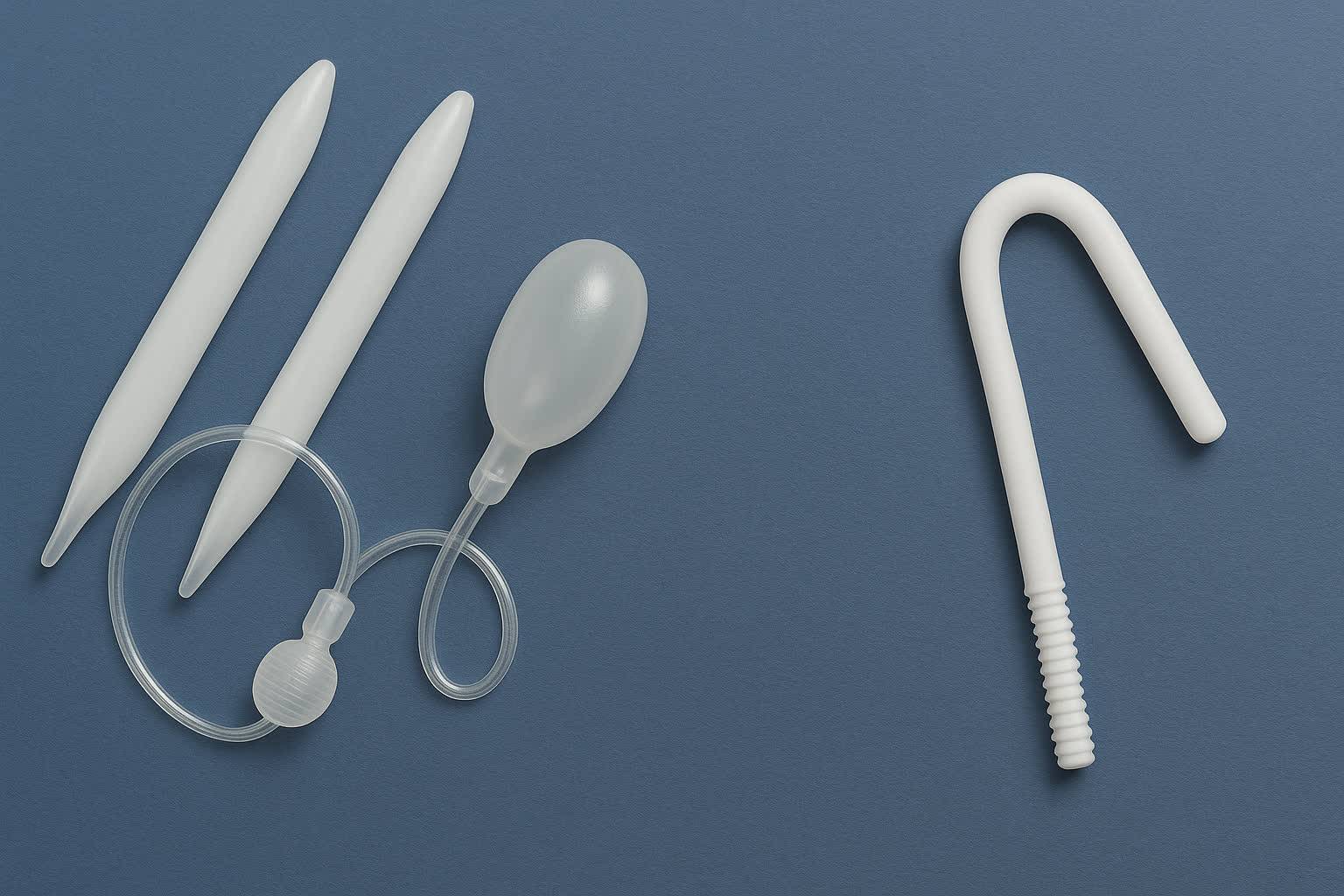
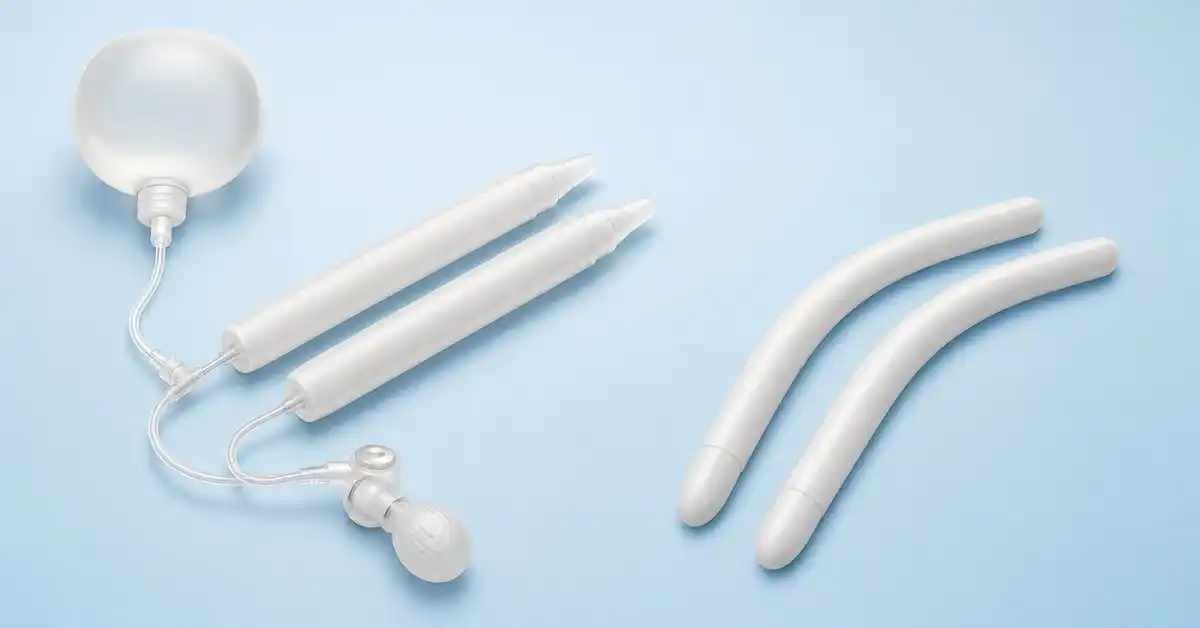
A three-piece inflatable implant includes penile cylinders, a pump positioned in the scrotum, and a fluid reservoir generally placed in the pelvis or lower abdomen.
Using the pump transfers fluid into the cylinders to create rigidity. Deflating the device returns the penis to a softer state, providing better concealment and a more natural resting appearance.
How Does a Malleable Penile Implant Work?
A malleable or semi-rigid implant consists of bendable cylinders that maintain a continuous degree of firmness.
The penis is manually positioned upward for intercourse and downward or sideways for concealment. There is no hydraulic pump or separate reservoir, making the device mechanically simpler.
Which Penile Implant Looks and Feels More Natural?
The inflatable implant generally has an advantage when concealability and natural appearance are major priorities.
Which Implant Looks More Natural When Not in Use?
An inflatable device can be deflated, allowing the penis to become softer and easier to conceal beneath clothing.
A malleable device remains semi-rigid continuously. It can be bent into a discreet position, but it does not reproduce the same transition between a softer resting state and rigidity.
Which Penile Implant Has Higher Satisfaction?
Both types can produce high satisfaction when patient selection and expectations are appropriate. Inflatable implants tend to achieve higher patient and partner satisfaction in direct comparisons, partly because of their more natural appearance and controllability.
Does a Penile Implant Change Sensation or Orgasm?
The implant provides rigidity; it does not directly create sexual desire or sensation.
If penile sensation and orgasm were intact before surgery, the implant itself is not intended to remove them. Ejaculation depends on the patient's underlying condition, so an implant cannot restore ejaculation lost after procedures such as radical prostate surgery.
Who Is a Good Candidate for an Inflatable or Malleable Implant?
Device selection should account for how the patient will actually use the implant every day.
Who May Prefer an Inflatable Implant?
It is often favored by men who prioritize concealability and a more natural resting appearance and who can comfortably operate a small scrotal pump.
A three-piece device is commonly selected when reservoir placement is suitable. A two-piece inflatable implant can be considered in selected patients in whom placing a separate reservoir is less desirable, such as after certain abdominal or pelvic procedures.
Who May Prefer a Malleable Implant?
A malleable implant can be particularly practical for men who want the simplest operating system or who have reduced hand strength or dexterity.
It can also have specific uses in severe corporal fibrosis, selected salvage procedures, and certain cases following ischemic priapism.
Which Implant Is Better for Peyronie's Disease?
Penile prosthesis surgery can be considered when Peyronie's disease occurs together with severe erectile dysfunction that does not respond adequately to less-invasive treatment.
Cylinder placement alone can improve some penile curvature, while more significant residual deformity may require additional correction. Implant type should be individualized rather than assuming one design is universally superior for Peyronie's disease.
Read about: Types of Penile Implants: Pros and Cons of Each Type
Which Implant Has More Complications or Mechanical Failure?
The major concerns after penile prosthesis surgery include infection, mechanical failure, erosion, displacement, and the possibility of revision surgery.
Is Infection More Common With Inflatable Implants?
Infection can occur with either device type. Implant design alone does not produce a consistent major difference in infection risk, and surgical history, health status, operative technique, and whether the procedure is a first implant or revision also matter.
Patients with significant medical conditions require careful optimization before surgery. Diabetes control is important, but there is no single universal HbA1c cutoff that determines candidacy for every patient.
Do Inflatable Penile Implants Break More Often?
Inflatable prostheses contain pumps, valves, tubing, and other moving components, so mechanical breakdown is more common than with simpler malleable rods.
Modern inflatable implants can still function for many years, but no penile prosthesis should be presented as guaranteed to last for life. Revision or replacement may eventually become necessary.
What Other Problems Can Occur?
Possible complications include erosion through surrounding tissue, device displacement, persistent pain, difficulty operating the pump, or the need for another procedure.
Complex fibrosis and previous penile surgery can make implantation more difficult, making surgeon experience particularly important in these patients.

What Happens During Penile Implant Surgery and Recovery?
All components of a penile prosthesis are placed inside the body, so no external device remains visible after surgery.
How Is a Penile Implant Inserted?
The surgeon opens the erectile bodies and prepares them for appropriately sized cylinders. Inflatable systems require placement of the pump and, for three-piece devices, the reservoir.
Malleable implantation is mechanically simpler because it does not require a hydraulic system. Accurate sizing is important because the objective is to fit the patient's anatomy safely rather than inserting the largest possible device.
When Can the Implant Be Used After Surgery?
Swelling, bruising, and discomfort are expected during early recovery and gradually improve.
Inflatable-device training begins after sufficient healing. Sexual intercourse should wait until the surgical site has healed and the surgeon has cleared the patient, which generally requires several weeks.
Does a Penile Implant Increase Penile Length?
A penile implant is designed to restore rigidity, not increase penile length.
Long-standing erectile dysfunction, Peyronie's disease, fibrosis, or previous surgery may already have reduced functional length before implantation. Perceived shortening is an important cause of dissatisfaction, so realistic preoperative counselling is essential.
Read about: Types of Penile Implants and Benefits of Flexible Devices
How Do You Choose the Best Penile Implant?
The best implant is the one that matches the patient's anatomy, physical abilities, expectations, and lifestyle.
Is Natural Concealment or Simplicity More Important?
Men who prioritize a softer resting appearance and better concealability often prefer an inflatable prosthesis.
Men who prioritize simplicity or who cannot reliably operate a pump may find a malleable device more practical.
Do Previous Pelvic Operations Affect Implant Choice?
They can. Previous prostate, bladder, abdominal, or pelvic surgery may influence reservoir placement and the surgical approach.
Severe corporal fibrosis, previous implant infection, or previous prosthetic surgery can also change the optimal device and surgical strategy.
What Should Be Discussed Before Choosing an Implant?
The most useful question is not simply which prosthesis is technologically more advanced, but which one will remain practical and comfortable for that individual over the coming years.
The patient should understand concealability, pump operation, mechanical revision risk, expected penile length, recovery, and what the implant can and cannot restore before making the final decision.
Read about: Hydraulic Penile Implant vs Flexible: Which Offers Better Control
Conclusion
Inflatable and malleable penile implants are both effective definitive options for severe erectile dysfunction when less-invasive treatments are unsuccessful or unsuitable. Inflatable implants generally offer better concealability and a more natural transition between resting and rigid states, while malleable devices are simpler to operate and contain fewer mechanical components.
The best choice depends on manual dexterity, anatomy, previous surgery, penile fibrosis, Peyronie's disease, health status, and personal expectations.
Frequently Asked Questions: Inflatable vs Malleable Penile Implants
Which is better, an inflatable or malleable penile implant?
Neither is universally better. Inflatable devices usually offer more natural concealment, while malleable implants provide simpler operation and fewer mechanical components.
Which penile implant lasts longer?
Both can function for many years, but malleable devices have fewer moving components and therefore a lower mechanical breakdown risk.
Can other people see a penile implant?
All components are implanted internally. An inflatable device is generally easier to conceal when deflated, while a malleable device maintains some continuous firmness.
Can intercourse be normal after penile implant surgery?
After complete healing, the implant can provide the rigidity needed for intercourse. It does not directly alter sexual desire, penile sensation, or orgasm when those functions are otherwise intact.
Can the implant be removed and natural erections return?
Penile implantation is considered a definitive surgical treatment and changes the erectile tissue. It should not be chosen with the expectation that removing the device later will simply restore the previous erectile function.