









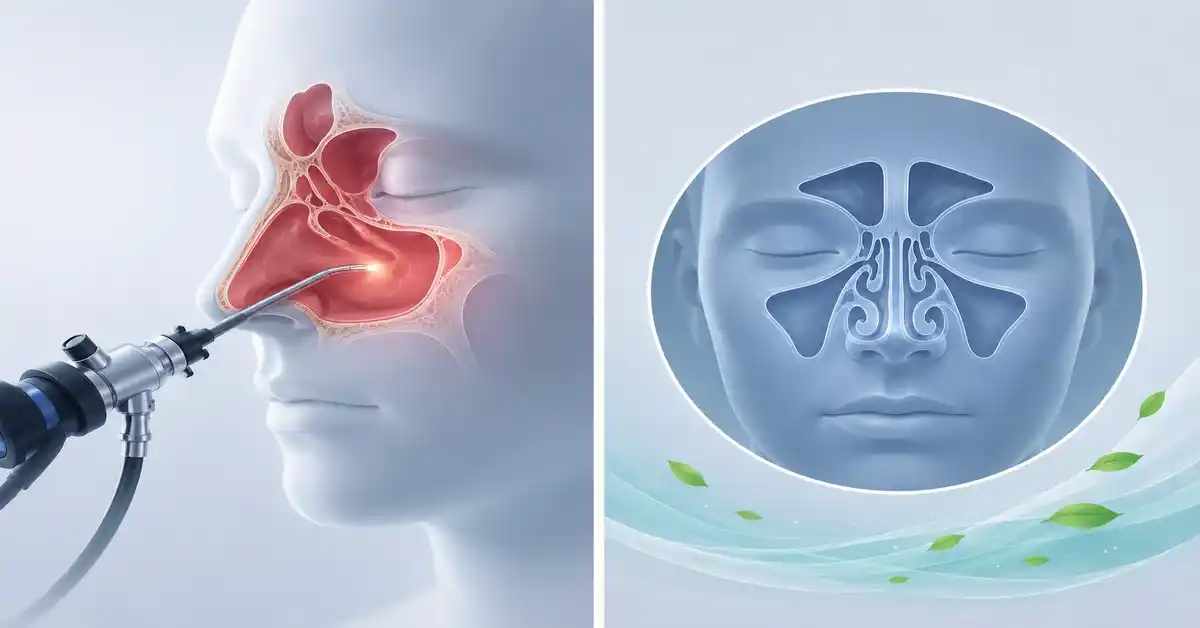
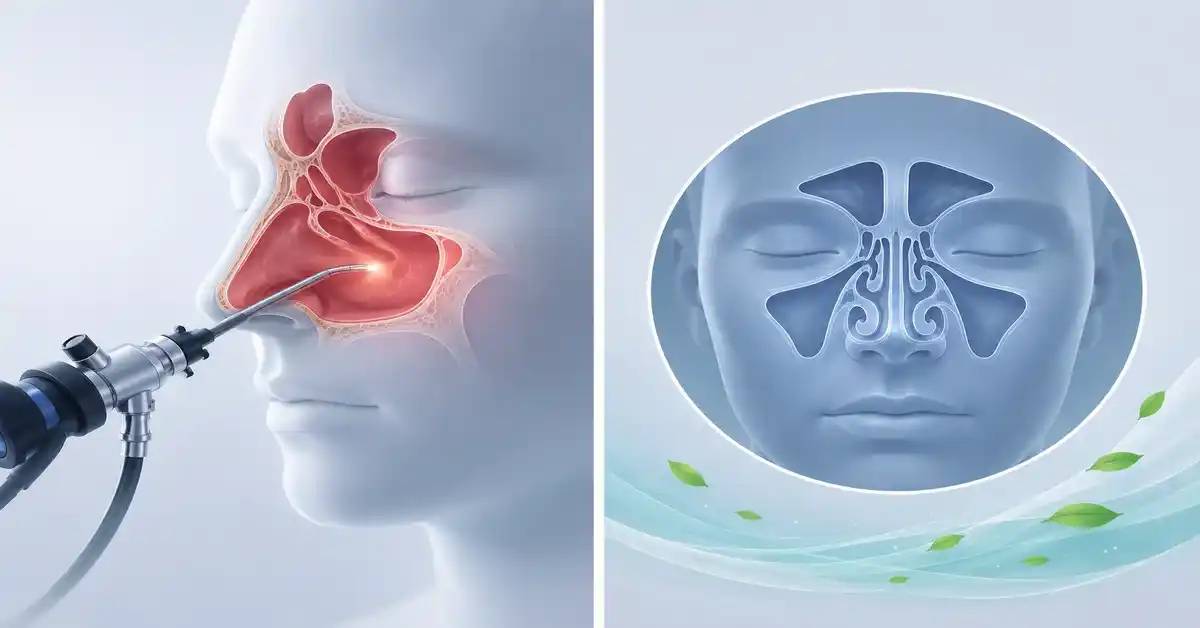
Endoscopic sinus surgery (ESS/FESS) is an established surgical treatment for selected patients with chronic rhinosinusitis when symptoms remain significant despite appropriate medical management or when polyps and structural obstruction interfere with sinus drainage.
The procedure is generally performed entirely through the nostrils using a telescope, camera, and specialized instruments. Most patients therefore do not require an external facial incision, and the operation does not normally change the external shape of the nose.
The purpose is not to remove the sinuses themselves. Surgery opens diseased sinus pathways, removes selected inflamed tissue or polyps, and creates access that can improve drainage and allow saline irrigation and topical medication to reach the sinus cavities more effectively. Surgery therefore often works together with long-term medical management rather than replacing it.
When Is Endoscopic Sinus Surgery Recommended?
Surgery should follow confirmation that the symptoms are truly related to sinus disease. Chronic rhinosinusitis usually involves symptoms lasting at least 12 weeks together with objective evidence of inflammation on nasal examination, endoscopy, or imaging.
Chronic Rhinosinusitis Despite Medical Treatment
ESS may be considered when persistent disease causes:
- Nasal obstruction.
- Persistent drainage.
- Postnasal discharge.
- Reduced smell.
- Recurrent inflammatory flares.
- Sinus-related facial pressure.
- Significant impairment in daily life.
The decision considers symptom severity, imaging, previous treatments, disease subtype, and general health rather than following one identical medication pathway for every patient.
Nasal Polyps and Obstructed Sinuses
Large or recurrent polyps can obstruct nasal airflow and sinus drainage and can substantially reduce the sense of smell.
Surgery can remove polyps and open affected sinuses when medical treatment is insufficient. However, polyps may recur because surgery does not eliminate the underlying inflammatory tendency in every patient.
When Symptoms May Come From Another Condition
Facial pressure or headache alone does not prove chronic sinus disease.
Conditions such as migraine can mimic sinus symptoms. Confirming the diagnosis before surgery reduces the chance of performing an operation that cannot address the real cause of the symptoms.
Tests and Planning Before Endoscopic Sinus Surgery
Preoperative planning determines which sinuses actually need treatment and how extensive the surgery should be. ESS is therefore individualized according to the patient’s anatomy and pattern of disease.
CT Scan of the Sinuses
CT imaging can show:
- Maxillary sinuses.
- Ethmoid cells.
- Frontal sinuses.
- Sphenoid sinus.
- Natural drainage pathways.
- Mucosal inflammation.
- Polyps or obstruction.
- Important bony anatomy close to the eyes and skull base.
This helps the surgeon plan the safest and most appropriate extent of surgery.
Nasal Endoscopy Before Surgery
Office endoscopy allows direct evaluation of the nasal passages.
It can identify:
- Polyps.
- Swelling.
- Discharge.
- Obstructed passages.
- Previous surgical changes.
- Areas of active inflammation.
Symptoms, imaging, and endoscopy are interpreted together rather than using one test in isolation.
Medications and Anesthesia Preparation
Many operations are performed under general anesthesia, although the exact approach depends on the procedure and patient.
Medication review is especially important for anticoagulants, antiplatelet therapy, chronic medical conditions, and drugs that may influence bleeding or anesthesia.

Main Steps of Functional Endoscopic Sinus Surgery
The operation is usually performed through the nostrils. A small endoscope provides a magnified view while specialized instruments are used to clear obstructed sinus pathways.
Opening the Natural Sinus Pathways
Depending on the disease, the surgeon may remove selected:
- Inflamed tissue.
- Nasal polyps.
- Thin bony partitions.
- Tissue obstructing a natural sinus opening.
The objective is to improve drainage and create openings that make postoperative irrigation and topical medication more effective.
Which Sinuses Can Be Treated?
| Sinus area | Possible surgical step |
|---|---|
| Ethmoid sinuses | Removal of selected diseased ethmoid partitions |
| Maxillary sinus | Enlargement of its natural opening |
| Frontal sinus | Opening the drainage pathway when required |
| Sphenoid sinus | Opening in selected disease |
| Nasal polyps | Removal with restoration of nasal and sinus access |
Some patients need limited surgery, whereas diffuse disease may require a more comprehensive procedure. The appropriate extent depends on disease pattern and anatomy.
Balloon Dilation Versus Endoscopic Sinus Surgery
Balloon sinus dilation widens selected sinus openings without removing significant tissue or bone.
Conventional ESS can remove tissue and bone when necessary to create a wider opening. Balloon treatment may be useful in selected situations, but it is not an interchangeable substitute for comprehensive ESS in every type of chronic sinus disease.
Recovery and Postoperative Care After Sinus Surgery
Many patients can return home on the day of surgery, although overnight observation may be needed when there is bleeding, nasal packing, or another medical reason.
Temporary blockage after surgery is expected because the tissues swell and develop crusts during healing.
The First Days and Weeks
Patients may experience:
- Nasal congestion.
- Mild blood-stained drainage.
- Pressure or mild pain.
- Crusting.
- Temporary reduction in smell.
- Fatigue.
Pain is often mild to moderate, although discomfort varies according to the extent of surgery.
Many patients require approximately a week away from routine work, while strenuous jobs can require longer recovery. Heavy lifting and vigorous exercise are commonly restricted during early healing.
Saline Irrigation and Nasal Medication
Postoperative treatment can include:
- Saline sinus irrigation.
- Topical anti-inflammatory medication.
- Additional medication according to disease type.
- Office endoscopic cleaning when needed.
Sinus surgery often improves access for topical medication rather than eliminating the need for it.
Follow-Up and Postoperative Cleaning
Crusts and old blood can accumulate while the sinus cavities heal.
Selected follow-up visits may include nasal endoscopy and debridement to remove crusts or clots, monitor the openings, and adjust treatment.
Read about: Chronic Sinusitis Problems and Advanced Endoscopic Solutions
Results of Endoscopic Sinus Surgery and Symptom Improvement
The primary objective of ESS is better disease control and quality of life. Contemporary evidence shows meaningful improvement in symptoms and patient-reported quality of life for many appropriately selected patients with medically refractory chronic rhinosinusitis.
Which Symptoms Can Improve?
Improvement may occur in:
- Nasal blockage.
- Nasal discharge.
- Postnasal drainage.
- Sinus-related pressure.
- Sense of smell in selected patients.
- Frequency of inflammatory episodes.
- Sleep and general quality of life.
Results differ according to the underlying inflammatory disease and presence of polyps.
When Does Surgery Start to Feel Better?
Some improvement can occur within weeks, but the earliest postoperative period is not a good time to judge the final result.
Swelling, mucus, and crusting can initially make the nose feel more blocked. More extensive surgery also creates a larger healing surface and may require additional recovery time.
Does Sinus Surgery Permanently Cure Chronic Sinusitis?
Not necessarily.
Surgery can correct obstruction and improve access to the sinuses, but underlying inflammatory disease may remain active.
Long-term care can therefore continue to involve irrigation, nasal medication, allergy management, treatment of associated airway disease, and additional therapies for severe inflammatory disease.
Risks, Warning Signs, and Revision Sinus Surgery
The sinuses lie close to the eyes and the skull base, so precise anatomical knowledge is important. Serious orbital and skull-base complications are uncommon, although bleeding and other complications can occur. Large contemporary data continue to support ESS as generally safe while confirming these recognized risks.
Possible Complications of ESS
Potential complications include:
- Nasal bleeding.
- Infection.
- Scar adhesions.
- Persistent obstruction.
- Changes in smell.
- Rare injury around the eye.
- Rare double vision or visual injury.
- Rare skull-base injury and cerebrospinal fluid leakage.
- Need for additional intervention.
Risk varies according to anatomy, disease extent, revision status, and the type of surgery performed.
Symptoms Requiring Prompt Medical Assessment
Urgent evaluation is appropriate for:
- Heavy or persistent bleeding.
- New double vision or loss of vision.
- Marked swelling around the eye.
- Significant fever with worsening symptoms.
- Unusual severe headache.
- Persistent abnormal clear watery nasal drainage.
- Neurological deterioration.
Progressively worsening pain and nasal blockage can also require examination for postoperative infection or another complication.
Why Can Revision Surgery Be Needed?
A second operation does not always mean that the first surgery failed technically.
Revision may become necessary because of:
- Recurrent nasal polyps.
- Persistent inflammatory disease.
- Scar formation.
- Narrowing of previously opened passages.
- Extensive disease phenotype.
- Disease progression over time.
Long-term outcomes therefore depend on both the operation and continued management of the underlying inflammation.
Read about: Chronic Sinus Problems: Turkey vs USA
Conclusion
Endoscopic sinus surgery allows obstructed and inflamed sinus pathways to be treated through the nose without an external incision in most patients. It can improve ventilation, drainage, and access for saline and topical medication.
Many appropriately selected patients experience meaningful improvement in congestion, drainage, sinus-related pressure, and quality of life. However, surgery does not necessarily eliminate the underlying inflammatory disease, making postoperative treatment and long-term follow-up important parts of maintaining the result.
Frequently Asked Questions: Endoscopic Sinus Surgery: Procedure, Recovery, and Results
Does endoscopic sinus surgery require facial incisions?
Usually not. Most procedures are performed entirely through the nostrils with an endoscope.
Is FESS painful?
Pain is generally mild to moderate, while congestion, pressure, and crusting can be more noticeable during early recovery.
When can I return to work?
Many patients need around one week, although physical occupations and more extensive procedures may require additional time.
Can nasal polyps return after surgery?
Yes. Surgery removes existing polyps but cannot always eliminate the underlying inflammatory tendency that caused them.
Will I still need nasal sprays after surgery?
Many patients do. Opening the sinuses can actually improve the ability of topical treatment to reach the areas requiring long-term inflammatory control.