








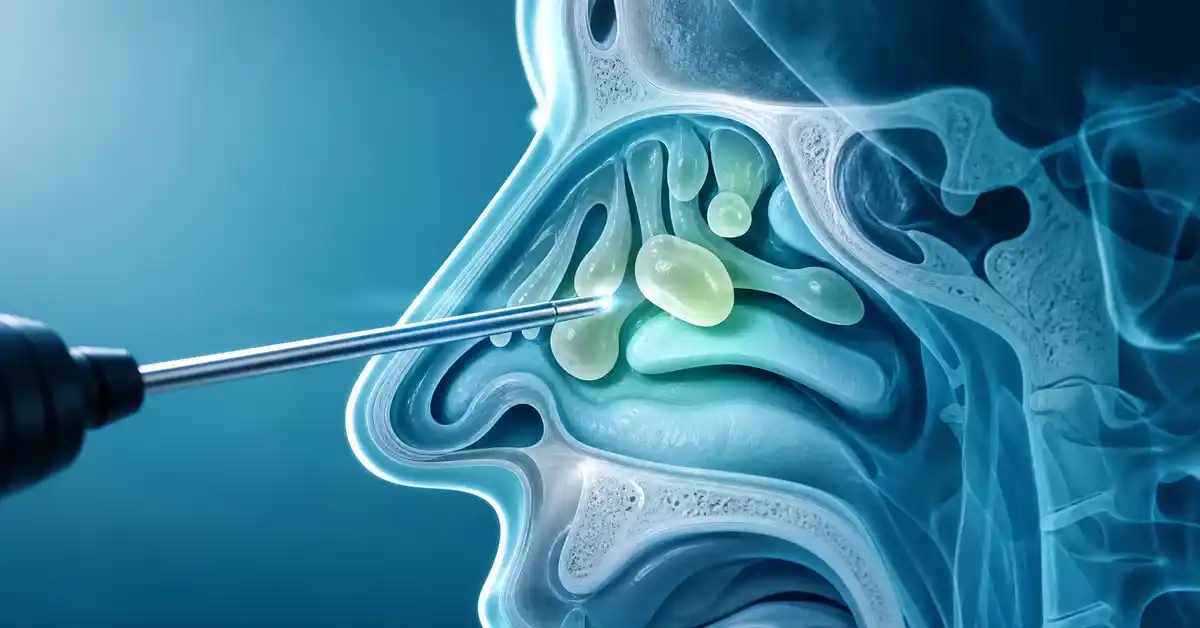
Nasal polyps are soft, noncancerous growths associated most commonly with chronic inflammation of the nasal and sinus lining. Large or extensive polyps can cause persistent nasal blockage, reduced or absent smell, drainage, facial pressure, disturbed sleep, and a major reduction in quality of life.
At Safemedigo, endoscopic polyp removal is not presented as a permanent cure for every patient. Nasal polyps are usually part of chronic rhinosinusitis with nasal polyps, meaning that surgery removes obstructing disease and improves access to the sinuses, while long-term control often requires continued treatment of the underlying inflammation. Long-term evidence supports meaningful improvements in symptoms, quality of life, and smell after endoscopic sinus surgery, although recurrence remains possible.
When Endoscopic Surgery Is Considered for Nasal Polyps
The presence of a polyp alone does not automatically require surgery.
Symptoms That May Lead to Nasal Polyp Surgery
Significant polyps can cause:
- Persistent nasal obstruction.
- Reduced or absent sense of smell.
- Nasal and postnasal drainage.
- Facial pressure.
- Sleep disturbance.
- Recurrent sinus symptoms.
- Reduced quality of life.
Surgery may become appropriate when these problems remain significant despite suitable medical management.
Medical Treatment Before Endoscopic Sinus Surgery
Treatment commonly begins with anti-inflammatory therapy delivered into the nose, with additional treatment selected according to disease severity and associated conditions.
There is no appropriate one-size-fits-all drug regimen or fixed treatment duration that every patient must complete before surgery. The decision should reflect symptoms, disease characteristics, previous treatment, and the expected benefit of surgery compared with continued medical care.
CT and Nasal Endoscopy Before Polyp Surgery
Nasal endoscopy shows the visible polyps and inflammatory changes.
A sinus CT provides detailed information about disease distribution and anatomy and is particularly useful when planning surgery around the orbit, skull base, and sinus drainage pathways.
How Endoscopic Nasal Polyp and Sinus Surgery Is Performed
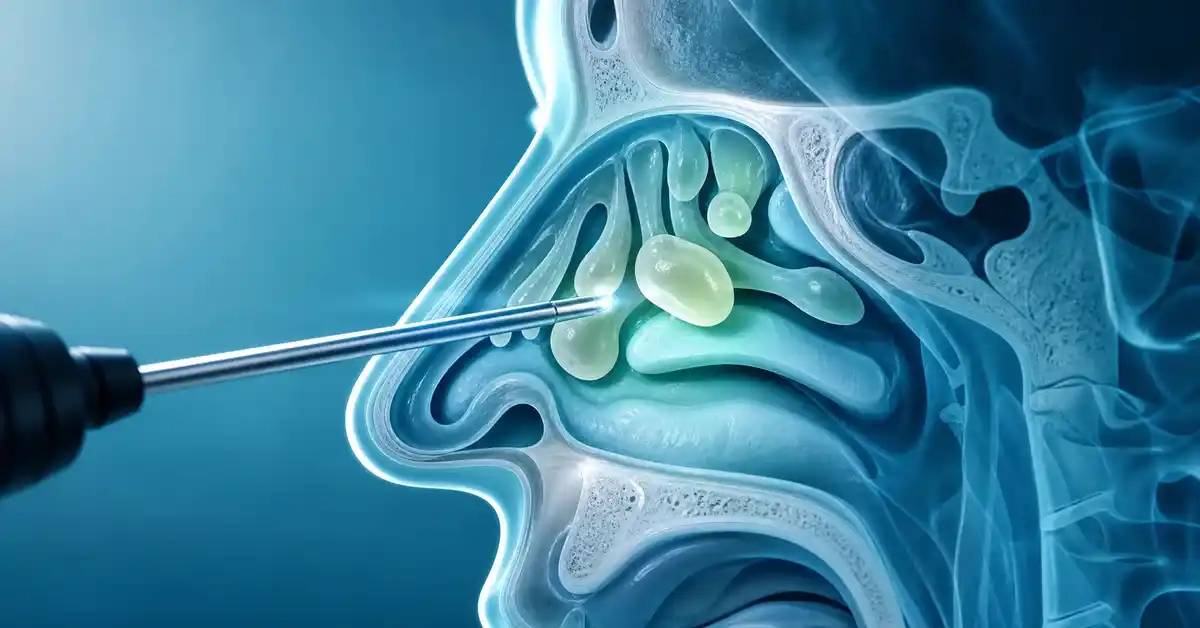
The procedure is normally performed through the nostrils using an endoscope and specialized instruments, without an external facial incision.
Polyp Removal Is More Than Cutting Away Visible Growths
Removing only the polyps projecting into the nasal cavity may not adequately treat extensive chronic sinus disease.
When indicated, endoscopic sinus surgery also opens diseased sinus cavities and removes obstructing inflammatory tissue so that ventilation, drainage, and postoperative topical treatment can improve.
Current surgical evidence emphasizes adequate exposure and treatment of involved sinuses in polyp disease rather than relying only on minimal dilation.
Functional Endoscopic Sinus Surgery for Nasal Polyps
Depending on disease distribution, surgery may involve the:
- Ethmoid sinuses.
- Maxillary sinuses.
- Frontal sinuses.
- Sphenoid sinuses.
Not every sinus needs to be opened in every patient. Surgical extent is individualized.
How Much Diseased Mucosa Should Be Removed?
Conventional functional surgery aims to preserve healthy mucosa where possible while removing tissue that prevents adequate disease control.
More extensive surgery may be considered in selected severe or recurrent disease, but the optimal degree of mucosal removal remains an area of continuing study.
Read about: Chronic Sinusitis Problems and Advanced Endoscopic Solutions
Nasal Breathing, Smell, and Results After Endoscopic Surgery
The main goal is improvement in symptoms and quality of life rather than simply producing an endoscopic view without visible polyps.
Nasal Breathing After Polyp Removal
Removing obstruction and reopening diseased sinuses commonly improves nasal airflow.
Long-term studies report sustained improvements in patient-reported sinonasal symptoms and quality of life after endoscopic sinus surgery.
Can Sense of Smell Return After Nasal Polyp Surgery?
Smell may improve when obstructing polyps are removed and inflammation is reduced.
However, loss of smell can also result from chronic inflammatory changes affecting the olfactory system itself, so complete recovery cannot be guaranteed.
Is Endoscopic Polyp Removal a Permanent Cure?
Not necessarily.
Surgery can remove current disease and create better conditions for controlling the sinuses, but it does not always eliminate the biological tendency that produced the polyps.
A successful operation and permanent freedom from recurrence are therefore different outcomes.

Why Nasal Polyps Can Return After Endoscopic Surgery
Recurrence does not automatically mean that the original surgery failed technically.
Asthma and Recurrent Nasal Polyps
Patients with asthma, particularly more severe asthma, may have more difficult inflammatory sinonasal disease.
Long-term studies show higher polyp recurrence and revision-surgery risk in some patients with both asthma and nasal polyps.
Aspirin-Exacerbated Respiratory Disease and Polyp Recurrence
A particularly challenging inflammatory pattern combines:
- Nasal polyps.
- Asthma.
- Respiratory reactions to aspirin or certain anti-inflammatory medication.
These patients often experience more severe recurrent disease and may require a broader long-term treatment strategy.
Severe Inflammation and Recurrent Polyposis
High baseline polyp burden and certain inflammatory patterns can also increase recurrence risk.
Modern care therefore aims to understand the patient's underlying inflammatory phenotype rather than repeatedly removing recurrent tissue without addressing the disease driving it.
Postoperative Care to Reduce Nasal Polyp Recurrence
Surgery is one stage of chronic rhinosinusitis treatment rather than the end of care.
Saline Care and Endoscopic Follow-Up After Surgery
Postoperative care may include:
- Saline nasal irrigation.
- Removal of crusting and secretions.
- Scheduled nasal endoscopy.
- Temporary activity restrictions.
- Monitoring for infection or bleeding.
- Gradual return to usual activities.
The exact regimen depends on the operation and surgeon.
Intranasal Steroids After Nasal Polyp Surgery
Anti-inflammatory treatment frequently continues after surgery.
A 2026 meta-analysis found that adding corticosteroid therapy after endoscopic surgery was associated with lower polyp recurrence and better symptom, quality-of-life, and endoscopic outcomes than surgery alone.
Warning Signs After Endoscopic Sinus Surgery
Heavy bleeding, significant visual change or double vision, marked swelling around the eye, worsening unusual headache, persistent fever, or abnormal clear watery nasal drainage should prompt urgent medical assessment.
Biologics and Revision Surgery for Recurrent Nasal Polyps
Modern treatment for severe recurrent polyposis is no longer limited to repeated operations.
When Revision Endoscopic Sinus Surgery Is Considered
Revision surgery may be appropriate when clinically significant polyps recur despite suitable medical therapy and once again cause obstruction or prevent effective topical treatment.
The reason for recurrence should be reassessed before planning another operation.
Biologic Treatment for Severe Nasal Polyps
Targeted biologic medicines are available for selected patients with severe chronic rhinosinusitis with nasal polyps.
They may be considered particularly when disease is recurrent or difficult to control and is associated with factors such as asthma, previous surgery, repeated systemic treatment, or a relevant inflammatory pattern.
Recent evidence shows meaningful improvements in polyp size, nasal blockage, smell, and quality of life in appropriately selected patients.
Endoscopic Surgery Versus Biologic Therapy
There is no universal winner.
Recent comparisons show that both surgery and biologic treatment can substantially improve symptoms and quality of life, while particular outcomes may favor different treatments. Direct long-term comparative evidence remains limited.
For some patients, surgery and advanced medical therapy are complementary parts of one long-term strategy.
Read about: Chronic Sinus Problems: Turkey vs USA
Conclusion
Endoscopic nasal polyp surgery is an effective treatment for patients with persistent symptomatic chronic rhinosinusitis with nasal polyps. It can remove obstruction, open diseased sinuses, improve breathing and quality of life, and improve smell in many patients.
It should not, however, be described as a guaranteed permanent cure. Polyps can recur because the underlying inflammatory disease may persist, particularly in patients with severe asthma and certain inflammatory phenotypes. Long-term topical treatment and follow-up are therefore important, while biologics or revision surgery may be appropriate for selected recurrent disease.
Frequently Asked Questions: Endoscopic Nasal Polyp Surgery
Can nasal polyps return after surgery?
Yes. Surgery removes existing disease but cannot always eliminate the chronic inflammation responsible for developing new polyps.
Does endoscopic sinus surgery leave facial scars?
It is generally performed entirely through the nostrils, so an external facial incision is usually unnecessary.
Does smell improve after nasal polyp surgery?
It often can, especially when obstruction contributes to smell loss, but complete recovery is not guaranteed.
Are nasal steroid sprays still needed after surgery?
Many patients require continued topical anti-inflammatory treatment to maintain disease control and reduce recurrence.
Can recurrent polyps be treated without another operation?
Yes in selected cases. Medical treatment can be adjusted, and biologic therapy is an important modern option for appropriately selected patients with severe recurrent disease.