





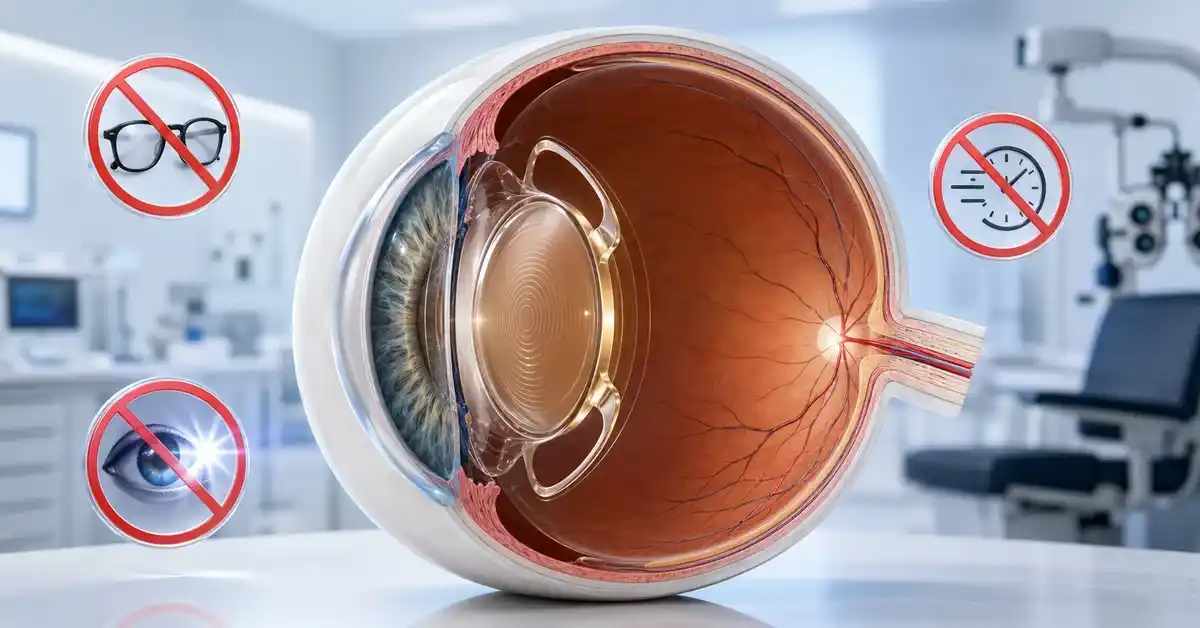
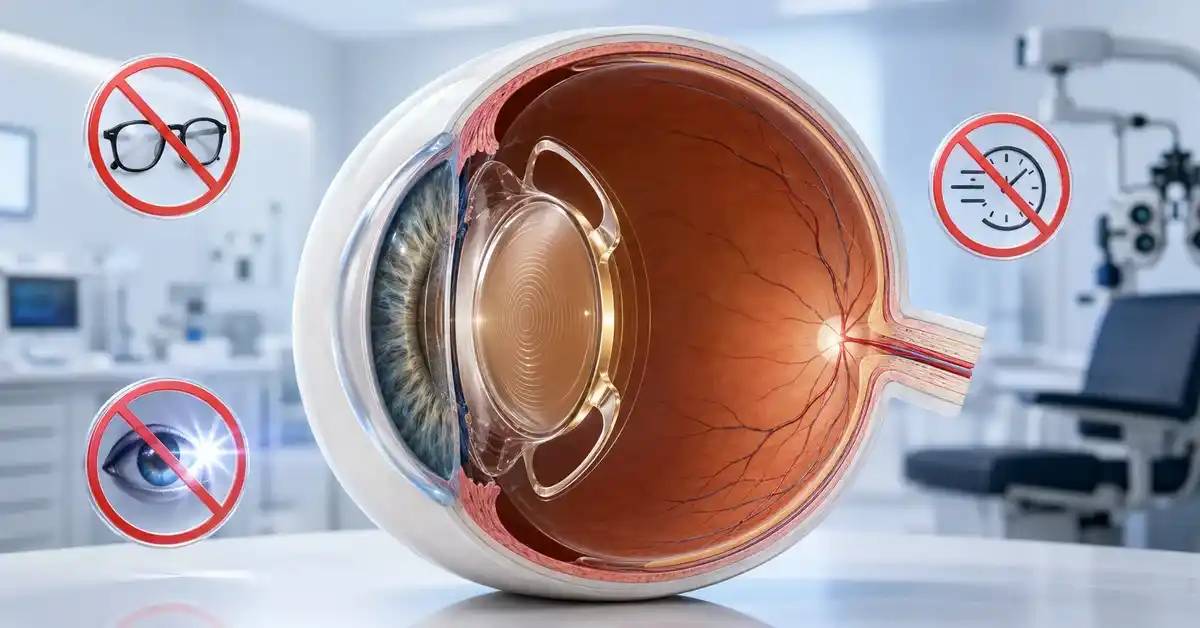
“Smart lens” is a commonly used term for premium intraocular lenses designed to reduce dependence on glasses and provide useful vision at more than one distance. It may refer to multifocal, trifocal, extended-depth-of-focus, or other advanced lens designs rather than one single type of implant.
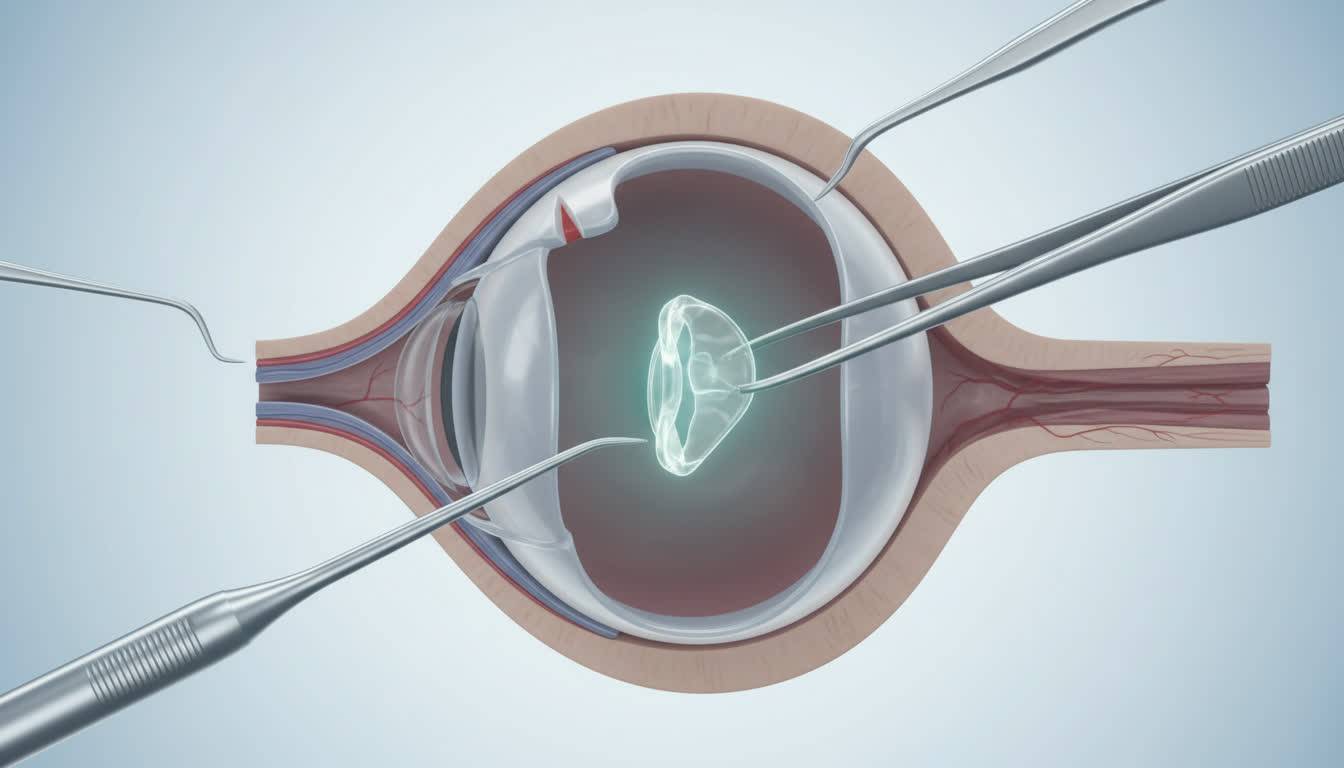
In most cases, the procedure involves removing the natural lens of the eye and replacing it with a permanent artificial intraocular lens. This makes patient selection, biometric measurements, eye health, and realistic expectations just as important as the surgical technique.
Common misconceptions include believing that smart lenses are suitable for everyone, that they guarantee complete freedom from glasses, that night halos never occur, or that the most expensive lens automatically provides the best result.
Understanding What Smart Lens Implantation Actually Means
The term smart lens covers several optical technologies. Each lens distributes light differently and is designed to achieve a particular balance between distance, intermediate, and near vision.
Mistake: Assuming All Smart Lenses Are the Same
Lens options may include:
- Monofocal intraocular lenses.
- Multifocal or trifocal lenses.
- Extended-depth-of-focus lenses.
- Toric lenses for astigmatism correction.
- Combinations of these optical features.
Two lenses described as “smart” may therefore provide very different visual experiences.
Mistake: Confusing Lens Surgery With Laser Vision Correction
Laser vision correction changes the shape of the cornea. Lens surgery removes the natural crystalline lens and replaces it with an artificial lens.
That distinction matters because natural-lens removal is irreversible and should therefore be considered after a comprehensive assessment.
Mistake: Choosing Surgery Only to Avoid Glasses
Reducing dependence on spectacles is important, but it should not be the only objective.
A patient who drives extensively at night may prioritize contrast and night vision differently from someone whose main objective is reading and computer work without glasses.
Read about: LASIK vs Femto LASIK: How to Choose the Best Vision Correction
Believing Smart Lenses Are Suitable for Everyone
An advanced intraocular lens can only perform as well as the rest of the visual system allows. Corneal, retinal, or optic-nerve disease may reduce the potential benefit of certain premium lens designs.
Assessing the Retina, Cornea, and Optic Nerve
Conditions that may influence lens selection include:
- Macular or retinal disease.
- Certain stages of glaucoma or optic-nerve damage.
- Irregular corneal shape.
- Significant dry-eye disease.
- Irregular astigmatism.
- Previous corneal procedures.
- Conditions affecting lens stability or centration.
These findings do not always prevent lens surgery, but they may change which lens is appropriate.
Previous Laser Surgery Can Affect Lens Calculations
Previous laser vision correction changes the corneal profile and may make intraocular-lens calculations more challenging.
Patients should therefore provide information about any previous eye surgery, even when it was performed many years earlier.
Age Alone Does Not Determine Suitability
Two people of the same age may need very different lenses.
Selection considers:
- Presence of cataract.
- Refractive error.
- Astigmatism.
- Retinal health.
- Corneal quality.
- Pupil characteristics.
- Occupational and visual demands.
- Expectations regarding glasses.
Read about: Latest Femtolasik Techniques for Sensitive Eyes in Turkey
Expecting Complete Freedom From Glasses
Advanced lenses can substantially reduce spectacle dependence, but no technology can guarantee that every patient will perform every visual task without glasses.
Mistake: Expecting Perfect Vision at Every Distance
A trifocal lens may provide useful distance, intermediate, and near vision, but quality at every exact working distance is not necessarily identical.
Some patients may still prefer glasses for:
- Extremely small print.
- Prolonged reading in poor lighting.
- Very detailed close work.
- Correction of a small residual refractive error.
A more realistic objective is greater independence from glasses, rather than an absolute promise never to use them again.
Mistake: Assuming Lens Power Calculations Are Perfect
Modern measurements are highly sophisticated, but postoperative refraction cannot be predicted with absolute precision.
A small amount of residual short-sightedness, long-sightedness, or astigmatism may remain. Depending on its significance, glasses or an additional corrective procedure may sometimes be discussed.
Matching the Lens to Working Distance
| Activity | Important visual range |
|---|---|
| Driving | Distance |
| Desktop computer | Intermediate |
| Smartphone | Near to intermediate |
| Reading | Near |
| Fine manual work | Very near |
| Outdoor activities | Distance and intermediate |
The most appropriate lens should support the distances most important to the individual patient.
Underestimating Halos, Glare, and Visual Adaptation
Some lenses divide incoming light between several focal ranges. This can increase the possibility of halos, glare, or reduced contrast in certain lighting conditions.
Mistake: Expecting Vision to Feel Completely Natural Immediately
Vision may improve quickly after surgery, but the brain can require time to adapt to a new optical system.
During adaptation, patients may notice:
- Halos around lights.
- Night-driving glare.
- Changes in contrast.
- Mild visual fluctuation.
- Temporary imbalance between the eyes.
Some symptoms improve with adaptation, while individual experiences vary.
Do Night Halos Always Disappear?
No. Many patients adapt well, but some continue to notice them.
Night-driving requirements should therefore be discussed before selecting the lens.
Mistake: Ignoring Dry Eye
Dry-eye disease can cause:
- Fluctuating vision.
- Glare.
- Burning.
- Light sensitivity.
- Reduced image quality.
Treating the ocular surface can therefore be important before judging whether a postoperative visual symptom is truly related to the implanted lens.

Assuming the Most Expensive Smart Lens Is Automatically the Best
A technologically advanced or expensive lens is not necessarily the most appropriate choice for every eye. The best outcome comes from matching optical design with ocular anatomy and lifestyle.
Lifestyle Should Guide Lens Selection
Relevant questions include:
- How important is night driving?
- How many hours are spent on a computer?
- Is reading without glasses a high priority?
- Does work require very fine visual detail?
- Is the patient willing to accept some halos for greater spectacle independence?
- Are there retinal or corneal limitations?
These factors can make a simpler lens the more appropriate choice in some patients.
Trifocal Versus Extended-Depth-of-Focus Lenses
| Feature | Trifocal lens | Extended-depth-of-focus lens |
|---|---|---|
| Distance vision | Generally strong | Generally strong |
| Intermediate vision | Strong | Often a major strength |
| Near reading | Often stronger | Reading glasses may be needed for very close tasks |
| Halos | May be more noticeable in some patients | May be less pronounced with some designs |
| Spectacle independence | Potentially high | Depends on near-vision requirements |
| Best choice | Individualized | Individualized |
Actual performance varies between lens designs within each category.
Astigmatism Should Not Be Overlooked
Clinically significant astigmatism may limit postoperative vision if it remains uncorrected.
A toric lens or another astigmatism-management strategy may therefore be considered when measurements indicate a meaningful benefit.
Read about: Femtosecond LASIK: Turkey vs Germany
Neglecting Follow-Up and Possible Problems After Smart Lens Surgery
Lens surgery is commonly performed, but it remains an intraocular operation. Appropriate postoperative monitoring is important both for healing and for identifying complications promptly.
Mistake: Assuming Every Later Blur Means the Lens Has Failed
Blurred vision months or years after surgery can have several causes, including ocular-surface problems, residual refractive error, retinal changes, or clouding of the posterior capsule behind the artificial lens.
Posterior capsule clouding does not mean that cataract has returned or that the implanted lens has deteriorated. Selected cases can be treated with a short laser procedure after examination.
Symptoms Requiring Prompt Assessment
Seek rapid eye evaluation for:
- Severe or increasing pain.
- Sudden reduction in vision.
- Marked redness.
- Significant light sensitivity.
- Sudden appearance of many new floaters.
- New flashes of light.
- A curtain or shadow across the visual field.
- Significant discharge or swelling.
These symptoms should not simply be assumed to represent routine postoperative recovery.
Mistake: Stopping Eye Follow-Up Permanently
A successful implanted lens does not prevent future retinal, optic-nerve, pressure, or ocular-surface disease.
Routine eye examinations therefore remain important even when vision is excellent.
Read about: LASIK Eye Surgery: Turkey vs USA
Conclusion
The most important misconception about smart lens implantation is that one premium lens can provide the same perfect result for every patient. Successful lens selection depends on the cornea, retina, optic nerve, astigmatism, biometric measurements, lifestyle, and realistic visual expectations.
The right question is therefore not simply “Which smart lens is best?” but “Which lens is best for this particular eye and this patient’s visual priorities?”
Frequently Asked Questions: Common Mistakes and Misconceptions About Smart Lens Implantation
Are smart lenses suitable for everyone?
No. Suitability depends on eye health, measurements, retinal and corneal status, and individual visual requirements.
Do smart lenses guarantee complete freedom from glasses?
No. They can significantly reduce spectacle dependence, but glasses may still be useful for selected tasks.
Can smart lenses cause halos?
Yes. Halos and glare may occur, particularly with some multifocal designs, although adaptation may reduce their impact.
Is the most expensive smart lens always the best?
No. The best lens is the one that matches the eye and the patient’s lifestyle rather than simply the highest-priced option.
Can an implanted lens be replaced?
Lens exchange can be considered in selected situations, but it involves another intraocular operation, making accurate initial selection particularly important.