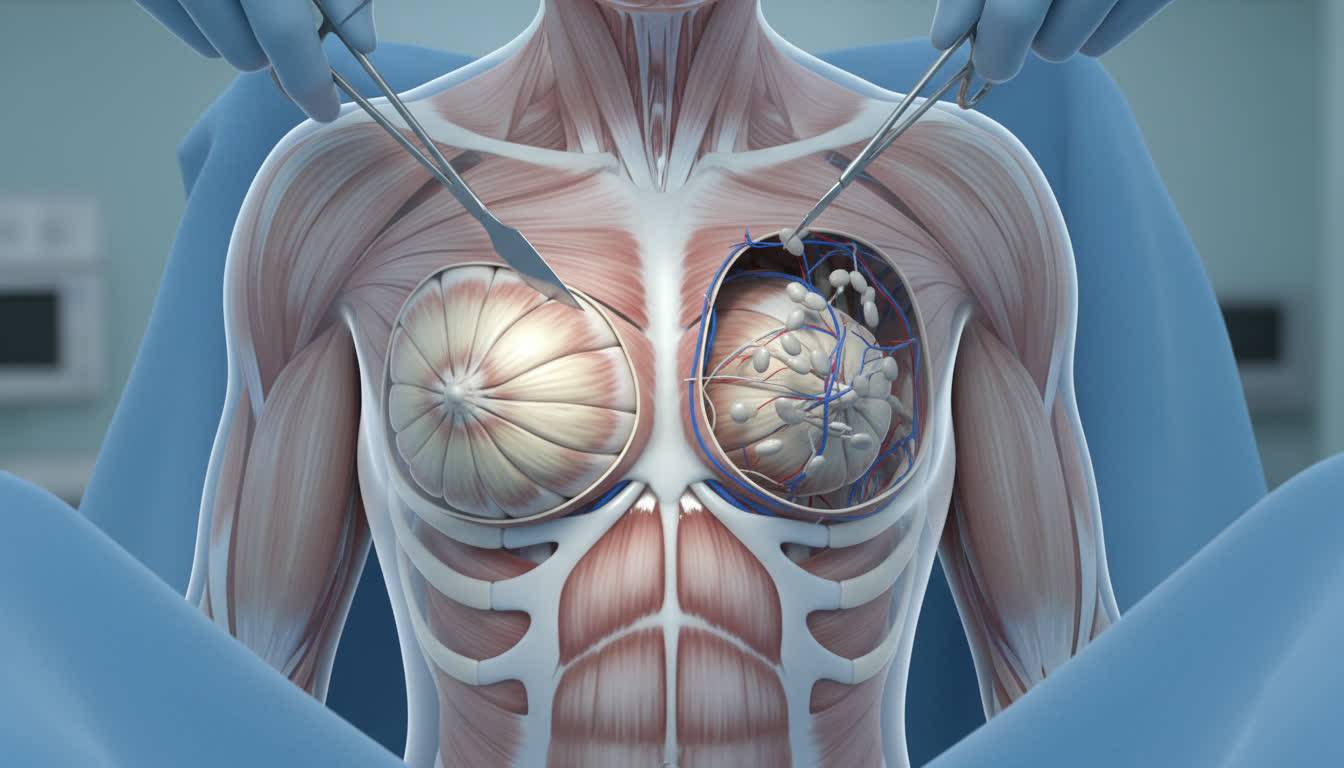








Surgery remains a central part of treatment for many people with breast cancer, but modern breast surgery is increasingly focused on removing the cancer safely while preserving breast tissue, appearance, and function whenever oncologically appropriate. Current options include breast-conserving surgery, mastectomy, oncoplastic techniques, reconstruction, sentinel-node surgery, and increasingly selective approaches to the axilla.
At Safemedigo, the surgical plan depends on tumor size and location, breast size, cancer biology, lymph-node status, response to preoperative treatment, radiation requirements, genetic risk, and patient preference. There is therefore no single breast cancer operation that is best for every patient.
What Types of Breast Cancer Surgery Are Available?
The main breast operations are breast-conserving surgery and mastectomy, often combined with appropriate lymph-node assessment.
What Is Breast-Conserving Surgery or Lumpectomy?
Breast-conserving surgery removes the cancer with a surrounding margin while preserving most of the breast.
It may be described as:
- Lumpectomy.
- Partial mastectomy.
- Breast-conserving surgery.
Radiotherapy is usually part of breast-conserving treatment afterward.
What Happens During a Mastectomy?
A mastectomy removes the breast containing the cancer or DCIS.
Different techniques can preserve varying amounts of skin or, in carefully selected patients, the nipple and areola.
Reconstruction can be performed during the same operation or at a later stage.
Does Breast Cancer Surgery Include Lymph Nodes?
Lymph-node staging may be performed to determine whether cancer has reached the axilla.
Modern treatment increasingly aims to obtain the necessary staging information with the smallest amount of axillary surgery possible to reduce lymphedema, shoulder limitation, and chronic discomfort.
Is Lumpectomy as Effective as Mastectomy for Breast Cancer?
One of the most common searches after diagnosis is whether removing the entire breast provides a better chance of survival.
Does Breast-Conserving Surgery Have the Same Survival as Mastectomy?
For appropriately selected early breast cancers, breast-conserving surgery followed by appropriate radiation can provide long-term survival equivalent to mastectomy.
A mastectomy should therefore not automatically be assumed to provide a greater chance of cure.
Who Can Have Breast-Conserving Surgery?
Breast conservation may be suitable when:
- The cancer can be completely removed.
- A satisfactory margin can be achieved.
- Tumor size is appropriate relative to breast size.
- Disease distribution allows adequate resection.
- Radiotherapy can be used when required.
Tumors that initially appear too large for breast conservation can sometimes become suitable after successful preoperative systemic treatment.
What Is Oncoplastic Breast-Conserving Surgery?
Oncoplastic surgery combines cancer removal with immediate reshaping of the remaining breast.
It can involve:
- Tissue rearrangement.
- Breast lifting.
- Breast reduction.
- Local tissue replacement.
This can allow selected patients to undergo a larger cancer resection while maintaining breast shape and avoiding mastectomy.
When Is Mastectomy Needed for Breast Cancer?
Mastectomy remains an important operation, but it is used selectively according to the extent and characteristics of the cancer.
When Is Mastectomy Recommended Instead of Lumpectomy?
Mastectomy may be appropriate when:
- The cancer is extensive relative to breast size.
- Cancer is present in multiple areas that cannot be safely conserved.
- Clear margins cannot be achieved with breast-conserving surgery.
- Inflammatory breast cancer is present.
- Radiotherapy is unsuitable in a particular patient.
- Genetic risk influences the surgical decision.
- The patient chooses mastectomy after discussing alternatives.
What Is the Difference Between Skin-Sparing and Nipple-Sparing Mastectomy?
Skin-sparing mastectomy removes breast tissue while retaining much of the breast skin for reconstruction.
Nipple-sparing mastectomy can additionally preserve the nipple and areola in selected patients.
It is not appropriate when tumor location or involvement of the nipple, skin, or nearby tissue makes preservation oncologically unsafe.
Is Radical Mastectomy Still Common?
The historical operation removing the breast, extensive axillary tissue, and chest-wall muscles is rarely required today.
More extensive surgery is reserved for unusual situations in which cancer directly involves structures that must be removed to obtain adequate local control.

How Are Lymph Nodes Treated During Breast Cancer Surgery?
Axillary surgery has become one of the major areas of surgical de-escalation in breast cancer.
What Is a Sentinel Lymph Node Biopsy?
The sentinel node is the first lymph node or group of nodes expected to receive lymphatic drainage from the tumor.
Removing and examining these selected nodes can often provide staging information without removing a large number of axillary nodes.
Can Sentinel Node Surgery Be Avoided in Some Early Breast Cancers?
Yes, in carefully selected low-risk patients.
Some clinically node-negative patients with small invasive cancers undergoing breast-conserving treatment can now be considered for omission of axillary surgery when the nodal result is unlikely to change treatment.
In a large contemporary randomized population, five-year invasive disease-free survival was 91.9% without axillary surgery and 91.7% after sentinel-node biopsy, while patients avoiding axillary surgery experienced less persistent lymphedema and fewer arm and shoulder problems.
This approach should not be generalized to every early breast cancer because nodal status can still influence systemic and radiation treatment decisions.
Does a Positive Sentinel Node Always Require Axillary Dissection?
No.
Selected patients with limited sentinel-node metastases can avoid completion axillary dissection while receiving appropriate radiation and systemic therapy.
Axillary clearance is therefore no longer an automatic next step after every positive sentinel node.
Can Treatment Before Surgery Reduce the Extent of Breast Cancer Surgery?
Preoperative systemic treatment can change the surgical possibilities significantly.
Why Is Chemotherapy or Targeted Therapy Given Before Surgery?
Neoadjuvant treatment may be used to:
- Shrink the breast tumor.
- Increase the possibility of breast conservation.
- Treat involved lymph nodes.
- Evaluate treatment response.
- Guide additional therapy after surgery.
This strategy is particularly important in several HER2-positive and triple-negative breast cancers, while preoperative endocrine therapy can also downstage selected hormone-sensitive cancers.
What Is Targeted Axillary Dissection After Neoadjuvant Treatment?
When a biopsy-proven positive axillary node is marked before treatment, it can later be removed together with sentinel nodes after systemic therapy.
This targeted axillary dissection approach can provide more accurate staging after treatment and allow some patients whose axilla responds well to avoid full axillary dissection.
Can Breast Surgery Be Avoided After a Complete Response?
Not routinely.
Even when imaging suggests that the tumor has disappeared after neoadjuvant treatment, residual microscopic invasive cancer or DCIS can still be present.
Surgery therefore remains standard treatment for operable breast cancer after neoadjuvant therapy outside carefully controlled investigational strategies.
What Are the Latest Advances in Breast Cancer Surgery and Reconstruction?
Modern breast surgery increasingly combines oncologic safety with minimizing physical impact.
Can Oncoplastic Surgery Help Avoid Mastectomy?
In selected patients, yes.
Oncoplastic techniques allow removal of a larger amount of breast tissue followed by immediate reshaping, which can expand breast-conservation options.
The priority remains achieving clear cancer margins rather than preserving appearance at the expense of adequate tumor removal.
When Can Breast Reconstruction Be Performed?
Reconstruction can be:
- Immediate during mastectomy.
- Staged.
- Delayed until after other cancer treatments.
Options include implants and reconstruction using the patient's own tissue.
When postmastectomy radiotherapy is likely, reconstruction and radiation planning should be coordinated before surgery because radiation can influence the timing, technique, and long-term reconstruction result.
Why Is Breast Cancer Surgery Becoming Less Extensive?
Increasingly effective systemic therapy and more precise radiation have allowed surgery to become more individualized.
Current surgical planning focuses on:
- Preserving the breast when safe.
- Avoiding unnecessary axillary clearance.
- Reducing lymphedema risk.
- Downstaging surgery with neoadjuvant treatment.
- Combining cancer surgery with reconstruction.
- Matching surgical extent to individual cancer biology and anatomy.
Conclusion
Breast cancer surgery now ranges from lumpectomy and oncoplastic breast conservation to mastectomy, nipple- or skin-sparing techniques, reconstruction, sentinel-node biopsy, and targeted axillary surgery.
The largest operation is not automatically the most effective operation. Appropriate breast-conserving surgery with radiation can achieve survival equivalent to mastectomy in many early-stage cancers, while carefully selected patients may also avoid extensive axillary surgery.
Frequently Asked Questions: Breast Cancer Surgery
Is lumpectomy better than mastectomy?
Neither is universally better. In appropriately selected early breast cancer, lumpectomy with appropriate radiation can provide survival equivalent to mastectomy.
Does mastectomy guarantee that breast cancer will never return?
No. Mastectomy substantially removes breast tissue but cannot reduce recurrence or distant spread risk to zero.
Can the nipple be preserved during mastectomy?
Yes in selected patients when tumor location and breast anatomy make nipple preservation oncologically appropriate.
Does a positive lymph node always mean all axillary nodes must be removed?
No. Selected patients with limited nodal disease can avoid completion axillary dissection.
Can reconstruction be performed during breast cancer surgery?
Yes. Immediate reconstruction is possible in many cases, while others benefit from staged or delayed reconstruction depending on radiation and treatment requirements.