


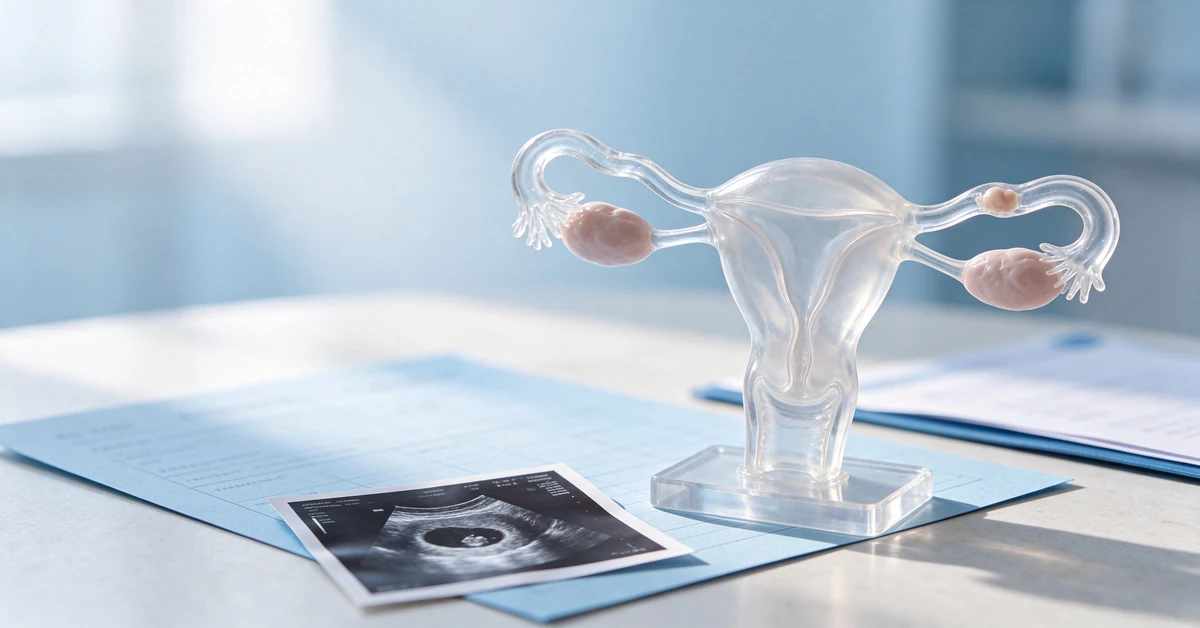
The fallopian tubes are not simply passages between the ovaries and uterus.
In natural conception, they help capture the ovulated egg, provide the usual site of fertilization and transport the early embryo toward the uterus.
Tubal blockage can therefore contribute to infertility, but the words “blocked fallopian tube” do not describe one single clinical situation.
Management depends on:
Whether one or both tubes are affected.
Whether the blockage is proximal or distal.
Whether the tube is structurally damaged.
Whether hydrosalpinx is present.
The woman's age and ovarian reserve.
Semen-analysis findings.
And how long the couple has been trying to conceive.
A woman with one blocked tube may still conceive naturally, while another patient with tubal disease may benefit more from IVF.
What Do the Fallopian Tubes Do?
After ovulation, the fimbrial end of the fallopian tube helps capture the egg.
Sperm travels through the uterus into the tube, and fertilization normally occurs there.
The early embryo then travels toward the uterine cavity.
A functioning tube therefore needs more than an open lumen.
It must also retain enough normal anatomy and transport function to move the egg and embryo.
This is why a tube described as “open” on imaging is not necessarily functionally perfect.
What Is Tubal Obstruction?
Tubal obstruction means that passage through the tube is prevented or significantly limited.
Blockage may be:
Proximal
Near the point where the tube enters the uterus.
Distal
Near the fimbrial end close to the ovary.
Complete or partial
There may also be adhesions around an otherwise patent tube.
Location and severity strongly influence treatment.
Can You Conceive Naturally With One Blocked Tube?
Yes.
If the other tube is patent and functional, ovulation is occurring and there are no major additional fertility factors, natural conception remains possible.
One healthy tube can be sufficient.
However, fertility also depends on:
Female age.
Duration of infertility.
Ovarian reserve.
Ovulation.
Semen quality.
Endometriosis.
Pelvic adhesions.
Having one open tube therefore does not guarantee pregnancy, but one blocked tube does not equal complete infertility either.
Can the Open Tube Pick Up an Egg From the Opposite Ovary?
It can happen.
The pelvic cavity does not completely isolate the two sides, and transperitoneal migration of the egg can allow an open tube to capture an egg released from the opposite ovary.
This is one reason why a woman with one functioning tube is not automatically fertile only every second month.
What If Both Tubes Are Completely Blocked?
With genuine bilateral complete obstruction, sperm and egg cannot normally meet.
The next step depends on the site and severity of disease.
Selected proximal obstruction may be treatable with tubal catheterisation.
Mild tubal disease may sometimes be surgically treated.
Severely damaged or irreparable bilateral tubes usually make IVF a more direct strategy because IVF bypasses the fallopian tubes.
What Causes Blocked Fallopian Tubes?
Common causes include:
Previous pelvic inflammatory disease.
Sexually transmitted infections that caused ascending inflammation.
Previous pelvic or abdominal surgery.
Previous ectopic pregnancy.
Endometriosis.
Pelvic adhesions.
Hydrosalpinx.
Occasionally, no clear cause is identified.
Endometriosis and infertility can cause adhesions and distorted pelvic anatomy even when symptoms are not severe.
What Is an HSG?
Hysterosalpingography, or HSG, is an X-ray examination of the uterine cavity and fallopian tubes.
Contrast material is introduced through the cervix while images are taken.
HSG can show:
The shape of the uterine cavity.
Whether contrast travels through the right tube.
Whether it travels through the left tube.
A possible site of obstruction.
Certain structural tubal abnormalities.
ASRM's 2026 fertility-evaluation guidance lists HSG and hysterosalpingo-contrast sonography as standard methods for assessing tubal patency and advises against routine diagnostic laparoscopy solely for tubal-patency assessment.
Is HSG 100% Accurate?
No.
HSG is extremely useful, but false-positive blockage can occur.
This is particularly important with proximal tubal occlusion.
ASRM reports that when HSG suggests unilateral proximal obstruction, there is a greater than 40% chance that the tube will subsequently be shown to be patent on laparoscopy or repeat assessment.
A single proximal-blockage result should therefore be interpreted carefully.
Why Can HSG Show a False Blockage?
Possible explanations include:
Transient tubal or uterine muscle spasm.
Pain or anxiety during the procedure.
Catheter position.
Technical factors.
Mucus or minor debris around the tubal opening.
ASRM specifically recommends further evaluation when bilateral proximal obstruction is reported, because transient contractions or catheter-related artefact can mimic true blockage.

What Happens After Proximal Blockage Is Found?
Depending on the clinical situation, options may include:
Reviewing the original HSG images.
Repeating tubal assessment.
Hysterosalpingo-contrast sonography.
Selective tubal catheterisation.
Selective catheterisation can both confirm proximal obstruction and, in some patients, reopen the tube.
NICE's 2026 fertility guideline recommends considering radiologically or hysteroscopically guided tubal catheterisation for proximal tubal obstruction after discussing other options, including IVF.
What Is Tubal Catheterisation?
A very thin catheter is guided through the uterus toward the proximal opening of the fallopian tube.
The procedure may:
Confirm whether an HSG blockage is genuine.
And potentially recanalise selected proximal obstructions.
However, reopening the lumen does not guarantee normal tubal function or pregnancy.
Can Hysteroscopy Open the Fallopian Tubes?
Hysteroscopy visualises the inside of the uterus and the tubal openings.
By itself, it does not assess the entire external length of the fallopian tube.
In selected procedures it can guide catheterisation of the proximal tube.
It is therefore useful to distinguish:
Hysteroscopy for the uterine cavity.
Tubal cannulation for proximal obstruction.
Laparoscopy for external pelvic and tubal evaluation.
Is Laparoscopy the Best Test?
Laparoscopy with dye can provide detailed information.
It can identify:
Peritubal adhesions.
Endometriosis.
Fimbrial abnormalities.
Distal tubal damage.
Whether dye exits through the tubes.
However, it requires surgery and anaesthesia.
ASRM therefore does not recommend laparoscopy routinely simply to assess tubal patency when there is no other surgical indication.
It becomes more useful when endometriosis, significant adhesions or another pelvic surgical problem is already suspected.
What Is the Difference Between Tubal Blockage and Hydrosalpinx?
Hydrosalpinx is a fluid-filled, distended fallopian tube, usually resulting from distal obstruction.
It is clinically important because the accumulated fluid can move back toward the uterine cavity and adversely affect implantation and IVF outcomes.
This is different from an uncomplicated tube that simply does not allow contrast to pass.
Read Safemedigo's detailed guide to hydrosalpinx and infertility before IVF.
NICE's 2026 guideline recommends laparoscopic salpingectomy or tubal occlusion for hydrosalpinx before IVF.
Does Every Blocked Tube Need to Be Removed Before IVF?
No.
A blocked tube without hydrosalpinx is not automatically removed.
The decision depends on:
Presence of hydrosalpinx.
Tube size and damage.
Pain or inflammation.
Previous surgery.
Surgical risk.
Potential effects on ovarian blood supply.
A tube should not be removed solely because contrast did not pass on one HSG.
Tubal Surgery or IVF: Which Is Better?
Neither is universally superior.
Tubal surgery can be reasonable when a patient is:
Relatively young.
Has good ovarian reserve.
Has mild repairable tubal disease.
Has no major male-factor infertility.
Wants the possibility of more than one natural pregnancy.
NICE's 2026 recommendations advise considering tubal surgery for mild tubal disease where suitable surgical expertise is available.
IVF may be more efficient when there is:
Severe bilateral tubal damage.
Irreparable obstruction.
Advanced reproductive age.
Diminished ovarian reserve.
Significant male-factor infertility.
Long-standing infertility.
Multiple fertility factors.
Why Does Age Matter So Much?
Tubal surgery does not stop age-related reproductive decline.
A younger patient with good ovarian reserve may have time to recover from surgery and attempt natural conception.
For a patient with advanced reproductive age or diminished ovarian reserve, waiting months after tubal treatment may carry a greater opportunity cost.
The best decision therefore considers overall pregnancy probability, not only whether the tube can technically be repaired.
Can Medication Reopen a Blocked Tube?
Usually not.
If the tube is blocked because of scar tissue, adhesions or structural damage, medication or supplements cannot reliably dissolve that damage.
Antibiotics can treat an active infection.
They generally cannot reverse established scarring left by an old infection.
Can HSG Itself Reopen a Tube?
Pregnancies sometimes occur after HSG, and flushing may remove minor mucus or debris in selected cases.
However, HSG should primarily be considered a diagnostic test rather than a guaranteed treatment for tubal obstruction.
Does the Type of HSG Contrast Matter?
Research has compared oil-based and water-based contrast media, and some studies have reported higher subsequent pregnancy rates after oil-based flushing in selected infertility populations.
However, contrast selection should be made by the treating team based on clinical context, allergy history, protocol and safety considerations.
It is not a universal fertility treatment for every patient.
Is HSG Painful?
Experiences vary.
Patients may feel:
Menstrual-like cramping.
Pressure from the catheter.
Brief pain as contrast passes through the uterus and tubes.
ACOG describes HSG as a test used to assess partial or complete tubal blockage and advises against performing it during pregnancy, active pelvic infection or uterine bleeding at the time of the procedure.
When Is HSG Usually Performed?
It is typically scheduled after menstrual bleeding has ended and before expected ovulation.
This helps avoid performing the test during an early pregnancy.
Exact timing depends on cycle length and the clinic's protocol.
Does Every Patient Need Antibiotics?
No.
Antibiotic prophylaxis may be considered in selected patients at increased risk of pelvic infection.
A history of pelvic inflammatory disease or certain abnormal tubal findings may influence the decision.
Antibiotics should not be taken automatically without medical advice.
Does Tubal Blockage Cause Symptoms?
Often it causes no symptoms.
Many patients only discover tubal disease during infertility testing.
Symptoms may occur when the underlying cause is:
Endometriosis.
Chronic pelvic infection.
Hydrosalpinx.
Pelvic adhesions.
Absence of pelvic pain does not prove that the tubes are normal.
Is Tubal Disease Associated With Ectopic Pregnancy?
Yes.
A damaged tube may permit fertilization but fail to transport the embryo normally to the uterine cavity.
This is one reason early pregnancy localisation can be particularly important in women with previous tubal disease or previous ectopic pregnancy.
Does an Open HSG Mean the Tube Functions Normally?
Not necessarily.
HSG shows contrast passage and some structural information.
It cannot fully measure microscopic ciliary function or all aspects of tubal transport.
A tube can therefore be patent but functionally impaired after previous severe inflammation.
What if Only One Tube Is Blocked and the Semen Analysis Is Normal?
If the other tube is healthy, ovulation is occurring, age is favourable and there are no other significant fertility factors, natural attempts or a less invasive fertility strategy may be reasonable for a defined period.
If pregnancy still does not occur, the evaluation should not stop simply because one tube is open.
ASRM's 2026 guidance recommends assessing ovulation, reproductive-tract anatomy and semen parameters as part of the overall infertility evaluation.
What if a Male Factor Is Present Too?
Combined tubal and male-factor infertility changes the calculation.
Even if tubal surgery is technically possible, natural pregnancy may still be substantially limited by sperm factors.
IVF or ICSI may then be more efficient than repairing the tube and waiting.
What if AMH Is Low as Well?
Time becomes particularly important.
Repairing a fallopian tube does not increase the number of remaining oocytes.
The decision should therefore compare:
Time required for surgery, recovery and natural attempts.
With the opportunity to retrieve oocytes now through IVF.
Low AMH does not automatically rule out surgery, but it changes the time-sensitive balance.
When Is IVF Often the More Direct Option?
IVF may be favoured when there is:
Severe bilateral obstruction.
Irreparable tubal damage.
Significant male-factor infertility.
Advanced reproductive age.
Low ovarian reserve.
Several infertility factors.
Failed previous tubal treatment.
Or a strong need to minimise time to pregnancy.
IVF bypasses the fallopian tubes because eggs are retrieved directly from the ovaries, fertilized in the laboratory and embryos are transferred into the uterine cavity.
When Should IVF Not Be Rushed?
An isolated proximal blockage on one HSG should not automatically lead to IVF.
Proximal occlusion is particularly vulnerable to false-positive findings from spasm or technical factors.
Repeat assessment or selective catheterisation may be appropriate before concluding that the tube is truly blocked.
What Information Should Be Reviewed Before Choosing Treatment?
A good decision should include:
Female age.
Duration of infertility.
The HSG images, not only the written report.
Site of obstruction.
Unilateral or bilateral disease.
Presence of hydrosalpinx.
Ovarian reserve.
Ovulatory status.
Semen analysis.
Previous pregnancy and ectopic pregnancy.
Previous pelvic infection or surgery.
Endometriosis.
Common Mistakes in Tubal-Factor Infertility
Common errors include:
Treating every HSG blockage as definitive.
Assuming one blocked tube causes complete infertility.
Performing laparoscopy routinely only to check patency.
Removing a tube simply because it appears blocked.
Ignoring hydrosalpinx before IVF.
Choosing surgery without considering female age and ovarian reserve.
Ignoring semen analysis.
Assuming a patent tube on HSG is functionally perfect.
Questions to Ask Your Doctor
Ask:
Is one tube blocked or both?
Is the obstruction proximal or distal?
Could HSG spasm explain the result?
Should the test be repeated?
Would HyCoSy be useful?
Is selective tubal catheterisation appropriate?
Is hydrosalpinx present?
Is there another reason for laparoscopy?
Is the tube realistically repairable?
Do my age and ovarian reserve allow time for surgery and natural attempts?
Would IVF offer a better overall chance in my situation?
Conclusion
Blocked fallopian tubes do not represent one single diagnosis with one single treatment.
Natural pregnancy may still occur with one healthy functioning tube.
True bilateral obstruction, however, may require tubal catheterisation, selected surgery or IVF depending on where the obstruction is located and how much tubal damage exists.
HSG remains a first-line test, but proximal obstruction can be falsely diagnosed. ASRM's 2026 fertility-evaluation guidance notes that more than 40% of unilateral proximal HSG occlusions may subsequently prove patent on further assessment.
For confirmed proximal obstruction, NICE's 2026 guideline recommends considering radiological or hysteroscopic tubal catheterisation while discussing alternatives including IVF.
Hydrosalpinx is a separate and particularly important condition. NICE recommends salpingectomy or tubal occlusion before IVF because treating hydrosalpinx improves clinical pregnancy outcomes compared with leaving it untreated.
The treatment decision should therefore consider the location of blockage, condition of the tube, female age, ovarian reserve, semen analysis and all other fertility factors rather than relying on the phrase “blocked tube” alone.
If your HSG suggests blockage in one or both fallopian tubes, you can book a consultation with Safemedigo on WhatsApp to review the imaging and determine whether repeat assessment, catheterisation, surgery or IVF is the more appropriate next step.
Frequently Asked Questions
Can I get pregnant naturally with one open fallopian tube?
Yes. Natural conception is possible when the other tube is healthy and there are no major additional fertility factors.
Does a blocked tube on HSG always mean the tube is truly blocked?
No. Proximal blockage can sometimes be caused by transient spasm or technical factors and may need confirmation.
Can tubal catheterisation reopen a blocked fallopian tube?
It can reopen selected proximal obstructions, although restoring passage does not guarantee completely normal tubal function.
Does every blocked tube require surgery before IVF?
No. Surgery is not required for every obstruction, but hydrosalpinx often needs treatment before IVF.
When is IVF preferable to tubal repair?
IVF may be more efficient with severe bilateral damage, advanced reproductive age, diminished ovarian reserve, significant male factor or multiple infertility factors.